
Joined April 2008
- Tweets 10,538
- Following 742
- Followers 646
- Likes 5,105
445 Photos and videos



Last post. Heading to b*sky -- hope to see you there!
1
221
🔥
15 Oct 2024

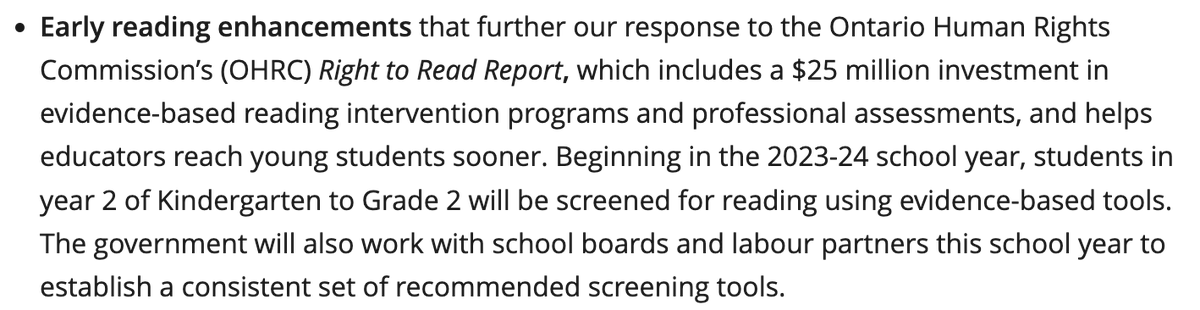
Children don’t actually learn to read “by themselves.” They are usually from privileged environments where they typically benefit from rich verbal interactions with attentive caregivers, story-time, have minimal screen time and play with books or other printed materials. Many children don’t have those privileges and to base an educational system on those privileged few would create even bigger disparity between advantaged and disadvantaged families.
236
My 7yo got a pumpkin on a school trip and named it Jason. My 9yo picked up on it and, when they got more pumpkins on the weekend, they named them after other Argonauts (britannica.com/topic/Argonau…).
1
3
226
"We have to have Asclepius!" is not something I expected to hear from the back seat as my children debated pumpkin names. (Thanks, #GreekingOut, you're the very best podcast for kids. nationalgeographic.com/podca…)
1
2
169
Preparing for a workshop, I came across this annotated bibliography on Reading Education: oxfordbibliographies.com/dis… A little old now (2011), but still a great list for new grad students (and research-focused practitioners).
1
1
145
From the intro: "The citations included in this entry lead a user to works that provide a comprehensive examination of theoretical, conceptual, and scientific, cultural, and ideological perspectives relevant to fields of reading in general and that inform teacher preparation, ...
1
70
... instructional practices, and education policy in particular. The references have been selected on the basis of their impact on reading education practices and education policy, their clarity, and their usefulness in representing multiple perspectives."
64
Lindsay's not here anymore. See you on 🦋 retweeted

10 Oct 2024
Just published meta-analysis (open access): Morphology instruction is effective for improving reading and spelling outcomes, and spelling effects can transfer to untrained words – but we still need to learn more about why it works and how best to teach it doi.org/10.1007/s10648-024-0…

6
51
157
17,953
"Explicit instruction isn't old-fashioned; it's essential." 3starlearningexperiences.wor… From Kindergarten to high school to university.
1
5
14
817
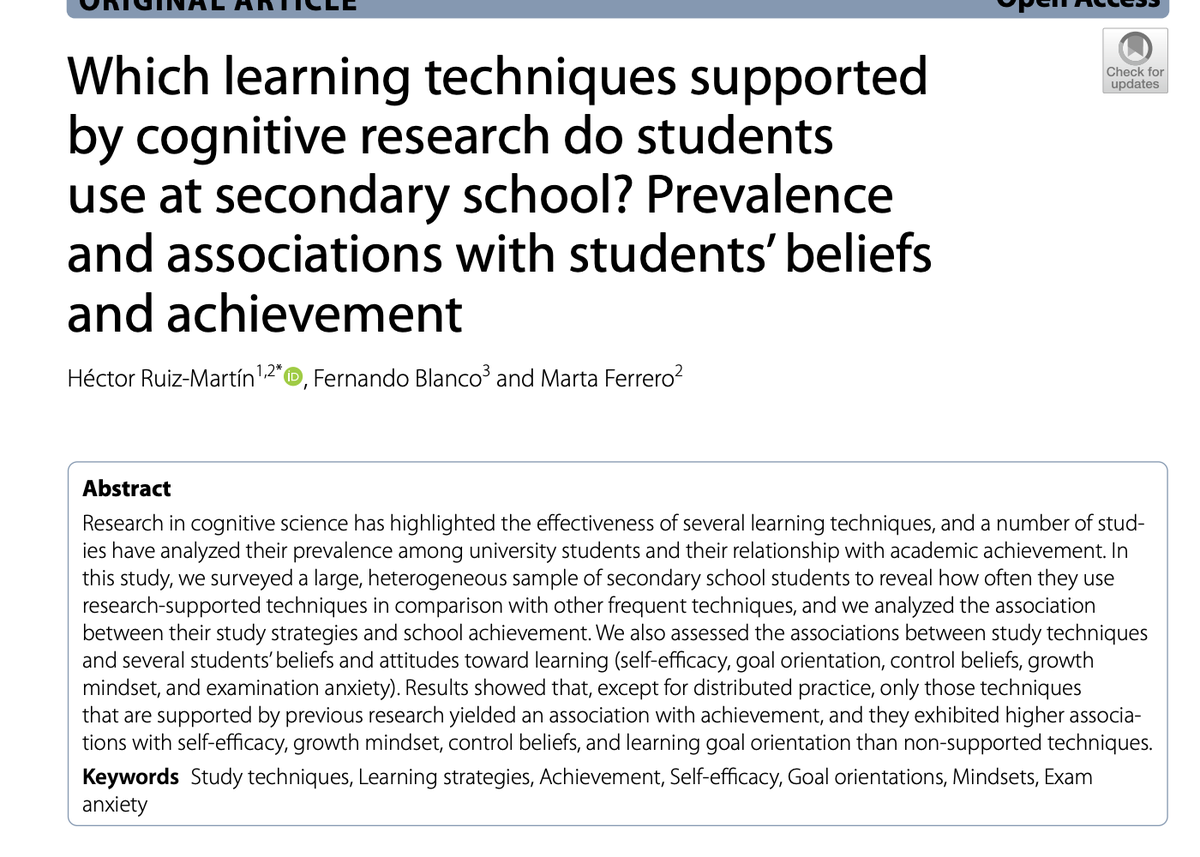
Click through for the takeaway thread -- or even better, read the paper! (Open access!) The one that jumped out at me: "the most anxious students are the ones who don't know how to learn."
28 Aug 2024
Really important new study: what learning strategies do successful students use? Key points:
▶️ Techniques backed by cognitive research, like elaborative study and retrieval practice, are positively correlated with student achievement.
▶️ Despite the effectiveness of techniques like retrieval practice, they are among the least used. Rote learning remains common, possibly due to its effectiveness for short-term success in examinations.
▶️ Higher use of effective study strategies correlates with positive beliefs, such as self-efficacy and growth mindset.
1
8
13
1,998
Lindsay's not here anymore. See you on 🦋 retweeted

7 Aug 2024
All my reading peeps: what is a classic, conceptual paper on word reading that stands the test of time, that you think everyone learning about reading development should read? Not a data paper but a nice, juicy conceptual paper.
12
11
24
8,258
Lindsay's not here anymore. See you on 🦋 retweeted

19 Jul 2024
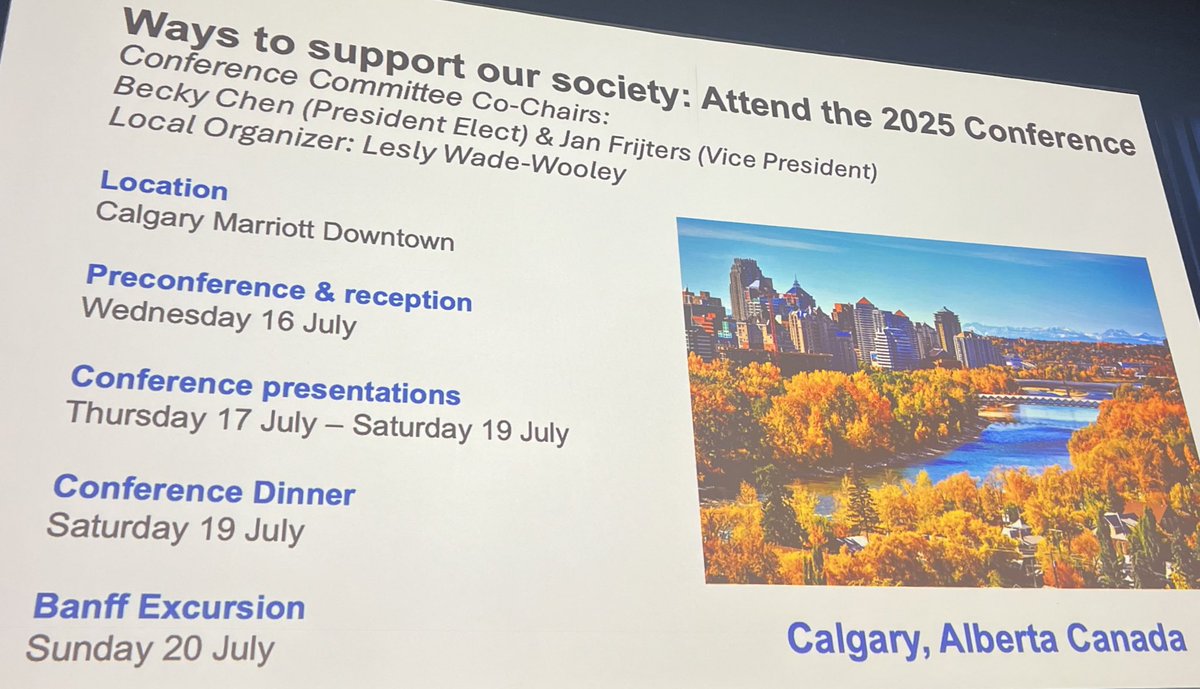
Seeing the #SSSR2024 posts and want to join the @SSSReading fun at next year’s conference? See you then!
4
5
36
2,615
Older (2022) story, maybe, but "Vibes-based" reading instruction! Whew, that framing is both spot-on and damning.
newyorker.com/news/annals-of…
115
This comes closest to describing all the feelings I had around the total solar eclipse. I'm going to do my best to hold on to it all.
9 Apr 2024

In 2017, I did something dumb. There was a total solar eclipse passing through the US, but I was in NY, far from the path. Was I really gonna get on a plane to see a cool thing for two minutes? Nah. I had shit to do.
The day came. I put my stupid glasses on and saw the sun become a little less big and then back to being full size again. It was mildly interesting.
Then the reports started coming in from the people who had seen it from the totality zone. People were like "it was an indescribably profound, perspective-shifting, life-altering experience." They were like "I'm a different person now, someone who can only be understood by other people who saw the total solar eclipse." It was massively fomo-y and upsetting.
Solar eclipses happen when the moon passes directly through the invisible line connecting the sun and Earth, something that doesn't happen very often because space is big and the invisible line is skinny. Earthlings are very lucky, eclipse-wise. Most planets don't have a big enough moon to create a total solar eclipse. Not only is our moon big enough, it's about exactly the size of the sun in our night sky because, by sheer coincidence, the sun is about 400 times farther from us than the moon and also about 400 times bigger than the moon in diameter—making our eclipses especially breathtaking.
There are about 70 total solar eclipses every century, each resulting in a thin path of total sun blockage. For most of history, there was no way to know when or where they would happen. Only the very lucky few who happened to be in the right place, at the right time, with the right weather, got to experience a total solar eclipse. Today you can ensure that you see one—and I had passed up the opportunity. I would not make the mistake again.
I went online and learned that there would be another total solar eclipse passing through the US in 2024, and then that would be it until 2045. It went on my calendar that day.
As fortune would have it, the 2024 eclipse's path of magical totality would be passing right over my new hometown of Austin, Texas. It was perfect.
Then came the weather reports. Austin was going to be cloudy on eclipse day.
Nope. Not okay. It wasn't an option to not see this eclipse. My friend @Liv_Boeree was equally psychotic about this, so we decided on Sunday night that Monday morning we'd get on a flight to somewhere in the eclipse's path that was forecast to have clear skies. We settled on Arkansas.
Early the next morning we flew to Little Rock, got in a car, and drove northwest to get to the dead center of the totality path, where the total eclipse would last for more than three minutes. We ended up in a big open rural field that may or may not have been part of someone's farm. It was us and some cows. The sky was perfectly clear.
30 minutes until totality. I looked through my glasses at a crescent sun. It seemed a little dimmer out than usual, but only a little.
20 minutes. Thinner crescent, a tad dim, maybe a tad cooler than it was before?
10 minutes. Razor thin crescent now, definitely weird lighting. Because all of the light is coming from one small area, shadows are very sharp. You can see the shadow of individual hairs on your head.
1 minute. It's very dim, like early evening, but still feels like daytime generally. Waves of light and dark ripple across the ground, like the way light moves at the bottom of a swimming pool.
5 seconds. Diamond ring! I take off my glasses and the diamond ring looks strikingly beautiful and strange (google "eclipse diamond ring" to see what I'm talking about).
4 seconds to 1 second. The Earth's dimmer switch suddenly goes downnnnn as dim daylight drops into night. Totality.
Imagine a world where there was always cloud cover, and one day every few years, in certain places, the sky cleared at night, and you could see stars for the first time in your life. It would be a totally surreal experience, something that reminded you that you don't live in a big world but on the edge of a tiny rock in vast outer space. It would show you the truth about reality.
We see stars all the time, so we're well-acquainted with our reality living in outer space (even if it's easy to forget during the day). But when I looked up at the sky during the total eclipse, it was the first time I had experienced another, totally different way to see with my eyes that I lived in outer space. I saw one sphere positioned in front of another sphere, with two other spheres—Venus and Jupiter—floating nearby. More than ever before, it felt obvious that I was standing on the edge of a fifth sphere. For the first time in my life, I was looking at the Solar System.
I looked around. There was a dim 360° sunset along the entire horizon—another first. It was dark. At 2pm. By a minute in, there was a chorus of chirping crickets that hadn't been there before. Birds were flying around overhead that hadn't been there before. The cows continued being cows but I assume they were super confused.
I looked back up at the Solar System and noticed a little imperfection on the edge of the black moon circle, which I realized must be a solar flare. A solar flare I could see with my naked eye.
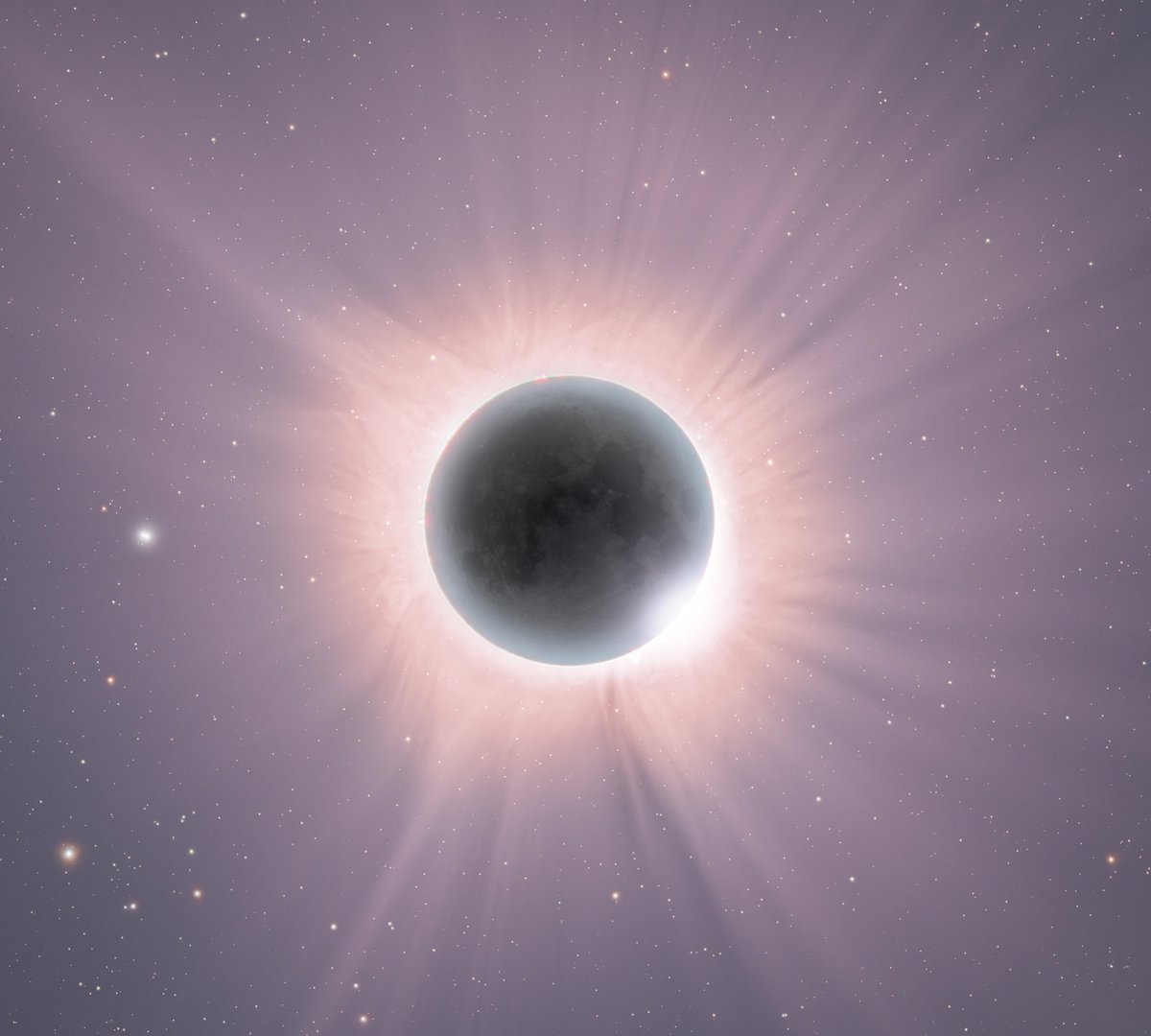
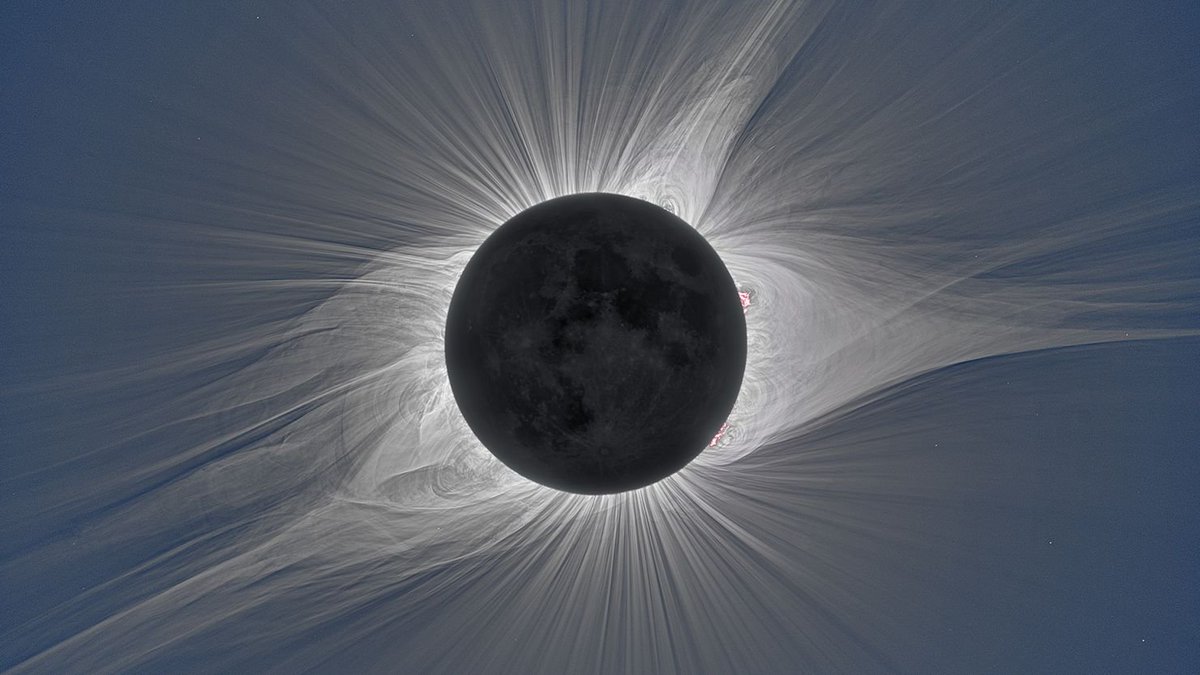
Only half of my brain was focused on the eclipse because the other half was frantically trying to figure out how to best use the precious three minutes. I told myself I wouldn't spend more than 30 seconds of the three minutes doing stuff with my camera, but I was not gonna not take pics. I got things all focused and snapped this gem:
Just kidding that's @AJamesMcCarthy's photo. But mine was pretty good too.
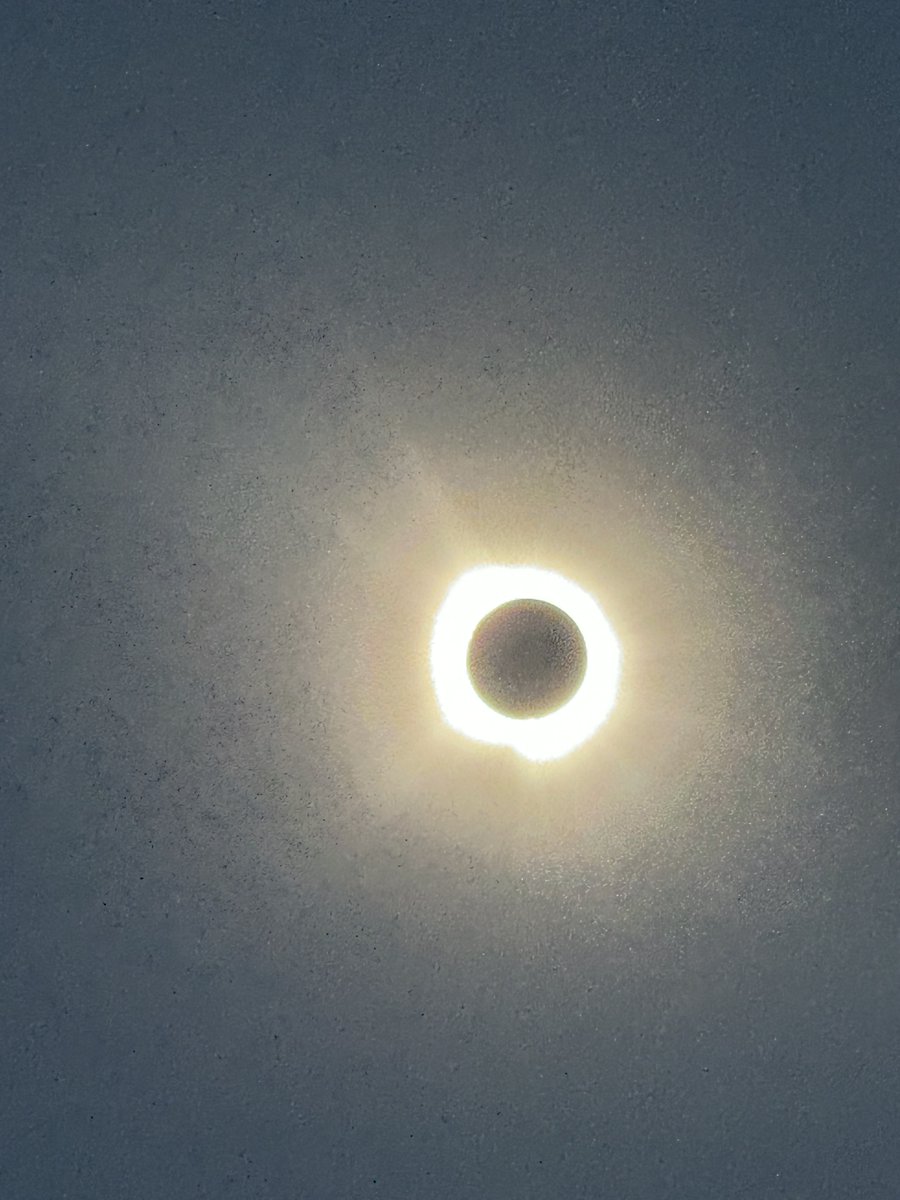
Okay fine that one was taken by @NASA. Here's mine.
Whatever. Anyway, eventually it ended. The glorious diamond ring reappeared, followed by me being blinded before remembering to not look at the sun anymore. Earth's dimmer switch swooped back up, as night turned to day in a few surreal seconds. It was over.
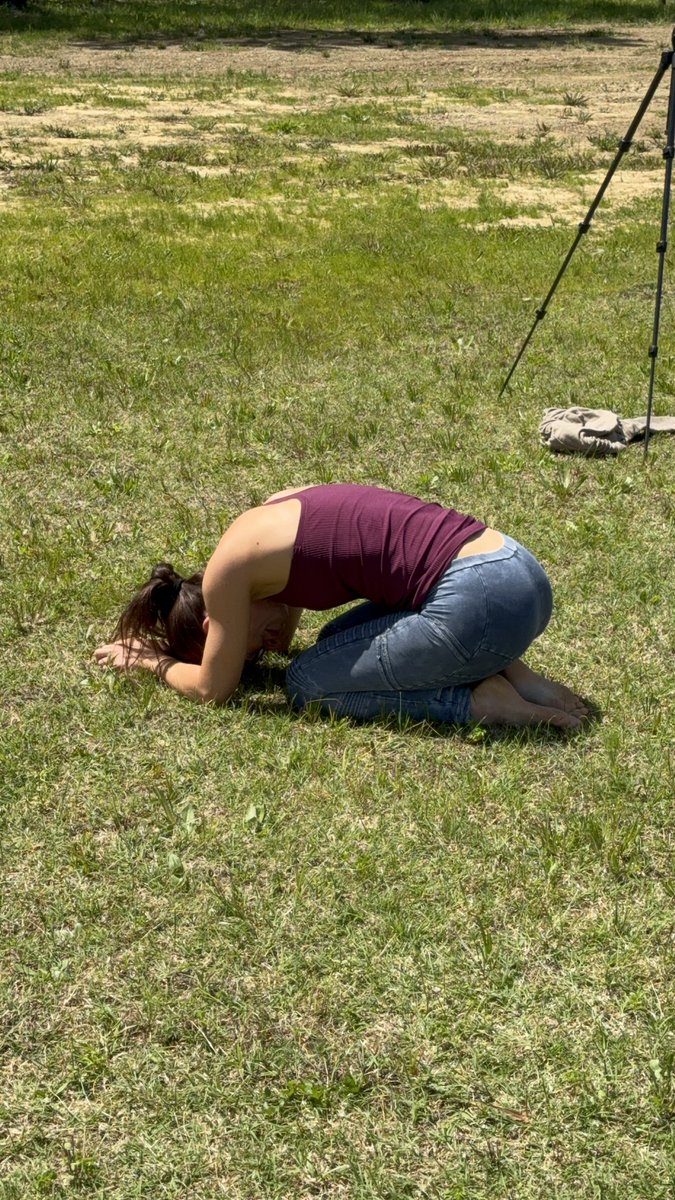
Thoughts were processed. Emotions were felt.
It was very very VERY worth the last second trip. For any of you who pulled a 2017 Tim and decided not to see this one, I hope I've sufficiently fomo'd you into making sure you see this for yourself, sometime soon, in some part of the world. 🌻
3
292
Looking to build fluency in students with dyslexia? Nice paper in The Reading League by @elizsn re: Continuous Reading (aka sustained or wide reading), which is just as effective as repeated reading -- and critically, students prefer it. learnlab.northwestern.edu/wp…
1
1
13
1,066
But don't toss RR: it is just as effective in building fluency, and can be especially helpful when a passage is challenging or the topic is difficult to understand. Both CR and RR are tools, and we can choose the right one based on the task at hand.
1
108
New study: evidence of a bidirectional relationship between word recognition and vocabulary, measured as both receptive (words you understand) and expressive (words you can use), in early years (Grades 1-5); consistent with Lexical Quality Hypothesis. link.springer.com/article/10…
3
24
53
10,808
As the authors note, findings "highlight the importance of vocabulary knowledge in word reading
development and vice versa, and therefore signal the need for early identification of difficulties and the provision of high-quality instruction and support in both domains."
2
8
300
This addresses something my students often ask about. "[D]ifferent operational definitions of reading disability will differentially impact which students get identified [and treated]... and this varies by the race and ethnicity of the student." @schotz @saraannhart
16 Mar 2024

Really important research on how the methods we use to identify students w/dyslexia (viz., discrepancy/PSW) differentially impact minoritized students from @schotz
osf.io/preprints/psyarxiv/qj…
1
2
7
1,478
Lindsay's not here anymore. See you on 🦋 retweeted

11 Mar 2024
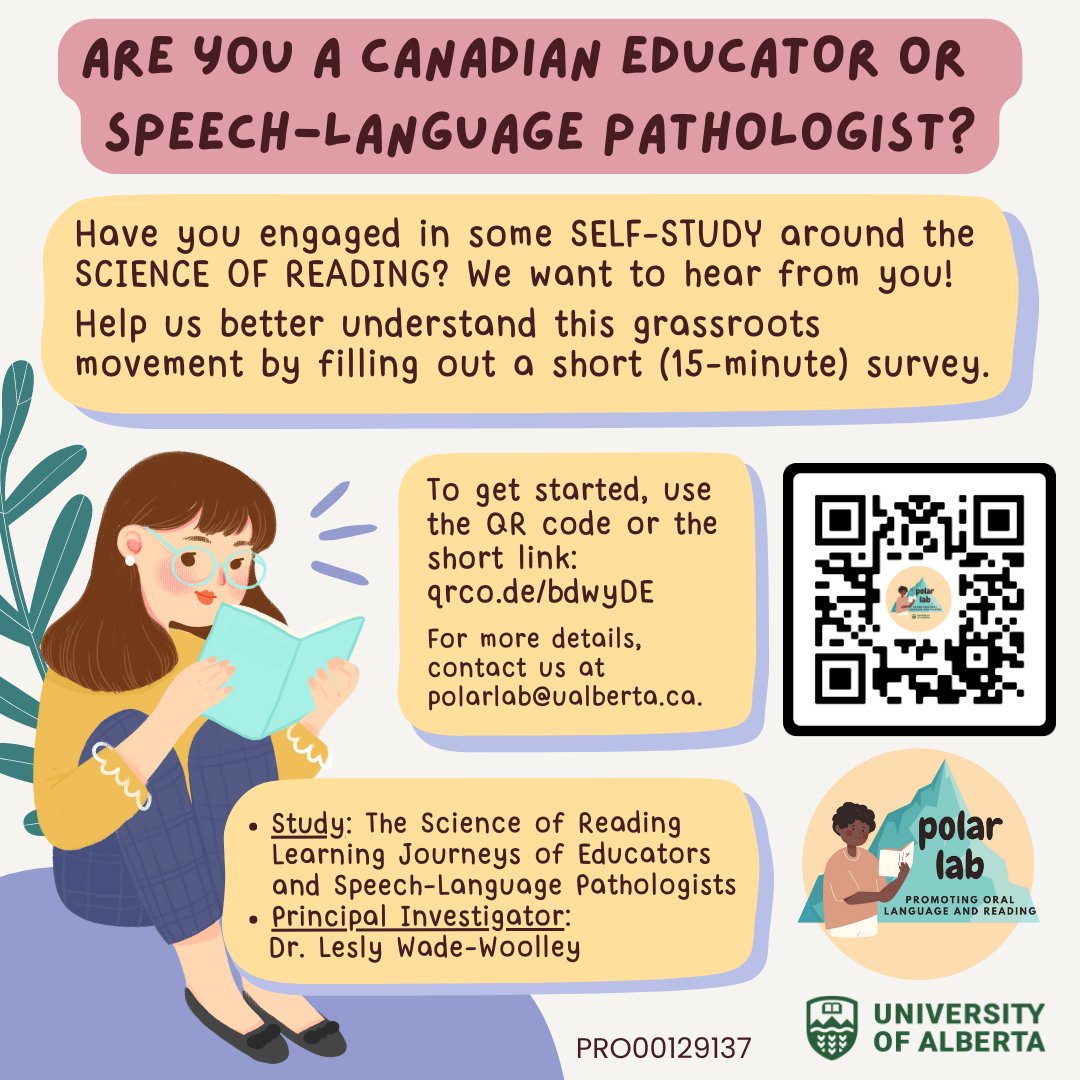
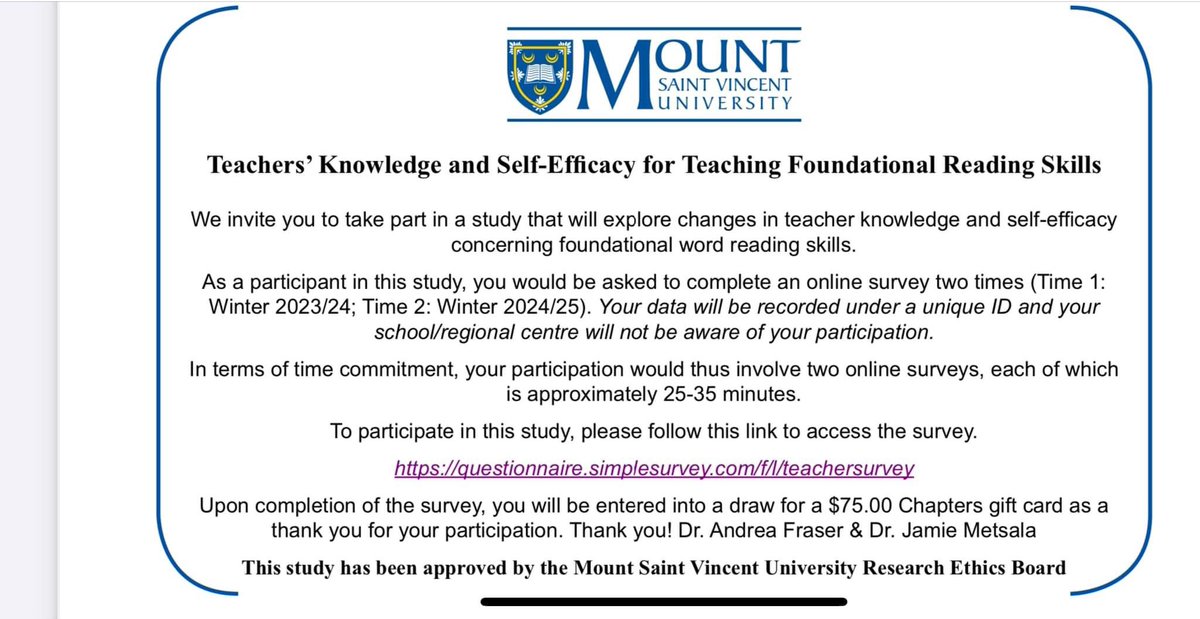
If you are a K-4 reading teacher anywhere in Canada, we invite you to participate in our study. Your role? A quick survey about foundational rdg skills now and again a year from now 📖 questionnaire.simplesurvey.c…
2
20
19
7,227