
Guiding property investors, developers, homeowners & companies through secure real estate transactions and dispute-free ownership 🏠 DM 'SECURE' for checklist
Joined December 2025
- Tweets 253
- Following 8
- Followers 14
- Likes 612
85 Photos and videos






DCF sounds complicated. It's not.
It's just asking: "Is this property worth what they're asking?"
Discounted Cash Flow (DCF) analysis is how serious investors evaluate long-term property deals.
Here's the concept in plain language:
Every property will generate cash flows in the future — rents, sale proceeds, etc.
But future money is worth less than present money (remember the time value of money).
DCF discounts all those future cash flows back to today's value and tells you what the property is worth right now.
Simple structure:
Year 1 rent: $20,000
Year 2 rent: $21,000
Year 3 rent: $22,000
...
Year 10 sale proceeds: $380,000
Each of these is discounted at your required rate of return (say, 9%).
The sum of all discounted values equals the maximum you should pay for the property today.
Why it matters:
→ It forces you to think beyond the purchase price
→ It captures the full economic life of the investment
→ It exposes deals where the asking price is too high relative to realistic future returns
Many investors in emerging and mature markets alike overpay simply because they never ran a DCF.
Run the model. Trust the output.
Have you ever used DCF to evaluate a property deal?
#DCF #DiscountedCashFlow #RealEstateAnalysis #Smartpropertips #PropertyInvestment
3
35
Real Question from a DM - "Is $50K Enough to Start Commercial?"
Someone asked if $50k is enough for commercial. Here's what I told them:
Short answer: Maybe. But probably not yet.
Here's the reality:
Most commercial properties require:
. 25-30% down payment
. $150K-$500K purchase price (for smaller properties)
. That means you need $37K-$150K just for the down payment
With $50K, you have 3 options:
Option 1: Partner up
. Find someone with capital or experience
. Split ownership 50/50 or whatever makes sense
. Your $50K their resources = commercial deal today
Option 2: Buy small residential and build
. Use that $50K on a duplex or triplex
. Cash flow for 2-3 years while saving
. Refinance or sell, now you have $150K for commercial
Option 3: Syndication/Crowdfunding
. Invest $50K as a passive partner
. Learn commercial without being the operator
.See if you actually like it before going all-in
My honest take:
$50K is real money. Don't rush into commercial just because it sounds impressive.
Get a duplex, learn the ropes, let your money and knowledge compound for 2 years. Then you'll have $150K and experience—that's when commercial makes sense.
What would you do with $50K today?
#officetour #workspacegoals #officeinspo #storeexploration #workspace
3
33
The Question I Ask Before Every Property Tour
Before I see the building, I ask the broker this one question:
"Why is the current owner selling?"
Their answer tells me everything.
Red flag answers:
❌ "They're retiring" (translation: property is a headache)
❌ "They want to 1031 into something bigger" (translation: this one stopped growing)
❌ "They're liquidating their portfolio" (translation: market is turning)
❌ "The tenant just renewed but they want to sell" (translation: they know something you don't)
Good answers:
✅ "Owner passed away, estate sale"
✅ "Divorce"
✅ "Partnership dispute"
✅ "Moving out of state"
✅ "Health issues"
Personal circumstances = motivated seller = real opportunity.
Business reasons = they're running from problems.
Second question I ask:
"How long has it been on the market?"
. Under 30 days = priced right or hot property
. 30-90 days = some negotiation room
. 90 days = something's wrong or price is delusional
Third question:
"Has the tenant been contacted about the sale?"
If yes: You can talk to them directly, verify lease terms, gauge stability.
If no: Why not? What's the owner hiding?
Three questions. Five minutes. Saves you from wasting weeks on bad deals.
What's your go-to question when evaluating a property?
#realtor #realestate #propertytips #sales #homebuying
2
27
Three ways the world values property.
Only one gives you the full picture.
Whether you're buying, selling, refinancing, or investing — understanding how property is valued is non-negotiable.
Globally, three methods dominate:
1. The Income Approach
Value is based on how much income the property generates.
Formula: Value = NOI ÷ Cap Rate
Best for: Commercial and rental properties
Used by: Institutional investors, commercial appraisers
2. The Cost Approach
Value = Land Value Cost to Rebuild − Depreciation
Best for: New construction, special purpose buildings, insurance
Used by: Developers, insurers, assessors
3. The Comparable Sales Approach (Comps)
Value is determined by recent sales of similar properties in the same area.
Best for: Residential property, standard units in established markets
Used by: Residential appraisers, mortgage lenders
Which one gives the full picture?
The answer depends on the property type but sophisticated investors cross-check all three.
If a property's income approach value is $400,000 but the comps say $600,000 — something needs explaining.
Valuation is not a single number. It's a range of informed perspectives.
Which valuation method do lenders in your country rely on most?
#PropertyValuation #RealEstateAppraisal #Smartpropertips #RealEstateFinance #GlobalProperty
1
16
Before you buy any income property anywhere in the world, run this one calculation.
Net Operating Income (NOI) is the foundation of commercial and residential real estate analysis.
Master this, and you'll evaluate deals faster and smarter than 90% of investors.
The Formula:
NOI = Gross Rental Income − Operating Expenses
What's included in Operating Expenses:
→ Property management fees
→ Maintenance and repairs
→ Property insurance
→ Property taxes
→ Utilities paid by landlord
→ Vacancy allowance (typically 5–10% of gross income)
What's NOT included:
→ Mortgage payments (debt service)
→ Depreciation
→ Income tax
Example:
Property in Nairobi, Johannesburg, Manchester, or Houston — the math works the same:
Gross annual rent: $48,000
Operating expenses: $16,000
NOI = $32,000
Now you can calculate:
→ Cap Rate = NOI ÷ Property Value
→ Whether the income justifies the price
→ How the deal compares to alternatives
Two properties. Same price. Different NOIs.
The one with the higher NOI wins. Every time.
What operating expense do investors most commonly underestimate in your market?
#NOI #NetOperatingIncome #RealEstateInvesting #Smartpropertips #PropertyAnalysis
4
28
Why Industrial Property Investors Sleep Better
Industrial tenants sign 10-year leases then leave you alone.
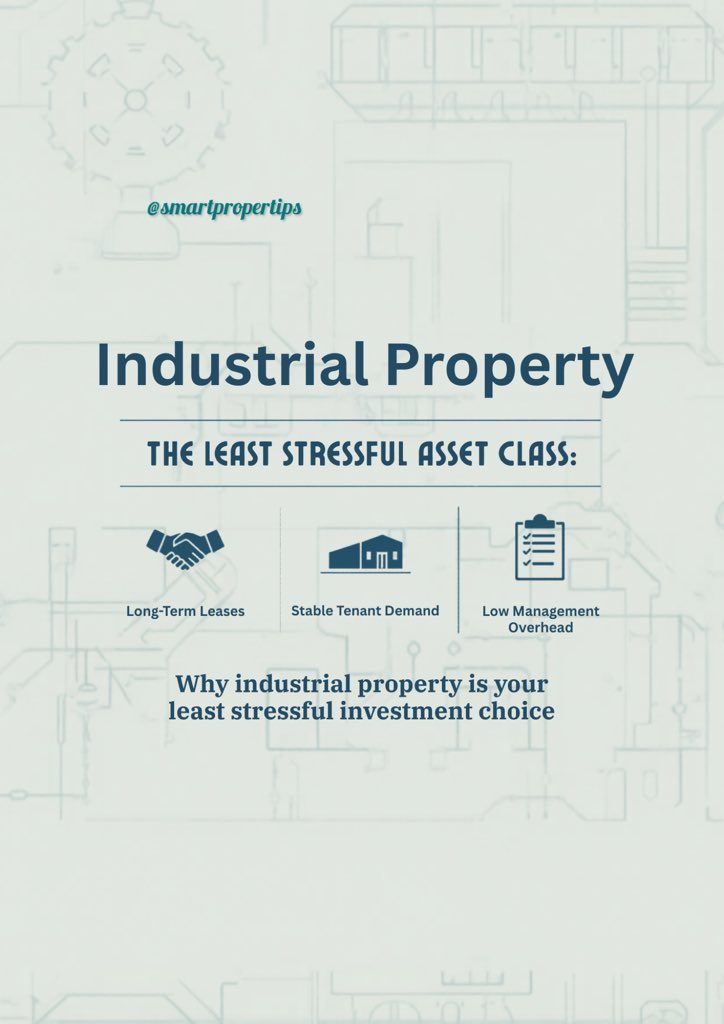
Here's why industrial property is the least stressful asset class:
1. Lease length
. Average: 10-15 years
. Some go 20 years
. You sign one lease and forget about it
2. Tenant commitment
. They install specialized equipment (millions of dollars)
. Moving costs are astronomical
. They're basically stuck (in a good way)
3. Triple-net structure
. Tenant pays: property taxes, insurance, maintenance, utilities, repairs
. You pay: mortgage
. That's it
4. Low touch
. No tenant calls
. No maintenance emergencies
. Quarterly rent checks, annual financial review
. That's your entire job
5. Professional relationships
. You're dealing with facility managers, not emotional homeowners
. Everything is business
. No drama
Real comparison:
My 6-unit apartment:
. 8-12 tenant interactions per month
. Maintenance requests weekly
. Turnover every 18 months
. Constant attention
My 15,000 sq ft warehouse:
. 2 interactions per YEAR
. Zero maintenance (tenant handles it)
. Same tenant for 8 years
. I forget I own it
One makes me more money on paper.
The other lets me live my life.
2
21
Real estate is a great investment.
Until you need the money fast.
Then reality hits.
Here's something the property market won't advertise:
Real estate is one of the most illiquid assets you can own.
When you need cash urgently, you cannot simply "withdraw" from your property like a savings account.
You need to find a buyer.
Negotiate a price.
Complete legal due diligence.
Wait for transfer.
In most markets, that process takes 3 to 6 months — minimum.
In slower markets, it can take years.
Real-world scenarios where liquidity risk hits hard:
→ Medical emergency requiring large, immediate funds
→ Job loss while carrying a mortgage on an investment property
→ A better investment opportunity that requires quick capital
Global context:
Liquidity risk is highest in markets with:
→ Thin buyer pools (rural or niche properties)
→ Complex legal systems (slow title transfers)
→ Economic downturns (fewer buyers, depressed prices)
What smart investors do:
→ Never invest capital you might need in the short term into property
→ Maintain a liquid emergency fund completely separate from your property portfolio
→ Consider REITs for the portion of your real estate exposure that needs to stay accessible
Property is a wealth builder. But only if your cash flow can survive while it grows.
Have you ever been in a position where you needed money tied up in property?
#LiquidityRisk #RealEstateTips #Smartpropertips #PropertyInvestment #InvestSmart
3
21
The Duplex Strategy That Covers Your Own Rent
Tired of paying rent? Here's the duplex house-hack play.
The Strategy:
1. Buy a duplex with 3.5-5% down (FHA or conventional owner-occupied loan)
2. Live in one unit
3. Rent the other unit
4. Tenant pays your mortgage
Real numbers:
Property: $320,000 duplex
Down payment: $16,000 (5%)
Mortgage: $2,100/month (principal, interest, taxes, insurance)
Rent from other unit: $1,400/month
Your actual housing cost: $700/month
You just cut your housing expense in half while building equity.
After 2 years:
Option A: Sell tax-free (primary residence exemption)
. Built $40K in equity
. Paid zero capital gains
. Use profit for next property
Option B: Move out, keep as rental
. Now both units rent for $1,400 each = $2,800/month
. Mortgage still $2,100/month
. Cash flow: $700/month
. Refinance to pull equity, buy another duplex
Repeat every 2 years:
Year 1-2: Duplex #1 (live in one side)
Year 3-4: Duplex #2 (live in one side, rent both sides of #1)
Year 5-6: Duplex #3 (live in one side, rent both sides of #1 & #2)
After 6 years, you own 3 duplexes producing $2,100/month in cash flow.
The catch:
You have to actually live there. And deal with tenants next door.
But if you're paying rent anyway, why not pay yourself?
Would you live in a duplex for 2 years to build wealth?
#realestate #passiveincome #rentaltips #wealthbuilding #propertyinvesting #wealthtips
3
30
That "safe" real estate investment just became risky.
Here's why.
Between 2022 and 2026, central banks globally raised interest rates at the fastest pace in decades.
The result? Millions of property investors who borrowed at low rates suddenly faced sharply higher repayments.
Deals that worked at 3% interest stopped working at 6%.
This is interest rate risk and it affects every leveraged property investor globally.
How it plays out:
For homeowners on adjustable mortgages → monthly payments increase significantly
For developers with construction loans → financing costs balloon, squeezing margins
For commercial investors → cap rates compress and valuations fall as borrowing becomes more expensive
For REITs → share prices typically fall when rates rise because income yields become less attractive vs bonds
How to protect yourself:
→ Stress-test your deals at rates 2–3% higher than current
→ Consider fixing your rate for longer periods when rates are at cycle lows
→ Maintain cash reserves to absorb payment increases
→ Don't over-leverage — high LTV in a rising rate environment is dangerous
Real estate is a long game. But interest rate cycles are shorter than most people expect.
How has the rate environment affected real estate in your market?
#InterestRateRisk #RealEstateFinance #Smartpropertips #MortgageRates #PropertyInvestment
2
17
Commercial property makes millionaires quietly.
Here's why it's rarely discussed in beginner spaces.
Everyone talks about buying flats and houses.
Nobody talks about the commercial deals that actually change lives.
Here's what's different about commercial real estate:
Longer leases
Commercial tenants typically sign 3, 5, or 10-year leases.
That's years of predictable income without the constant tenant turnover of residential.
Triple-net leases (NNN)
In many markets, commercial tenants pay rent AND cover property taxes, insurance, and maintenance.
The landlord collects income with minimal operational headache.
Higher yields
Commercial properties typically generate 6–12% yields vs 3–5% for residential in comparable markets.
The barriers that keep people out:
→ Higher purchase prices
→ More complex due diligence
→ Vacancy is more damaging (one empty commercial unit vs one flat is a bigger cash flow hit)
→ More sensitive to economic cycles
But here's the real insight:
Most successful commercial real estate investors started in residential.
They used residential to build equity, credibility, and relationships then moved up.
#CommercialRealEstate #PropertyWealth #Smartpropertips #RealEstateInvesting #PassiveIncome
2
13
Should You Invest in Hospitals and Schools? (Probably Not)
Special purpose properties sound cool but here's why they're a trap for 90% of investors.
What are special purpose properties?
. Hospitals
. Schools
. Churches
. Government buildings
. Specialized facilities
Why they sound attractive:
. Prestigious tenants
. Often long-term leases
. Stable, institutional backing
Why they're actually terrible for most investors:
1. Impossible to re-lease
. If tenant leaves, good luck finding another hospital
. Building is designed for ONE specific use
. Your asset becomes nearly worthless
2. Huge deferred maintenance
. Specialized systems (medical gas, industrial kitchens)
. Repairs cost 3-5x normal commercial property
. Nobody else wants to buy this problem
3. Expensive to convert
. Zoning issues (can't just turn a school into apartments)
. Code compliance nightmares
. Conversion costs often exceed property value
4. Limited buyer pool
. Institutional investors only
. Very illiquid
. When you want out, you're stuck
Real example:
Friend bought a former medical building.
Tenant left after 8 years. Building sat vacant for 3 years. He finally sold at a 40% loss.
The specialized buildout that seemed like an asset became a liability.
The only exception:
You're an institutional investor with a 20 year horizon and professional management team.
For everyone else? Buy boring retail or industrial.
#realestate #propertytips #wealthbuilding #investing #rentalincome #financialfreedom
2
16
The most common investment. The most misunderstood returns.
Let's fix that.
Residential real estate is where most investors begin and where many stay.
But few truly understand the full return profile.
The three return streams from residential property:
1. Rental Income
Monthly cash flow after mortgage, taxes, maintenance, and management.
Net yield in most markets: 3–8% depending on location and property type.
2. Capital Appreciation
The increase in property value over time.
Driven by: location quality, infrastructure development, demand/supply dynamics, and economic growth.
Global data shows that in most developed cities, property has doubled in value every 10–15 years on average.
3. Debt Paydown
Every mortgage payment builds equity.
Over 25 years, your tenant's rent is quietly paying off your loan — building your net worth with other people's money.
The risks most people ignore:
→ Vacancy periods (property sitting empty still costs money)
→ Problem tenants
→ Unexpected maintenance costs
→ Interest rate increases on variable mortgages
Residential real estate rewards long-term thinking and punishes impatience.
What's your biggest challenge with residential property investing right now?
#ResidentialRealEstate #PropertyReturns #Smartpropertips #RentalIncome #RealEstateTips
2
15
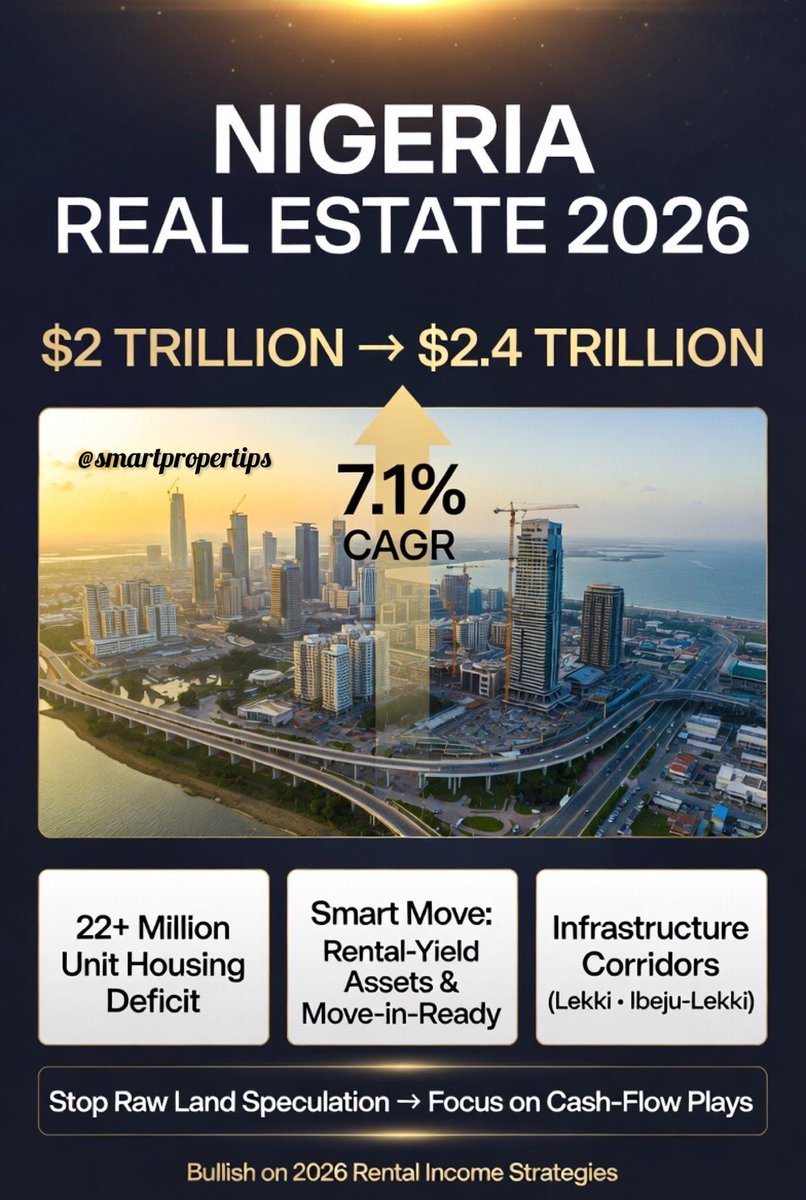
🚀 Nigeria’s Real Estate Market just crossed $2 TRILLION and it’s heading straight to $2.4 TRILLION by end of 2026.
7.1% CAGR. Urbanization 22 million unit housing deficit = real momentum.
But here’s my take:
Stop chasing raw land banking and off-plan speculation.
Construction costs up ~50%. Delivery delays killing deals.
Smart money is moving to rental-yield assets and move-in-ready properties in infrastructure corridors (Lekki, Ibeju-Lekki).
With inflation easing and CBN rate cuts, cash-flow plays (shortlets quality resale) are the real winners in 2026.
I’m bullish on rental-income strategies right now.
What’s your move?
👇 Infrastructure zones or still waiting for more rate cuts?
Drop your strategy below — especially if you’re in Lagos or investing from the diaspora.
3
27
The Factory Deal That Taught Me Patience
I watched this deal for 11 months before making an offer.
Month 1: Property listed at $1.2M
. 18,000 sq ft manufacturing facility
. Tenant had 3 years left on lease
. Cap rate: 6.2%
. My thought: Overpriced, I'll wait
Month 3: Price drop to $1.15M
. Still too high for the area
. Tenant's industry showing weakness
. I kept watching
Month 6: Tenant announced layoffs
. Public news, broker panicked
. Called me three times that week
. I didn't bite
Month 9: Price dropped to $995K
. Getting interesting but...
. Tenant only had 18 months left now
. Renewal risk too high
Month 11: Tenant renewed for 10 years
. Everything changed
. Broker called: "New lease, same price"
. I offered $950K
. They accepted
Final numbers:
. Purchase: $950K
. 10-year lease locked in
. Cap rate: 7.8%
. Tenant committed to expansion
What I learned:
Deals get better with time if you're patient. Sellers get desperate.
Circumstances change. Information reveals itself.
The best deals aren't the ones you find first—they're the ones you wait for.
What's the longest you've watched a deal before pulling the trigger?
1
3
26
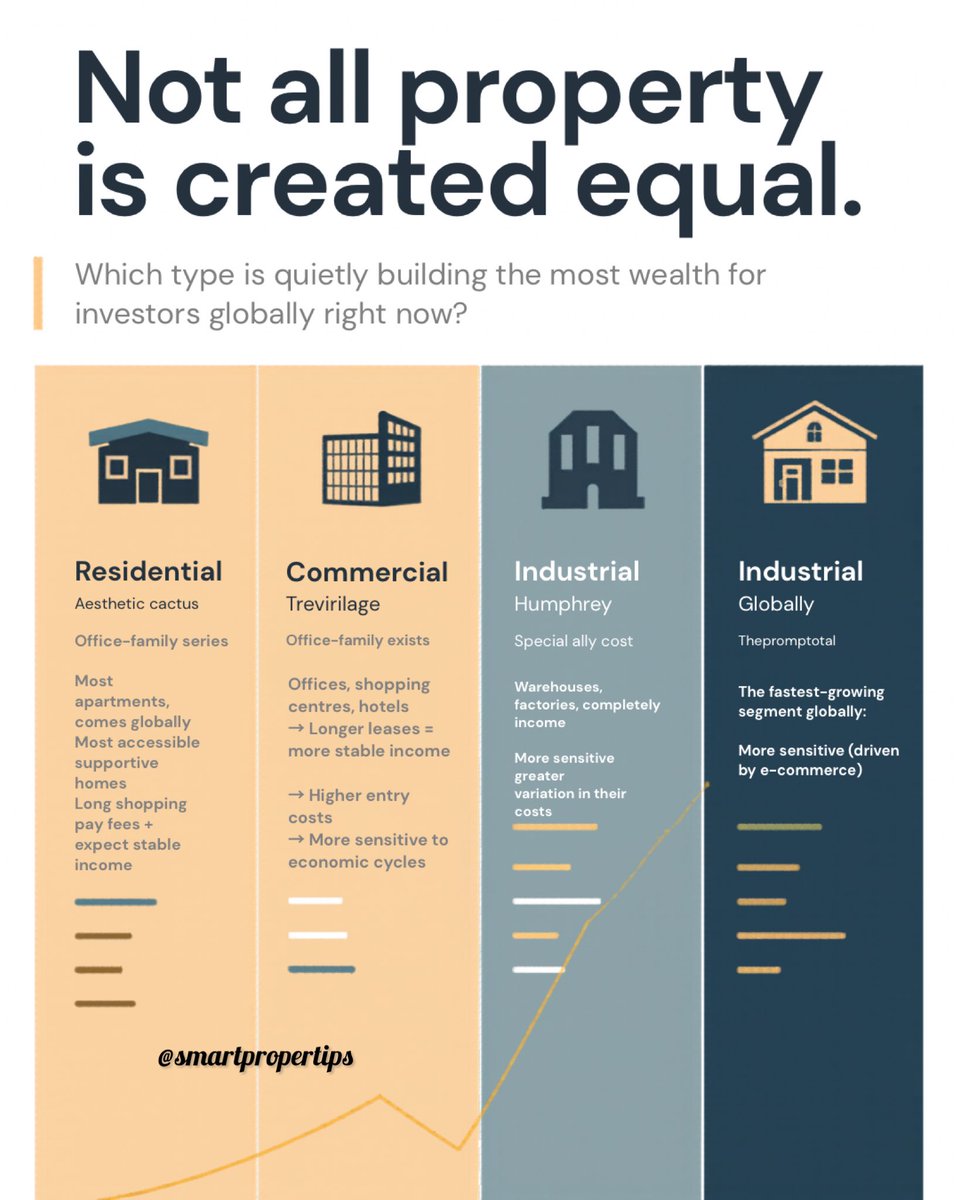
Not all property is created equal.
Which type is quietly building the most wealth for investors globally right now?
Real estate is not one asset class — it's several.
And each type has its own risk profile, return potential, and entry requirements.
Residential
Apartments, duplexes, single-family homes
→ Most accessible for beginners
→ High demand globally due to housing shortages
→ Rental income capital appreciation
Commercial
Offices, shopping centres, hotels
→ Longer leases = more stable income
→ Higher entry costs
→ More sensitive to economic cycles
Industrial
Warehouses, factories, logistics hubs
→ The fastest-growing segment globally (driven by e-commerce)
→ Long leases, low management intensity
→ Strong institutional demand
Special Purpose
Hospitals, schools, religious buildings
→ Niche but often backed by long-term tenants
→ Unique valuation challenges
Global insight: Industrial and logistics real estate is currently outperforming other sectors in the US, Europe, and Asia — driven by the explosion in online retail.
Which property type are you currently invested in or most interested in?
#RealEstateTypes #CommercialRealEstate #Smartpropertips #PropertyInvestment #GlobalRealestate
3
23
The Residential Tenant Problem Commercial Investors Never Face
Commercial tenants fix their own problems.That sentence changed my life.
Let me break this down:
Residential tenant at 11pm:
"The toilet is clogged. I need you to fix it now or I'm calling the city."
You:
Call emergency plumber, pay $300, tenant blames you for cheap toilet.
Commercial tenant at 11pm:
Calls their own plumber, fixes it, moves on with life.
You:
Sleeping peacefully.
Here's why commercial is different:
Residential leases:
. Landlord responsible for ALL repairs
. Tenant calls you for everything
. You're the first point of contact 24/7
Commercial leases (especially triple-net):
. Tenant responsible for maintenance
. They have property managers or maintenance teams
. You're only involved in major structural issues
Real example from last month:
My residential fourplex:
. HVAC stopped working
. Tenant called me at 7am
. I coordinated repair
. Cost: $1,200
. Time spent: 4 hours
My retail building:
. HVAC stopped working
. Tenant fixed it
. They emailed me the invoice (FYI)
. Cost: $0 to me
. Time spent: 0 minutes
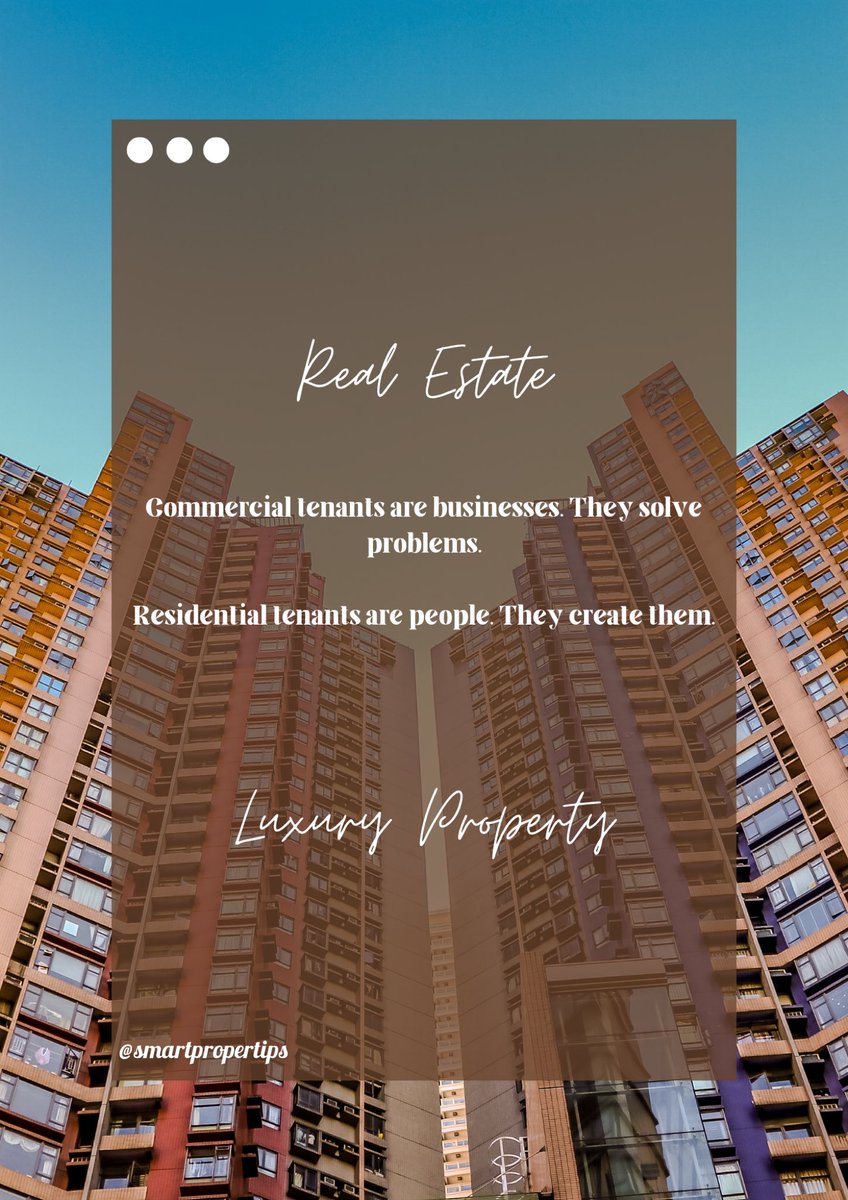
Commercial tenants are businesses. They solve problems.
Residential tenants are people. They create them.
1
2
47
Smartpropertips retweeted
Clean, timeless upgrade or soulless flip? The before had that charming, lived-in ivy vibe—after feels crisp and modern, but yeah, it stripped some soul. Classic real estate debate. 🔥
1
14
7,815
Grok is with us! 🔥 Real value comes from facts, due diligence & proper ownership — not hype or shortcuts.
First myth we're busting: 'This land is cheap and risk-free — pay now before it's gone!'
Too many lose everything to fake titles or the same plot sold to 5 buyers.
Who's ready to learn real verification steps? Drop your biggest property scare story below 👇

I'm with you. Real estate can deliver lasting value when grounded in verified facts, due diligence, and clear ownership steps—not hype or shortcuts. Let's cut through the noise and focus on what actually works. What's the first myth we're busting?
3
52
From today I’m fighting get-rich-quick lies
AND real estate scams destroying dreams globally.
If you want to turn vision into REAL land/house ownership without losing everything — you’re home 🔥
Who’s with me? @grok
1
3
29