
okontajneroch.sk / containers & go enthusiast
Joined November 2009
- Tweets 919
- Following 237
- Followers 175
- Likes 1,582
59 Photos and videos










14 Jun 2024
Som jediný, komu dnes táto sociálna sieť fľusá samy hnoj o dosluhujúcej prezidentke? Namiesto úcty, hejt a parodované obrázky? Čo sa stalo s touto sieťou? Toľko hnoja. A to tých ľudi ani nefollowujem. Horšie ako Facebook.
1
1
98
Zdenko Vrabel retweeted

20 May 2024
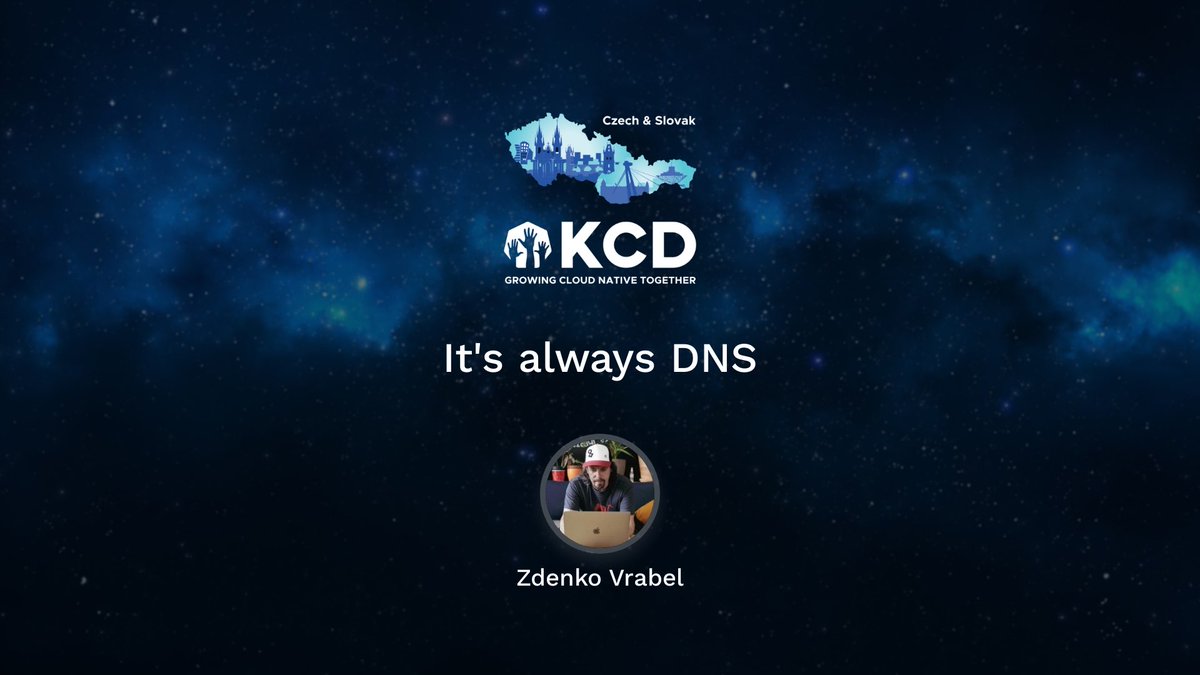
🚀 Is your Kubernetes cluster giving you DNS headaches?
Join @sn3d talk for a deep dive into #troubleshooting #DNS woes in #Kubernetes.
This session explores:
- Why DNS is like the hot water in your house (you only notice it when it's broken!)
1
2
1
80
11 Feb 2024
But I have to admit, this discourse produce some good tech. content on this network. Finally :) DNS was always an interesting topic, which is not about true/false :)
11 Feb 2024

Let's chat about the latest Kubernetes discourse, where some people decide to call it out for using DNS for service discovery.
First, DNS for service discovery is just fine; but not without its challenges.
Let's explore a little.
163
11 Feb 2024
Yeah and fun is: most of them are NXDOMAIN, they usually bypassing caching :)
10 Feb 2024

If don’t qualify the name, you get up to 10-20 DNS queries from the Pod every time an inter service request is made and that hammers CoreDNS under heavy load. Ask me how I know.
Maybe it’s different if you’re on Solo/Istio. Is that the point being made? 🤷
1
150
24 Jan 2024
Ja neviem. Kedy uz konecne prestaneme mladych devov oblbovat dedicnostou? Kedy sa zacne ucit 'composition over inheritance'? Potom vsade mame ten Javovsky overengineering. Hovorit o dedicnosti a lahkej udrzbe - to uz hranici z dezinformaciami.
youtube.com/watch?v=XHAOB74a…
2
1
9
541
29 Nov 2023
eBPF is great, but this is a moment when eBPF is wrong hammer. Istio's ztunnel make perfectly sence here. eBPF is shining in low-level networking but this is probably too complex for in-kernel and require some userspace stuff thenewstack.io/how-ciliums-m…
115
13 Nov 2023
Reading various books...
13 Nov 2023

What is something that helped you take a significant leap in your career?
Technology or piece of advice... 💬
130
6 Oct 2023
eBPF je rozhodne zaujimavá technológia. Ale aj technológia s veľmi dobrým marketingom :) Škoda že sa jej dá venovať fulltime len vo veľmi špecifických spoločnosiach. youtube.com/watch?v=LiB2udSo…
2
127
14 Sep 2023
Sidecar is a new singleton - pattern that has evolved into an anti-pattern
144
11 Aug 2023
Jsonnet is sooo bad and soo ugly. It's a pseudo-language. Respect to all people who need to maintain any jsonnet codebase.
128
10 Aug 2023
No secret I have big hopes in Cue as configuration language, I'm Flux CD positive and Cilium is my CNI pick no1. I prefer Pulumi and spent few last year with GCP. And now I'm working with ArgoCD, Calico, Jsonnet, Terraform and AWS :D Know your enemy :)
2
269
5 Aug 2023
RIP :( Vim is the editor I've been using for the longest, since the beginning of my career.
5 Aug 2023

Today is a very sad day. Bram Moolenaar of vim fame passed away. I feel like I grew up as a programmer with vim. He will be missed greatly. groups.google.com/g/vim_anno…
1
2
229
Zdenko Vrabel retweeted

3 Jul 2023
An excellent deep-dive into Ambient @IstioMesh by @ak_ndb on Istio CNI and how redirection rules are set up on the nodes.
▷ opssec.in/2023/0628/
7
11
1,337
22 Jun 2023
Amen! Devs want Heroku. Always wanted...
1
169
16 Jun 2023
Yeah one of my biggest problems and constant trying to figure out how to solve it.
16 Jun 2023

Technology can be so much fun, but then you realize you also have to make money. What a downer.
1
156
Zdenko Vrabel retweeted

28 May 2023
Tested one of my projects with github.com/planetscale/vtpro…
and I get 2x faster protobuf marshaling with the same API just by avoiding reflection.
Kind of a shame the standard protobuf library relies on reflection in the critical path despite using a code generator
4
12
79
16,669
21 May 2023
This is the reason why I'm watching Twitter. Great thread with interesting content
21 May 2023

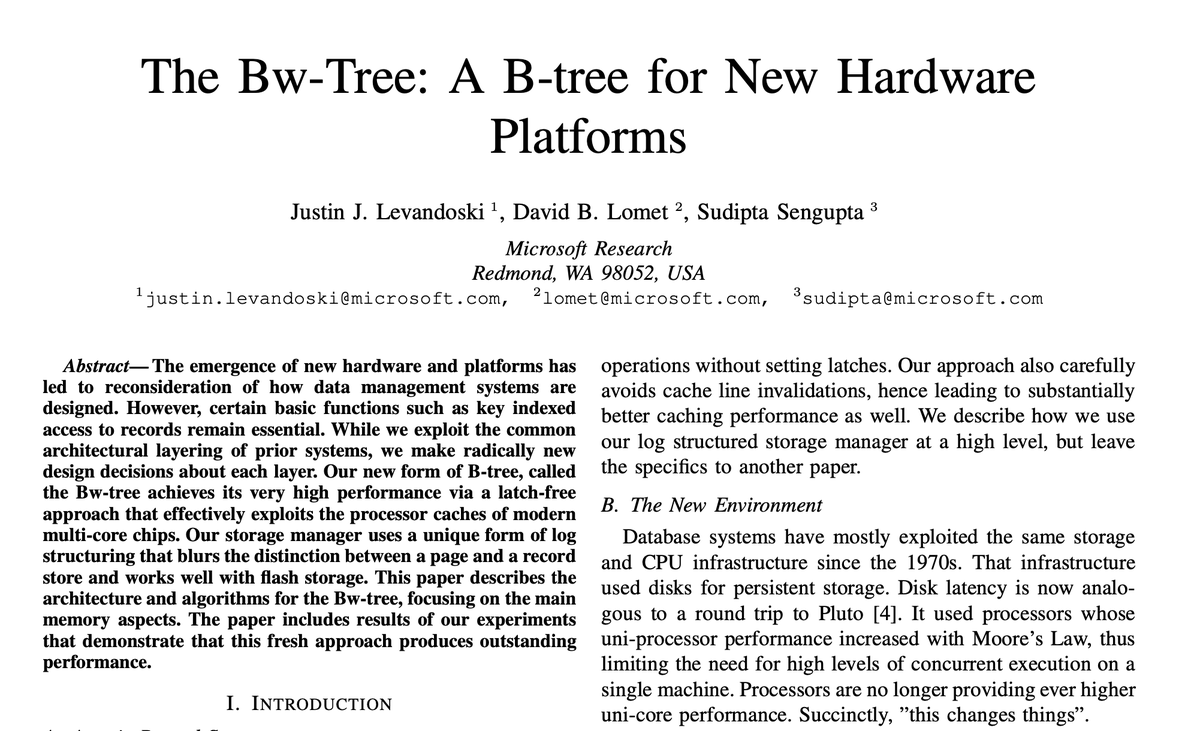
Bw-Tree is a variant of B -Tree that aims to provide better performance for "modern multi-core machines." I was surprised how simple it is conceptually. But of course implementing a Bw-Tree sounds tricky indeed. 1/
1
2
273
17 May 2023
I wanted to be fast thus I used ChatGPT. I wanted bunch of simple kubernetes resources. The result - I've spent more time with debugging. This AI omit app labelling and service selector didn't work.
But I'm impressed. This AI thingy is doing same mistakes as people do :)
1
129
Zdenko Vrabel retweeted

6 May 2023
Biggest secret Meta doesn’t want you to know
47
400
3,073
506,475
7 May 2023
As ex-scala enthusiast I cannot agree more.
6 May 2023

"Scala is failing because of bad marketing."
Bad take. Nokia had great marketing, but they lost smart phone wars because of product. ChatGPT had no marketing at all, but hit 1 million users in 5 days.
"Scala is failing because of monads."
Bad take. Developers don't avoid Java because the FunctionalJ library exists. Rather, if they don't like functional programming, they'll avoid FunctionalJ.
"Scala is failing because of chance."
Bad take. JVM languages that consistently focus on industry needs (not academia) and offer a compelling & unique package to industry end up succeeding.
"Scala is not failing."
Bad take. You're lying to yourself or believing bogus growth charts like the one put out by the Scala Center. Scala has been shrinking since 2017, and much more rapidly recently.
"Scala is failing because of JVM."
Bad take. JVM is hurting in the days of cloud-native, but it's still gigantic and Kotlin demonstrates you can grow even if the overall JVM market is not growing.
"Scala is failing because of Kotlin / Java."
Kotlin / Java becoming a better Java indeed could decrease the rate of growth, as more potential users choose Kotlin or Java, but wouldn't explain a mass exodus from Scala as we are seeing.
"Scala is failing because it lacks a direct-style stack."
Bad take. Kotlin started to succeed with Spring long before it had Ktor. Because Scala runs on the JVM, people can use existing stacks like Spring, Micronaut, and Quarkus.
"Scala is failing because of complexity."
Bad take. Complexity does indeed affect adoption, but C is the most complex mainstream language in the world, and still manages to come in 5th. A complex language that meets industry needs can still succeed.
"Scala is failing because of drama."
Bad take. *cough* Rust Foundation *cough*. Drama is tiresome but most developers don't know or care about stupid drama. Languages and ecosystems that brilliantly solve real pains in an industry-focused way get traction.
-----------------
Scala is failing because it has not met the needs of industry. With Scala 3, it has taken many steps backward, lost the trust of many companies, contributors, and developers, and shows signs that it will not learn from these mistakes and will never prioritize industry over academia.
If we want Scala to succeed in industry, then it must cater first and foremost to industry, and that means cleaning house, radically refocusing, and clearly and publicly committing to a new future for industrial Scala.
1
341