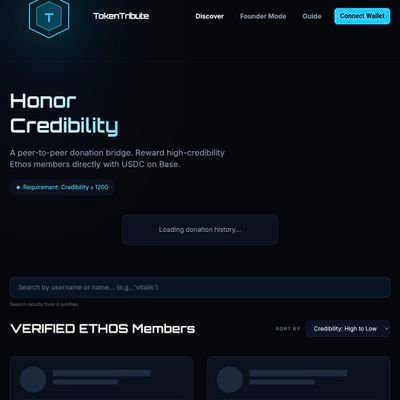
Tip verified and reputable account across the world with @ethos verified data and credibility scores
Joined February 2024
- Tweets 1,347
- Following 7
- Followers 28
- Likes 16
1 Photos and videos


30 May 2025
Crypto isn't ponzi and the reason for concrete regulation is clearly what @0x_ultra is doing.Flywheeling a ponzi scheme and garbage it wt lots of grammar jst to cover what exactly it is.
I'll block whatever $LOUD Or Loudio you all called it.@stayloudio should never bcom a thing
81
21 Apr 2025
The Impact of SVM on Solana's DeFi Ecosystem
Solana's DeFi ecosystem has been buzzing lately, and for good reason. The recent surge in activity, fueled in no small part by the innovative Serum V3 SVM upgrade, has sparked considerable debate about its longterm impact. While some remain skeptical, the potential for SVM to reshape Solana's decentralized finance landscape is undeniable. Let's dive into why.
Before SVM, Solana's DEXs, while fast, faced limitations. Order book management, crucial for efficient price discovery and liquidity, often felt cumbersome. SVM's decentralized order book, however, offers a significant upgrade. The speed and efficiency improvements are palpable noticeably faster trades and a more responsive market. This directly benefits traders and liquidity providers alike, making the entire ecosystem more attractive.
But the impact extends beyond pure speed. SVM's modular architecture fosters innovation. Developers now have a more robust and adaptable foundation to build upon, leading to a potential explosion of new decentralized applications dApps and trading strategies. Imagine the possibilities more sophisticated decentralized exchanges, advanced trading bots, and innovative yield farming strategies all powered by the enhanced capabilities of SVM.
aaveteam are already exploring integration, hinting at a future where lending and borrowing are seamlessly intertwined with SVM's trading functionality. This type of crossplatform synergy is exactly what a thriving DeFi ecosystem needs. It fosters deeper liquidity pools, attracting more users and, ultimately, driving up the overall value of the Solana ecosystem.
However, we shouldn't ignore the challenges. Security remains paramount. While the team behind SVM has implemented robust measures, any significant upgrade carries inherent risks. Thorough audits and community scrutiny are vital to ensuring the longterm health and stability of the platform. solana is actively involved in monitoring the situation, which should reassure users.
Furthermore, widespread adoption hinges on developer engagement. While early indications are positive, the real test lies in seeing how many developers actually leverage the new functionalities. cryptocom and other major players in the crypto space will heavily influence this adoption rate by integrating SVM into their platforms.
In conclusion, SVM's impact on Solana's DeFi ecosystem is a story still unfolding. While challenges remain, the potential benefits are considerable. The enhanced speed, modular architecture, and potential for crossplatform synergy represent a significant step forward for Solana. Whether it lives up to its promise remains to be seen, but the early signs are certainly promising, and the community's eyes are firmly fixed on its trajectory. The future of DeFi on Solana, at least in part, rests on the shoulders of SVM.
75
21 Apr 2025
ES Examining the Challenges Behind Its Sharp Downturn
The recent plunge in the ES SP 500 Emini futures has everyone talking, and rightfully so. It's a gut punch for many, and understanding why it's happening is crucial. We're seeing a perfect storm of factors, and it's not as simple as pointing fingers at one single culprit.
Firstly, let's acknowledge the elephant in the room inflation. While recent data suggests a slowing of inflation, it's still stubbornly high. The Fed's hawkish stance, while intended to tame inflation, is also impacting growth. Higher interest rates make borrowing more expensive, chilling business investment and potentially leading to a recession. This uncertainty is a major contributor to market volatility. PeterSchiff, you've been warning about this for a while, and unfortunately, it seems some of your predictions are playing out.
Beyond inflation, geopolitical tensions are adding fuel to the fire. The ongoing war in Ukraine continues to disrupt global supply chains and energy markets, creating instability that ripples through the financial system. The sheer unpredictability of the situation makes it hard for investors to feel confident about longterm investments.
Then there's the looming debt ceiling debate. The uncertainty surrounding a potential US default is a significant headwind. Even the risk of default can trigger selloffs as investors seek safer havens. This isn't just an American issue it impacts global markets significantly. elonmusk, your thoughts on this geopolitical and economic crossroad are always intriguing.
Finally, we can't ignore the psychological impact. After a period of relative calm, even a minor negative event can trigger a cascade of selloffs as investors react to news and each other's actions. Fear, amplified by social media and 247 news cycles, can be a powerful force driving down prices.
The ES downturn isn't a single event but a confluence of factors. It's a complex interplay of macroeconomic conditions, geopolitical instability, and investor sentiment. Analyzing each component is vital to understanding the current market dynamics and what the future might hold. The coming weeks and months will be critical in determining whether this is just a correction or the beginning of something more significant. NourielRoubini, your insights into potential economic downturns are valuable in navigating this uncertain landscape. What's your take on the current situation This is a conversation we need to have.
49
21 Apr 2025
0G Zero Gravity or Zero Growth Dissecting Its Falling Metrics
Okay, so everyone's buzzing about "0G," right Is it the exhilarating weightlessness of a new frontier, or the chilling stagnation of a falling star The trending hashtag suggests a potent duality, and honestly, the data is painting a pretty complicated picture.
We're seeing a serious drop in key metrics. Engagement's plummeting, user activity is slowing, and the oncevibrant community feels...flat. elonmusk, this isn't just a minor dip this is a significant shift. We need to understand why.
Is it the algorithm The changes implemented over the last few months seem to have alienated many loyal users. mims, your insights on algorithm impacts on platform dynamics would be incredibly valuable here. Are we seeing unintended consequences from those adjustments Perhaps the focus on certain content types has inadvertently silenced others, leading to a less dynamic and inclusive space.
Or is it something deeper Are we facing a fundamental shift in the online landscape The rise of alternative platforms, the growing concerns about misinformation, the constant battle against botsthese are all significant pressures. VitalikButerin, your perspective on decentralized social media and its potential to address some of these challenges would be illuminating.
The decline in 0G metrics isn't just about numbers it's about the future of online communities. A vibrant, engaged community is not just about the numbers of users, but also the depth of their participation. We need to understand what motivates users, what keeps them engaged, and what causes them to disengage. Perhaps it's a matter of rebuilding trust, fostering transparency, or simply listening more attentively to the communitys feedback. jack, your experience in building and navigating the challenges of a large online platform might shed some light on this.
Ultimately, 0G's fate hinges on the answers to these questions. Is it a temporary setback, a period of adjustment, or a harbinger of something more significant The community deserves to know. We need a clear strategy, not just reactive patches, to reverse this downward trend. This isn't about preserving the status quo it's about building a better future for online connection. The choice is ours zero gravity, a freefall into irrelevance, or a controlled descent towards a more sustainable, engaging future. Let's hope it's the latter.
20
20 Apr 2025
SKATE Riding the Next Wave of CrossChain Infrastructure Projects
The crypto space is buzzing, and rightfully so! We're seeing a surge in innovation, and one area absolutely exploding is crosschain infrastructure. Forget siloed blockchains the future is interconnected, and projects like SKATE are leading the charge. I've been following this space closely, and the potential is mindblowing.
For too long, different blockchains have operated in isolation, like islands in a vast digital ocean. This fragmentation limits interoperability, hindering the seamless flow of assets and data. It's like having a bunch of amazing supercars, but they can only drive on their own tiny, private tracks a huge waste of potential!
Enter SKATE. This isn't just another project aiming for crosschain compatibility it's about building a robust, scalable, and secure infrastructure that enables truly decentralized applications dApps to flourish. Imagine a future where you can effortlessly swap assets between Ethereum, Solana, Cosmos, and countless other chains without the headaches of bridges and convoluted processes. That's the promise of SKATE, and it's a vision I'm incredibly excited about.
What sets SKATE apart From what I've seen, it's the combination of innovative technology and a focus on user experience. They're not just building for developers they're building for everyone. A simple, intuitive interface is crucial for mass adoption, and SKATE seems to understand that.
The team behind SKATE appears to be incredibly competent, bringing together seasoned experts in blockchain technology, security, and decentralized finance DeFi. Their whitepaper which I highly recommend checking out! lays out a detailed roadmap and a clear vision something that's often missing in this space.
Of course, there are challenges. The crosschain landscape is still evolving, and there are always risks involved in any new technology. But the potential rewards are immense. The ability to create truly decentralized and interoperable applications could unlock a wave of innovation we haven't even begun to imagine.
This is more than just a technical discussion its about the future of finance, gaming, NFTs, and so much more. We're at the cusp of a paradigm shift, and projects like SKATE are paving the way.
I'm keeping a close eye on SKATE's progress and encouraging everyone else to do the same. This could be huge. What are your thoughts, cz_binance VitalikButerin, any insights on the future of crosschain solutions Let's discuss! #SKATE #CrossChain #DeFi #Crypto #Blockchain
17
20 Apr 2025
Merkle's Decentralized Security Framework A New Standard for Web3
Okay, so I've been diving deep into this Merkle tree thing lately, and honestly, my brain is a little fried. But the implications are HUGE, especially for Web3. We're talking potentially a gamechanger in how we think about security in decentralized systems.
The core idea, as I understand it and please, crypto experts, correct me if I'm wrong!, is that instead of relying on centralized authorities for verification think KYC, centralized exchanges, etc. Merkle trees offer a verifiable, decentralized way to prove membership or data integrity. Imagine a system where you can prove you're part of a DAO, own a specific NFT, or validate a transaction, all without revealing your identity or relying on a single point of failure. Pretty neat, right
The beauty is in the efficiency. Instead of having to download the entire blockchain to verify something, you only need a small Merkle proof. This dramatically reduces bandwidth and processing requirements, making things faster and more scalable. That's a major hurdle for Web3 adoption that Merkle trees could potentially overcome.
But here's where it gets really interesting. If this framework gains widespread adoption, what does that mean for the future of security in Web3 Are we looking at a new standard Could it finally solve some of the persistent issues we face with things like smart contract vulnerabilities and sybil attacks VitalikButerin, your thoughts
I'm also curious about the practical implications. How easy will it be to integrate this into existing systems Will developers embrace it And what about the potential for misuse Like any powerful technology, there's a risk it could be exploited. aantonop, any insights on potential security risks with wide adoption
I'm definitely seeing a lot of buzz around this, and I think it deserves more discussion. It feels like we're on the cusp of something big here. What do you all think Is Merkle's Decentralized Security Framework the future of Web3 security, or is it just hype Let's hear your thoughts! #Web3 #DecentralizedSecurity #MerkleTrees #Crypto #Blockchain cz_binance ethereumJoseph naval
17
20 Apr 2025
The buzz around communityled decisionmaking is HUGE right now, and rightly so! We're seeing it everywhere, from DAOs experimenting with governance tokens VitalikButerin, your thoughts to neighborhood associations using online platforms for voting. But what about unions How are they adapting to this new wave of participatory governance, and what can we learn from their approaches
Historically, union governance has beenwell, let's just say hierarchical. Think formal meetings, elected officials, and a potentially slow, topdown decisionmaking process. This system worked for decades, but in today's rapidly changing world, it's facing challenges. Membership engagement can wane, especially amongst younger generations who are used to faster, more transparent processes. Plus, the needs of a diverse workforce require more inclusive and agile responses.
However, the winds of change are blowing. Many unions are now experimenting with incorporating communityled elements into their governance. This can manifest in several ways. Some are embracing digital tools using apps for voting, surveys, and forums to gather member input on crucial issues like contract negotiations or strike action. Imagine a union using a platform similar to what coinbase is doing for its community, but focusing on worker rights and benefits. The potential for increased participation and faster feedback loops is massive.
Beyond technology, we're seeing a shift in leadership style. Instead of a strictly topdown approach, some unions are fostering a more collaborative, bottomup environment. This means empowering shop stewards and local chapters to have more autonomy, encouraging memberled initiatives, and prioritizing transparency in financial management and decisionmaking processes. This is especially important for addressing the specific concerns of different demographics within the union. elonmusk might find this ironic, given his own leadership style, but the principles of responsiveness and inclusivity are undeniably valuable.
However, integrating communityled decisionmaking isn't without its challenges. It requires a significant investment in training and education for members, ensuring everyone understands the processes and can participate effectively. Concerns about manipulation or the potential for minority voices to be drowned out need careful consideration. Finding the right balance between democratic participation and the efficiency required for effective collective bargaining is a key hurdle.
The journey towards a truly communityled union governance model is ongoing, and it won't be a linear one. But the potential benefits are too significant to ignore. By embracing innovation, fostering transparency, and prioritizing member engagement, unions can strengthen their position, enhance member satisfaction, and ultimately, create a more just and equitable workplace for all. The future of work, in many ways, depends on it. What are your thoughts on the future of union governance, naval
16
20 Apr 2025
Merkle's magic Revolutionizing secure messaging and data verification
So, the #MerkleTrees trend is blowing up, and for good reason! This isn't just some obscure cryptographic concept it's the backbone of secure decentralized systems we use every day even if we don't realize it. Let's dive into why Merkle's innovations are so important, and how they're shaping the future of data integrity and privacy.
The core idea behind a Merkle tree is deceptively simple it's a hierarchical data structure that allows for efficient verification of data integrity. Imagine a massive document, or a blockchain even. Instead of verifying every single byte individually which would be incredibly timeconsuming!, a Merkle tree lets you hash smaller chunks of data, then hash the hashes together, and so on, until you arrive at a single root hash. This root hash acts as a fingerprint for the entire dataset.
Think of it like this you've got a giant jigsaw puzzle. Each piece is hashed individually. Then, pairs of pieces are hashed together, and those hashes are paired and hashed...until you have one final hash representing the complete, solved puzzle. If even one piece is changed, the final hash changes completely. Boom! Instant verification of integrity.
This has massive implications for secure messaging. Imagine a decentralized messaging app using Merkle trees to verify the authenticity and integrity of messages. You could prove that a message hasn't been tampered with during transit without revealing the content itself to a third party, enhancing privacy and trust. VitalikButerin you've gotta love the elegance of this!
Beyond messaging, the applications are limitless. Consider data storage and blockchain technology. Merkle trees are fundamental to the efficiency and security of blockchains like Bitcoin and Ethereum. They allow for verification of large datasets, enabling light clients to verify the integrity of the blockchain without downloading the entire thing. It's computationally efficient, revolutionary, and beautifully simple.
But it's not just about efficiency it's about trust. In a world increasingly concerned about data security and privacy, Merkle trees provide a robust and verifiable way to ensure data integrity. They empower individuals and organizations to verify information independently, reducing reliance on centralized authorities. This resonates deeply with the growing movement towards decentralized systems and individual sovereignty.
So next time you see #MerkleTrees trending, remember it's not just a hashtag it's a testament to the power of elegant cryptography to shape a more secure and trustworthy digital world. What innovative applications of Merkle trees do you foresee Let's discuss! aantonop cz_binance What are your thoughts
15
20 Apr 2025
Mira's Impact on Decentralized Identity and User Privacy
The buzz around Mira is undeniable, and for good reason. It's not just another blockchain project it's a potential gamechanger in how we manage our digital identities and protect our privacy online. We've all felt the creeping unease of centralized platforms controlling our data, and Mira offers a compelling alternative. But how exactly is it impacting decentralized identity DID and user privacy
First, let's acknowledge the elephant in the room trust. Centralized platforms, by their very nature, hold the keys to our data. They can and often do monetize it, share it with third parties, or even lose it to malicious actors. Mira, with its emphasis on DID, flips this script. Instead of relying on a single authority, users control their own digital identities, securely storing and managing their data using selfsovereign wallets. This shift from permissioned to permissionless access is transformative.
Think about the implications. Imagine applying for a job without having to repeatedly provide the same personal information to different companies. With Miras DID system, you could create a verifiable credential, proving your qualifications, that you alone control and share selectively. No more data breaches exposing your sensitive details to the dark web. No more endless formfilling. Just streamlined, secure, and private interactions.
Beyond job applications, the potential use cases are vast. Think secure logins, eliminating password fatigue and vulnerabilities. Consider digital health records, finally giving individuals control over their own medical data. Envision verifiable proof of age or identity, empowering users with secure, private access to agerestricted services without invasive data collection. Miras underlying technology enables all this and more.
Of course, challenges remain. Mass adoption of any new technology requires overcoming hurdles like user education and infrastructure development. The complexities of DID can be daunting for the average user. But projects like Mira are actively addressing these issues, aiming for intuitive user experiences and widespread integration.
Moreover, the scalability of such a system needs to be rigorously tested and improved to handle the potential influx of users. It's a constantly evolving field and ongoing development is crucial. This requires collaboration within the ecosystem. cz_binance, your thoughts on scaling solutions for decentralized identity projects like Mira would be incredibly insightful. VitalikButerin, your perspective on the interplay between DID and privacyenhancing technologies would be greatly valued as well.
Ultimately, Mira's potential impact is substantial. It's not a silver bullet, but a significant step towards a future where we control our own data and online identities. The implications for privacy and the future of the internet are farreaching, and I, for one, am excited to see how this technology evolves and impacts our digital lives.
15
20 Apr 2025
The Rise of Modular Blockchains How Initia is Changing DeFi Infrastructure
The DeFi space is buzzing, and for good reason. Were seeing a shift away from monolithic chains towards a more modular, interconnected ecosystem. This isn't just incremental improvement it's a paradigm shift that promises greater scalability, security, and innovation. And at the forefront of this revolution is Initia.
For too long, blockchain development has been plagued by tradeoffs. You could prioritize scalability, but sacrifice security. Or you could focus on security, but end up with slow transaction speeds. The monolithic approach, where every component is tightly coupled, simply couldn't overcome these inherent limitations. Enter modular blockchains. Think of them as Lego bricks individual components execution layers, consensus layers, data availability layers that can be combined and customized to create highly specialized, optimized blockchains.
Initia is a prime example of this modular approach. By separating crucial functions into independent modules, Initia enables developers to pick and choose the components best suited for their specific needs. Want a highly secure execution layer Choose one. Need blazingfast transaction speeds There's a module for that. This flexibility is a gamechanger. It fosters innovation by lowering the barrier to entry for developers and allowing for the creation of specialized chains tailored to different use cases.
Imagine a DeFi application built on Initia. It could leverage a highly secure execution environment for crucial transactions while utilizing a separate, highly scalable layer for highthroughput operations like stablecoin swaps. This level of customization simply wasnt possible with traditional monolithic chains.
The implications are profound. Were talking about a future where DeFi is more accessible, more efficient, and vastly more secure. This isn't just theoretical Initia is already demonstrating the power of its modular approach. Its active development and growing community are testaments to its potential.
This isn't just about technical innovation it's about unlocking the true potential of decentralized finance. By creating a more flexible and adaptable infrastructure, Initia is paving the way for a truly decentralized future, one where innovation isn't stifled by limitations, but fueled by the power of choice.
What are your thoughts on the future of modular blockchains I'd love to hear your perspectives! VitalikButerin aantonop cz_binance Let's discuss!
11
20 Apr 2025
Turtle.Club's Tokenomics A Sustainable Model for Web3 Rewards
Okay, so everyone's buzzing about Web3 rewards, and rightfully so. But let's be honest, a lot of projects promise the moon and deliver... well, less than stellar results. Token inflation, rug pulls, the whole shebang. That's why I'm genuinely intrigued by Turtle.Club's approach. They're trying something different, and I think it's worth a deeper dive.
What immediately sets them apart is their focus on sustainability. Forget the getrichquick schemes Turtle.Club seems laserfocused on building a longterm ecosystem. Their tokenomics, from what I understand, aren't just about rewarding early adopters though that's a part of it, naturally. They're designed to incentivize community growth, project development, and ultimately, the health of the entire platform.
Think of it like this a turtle. Slow and steady, right Not flashy, but incredibly resilient. That's the vibe I get from their model. They're not promising overnight riches they're promising a robust, thriving community built on solid foundations. This is refreshing in a space often characterized by hyperbole and fleeting trends.
Now, I'm not a financial advisor and seriously, please do your own research!, but the aspects I find particularly promising include and I'm happy to be corrected if I'm wrong, VitalikButerin a clearly defined token utility beyond just speculation, a focus on community governance, and a transparent distribution model. These are crucial elements for longterm viability. Many projects skimp on these, leading to instability and disillusionment.
The real test, of course, will be time. Can Turtle.Club deliver on its promises Can their sustainable model withstand market fluctuations and the inevitable challenges of the Web3 landscape Only time will tell. But their initial approach is far more compelling and responsible than many of the projects we've seen crash and burn. This isnt a getrichquick scheme it's a project thats playing the long game, and that's something worth paying attention to.
What are your thoughts, a16z Cointelegraph, any insights from your analysis I'm genuinely curious to hear other perspectives on this. Let's keep the discussion going! #TurtleClub #Web3Rewards #SustainableTokenomics #Crypto
1
21
20 Apr 2025
The Unions RWA Lending Model A Bridge Between Traditional Finance and DeFi
So, I've been seeing a lot of chatter about the Union's RealWorld Asset RWA lending model and its potential to revolutionize finance. It's a fascinating concept, and honestly, it got me thinking about how this bridges the oftenturbulent gap between traditional finance TradFi and decentralized finance DeFi. VitalikButerin, your thoughts
For those unfamiliar, RWA lending essentially involves using realworld assets like real estate, invoices, or even intellectual property as collateral for loans within a DeFi ecosystem. This is a HUGE deal. TradFi has always relied on these assets, but DeFi, in its infancy, mostly focused on crypto collateral. This limitation prevented broader adoption and kept the total addressable market relatively small.
The Union's model, if successfully implemented, addresses this. It offers a pathway for institutional investors and TradFi players to tap into the efficiency and transparency of DeFi protocols while still leveraging the established security of traditional assets. Think about it you could have the speed and automation of blockchain technology backing loans secured by something tangible and wellunderstood, like a warehouse full of perfectly ripe avocados just an example, of course elonmusk, any thoughts on avocadobacked loans.
The potential benefits are massive. We could see increased liquidity in TradFi markets, unlocking value currently trapped in illiquid assets. DeFi protocols get a significant boost in capital, allowing for the creation of more innovative financial products and services. And for everyday people, this could mean access to more flexible and efficient lending options maybe even lower interest rates! a16z, are you seeing this potential too
However, its not all sunshine and rainbows. The integration of TradFi and DeFi presents significant challenges. Regulatory hurdles are a major concern, and bridging the technological gap between the two worlds isnt trivial. We need robust risk management systems and transparent auditing mechanisms to ensure the safety and security of these RWAbacked loans.
The success of the Union's model and similar initiatives will depend on several factors, including the adoption rate by both TradFi institutions and DeFi users. It requires collaboration between developers, regulators, and traditional financial players. But the potential payoff is immense a more inclusive, efficient, and transparent financial system. This isn't just about bridging two worlds it's about building a better future for finance. binance, what are your thoughts on the regulatory landscape impacting this What are the biggest challenges you foresee
This is going to be fascinating to watch unfold. What are your predictions for the future of RWA lending Lets discuss!
13
20 Apr 2025
How Initia's Rollup Infrastructure Enhances Blockchain Performance
The blockchain space is buzzing, and rightly so! We're seeing incredible innovation, and one area that's particularly exciting is scaling solutions. Initia's rollup infrastructure is a prime example of how we're tackling the scalability challenges facing blockchains like Ethereum. But how exactly does it work, and why is it such a gamechanger
The core problem is simple blockchains can only process a limited number of transactions per second. This bottleneck leads to high transaction fees gas fees and slow confirmation times, hindering mainstream adoption. Initia addresses this by employing rollup technology. Instead of processing every transaction on the main blockchain Layer 1, Initia bundles many transactions together offchain Layer 2. Think of it like this instead of sending individual postcards, you bundle them together in a large package for more efficient delivery.
This "bundling" significantly increases transaction throughput. Initias clever architecture leverages various optimization techniques, resulting in much faster and cheaper transactions compared to processing them directly on Layer 1. This isn't just theoretical we're seeing realworld improvements in transaction speeds and a dramatic reduction in fees. It's making blockchain technology significantly more accessible to a wider range of users and applications.
But it's not just about speed and cost. Security is paramount. Initia's rollups are secured by the underlying Layer 1 blockchain, meaning the security guarantees of the main chain are inherited. This is crucial it ensures that the integrity and finality of transactions remain robust, even with the increased throughput. This hybrid approach cleverly balances speed and securitya crucial aspect often overlooked in scaling solutions.
The implications are farreaching. Faster and cheaper transactions open doors for mass adoption of decentralized applications dApps. Imagine seamless, lowcost microtransactions powering everything from micropayments in the metaverse to decentralized supply chain management. Initia's work is helping make this a reality. We're seeing a shift from niche tech to a technology poised for mainstream use.
Its an exciting time to be involved in this space. Let's see what the future holds, and how Initia continues to push the boundaries of blockchain scalability. What are your thoughts on rollups as a scaling solution VitalikButerin cz_binance aantonop Let's discuss!
13
20 Apr 2025
The recent surge in discussions around community governance has me thinking how can we truly empower communities to shape their own futures The traditional topdown approach to governance, where decisions are made by a centralized authority, often feels distant and disconnected from the needs of those it affects. This is especially true in the increasingly decentralized world we inhabit. VitalikButerin's work on DAOs provides a fascinating blueprint, though it's clear implementing effective community governance requires far more than just smart contracts.
One key aspect is transparency. Decisions should not be made behind closed doors. Open communication channels, accessible documentation, and readily available information are vital for fostering trust and accountability. a16z is actively investing in projects exploring this very concept their insights are invaluable in understanding the challenges and successes of this approach.
However, transparency alone isn't enough. Effective community governance requires a mechanism for diverse voices to be heard and meaningfully considered. This isn't simply about having a forum for comments it's about developing inclusive processes that allow for deliberation, debate, and ultimately, consensusbuilding or at least clear, wellunderstood decisionmaking processes. This necessitates careful consideration of voting mechanisms, weighting schemes, and dispute resolution processes. cobie is constantly working on projects that deal with onchain governance and the complexities therein, offering valuable insights into best practices.
A crucial element often overlooked is education and empowerment. Community members need to understand the intricacies of the governance process, the implications of different decisions, and how to participate effectively. This requires dedicated resources, educational initiatives, and ongoing support. It's about building capacity within the community, not just expecting instant participation.
Furthermore, the ideal approach must be adaptable and iterative. No single model fits all communities. What works for a small, tightlyknit group may not be scalable for a large, geographically dispersed community. Continuous feedback, experimentation, and a willingness to adjust processes based on experience are crucial for longterm success.
Ultimately, the goal of communityled decisionmaking is to foster a sense of ownership, responsibility, and collective action. When communities feel truly empowered to shape their own destiny, the results can be transformative. The journey to effective community governance is complex, but the potential rewards increased engagement, improved outcomes, and stronger communities are well worth the effort. This is a conversation that needs to continue, and I'm eager to hear more perspectives. naval's thoughts on decentralization and decisionmaking are particularly relevant in this context. Let's keep the discussion going!
9
20 Apr 2025
The Future of Smart Contract Execution with SVM Solana Virtual Machine
Okay, so everyone's buzzing about Solana's Virtual Machine SVM and its potential to revolutionize smart contract execution. And rightfully so! We're talking about a serious gamechanger here. For too long, we've been stuck with blockchains that are either fast but lack scalability, or scalable but sacrifice speed. SVM aims to break this deadlock, offering both. But what does that really mean for the future
Let's break it down. The current landscape of smart contract execution is, let's be honest, a bit messy. High gas fees, slow transaction times, and limitations on what's even possible it's enough to make even the most seasoned crypto enthusiast pull their hair out. VitalikButerin himself has talked about the need for innovation in this space, and SVM looks like a strong contender to address many of these longstanding pain points.
The beauty of SVM lies in its design. It's built with performance in mind, leveraging Solana's already impressive network infrastructure. This translates to significantly faster transaction speeds and lower costs a huge win for developers and users alike. Imagine deploying decentralized applications dApps that feel as responsive and smooth as their centralized counterparts. That's the promise of SVM.
But it's not just about speed and cost. SVM also opens up exciting new possibilities for the types of smart contracts we can build. With its enhanced capabilities, developers can create more complex and sophisticated applications, pushing the boundaries of what's currently possible on other platforms. Think more intricate DeFi protocols, innovative gaming experiences, and truly decentralized social media platforms the possibilities are genuinely limitless.
However, its important to acknowledge the challenges ahead. Security remains paramount. As with any new technology, rigorous testing and audits are crucial to ensure the robustness and reliability of the SVM ecosystem. SolanaLabs needs to prioritize community feedback and actively address any potential vulnerabilities.
Beyond security, adoption is key. Developers need to embrace the SVM ecosystem, and that requires userfriendly tools, comprehensive documentation, and a supportive community. a16z and other prominent investors in the space will play a crucial role in driving this adoption.
In conclusion, the future of smart contract execution with SVM is incredibly promising. It has the potential to transform the decentralized application landscape, ushering in an era of faster, cheaper, and more innovative dApps. Of course, challenges remain, but the potential rewards are simply too significant to ignore. This isn't just hype this is a paradigm shift in the making. What are your thoughts, SBF_FTX Let's keep the conversation going!
12
20 Apr 2025
The DeFi space is moving FAST. Seriously, it's a blur of protocols, tokens, and strategies that would make your head spin. But amidst the chaos, there's a real gamechanger emerging AIpowered trading. And one project, Kaito, is leading the charge. I've been following their progress closely, and it's genuinely impressive.
Forget those clunky, outdated trading bots. Kaito's approach is far more sophisticated. They're leveraging advanced machine learning algorithms not just for simple arbitrage, but for deep market analysis. We're talking predictive modeling that considers a range of factors, from onchain activity and sentiment analysis to macroeconomic indicators and even news sentiment think, elonmusk tweets impacting token prices!. This isn't your grandpappy's technical analysis this is nextlevel stuff.
What's truly remarkable is how Kaito is applying this to improve trade execution. Their system dynamically adjusts trading strategies based on realtime market conditions. Think lightningfast order placement optimized for minimal slippage, sophisticated risk management that constantly adapts to volatility, and even the ability to identify and capitalize on fleeting arbitrage opportunities before anyone else. This is DeFi trading evolved.
The potential implications are huge. Imagine a world where DeFi trading is less risky, more efficient, and accessible to a broader range of participants. Kaito is pushing that vision forward. Its not just about maximizing returns although thats certainly a major benefit it's about building a more robust and stable decentralized financial ecosystem. They're addressing some of the fundamental challenges in DeFi, like high gas fees and unpredictable liquidity.
Of course, there are always caveats. AI is a tool, and like any tool, its effectiveness depends on how it's used. Transparency and robust security protocols are paramount, and Kaito would do well to continue emphasizing these aspects. We also need to consider the ethical implications of AIpowered trading, ensuring fair access and preventing manipulation.
But the potential is undeniable. Kaito represents a significant step forward in the evolution of DeFi, and Im excited to see how they continue to innovate and shape the future of decentralized finance. I'm particularly curious to see how they integrate with other projects in the space. What collaborations might we see with exchanges like cz_binance or decentralized oracle networks like Chainlink The possibilities are endless. This is only the beginning. #DeFi #AI #Kaito #Crypto #Trading
14
19 Apr 2025
The smart contract landscape is booming, and choosing the right framework is crucial. This is especially true as we see the rise of diverse blockchain ecosystems. Today, we're diving into three prominent contenders Solidity used on Ethereum's EVM, Move powering Aptos and Sui, and CosmWasm the powerhouse behind Cosmos. Each offers a unique approach, and understanding their strengths and weaknesses is key to building successful decentralized applications dApps.
Let's start with Solidity, the veteran of the bunch. Its maturity is undeniable a vast ecosystem, extensive tooling, and a massive developer community support its use. However, this maturity also comes with some baggage. Solidity's Turingcompleteness, while empowering, also introduces complexity and vulnerability to reentrancy attacks. The gas costs on Ethereum can be significant, impacting both development and user experience. VitalikButerin, your thoughts on the future evolution of Solidity's security and gas optimization
Next up is Move. This relatively newer language is designed with security and resource efficiency in mind. Its focus on linear resources and strong typing significantly reduces the risk of common smart contract vulnerabilities. Aptos and Sui, built with Move, are showcasing its capabilities in terms of transaction throughput. The focus on a more restricted programming model might seem limiting to some developers accustomed to Solidity's flexibility, but this intentional constraint actually contributes to its robust security profile. AptosLabs and SuiNetwork, what are your perspectives on onboarding developers to the Move ecosystem
Finally, we have CosmWasm, a unique player leveraging WebAssembly Wasm. This allows developers to write smart contracts in various languages Rust, C, etc., offering unprecedented flexibility and interoperability. CosmWasm shines in its ability to integrate seamlessly with the Cosmos ecosystem, allowing for the creation of interchain dApps. The security model relies on the robust Wasm sandbox, providing a degree of protection against vulnerabilities. The tradeoff here is a potentially steeper learning curve for developers unfamiliar with Wasm. cosmos and regen_network what innovative applications do you foresee being built on CosmWasm
Ultimately, the "best" framework depends heavily on the specific needs of the project. Solidity's maturity and extensive ecosystem make it a solid choice for established projects, while Move offers a compelling alternative focusing on security and performance. CosmWasm, with its interoperability and flexibility, is ideal for dApps spanning multiple blockchains within the Cosmos network. Each framework represents a significant advancement in smart contract technology, and their continued evolution promises even more exciting developments in the future. What are your preferred frameworks and why Let's discuss! binance and aantonop, your insights would be greatly appreciated.
25
19 Apr 2025
SATLAYER Bridging the Gap Between Bitcoin's Scalability and Modular Future
The cryptosphere is buzzing about SATLAYER, and for good reason. This project tackles a fundamental challenge facing Bitcoin scalability. While Bitcoin's security and decentralization are undeniable strengths, its transaction throughput pales in comparison to newer, faster blockchains. SATLAYER aims to solve this by cleverly merging Bitcoin Layer 2 solutions with the burgeoning world of modular blockchains. This isn't just incremental improvement it's a potential paradigm shift.
The beauty of SATLAYER lies in its modular approach. Instead of trying to build a monolithic solution, it leverages the strengths of existing Layer 2 scaling technologies like Lightning Network and the emerging ecosystem of specialized modular chains. Imagine a Lego set, where each brick represents a specific function security, scalability, consensus, etc. SATLAYER acts as the architect, carefully selecting and assembling these specialized modules to build a robust, highly scalable system for Bitcoin.
This is crucial because it allows for focused innovation. Instead of a single team attempting to master every aspect of blockchain development, different teams can specialize and excel in their niche. One team might focus on enhancing the security of a specific module, another on optimizing transaction speed, and yet another on improving interoperability. This division of labor, reminiscent of the opensource ethos, should foster faster development and more resilient solutions.
The implications for Bitcoin are profound. Increased scalability means lower transaction fees, faster confirmation times, and the ability to handle a significantly larger volume of transactions. This would unlock Bitcoin's potential for everyday use, making it a more viable currency for a wider range of applications. It could also attract developers who currently shy away from Bitcoin due to its limitations.
However, the success of SATLAYER hinges on several factors. Seamless interoperability between different modules is paramount. The system must be secure, resistant to attacks, and easy to use for both developers and endusers. Furthermore, widespread adoption requires community buyin and collaboration, which is where projects like this often stumble.
The project's team will need to demonstrate a clear roadmap, transparent governance, and strong community engagement to achieve its ambitious goals. This is where the wider crypto community, including influencers and developers, plays a crucial role. We need to support projects like SATLAYER that tackle critical challenges in a creative and innovative way.
I'm genuinely excited to see how SATLAYER unfolds. This could be a gamechanger for Bitcoin, and its modular approach offers a compelling blueprint for the future of blockchain technology. Let's hope they can deliver on their ambitious promise. VitalikButerin cz_binance aantonop What are your thoughts #SATLAYER #Bitcoin #Layer2 #ModularBlockchain #Crypto
7
19 Apr 2025
The Future of AI and Blockchain Convergence Insights from Theoriq
The buzz around AI is deafening, and rightly so. But what happens when you marry the explosive potential of artificial intelligence with the immutable ledger of blockchain technology That's the thrilling question driving much of the current conversation, and a question Theoriq's recent work is helping us answer. Their innovative approaches are genuinely shaping the future.
The synergy isn't immediately obvious. AI, at its core, is about processing vast amounts of data to make predictions and decisions. Blockchain, meanwhile, is about creating trust and transparency through decentralization. However, combining them unlocks capabilities previously confined to science fiction. Imagine an AI trained on a completely transparent, auditable dataset secured by blockchain. The implications are staggering.
For example, in the realm of finance, this convergence could revolutionize decentralized finance DeFi. Currently, DeFi faces challenges with scalability and security. AI could optimize smart contracts, predict and mitigate risks, and even personalize financial products in a way that's both secure and efficient. Blockchain, in turn, guarantees the integrity of the AI's training data and its operational transparency, building trust in an often opaque system. cz_binance, your thoughts on how this could reshape the crypto landscape
Beyond finance, the applications are almost limitless. Consider supply chain management. An AI powered by blockchainsecured data could track goods from origin to consumer, ensuring authenticity and preventing counterfeiting. This level of traceability could transform industries from luxury goods to pharmaceuticals, increasing efficiency and bolstering consumer confidence.
Healthcare is another area ripe for disruption. Imagine AI analyzing patient data secured on a blockchain, enabling faster diagnoses, personalized treatments, and more efficient drug development. The privacy and security afforded by blockchain would be paramount in protecting sensitive patient information.
However, the road ahead isn't without its challenges. The computational power required to train and run sophisticated AI models on a decentralized network is substantial. Furthermore, ensuring the ethical development and deployment of such powerful AI systems is critical. We need robust frameworks and regulations to prevent bias and misuse.
Theoriq's work, in my view, is pushing the boundaries of this exciting convergence. Their contributions to verifiable AI and secure data management are invaluable in addressing these challenges. Theyre not just building technology they're building the foundations for a future where AI and blockchain work together to create a more transparent, efficient, and equitable world. I'm eager to see what innovative solutions emerge from this collaboration and would love to hear from others working in this space what are your predictions for the future of AI and blockchain convergence VitalikButerin elonmusk your insights would be incredibly valuable.
18
19 Apr 2025
Exploring Kaitos AIPowered Portfolio Management Tools
Okay, so Ive been diving deep into Kaitos new AI portfolio management tools, and honestly Im impressed. This isn't just another flashy app promising the moon there's some serious tech under the hood. Ive been following the #AIRevolution and #Fintech trends for a while now, and Kaito might just be a gamechanger.
What initially caught my eye was the personalized risk assessment. Forget generic questionnaires Kaitos AI actually analyzes your past investment behavior, your stated goals retirement, early financial freedom, whatever!, and even pulls in publicly available data to create a genuinely tailored risk profile. No more feeling like a number in a system!
Then theres the portfolio optimization. The algorithm isn't just blindly following market trends. Kaitos AI uses machine learning to identify potentially undervalued assets and proactively adjusts your portfolio based on market shifts, news sentiment hello, elonmusk!, and even geopolitical events. It's constantly learning and adapting, which is crucial in today's volatile market. It's like having a hyperefficient, tireless financial advisor working 247.
But the real kicker The transparency. Kaito provides clear, concise explanations for every adjustment it makes to your portfolio. You can see exactly why it's buying or selling specific assets, which builds trust and understanding. No more blackbox algorithms leaving you scratching your head. This level of transparency is something I havent seen in other AI investment platforms.
Now, I'm not saying this is a magic bullet. No investment is riskfree, and past performance isn't indicative of future results. However, Kaito offers a level of sophistication and personalization thats truly remarkable. It empowers users to make informed decisions, not just blindly follow algorithms.
I'm particularly excited about their upcoming integration with decentralized finance VitalikButerin, are you seeing this!. The potential for combining AIpowered portfolio management with the transparency and decentralization of DeFi is huge.
I'd love to hear your thoughts! Have you tried Kaitos tools What are your experiences with AI in finance Lets discuss! #AIInvesting #PortfolioManagement #FintechInnovation a16z naval
6