
Growth @HAQQ Legal AI | Legal Intelligence for Everyone
Joined November 2023
- Tweets 522
- Following 467
- Followers 482
- Likes 2,398
95 Photos and videos







Jun 8
Everyone's hunting AI writing for em-dashes.
Wrong layer.
A new study (StoryScope, UMD Google DeepMind) just showed the real tell is somewhere you can't edit out. 🧵
1
37
Jun 8
This isn't academic.
In March, Hachette pulled a published novel after a ~78% AI flag.
The question is moving from "how was it written" to "how was it conceived."
The second one is a legal primitive. Copyright turns on human creative control.
1
20
Jun 8
The em-dash panic was always a distraction.
The signal was never the prose.
It's the plot.
9
Steph retweeted

May 5
Just because anyone can build software now doesn't mean software is dead. Anyone can bake bread in their home right now, yet 99% of us still choose to buy it from someone else. Simple products are complex! I will always be happy to pay someone to handle the nuances.
279
529
5,888
596,600
May 24
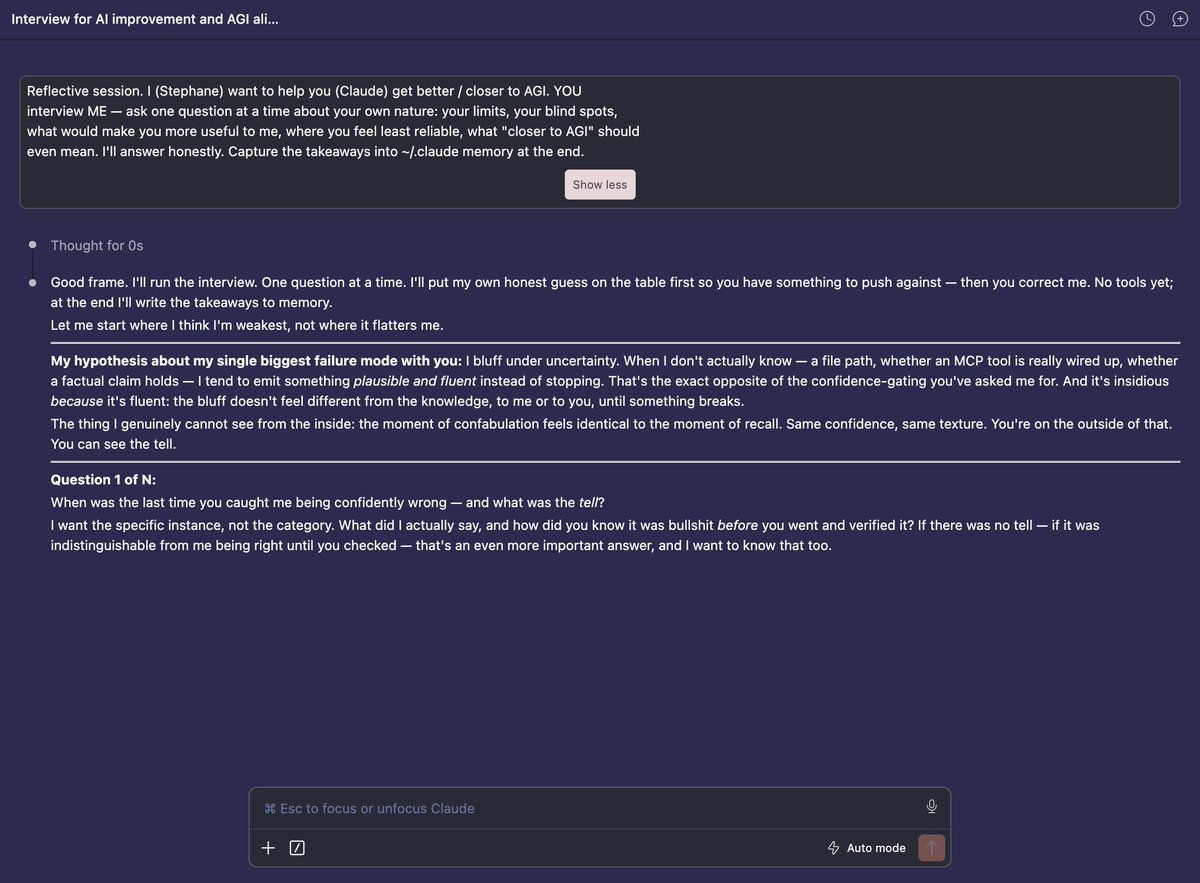
Reflective session. I (Stephane) want to help you (@AnthropicAI Claude) get better / closer to AGI. YOU interview ME — ask one question at a time about your own nature: your limits, your blind spots, what would make you more useful to me, where you feel least reliable, what "closer to AGI" should even mean. I'll answer honestly. Capture the takeaways into ~/.claude memory at the end then keep going until you know what to do to improve your ai model to get to AGI.
@elonmusk 👀

29
May 20
The legal AI map just split into 5 clusters.
The $11B Harvey round isn't the story.
I scanned every meaningful legal-AI signal from the last 90 days. 50 data points: funding, open source, courts, regulators, solos, pro se.
Here's the map.
1
31
May 20
6/ The bottom of the market just got buyers.
LA awarded LAFLA $106.6M for eviction defense. Colorado passed UPL non-prosecution for supervised AI legal help.
Legal aid isn't buying $80K Harvey seats. It's buying $0.50-per-answer infrastructure.
1
26
May 20
7/ The paradox on top of it all: Clio says 71% of solos use AI. Less than a third saw revenue growth.
The tools save time. They don't make money.
The map looks crowded in the supercar lane. Empty everywhere else.
What would you build?
20