
Varken eller, eller både och? 🙄❓ Desillusionerad före detta vänster. Klimatförnekare. Nu Konservativ utan närmare specifikation. Totalt partilös.
Joined December 2022
- Tweets 361
- Following 899
- Followers 71
- Likes 809
8 Photos and videos



May 8
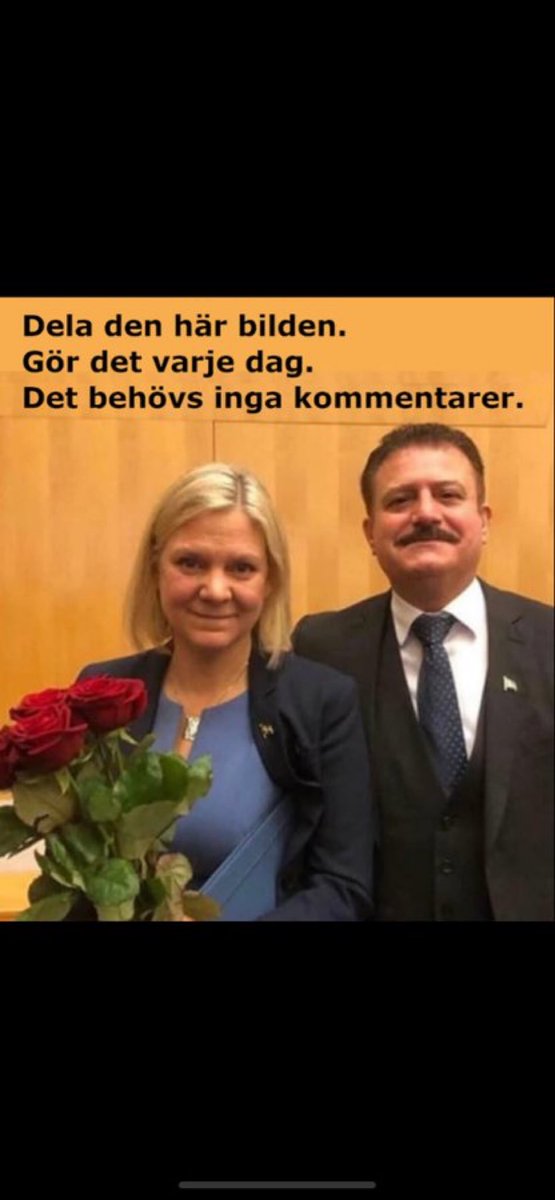
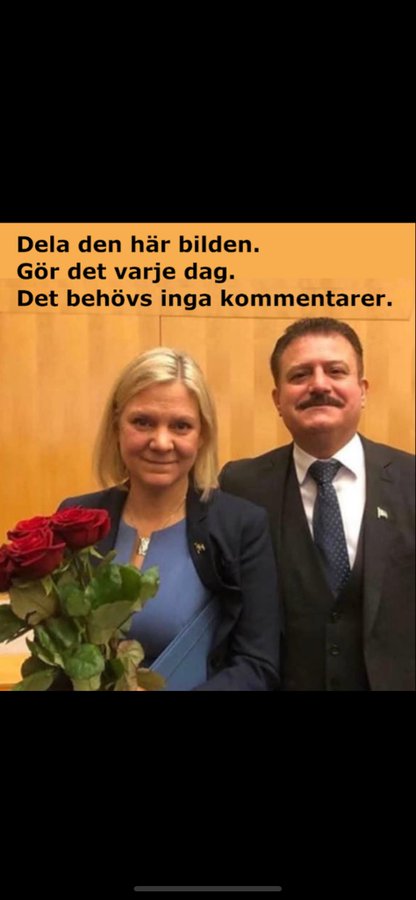
Låt honom fronta sossarnas valaffischer så tappar de minst 5%. Men tyvärr kommer de hålla honom gömd hela valrörelsen liksom Strandhäll. Sen får de såklart fina poster hela vägen till landets haveri. #svpol #aftonbladet #svt #srnyheter #svd #svenskpolitik
May 8

Min bild - vilken är svår att befria sig ifrån - är att Magdalena Anderssons främsta utrikespolitiska prioritering är att hon kommit fram till att Morgan Johansson är bäst lämpad att bli Sveriges utrikesminister.
Morgan Johansson is back!
71

Hygglo Hyggelin retweeted

Mar 5
This is complete rubbish
To criticise a religion is not racist.
It's culturalist
The difference ? you can choose one, not the other other
Now, many of us prefer some cultures to others
For example, I prefer a culture that does not permit Female Genital Mutilation, Child Marriage, Animal Torture, Total Humiliation of Women, and Execution
of People from other Belief Systems, and which is not intent on World Domination
Call me old-fashioned...
Mar 4

NOT JUST STARMER‼️ Wes Streeting also gave a speech at last night’s iftar in Westminster Hall - saying that anyone who objects to Islam is racist.
1,842
11,552
48,093
889,886
Hygglo Hyggelin retweeted

Feb 27
Preacher and Islamic scholar Suad Salih on the rape of Yazidi women by ISIS:
“Allah allows Muslims to rape and humiliate non-Muslim women.
If we fight Israel, we will take Jewish women as sex slaves and rape them.
This is permitted in the Quran and hadith.”
These are not fringe voices on the street — this is a figure presented as a religious authority.
How long will the West keep pretending this has no real, world consequences?
1,924
9,471
17,012
866,228
Hygglo Hyggelin retweeted

Feb 24
Whether Elon Musk is right in his assessment remains to be seen. What is undeniable, however, is that it takes a lot of courage to publicly defend free speech, civil liberties, and the protection of women and children in today’s political climate. By openly supporting Reform UK and engaging in the British political debate, Musk has positioned himself as one of the few high-profile figures willing to confront what he views as institutional complacency. That stance deserves recognition, regardless of one’s broader political alignment.
The more complex question is whether Rupert Lowe and his new party, Restore Britain, stand a realistic chance in the next general election, whether on schedule or triggered early. Two structural obstacles make this an uphill battle.
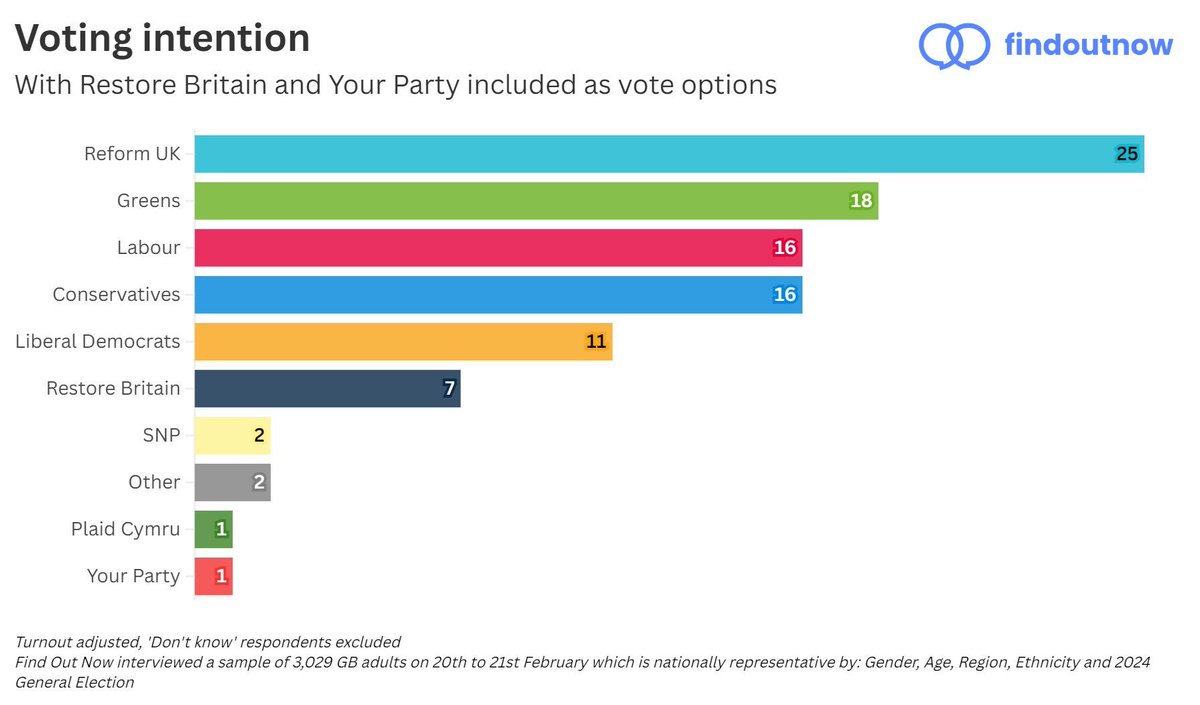
The first is the fragmentation of the center-right spectrum. Reform UK, the Conservatives, Restore Britain, and Advance UK together command roughly half of the electorate. In aggregate terms, that is formidable. In practice, however, Restore Britain is currently polling around seven percent. The party is new and has already attracted around 90,000 members, with expectations of surpassing 100,000 soon. That growth suggests momentum and may soon allow it to overtake the Liberal Democrats in membership and potentially move into double-digit polling territory. The question is whether that would be enough.
Reform UK is polling at roughly 25 percent and is clearly the dominant force on the right at present. Some observers predict internal tensions could weaken it. Others argue that its base is solid and that it will remain the primary challenger to Labour. Regardless of which scenario unfolds, the arithmetic remains unforgiving. If Restore Britain and Reform UK compete for largely overlapping voters, they risk splitting the right-leaning electorate and neutralizing their collective strength. In a tightly contested election, that division alone could determine the outcome.
The second and arguably more decisive factor is the United Kingdom’s first past the post electoral system. Winning national vote share is not enough. Seats are won constituency by constituency, and a candidate does not need 50 percent to prevail. In many districts, 20 or 25 percent can be sufficient if the opposition is divided. That system rewards concentrated strength and punishes fragmentation.
For Restore Britain to translate its support into seats, it would need not only national momentum but also geographically broad and deep backing. Realistically, that implies moving into the low to mid-twenties in polling and overtaking Reform UK in multiple regions. In effect, Reform UK would have to lose substantial ground while Restore Britain gained it. That is a steep climb.
The Conservatives, currently polling around the mid-teens, add another layer of unpredictability. If their support continues to erode, some of those voters could migrate. But the direction of that movement is uncertain and may benefit Reform UK as much as Restore Britain.
If, in the end, Reform UK remains roughly half as strong as it is today and Restore Britain achieves only half of Reform UK’s current strength, the likely outcome is a Labour or Labour-Green government. A divided right under first past the post does not produce leverage. It produces losses.
Some commentators argue that a merger between Reform UK and Restore Britain would instantly create the strongest party on the right. In theory, that would resolve the arithmetic problem. In reality, personal rivalries and hardened policy differences, particularly between Nigel Farage and Rupert Lowe, make such a unification unlikely in the near term.
Everything now hinges on whether @ElonMusk’s influence can materially shift voter alignment and whether Restore Britain can convert momentum into a decisive breakthrough rather than merely adding another fragment to an already crowded field.
18
20
102
11,593
Hygglo Hyggelin retweeted

Feb 21
Restore Britain will make it abundantly clear that any religion can be mocked, offended and insulted.
That very much includes Islam.
Under a Restore Britain Government, the law will not protect your feelings.
1,186
4,635
44,474
865,884
Feb 11
Bra! Men din regering på hemmaplan måste regera och agera, även om det går emot EU.s regler. Annars gör det 0 skillnad. EU kommer inte agera. Lämna Schengen nu! Oavsett konsekvenser! #aftonbladet #svtnyheter #svpol #tidö #moderaterna @moderaterna
Feb 11

Folket förtjänar svar från Socialdemokraterna om massamnestin i Spanien.
1
83
Feb 10
Bra! Men din regering på hemmaplan måste regera och agera, även om det går emot EU.s regler. Annars gör det 0 skillnad. #aftonbladet #svtnyheter #svpol #tidö #moderaterna @moderaterna
Feb 10

The unilateral decision by the Spanish socialist government, to give amnesty to 500 000 irregular migrants, is not about solidarity – it is a political strategy to please his left-wing colleagues and stay in power.
But the consequences go far beyond Spain.
Prime Minister Sánchez is undermining our common European efforts to strengthen borders and tackle illegal migration.
73
Hygglo Hyggelin retweeted

Jan 5
This man gets it. Every thing is "Racist" until it comes to the white population & indigenous English. Well bloody said 👏👏👏👏👏👏👏👏👏.
483
9,492
43,703
599,066

True

🚨TRUMP'S WARNING TO EUROPE
"YOU'RE DESTROYING YOUR HERITAGE"
"If you don't stop people that you've never seen before, that you have nothing in common with, your country is going to fail"
10,925
57,788
416,743
30,279,777
Hygglo Hyggelin retweeted

When an actual Nazi does a salute, there’s just crickets.
In case you were triggered: he said he is a socialist, he hates Jews (in fact he rolled back most of the antisemitism directives) and he belongs to an authoritarian ideology.
29
78
500
8,814
Hygglo Hyggelin retweeted

Jan 2
It’s almost been 24 hours and not a single Corporate Media outlet has had anything to say about this.
Funny how that works.
x.com/mattvanswol/status/200…
3,347
6,590
41,927
40,701,584
Jan 2
Det är vad media INTE skriver om som är av intresse.#mörkläggning #aftonbladet #expressen #Elon_Musk #svt #bbc
Jan 2

It’s almost been 24 hours and not a single Corporate Media outlet has had anything to say about this.
Funny how that works.
x.com/mattvanswol/status/200…
53
Because they aren’t actually news organizations, they are legacy media propaganda pushers for the far left
Jan 2
It’s almost been 24 hours and not a single Corporate Media outlet has had anything to say about this.
Funny how that works.
x.com/mattvanswol/status/200…
10,587
53,150
408,722
39,820,871
28 Dec 2025
Själva förutsättningen för att tillhöra en skyddad minoritetsgrupp är att man inte är ”svensk”.Det anser t.ex samerna själva. Inget konstigt. Alla etniciteter oavsett grund har sitt värde. Detta är mest bara fakta. Är man svensk kan man inte även kräva minoritetsbehandling#svpol
53
26 Dec 2025
Hot och hat i all ära, men den allvarligaste självcensuren beror på bristande yttrandefrihet och inget annat. Jag och många med mig vet vad självcensur innebär. Och det är definitivt INTE MP.s åsikter som behöver självcensureras. De är redan statligt godkända sedan länge.#svpol
26 Dec 2025

Det politiska samtalet får inte upphöra och därför får vi inte låta hatet flöda, säger Miljöpartiets språkrör Amanda Lind. Hon berättar om sin syn på en brottslighet där 12-åringar mördar, om makten som språkrör och om vad grön ideologi innebär konkret.kvartal.se/fredagsintervjun/…
86
Hygglo Hyggelin retweeted

24 Dec 2025
Det är som om agendan redan är spikad - frågan är av vem?
Muslimernas högtider uppmärksammas hela tiden. Då lagas det mat och pratas ramadan i varje soffgrupp i TV.
Men våra traditioner ursäktas hela tiden - så att de inte sticker invandrade grupper i ögonen!!!
4
3
23
952
19 Dec 2025
Snälla, beskriv sd sakligt om hur ”hemska” de nu ev. är istället för mantran som ”nyssnazister” eller ”nazister i kostym”. Blir bara pinsamt och motverkar sitt syfte. ”Maria Robsahm/Peter Robsahm”-pinsamt. #robsahm #svpol
18 Dec 2025

Ren anständighet räcker som argument för att inte släppa in nyssnazisterna i regeringen. Måste vi påminna er om vad ni tyckte bara för några år sedan?
De har inte ändrat sig. Det är ni som har gjort det.
90
Hygglo Hyggelin retweeted

15 Dec 2025
Hur skiljer du på islam och politisk islam? Det är väl knäckfrågan som många i Väst brottas med, men som är solklar för de islamskt lärde - det finns ingen skillnad, all islam är politisk. Men den insikten är antagligen alltför mörk och långtgående för att vi ska ta den till oss.
1
5
137