
seo consultant, web designer, photographer, Dunnett reader/commentator, chess player, guitarist (allegedly). Also spiderbill on other social networks.
Joined April 2009
- Tweets 13,530
- Following 250
- Followers 451
- Likes 12,378
136 Photos and videos














Bill Marshall retweeted

13 Jan 2025
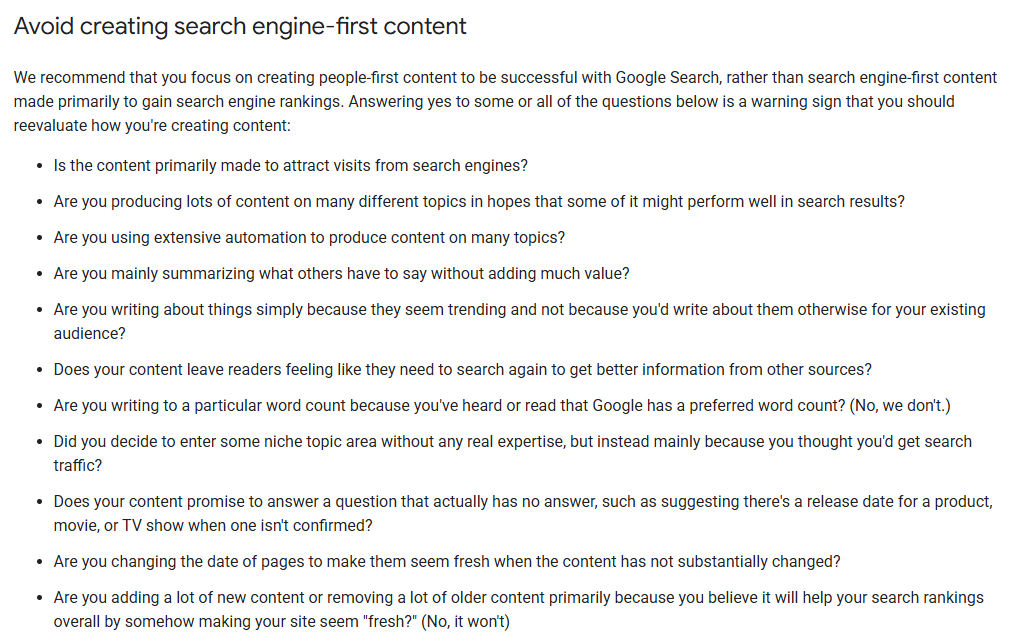
Almost every SEO audit I've worked on in the past 2 years for sites seeing big declines struggle with at least a few items on this list:
17
34
277
25,899
Bill Marshall retweeted

26 Dec 2024
False Advertising by Reform UK (which is a bit of a pattern):
There are no such thing as Reform members. It is a private company owned by Nigel Farage & Richard Tice.
26 Dec 2024

🚨 BREAKING NEWS 🚨
Reform UK has OVERTAKEN the Conservative Party membership.
We are now the real opposition.
3
25
56
3,946
Bill Marshall retweeted

12 Dec 2024
A historic concert by the forbidden voice of an Iranian woman took place inside Iran, a country where women are jailed simply for singing. Thousands of Iranians watched it live on YouTube, celebrating the bravery of this extraordinary woman.
Parastoo Ahmadi, who was once arrested during the “Woman, Life, Freedom” uprising and forced to erase the song “From the Blood of the Youth of the Homeland” from her page, defied the regime once again. This time, she stood without a hijab in a centuries-old caravanserai, singing her heart out and streaming the concert live on YouTube.
She wrote:
“I am Parastoo, a girl who cannot stay silent and refuses to stop singing for the people she loves. This is my right, one I will never surrender. I sing for this land I adore, for the soil of my homeland. Here, in this sacred corner of our beloved Iran, listen to my voice in this imagined concert, and dream of a free and beautiful nation.”
Her voice is a weapon against tyranny, her courage a song of defiance. Parastoo is everything the regime fears, a woman who cannot be silenced.
Zara Esmaeili, another brave young woman who dared to sing in public, is now behind bars. We hope for her freedom and for Iran to be liberated from the tyranny of the Islamic Republic, a regime that, for over 40 years, has banned women from singing and letting their hair flow freely.
I call on all international singers to stand in solidarity with Parastoo, Zara, and the courageous women of Iran who are defying oppressive, discriminatory laws. These brave female singers are risking their freedom and their lives to challenge a regime that has silenced women’s voices for over four decades. Let their courage inspire action, your support can amplify their fight for justice and freedom.
Iranian women are wounded but unbowed to their oppressors.
💔✌️
179
1,943
6,653
1,293,239
Bill Marshall retweeted

8 Dec 2024

10
35
969
Bill Marshall retweeted

8 Dec 2024
The New Year’s magazine is out! Dive into festive spirit of Bohinj this December. From light displays to New Year’s celebrations, there is something for everyone, from the youngest to the young at heart. Find it here: bit.ly/winter-in-bohinj
#Bohinj #FestiveSeason
📸Mojca Odar

3
11
199
Bill Marshall retweeted

5 Dec 2024
Nigel Farage isn't the answer to your problems, Britain. He is the cause of them.
Every single fucking stupid thing he has advocated across the last twenty years has now been adopted and every stupid fucking thing has turned out to be an absolute fucking disaster.
#bbcqt
722
2,084
13,153
456,389

13 Nov 2024
For all my friends and followers, and particularly the #Dunnett ones, my engagement here is declining and my contributions will go the same way. I'd be happy to see you all over on Bluesky where there are far fewer nutjobs and trolls.
1
2
33
Bill Marshall retweeted

9 Nov 2024
We’re trying to get as many followers as Nigel Farage so we can show those who want to privatise the NHS just how many people are prepared to fight against it.
Please take a few seconds to help by following us and reposting this.

372
3,874
5,652
365,553
Bill Marshall retweeted

8 Nov 2024
An insight into how the corrupt UK Gov, and their media machine, works/deflects.
£28,000,000,000 went missing during covid, and is so far, STILL unaccounted for.
£600,000 was DONATED to the SNP, and the police, and the same media, are all over it ?
Think about that......
89
590
1,322
41,072
Bill Marshall retweeted


11
276
586
11,491
Bill Marshall retweeted

6 Nov 2024
Always and forever.

1,455
132,275
231,605
8,153,910
Bill Marshall retweeted

5 Nov 2024
Wow wow wow 🤩🤩 Incredible photos yet again, Boštjan!!
Photo by 📸 @medvedov_bostjan




2
6
35
789
Bill Marshall retweeted

6 Nov 2024
I am right in thinking everyone wants to Rejoin the EU aren't I?
Like if you do
RT if you really do

889
4,038
12,253
269,162
Bill Marshall retweeted

4 Nov 2024
This must be reposted 1 millions times ✖️
151
2,986
3,501
158,559
Bill Marshall retweeted
4 Nov 2024
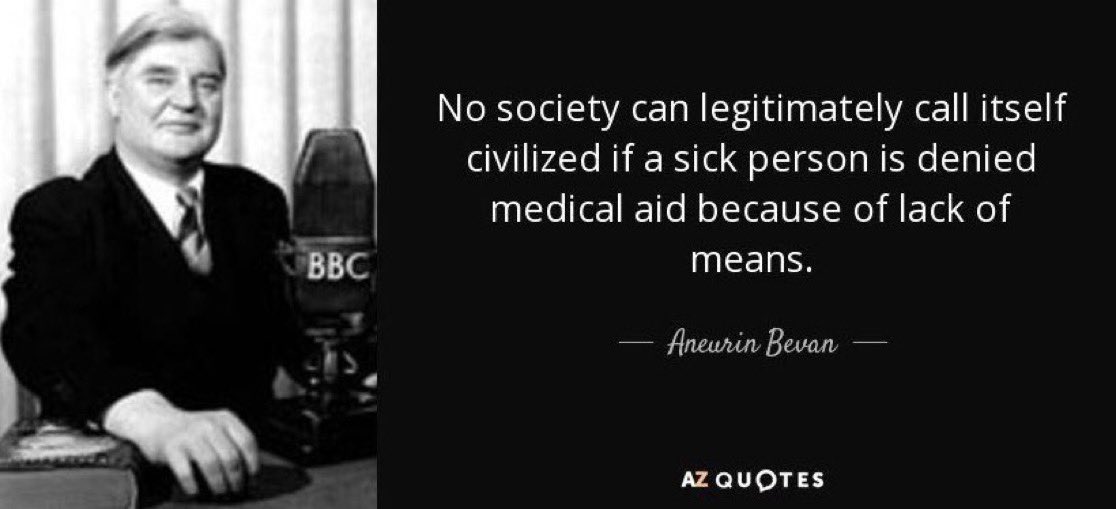
This is as true today as it was 76 years ago
We think Aneurin Bevan, the founder of the NHS, was an absolute legend
What about you?
207
1,832
5,265
135,397
Bill Marshall retweeted

4 Nov 2024
POTS (postural orthostatic tachycardia syndrome) can take years to be properly diagnosed.
My article examines the LONG road to diagnosis, tips & tricks for the dreaded tilt table, how to handle gaslighting, what tests to expect & more:
disabledginger.com/p/its-jus…

ALT Glowing red heart on a black background. White text reads: "It's Just Anxiety"... Or Perhaps They've Misdiagnosed You Patients with POTS are frequently misdiagnosed as anxious. An exploration of the diagnostic process, the gaslighting and barriers patients face when dealing with this debilitating condition. WWW.DISABLEDGINGER.COM
102
568
7,563
310,736
Bill Marshall retweeted

3 Nov 2024
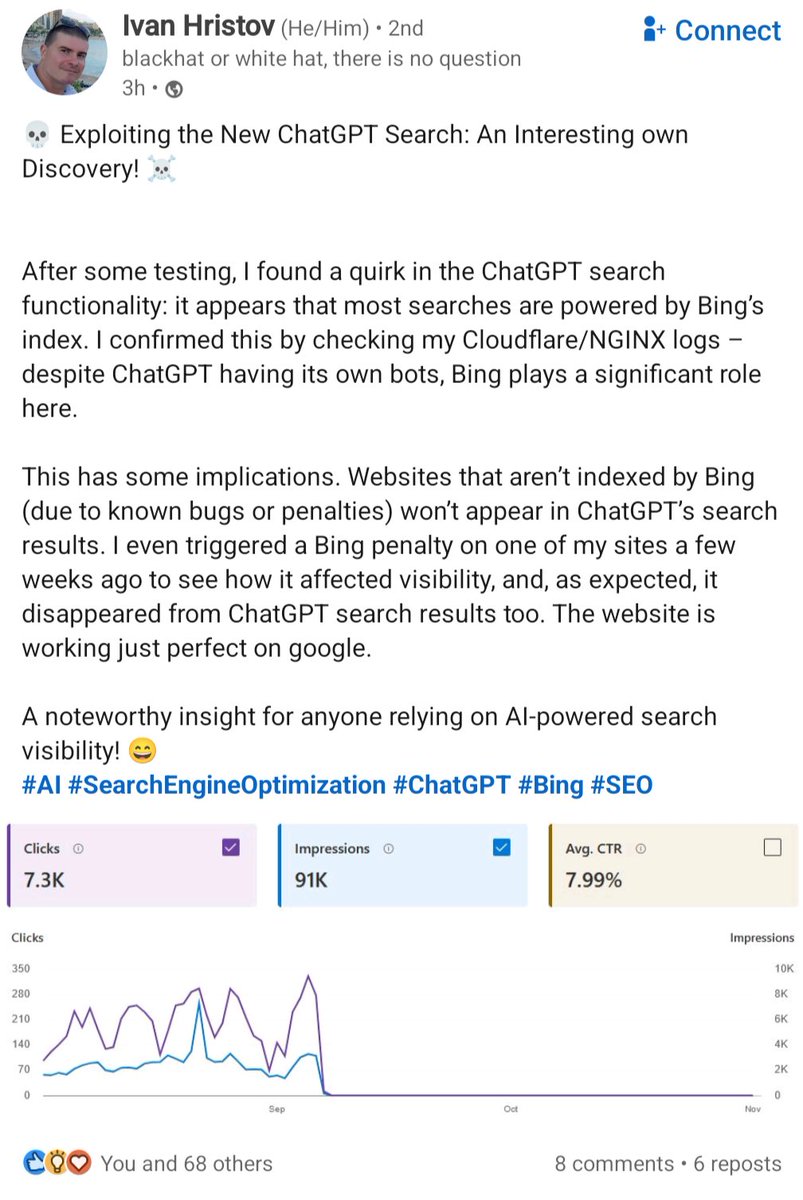
Dust off your Bing Webmaster Tools logins. Bing's index powers ChatGPT Search.
23
87
524
98,812
Bill Marshall retweeted

3 Nov 2024
Emilie's post echoes another conversation I was having elsewhere, and she makes excellent points.
But I argue that the absolute root cause is AdWords.
Let me explain my assertion with a little thread...
1/
2 Nov 2024

Sadly inevitable, lol.
It's funny, really. The reason so many of us *were* routinely appending "site:reddit. com" to those types of queries, was specifically to AVOID recommendations that involved affiliate links.
Many of us just didn't trust sites to truly promote the best products when they have a clear financial incentive to promote some products over others -- namely, those that have the best affiliate payouts.
(Which, for example, has long been known to be a major factor in why Bluehost has always been so commonly recommended and promoted for web hosting -- they have a particularly good affiliate program.)
Those of us who had been involved with niche product review sites in various capacities, particularly pre-Product Reviews Update, were also keenly aware that typically, your average affiliate site's so-called "product reviews" were generally put together by people who had never so much as been in the same *zip code* as the products in question.
Can't tell you how many affiliate site product reviews I wrote at bottom barrel rates in the mid to late-ish 2010s, lmao. The general protocol was to scrape things together based on a combination of existing affiliate site reviews, and whatever info could be gleaned from user reviews on Amazon.
I certainly don't blame the content writers, and tbh I can't even quite blame the sites' proprietors. Those approaches *worked*. Why spend considerable amounts of time, money, and effort testing out products -- particularly higher-value stuff like refrigerators, recliners, etc. -- when there was no functional need to do so?
Like, who in that context is gonna like, buy a whole bunch of $500 large home appliances for purposes of actually testing them?
Point is, previously, if you didn't trust affiliate monetized reviews and wanted to take a look at real feedback from real people about a product, a good way to look for that was to look for reddit threads consisting of someone asking a relevant subreddit for input and advice on what to buy.
These tended to, or were perceived to, often give a clearer picture of quality than UGC reviews posted on retail sites or third party review sites.
Such product reviews, e.g. Amazon reviews etc., have a bimodal distribution at best, or skew unduly negative at worst. Especially for mundane everyday products, people don't take time out of their busy day to write a user review of something that didn't really, really stand out as either stellar or abysmal.
Such reviews tend to be either "this is the best thing ever and changed my life!!", or "this product poisoned my water supply, burned my crops, and delivered a plague unto all my houses!!!"
Whereas on Reddit, you're more likely to see responses that are like, "Oh, I bought the Widget 5000. I like A, B and C about it, but really I thought it wasn't great in terms of X, Y, and Z. Not bad for the price but not the best. If you have the budget and you really need something with better X, Y, and Z features, you should really probably opt for the Widget 10000 LX Pro Edition instead. If not, though, the Widget 5000 will probably do what you need it to do, and it's not terrible for the price point."
Of course, cutting a deal with Reddit, then proceeding to feature Reddit threads at the top of the SERPs, has pretty much entirely ruined this, lmao.
I made a post some time ago predicting that this would inevitably happen, aimed at non-marketers who may not know to anticipate this stuff in the then-near-future: old.reddit.com/r/CasualConve…
1
1
12
2,126
Bill Marshall retweeted

2 Nov 2024
Sadly inevitable, lol.
It's funny, really. The reason so many of us *were* routinely appending "site:reddit. com" to those types of queries, was specifically to AVOID recommendations that involved affiliate links.
Many of us just didn't trust sites to truly promote the best products when they have a clear financial incentive to promote some products over others -- namely, those that have the best affiliate payouts.
(Which, for example, has long been known to be a major factor in why Bluehost has always been so commonly recommended and promoted for web hosting -- they have a particularly good affiliate program.)
Those of us who had been involved with niche product review sites in various capacities, particularly pre-Product Reviews Update, were also keenly aware that typically, your average affiliate site's so-called "product reviews" were generally put together by people who had never so much as been in the same *zip code* as the products in question.
Can't tell you how many affiliate site product reviews I wrote at bottom barrel rates in the mid to late-ish 2010s, lmao. The general protocol was to scrape things together based on a combination of existing affiliate site reviews, and whatever info could be gleaned from user reviews on Amazon.
I certainly don't blame the content writers, and tbh I can't even quite blame the sites' proprietors. Those approaches *worked*. Why spend considerable amounts of time, money, and effort testing out products -- particularly higher-value stuff like refrigerators, recliners, etc. -- when there was no functional need to do so?
Like, who in that context is gonna like, buy a whole bunch of $500 large home appliances for purposes of actually testing them?
Point is, previously, if you didn't trust affiliate monetized reviews and wanted to take a look at real feedback from real people about a product, a good way to look for that was to look for reddit threads consisting of someone asking a relevant subreddit for input and advice on what to buy.
These tended to, or were perceived to, often give a clearer picture of quality than UGC reviews posted on retail sites or third party review sites.
Such product reviews, e.g. Amazon reviews etc., have a bimodal distribution at best, or skew unduly negative at worst. Especially for mundane everyday products, people don't take time out of their busy day to write a user review of something that didn't really, really stand out as either stellar or abysmal.
Such reviews tend to be either "this is the best thing ever and changed my life!!", or "this product poisoned my water supply, burned my crops, and delivered a plague unto all my houses!!!"
Whereas on Reddit, you're more likely to see responses that are like, "Oh, I bought the Widget 5000. I like A, B and C about it, but really I thought it wasn't great in terms of X, Y, and Z. Not bad for the price but not the best. If you have the budget and you really need something with better X, Y, and Z features, you should really probably opt for the Widget 10000 LX Pro Edition instead. If not, though, the Widget 5000 will probably do what you need it to do, and it's not terrible for the price point."
Of course, cutting a deal with Reddit, then proceeding to feature Reddit threads at the top of the SERPs, has pretty much entirely ruined this, lmao.
I made a post some time ago predicting that this would inevitably happen, aimed at non-marketers who may not know to anticipate this stuff in the then-near-future: old.reddit.com/r/CasualConve…
1
1
19
7,095