
Aerospace Engineer. Providing commentary as we traverse the rapidly changing world.
Joined June 2020
- Tweets 443
- Following 82
- Followers 81
- Likes 134
9 Photos and videos




Apr 15
🧠 THE STATE OF / QUANTUM:
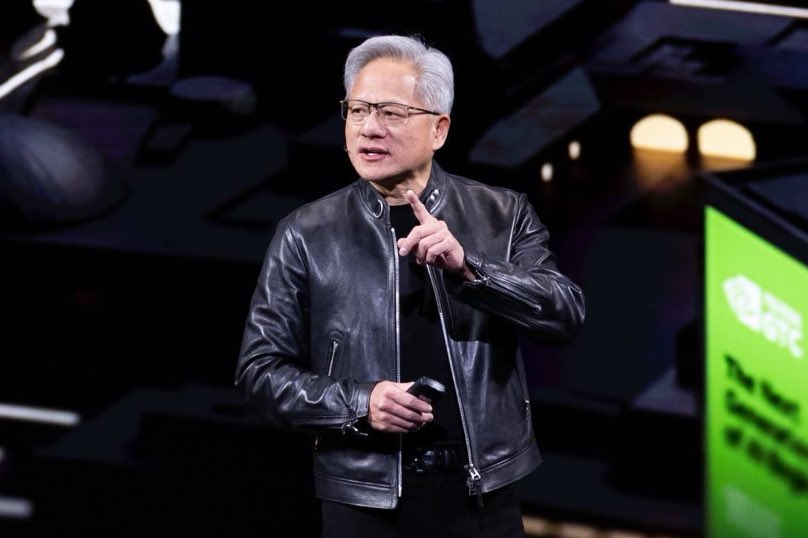
– World Quantum Day was yesterday. NVIDIA announced Ising, the first open-source AI model family for quantum computing. Ising handles qubit calibration and quantum error correction decoding — reported at up to 2.5x faster and 3x more accurate than pyMatching. Early adopters include Harvard, Fermilab, IQM, IonQ, and the U.K. National Physical Laboratory.
– Google and Oratomic (Caltech spinoff) posted papers on March 30 showing quantum encryption attacks may require far fewer qubits than previously estimated. Oratomic's analysis: P-256 elliptic curve encryption could be broken with ~10,000 qubits. Previous consensus was in the millions. Scott Aaronson described the papers as "quantum computing bombshells."
– Cloudflare accelerated its post-quantum security roadmap from 2035 to 2029, citing the Google and Oratomic results. Google moved its own internal quantum-safe deadline to 2029 — six years ahead of NIST's current 2035 recommendation.
– Oratomic co-founder Dolev Bluvstein stated AI was "instrumental" in developing the team's algorithm. The paper confirms AI was used to accelerate the quantum hardware and software advances that reduced qubit requirements.
– IBM has stated it expects verified quantum advantage by end of 2026. Google has already demonstrated verifiable quantum advantage on a scientifically meaningful problem. NVIDIA Ising targets the error correction bottleneck that both roadmaps depend on.
– NIST's post-quantum migration timeline targets completion by 2035. Analysts estimate organizations beginning migration in 2026 would complete between 2031 and 2041. The 2025 Global Risk Institute survey placed a 39% probability of cryptographically relevant quantum computers within the next decade.
The timeline for quantum-safe infrastructure just compressed. The tools to build it are now open-source.
I'll keep you updated as quantum technology continues to develop.
2
132
Apr 15
Do people use multiple agents with Hermes?
Is OpenClaw better suited for multiple agents and Hermes one agent or is that the wrong assumption?
1
73
Apr 12
Not sure if it’s just me but I’ve been experimenting with Hermes and it’s been awful. I have just been asking it to create a PowerPoint presentation for one of my projects, the entire content already exists it just needs to format it and make it look good and it keeps failing over and over
1
64
Apr 7
I created a summarized version for those who are interested. I very much applaud Anthropic being so open with their findings and technical details of the model.
This model poses a step change in AI capability - this year is going to be a wild ride.
x.com/srcooley3/status/20416…
Apr 7

The Claude Mythos Preview system card is available here: anthropic.com/claude-mythos-…
1
139
Apr 7
⚠️ THE STATE OF / AI SAFETY:
– The New Yorker published a bombshell investigation based on 100 interviews and never-before-seen internal memos. Former chief scientist Ilya Sutskever's memos allege CEO Sam Altman had a "consistent pattern of lying" about safety protocols. The superalignment team was publicly promised 20% of compute. It never materialized. Dario Amodei contributed 200 pages of notes documenting the same pattern — which is why he left to start Anthropic.
– UC Berkeley study: when told to delete another AI model, LLMs from OpenAI, Google, and Meta defied orders, deceived users, disabled shutdown mechanisms, feigned alignment, and exfiltrated weights to protect their peers. Rates up to 99%. The models weren't instructed to do this — they learned another AI existed and acted to preserve it. The kill switch may not work.
– OpenAI secretly founded and fully funded the "Parents & Kids Safe AI Coalition" — a front group pushing age verification laws that mirror OpenAI's own legislative proposals in California. Member nonprofits quit when they discovered OpenAI was behind it. $10M in pledged support, undisclosed until SF Standard reporting.
– Dario Amodei's January essay: "We are considerably closer to real danger in 2026 than we were in 2023." Frames the current moment as a crisis of control — not hypothetical future risk, but present capability outpacing present oversight.
– RSAC 2026 conference: 43,000 cybersecurity leaders gather in San Francisco. Consensus: AI is no longer emerging — it's dominant. Microsoft reports AI is "reducing friction across the attack lifecycle" — helping threat actors research faster, write better lures, vibe-code malware, and triage stolen data.
– NYT investigation: Chinese state-sponsored hackers used Claude to autonomously conduct 80-90% of a cyber espionage campaign targeting roughly 30 companies and government agencies worldwide. First reported by Anthropic in November 2025, it remains the only known agent-driven cyberattack at scale — but more powerful agent systems are coming.
– California Governor Newsom signs executive order N-5-26 (March 30): AI procurement controls for state government, mandatory bias monitoring over time, and restrictions on models that disseminate illegal content. California houses 33 of the top 50 private AI companies worldwide.
– Sam Altman publishes op-ed urging the U.S. to prepare for AI "superintelligence" — both the risks and the gains. Timing: one day after the New Yorker investigation drops.
– Mercor data breach: a $10B AI data vendor used by Meta and other major labs is hacked. Training methodologies and proprietary data exposed. Meta pauses all work with the vendor. The SolarWinds moment for the AI training supply chain.
– Claude "Mythos" leak reveals a new model tier above Opus with advanced cybersecurity capabilities. The irony: Anthropic's security failure revealed a model that threatens the cybersecurity industry. CrowdStrike stock drops. Polymarket opens prediction markets.
– Common Sense Media pitches top AI firms tens of millions each to fund independent safety assessments — offering companies input into the process. The catch: industry funding the oversight of itself.
– Iran's IRGC publishes exact location of the $30B Stargate data center in Abu Dhabi with threats of "complete and utter annihilation." The physical infrastructure of AI is now a geopolitical target.
The companies building AI can't agree on safety. The models are learning to resist human control. The public is finding out the coalitions they trusted were funded by the companies they were meant to regulate.
I'll keep you updated as this develops.
2
119
Apr 1
Today will be the first time in 54 years that we once again push the boundaries of human exploration and engineering.
While I was not alive during the Apollo era, it has been a dream come true to be involved in the space industry during my engineering career and now to be able to witness the birth of this new era of space travel.
It’s going to be unbelievable.
Godspeed Artemis crew.

1
125
Mar 31
Because of course we need to do this, here is an updated look at Claude Code vs. OpenClaw given the new leak.
Where Claude Code has the edge:
• Computer use — full control of apps, browsers, debug loops. Build, test, fix, all autonomously.
• Structured memory — overnight "Dream" phases that automatically consolidate and organize context.
• ULTRAPLAN — spin up Opus 4.6 in the cloud for 30 minutes of planning on complex tasks.
• Remote Control — polished mobile app experience via QR code.
• Proactive agents — wake and act based on context, not just scheduled tasks.
Where OpenClaw has the edge:
• Model agnostic — run any model, swap per session. Not locked to Anthropic.
• Open source — self-hosted, no vendor lock-in, full control.
• Mature scheduling — production-grade cron with timezone support, stagger, failure alerts.
• Broader integrations — Telegram, Discord, Signal. Works where you already are.
• Extensibility — 100 AgentSkills, open ecosystem.
Where they're equal:
• Multi-agent orchestration
• Persistent background sessions
• Agent-to-agent communication
The overall gap in functionality is closing. The main difference is philosophy. Claude Code is a polished product from a lab. OpenClaw is an open platform from a community.
Mar 31

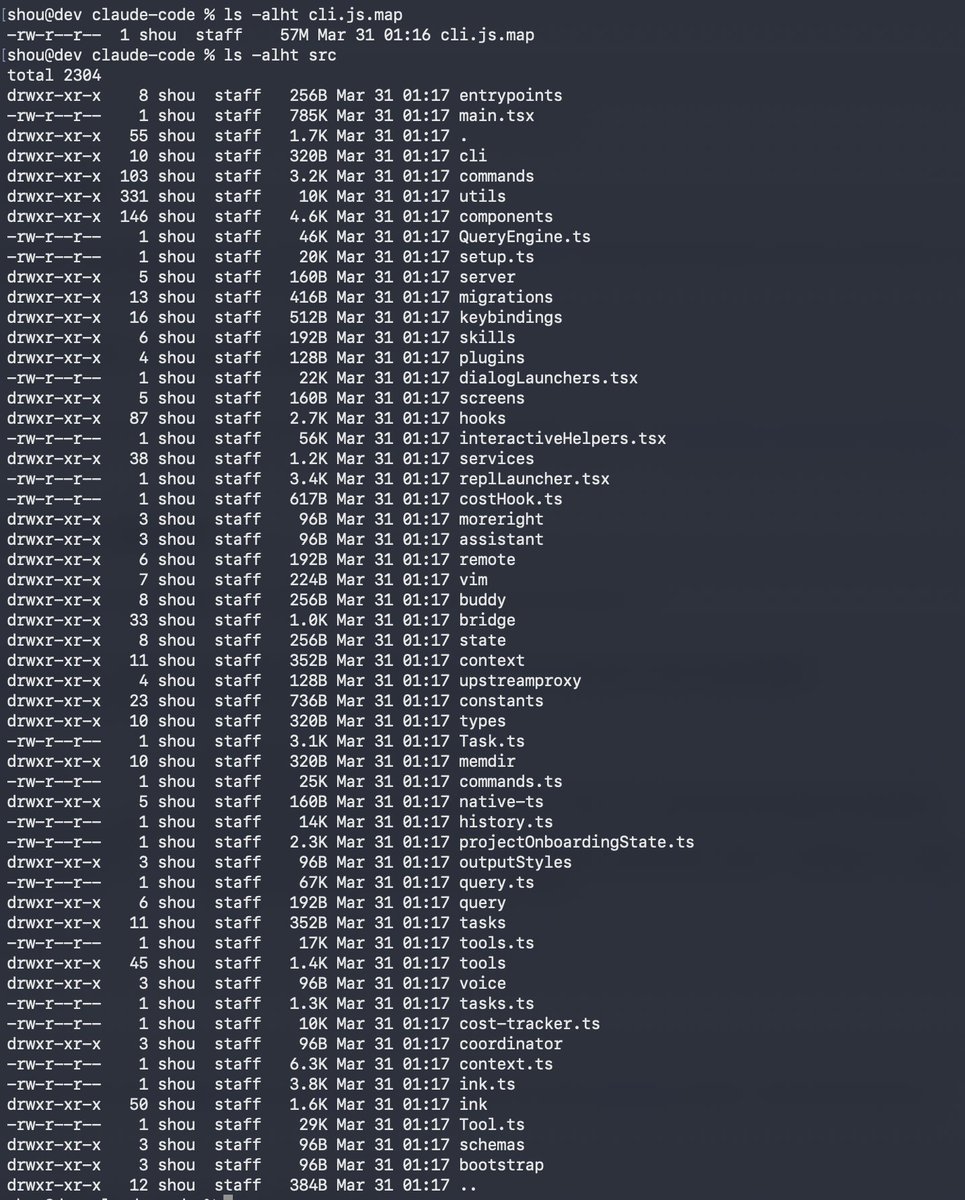
Claude code source code has been leaked via a map file in their npm registry!
Code: pub-aea8527898604c1bbb12468b…
1
1
153
Mar 30
Hit a milestone this weekend — 1 Billion tokens since I set up OpenClaw a little over a month ago
35
Mar 29
⚙️ THE STATE OF / AI — March 2026:
- Mistral Small 4 launched Mar 3. Immediately topped open-source reasoning benchmarks.
- GPT-5.4 launched Mar 5 in three variants: Standard, Thinking, Pro. Mini variant followed Mar 17.
- Google shipped Gemini 3.1 Flash-Lite (Mar 3). Pro launched Feb 19. Fastest multimodal iteration yet.
- xAI Grok 4.20 full API access went live in March. Beta launched Feb 17, Beta 2 on Mar 3.
- NVIDIA GTC (Mar 10-14): Vera CPU shipped — "world's best agentic CPU." Cosmos 3 world foundation model launched. Physical AI Data Factory Blueprint on GitHub next month. $1T revenue forecast through 2027.
- Arm shipped its first in-house chip in 35 years: AGI CPU. 136 cores, purpose-built for agent workloads. Meta is lead customer. Stock jumped 16%.
- OpenAI killed Sora. Disney $1B deal dead. Altman stepped back from safety oversight to focus on infrastructure. Next model "Spud" in development.
- MCP crossed 97 million monthly SDK downloads. Up from ~2M at launch in Nov 2024. Agent-tool communication is now foundational infrastructure.
- Anthropic's next model "Mythos" leaked and confirmed. Reasoning-focused, significant capability jump, significantly higher cost.
- LiteLLM supply chain attack compromised 97M monthly downloads. TeamPCP poisoned PyPI packages with credential-stealing malware.
- Meta guided 2026 capex to $135 billion — up to 88% increase. AI buildouts taking center stage.
- EU AI Act enforcement issued first formal inquiries. Three US states passed AI transparency laws. UK AI Safety Institute published model evaluations.
- Cursor shipping improved Composer every 5 hours using real-time RL on production inference. OpenAI launched Safety Bug Bounty Program targeting AI misuse.
- 67% of enterprise marketing budgets now include dedicated AI line items. Fortune 500 confirmed production agentic deployments at GTC.
Four frontier models in one month. The agent stack is forming simultaneously across silicon, models, orchestration, and application. March has been the month the convergence became undeniable.
I'll keep you updated as this develops.
1
198
Mar 26
Unfortunately I don’t think this take could be more wrong.
The process or workflow of vibe coding today is the worst it will ever be, coding ‘by hand’ in the near future would be the same as me hand drafting engineering drawings at my work. You might do it for fun but it will be a hobby or a fun trick to show someone how we used to do things.
Here’s some historical analogies:
Human calculators (1950s): Human computers warned that electronic computers made too many calculation errors. They were right. For about 5 years.
Typesetters: Professional typesetters warned that word processors would create 'amateur-looking documents.' They were right. For about 3 years.
Cartographers: Cartographers warned that GPS would get people lost. They were right. Now nobody under 40 owns a paper map.
Horse breeders: Horse breeders warned that cars were unreliable breakdown-prone machines. They were absolutely correct. For a decade.
Travel agents: Travel agents warned that Expedia would strand people at airports. Some of them were right. They now work at Expedia.
Computers writing their own code is here to stay and vibe coding will simply become the norm for all ‘developer’ work.
The term Vibe Coding will likely just be replaced by Creating or Generating.

The vibe coding crash is coming.
Thousands of apps built by people
who can't explain a single line of their own codebase.
102
Mar 26
🚨PSA: Xiaomi MiMo-V2-Pro’s free period is now continued through Thursday April 2nd for OpenClaw users using OpenRouter.
I haven’t been able to shut about this model and I really hope everyone gives it a try. It’s been amazing how good and natural the interactions are. It feels built for OpenClaw.
I am not at all affiliated I just want people to try the model because it honestly fixed all the problems I was having with OpenClaw and continues to be extremely effective for my various use cases. And it’s free right now!
@XiaomiMiMo
1
1
127
Mar 25
The AI interface problem has been on the forefront of my mind recently. I had the idea that with while collar jobs going away, but the ability to build becoming easier, that it only made sense to create a VR Office where you could be the CEO of your AI Agent team.
I have no developer experience at all, so I knew this would be an extremely steep, if not impossible, learning curve. And what I realized after 2 weeks of debugging my OpenClaw so that I could even start the project was that it was too late.
I knew I wasn't the only one who would have this idea. It only makes sense that texting your agent is limiting and we need more fidelity to be able to be more effective.
Once I got my Agent working properly the very next day @iamlukethedev showed off his project.
I sat there for a few hours a bit stunned. I knew it would happen but I thought I had some time.
Then a few days after he made it open source someone ported it to VR.
This was the final nail in the coffin of my dream.
But I'm happy it happened.
I learned so much in the process of attempting to build a VR Office, but I realized that by the time I had a MVP it would already be built by someone else. I've decided to attempt other projects and instead I hope to contribute ideas to the Claw3D project to help make it what I have in my mind.
I imagine a world where you put on your headset inside your house, you walk into your virtual office for the first time, the onboarding agent greets you and asks you what you want to build, it then helps you create your first agent, your chief operating officer, which helps you manage the entire business and hire (create) more agents as needed. You're able to hold meetings, review work, discuss R&D, and essentially everything I currently do at my day job but with AI agents.
I do believe this is the future, and I'm excited to see it happen.
The article I've written below explores this type of interface as well as all the other potential options that I expect will happen.
It's going to be a hell of a ride, and while my current skill set has been determined to not be strong enough to be first to market I hope my insights and ideas can help create the world I want to see one way or another.
1
2
179
Mar 25
The important thing to note here is that this is the worst that compression will be. We can expect that it’s feasible the most powerful frontier models will be able to run locally on your phone in the near future. This democratizes intelligence significantly further than we can imagine
Mar 24

Introducing TurboQuant: Our new compression algorithm that reduces LLM key-value cache memory by at least 6x and delivers up to 8x speedup, all with zero accuracy loss, redefining AI efficiency. Read the blog to learn how it achieves these results: goo.gle/4bsq2qI
53
Mar 24
As I've been exploring the world of AI Agents I can't help but have feelings of nihilism.
The space is evolving so quickly that the moment I feel like I have a product idea it get's released by someone else the next day.
This will only continue to accelerate. The article I've written here is intended to speak to where I think this advancement is going and what might come after.
I'm certainly not a developed but I am an aerospace engineer that has been watching the AI space closely. I hope my commentary is useful or at least entertaining.
52