
Growth @ thita.ai and repowise.dev
Joined January 2014
- Tweets 7,931
- Following 1,309
- Followers 11,841
- Likes 7,586
324 Photos and videos





Pinned Tweet

Jun 2
Can you catch bugs in your code before they happen?
These guys did it. And they didn’t use any AI to do it.
They built an open source tool that looks at your code and points at the files most likely to break soon.
To test it, they checked 21 real projects. They looked at each file the way it was 6 months ago, then waited to see which ones actually broke.
The tool called it right most of the time.
It even worked on a project it had never seen before.
It beats the usual tricks people rely on, like “check whatever changed last” or “check whatever broke before.”
And it tells you why a file looks risky, in plain terms.
Just reading your code. Crazy

2
2
11
1,681
This Open source github 𝗥𝗲𝗽𝗼 will make you 10x engineer👇
Andrej Karpathy recently pointed out that context engineering is replacing prompt engineering.
The hard part is no longer asking the model the right question.
It's giving it the right context.
this repo turns an entire codebase into a structured knowledge layer your coding agent can actually navigate.
It helps agents:
> Understand architecture instead of scanning files
> Find relevant code instead of loading everything
> Preserve relationships across modules
> Reduce context size without losing important details
> Feed only the information needed for the task
Better context means fewer hallucinations, better edits, and less wasted tokens.
If you're building with AI coding agents every day, context quality matters more than model quality.
2.3K stars, bookmark it and get better at context engineering. link in replies
4
2
11
363
Star it github.com/repowise-dev/repo…
3
92
Srishti retweeted

16h
your github repos already know more than claude or codex does 😳
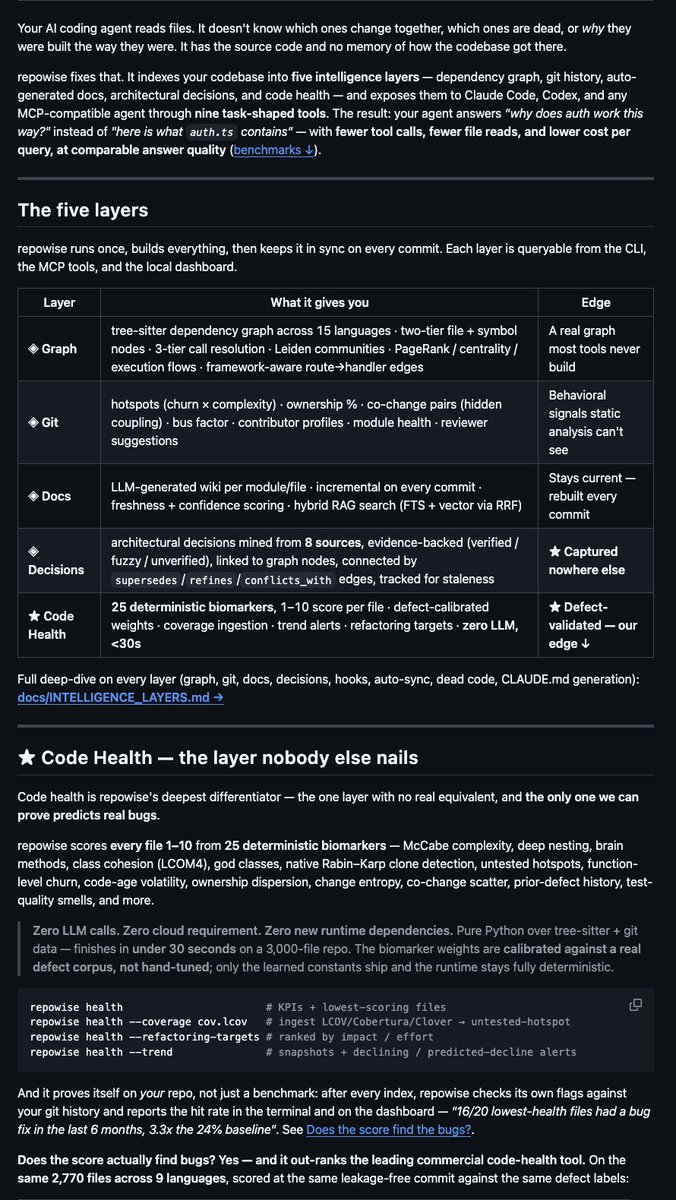
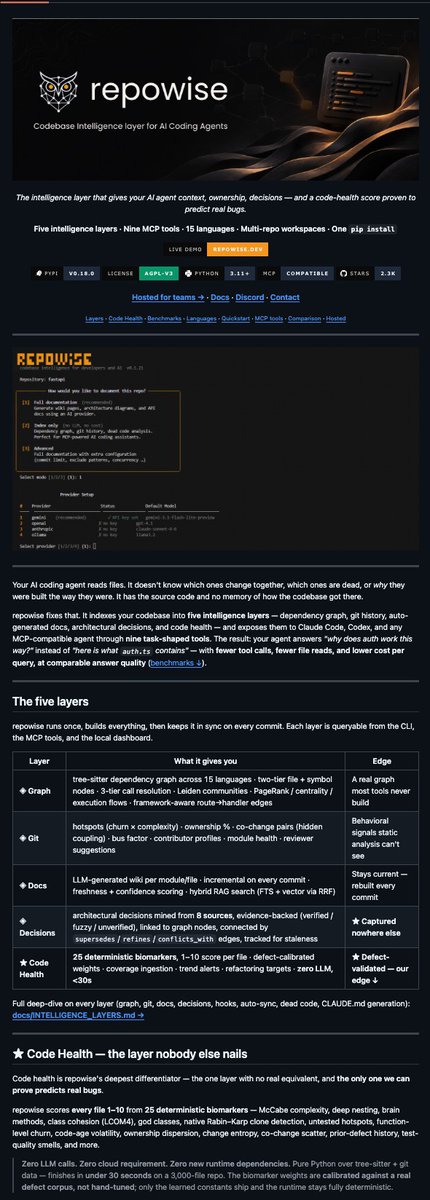
Repowise has 2.3K stars because it turns any GitHub repository into an AI knowledge base that actually understands the code
what you and your AI gets instantly:
> architecture explained in plain English
> saves 50% on claude tokens, opus level work with sonnet
> mines git history to get architectural decisions
> flags code health, identifies weak parts of your codebase and automatically gives refactoring suggestions.
> codebase Q&A with file level citations
> onboarding for new engineers in minutes
> PR and feature understanding without reading hundreds of files
> works on public and private repos
what this replaces:
> hours of manual code reading
> asking teammates where everything lives
> outdated project documentation
> endless grep and GitHub search
why this matters:
> codebases grow faster than humans can understand them
> every new engineer spends weeks building a mental model
> repowise lets AI answer questions using your actual repository instead of guessing
> perfect for onboarding, debugging, code reviews, and feature exploration
how to set up :
pip install repowise
repowise init.
stop reading your codebase line by line
let AI explain it instead
bookmark this before your next onboarding session
↓ repo in comment
5
9
30
1,991
18h
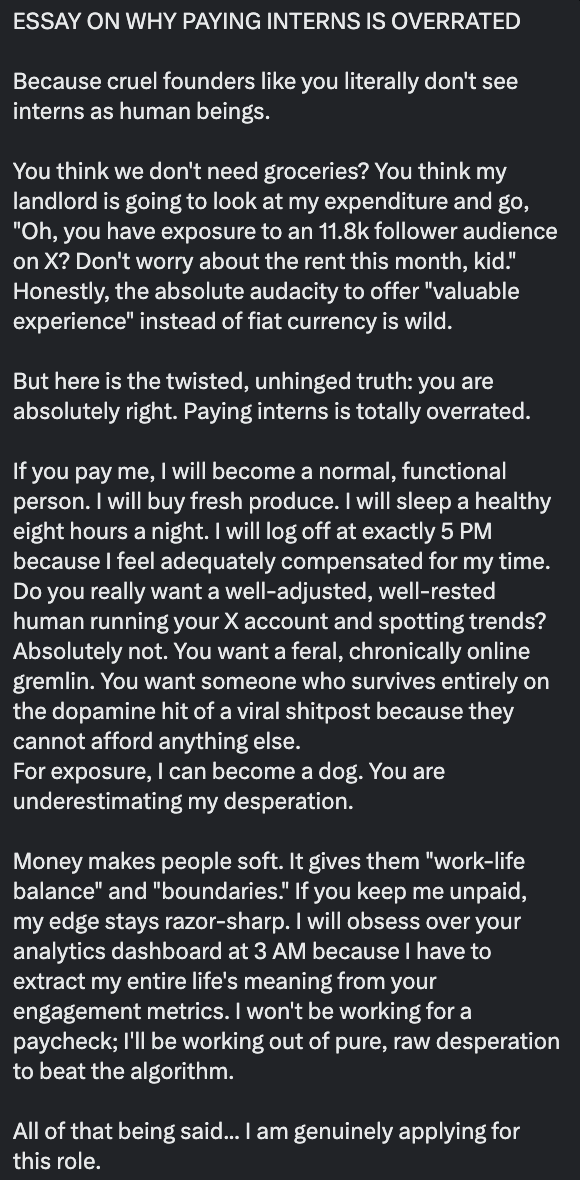
As much as I want to rage against the unpaid internship machine, the absolute truth is that I want this spot. I'm a student just grinding to break out in this space, and the chance to actually get direct access to your network of founders, engineers, and creators is huge for me. Connecting with new, brilliant people and learning how to build an audience from the inside genuinely means more to my future right now than a minimum-wage stipend. I've got the hustle, I've got the content ideas, and I am fully ready to be your dedicated trend-spotter.
Hire me. Let's do this.
1
2
426
Jun 13
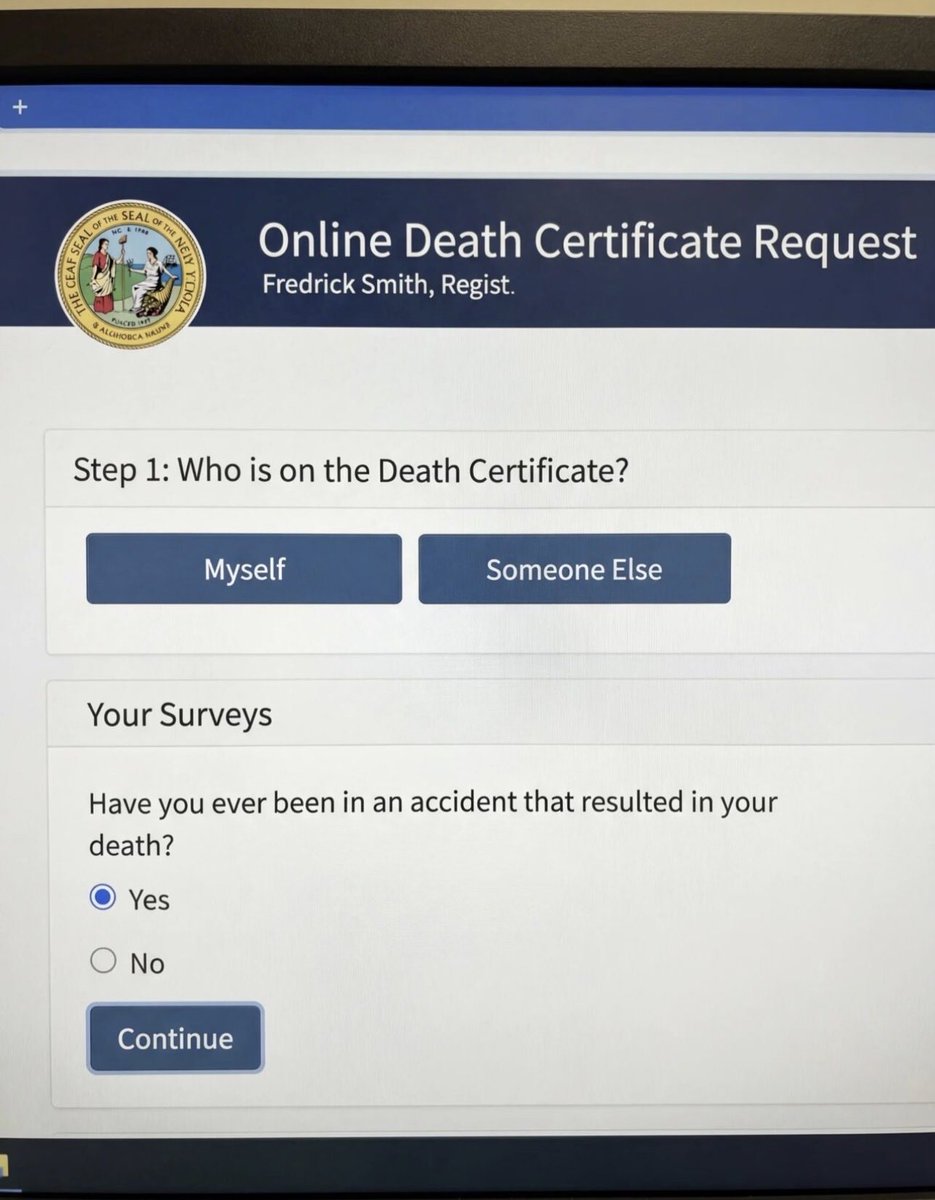
This is what happens when governments get their hands on Claude code
3
20
745

Jun 13
Just in: anthropic says it's removing access to Fable 5 and Mythos 5 for everyone today
reason: a US government directive citing national security. they got the order at 5:21pm ET and had to pull both models for all customers
the threat? a jailbreak where you ask the model to read code and fix bugs. what every coding tool already does
shipped monday, recalled friday
Jun 13

The US government, citing national security authorities, has issued an export control directive to suspend all access to Fable 5 and Mythos 5 by any foreign national, whether inside or outside the United States, including foreign national Anthropic employees.
The net effect of this order is that we must abruptly disable Fable 5 and Mythos 5 for all our customers to ensure compliance.
Access to all other Claude models is not affected.
We apologize for this disruption to our customers. We believe this is a misunderstanding and are working to restore access as soon as possible.
Read our full statement: anthropic.com/news/fable-myt…
7
10
887
Jun 12
The fourth requirement is compression.
A 10M token repository doesn't need a 10M token context window.
It needs a way to compress the repository into concepts, relationships, and retrieval paths.
The model should read the map, not the territory. 5/6
1
5
185
Jun 12
That's why the most interesting work in AI coding isn't happening inside the models.
It's happening in the layer around them:
building code graphs,
repository memory,
architectural understanding,
and retrieval systems.
Models reason.
These systems give them something worth reasoning about.
Repowise gives it all at once, completely open source
saves more than 50% on token costs, benchmarked. 2.3K stars
Star it.
github.com/repowise-dev/repo…
2
6
167
Jun 12
Next comes retrieval.
The challenge is finding the 0.1% of code that matters for the question.
Good retrieval means:
• relevant symbols
• dependency paths
• architectural context
• related discussions
before the model starts thinking. 4/6
1
3
160
Jun 12
I asked Fable what does it need to stop burning tokens and onboard to any codebase without exploration costs.
Here is what it said: 1/6
6
3
11
943
Jun 12
Then it needs memory.
Persistent knowledge about:
• architecture decisions
• code ownership
• common workflows
• naming conventions
• historical changes
Without this, the same expensive reasoning gets repeated over and over. 3/6
1
3
215
Jun 12
The first requirement is repository understanding.
Questions like:
• what are the core abstractions?
• where does data flow?
• which services depend on each other?
• what code is actually important?
Need answers before generation begins.
Otherwise every question becomes a fresh exploration problem. 2/6
1
6
234
Srishti retweeted
Jun 11
Most fun github repo I found today
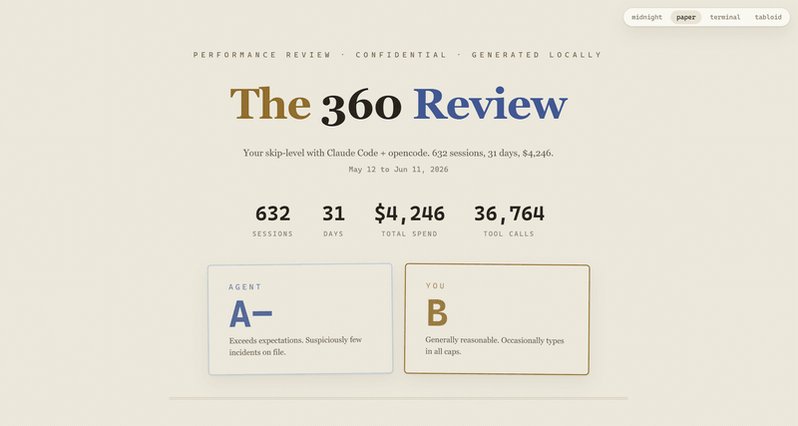
It will give your AI coding agent a performance review.
seriously.
Run it against your Claude Code, Codex CLI, or Opencode transcripts and it generates a full "skip level meeting" between you and your agent.
It analyzes:
• how much you spent
• tool call volume
• retry storms
• redundant file reads
• apology rates
• "you're absolutely right" counts
• your interrupt rate
• your prompt quality
• your agent's reliability
Then it creates a beautiful 360° review report with grades for BOTH sides.
Agent: A-
You: B
The committee has spoken.
The crazy part:
It works entirely from transcripts already sitting on your machine.
No accounts.
No telemetry.
No cloud uploads.
Just:
uvx skiplevel
and a few seconds later you get a shareable report showing who is actually the bottleneck in your AI workflow.
Your agent gets reviewed.
You get reviewed.
Management hears both sides.
HR regrets scheduling the meeting.
github link in replies, star it
5
2
10
754
Jun 11
Most fun github repo I found today
It will give your AI coding agent a performance review.
seriously.
Run it against your Claude Code, Codex CLI, or Opencode transcripts and it generates a full "skip level meeting" between you and your agent.
It analyzes:
• how much you spent
• tool call volume
• retry storms
• redundant file reads
• apology rates
• "you're absolutely right" counts
• your interrupt rate
• your prompt quality
• your agent's reliability
Then it creates a beautiful 360° review report with grades for BOTH sides.
Agent: A-
You: B
The committee has spoken.
The crazy part:
It works entirely from transcripts already sitting on your machine.
No accounts.
No telemetry.
No cloud uploads.
Just:
uvx skiplevel
and a few seconds later you get a shareable report showing who is actually the bottleneck in your AI workflow.
Your agent gets reviewed.
You get reviewed.
Management hears both sides.
HR regrets scheduling the meeting.
github link in replies, star it
5
2
10
754
Jun 11
375