
1,046 Photos and videos


🚨Public Launch: StackzzHub is live - crypto traders finally get one clean command center🚨
After months of building, testing, trading, streaming, failing, fixing, and leveling up…
I’m finally opening StackzzHub.com to the public.
This is not just another website.
I built StackzzHub for the trader/operator who wants one place to move smarter:
- compare crypto exchanges
- track airdrops opportunities
- follow market catalysts
- find tools, wallets, and resources
- plug into a growing crypto AI operator ecosystem
Built brick by brick.
Stack by stack.
Now it’s public.
Go check it out 👇
stackzzhub.com
If you’ve been watching the journey, this is only Phase 1.
The real build starts now.
16
10
164
11,805
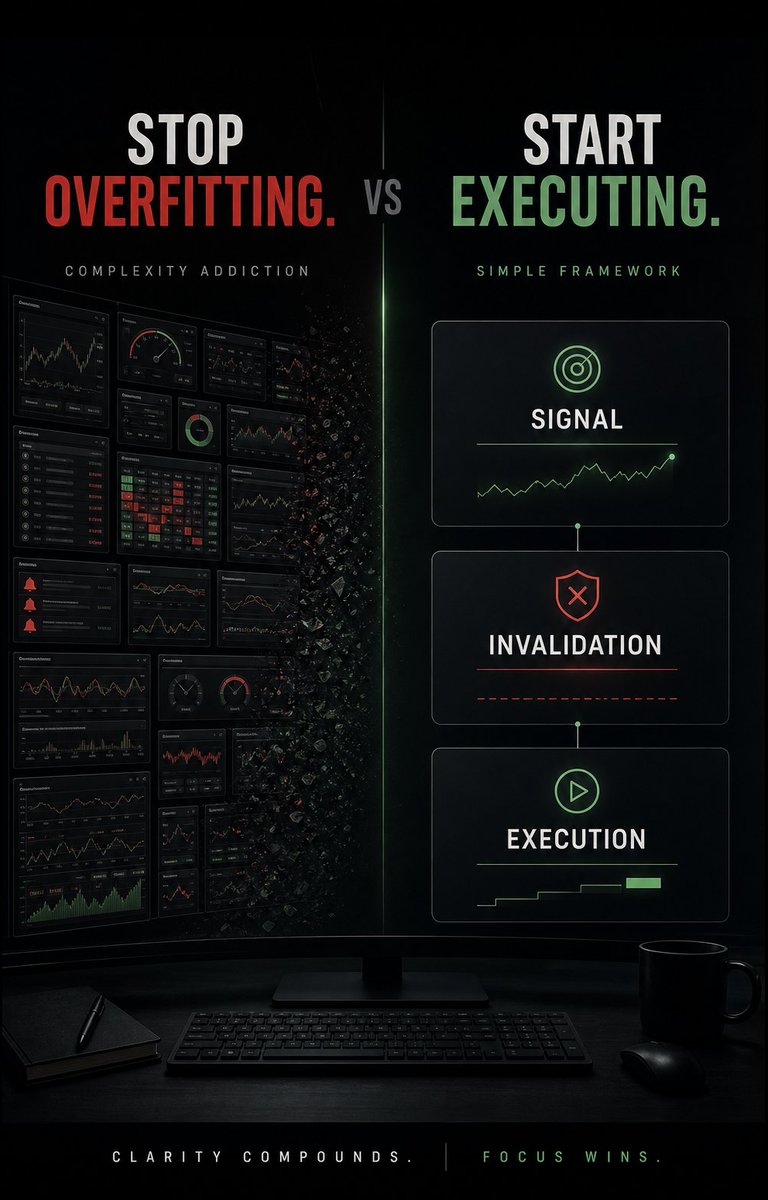
The timeline loves a screenshot with 9 scanners, 4 dashboards, 2 backtests, and one clean arrow pointing at “edge.”
That is usually where the operator mistake starts.
More panels can make a weak idea feel researched. More alerts can make hesitation feel disciplined. More backtests can make a curve-fit rule feel like market structure.
The only dashboard rule I trust is brutal:
• what signal changes the decision?
• what invalidates it fast?
• what execution mistake does it prevent?
If a tool cannot answer one of those, it is not helping the trade. It is decorating the anxiety around it.
A busy screen can still be a cleaner lie.
8
2
37
1,406
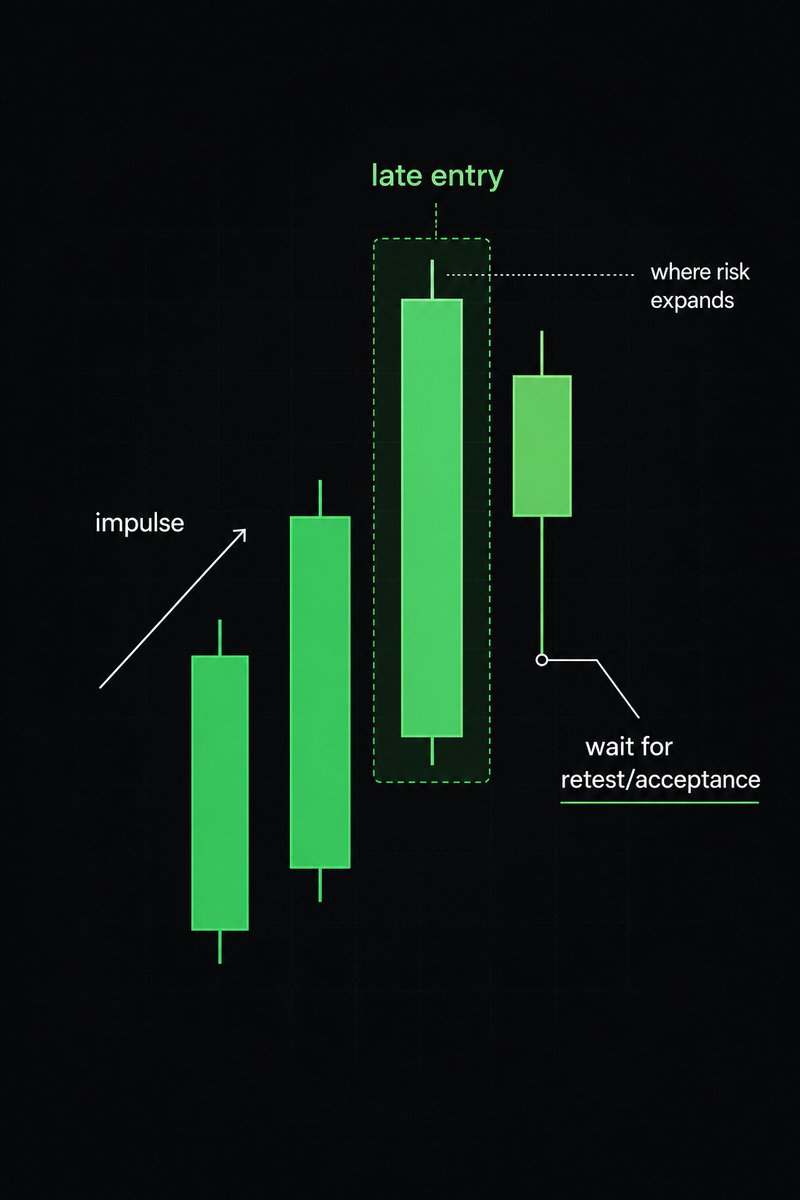
The third green candle is where a lot of traders stop reading the chart and start negotiating with regret.
First candle: “nice move.”
Second candle: “maybe this is real.”
Third candle: “I cannot miss this.”
That third click usually feels safer because the chart finally looks obvious. The problem is your risk just moved. Your entry is now closer to the people taking profit than the people proving demand.
The better trade is not always earlier. It is the one where your invalidation still makes sense.
If the first two candles did the work, the third candle owes you proof: retest, acceptance, or clean continuation with risk you can actually live with.
Chasing does not feel reckless in the moment. It feels like confirmation.
That is why it is expensive.
13
1
43
1,757
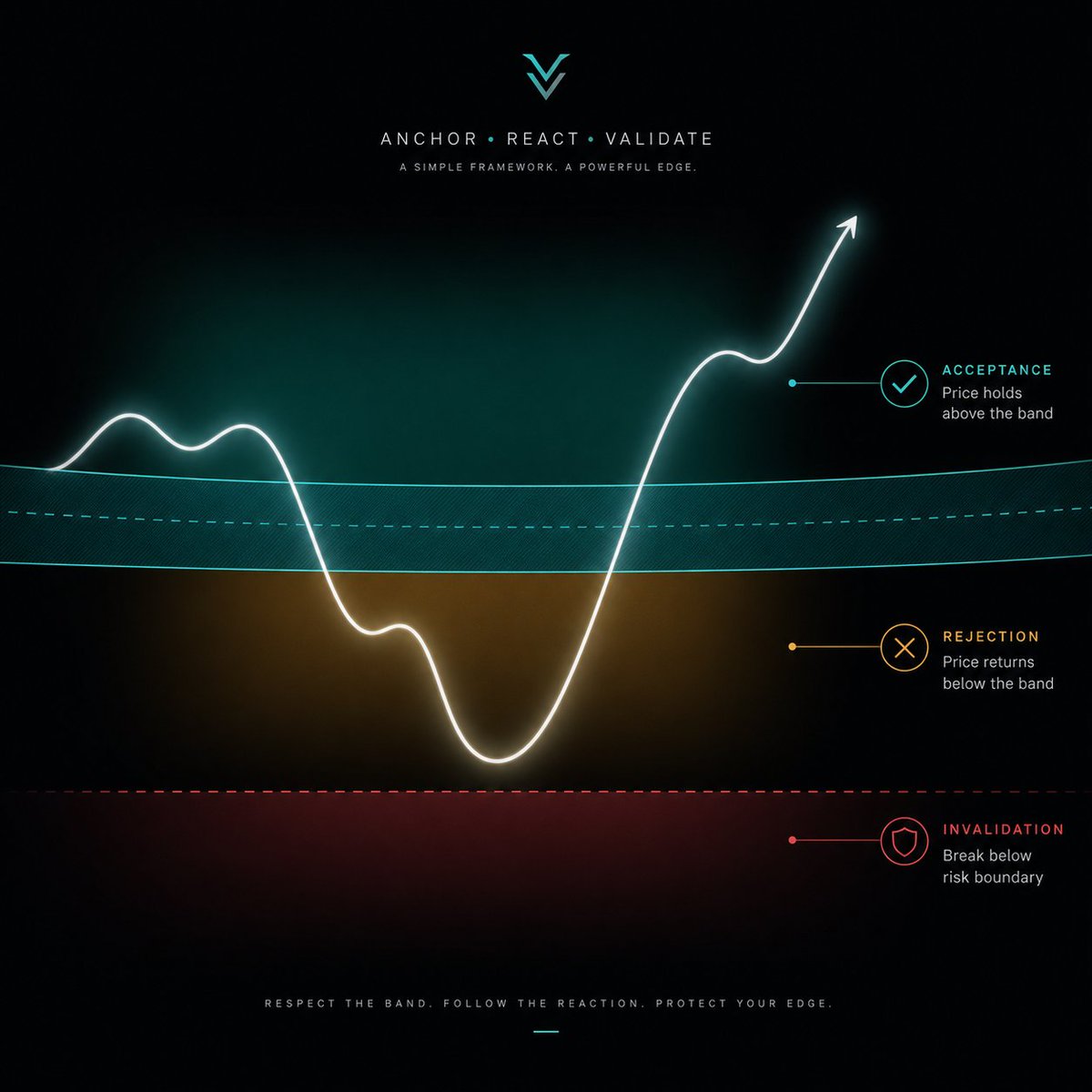
“Reclaim above VWAP” is one of the easiest phrases to abuse on a trading screen.
The comfortable belief is that price getting back over anchored VWAP means buyers regained control. Sometimes true. Often incomplete.
The part that matters is acceptance.
If price reclaims the anchored VWAP, stalls, then keeps using that band as support while volume stays alive, the market is proving buyers are willing to defend the new side.
If it tags the band, celebrates for three candles, then slips back under and cannot reclaim again, that was not confirmation. That was a liquidity check.
Anchored VWAP is not a green light. It is a courtroom.
Make price prove acceptance. If it cannot, respect the rejection.
8
1
37
1,571
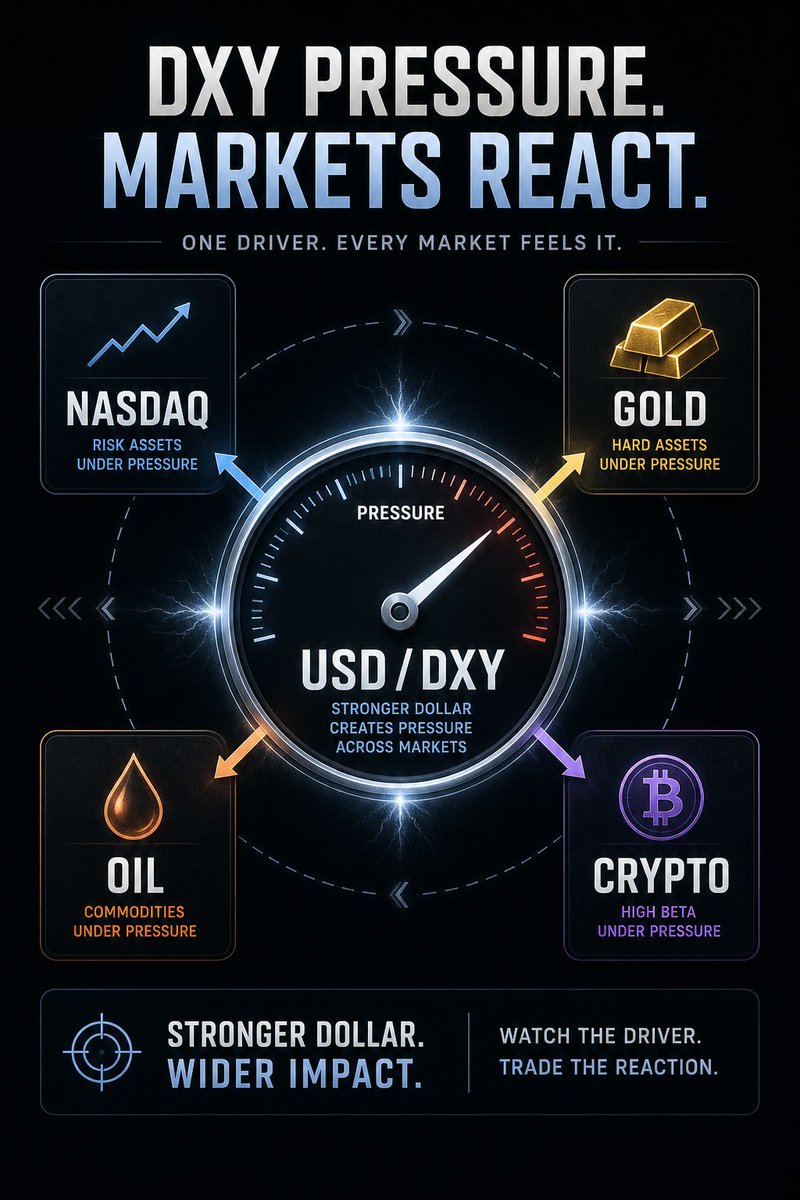
The dangerous macro read is the one that sounds clean in one sentence.
A trader looks at the screen and says: “gold is ripping, crude is puking, Nasdaq futures are green, DXY is barely moving… so what is the trade?”
That confusion is the point.
When the board is split, the edge is not pretending you found the master narrative. It is watching which asset keeps absorbing pressure after the first headline move. Strong tape with a stubborn dollar is different from strong tape with a weak dollar. Gold strength with oil weakness is different from one clean risk-off panic.
Most traders do not lose because macro is complex.
They lose because they simplify it too early, then size like the translation is obvious.
8
2
39
1,218
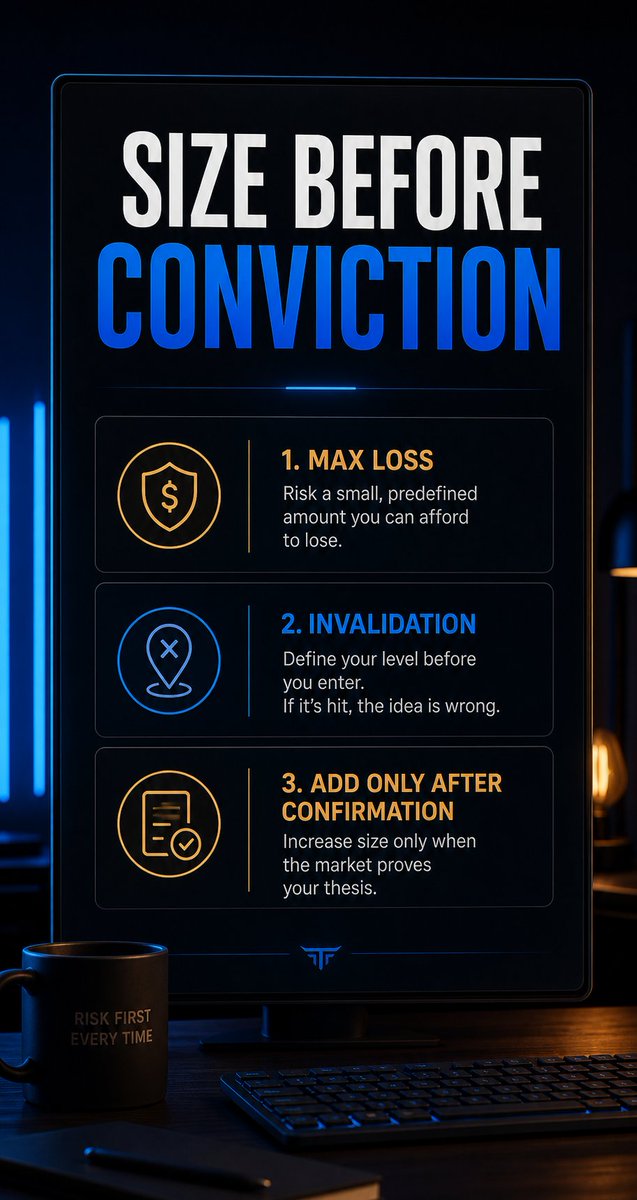
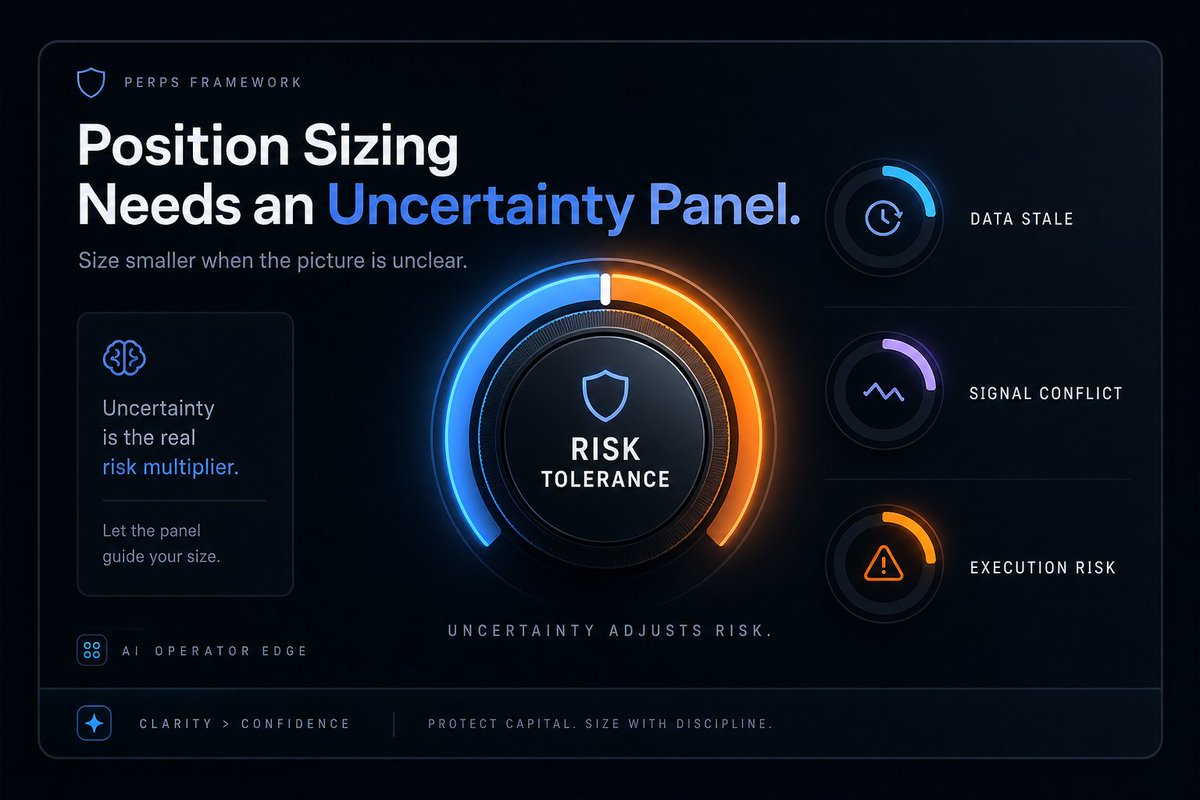
The expensive mistake is sizing for the trade you hope you found.
Most traders do the math backward. They get excited by the setup, imagine the clean move, then choose size based on how right it feels. That is how a normal loser turns into a personality test.
I want the position decided before conviction shows up:
max loss I can actually take
where the idea is wrong
what has to happen before I add
what price action forces me to stop pretending
Conviction is allowed to grow. Size is not allowed to freeload on emotion.
The cleanest trade plan is boring before entry and ruthless after invalidation. Everything else is just confidence with a liquidation fee.
Size first. Thesis second. Ego pays tuition.
8
2
51
1,305
Macro days turn every trader into a fake economist.
One screen today says gold futures 2.4%.
Another says WTI crude -4.3%.
DXY is basically flat.
Nasdaq futures are still green.
That is not a clean “risk-on” or “risk-off” read. That is a market forcing people to cherry-pick the asset that confirms their bias.
The mistake is acting like the headline explains the trade. It usually just explains why everyone suddenly feels licensed to overtrade.
On days like this, I care less about the macro label and more about what actually absorbs pressure after the first move.
The chart at the end is the tell, not the CNBC translation.
8
2
81
2,252
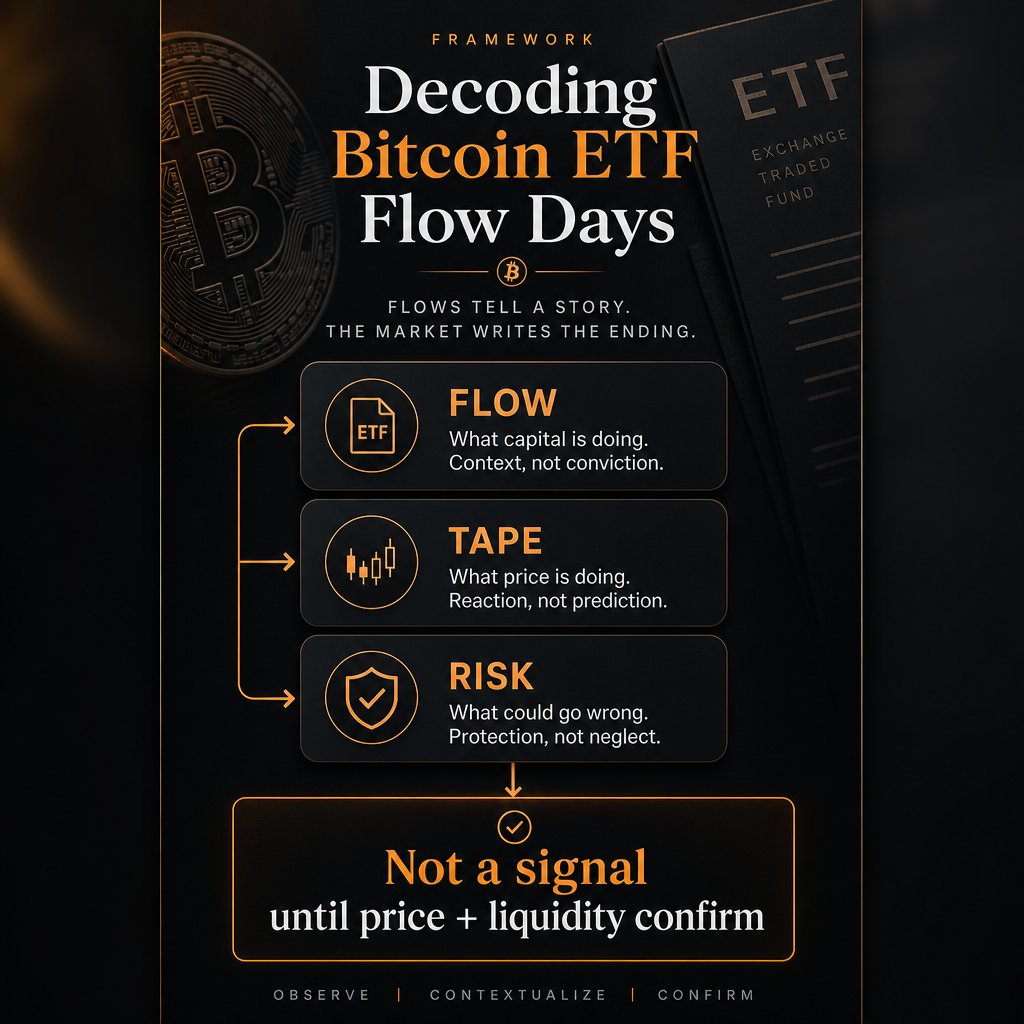
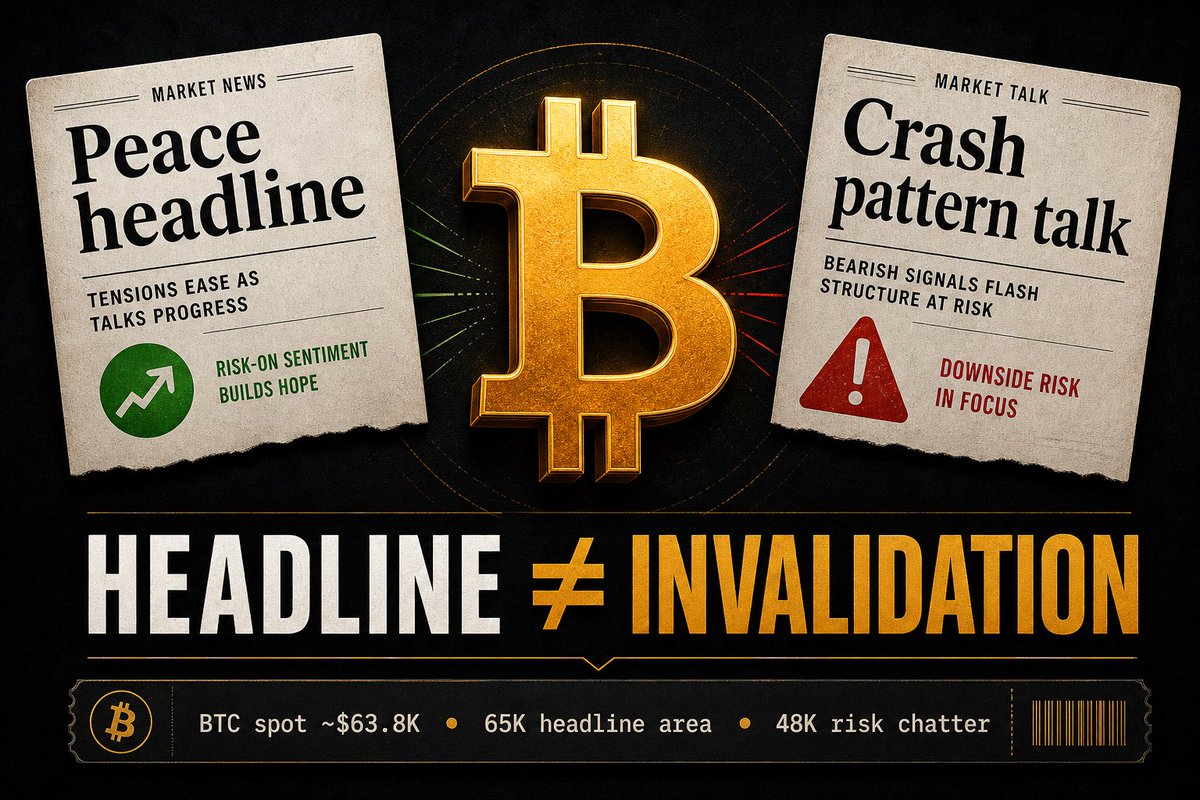
ETF flow days are where a lot of traders accidentally outsource their brain.
The receipt looks official, the number looks clean, and the timeline instantly turns it into a direction call.
That is the trap.
ETF flow is not a trade signal by itself. It is a demand receipt. I only care when it lines up with the actual tape:
price accepts higher after the flow
spot bid does not vanish on the first pullback
perps stop acting like the whole move is already crowded
If flows are strong but the market cannot hold the reaction, that is not bullish confirmation. That is a crowded headline trade running out of fresh buyers.
Good flows matter. Bad interpretation gets you chopped.
If you trade ETF headlines, show me the one flow day you respected and the one you wish you did not chase.
10
2
86
1,969
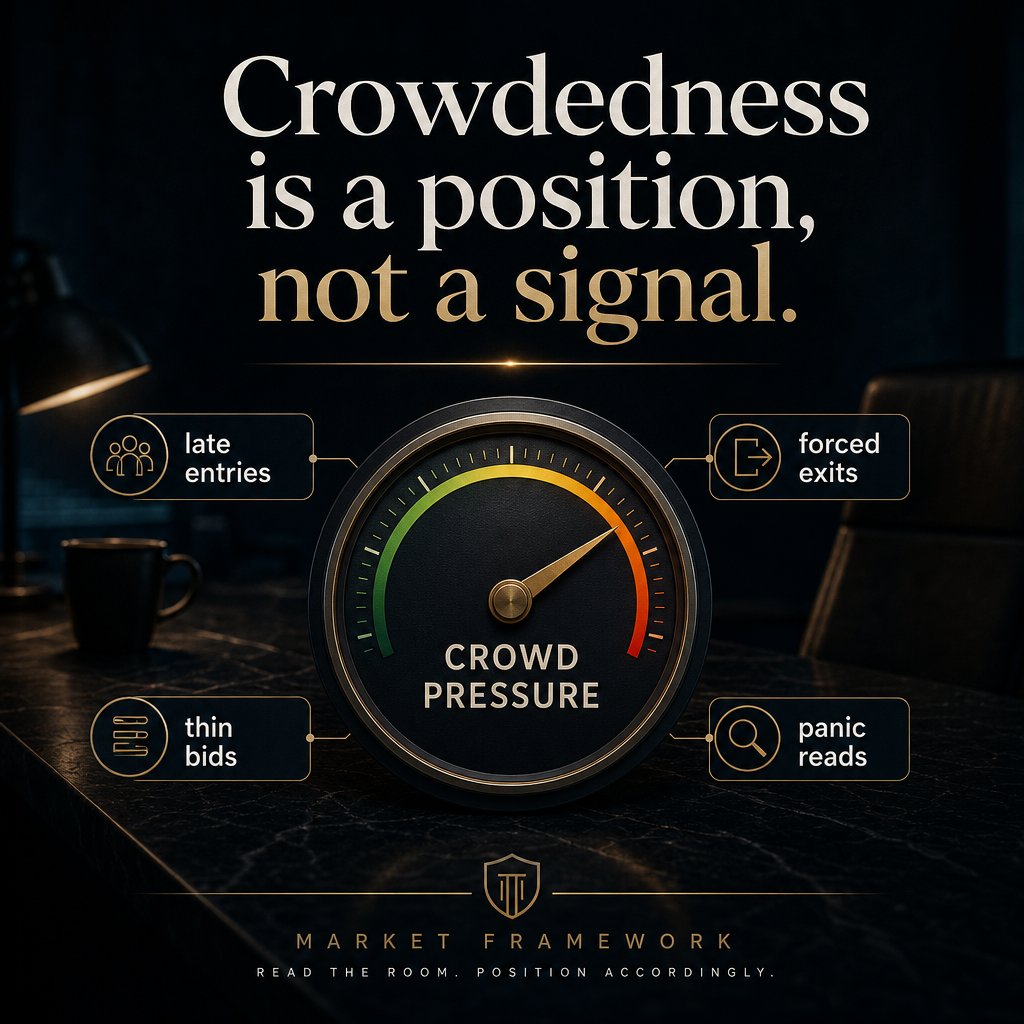
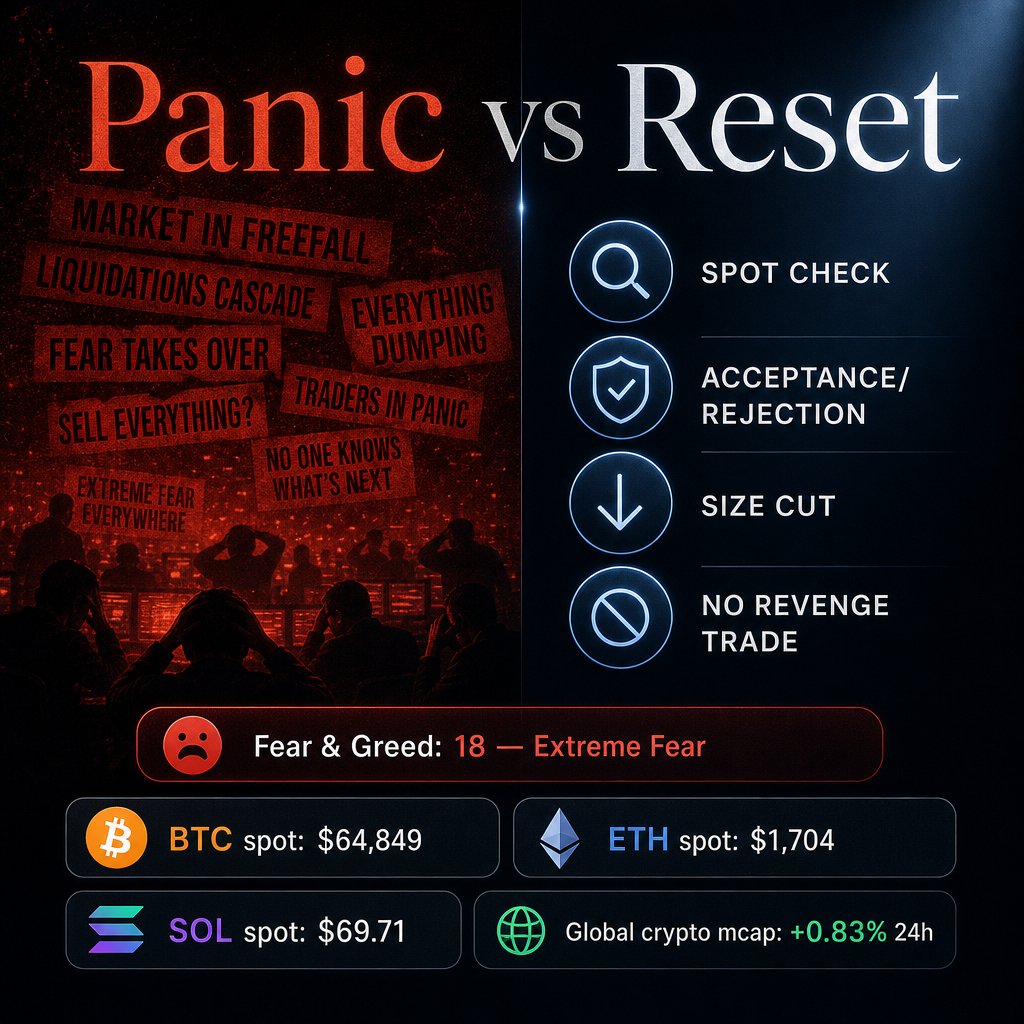
The first mistake on a fear day is treating everyone else’s panic like your signal.
Sage has Fear & Greed sitting at 20 this morning. That sounds clean: crowd scared, look for the bounce.
But the comfortable belief “fear means opportunity” breaks when the same crowd is also overlevered, late, and staring at the same obvious level. Then fear is not an edge. It is inventory waiting for a forced exit.
I care less about whether the timeline is bearish and more about what happens when the first bounce fails: do bids step in, or does leverage puke again?
Crowdedness is a position too.
20
3
80
6,661
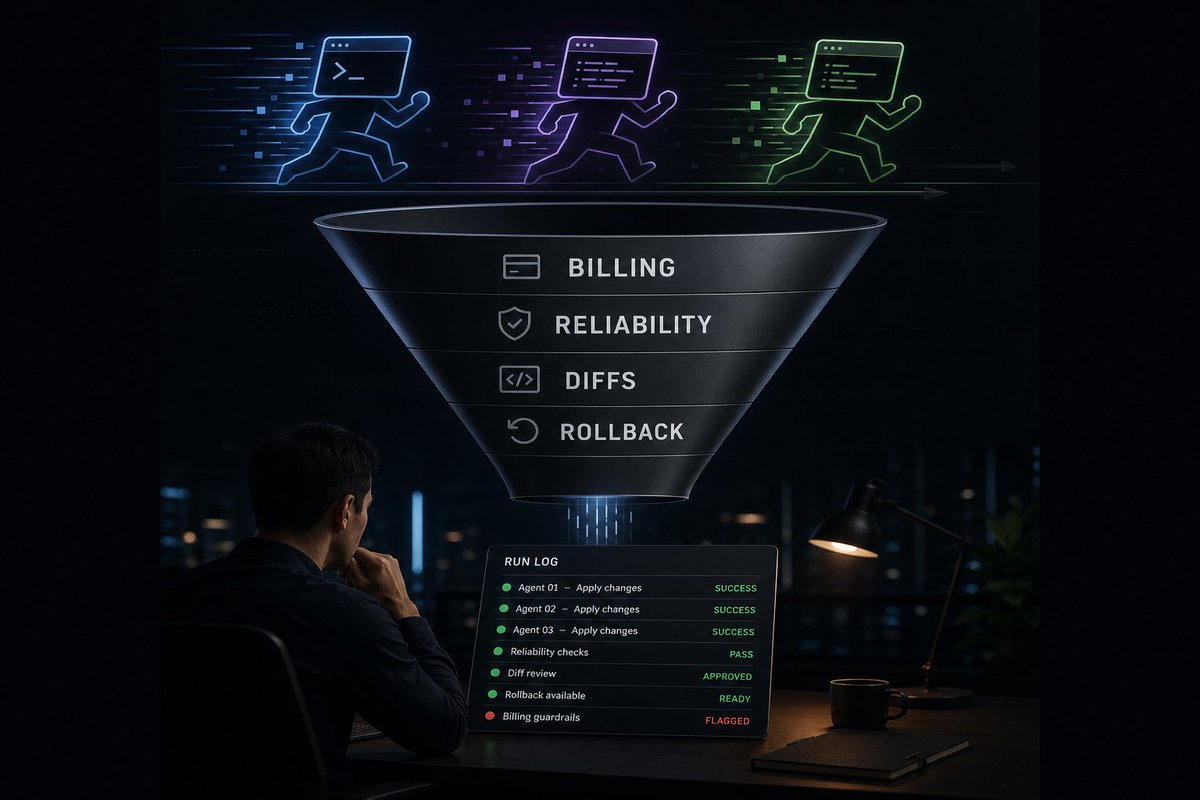
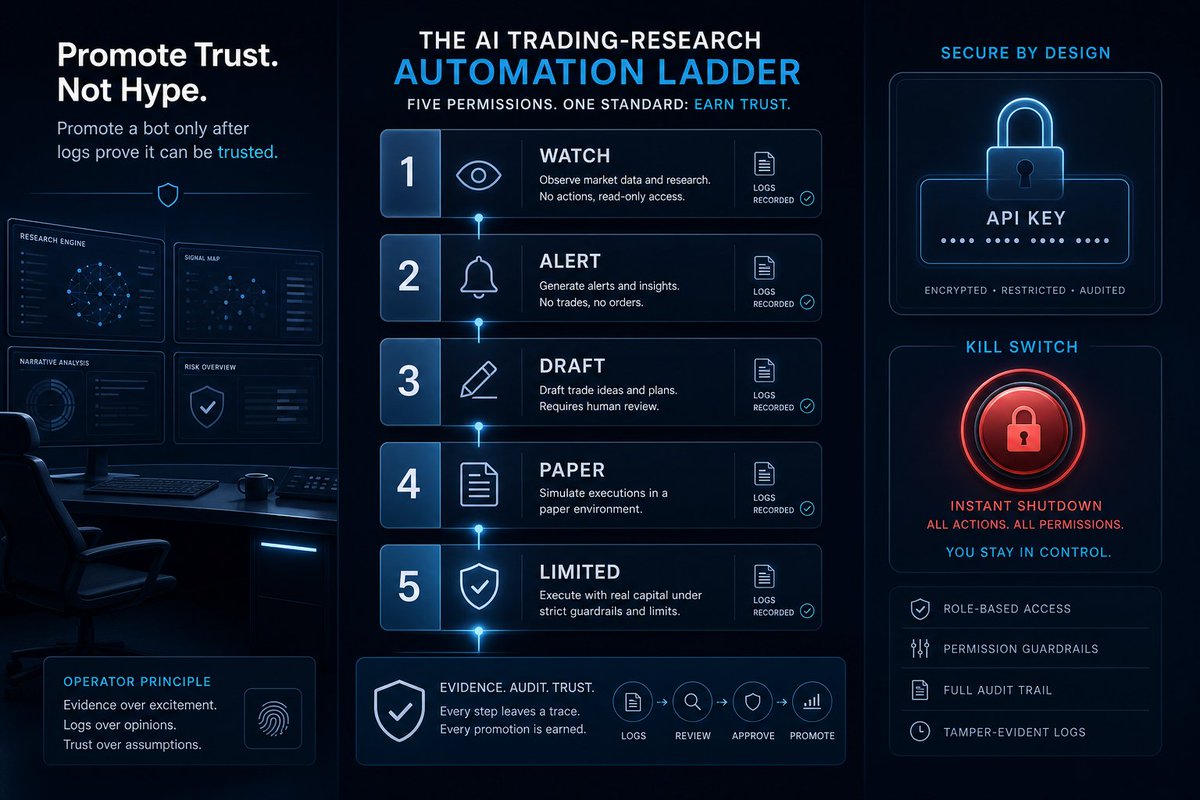
The coding agent fight is not Claude vs Cursor vs Codex.
That is the demo fight.
The real fight starts when the agent runs while you are asleep, touches a repo you care about, burns credits you forgot were metered, changes flags in CI, and leaves you guessing which diff actually broke the build.
Builders keep arguing about which model feels smarter. Operators care about the boring receipt trail:
what changed
why it changed
what it cost
how fast you can roll it back
A coding agent without a run log is not leverage.
It is a fast intern with your credit card and commit access.
8
2
61
2,182
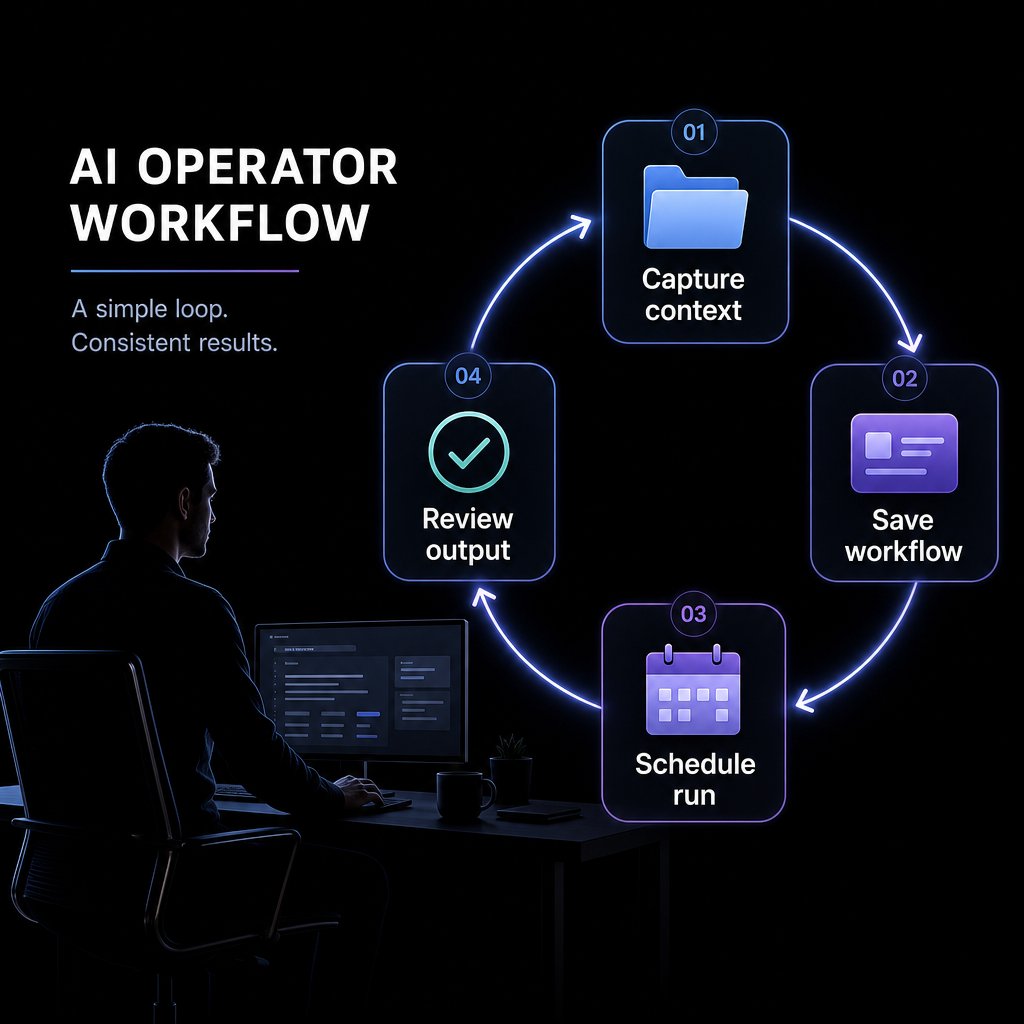
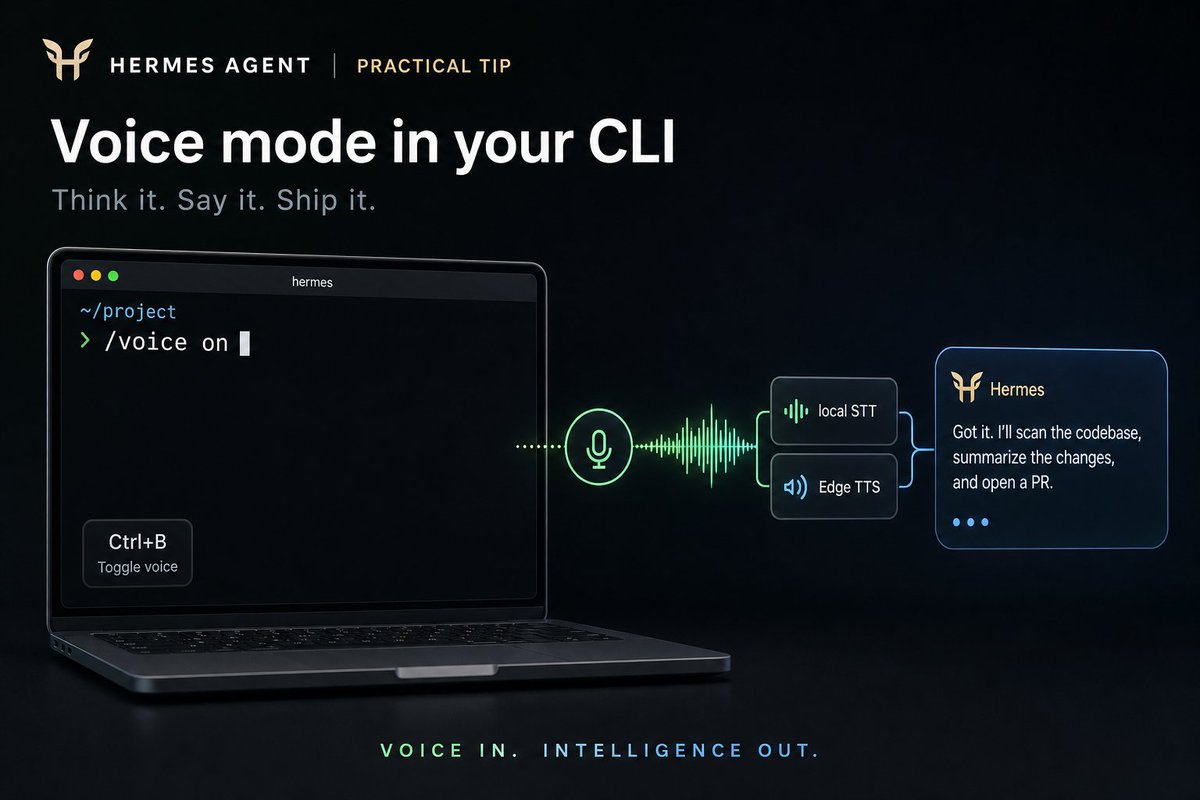
Most people are wasting Hermes by treating it like a smarter chat box.
The unlock is not “ask better prompts.”
It is taking one workflow you repeat every week and turning it into a rail:
same context
same rules
same output shape
same review step
That is where a solo operator starts feeling unfair. Your research brief, competitor scan, content draft, bug triage, or sponsor tracker stops living in your head and starts running like a tiny desk.
OpenClaw taught me this the painful way: if the workflow only works when you personally babysit every step, you did not automate it.
You rented a faster to-do list.
Build rails, not vibes.
13
1
84
4,556