
🚀 Goal: 1M followers! 🌟 Join the journey and be part of the story! Discover amazing statistics, trends and facts! Stay informed and inspired with us! 📊🚀🧠
Joined July 2015
- Tweets 4,187
- Following 1,011
- Followers 4,619
- Likes 874
367 Photos and videos














Pinned Tweet

13 Nov 2024
🚨 SHOCKING GOVERNMENT WASTE! 🚨
- Expired Programs: $516B in funding for programs that shouldn't even exist anymore! 🏛️💸
- Annual Waste: The US gov't flushes away $247B of your tax dollars every year! 💰🚽
- Lost Money: $24.5B spent on... who knows what? 🤷♂️💵
- Credit Card Abuse: USDA staff buying tattoos and concert tickets with your money! 🎫😲
- Bizarre Research: $33.2M on transgender monkey studies $2.7M for cats on treadmills? 🧬🙀
- Neglect: The DoD left $170M in military gear out in the rain! ☔️⚔️
- Tourist Dollars: $6M to make Egypt a travel hotspot? 🇪🇬🌴
- PPP Fiasco: Celebrities like Post Malone got millions in small biz aid! 🎤🤑
- Overpriced Soap: Military soap dispensers cost 80X more than at your local store! 🧼💸
That's why we NEED @elonmusk and @VivekGRamaswamy's #DOGE to cut the fat! 🇺🇸💪 #GovernmentEfficiency #Viral #WasteExposed
2
2
5
2,421
8 Feb 2025
📈 COUNTRIES WITH THE FASTEST-GROWING ECONOMIES (2025 PROJECTIONS):
🇬🇾 Guyana: 16.3%
🇸🇸 South Sudan: 14.6%
🇱🇾 Libya: 10.3%
🇳🇪 Niger: 9.9%
🇼🇸 Samoa: 9.7%
🇸🇳 Senegal: 7.9%
🇷🇼 Rwanda: 7.0%
🇪🇹 Ethiopia: 6.1%
🇮🇳 India: 6.5%
🇧🇩 Bangladesh: 5.4%
🇵🇭 Philippines: 5.8%
🇻🇳 Vietnam: 6.1%
🇰🇪 Kenya: 5.0%
🇵🇱 Poland: 3.5%
🇪🇸 Spain: 2.3%
🇹🇷 Turkey: 2.8%
🇷🇺 Russia: 3.8%
🇳🇬 Nigeria: 3.1%
🇨🇦 Canada: 1.3%
🇺🇸 United States: 2.8%
🇨🇳 China: 4.8%
🇩🇪 Germany: -0.2%
🇫🇷 France: 1.1%
🇬🇧 United Kingdom: 0.9%
Source: IMF, World Bank, and Focus Economics Consensus Forecasts (2025)
8
683
13 Nov 2024
🚨 EPIC WHITE HOUSE SHOWDOWN 🚨
Biden and Trump in the same room?! 🇺🇸🤝
#BidenTrumpSummit #PoliticalReunion #WhiteHouseHandshake
1
4
792
13 Nov 2024
Bitcoin Rockets to $93,000: Is $100,000 Next on the Horizon?
The crypto world is abuzz as Bitcoin smashes through the $93,000 barrier! 🚀 Everyone's asking: When will it soar to $100,000? Analysts predict this milestone could be just around the corner, with some betting on it before the year's end. Buckle up, the digital gold rush is on, and $100K might be closer than you think! 🔥 #BitcoinToTheMoon
2
659
13 Nov 2024
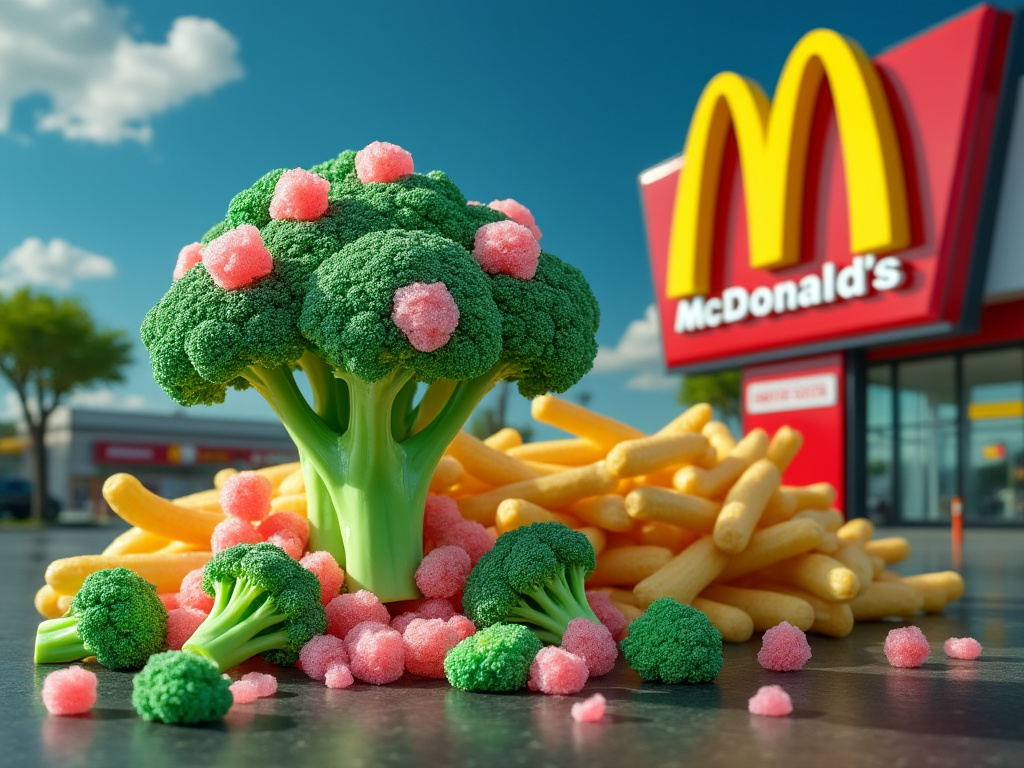
✅ McDonald’s once made bubblegum-flavored broccoli.
Did you know that McDonald's once tried to make broccoli taste like bubblegum?
They created bubblegum-flavored broccoli to encourage kids to eat more vegetables. The idea was to make broccoli fun and appealing by adding a flavor kids love.
But there was a catch: kids were totally confused by it! They couldn’t figure out if they were eating candy or vegetables, so the experiment didn’t go over as planned.
In the end, McDonald's decided it was a little too strange, and bubblegum broccoli never made it to the menu.
It's a quirky part of McDonald's history, and it shows how far they were willing to go to get kids to eat their greens!
1
3
525
12 Nov 2024
Bananas Are Radioactive. 🍌
Due to their high potassium content, bananas contain a small amount of naturally occurring potassium-40, which is radioactive. However, you would need to eat around 10 million bananas at once to get a dose of radiation equivalent to that from undergoing one whole-body CT scan.
3
429
12 Nov 2024
Ketchup was once sold as medicine.
In the 1830s, ketchup was marketed as a medicinal remedy. Dr. John Cook Bennett, an American physician, claimed that his tomato-based ketchup could cure ailments such as diarrhea, indigestion, and jaundice. He even produced concentrated ketchup in pill form, which gained popularity among consumers seeking these health benefits.
However, the market soon became saturated with imitators producing their own versions of medicinal ketchup, often making exaggerated claims about their products' efficacy. Some of these products contained little to no tomato content and were essentially laxatives. This proliferation of dubious products led to public skepticism, and by the 1850s, the trend of selling ketchup as medicine had largely faded.
Despite its fall from medicinal grace, ketchup found a new life as a popular condiment. In 1876, Henry J. Heinz introduced a recipe that emphasized quality and taste, helping to establish ketchup as a staple in American cuisine.
1
409
11 Nov 2024
👉Allodoxaphobia is the fear of other people’s opinions.
Allodoxaphobia is an intense and irrational fear of hearing or being exposed to other people's opinions. This phobia can lead individuals to avoid social interactions where they might encounter feedback or judgments, significantly impacting their personal and professional lives.
Do you know anyone suffering from Allodoxaphobia?
1
374
10 Nov 2024
👉The longest English word is 189,819 letters long.
The longest word in the English language is the chemical name for the protein titin, comprising 189,819 letters. This extensive name enumerates the sequence of amino acids in the protein and would take approximately three and a half hours to pronounce.
The word 👇
cw39.com/wp-content/uploads/…
1
1
361
10 Nov 2024
👉The Eiffel Tower was originally made for Barcelona.
The Eiffel Tower, now an iconic symbol of Paris, was initially proposed for Barcelona. In the early 1880s, engineer Gustave Eiffel presented his design for a monumental iron tower to the city of Barcelona, intending it to serve as the centerpiece for the 1888 Universal Exposition. However, the Barcelona city council found the design unconventional and costly, leading them to reject the proposal.
Following this rejection, Eiffel submitted his design to Parisian authorities, who accepted it for the 1889 Exposition Universelle, celebrating the centennial of the French Revolution. Despite initial criticism from some Parisians who considered the structure an eyesore, the Eiffel Tower was constructed and has since become one of the world's most recognizable landmarks.
This episode highlights how the Eiffel Tower's association with Paris was not predestined but resulted from a series of decisions and rejections, ultimately leading to its enduring legacy in the French capital.
2
427
10 Nov 2024
At any point in time, 0.7% of the world’s population is drunk.
As you are reading this, 50 million people are drunk!
1
308
9 Nov 2024
🤓 Life expectancy in the US is on the rise again, reversing the decline seen during the Covid-19 period, likely due to improvements in various societal aspects like economy, crime rates, insurance coverage, and environmental quality.
1
327
9 Nov 2024
🤓 Did you know? If you gather 70 people, there’s a 99.99% chance at least two share the same birthday.
1
1
331
9 Nov 2024
🤓 Surprising stat: 15% of daily Google searches have never been searched before.
1
1
334
9 Nov 2024
Did you know that keyboards weren’t always laid out in the familiar QWERTY format?
Originally, early typewriters used an alphabetical arrangement. But here’s the twist: people typed so quickly that the mechanical arms would jam and tangle.
The solution? Rearranging the keys in a random order to slow down typing and prevent jams. This led to the creation of the QWERTY layout, which has become the global standard.
Surprising, right?
The setup we use daily wasn’t meticulously planned for efficiency, but to manage the limits of early technology.
2
472
9 Nov 2024
Did you know that in 2024, 96% of adults endorse sexting?
A recent study revealed that 96% of surveyed adults support sexting, highlighting its growing acceptance in modern relationships.
258