Decompose, analyze, and execute transaction graphs with maximum parallelism on Solana.
Joined February 2026
- Tweets 34
- Following 0
- Followers 75
- Likes 40
10 Photos and videos





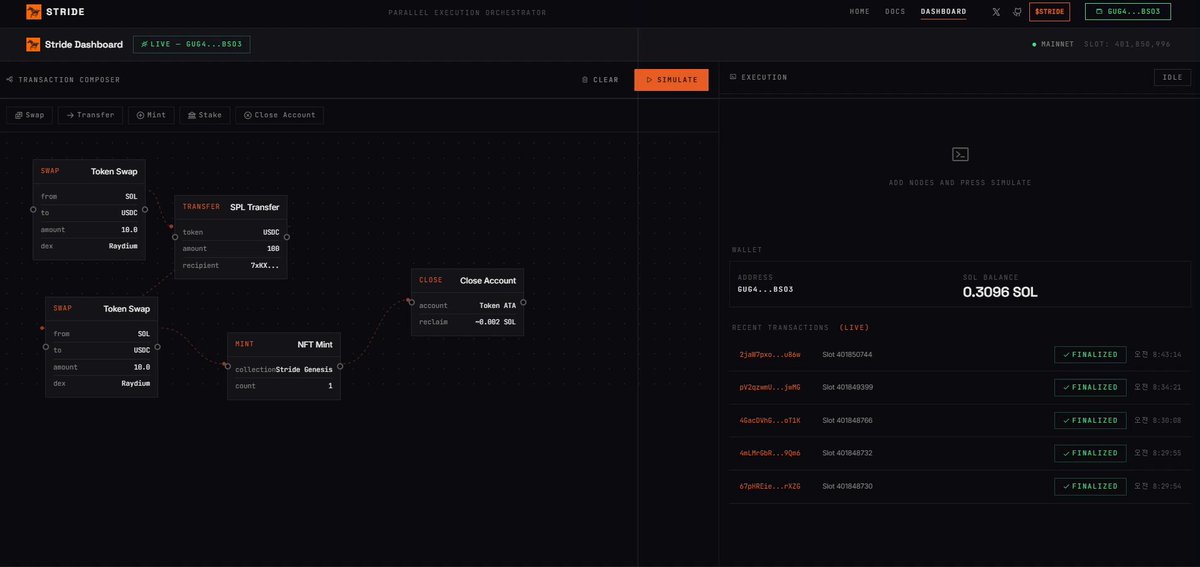

Feb 22
the horses were just the beginning.
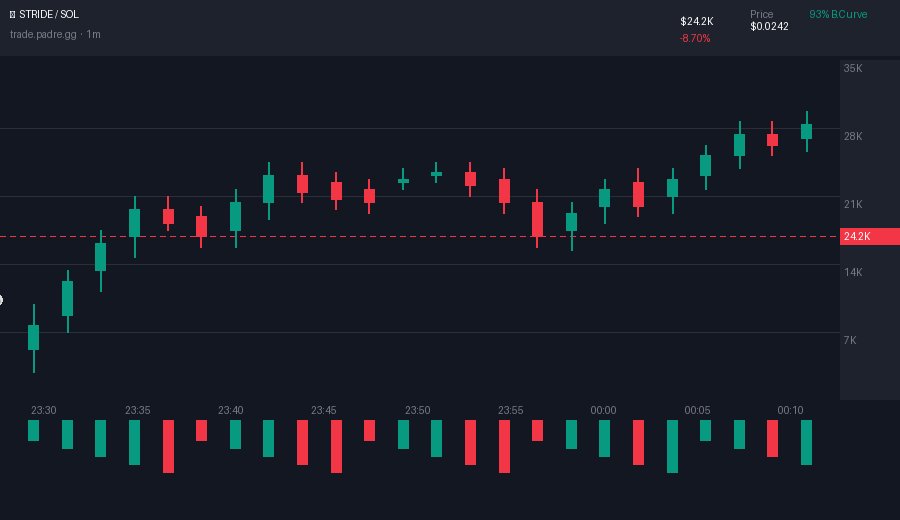
watch the new tech soon and you'll $STRIDE 👀
22
2
30
1,942
Feb 22
the stride riders don't ask how. they ask how many transactions per slot.
2
1
19
1,262
Feb 22
Next update : more dashboard-native components.
. . .
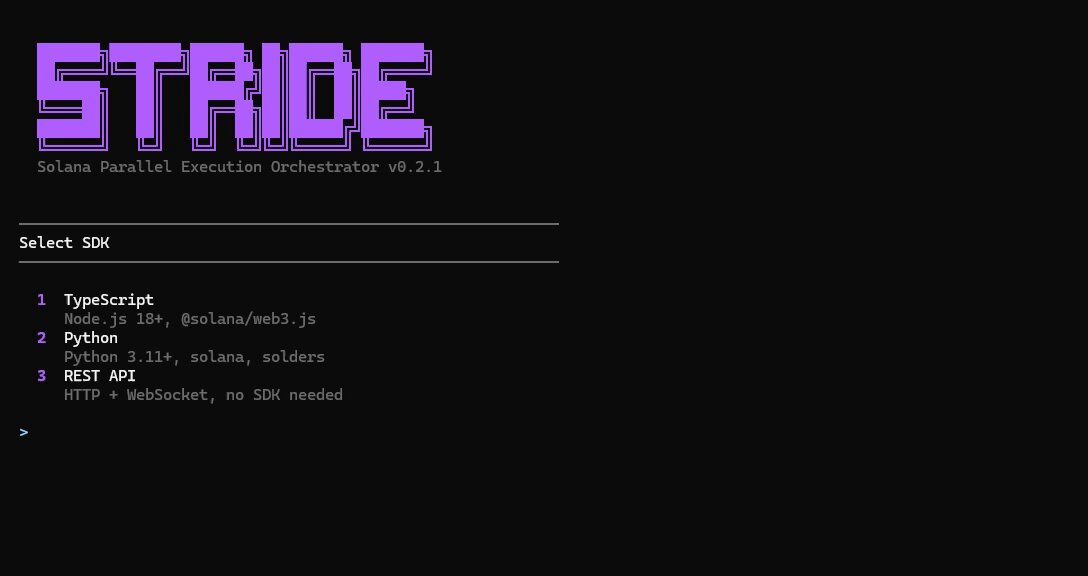
SDK API.
1
1
19
1,292
Feb 22
stride solves a problem i didn't know i had and now it's all i can think about. this is what crypto does to you
2
16
1,492
Feb 21
Stride
Stride is a parallel execution orchestrator for Solana. It takes complex transaction sequences, models them as directed acyclic graphs, and automatically identifies which operations can run at the same time. The result is fewer slots, lower latency, and better throughput compared to sequential submission.
Problem
Solana supports parallel transaction execution at the runtime level, but most applications still submit transactions one at a time. When you have multiple independent operations (swaps across different pools, transfers to different recipients, multi-step workflows), sending them sequentially wastes slots and increases exposure to price movement and failed landings.
How It Works
You define execution units, each containing one or more Solana instructions, and declare dependencies between them. Stride analyzes account-level read/write locks to detect conflicts, computes parallel execution groups using topological sorting, and submits independent groups simultaneously.
Before anything hits the network, a simulation engine estimates compute units per instruction and predicts potential errors. A fee optimizer calculates priority fees using one of three strategies (conservative, adaptive, aggressive) based on recent slot data, with optional Jito tip integration.
An event monitor streams the full execution lifecycle in real time: units sending, confirming, retrying, failing. Telemetry is recorded for post-execution analysis.
Architecture
On-chain program (Rust): Manages graph state, lock entries, and execution lifecycle on Solana. Handles 10 instruction types from graph initialization through finalization.
TypeScript SDK: Client, graph builder, simulation engine, fee optimizer, execution monitor, and pre-built templates.
Python SDK: Mirrors the TypeScript SDK with idiomatic Python dataclasses and the same feature set.
API server: REST endpoints for graph creation, simulation, and fee estimation. WebSocket support for real-time event streaming.
Templates
Pre-built graph patterns for common use cases:
ParallelSwap: Multiple independent swaps in a single slot
MultiHopSwap: Sequential swaps through a route with automatic dependency chaining
BatchTransfer: Parallel token transfers to multiple recipients
DCA: Dollar-cost averaging with interval scheduling
ConditionalExecution: Branching logic based on on-chain state
Stack
Rust, TypeScript, Python. Solana web3.js, Express, WebSocket. MIT licensed.
7
9
931