product studio building tools to improve the lives of stroke survivors & their caregivers

Joined May 2026
1 Photos and videos
Pinned Tweet
We are dedicated to building tools to make the lives of stroke survivors and their caregivers easier. Sign up for our waitlists today!
1
3
51
stroke.technology retweeted
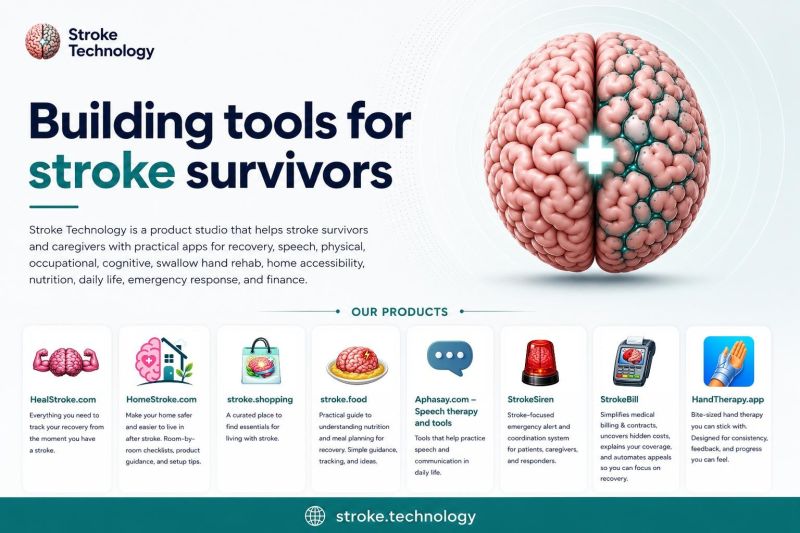
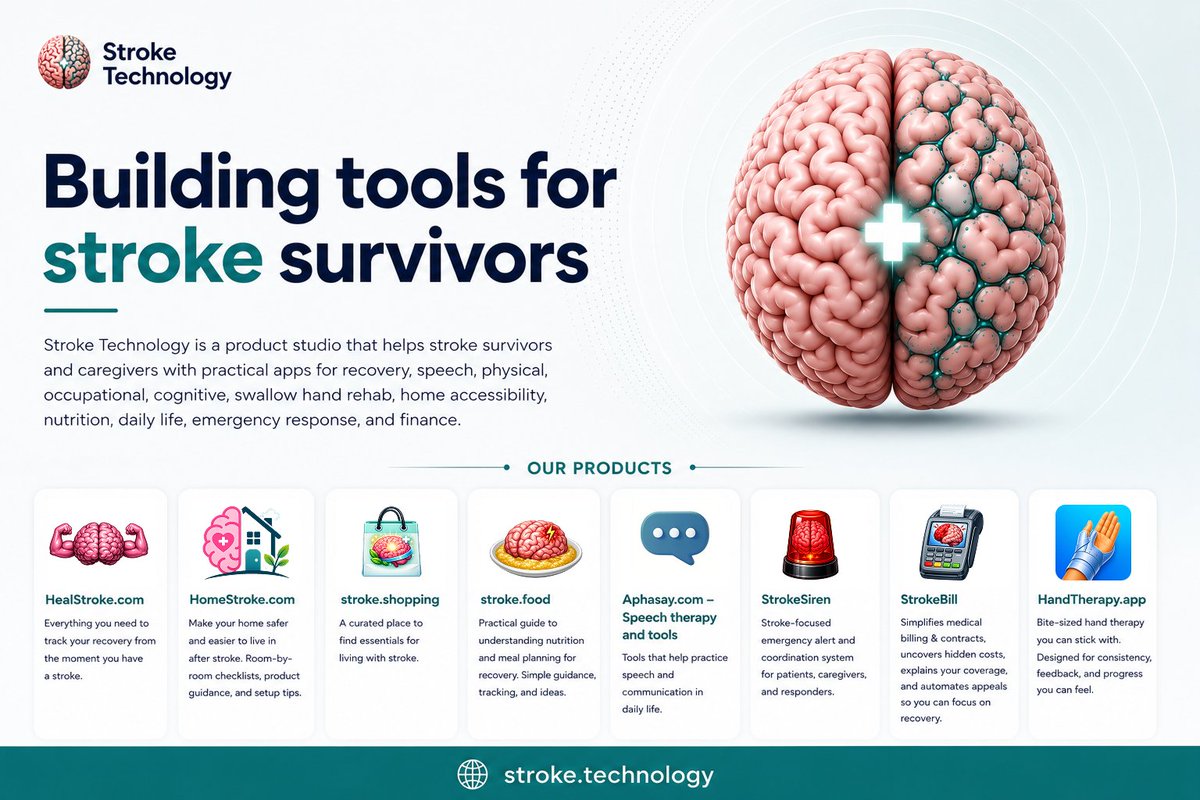
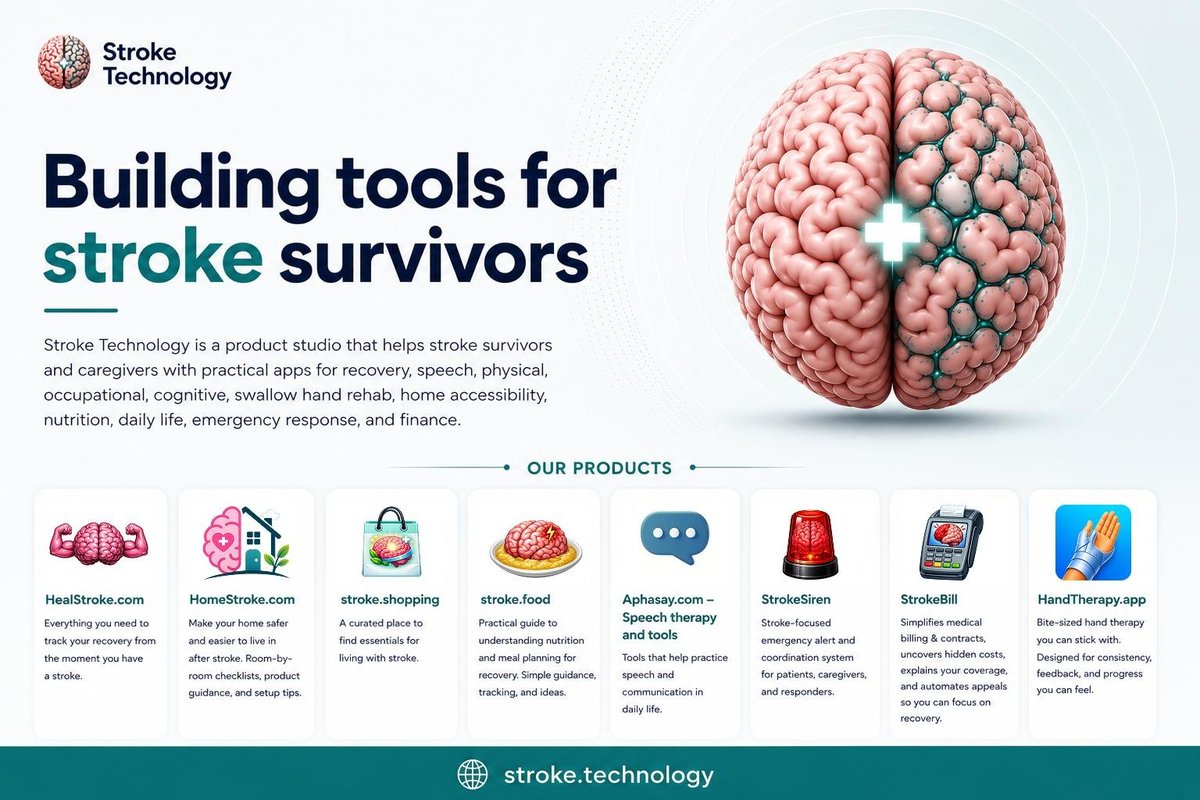
StrokeBill → Making medical billing & insurance less painful All designed to be evidence-based, survivor-focused, and caregiver-informed. vasically it designed to make "life after stroke" into more doable daily life.
1
1
22
stroke.technology retweeted
stroke.food → nutrition & meal planning Aphasay.com → speech & communication tools HealStroke.com → Full recovery tracking StrokeSiren → emergency alerts for survivors & caregivers
1
1
2
16
stroke.technology retweeted
They’re a product studio building practical digital tools made by people who’ve seen stroke up close (family personal experience). Here what we are building :
2
1
2
53
stroke.technology retweeted
HandTherapy.app → Bite-sized hand exercises with tracking & feedback so you actually stick with it stroke.shopping → Curated adaptive products that make daily life easier HomeStroke.com → home safety checklists
1
1
11
stroke.technology retweeted
After a stroke, the real challenge begins when you leave the hospital. Clinics do amazing work but they can’t be there for the daily struggles: sticking to hand exercises, making your home safe, eating right, communicating when words are hard, or dealing with bills.
1
1
1
41
stroke.technology retweeted
Disclaimer. For you that followed Simon for NEAR Content, this is not a NEAR Project but i appreciate the reasoning-vision on developing this apps. But ill appreciate if you do some like or retweet to make this have better reach. This is a story of @stroke_tech A Thread.
Exactly one month ago, I was in Africa building local, real-time private payments when I got the call: my dad in the US had a 𝗵𝗲𝗺𝗼𝗿𝗿𝗵𝗮𝗴𝗶𝗰 𝘀𝘁𝗿𝗼𝗸𝗲. I flew home immediately. After 4 years & 30 countries on the road, I did not know if I would make it in time, but I promised myself that if he survived, I would stay, care for him, and build my way out of it. After a month living between the hospital and inpatient rehab, I am grateful to say he is close to mostly recovered, though full recovery will take time. 𝗧𝗵𝗶𝘀 𝗶𝘀 𝗻𝗼𝘁 𝗮 𝗻𝗶𝗰𝗵𝗲. Stroke is one of the largest unmet health challenges in the world. Every year, it causes approximately 7 million deaths, making it the world's second-leading cause of death (in China #1) and one of the leading causes of long-term disability. Stroke can upend nearly everything: thinking, speaking, movement, eating, work, and relationships. It can affect speech, swallowing, mobility, memory, mood, vision, and independence simultaneously. For the ~𝟵𝟰 𝗺𝗶𝗹𝗹𝗶𝗼𝗻 𝘀𝘁𝗿𝗼𝗸𝗲 𝘀𝘂𝗿𝘃𝗶𝘃𝗼𝗿𝘀 𝘄𝗼𝗿𝗹𝗱𝘄𝗶𝗱𝗲, (12 million yearly new strokes), recovery is not a moment. It is a long journey of rebuilding daily life, and it remains deeply underserved by modern technology .I also learned how much of recovery happens outside the hospital. Therapy becomes homework. Paperwork becomes a second job. Progress depends on advocacy. Not everyone has someone who can be there 24/7 to coordinate care, manage insurance, catch errors, and build the custom workarounds that keep things moving.I watched the gaps firsthand: doctors unsure of stroke subtype, nurses losing context between shifts, meals not matching swallowing needs, meds going missing, and no clear “transition home” toolkit. This was in one of the nicest parts of the world, but it is even more devastating in places with fewer resources, where a lack of resources directly leads to higher death rates.I am deeply grateful for my dad’s recovery. I am thankful for the ability to use software to speed up his recovery & for the clarity this has given me to continue this journey, not only for my family, but for all of your families as well. Today, I am proud to announce the formation of stroke.technology (@stroke_tech): a 𝗽𝗿𝗼𝗱𝘂𝗰𝘁 𝘀𝘁𝘂𝗱𝗶𝗼 𝗱𝗲𝗱𝗶𝗰𝗮𝘁𝗲𝗱 𝘁𝗼 𝗯𝘂𝗶𝗹𝗱𝗶𝗻𝗴 𝘁𝗼𝗼𝗹𝘀 𝗳𝗼𝗿 𝘀𝘁𝗿𝗼𝗸𝗲 𝘀𝘂𝗿𝘃𝗶𝘃𝗼𝗿𝘀 𝗮𝗻𝗱 𝗰𝗮𝗿𝗲𝗴𝗶𝘃𝗲𝗿𝘀. In the upcoming months, our team is constantly launching, so sign up for our waitlists. If you have a loved one impacted by stroke, I am here to help.
3
1
3
169
stroke.technology retweeted
A month ago, I built a health-tech app for PCOS during a team challenge. The next day, my boss's dad had a stroke. Soon after, our company pivoted to stroke-focused health-tech. Two weeks later, my uncle had a stroke. Funny how a side project can suddenly become personal.
Exactly one month ago, I was in Africa building local, real-time private payments when I got the call: my dad in the US had a 𝗵𝗲𝗺𝗼𝗿𝗿𝗵𝗮𝗴𝗶𝗰 𝘀𝘁𝗿𝗼𝗸𝗲. I flew home immediately. After 4 years & 30 countries on the road, I did not know if I would make it in time, but I promised myself that if he survived, I would stay, care for him, and build my way out of it. After a month living between the hospital and inpatient rehab, I am grateful to say he is close to mostly recovered, though full recovery will take time. 𝗧𝗵𝗶𝘀 𝗶𝘀 𝗻𝗼𝘁 𝗮 𝗻𝗶𝗰𝗵𝗲. Stroke is one of the largest unmet health challenges in the world. Every year, it causes approximately 7 million deaths, making it the world's second-leading cause of death (in China #1) and one of the leading causes of long-term disability. Stroke can upend nearly everything: thinking, speaking, movement, eating, work, and relationships. It can affect speech, swallowing, mobility, memory, mood, vision, and independence simultaneously. For the ~𝟵𝟰 𝗺𝗶𝗹𝗹𝗶𝗼𝗻 𝘀𝘁𝗿𝗼𝗸𝗲 𝘀𝘂𝗿𝘃𝗶𝘃𝗼𝗿𝘀 𝘄𝗼𝗿𝗹𝗱𝘄𝗶𝗱𝗲, (12 million yearly new strokes), recovery is not a moment. It is a long journey of rebuilding daily life, and it remains deeply underserved by modern technology .I also learned how much of recovery happens outside the hospital. Therapy becomes homework. Paperwork becomes a second job. Progress depends on advocacy. Not everyone has someone who can be there 24/7 to coordinate care, manage insurance, catch errors, and build the custom workarounds that keep things moving.I watched the gaps firsthand: doctors unsure of stroke subtype, nurses losing context between shifts, meals not matching swallowing needs, meds going missing, and no clear “transition home” toolkit. This was in one of the nicest parts of the world, but it is even more devastating in places with fewer resources, where a lack of resources directly leads to higher death rates.I am deeply grateful for my dad’s recovery. I am thankful for the ability to use software to speed up his recovery & for the clarity this has given me to continue this journey, not only for my family, but for all of your families as well. Today, I am proud to announce the formation of stroke.technology (@stroke_tech): a 𝗽𝗿𝗼𝗱𝘂𝗰𝘁 𝘀𝘁𝘂𝗱𝗶𝗼 𝗱𝗲𝗱𝗶𝗰𝗮𝘁𝗲𝗱 𝘁𝗼 𝗯𝘂𝗶𝗹𝗱𝗶𝗻𝗴 𝘁𝗼𝗼𝗹𝘀 𝗳𝗼𝗿 𝘀𝘁𝗿𝗼𝗸𝗲 𝘀𝘂𝗿𝘃𝗶𝘃𝗼𝗿𝘀 𝗮𝗻𝗱 𝗰𝗮𝗿𝗲𝗴𝗶𝘃𝗲𝗿𝘀. In the upcoming months, our team is constantly launching, so sign up for our waitlists. If you have a loved one impacted by stroke, I am here to help.
10
9
235
stroke.technology retweeted
Reading this hit differently for me because I have experienced a small part of what stroke survivors and their families go through every single day. About 2 months ago, I was involved in an accident that left me with a fractured left hip joint and a dislocation on the right side. The dislocation came with nerve complications, and for almost 5 weeks I could not properly move or feel part of my right leg. I had to start learning almost everything again, especially walking. The therapy sessions, personal exercises, daily pain, frustration, and mental stress are things people rarely see from the outside. Recovery is not just physical, it affects your entire life and everyone around you. And this is coming from someone dealing with “just” nerve complications and fractures. It gave me a deeper understanding of what stroke survivors and their families endure during recovery. I am still in the recovery process Special thanks to my wife for her tireless support throughout my routines, therapy, and difficult days. I genuinely do not know how I would have managed without her. Guys, this is something all of us should support however we can, because nobody truly understands these battles until life suddenly places you inside one.
Exactly one month ago, I was in Africa building local, real-time private payments when I got the call: my dad in the US had a 𝗵𝗲𝗺𝗼𝗿𝗿𝗵𝗮𝗴𝗶𝗰 𝘀𝘁𝗿𝗼𝗸𝗲. I flew home immediately. After 4 years & 30 countries on the road, I did not know if I would make it in time, but I promised myself that if he survived, I would stay, care for him, and build my way out of it. After a month living between the hospital and inpatient rehab, I am grateful to say he is close to mostly recovered, though full recovery will take time. 𝗧𝗵𝗶𝘀 𝗶𝘀 𝗻𝗼𝘁 𝗮 𝗻𝗶𝗰𝗵𝗲. Stroke is one of the largest unmet health challenges in the world. Every year, it causes approximately 7 million deaths, making it the world's second-leading cause of death (in China #1) and one of the leading causes of long-term disability. Stroke can upend nearly everything: thinking, speaking, movement, eating, work, and relationships. It can affect speech, swallowing, mobility, memory, mood, vision, and independence simultaneously. For the ~𝟵𝟰 𝗺𝗶𝗹𝗹𝗶𝗼𝗻 𝘀𝘁𝗿𝗼𝗸𝗲 𝘀𝘂𝗿𝘃𝗶𝘃𝗼𝗿𝘀 𝘄𝗼𝗿𝗹𝗱𝘄𝗶𝗱𝗲, (12 million yearly new strokes), recovery is not a moment. It is a long journey of rebuilding daily life, and it remains deeply underserved by modern technology .I also learned how much of recovery happens outside the hospital. Therapy becomes homework. Paperwork becomes a second job. Progress depends on advocacy. Not everyone has someone who can be there 24/7 to coordinate care, manage insurance, catch errors, and build the custom workarounds that keep things moving.I watched the gaps firsthand: doctors unsure of stroke subtype, nurses losing context between shifts, meals not matching swallowing needs, meds going missing, and no clear “transition home” toolkit. This was in one of the nicest parts of the world, but it is even more devastating in places with fewer resources, where a lack of resources directly leads to higher death rates.I am deeply grateful for my dad’s recovery. I am thankful for the ability to use software to speed up his recovery & for the clarity this has given me to continue this journey, not only for my family, but for all of your families as well. Today, I am proud to announce the formation of stroke.technology (@stroke_tech): a 𝗽𝗿𝗼𝗱𝘂𝗰𝘁 𝘀𝘁𝘂𝗱𝗶𝗼 𝗱𝗲𝗱𝗶𝗰𝗮𝘁𝗲𝗱 𝘁𝗼 𝗯𝘂𝗶𝗹𝗱𝗶𝗻𝗴 𝘁𝗼𝗼𝗹𝘀 𝗳𝗼𝗿 𝘀𝘁𝗿𝗼𝗸𝗲 𝘀𝘂𝗿𝘃𝗶𝘃𝗼𝗿𝘀 𝗮𝗻𝗱 𝗰𝗮𝗿𝗲𝗴𝗶𝘃𝗲𝗿𝘀. In the upcoming months, our team is constantly launching, so sign up for our waitlists. If you have a loved one impacted by stroke, I am here to help.
7
6
32
539
This is how you turn a problem into a solution.
Exactly one month ago, I was in Africa building local, real-time private payments when I got the call: my dad in the US had a 𝗵𝗲𝗺𝗼𝗿𝗿𝗵𝗮𝗴𝗶𝗰 𝘀𝘁𝗿𝗼𝗸𝗲. I flew home immediately. After 4 years & 30 countries on the road, I did not know if I would make it in time, but I promised myself that if he survived, I would stay, care for him, and build my way out of it. After a month living between the hospital and inpatient rehab, I am grateful to say he is close to mostly recovered, though full recovery will take time. 𝗧𝗵𝗶𝘀 𝗶𝘀 𝗻𝗼𝘁 𝗮 𝗻𝗶𝗰𝗵𝗲. Stroke is one of the largest unmet health challenges in the world. Every year, it causes approximately 7 million deaths, making it the world's second-leading cause of death (in China #1) and one of the leading causes of long-term disability. Stroke can upend nearly everything: thinking, speaking, movement, eating, work, and relationships. It can affect speech, swallowing, mobility, memory, mood, vision, and independence simultaneously. For the ~𝟵𝟰 𝗺𝗶𝗹𝗹𝗶𝗼𝗻 𝘀𝘁𝗿𝗼𝗸𝗲 𝘀𝘂𝗿𝘃𝗶𝘃𝗼𝗿𝘀 𝘄𝗼𝗿𝗹𝗱𝘄𝗶𝗱𝗲, (12 million yearly new strokes), recovery is not a moment. It is a long journey of rebuilding daily life, and it remains deeply underserved by modern technology .I also learned how much of recovery happens outside the hospital. Therapy becomes homework. Paperwork becomes a second job. Progress depends on advocacy. Not everyone has someone who can be there 24/7 to coordinate care, manage insurance, catch errors, and build the custom workarounds that keep things moving.I watched the gaps firsthand: doctors unsure of stroke subtype, nurses losing context between shifts, meals not matching swallowing needs, meds going missing, and no clear “transition home” toolkit. This was in one of the nicest parts of the world, but it is even more devastating in places with fewer resources, where a lack of resources directly leads to higher death rates.I am deeply grateful for my dad’s recovery. I am thankful for the ability to use software to speed up his recovery & for the clarity this has given me to continue this journey, not only for my family, but for all of your families as well. Today, I am proud to announce the formation of stroke.technology (@stroke_tech): a 𝗽𝗿𝗼𝗱𝘂𝗰𝘁 𝘀𝘁𝘂𝗱𝗶𝗼 𝗱𝗲𝗱𝗶𝗰𝗮𝘁𝗲𝗱 𝘁𝗼 𝗯𝘂𝗶𝗹𝗱𝗶𝗻𝗴 𝘁𝗼𝗼𝗹𝘀 𝗳𝗼𝗿 𝘀𝘁𝗿𝗼𝗸𝗲 𝘀𝘂𝗿𝘃𝗶𝘃𝗼𝗿𝘀 𝗮𝗻𝗱 𝗰𝗮𝗿𝗲𝗴𝗶𝘃𝗲𝗿𝘀. In the upcoming months, our team is constantly launching, so sign up for our waitlists. If you have a loved one impacted by stroke, I am here to help.
1
1
36
stroke.technology retweeted
Exactly one month ago, I was in Africa building local, real-time private payments when I got the call: my dad in the US had a 𝗵𝗲𝗺𝗼𝗿𝗿𝗵𝗮𝗴𝗶𝗰 𝘀𝘁𝗿𝗼𝗸𝗲. I flew home immediately. After 4 years & 30 countries on the road, I did not know if I would make it in time, but I promised myself that if he survived, I would stay, care for him, and build my way out of it. After a month living between the hospital and inpatient rehab, I am grateful to say he is close to mostly recovered, though full recovery will take time. 𝗧𝗵𝗶𝘀 𝗶𝘀 𝗻𝗼𝘁 𝗮 𝗻𝗶𝗰𝗵𝗲. Stroke is one of the largest unmet health challenges in the world. Every year, it causes approximately 7 million deaths, making it the world's second-leading cause of death (in China #1) and one of the leading causes of long-term disability. Stroke can upend nearly everything: thinking, speaking, movement, eating, work, and relationships. It can affect speech, swallowing, mobility, memory, mood, vision, and independence simultaneously. For the ~𝟵𝟰 𝗺𝗶𝗹𝗹𝗶𝗼𝗻 𝘀𝘁𝗿𝗼𝗸𝗲 𝘀𝘂𝗿𝘃𝗶𝘃𝗼𝗿𝘀 𝘄𝗼𝗿𝗹𝗱𝘄𝗶𝗱𝗲, (12 million yearly new strokes), recovery is not a moment. It is a long journey of rebuilding daily life, and it remains deeply underserved by modern technology .I also learned how much of recovery happens outside the hospital. Therapy becomes homework. Paperwork becomes a second job. Progress depends on advocacy. Not everyone has someone who can be there 24/7 to coordinate care, manage insurance, catch errors, and build the custom workarounds that keep things moving.I watched the gaps firsthand: doctors unsure of stroke subtype, nurses losing context between shifts, meals not matching swallowing needs, meds going missing, and no clear “transition home” toolkit. This was in one of the nicest parts of the world, but it is even more devastating in places with fewer resources, where a lack of resources directly leads to higher death rates.I am deeply grateful for my dad’s recovery. I am thankful for the ability to use software to speed up his recovery & for the clarity this has given me to continue this journey, not only for my family, but for all of your families as well. Today, I am proud to announce the formation of stroke.technology (@stroke_tech): a 𝗽𝗿𝗼𝗱𝘂𝗰𝘁 𝘀𝘁𝘂𝗱𝗶𝗼 𝗱𝗲𝗱𝗶𝗰𝗮𝘁𝗲𝗱 𝘁𝗼 𝗯𝘂𝗶𝗹𝗱𝗶𝗻𝗴 𝘁𝗼𝗼𝗹𝘀 𝗳𝗼𝗿 𝘀𝘁𝗿𝗼𝗸𝗲 𝘀𝘂𝗿𝘃𝗶𝘃𝗼𝗿𝘀 𝗮𝗻𝗱 𝗰𝗮𝗿𝗲𝗴𝗶𝘃𝗲𝗿𝘀. In the upcoming months, our team is constantly launching, so sign up for our waitlists. If you have a loved one impacted by stroke, I am here to help.
3
12
39
2,090
Just because we are helping heal stroke 🧠 doesn't mean we are not building from our 💕 hearts
Inspired by @plugrel who turned a deeply personal challenge into a solution. After his father suffered a stroke, he and his team spent weeks building a platform to support stroke survivors and their families while navigating hospital and rehab care firsthand. This is a reminder that some of the most impactful innovations come from lived experience. If stroke has affected you or someone you love, consider joining the waitlist and helping shape the future of stroke recovery support. stroke.technology
1
11