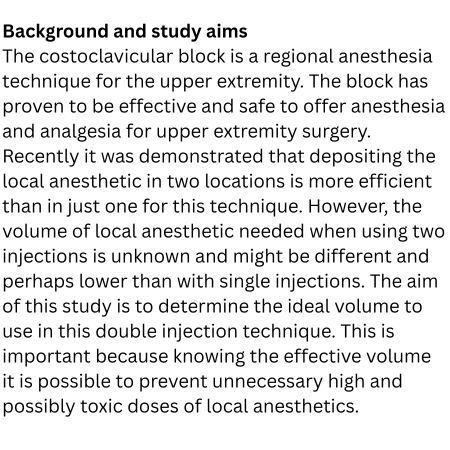
ALT The costoclavicular block is a regional anesthesia technique for the upper extremity. The block has proven to be effective and safe to offer anesthesia and analgesia for upper extremity surgery. Recently it was demonstrated that depositing the local anesthetic in two locations is more efficient than in just one for this technique. However, the volume of local anesthetic needed when using two injections is unknown and might be different and perhaps lower than with single injections. The aim of this study is to determine the ideal volume to use in this double injection technique. This is important because knowing the effective volume it is possible to prevent unnecessary high and possibly toxic doses of local anesthetics.

#WorldKidneyDay 2026 is 12 March & Don’t Kid Yourself is back – the joint campaign to bust myths about kidney disease & show why kidneys matter
We need your help to challenge misconceptions & spark conversations. Watch our socials to see how to get involved
#KidneysMatter
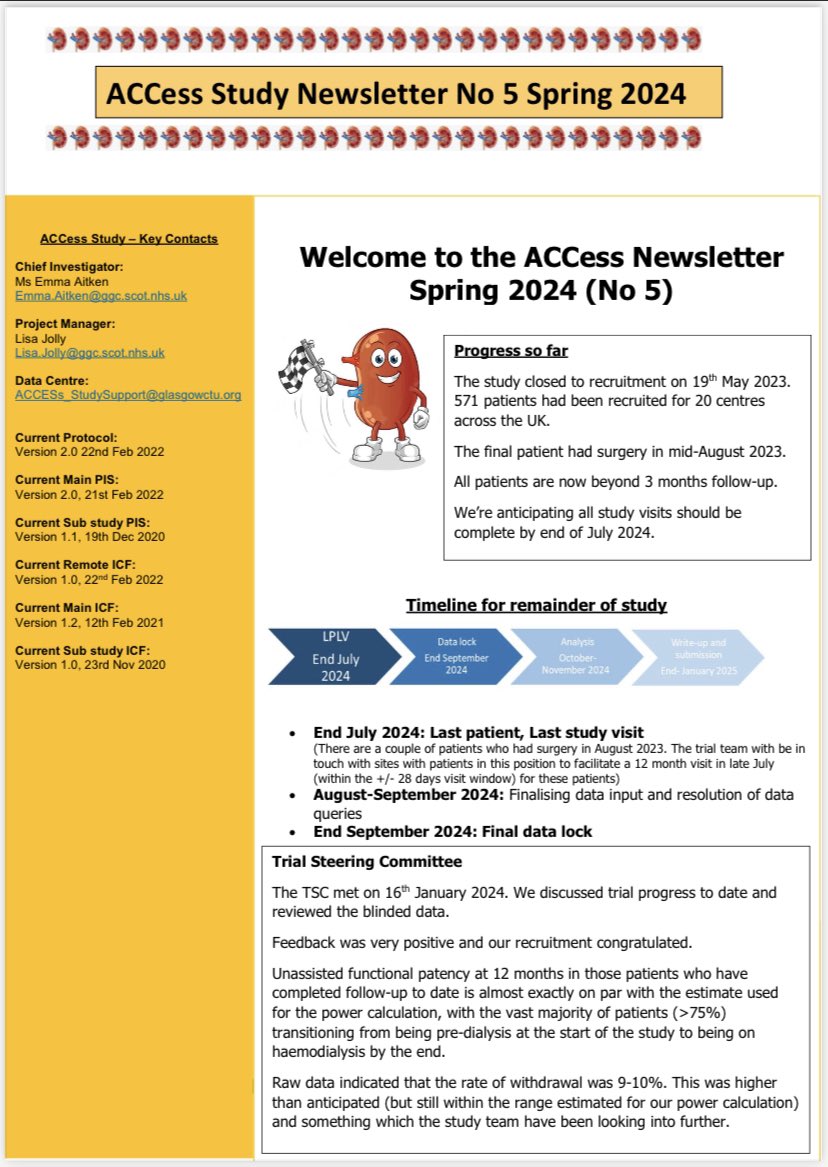
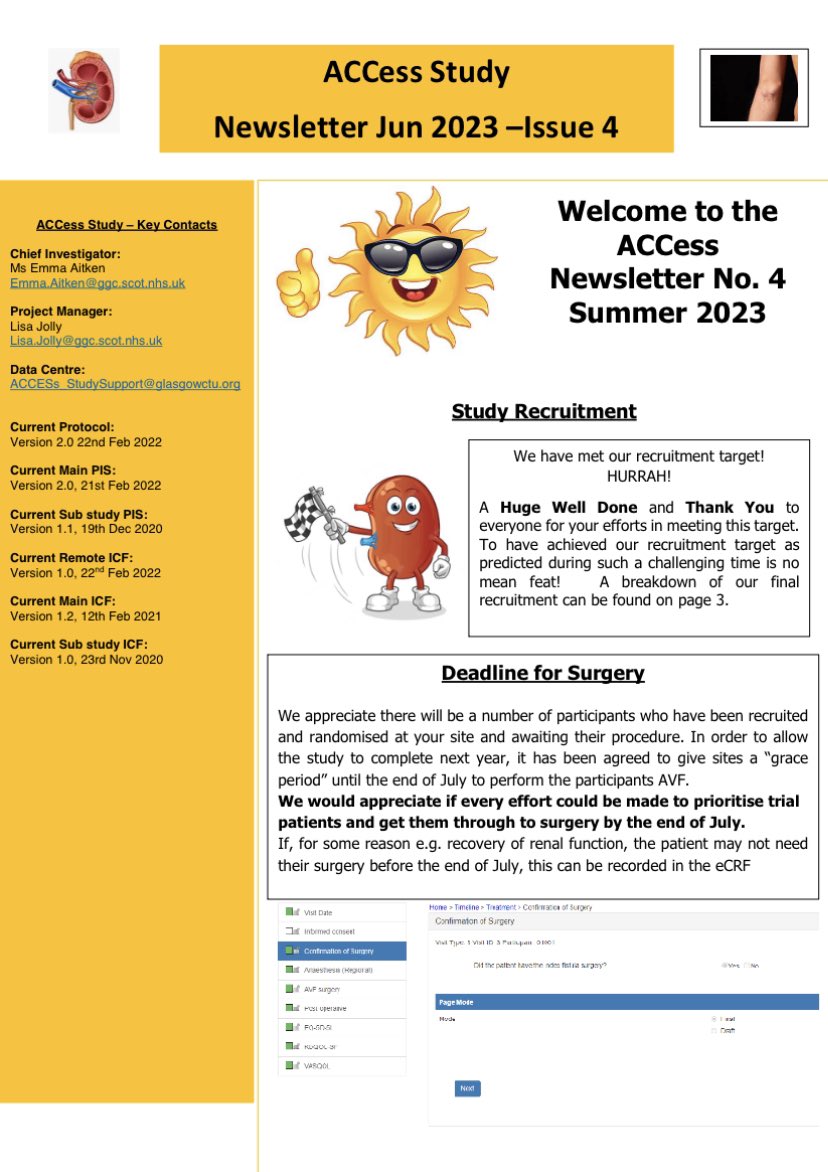
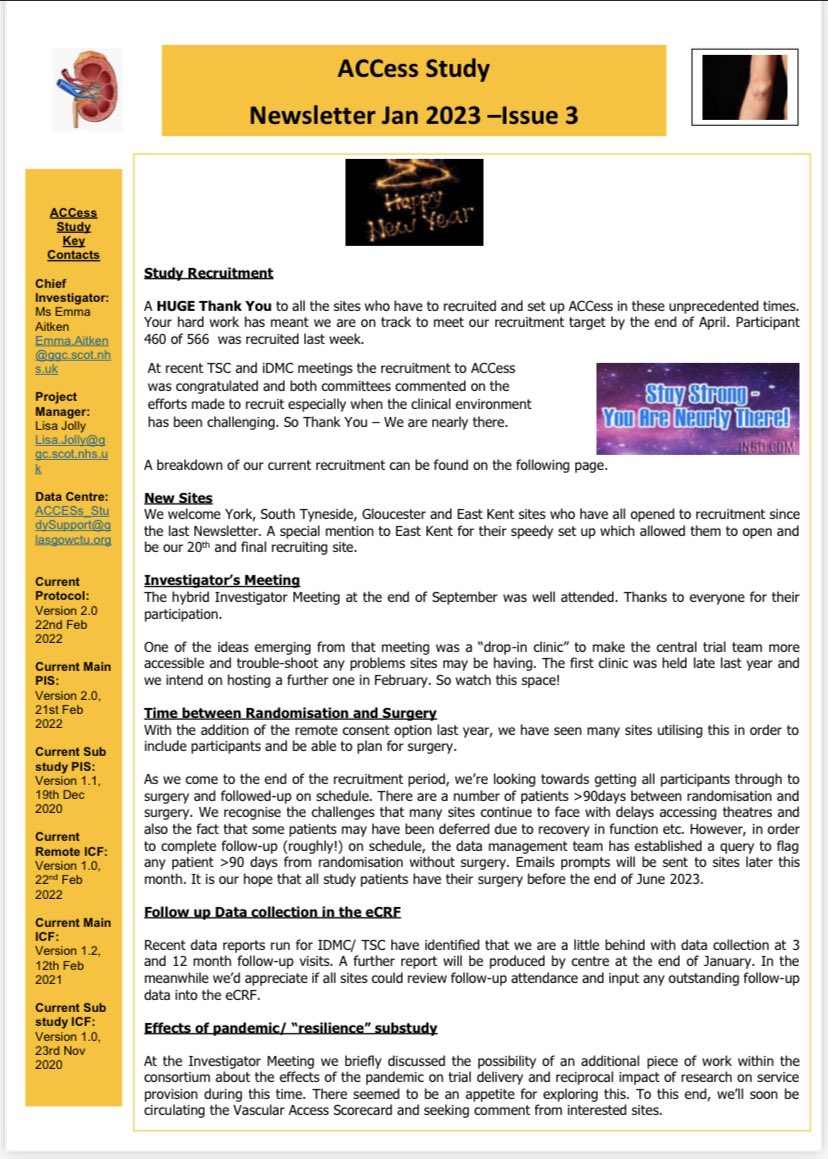
Follow-up is complete! 👏🏻🎉
The final patient attended for their final visit yesterday.
Congratulations everyone!
Now one final push to data lock at the end of September
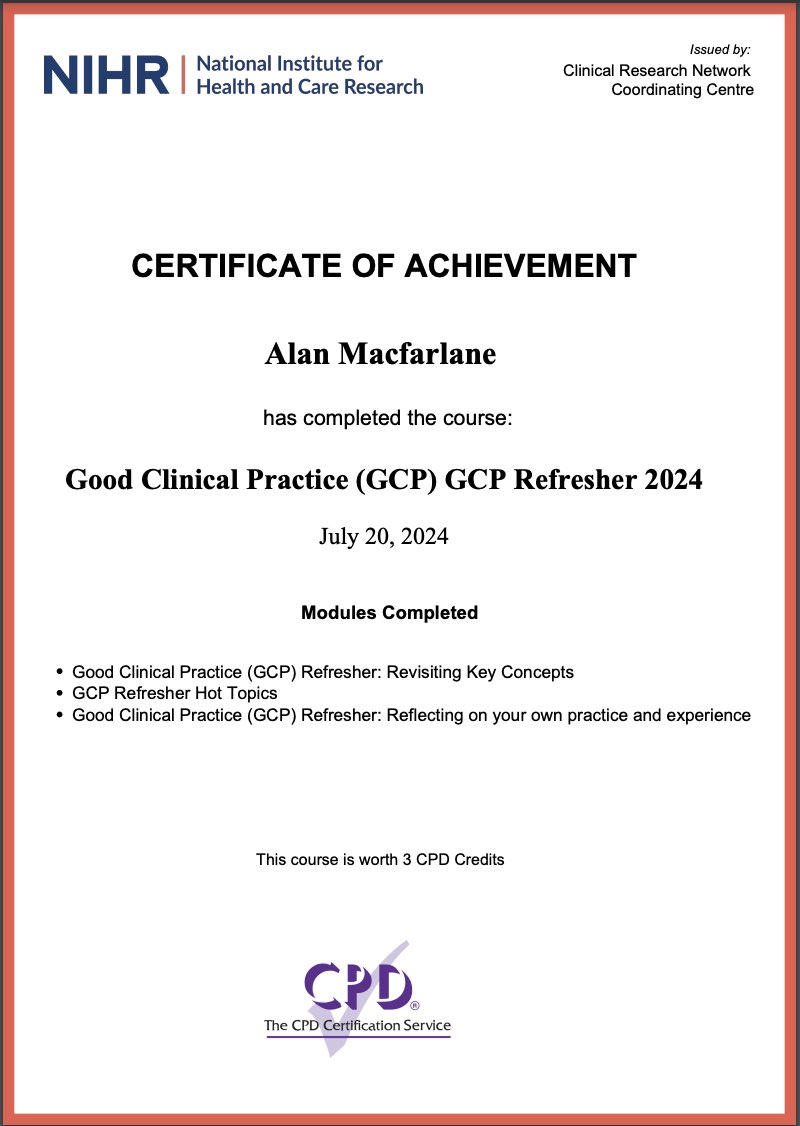
Saturday morning chores - refreshing GCP….😀
Quick and easy to do (and free) at @NIHRresearch learn website
➡️learn.nihr.ac.uk/
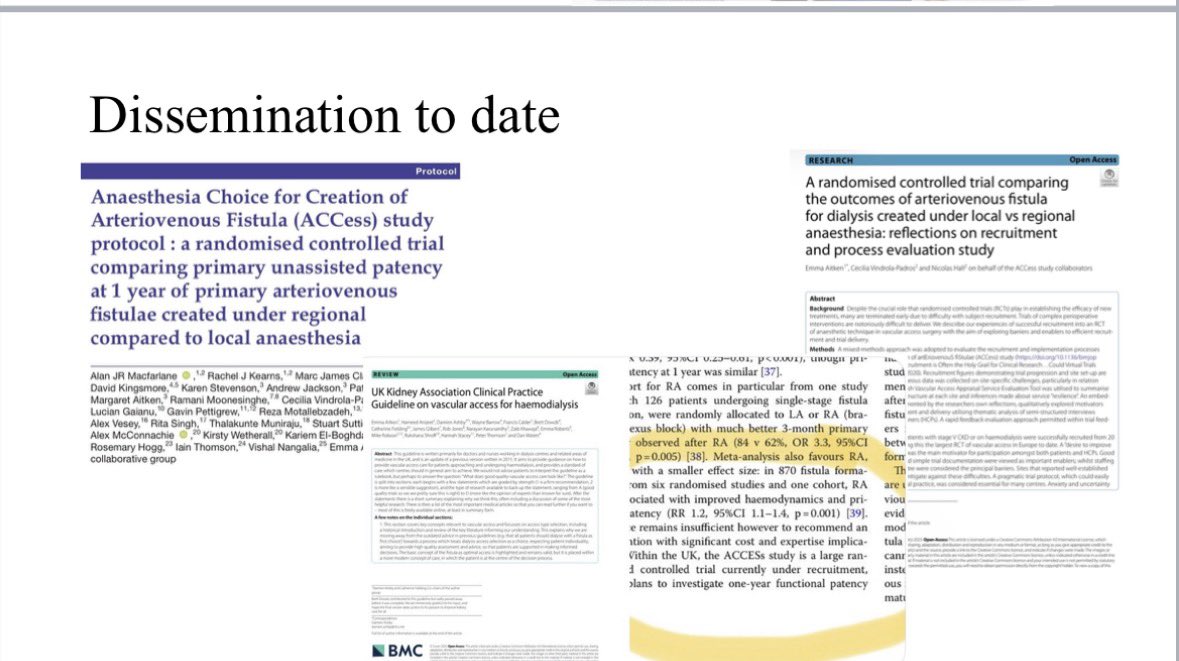
Not long now until data lock for the @study_access and then the @UofGlasgow statisticians can do their magic 🤞
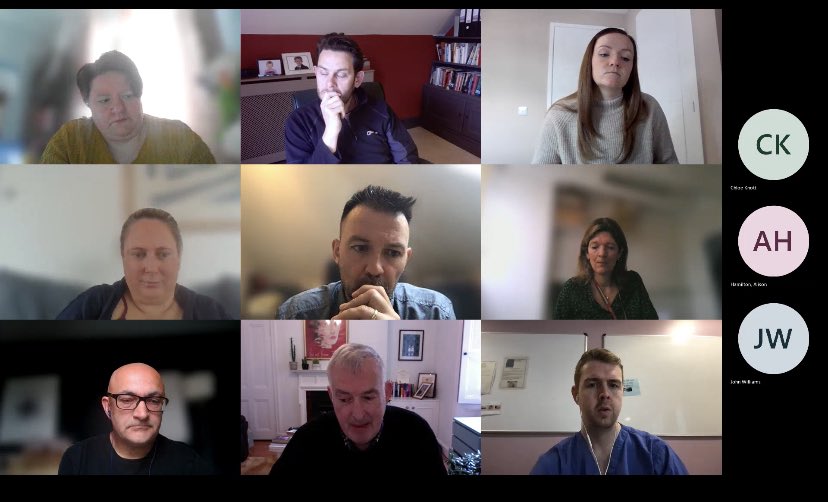
Very productive meeting with data managers and stats team @UofGIHW this morning.
Timelines for study close out:
-LPLV nationally: 19th August
-Data lock: 30th September
Lots of work to do. But coming along nicely.
Thanks to everyone involved. Excited to see results soon
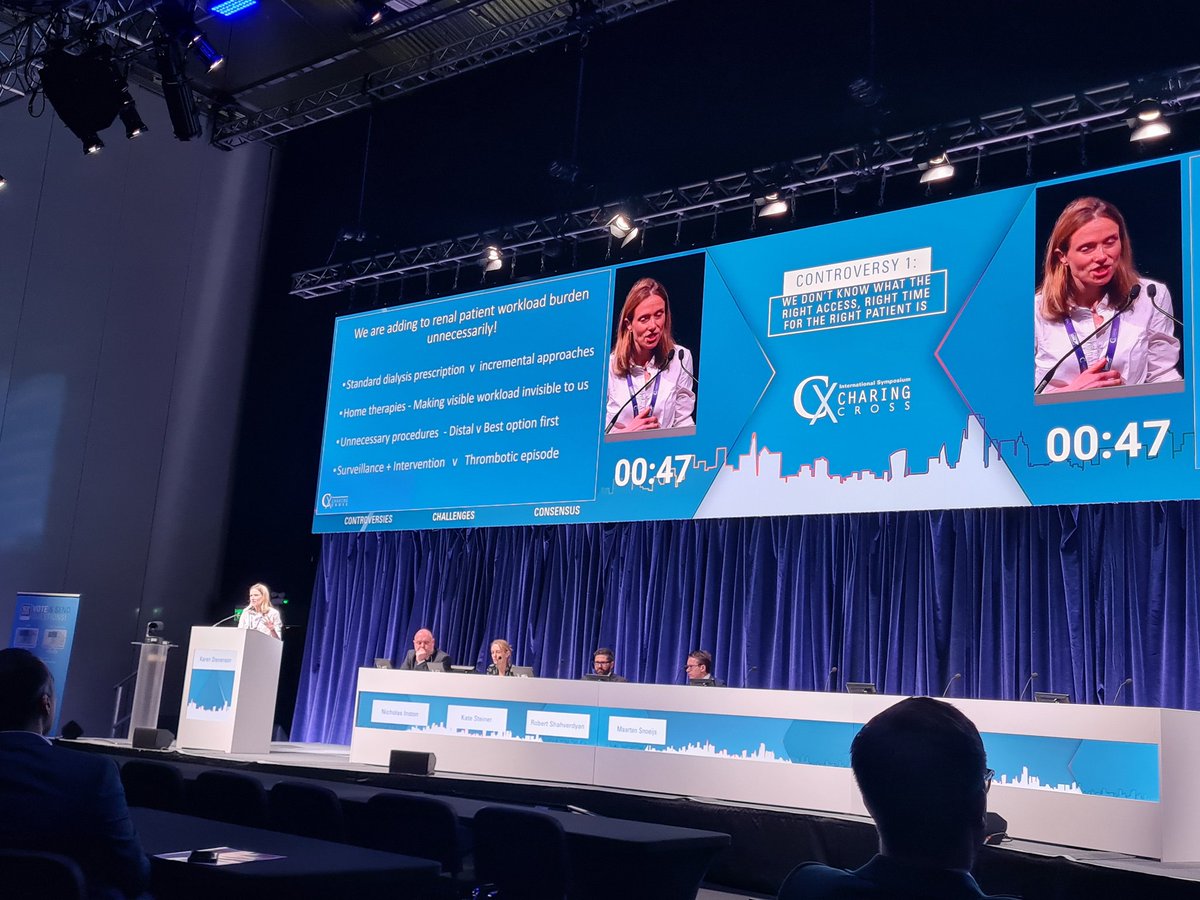
.@karensara77 outlines the treatment burden experienced by vascular access patients, and advocates the idea of 'minimally disruptive vascular access' - "maybe then, we can decrease the burden on our patients"
#CX2024
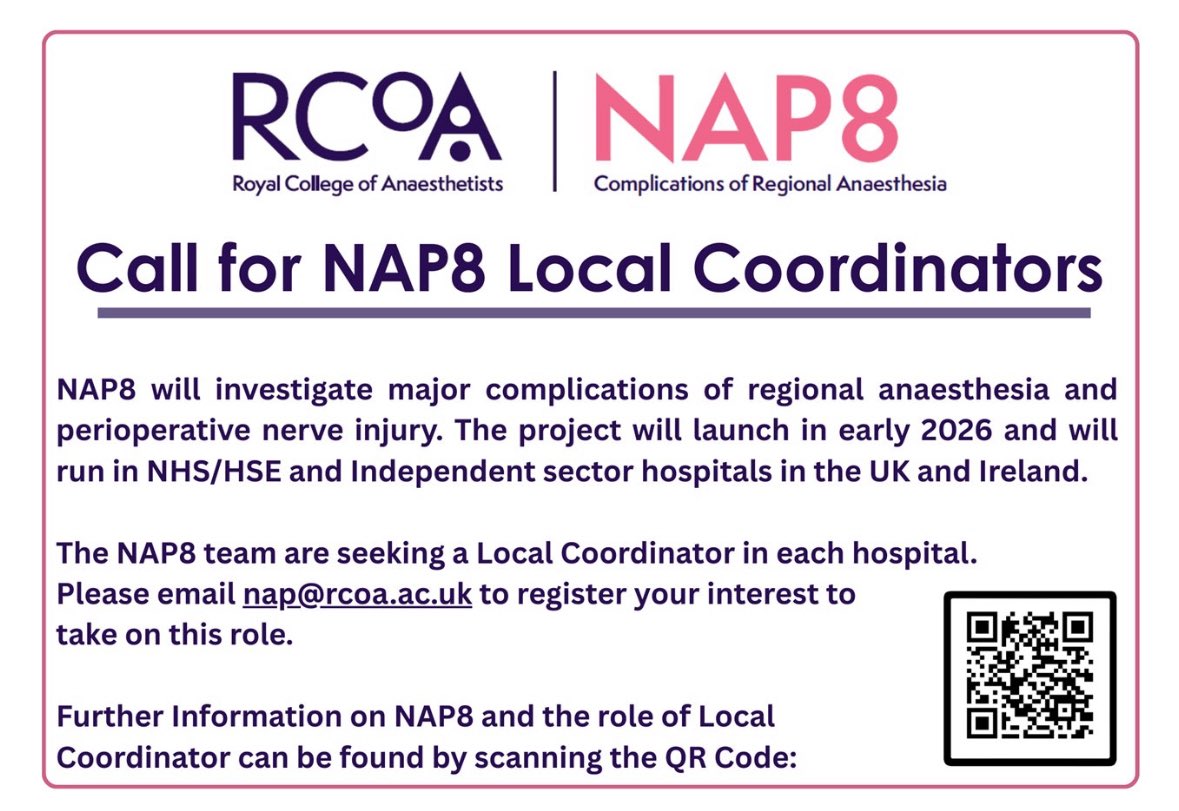
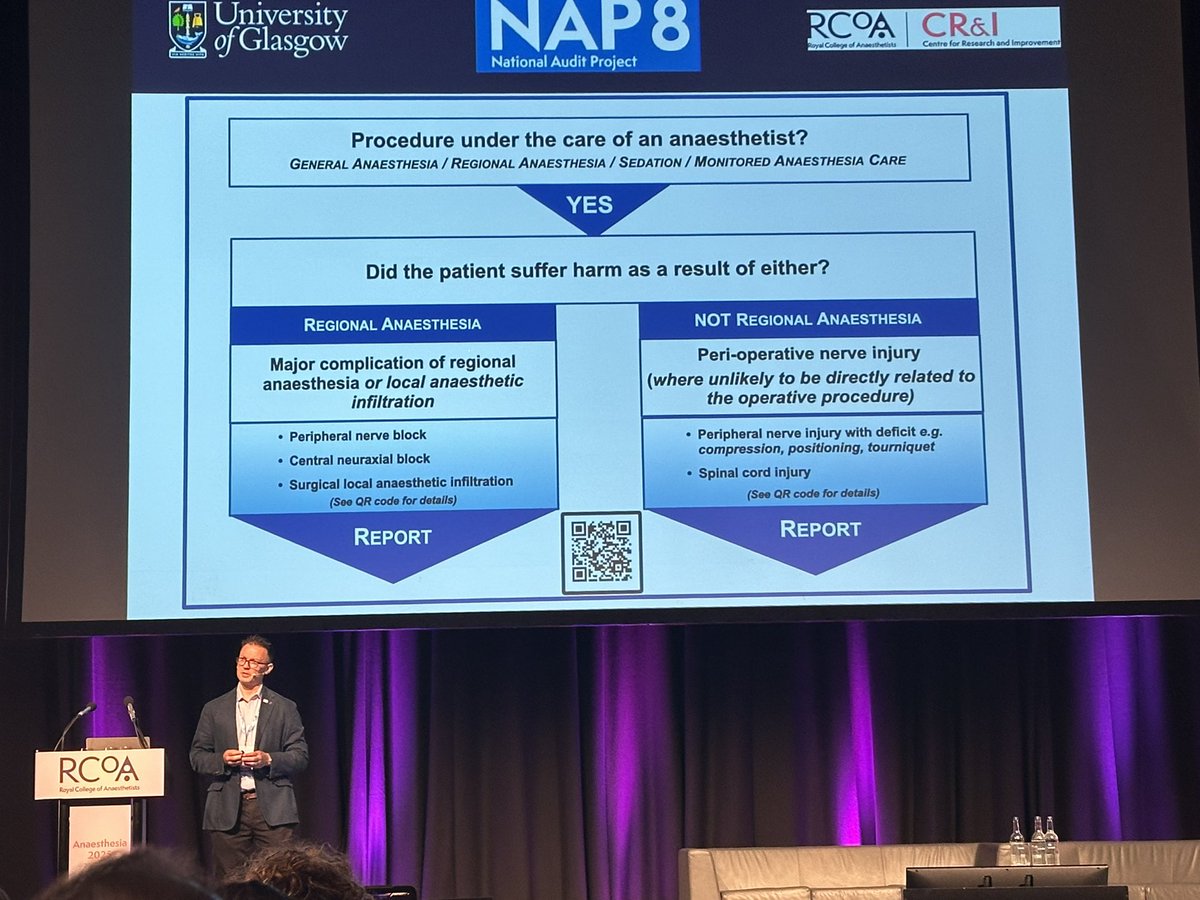
We are pleased to announce the topic for our 8th National Audit Project (NAP8) will be complications of regional anaesthesia (peripheral blocks and central neuraxial blockade) and other neurological complications of anaesthesia.
ow.ly/mLpR50QWqiK