
PhD | Mathematical Modeling | Cognition | Education
Joined January 2020
- Tweets 1,334
- Following 1,457
- Followers 188
- Likes 1,777
105 Photos and videos


Brenden retweeted

Jun 12
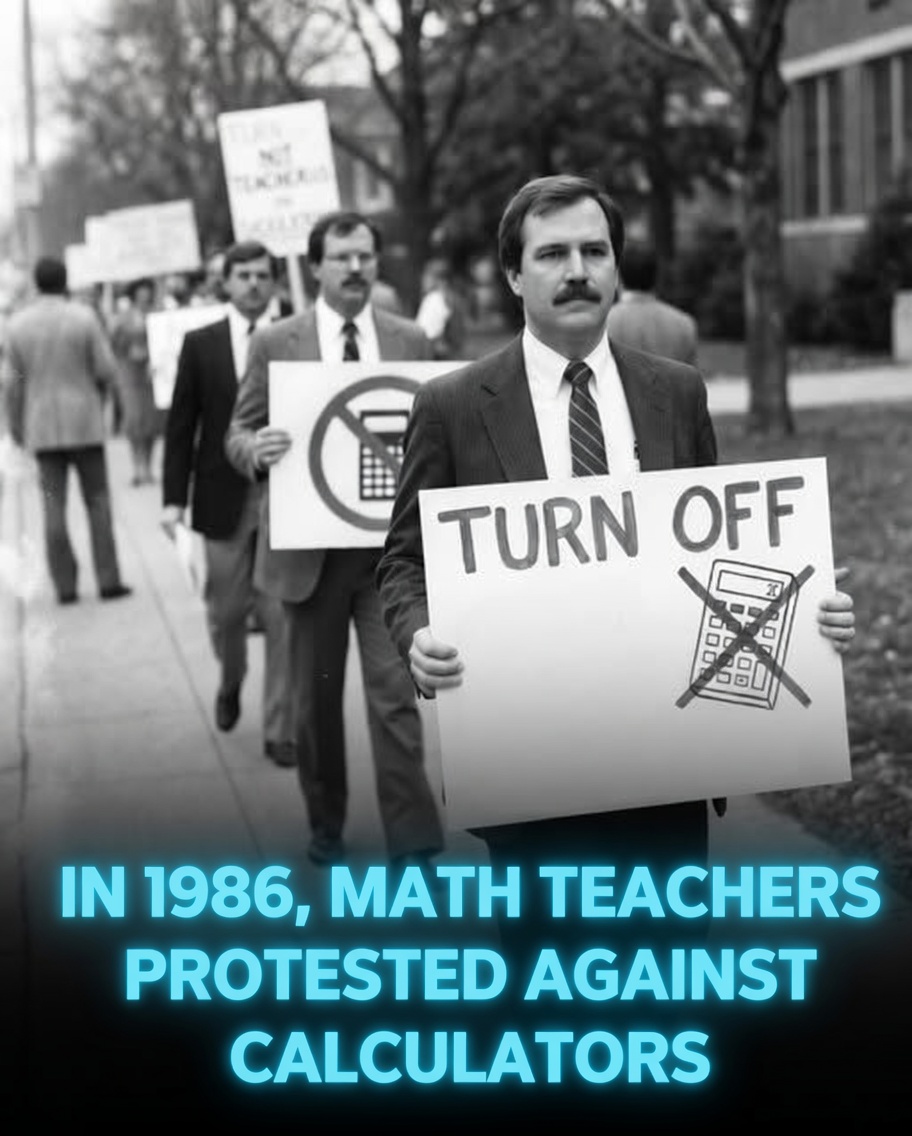
The so-called “calculator riots” of 1986 serve as a powerful reminder that today’s anxieties about artificial intelligence replacing human thinking are far from new.
In April 1986, a determined group of math educators staged a vocal protest outside the National Council of Teachers of Mathematics (NCTM) annual convention in Washington, D.C. Led by influential textbook author John Saxon, demonstrators carried signs declaring, “The Button’s Nothin’ ’Til the Brain’s Trained.”
They were opposing the NCTM’s new recommendation to incorporate electronic calculators into mathematics education at every grade level, including homework and exams.
The protesters worried that reliance on calculators would erode students’ mental arithmetic skills, numerical intuition, and deep conceptual understanding, potentially creating a generation of “calcuholics” overly dependent on machines.
The NCTM countered that calculators would free students from repetitive, low-level calculations, enabling them to tackle more complex problem-solving and higher-order thinking. Ultimately, the debate led to a pragmatic compromise: students would first master core mathematical concepts and mental strategies before using calculators as tools for more advanced work.
This balanced approach allowed technology to enhance, rather than replace, mathematical reasoning.
Today, as schools navigate the rapid rise of generative AI, the 1986 calculator compromise offers a valuable blueprint: prioritize genuine understanding first, then thoughtfully integrate powerful new tools.
143
463
1,446
92,739

Mar 19
Mathematical modeling is not a place to introduce content. I see many teachers using modeling or modeling adjacent tasks to attempt to explain the reasoning as to why the students are about to learn some topic.
Modeling is where existing knowledge (gained through explicit
1
30
Mar 19
instruction) gets applied, extended, and stressed-tested against reality. Build mathematics first, then sequence into modeling and modeling tasks.
23
Mar 17
substack.com/@mathmodelingla…
New article discussing the difference between mathematical modeling and discovery learning and why the mix up is suboptimal!
#math #matheducation #mathematics #mathematicalmodeling #mtbos #desmos #teacher #education
24
Mar 15
1) Every time I explain mathematical modeling to a teacher, the same thing happens. Around the part where I say "students make their own assumptions," they smile and say "oh, like discovery learning." No. Not like discovery learning. And mixing them up is quietly ruining modeling
1
30
Mar 15
5) But it only works if the math foundation is already there. Content first, modeling second.
Because the task requires the content to already be operational. Sequence isn't optional.
1
13
Mar 15
6) I am writing the full argument over at Math Modeling Lab this Tuesday.
mathmodelinglab.substack.com…
#mtbos #mathteacher #teaching #math #matheducation
17
Mar 14
Modeling can only effectively occur after requisite knowledge is mastered.
Every attempt at engaging in authentic modeling before that is cognitive overload.
14
Mar 12
Modeling requires students to:
Take mathematical tools they already have
Apply them to an ambiguous situation
Make assumptions about what matters
Build a representation
Execute the math
Interpret the result in context
Every step presupposes the math is already accessible.
18
Mar 7
I believe AI will be detrimental for aspects of mathematics education. Students will get worse at adding/subtracting, multiplying/dividing, solving equations because the cognitive work is offloaded.
However, I think mathematical modeling education will grow with AI which is 👍
15
Mar 6
My x algorithm is messed up.
Half of it is about AI destroying all jobs/education/humanity
The other half is posts made with the help of AI
1
15
Mar 3
🤦
Mar 2

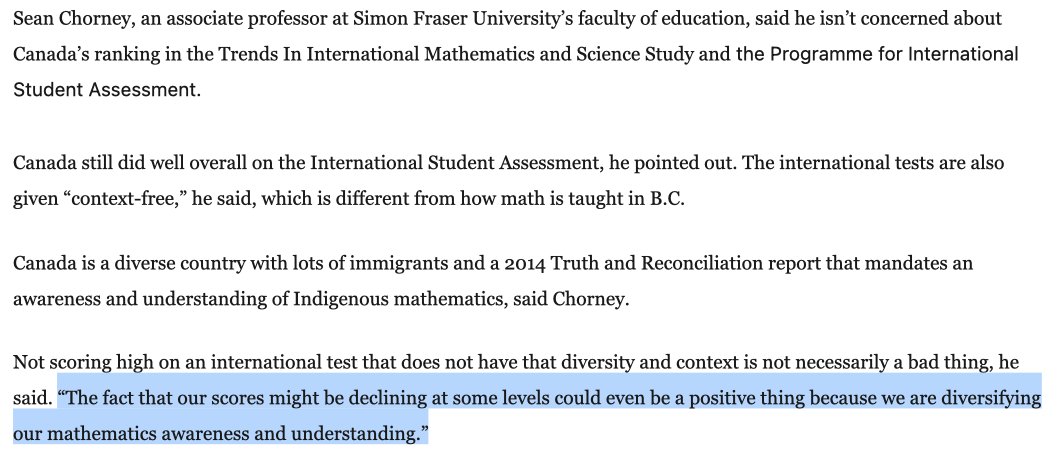
😲Wow. This ed prof even says that declining math scores could be a good thing. “The fact that our scores might be declining at some levels could even be a positive thing because we are diversifying our mathematics awareness and understanding.” vancouversun.com/news/canada…
1
29
Brenden retweeted

Feb 22
A list of evidence based peragogy that I'd wager 90% of educators in America don't know but should:
🍎 John Sweller’s Cognitive Load Theory
🍎 Barak Rosenshine’s Principles of Instruction
🍎 Retrieval practice and interleaving
🍎 Explicit instruction
🍎 Frequent opportunities to respond
🍎 Cold calling
Why don't American teacher prep colleges teach these things?
18
36
193
31,694
Feb 14
I think the real risk of artificial intelligence in mathematics education is that we will experience curriculum changes that are counter to the development of mathematical competence.
14