Allianz #Accelerator Founder & MD (@AllianzStartup) #UnicornBreeder #investor #AI #longevity #braintech #robotics and more
Joined September 2010
- Tweets 9,663
- Following 4,904
- Followers 3,682
- Likes 2,735
898 Photos and videos




Pinned Tweet

Jun 12
💥 @elonmusk is first human to go over 1 trillion $ of wealth… not any more billionaire but trillionaire 🚀

51
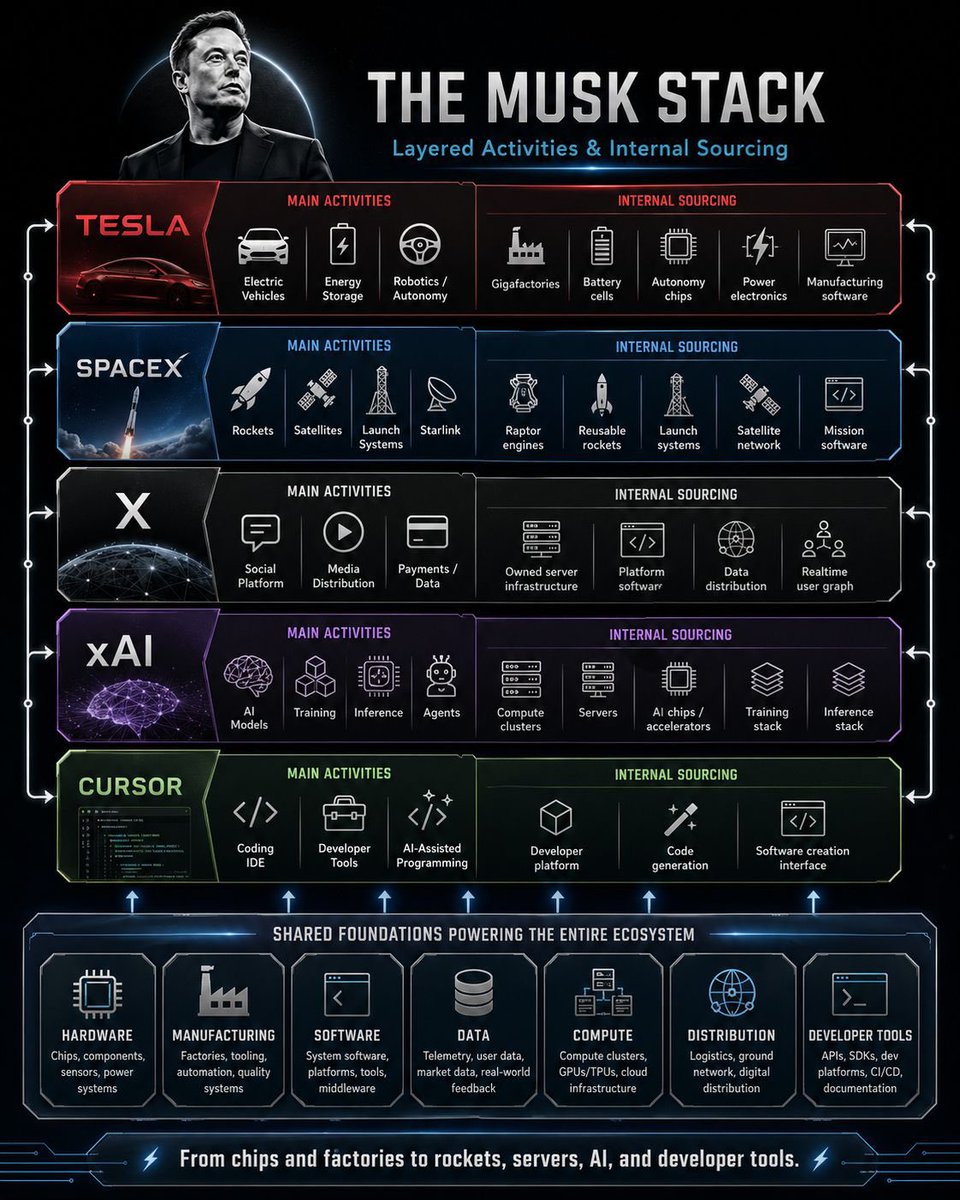
🔥🔥🔥 best post ever on SpaceX

45
So true !! go @elonmusk 😇
Jun 8

Karpathy said something we all read without really understanding it.
Elon Musk doesn't run the biggest companies in the world. He runs the biggest startups in the world. And he's the only person on Earth who knows how to do that at this scale.
That nuance isn't a detail. It's becoming the standard, and I think in ten years it will be the only acceptable way to run a company.
What Karpathy describes is a man who refuses growth by default. Small teams, deeply technical. No middle management to filter the information. Engineers and code as the only source of truth, never a VP's slide deck. A CEO who spends half his time talking directly to the people who build, not five layers up in an ivory tower. And a personal obsession with removing bottlenecks one by one, by hand.
Most people read this as the eccentricity of a genius. I read it as a job description.
Because this model implies a few non negotiables.
Being a polymath. You cannot understand the real state of your company if you only speak one language. You need to drop into the code, climb back up into go to market, open the cap table, read a contract, challenge an architecture. Every layer, every node.
Being curious about everything, not as a hobby, as a necessity. Curiosity is the tool that gives you a complete map of your organization. Without that map, you fly blind and you outsource your judgment to people who have every incentive to hide the truth from you.
Not wanting to be liked. This is the part nobody owns. You cannot make the right calls and give real feedback if your deep need is to be appreciated. The need to please is the number one enemy of quality. It turns every decision into a social negotiation and every piece of feedback into a lukewarm compliment.
And the last point, the most important one. Building for humanity, not for profit itself. When abundance arrives, profit for the sake of profit loses all meaning. The only thing left is whether what you build actually moves people forward. That's what justifies the intensity.
It took me years to understand this.
In every company I worked at, I couldn't understand why the CEOs, and even the CTOs, lived in their ivory tower. Disconnected from the product, disconnected from the ground, managing slides instead of managing reality. It felt absurd to me. Almost professional malpractice.
And then I understood the real reason.
People, and organizations, on average never question the status quo. They endure it. The ivory tower isn't a strategic choice, it's the default state of any structure you let grow without friction. Nobody decides to become disconnected. You become it because it's the path of least resistance.
Musk didn't invent a magic method. He just refused the default. His entire singularity fits in one sentence: being a permanent force against the entropy of his own company.
That's the real standard coming. Not the size of the teams. The refusal of the status quo as a daily discipline.
And most companies will die not because they were wrong, but because they never thought to ask themselves why they did things the way they did.
1
73
Jun 8

Elon Musk just unveiled SpaceXAI's first AI satellite.
• 150 kW peak power / 120 kW sustained compute power
• 150 kW solar array using SpaceX-manufactured solar technology
• Centralized AI compute payload designed for high-performance AI workloads
• 70-meter wingspan when fully deployed
• 110 m² deployable liquid radiators to remove waste heat in space
• Redundant cooling loops with integrated micrometeoroid shielding
• Designed to launch on Starship, enabling the mass-to-orbit needed for large-scale space computing
• Uses laser links while avoiding many of the complex communications systems required by Starlink satellites
• SpaceX believes future versions can scale far beyond this first design
Elon Musk says the path to scaling AI in space requires 3 things:
• Massive launch capability (Starship)
• Enormous solar power generation
• Large radiators to reject heat from AI chips
He also suggested that truly large-scale orbital AI could eventually require hundreds of gigawatts to a terawatt of power, implying millions of tons of infrastructure in orbit.
1
57
Again Elon understood everything. He is selling shovels and picks to the gold miners of AI @Google and @AnthropicAI @elonmusk #Genius from LLM to AI infrastructure
42
May 21
SpaceX is actively hiring world-class engineers/physicists for SpaceXAI, even if you have zero prior experience in AI. Smart humans figure it out fast.
Please send an email with ~3 bullet points demonstrating evidence of exceptional ability to ai_eng@spacex.com.
40
May 20
👀
May 19

Personal update: I've joined Anthropic. I think the next few years at the frontier of LLMs will be especially formative. I am very excited to join the team here and get back to R&D. I remain deeply passionate about education and plan to resume my work on it in time.
67
May 10
👀

55
👀
May 6

We are back. After one year of quiet building.
Introducing GENE-26.5, our first robotic brain that takes a major step toward human-level capability.
For years, robotics has struggled to learn from the world’s largest and valuable data source: Humans.
Solving it means rethinking the whole stack from the ground up:
- A robotics-native foundation model.
- A 1:1 human-like robotic hand.
- A noninvasive data collection glove for motion, force, and touch.
- A simulator that turns weeks of experiments into minutes.
GENE-26.5 is trained across language, vision, proprioception, tactile, and action. We designed a set of tasks to test how far we can go with this new paradigm.
Fully autonomous, 1x speed, one model, same weights. (Enjoy with sound on)
We are approaching the endgame for robotics.
And this is just a beginning.
2
59
‘Tunnels are so under-appreciated’ 😇

Elon Musk: "I'm actually quite a big fan of tunnels. Tunnels are so under-appreciated."
63
Apr 24
🔥🔥🔥

The hood isn’t a costume. It’s a choice.
Something is building on Ethereum.
One artist. Just the art and the identity.
The hood stays on.
Are you ready for Hoodlrz ?
28
Apr 16
👀🔥
Starship Super Heavy Booster, the most powerful moving object ever made by far
1
27

Apr 15
👀
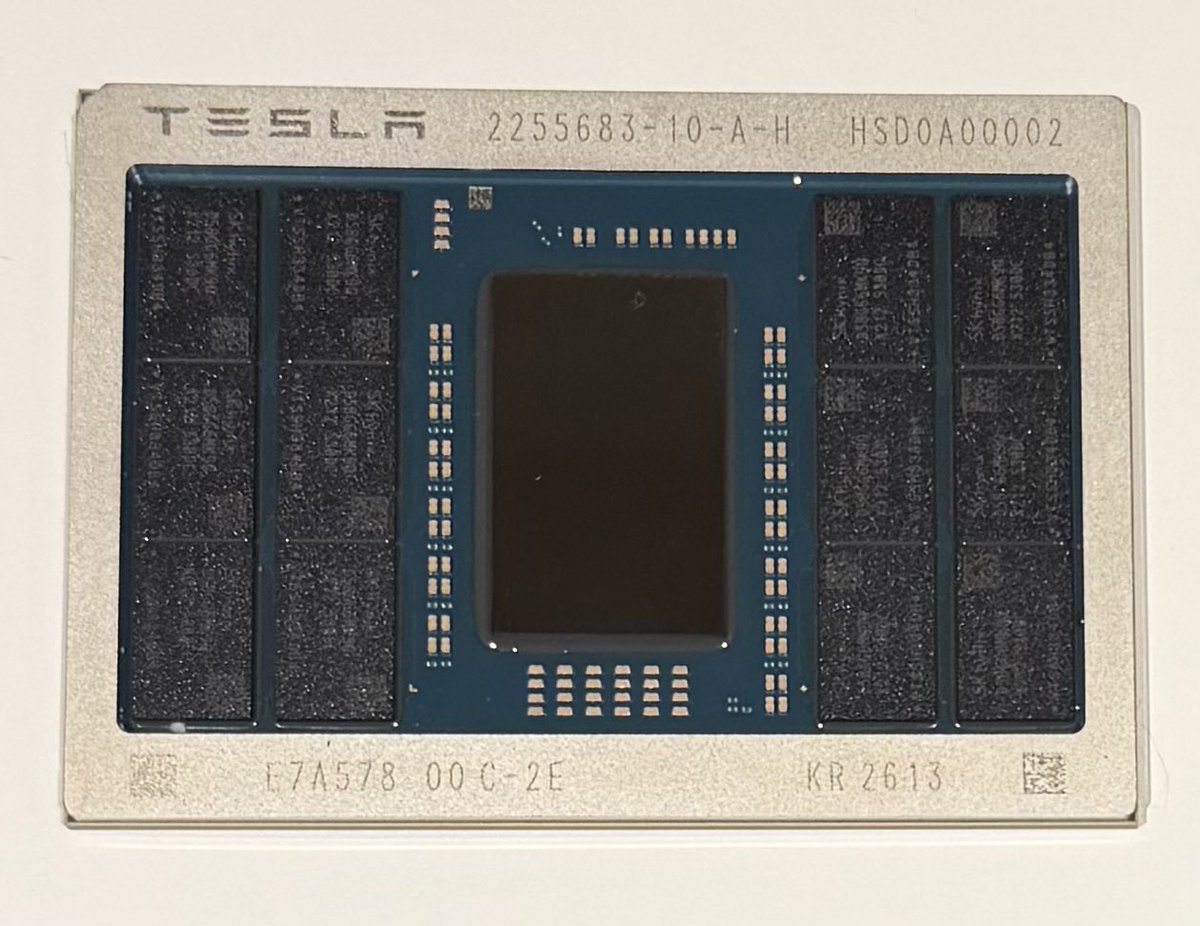
Congrats to the @Tesla_AI chip design team on taping out AI5!
AI6, Dojo3 & other exciting chips in work.
33
I just minted one EXPERIMENT 1 from @obv_ious
manifold.xyz/@2044822929/id/…
9
👀

Liftoff.
The Artemis II mission launched from @NASAKennedy at 6:35pm ET (2235 UTC), propelling four astronauts on a journey around the Moon.
Artemis II will pave the way for future Moon landings, as well as the next giant leap — astronauts on Mars.
23