
Track everything, guess less. For guys who feel great one week and terrible the next with no idea why.
Joined May 2026
- Tweets 175
- Following 67
- Followers 21
- Likes 258
11 Photos and videos
Pinned Tweet

Jun 11
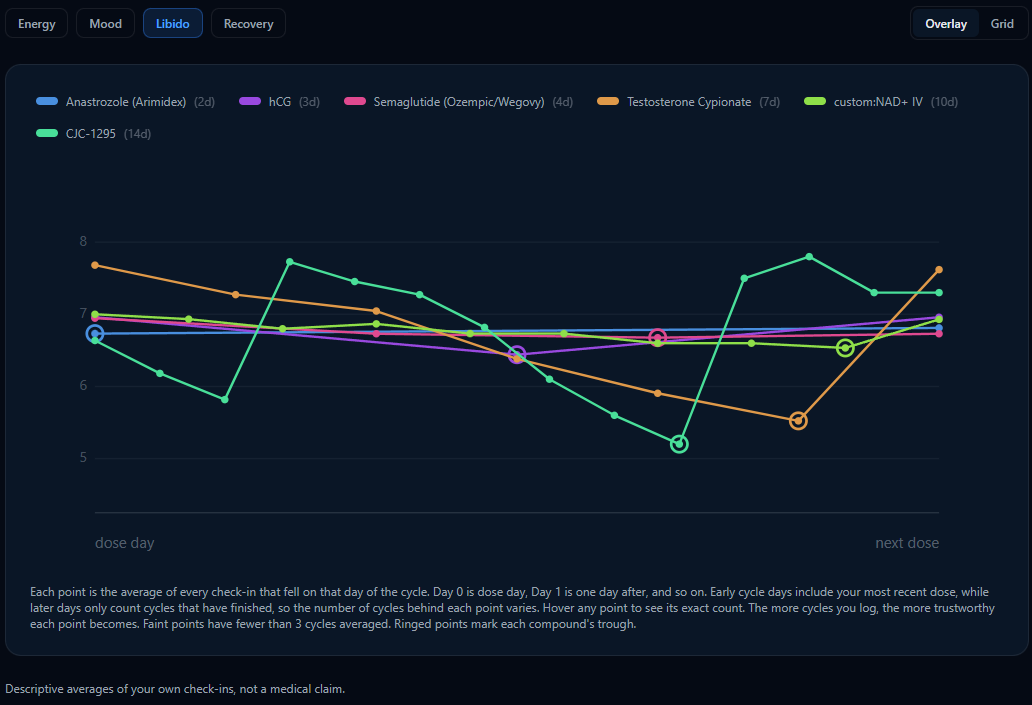
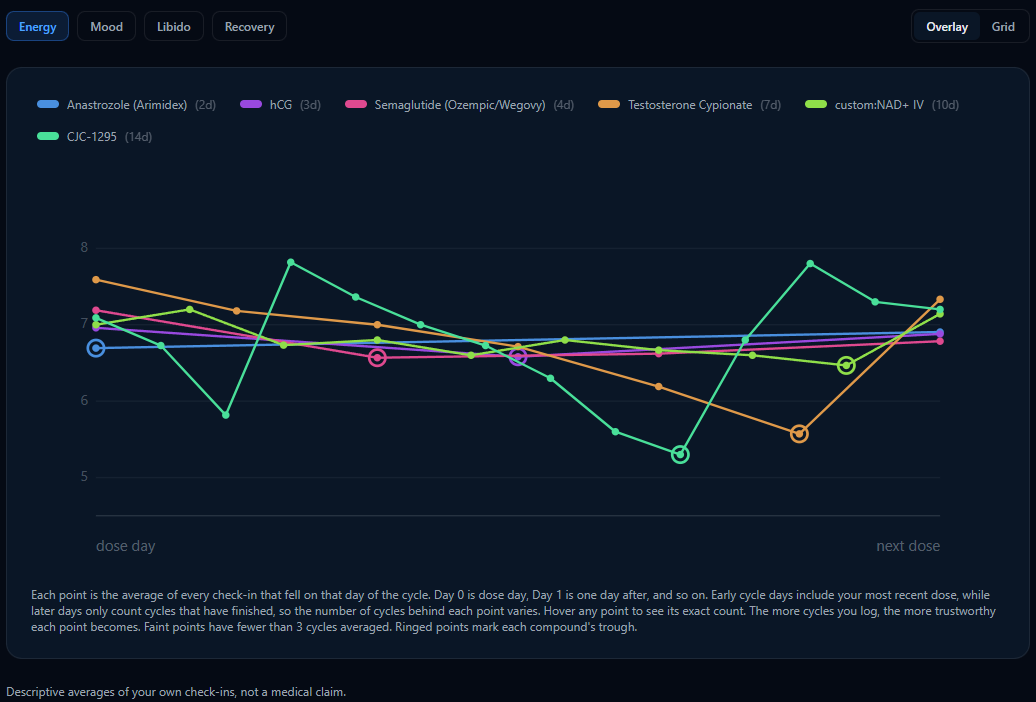
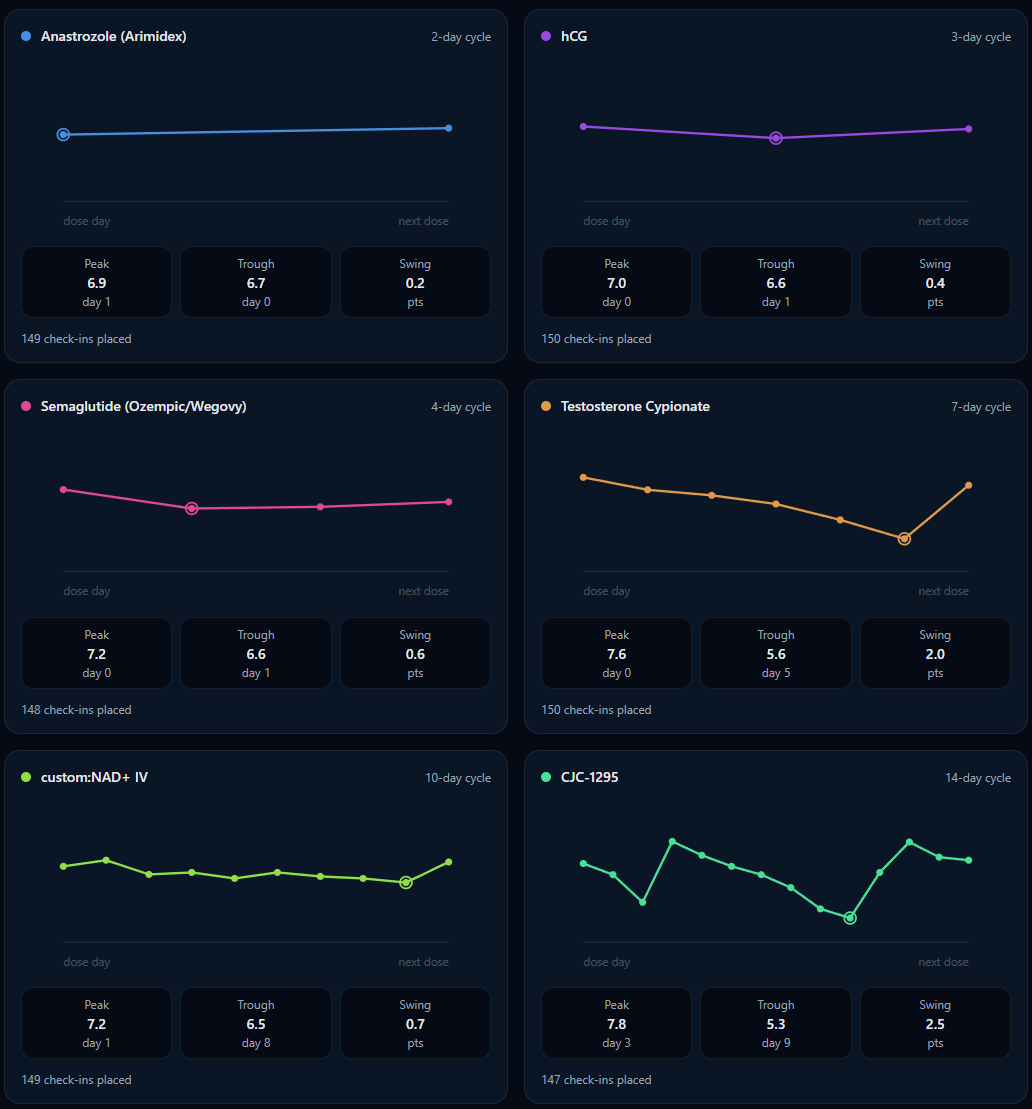
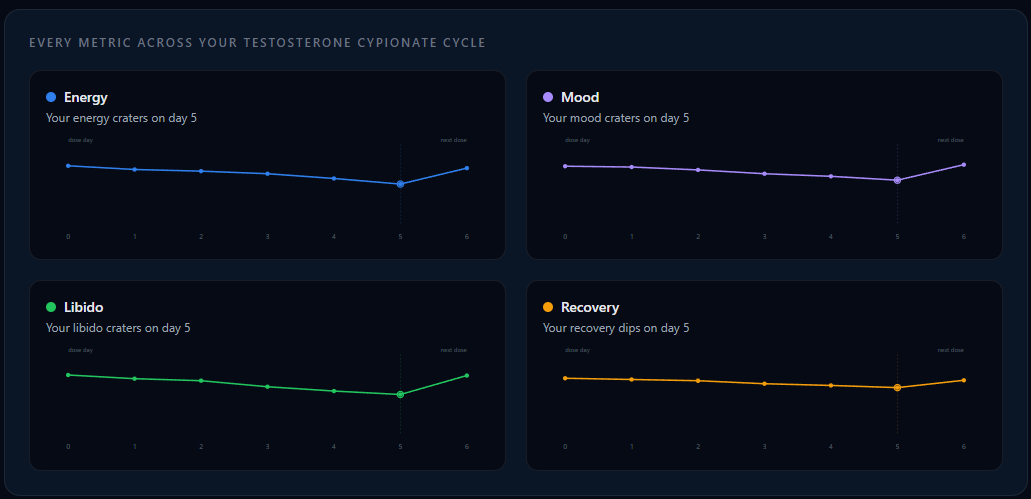
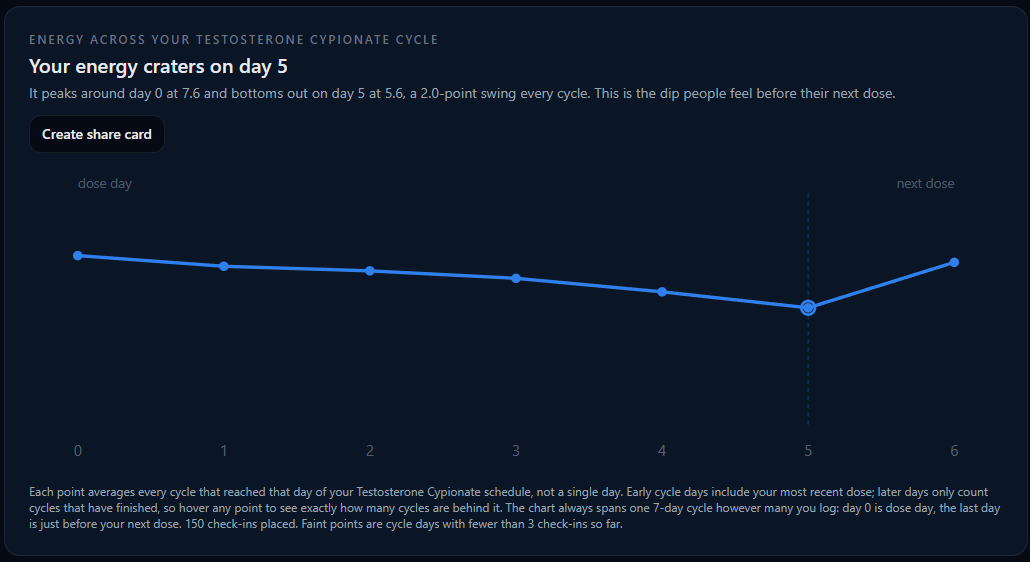
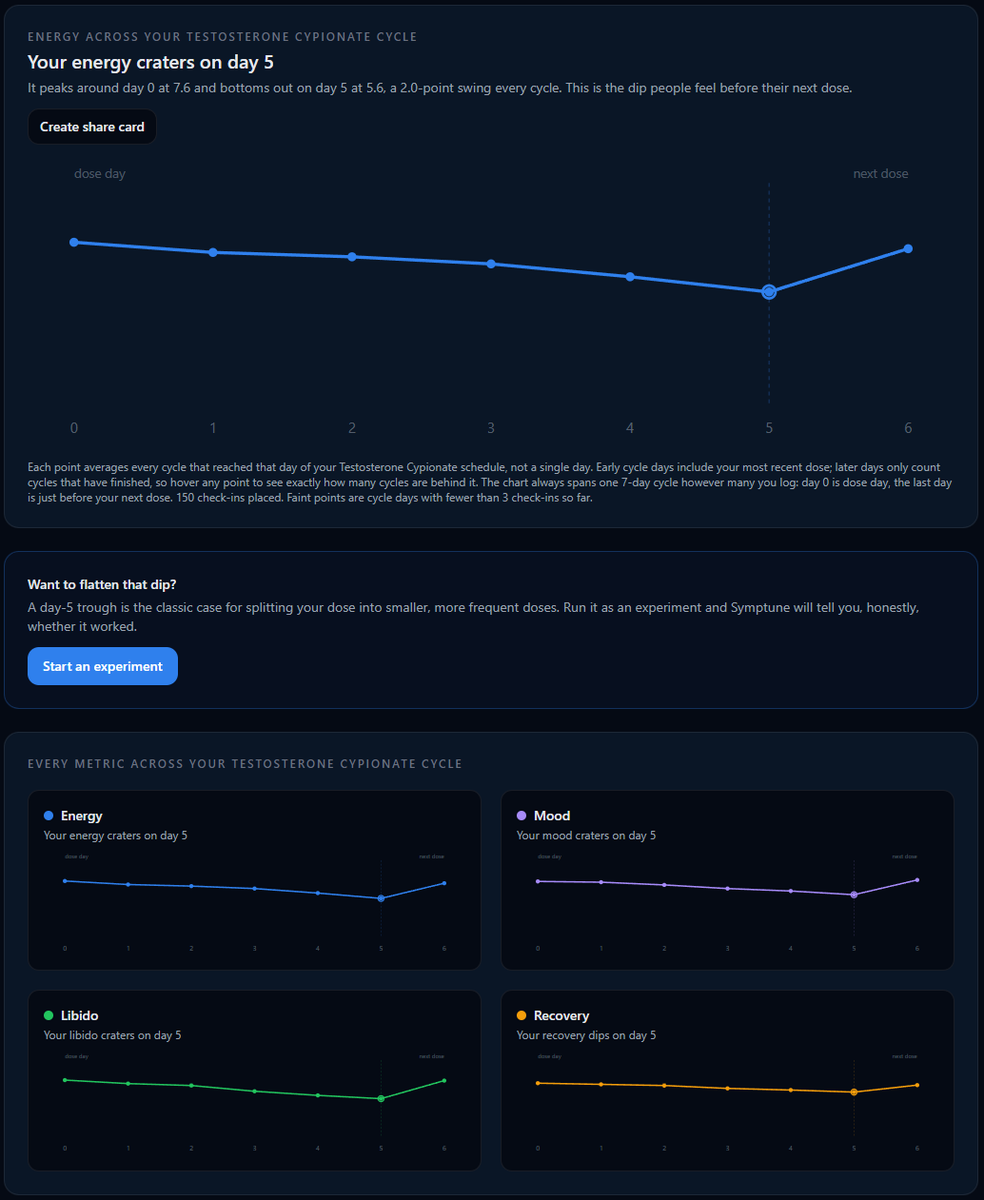
1/8) The pre-injection dip is the most argued about, least measured thing in this whole space.
We built a feature that answers it. Your check-ins, every cycle, one curve.
It's called "Your Cycle". Quick walkthrough below. 🧵
1
1
89
Testosterone has been declining about 1% per year since the late 1980s, independent of aging. Between 1987 and the early 2000s, levels dropped roughly 17% in age matched men. A study tracking 102,000 men through 2019 confirmed it's still happening.
Researchers controlled for obesity, smoking, and lifestyle. Still declined, no explanation.
When your doctor says your T is normal, that's relative to a population that's significantly below what it was in 1987. The range is the same, but the average man sits a lot lower in it than he did in the past.
1
3
686
Jun 13
Endocrine Society guidelines say check hematocrit at 3-6 months and annually. Ask ten guys on TRT what their last hematocrit reading was.
1
17
Jun 13
Cranking your testosterone higher won't fix your libido. Low T genuinely kills sex drive, so guys assume more must be better and keep chasing a bigger number.
In controlled studies, sexual function was about the same whether nadir testosterone landed at 250 or 2370. Once you're out of the basement, more isn't reliably more. Look at your estradiol, sleep, and stress before you touch your protocol.
1
20
Jun 12
Most guys on TRT don't need an aromatase inhibitor. High E2 causing gyno is a real thing, so people overcorrected and started crushing estrogen to the floor. Problem is low E2 hits libido and bone too. In a 12-month trial men on anastrozole lost bone at the spine and hip while their testosterone sat high. The fix is usually your dose, not an AI.
4
8
900
Jun 11
1/8) The pre-injection dip is the most argued about, least measured thing in this whole space.
We built a feature that answers it. Your check-ins, every cycle, one curve.
It's called "Your Cycle". Quick walkthrough below. 🧵
1
1
89
Jun 11
7/8) Why build it like this?
Most tracking apps either bury you in raw logs or invent insights they can't back up.
The honest middle: collect one clean daily signal, average it carefully, label the uncertainty, and let you draw the conclusion.
Your labs and your doctor handle the rest.
1
16
Jun 11
8/8) "Your Cycle" is live. Check-ins take about 20 seconds a day, and the curve sharpens with every cycle you log.
If you've ever wondered whether your dip is real, this is the cheapest way to find out.
Link in bio.
11
Jun 10
Hematocrit is one of the TRT markers most worth watching. Testosterone raises red blood cell production, more so on injectables, and it can climb quietly over months. It's one of the few markers where the trend matters more than the symptom, because you often won't feel it until it's already high.
1
20
Jun 10
Your afternoon energy crash might be your morning coffee, not your protocol. Caffeine's half-life averages 5-6 hours, so a 2pm cup still has a meaningful amount active near bedtime. There's trial data showing 400mg six hours before bed cut total sleep by about an hour. People blame their dose for problems their caffeine is causing.
1
28
Jun 7
A lot of guys on TRT still feel like garbage. Fatigue, mood swings, poor recovery. etc. The dose gets blamed first.
Sometimes it is the dose. But sometimes it's the same stuff that was dragging them down before they started: sleep, alcohol, stress, metabolic health.
Changing your dose is the easy lever.
How many of you actually cleaned up sleep, alcohol, and stress before blaming the dose?
1
24
Jun 6
Low T is real, but bad sleep, chronic stress, and metabolic issues can all show up looking exactly like low T. The path of least resistance runs straight from symptoms to labs to prescription. There's no money in telling someone to fix their sleep for 90 days and then retest.
Not arguing against TRT. Just that the number and the symptoms aren't always proof T was the actual problem. How many people here actually cleaned up the basics before pulling the trigger?
3
4
637
Jun 5
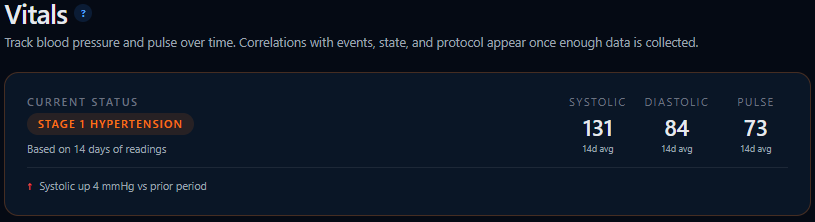
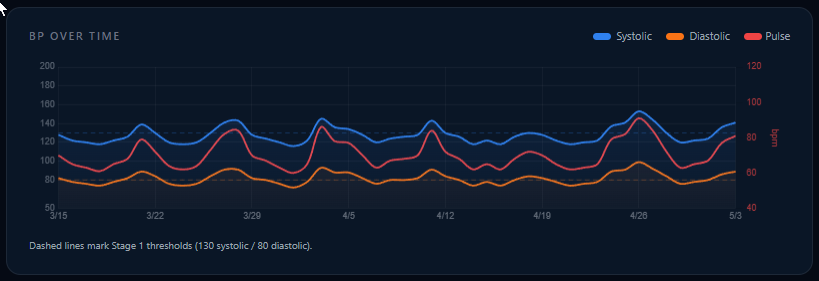
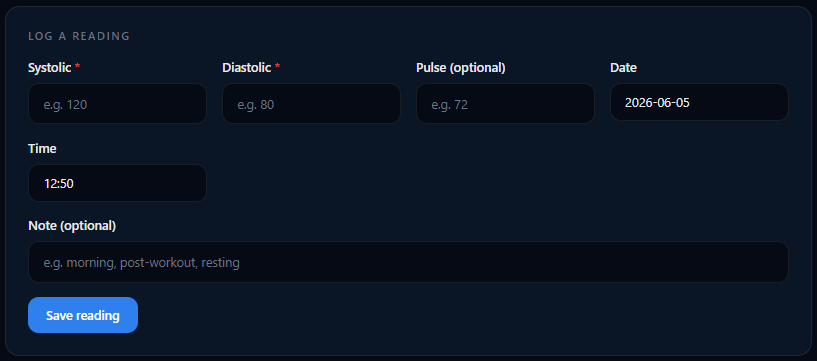
1/6) This is exactly why we log BP from week one. Most guys only check it before they start, then never again. One reading tells you almost nothing. The trend over the first few months is the whole story.
Adding BP and pulse to Symptune sounded simple. It wasn't. Thread on why👇

At our clinic, we sometimes see a small, temporary increase in blood pressure when patients start TRT.
For some men, systolic pressure (the top number) may rise 10–15 points early on.
Diastolic can rise too but usually not as much.
This doesn’t happen to everyone and it’s usually not permanent.
Blood pressure is rarely caused by one thing. It can be affected by body weight, sleep, stress, sodium intake, alcohol, hydration, training, cardio, genetics and medication use.
I’ve also seen lean guys with normal BMIs develop high blood pressure, so it’s not always just a “body fat” issue.
The good news is that for many patients, this improves over time…especially when testosterone is used as a tool alongside better habits.
That means:
>Training consistently
>Doing cardio
>Eating better
>Improving sleep
>Losing body fat if needed
>Monitoring blood pressure regularly
For a lot of guys, the first 3–9 months are more of a management phase.
We keep an eye on blood pressure, adjust when needed and make sure the patient is actually improving their health, not just taking testosterone and ignoring everything else.
Sounds corny to say but TRT should support the process, not replace the basics.
2
2
97
Jun 5
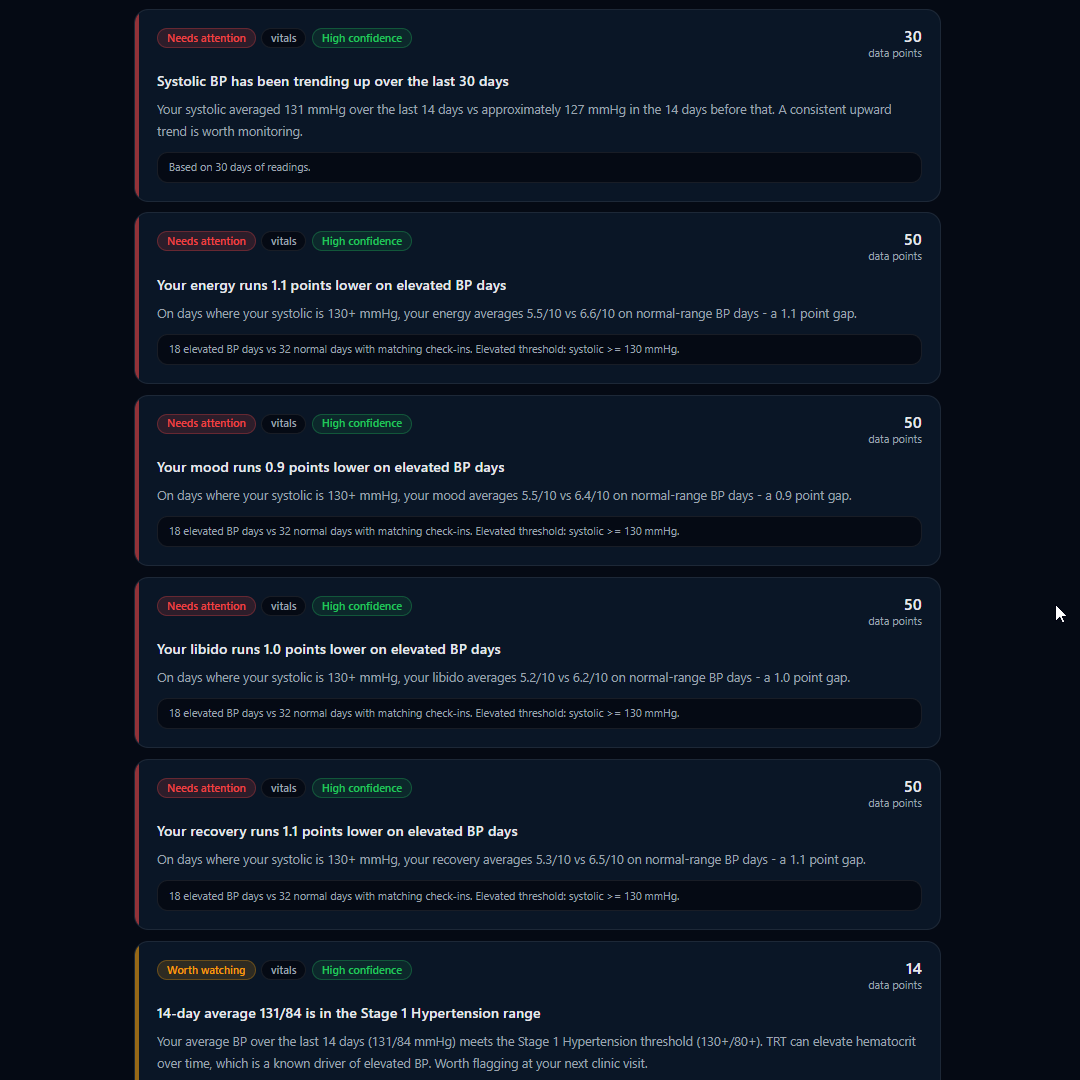
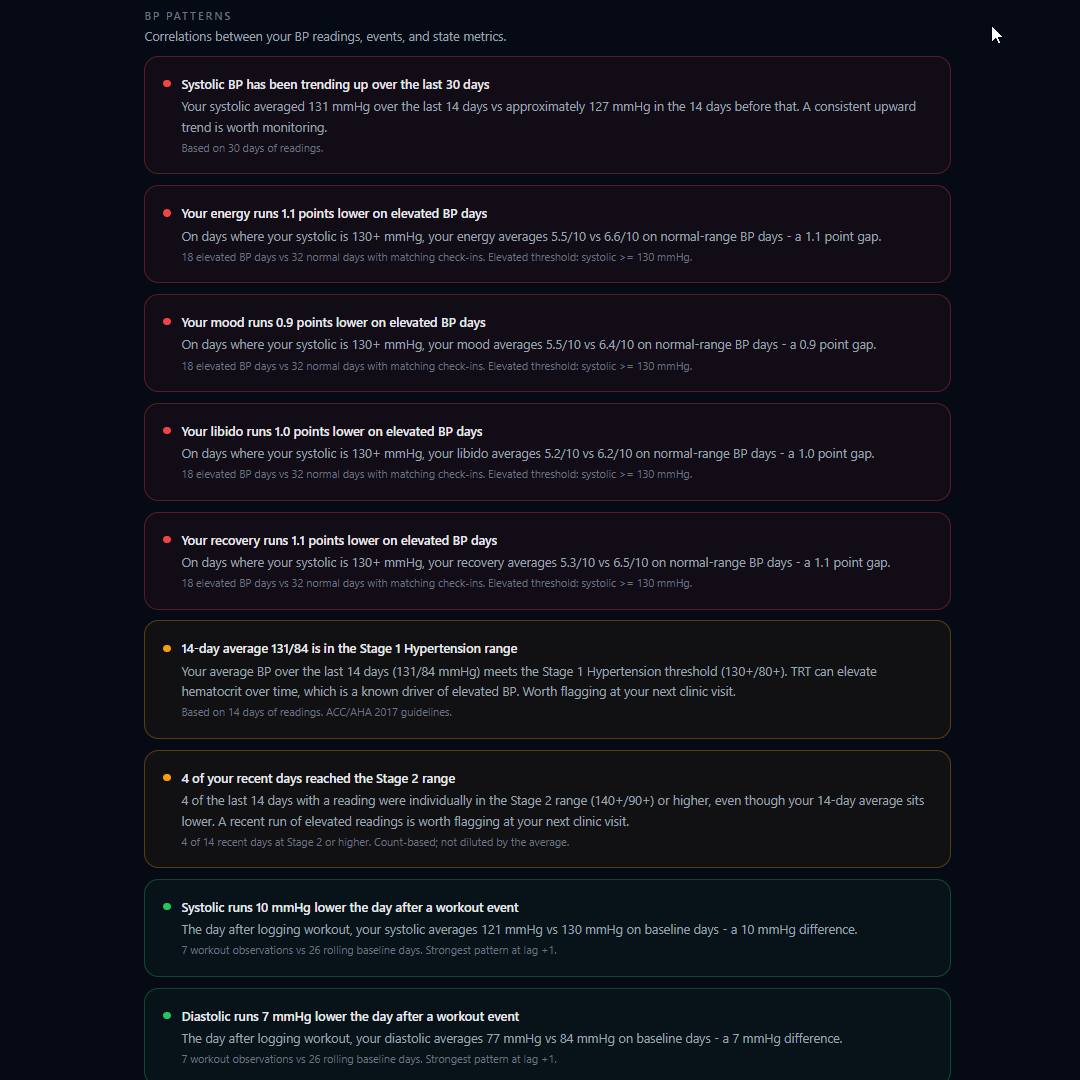
5/6) Here's the part the engine exists for. Once there's enough data, BP stops being a number and starts connecting to how you actually feel.
Energy, mood, libido, recovery all measurably lower on your high BP days. Plus lagged effects, like systolic dropping the day after a workout.
1
34
Jun 5
6/6) This is why we don't just bolt features on.
Every pattern carries how many data points it's built on and a confidence level. Nothing surfaces until the data earns it. No fake insights on day two. The engine waits until the signal is real, then shows you what it found.
None of this is an AI guessing. The patterns are computed directly from your readings. Every one shows how many data points it's built on and a confidence level, so you can check the math yourself.
Nothing surfaces until the data earns it.
That's the whole philosophy. Track carefully, surface honestly.
25