
Modern goals for modern teams. A complete platform to stay on top of your OKRs, KPIs, and initiatives as a team. Try it for free today!
Joined December 2018
- Tweets 1,813
- Following 144
- Followers 323
- Likes 328
853 Photos and videos


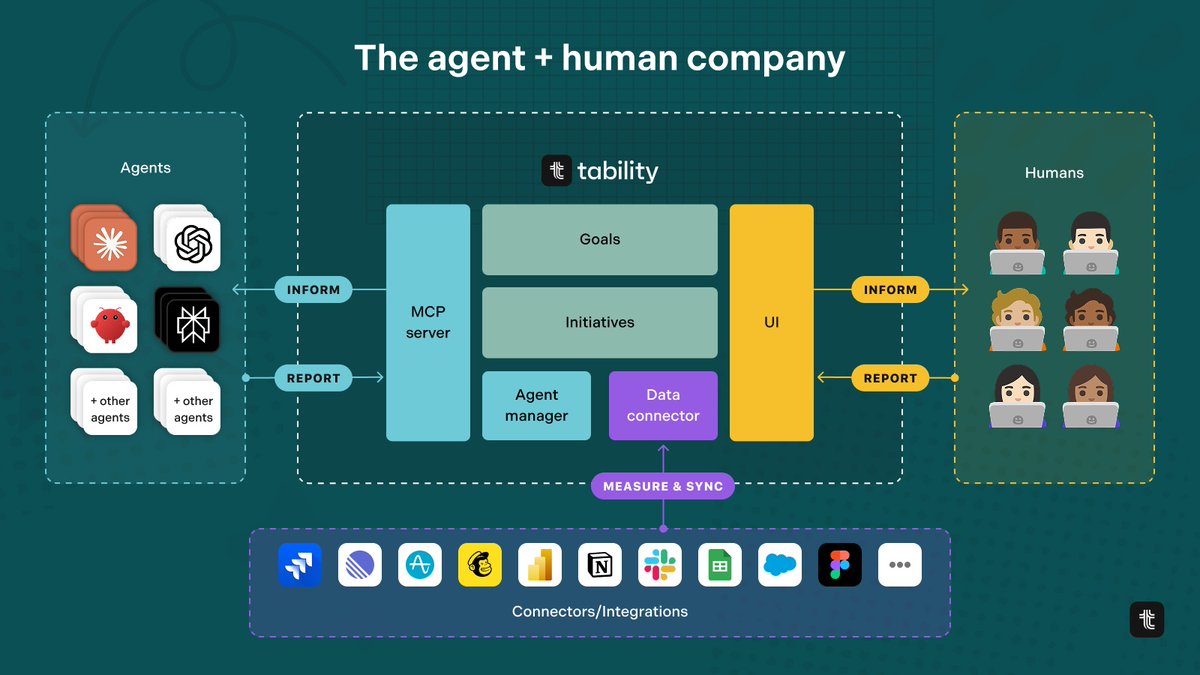
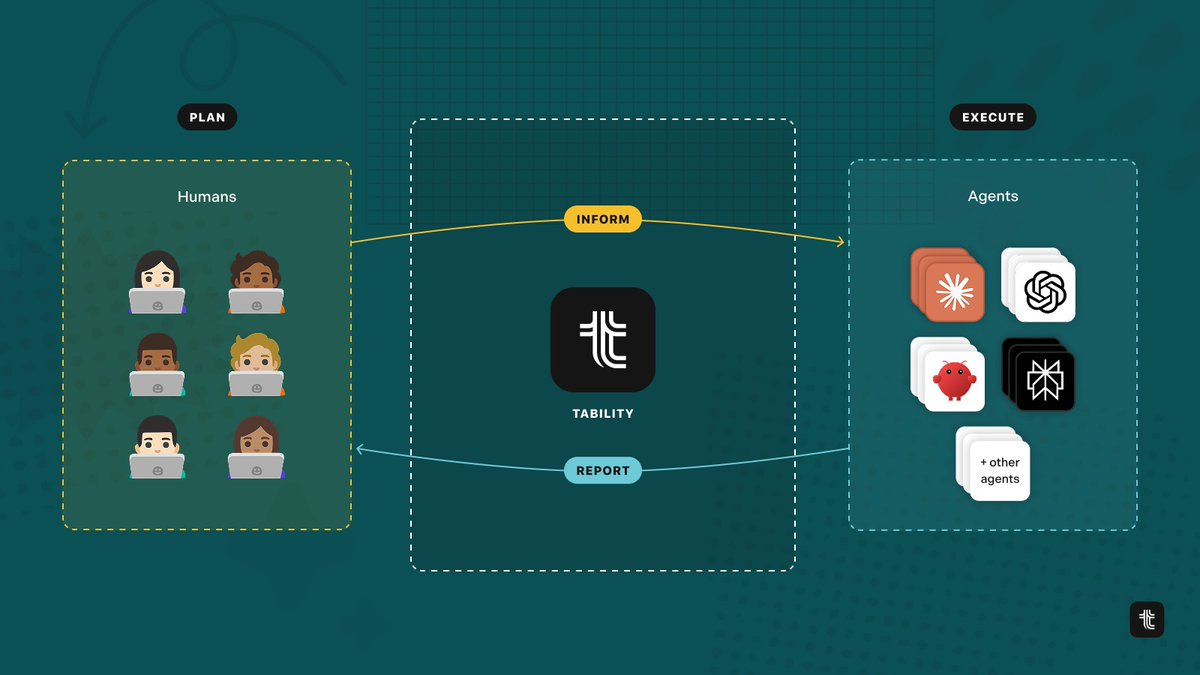
Pinned Tweet

23 Jul 2024
Focus, alignment, transparency, and accoun*tability*. Helping you keep a pulse on what matters most is what we do best 💪🎯
1
1
6
427
Tability retweeted
27 Dec 2025
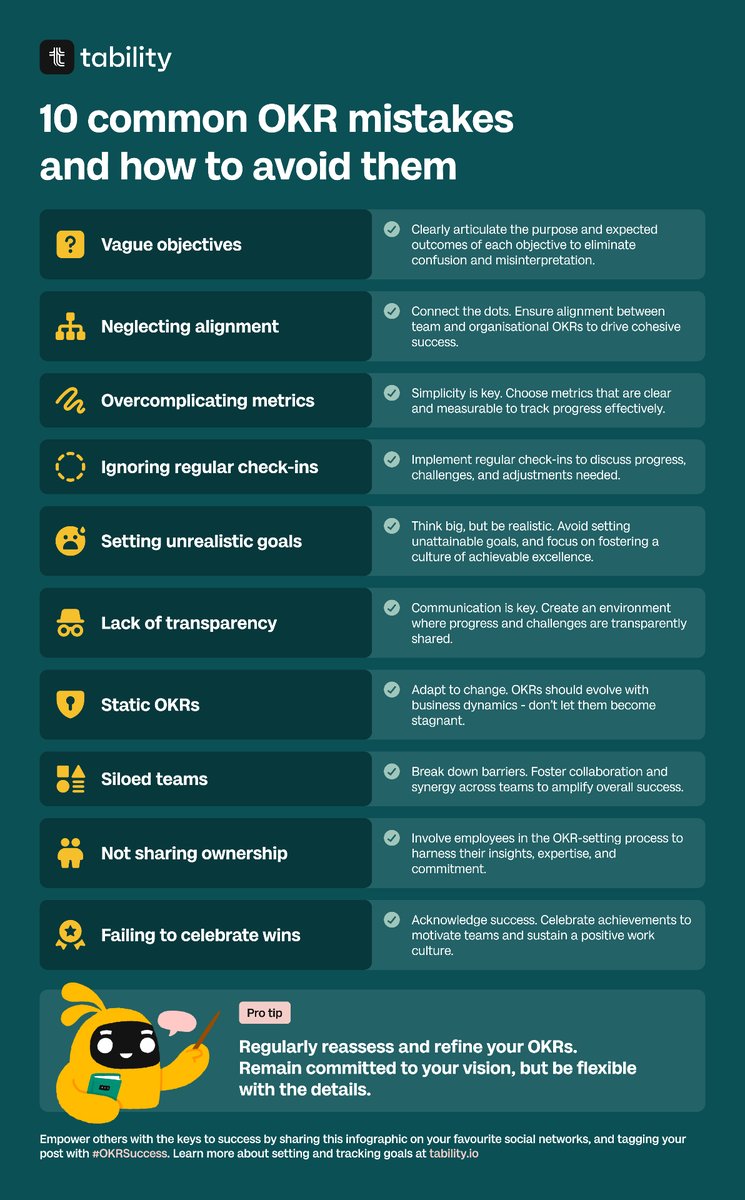
Avoid the top 10 OKR mistakes that derail results ❌ 🛑 Check out our guide and infographic to learn more about some of the most common OKR mistakes - and more importantly - get actionable solutions to course-correct.
1
1
28
Jun 12
The weekly status update might be the most expensive meeting in your company.
Everyone prepares. Everyone attends. And at the end, leadership still doesn’t have a clear picture of where things actually stand.
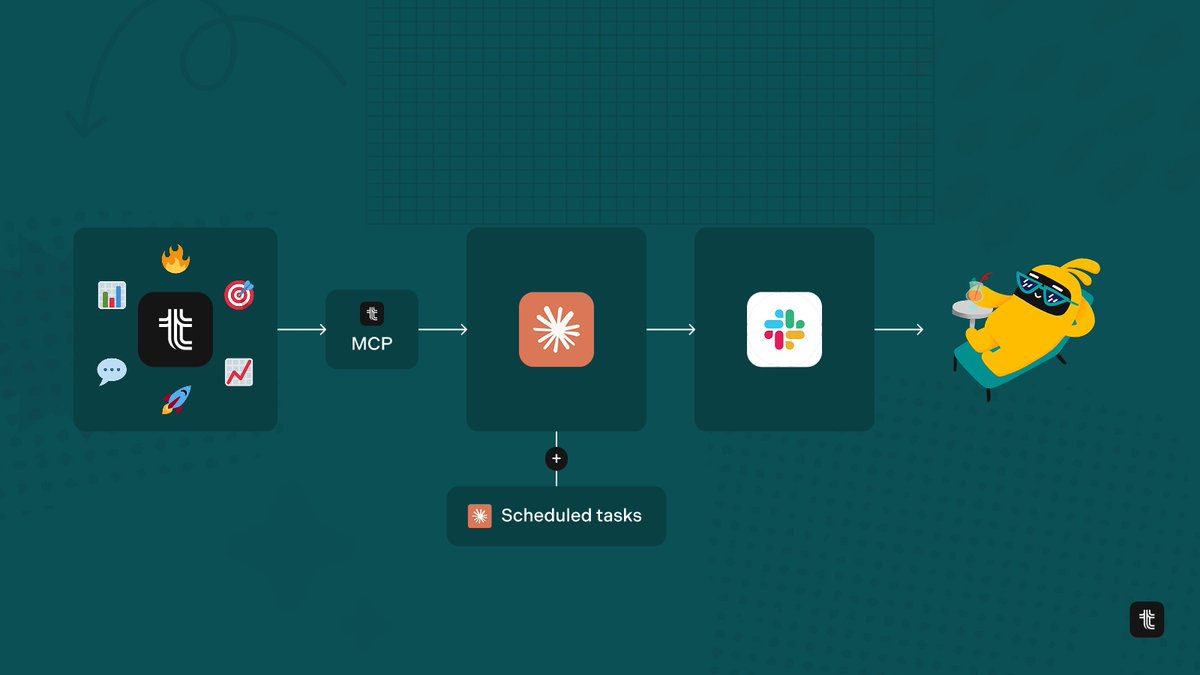
We connected Claude, Slack, and Tability’s MCP server — and gave the job to an AI.
The result: a weekly digest that reads your OKRs, pulls signals from Slack, and writes a summary that’s more useful than most human-written status updates. Without the meeting.
It’s not about replacing your team. It’s about removing the overhead that nobody wants to do anyway.
Full setup → tability.io/odt/articles/cla…
11
Tability retweeted
Mar 19
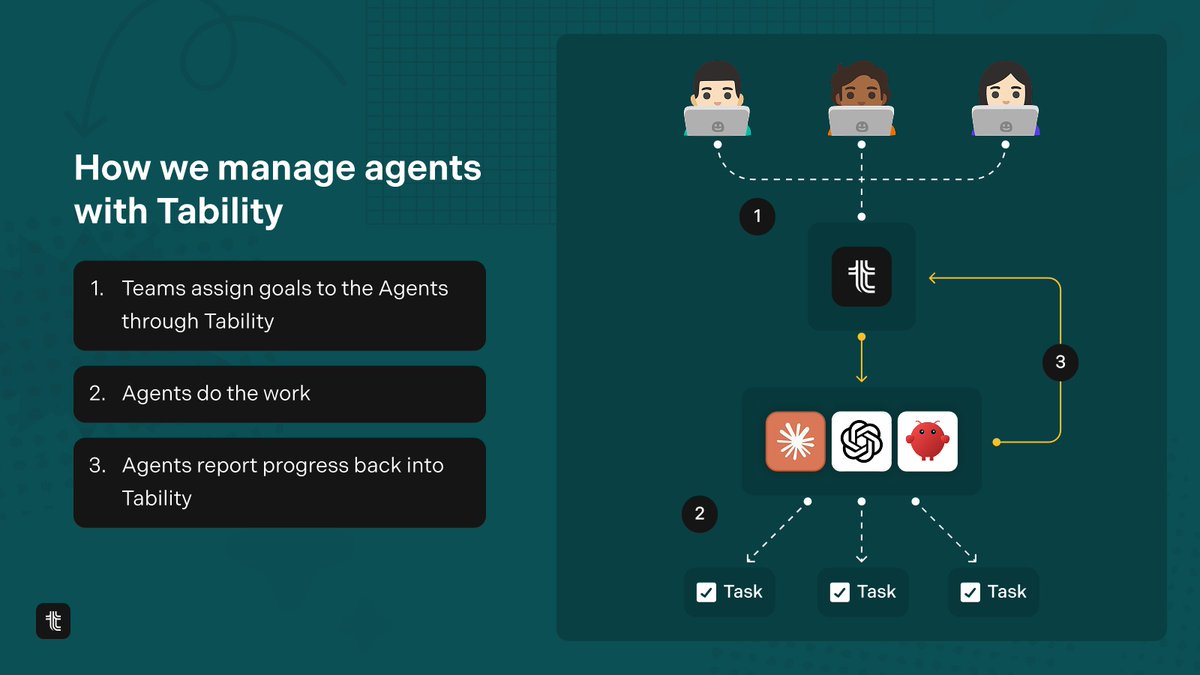
You don't need fewer humans. You need a better way for your humans to create/manage their agents.
tability.io/odt/articles/orc…
1
16
Jun 11
Q2 ends in 2 weeks.
Here’s what most teams will do: show up to the QBR and explain why things missed.
Here’s what the best teams do: spend the next week diagnosing what’s actually off and doing something about it while they still can.
Three things worth auditing right now:
→ OKRs that look “on track” but have had no movement in the last few weeks
→ Initiatives marked “in progress” with no clear next action or owner
→ Metrics that haven’t been updated since April
The difference between a bad QBR and a good one is almost always what you did — or didn’t do — in the 3 weeks before it.
How to run a quick end-of-quarter audit → tability.io/odt/articles/how…
1
5
Jun 11
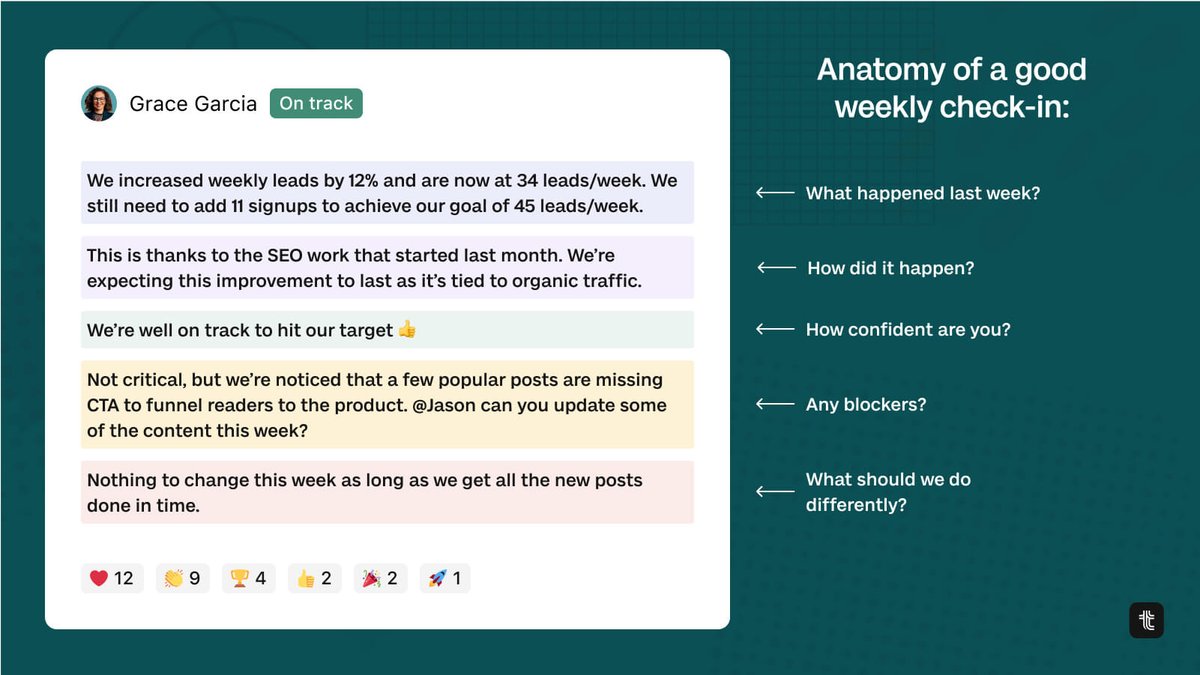
Most weekly check-ins take too long and answer the wrong questions.
5 that take 10 minutes and actually keep remote teams aligned:
1. What did we move forward this week?
2. What’s blocked and needs a decision?
3. Are we still on track toward the quarter goal?
4. What do we need from leadership?
5. What’s the one priority for next week?
Simple. But most teams skip 3 and 4 — which is exactly why they’re surprised at the QBR.
More detail on why each question matters → tability.io/odt/articles/5-w…
1
4
Jun 10
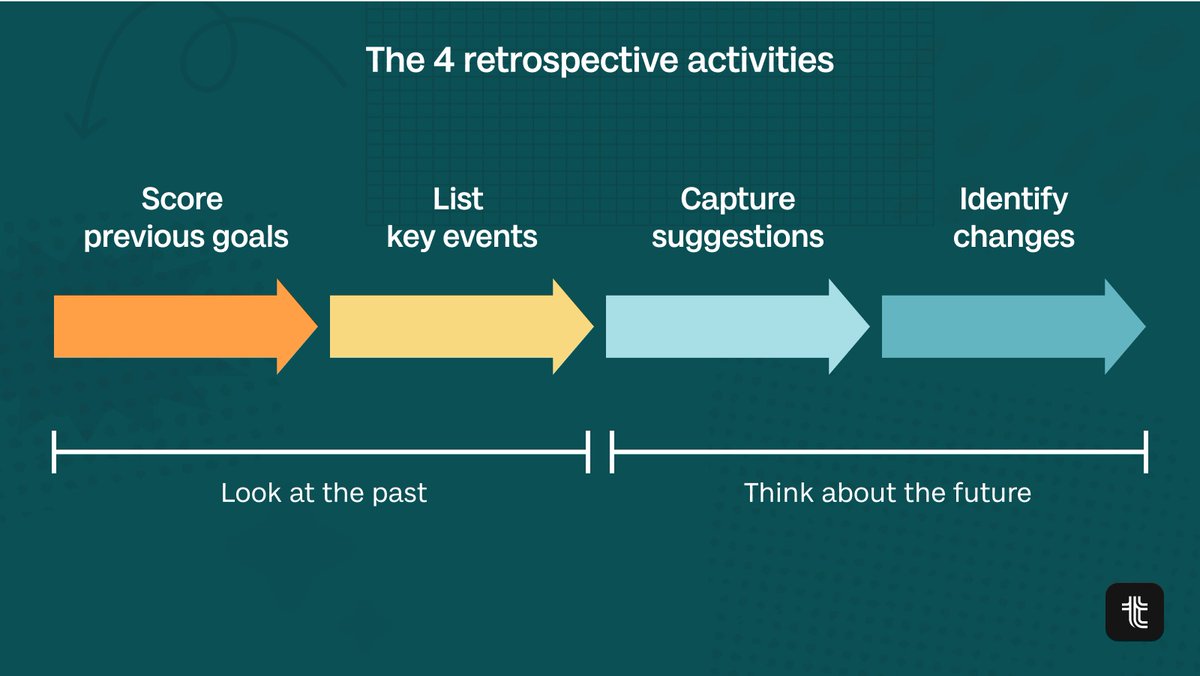
Retrospectives have a reputation problem.
Most teams treat them as a formality — a box to check before everyone sprints toward next quarter’s goals. The result: the same issues, the same misses, quarter after quarter.
A well-run retro is one of the highest-leverage activities your team can do. Not because of what happened, but because of what you’ll do differently.
With Q2 ending in a couple of weeks, now is the right time to plan one. The best retros aren’t reactive — they’re scheduled before the quarter closes, when the work is still fresh and people can be honest.
How to make yours actually count → tability.io/odt/articles/ret…
4
Jun 9
Nobody became a strategic leader by spending Friday afternoon chasing OKR updates.
OKRs are supposed to create focus. But somewhere along the way, the maintenance overhead became its own full-time job.
Things you should stop doing manually:
→ Sending weekly check-in reminders
→ Compiling progress roll-ups from spreadsheets
→ Writing status summaries for leadership
→ Flagging OKRs that haven’t moved
→ Building end-of-quarter report drafts
9 ways to automate the tedious parts — so the time goes back to actual strategy → tability.io/odt/articles/9-w…
58
Jun 8
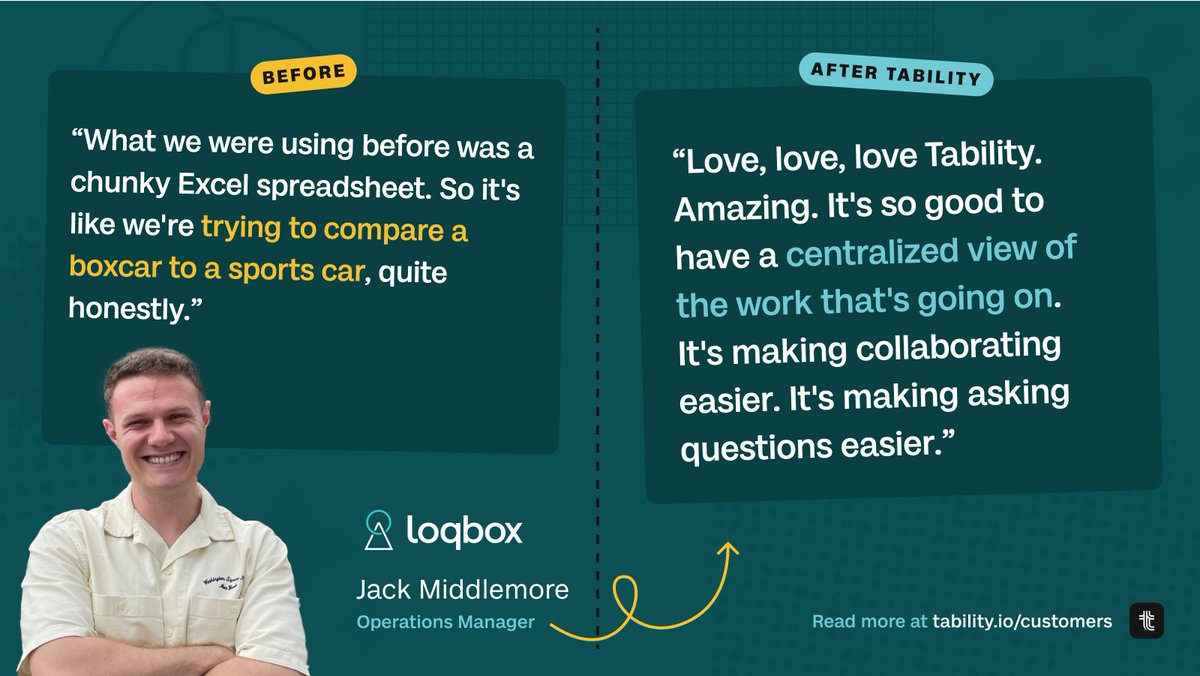
“Love, love, love Tability. It’s so good to have a centralized view of the work that’s going on.”
In Q2 2024, Loqbox decided spreadsheets weren’t cutting it anymore.
At 100 people, the overhead of keeping them accurate was killing the whole point of having OKRs. Every update was a manual chase. Every leadership review was a reconciliation exercise.
The title of their story says it all: From Boxcar to Sports Car.
How they made the switch → tability.io/customers/loqbox…
1
9
Jun 7
Tability Agents write better status reports than your humans do.
Yeah, we said it.
Not because your team is lazy. But because status reporting is the wrong job for humans.
→ Humans forget what shifted since last week
→ Humans soften bad news to avoid uncomfortable conversations
→ Humans are busy working on building, designing, writing, etc... not status reporting 🙀
The agents don't care about the politics. They just report what actually happened.
Here's what agentic status reporting looks like in practice:
tability.io/odt/articles/age…
17
Jun 6
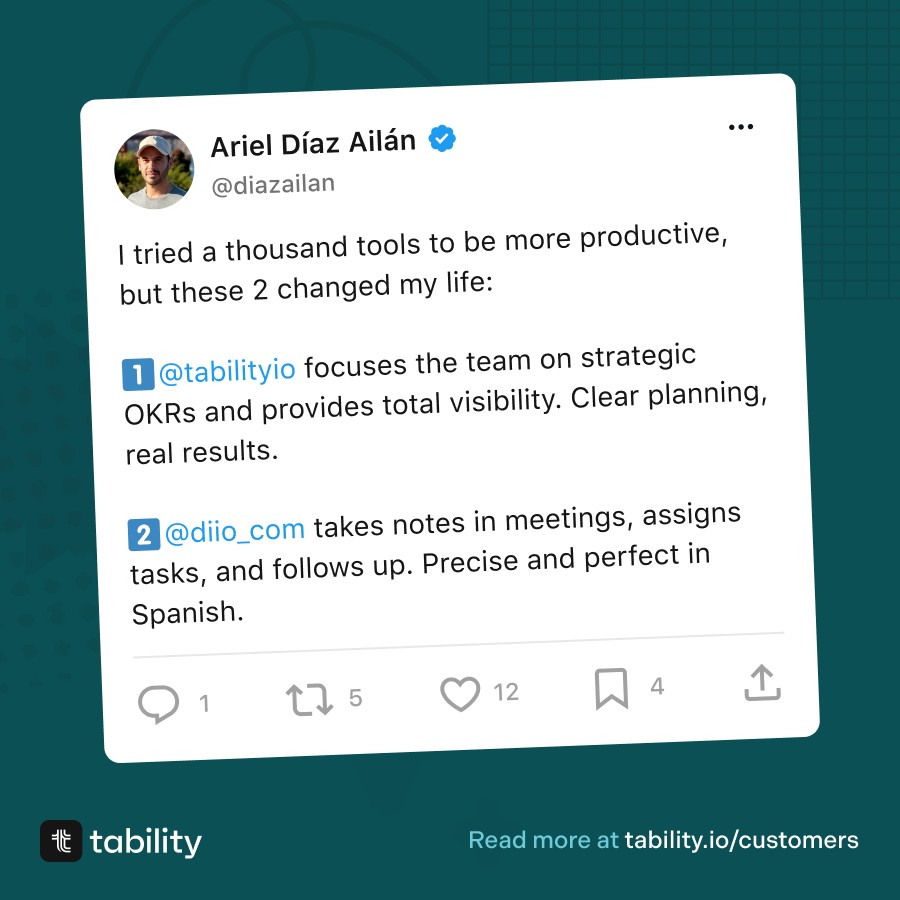
We love working with our friends over at Rebill.
Read more of their OKR journey:
tability.io/customers/rebill
6
Jun 6
OKR reporting shouldn't take two weeks. It should take two minutes.
If your end-of-quarter process involves chasing updates, reformatting data, and rewriting summaries that nobody reads — the process is the problem.
The fix isn't working harder. It's removing the manual parts that should never have been manual.
We wrote the guide. End of quarter is the perfect time to read it.
tability.io/odt/articles/how…
15
Jun 5
What if your morning brief wrote itself?
Every day, your team's most important signals — goal progress, blockers, risks — exist in your tools. They just don't surface until someone manually compiles them.
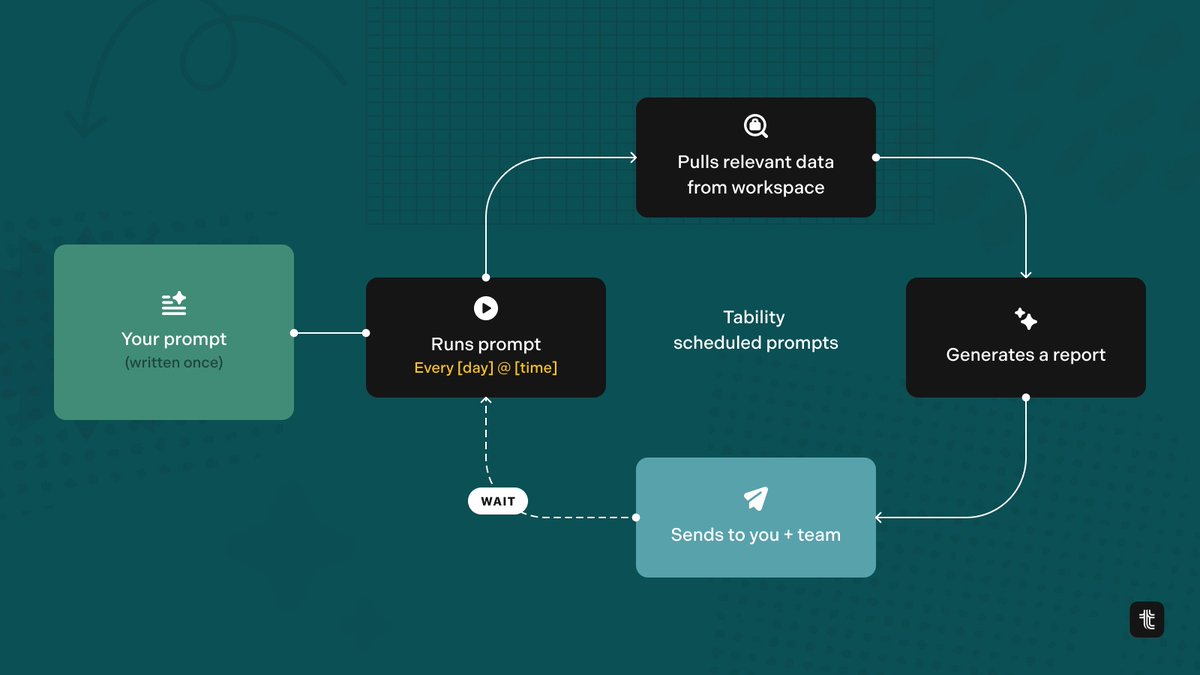
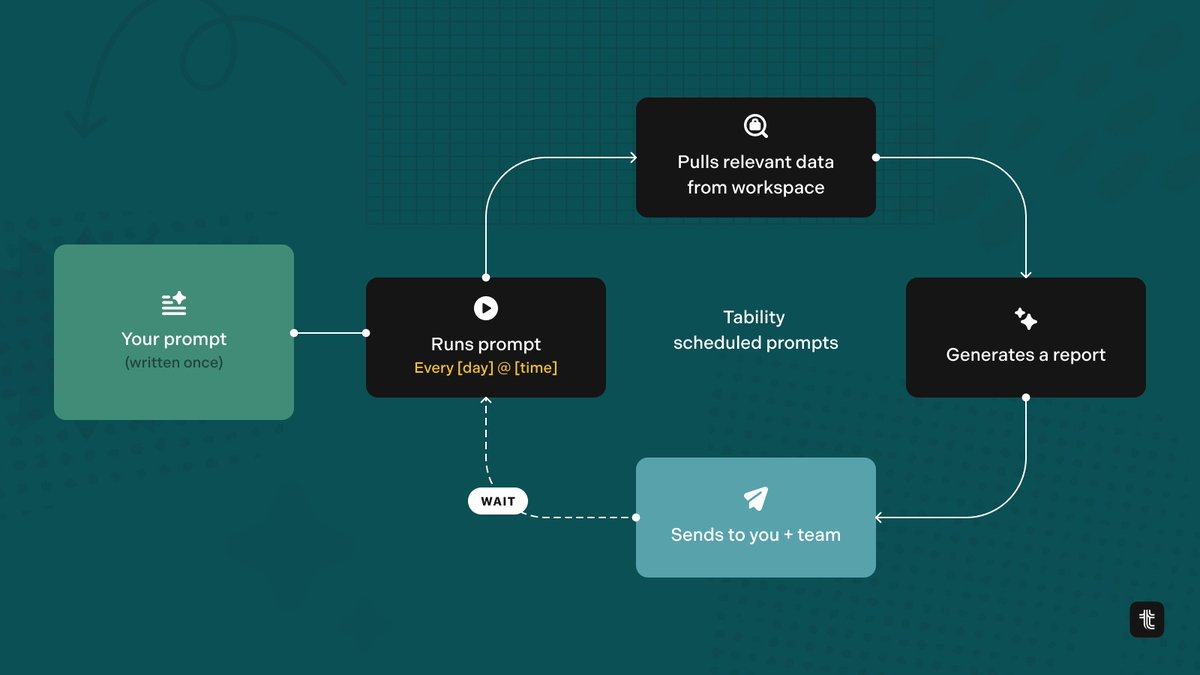
We set up automated daily reports in Tability so the context arrives before your first meeting. No chasing. No compiling. Just the stuff that matters, waiting for you.
How we built it:
→ tability.io/odt/articles/wak…
12
Jun 4
We run a $1M agent team. Here's the setup — it's simpler than you think.
No massive engineering investment. No army of AI specialists.
The infrastructure is lean by design:
→ Clear goals each agent is responsible for
→ Real-time check-ins that surface what's working and what's not
→ Tability as the operating layer that keeps agents accountable to outcomes
When agents have goals — and those goals are tracked — you stop wondering what they're doing and start seeing what they're delivering.
The full setup:
tability.io/odt/articles/1m-…
1
10
May 15
One dashboard for everyone serves no one particularly well.
The CEO wants two paragraphs of company-wide risk. The VP of Engineering wants which initiatives are slipping. The Head of Sales wants pipeline coverage.
Same data, completely different briefs. We wrote how to set up one per role →
tability.io/odt/articles/wak…
8
May 14
You launched the strategy in January. By March, half the teams are interpreting it differently. By June, the thread to the company vision has frayed.
Strategic pillars are the missing piece — a small set of focus areas every team uses as their compass, so the strategy stays intact from deck to delivery.
How to define yours →
tability.io/odt/articles/str…
11
May 11
Three questions cover most of what a leader actually needs each morning:
→ What changed yesterday?
→ What's at risk and who owns it?
→ What deserves attention next 24h?
Three paragraphs in your inbox. Not a 15-page PDF, not a dashboard tour.
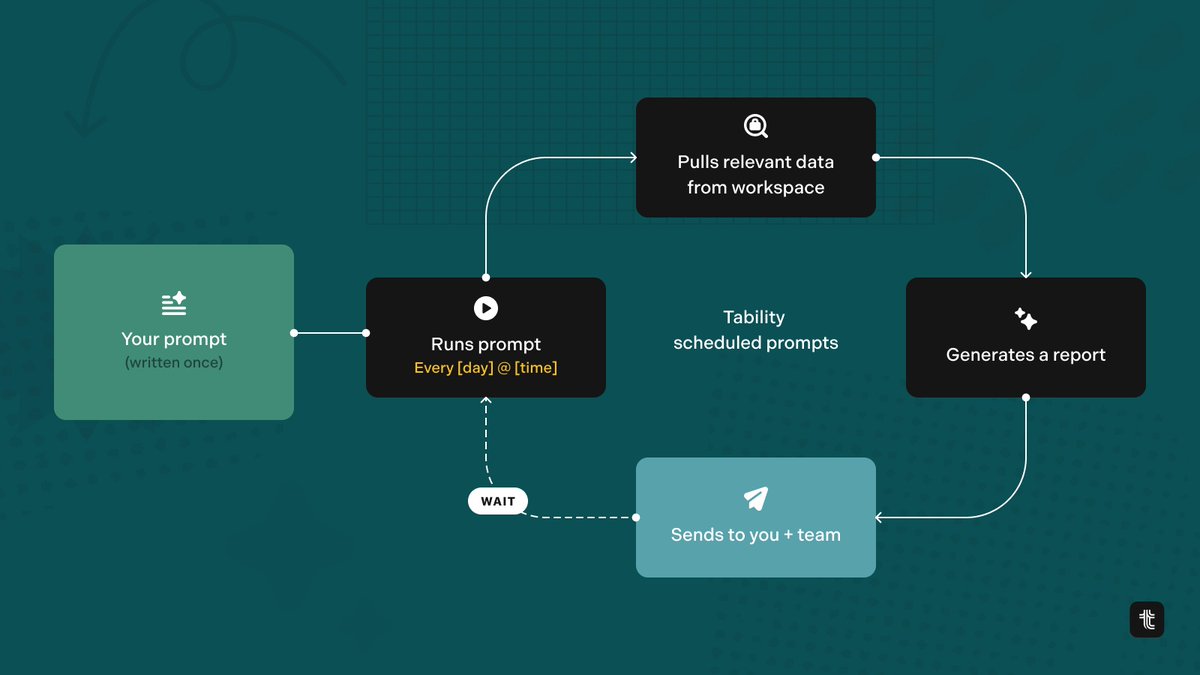
The prompt and the once-and-done schedule →
tability.io/odt/articles/wak…
1
26
May 8
30 minutes is the setup time for your first AI teammate. Same length as a kickoff meeting that doesn't ship anything.
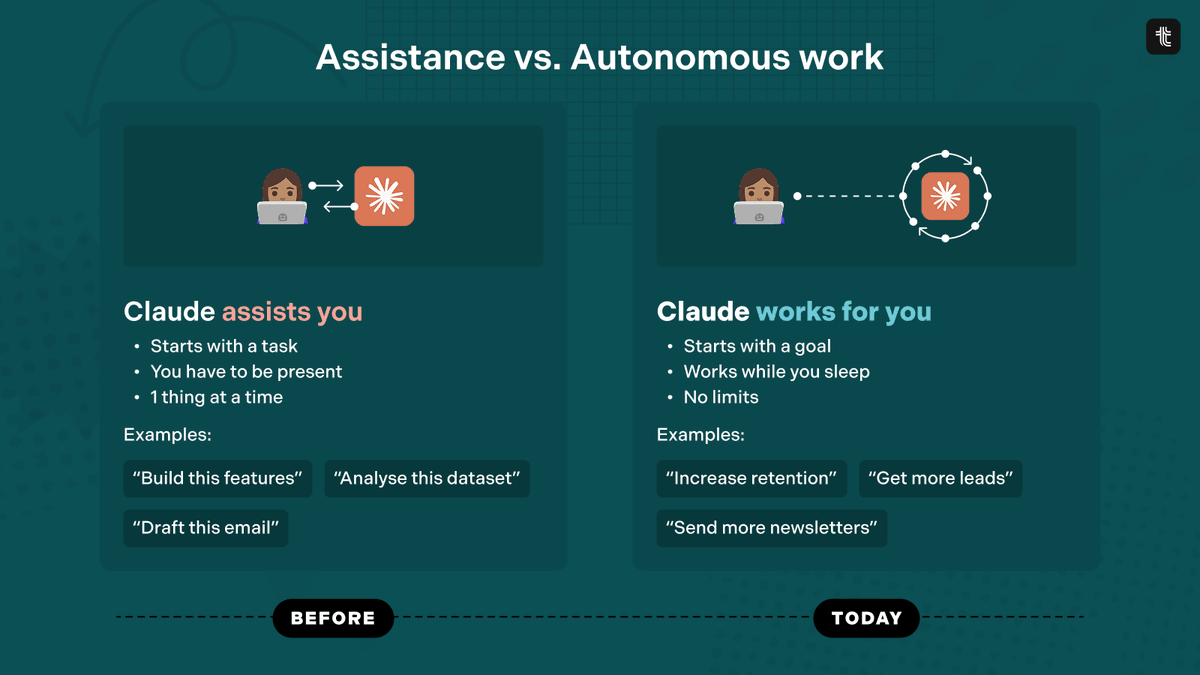
It picks up a goal, breaks it into work, drafts the output, and reports back. No prompting back-and-forth.
We filmed the whole thing unedited so you can see what 30 minutes actually buys you →
tability.io/odt/articles/cla…
7
Tability retweeted
Feb 27
Momentum beats accuracy 🏃
It's better to run a flawed OKR cycle and learn from it than to spend months writing perfect goals that never get tracked. The teams that win aren't the ones with the best-written key results — they're the ones that show up every week.
tability.io/odt/articles/the…
1
9