Take control of technology to end violence against women! An @APC_News campaign working with grassroots movements around the world since 2007.
- Tweets 15,064
- Following 2,271
- Followers 9,923
- Likes 4,943

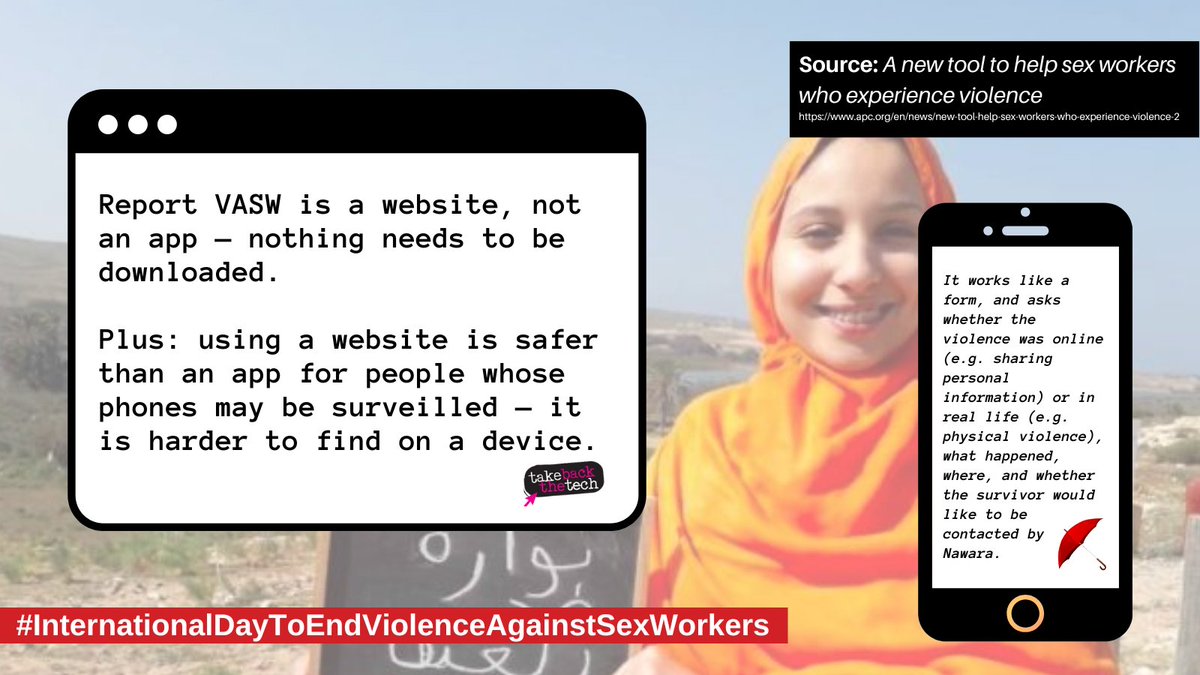
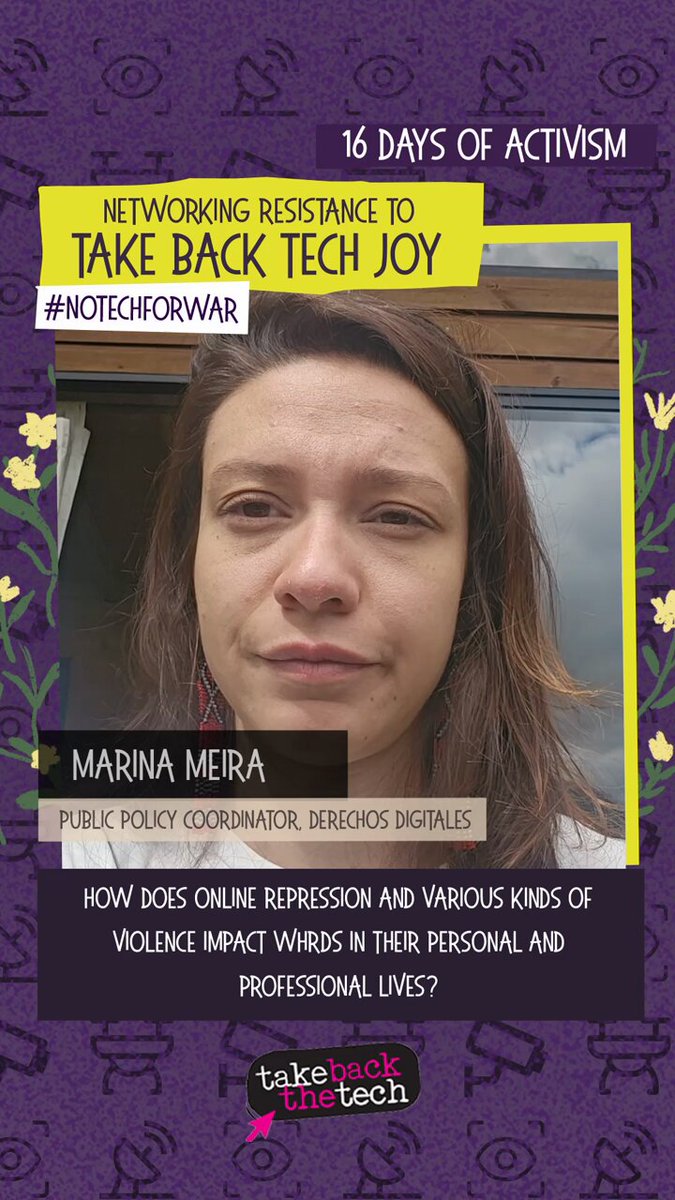
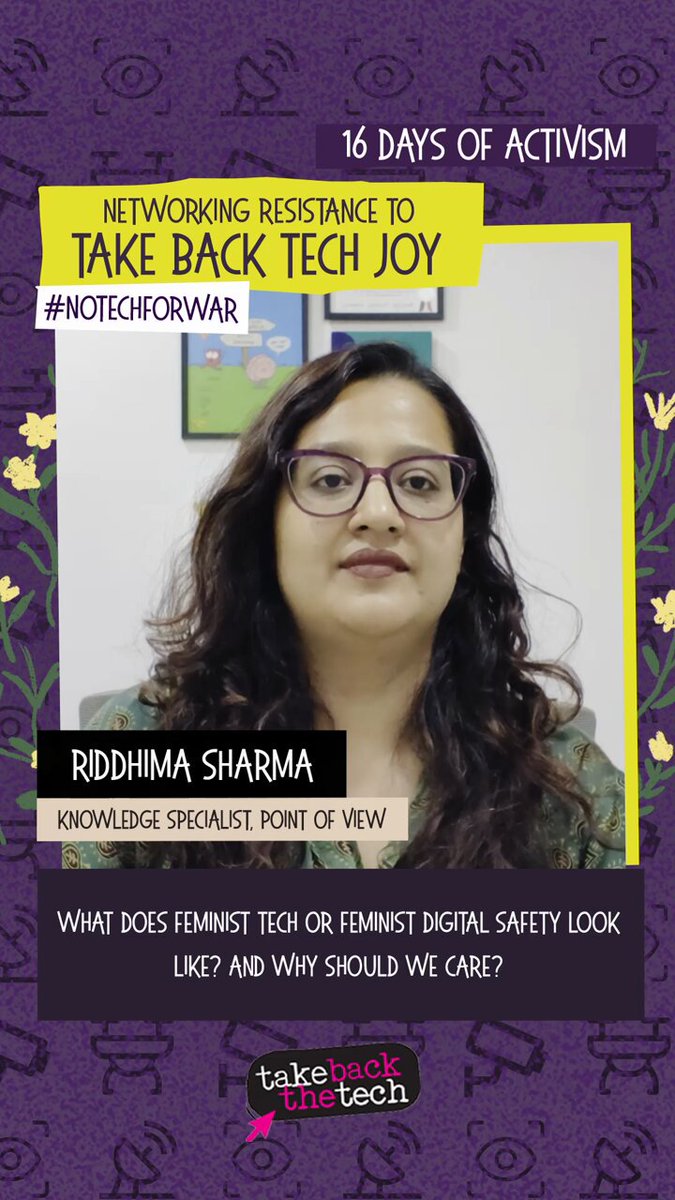
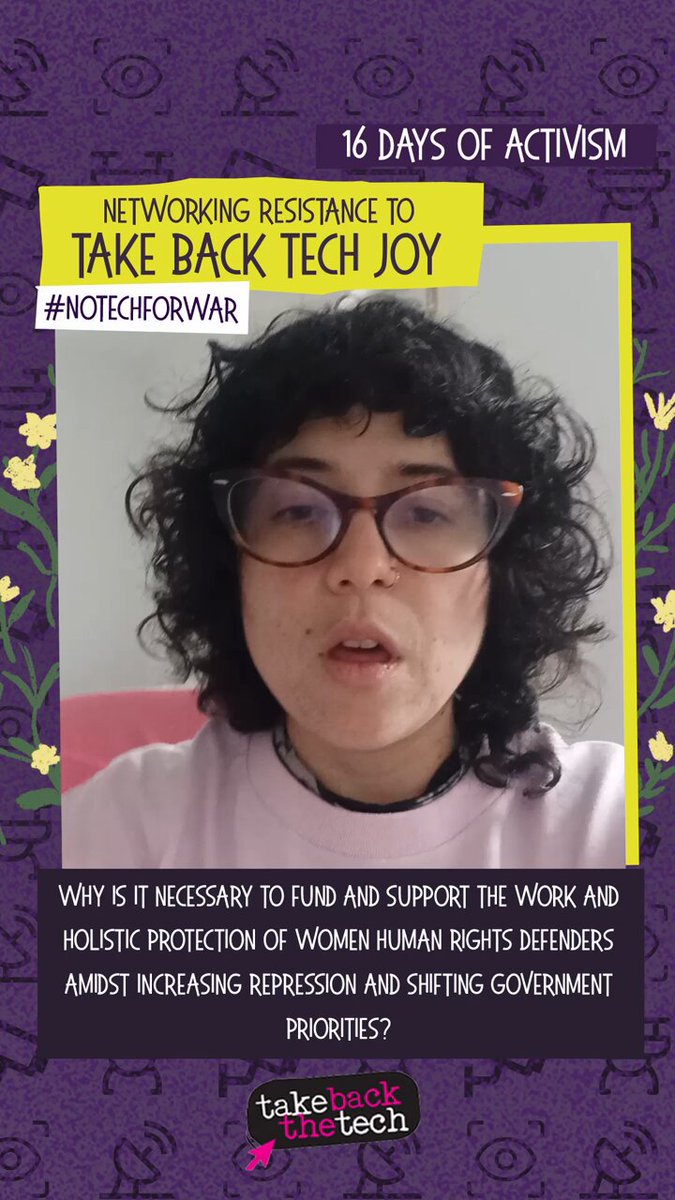
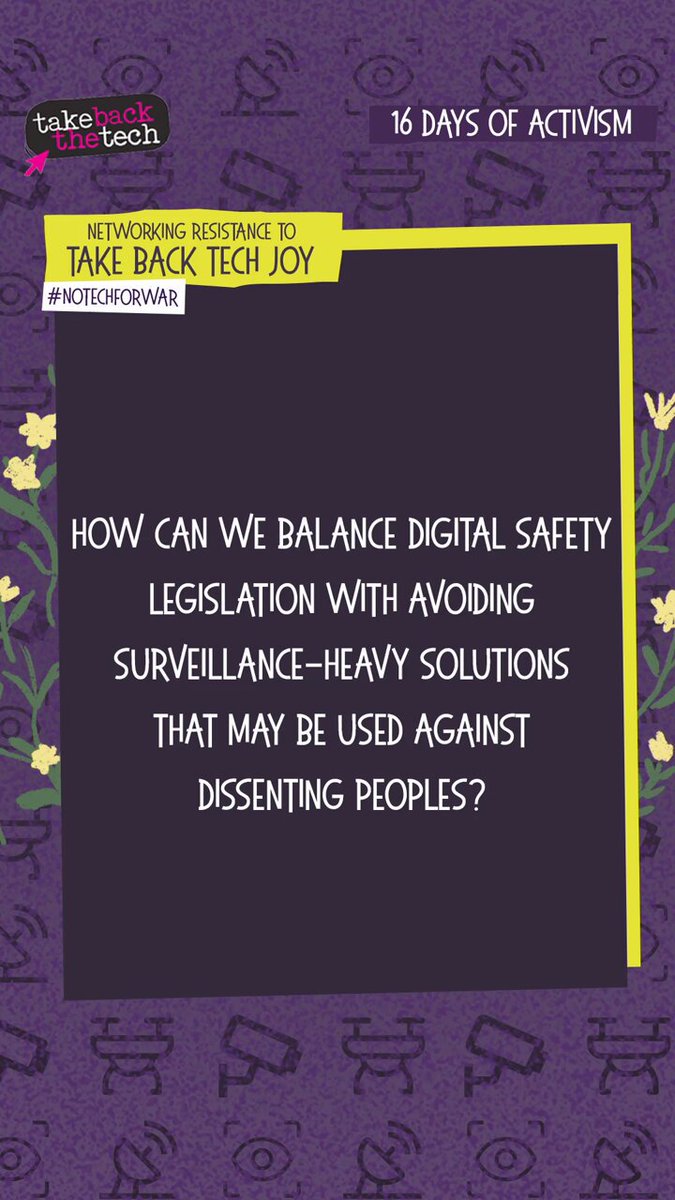

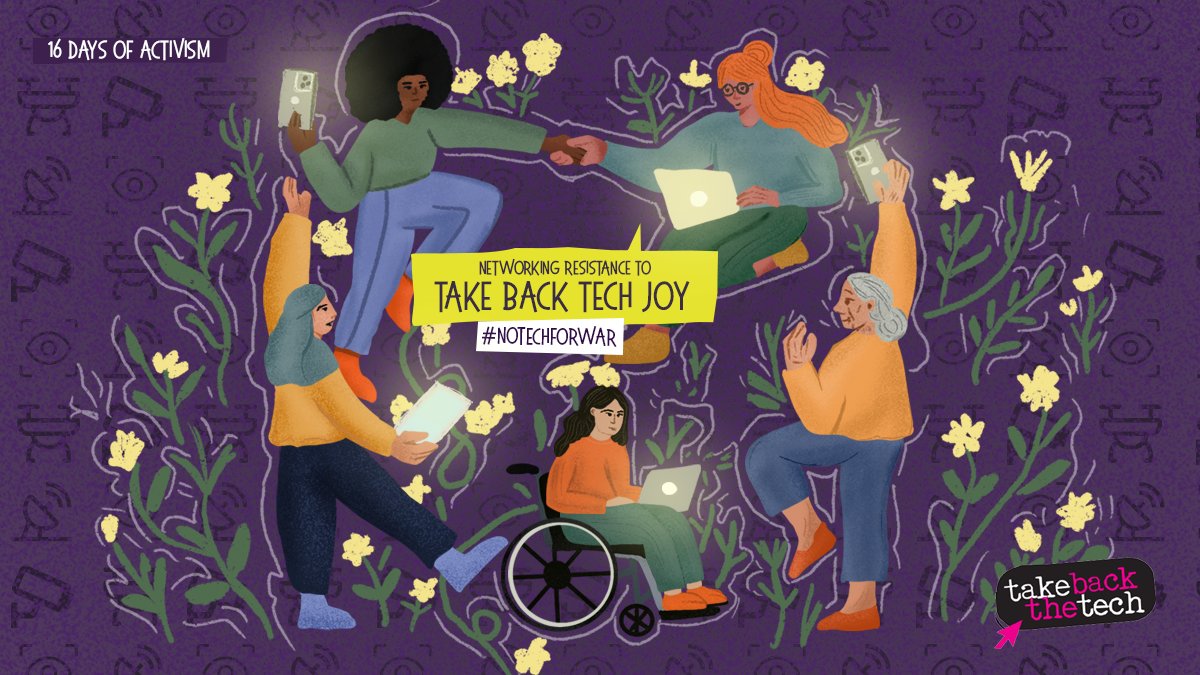
ALT On a dark purple background are surveillance icons and "16 Days of Activism" is on the top left corner. The central image is of diverse women holding glowing tech devices, surrounded by flowers. Text in the middle: Networking resistance #NoTechForWar
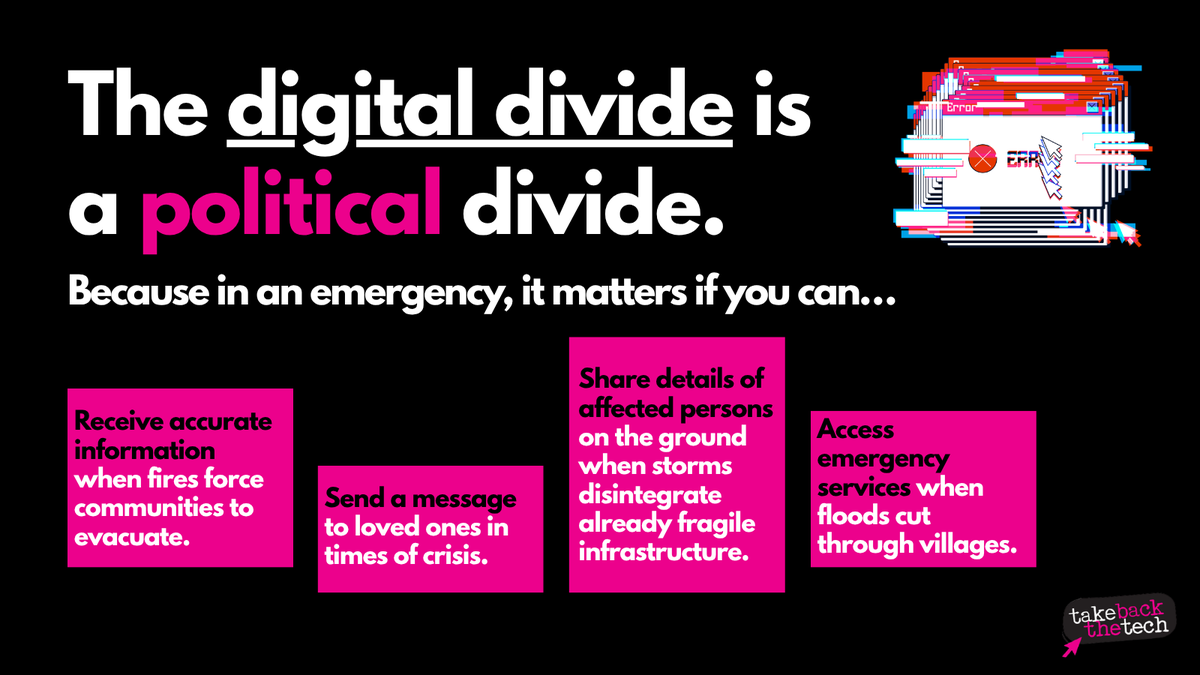
ALT On a black background, text: The digital divide is a political divide. Because in an emergency, it matters if you can... Receive accurate information when fires force communities to evacuate. Send a message to loved ones in times of crisis. Share details of affected persons on the ground when storms disintegrate already fragile infrastructure. Access emergency services when floods cut through villages. There is a visual element of a glitchy error message on the top right corner and the Take Back The Tech! logo on the bottom right corner.
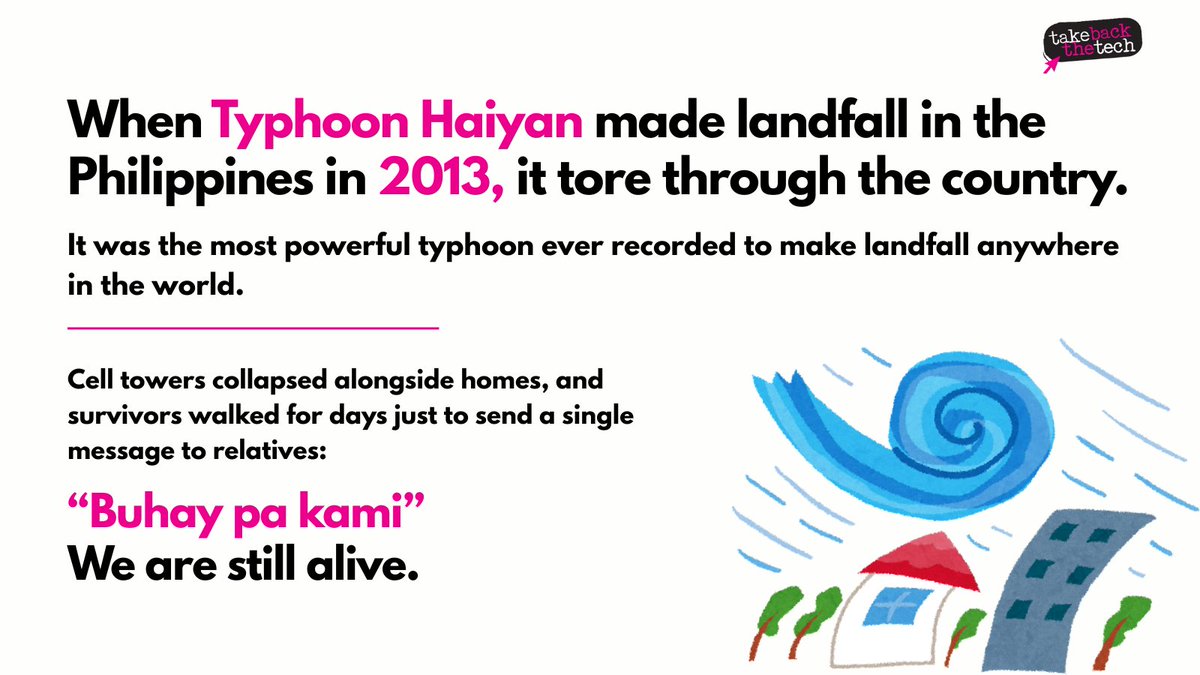
ALT On a white background, there is the Take Back The Tech! Logo on the top right corner and an illustration of a typhoon with a house and tree on the bottom right side. Text: When Typhoon Haiyan made landfall in the Philippines in 2013, it tore through the country. It was the most powerful typhoon ever recorded to make landfall anywhere in the world. Cell towers collapsed alongside homes, and survivors walked for days just to send a single message to relatives: “Buhay pa kami” We are still alive.
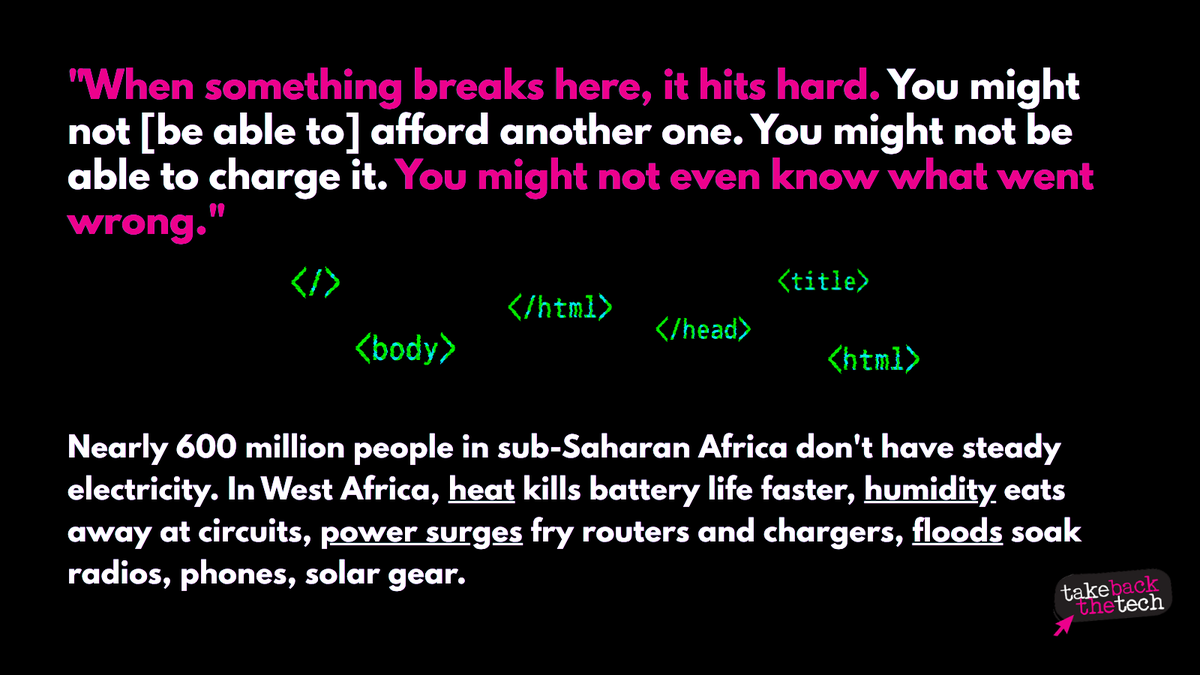
ALT On a black background, there is the Take Back The Tech! Logo on the bottom right corner and illustrations of code language running through the middle. Text: "When something breaks here, it hits hard. You might not [be able to] afford another one. You might not be able to charge it. You might not even know what went wrong." Nearly 600 million people in sub-Saharan Africa don't have steady electricity. In West Africa, heat kills battery life faster, humidity eats away at circuits, power surges fry routers and chargers, floods soak radios, phones, solar gear.
ALT On a wall is text “The media is complicit in everything” and another poster that says “Stilfontein is now. Stop the sacrifice” with a few words below scratched/blurred out. There is a figure in the middle.
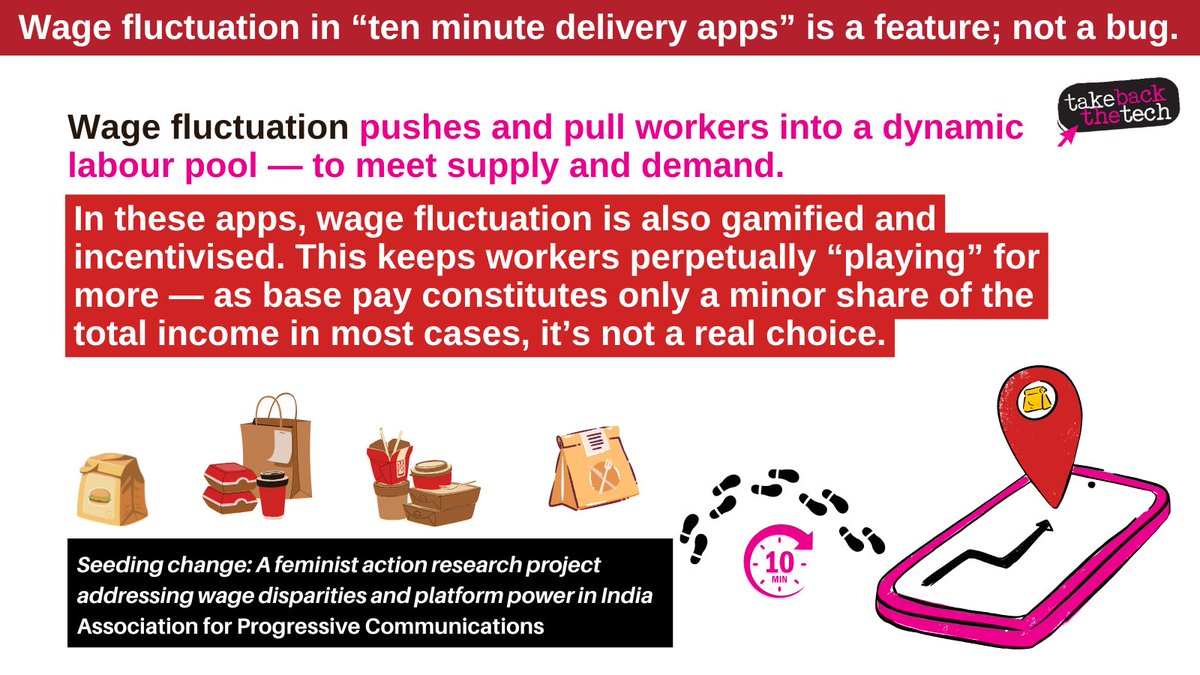
ALT Wage fluctuation in “ten minute delivery apps” is a feature; not a bug. Wage fluctuation pushes and pull workers into a dynamic labour pool — to meet supply and demand. In these apps, wage fluctuation is also gamified and incentivised. This keeps workers perpetually “playing” for more — as base pay constitutes only a minor share of the total income in most cases, it’s not a real choice. Seeding change: A feminist action research project addressing wage disparities and platform power in India Association for Progressive Communications
ALT Wage fluctuation in “ten minute delivery apps” is a feature; not a bug. Wage fluctuation pushes and pull workers into a dynamic labour pool — to meet supply and demand. In these apps, wage fluctuation is also gamified and incentivised. This keeps workers perpetually “playing” for more — as base pay constitutes only a minor share of the total income in most cases, it’s not a real choice. Seeding change: A feminist action research project addressing wage disparities and platform power in India Association for Progressive Communications
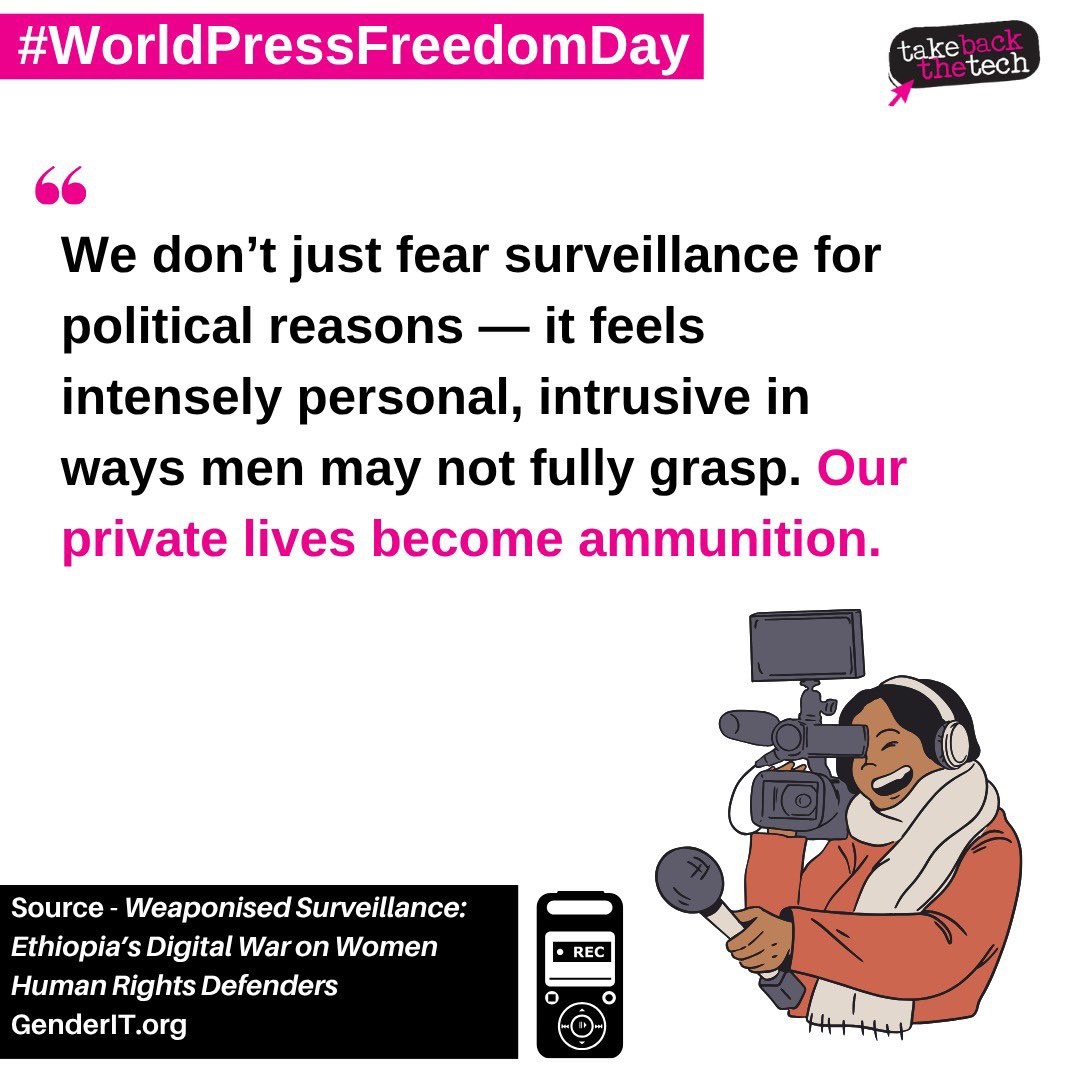
ALT #WorldPressFreedomDay Illustration of a woman journalist laughing and using a video camera. Text: We don’t just fear surveillance for political reasons — it feels intensely personal, intrusive in ways men may not fully grasp. Our private lives become ammunition. Source - Weaponised Surveillance: Ethiopia’s Digital War on Women Human Rights Defenders GenderIT.org
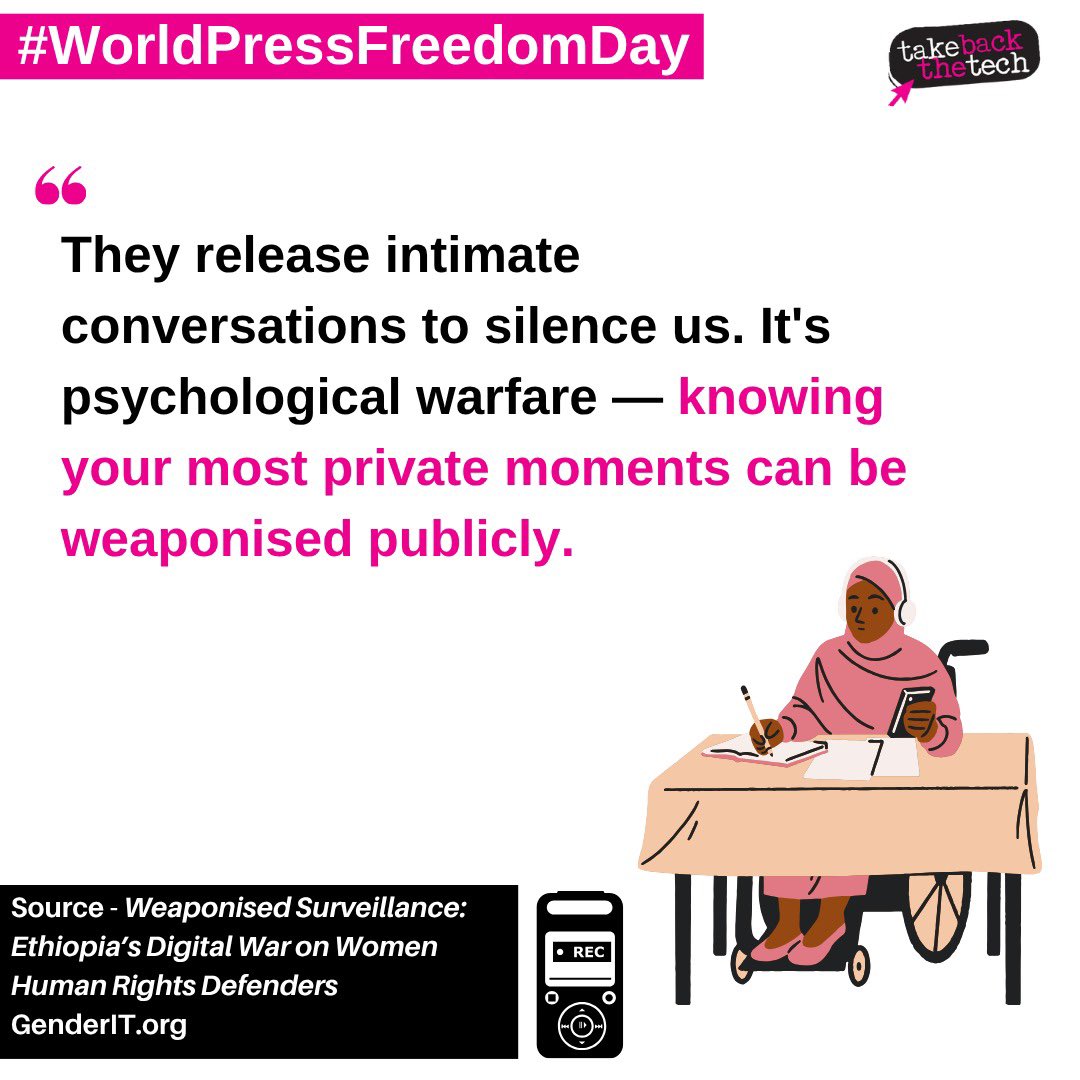
ALT #WorldPressFreedomDay Illustration of a disabled Hijabi woman writing on a desk while using a wheelchair. Text: They release intimate conversations to silence us. It's psychological warfare — knowing your most private moments can be weaponised publicly. Source - Weaponised Surveillance: Ethiopia’s Digital War on Women Human Rights Defenders GenderIT.org
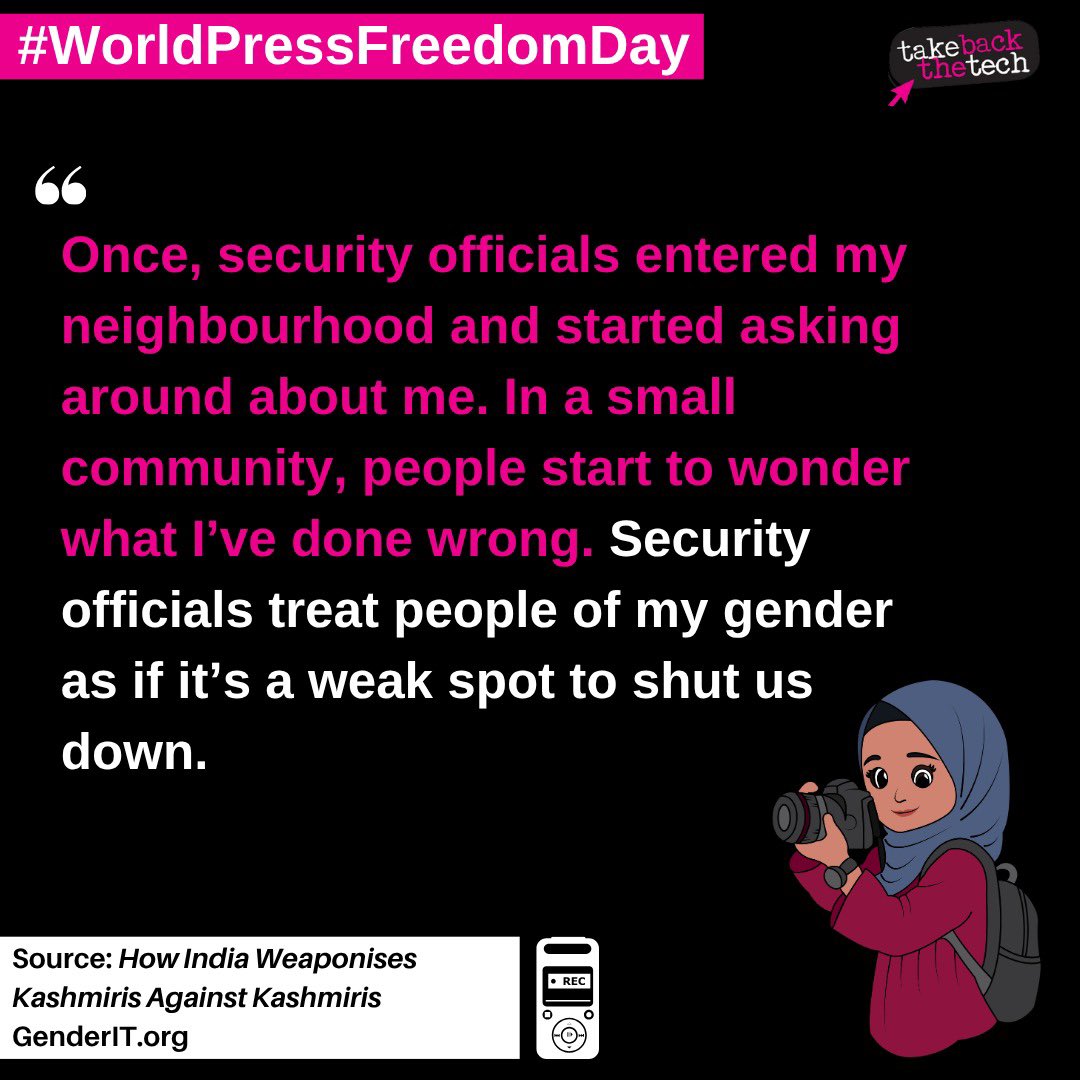
ALT #WorldPressFreedomDay Illustration of a Hijabi woman using a camera. Text: Once, security officials entered my neighbourhood and started asking around about me. In a small community, people start to wonder what I’ve done wrong. Security officials treat people of my gender as if it’s a weak spot to shut us down. Source: How India Weaponises Kashmiris Against Kashmiris GenderIT.org
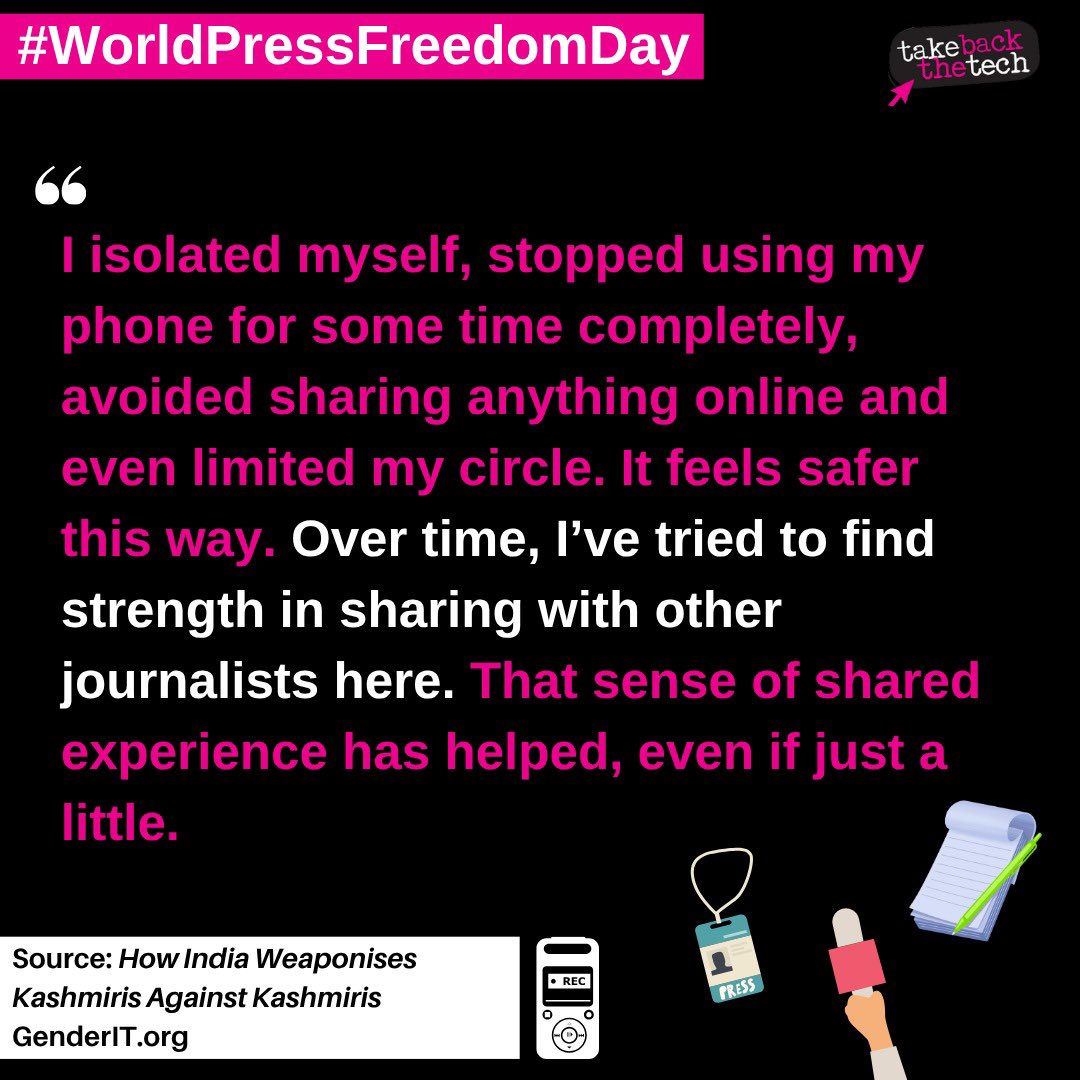
ALT #WorldPressFreedomDay Small illustrations of a microphone, press ID and notepad. Text: I isolated myself, stopped using my phone for some time completely, avoided sharing anything online and even limited my circle. It feels safer this way. Over time, I’ve tried to find strength in sharing with other journalists here. That sense of shared experience has helped, even if just a little. Source: How India Weaponises Kashmiris Against Kashmiris GenderIT.org
ALT #WorldPressFreedomDay Illustration of a woman journalist laughing and using a video camera. Text: We don’t just fear surveillance for political reasons — it feels intensely personal, intrusive in ways men may not fully grasp. Our private lives become ammunition. Source - Weaponised Surveillance: Ethiopia’s Digital War on Women Human Rights Defenders GenderIT.org
ALT #WorldPressFreedomDay Illustration of a disabled Hijabi woman writing on a desk while using a wheelchair. Text: They release intimate conversations to silence us. It's psychological warfare — knowing your most private moments can be weaponised publicly. Source - Weaponised Surveillance: Ethiopia’s Digital War on Women Human Rights Defenders GenderIT.org
ALT #WorldPressFreedomDay Illustration of a Hijabi woman using a camera. Text: Once, security officials entered my neighbourhood and started asking around about me. In a small community, people start to wonder what I’ve done wrong. Security officials treat people of my gender as if it’s a weak spot to shut us down. Source: How India Weaponises Kashmiris Against Kashmiris GenderIT.org
ALT #WorldPressFreedomDay Small illustrations of a microphone, press ID and notepad. Text: I isolated myself, stopped using my phone for some time completely, avoided sharing anything online and even limited my circle. It feels safer this way. Over time, I’ve tried to find strength in sharing with other journalists here. That sense of shared experience has helped, even if just a little. Source: How India Weaponises Kashmiris Against Kashmiris GenderIT.org

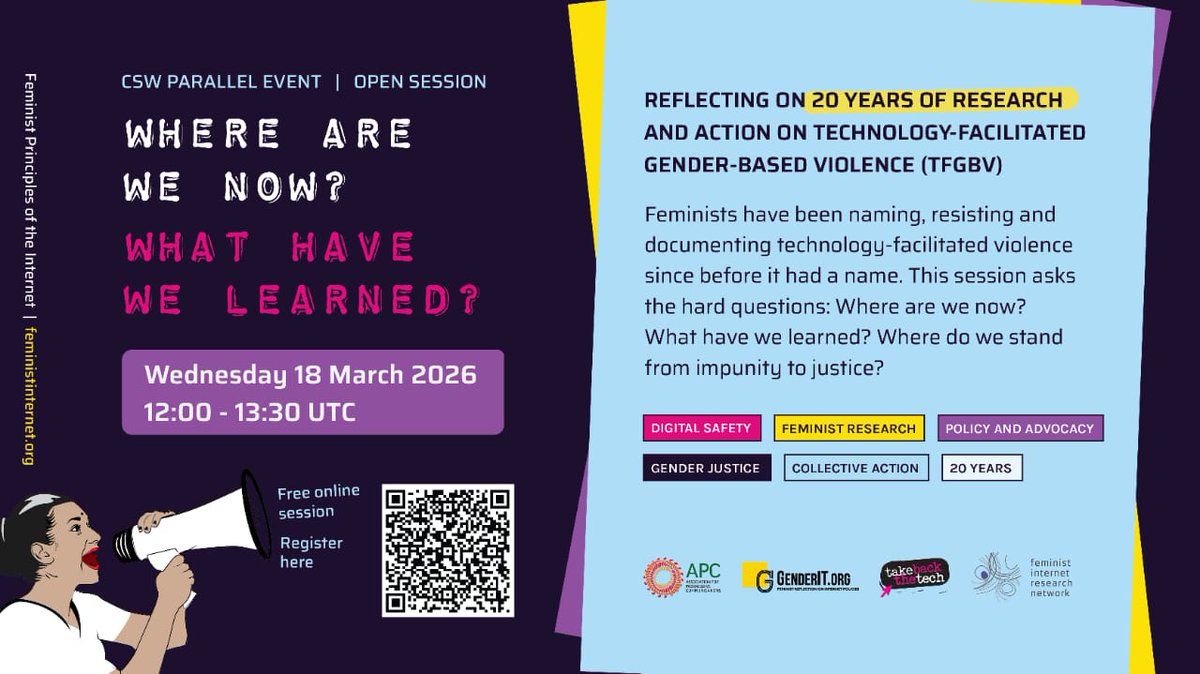
ALT Where are we now? What have we learned? Reflecting on 20 years of research and activism on tech-facilitated gender-based violence. CSW70 Parallel Event Wednesday March 18 12-13:30 UTC Registration: https://s.apc.org/7F52aG Feminists have been naming, resisting and documenting technology-facilitated violence since before it had a name. This session asks the hard questions: Where are we now? What have we learned? Where do we stand from impunity to justice? Digital safety |Feminist research | Policy advocacy | Gender Justice | Collective action | 20 years