🛰️ Making Earth Observation, Satellite Data and Applications Mainstream 🌍 | Newsletter 📝 | Advisory Services 📈 | Organiser @EOSummitConf 🤝
Joined September 2021
- Tweets 956
- Following 2
- Followers 3,262
- Likes 713
227 Photos and videos



TerraWatch Space retweeted
Wrote a thing - a long read on some thoughts on the future of Earth observation, especially the open data policy which we all seem to be taking for granted.
At a time when 60 countries seem to be launching national EO satellite constellations, the question is not whether we will have enough capability - we do.
The harder question is whether we will have the will to come together to create a global infrastructure for EO.
Sixty countries launching their own EO satellites could mean 60 contributions to a global Earth observation system or just 60 isolated national EO programs that do not add up.
3
8
16
1,444

Announcing the Parametric Insurance panel at the EO Summit in London on June 22 which will focus on the use cases of satellite data for designing new parametric solutions.
Our sincere thanks to @EarthDailyA for sponsoring this session.
Join us to learn about the applications of geospatial and remote sensing in the insurance sector!
2
2
241
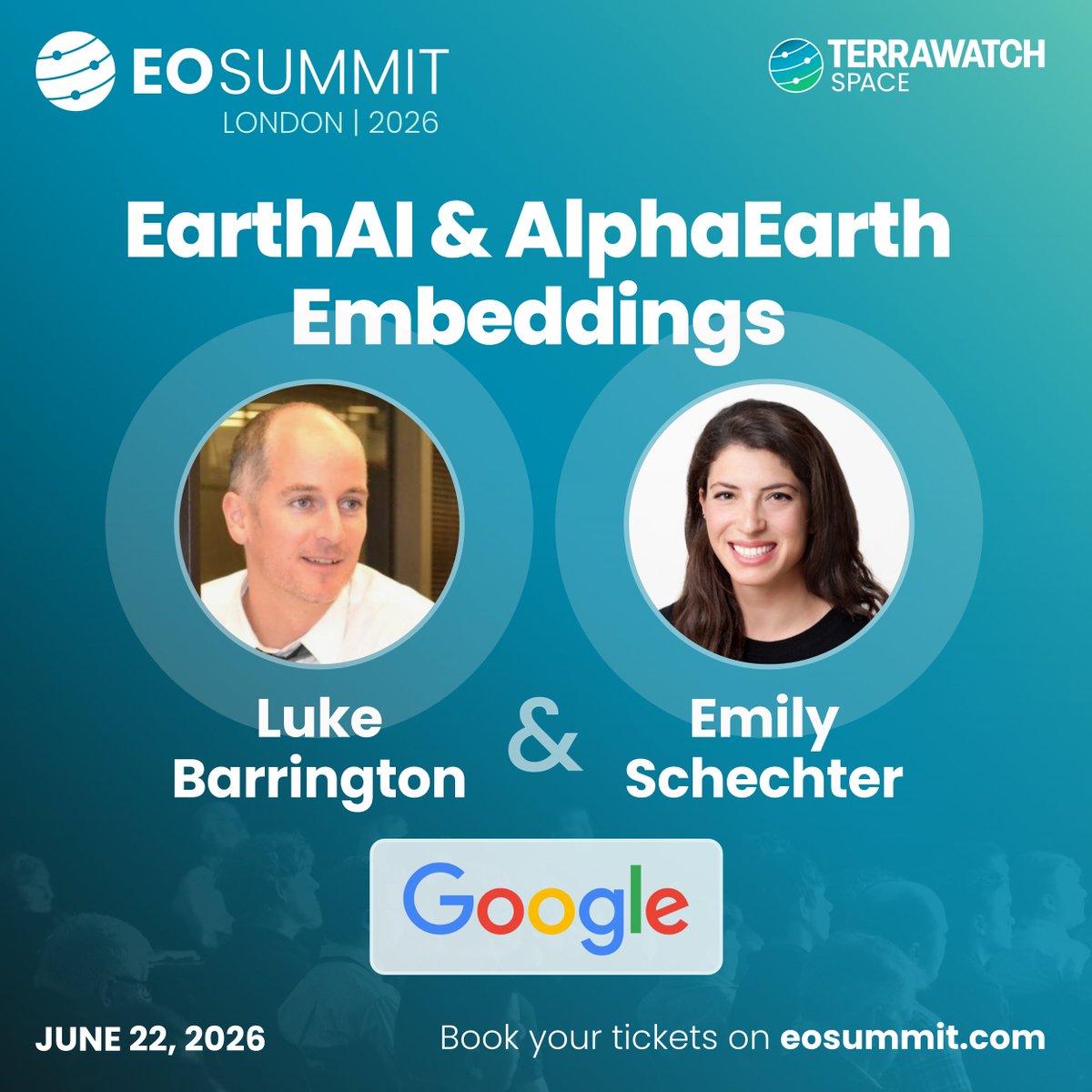
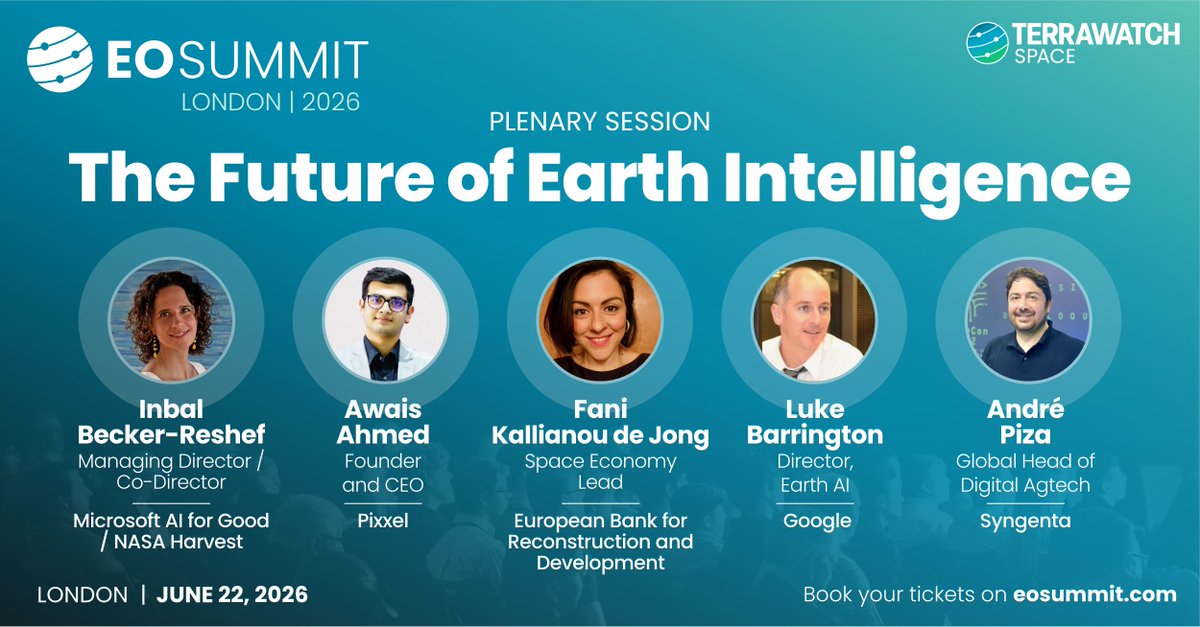
Join us at EO Summit on June 22 in London to learn about Google's EarthAI models and use cases of AlphaEarth Embeddings.
Less than a week remaining for booking your tickets for @EOSummitConf!
1
3
831
TerraWatch Space retweeted

Jun 8
Join us for EO Summit in 2 weeks - we have an amazing line-up of speakers from some incredible organisations across several sectors. Really proud of our logo wall!
I can't wait for June 22, see you in London!
@EOSummitConf

2
4
420
TerraWatch Space retweeted
Jun 7
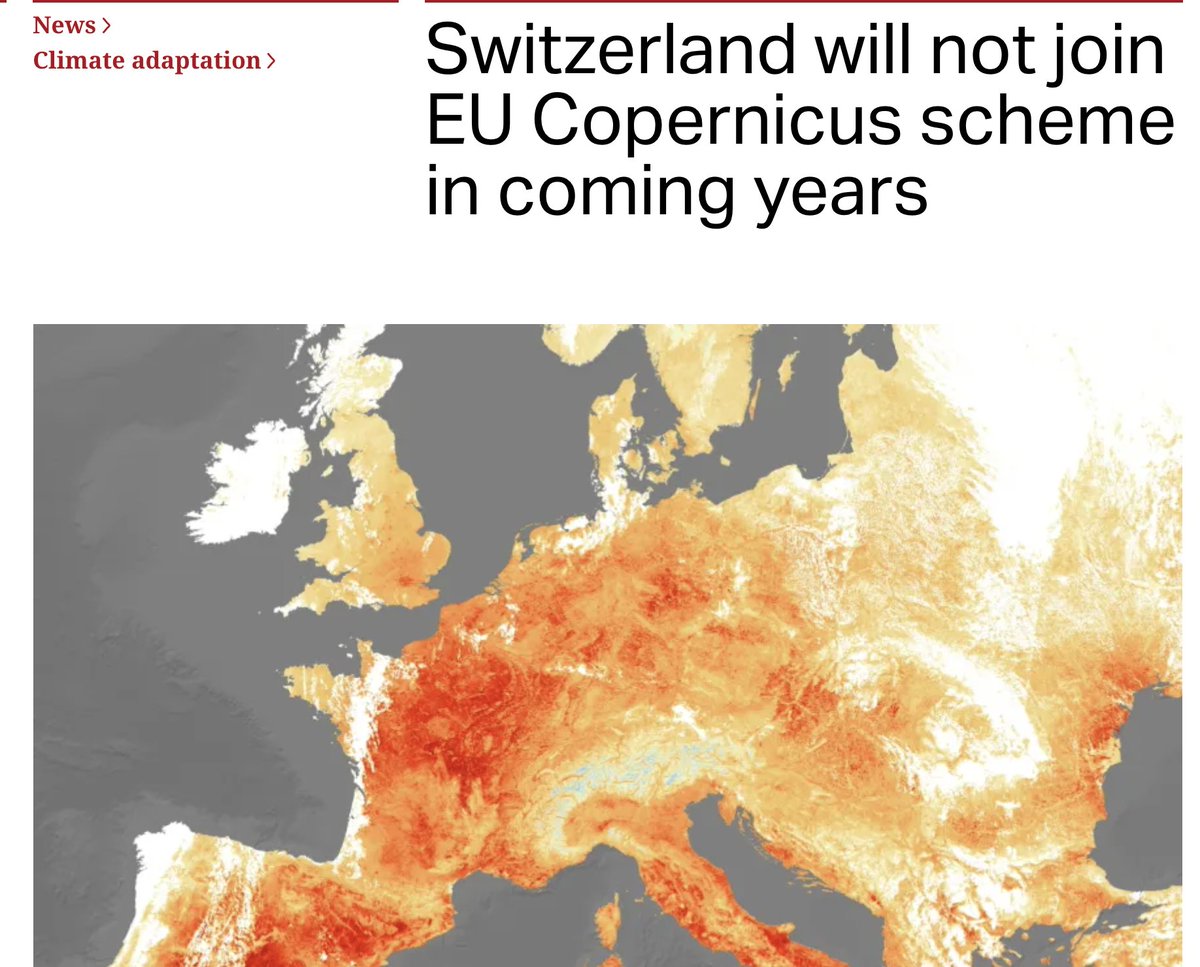
Switzerland has decided it would be opting out of participating in the Copernicus programme for the next cycle (2028-2034). This follows their previous decision in 2024 to not participate in the current cycle.
Why? Copernicus has an open-data policy and so Switzerland can access almost all of the data. But, it won't be able to take advantage of membership benefits like receiving real-time data, activating Copernicus services (in case of emergencies) and influencing the direction of the programme.
What's worth watching is the bigger question this raises: the financial sustainability of open data.
Copernicus is only getting more expensive from here: new Sentinel missions, more data to process and more investment in storage and dissemination.
All of it will be funded by the countries in Copernicus. So if other countries reach the same conclusion that Switzerland has - that open access makes paying in optional - there will be questions about the willingness of contributors to keep funding something others can use for free, or to continue today's open data policies for non-members.
Important to remember: The open-data policy has always been a political choice, not a law of nature. And the more it looks like it can be enjoyed without contributing, the more pressure builds to revisit the terms for those who don't.
In short: Please do not take open satellite data as a given!
5
18
63
5,717
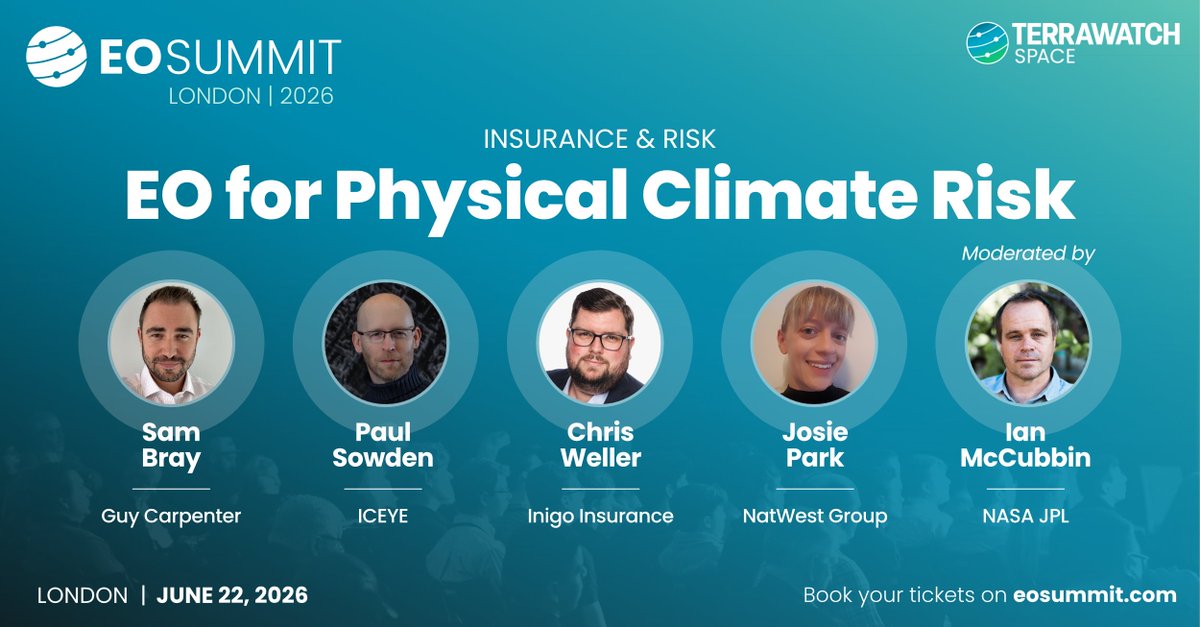
Unveiling the Physical Climate Risk panel at EO Summit in which our panelists will discuss the value of geospatial data for evaluating asset risk and how EO can support financial decisions in insurance and finance sectors.
Thanks to @iceye_global for sponsoring this session!
Join us at @EOSummitConf in London on June 22 to learn about the various applications of remote sensing!
1
3
2
280
TerraWatch Space retweeted
Jun 3
The audience includes EO satellite companies, geospatial solution providers, end-users from various sectors, non-profits, investors and researchers.
Book your tickets now!
eosummit2026.rsvpify.com
4
8
363
TerraWatch Space retweeted
Jun 3
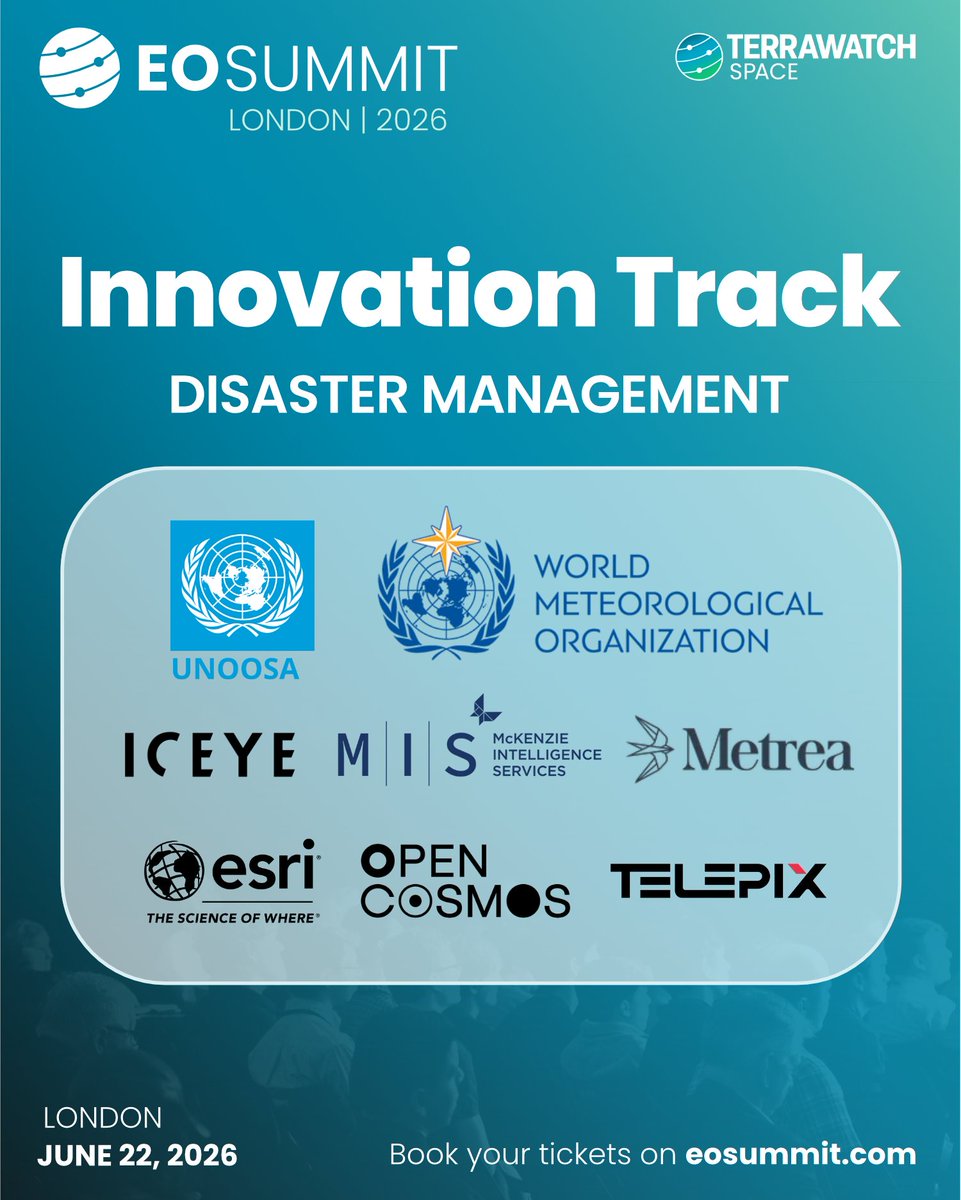
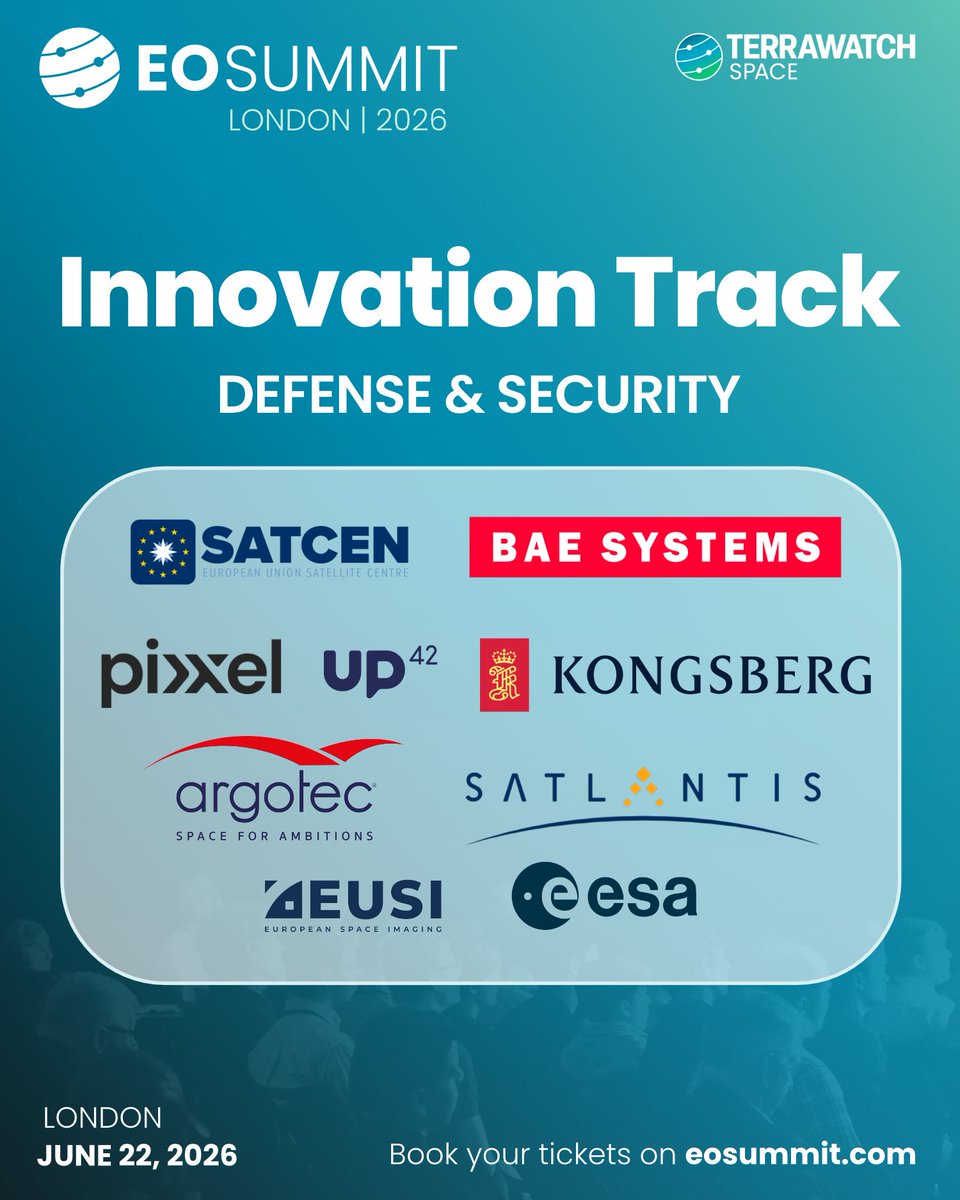
- Innovation Track focusing on new innovations in EO for defense, security and disaster management
1
2
4
349
TerraWatch Space retweeted
Jun 3
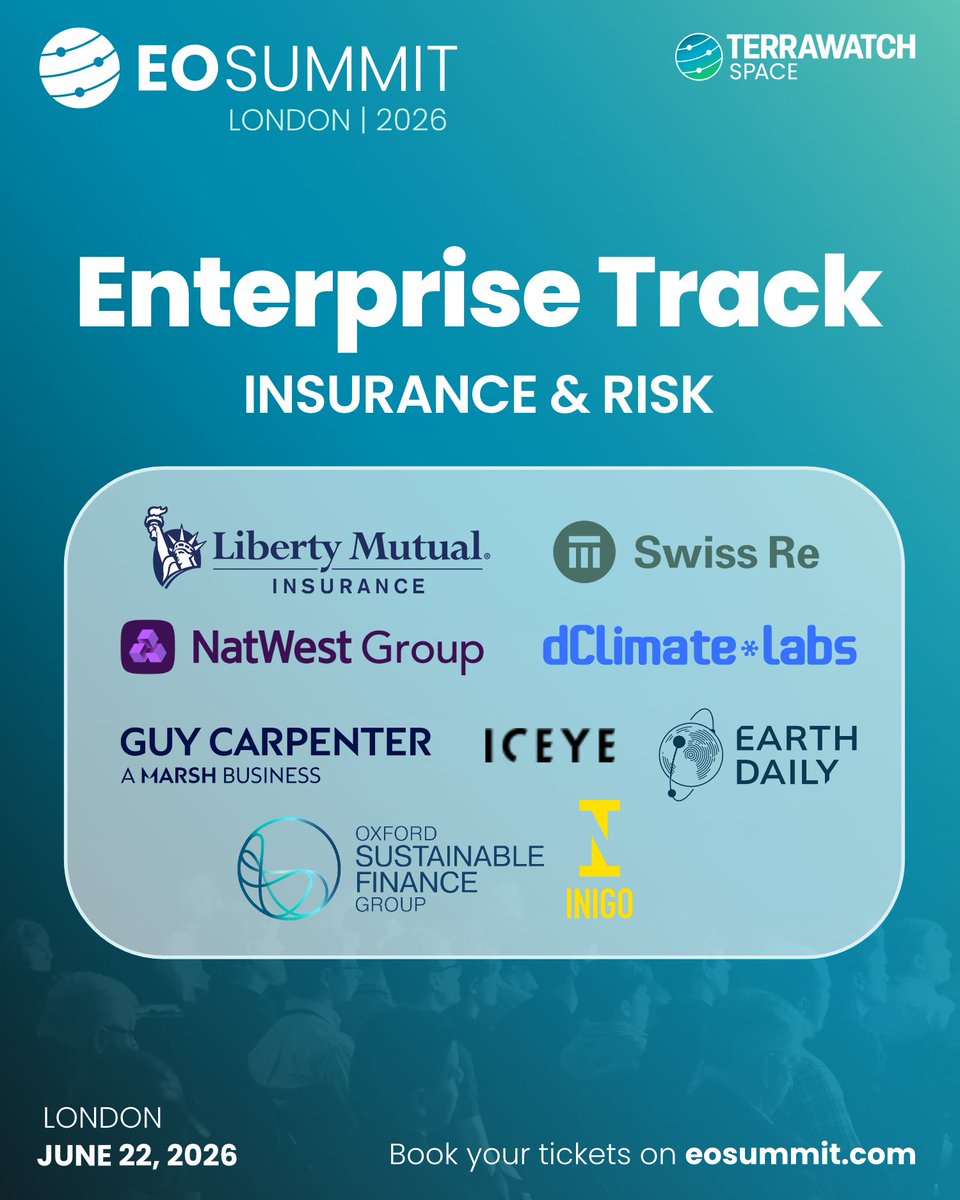
Less than 3 weeks until EO Summit 2026 in London!
We will have two tracks:
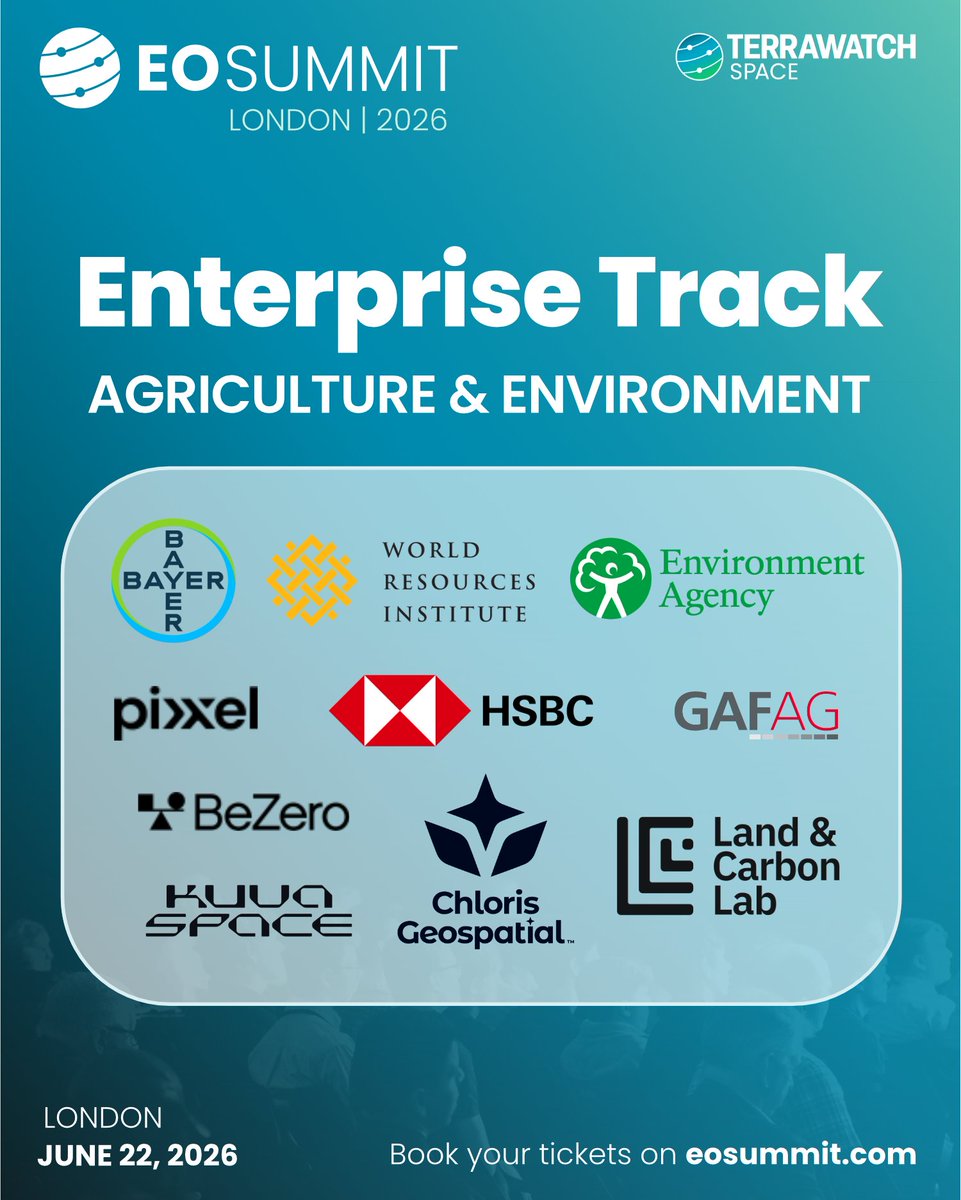
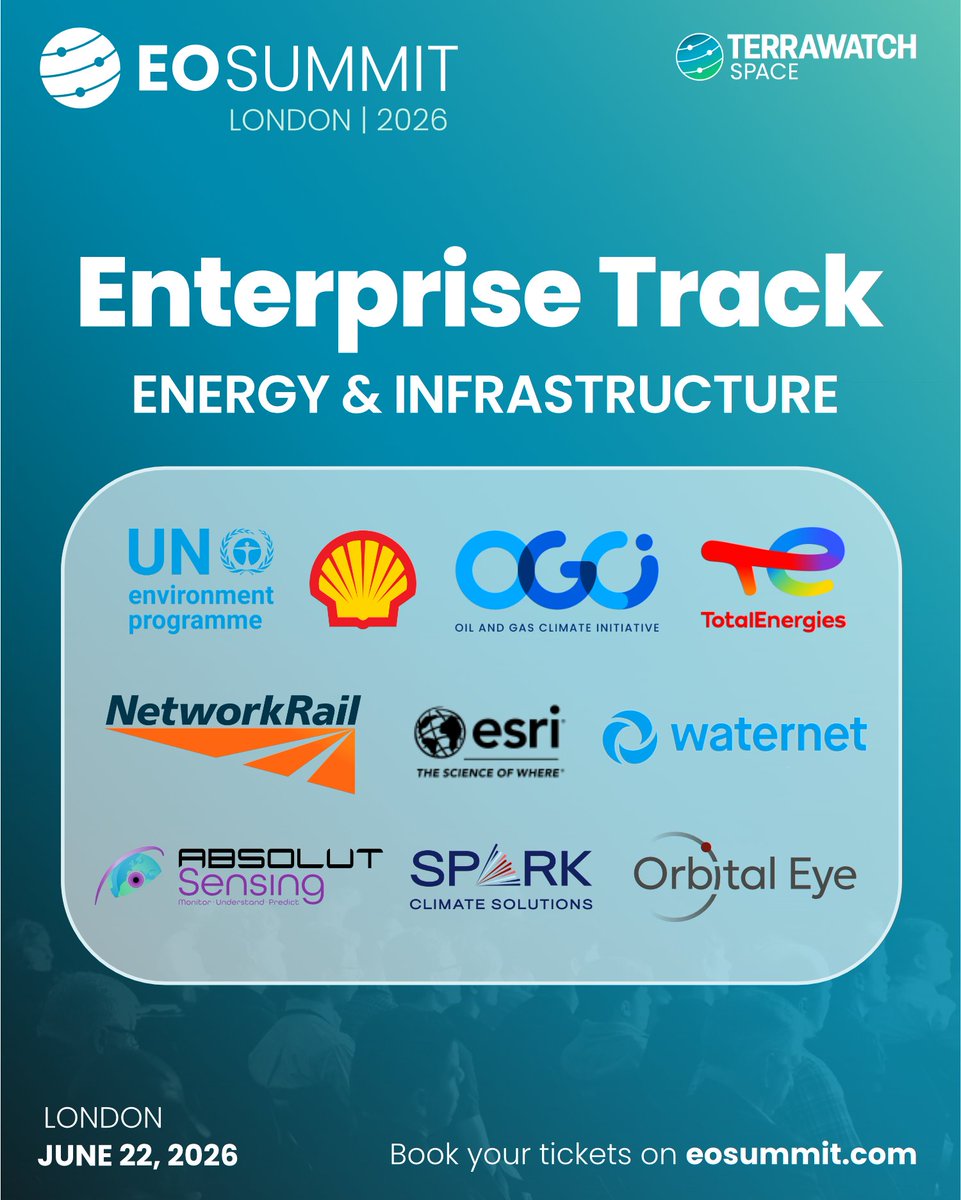
- Enterprise Track discussing commercial applications of EO across insurance, finance, energy, utilities, agriculture and environment
1
5
6
547
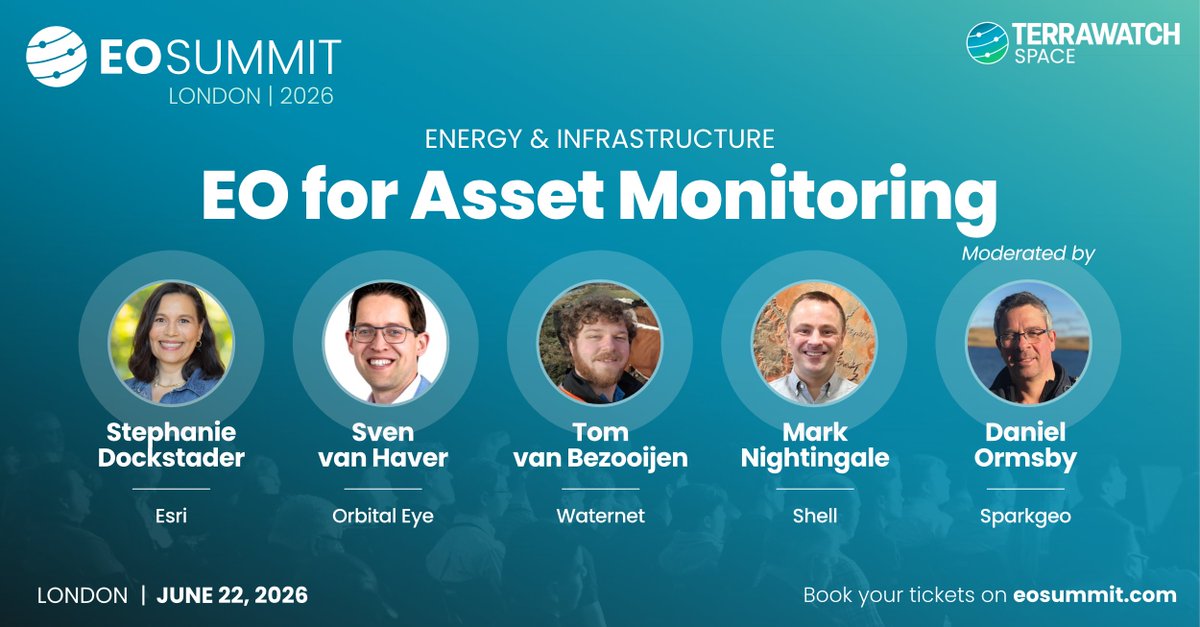
Announcing the Asset Monitoring panel at EO Summit in which our panelists will discuss the value of satellite data for monitoring infrastructure across utilities and energy sectors and the challenges involved in making EO operational.
Thanks to Orbital Eye for sponsoring this session and Esri for being a Gold sponsor of the conference.
Join us at EO Summit in London on June 22 to learn about applications of remote sensing!
1
2
219
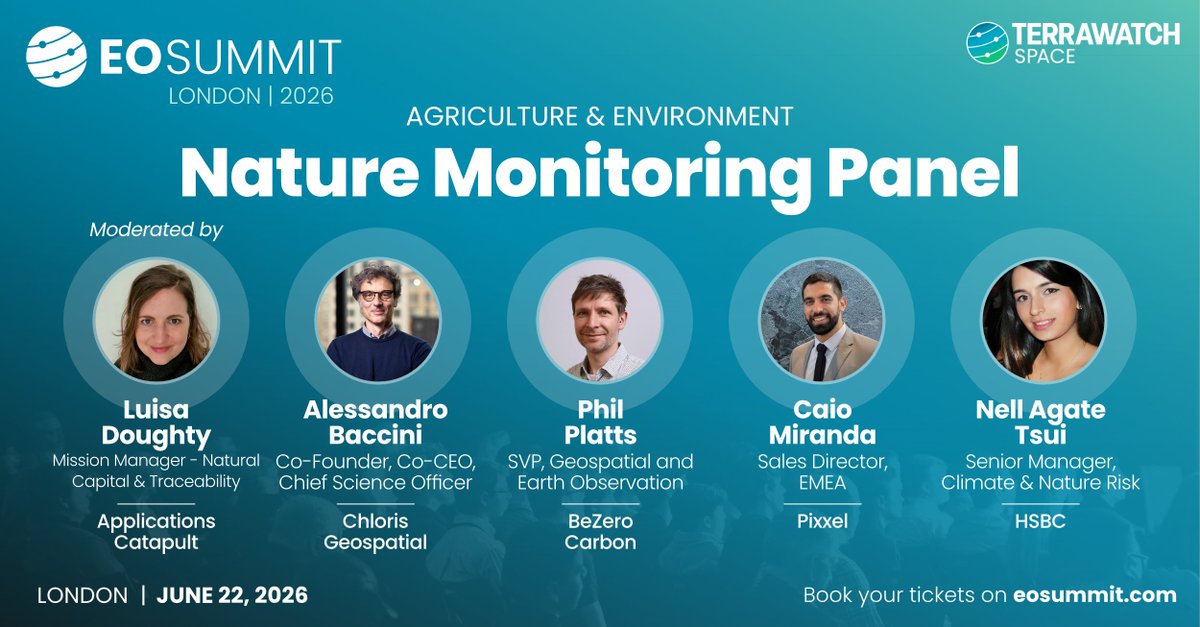
Announcing the Nature Monitoring panel at EO Summit in which our panelists will discuss the value of satellite data for ecosystem and biodiversity monitoring carbon markets, the state of the carbon markets and use of EO for nature risk reporting.
- Alessandro Baccini from @ChlorisGeo
- Phil Platts from @BeZeroCarbon
- Caio Miranda from @PixxelSpace
- Nell AT from @HSBC
- Luisa Doughty from @SatAppsCatapult [Moderator]
Thanks to Chloris Geospatial for sponsoring this session.
Join us at @EOSummitConf in London on June 22 to learn about applications of remote sensing!
3
4
387
TerraWatch Space retweeted
May 26
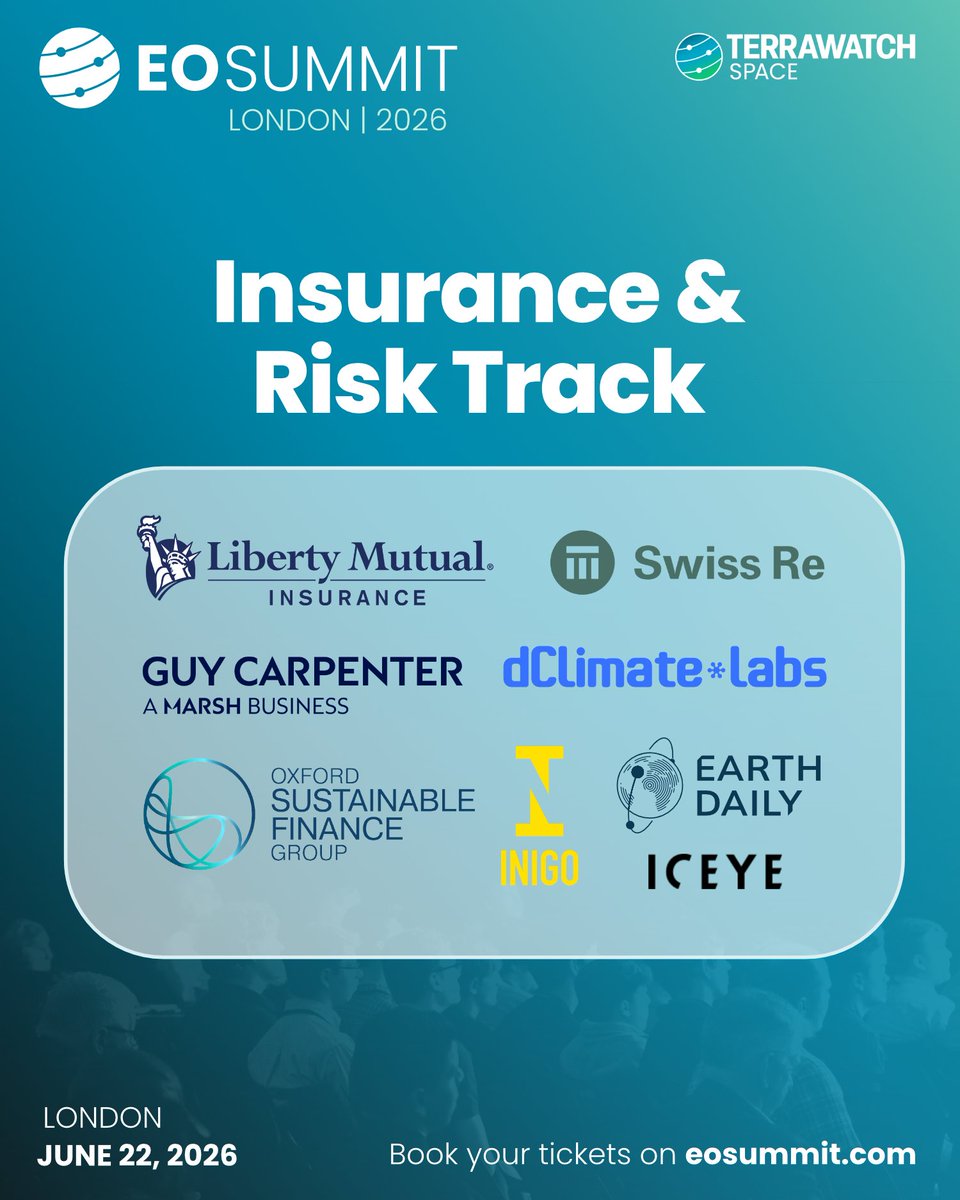
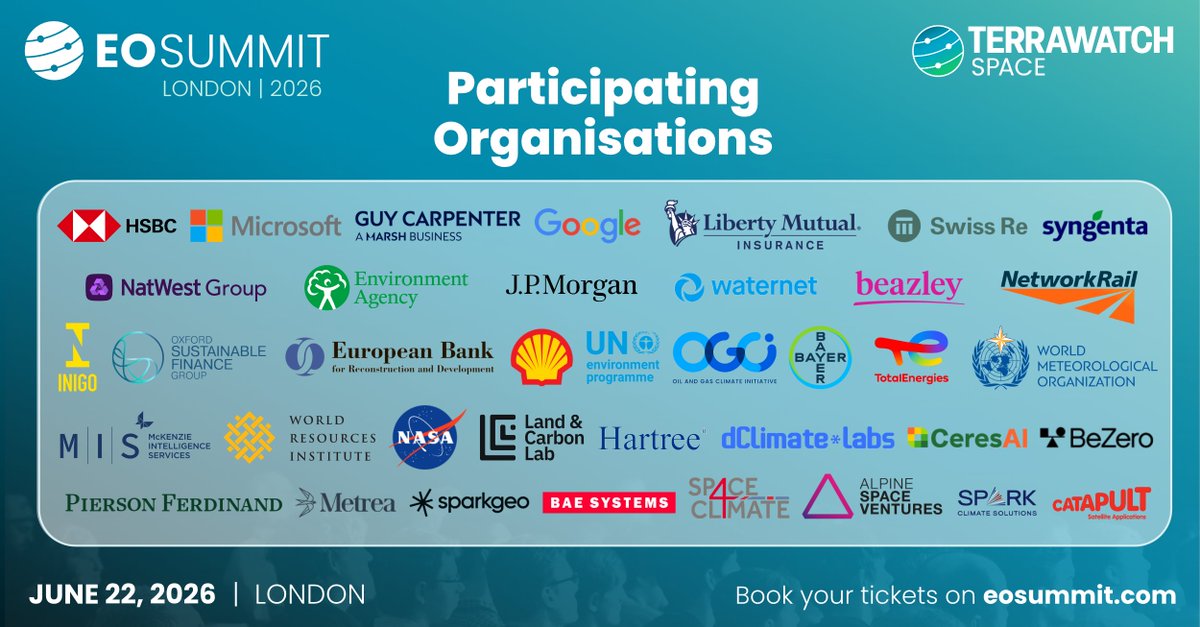
Meet the participating organisations for EO Summit 2026 - spread across insurance, finance, energy, utilities, agriculture, environment, government and defence sectors, who will present real-world case studies Earth observation through presentations and panels.
We conceived @EOSummitConf as a user-focused, application-driven conference - one that was missing in the EO and space event calendar. For the third straight year, we continue to deliver on our promise.
Come meet the users of satellite data and geospatial on June 22!
5
16
976
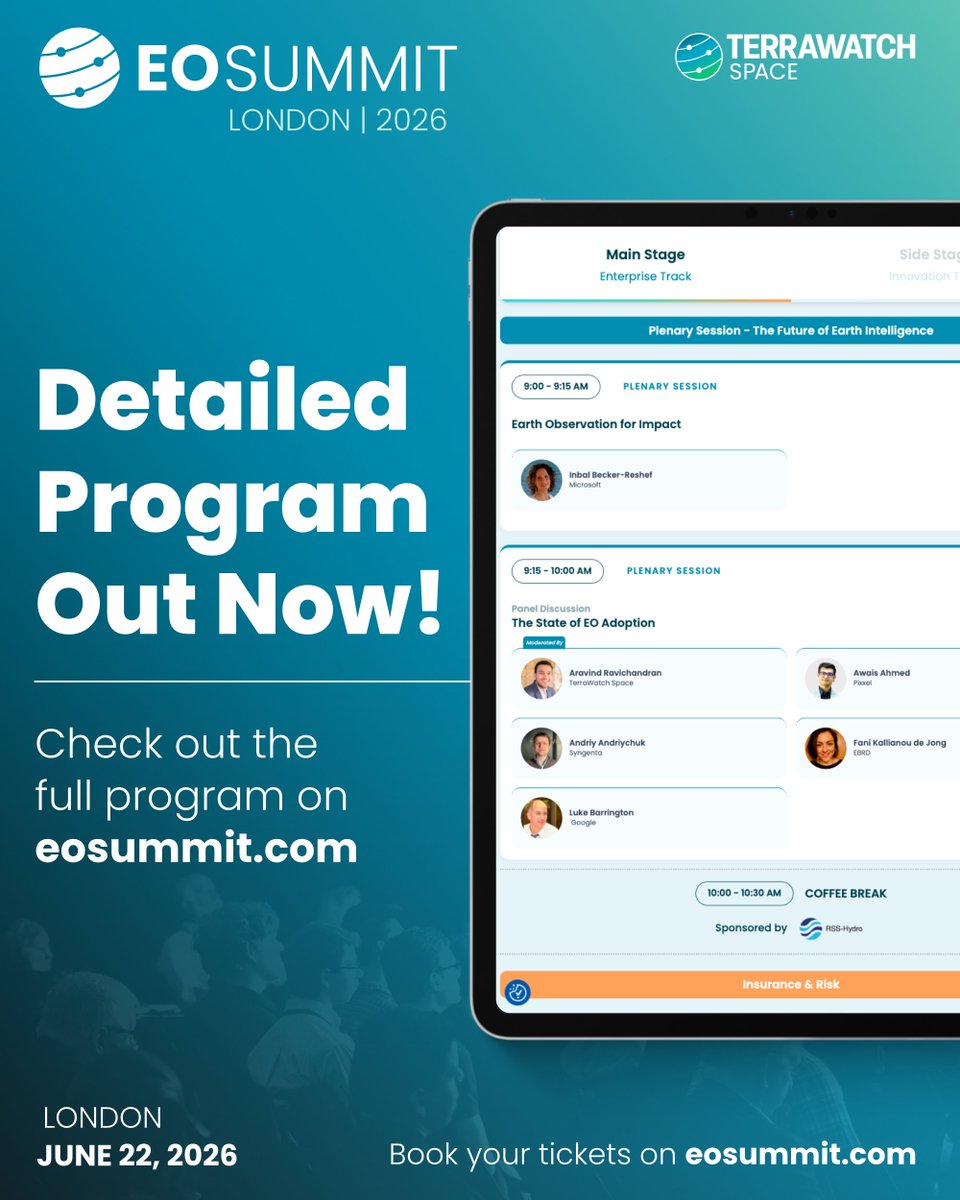
Go check out the detailed program with all the incredible speakers from various organisations that will be participating in EO Summit 2026.
You can hear from those building EO capabilities, using EO applications, funding EO solutions and more.
Book your tickets and join us on June 22 in London!
75
TerraWatch Space retweeted
May 22
Three years after Advent acquired Maxar for $6.4B, @fikocian and I took a deep dive into its transformation into @vantortech, one of the most prominent Earth observation companies.
We take a deeper look at what happened after the deal, whether the divestments helped, how the company has transformed beyond satellite imagery and what the future looks like.
Filip reached out to me first and put in a lot of work to get this in motion and is the finance brain behind this piece, and as always, I am the strategy guy.
It's a pretty long, in-depth analysis of a very interesting company - so a perfect weekend read for anyone interested in space tech, geospatial or private equity!
3
7
44
7,945
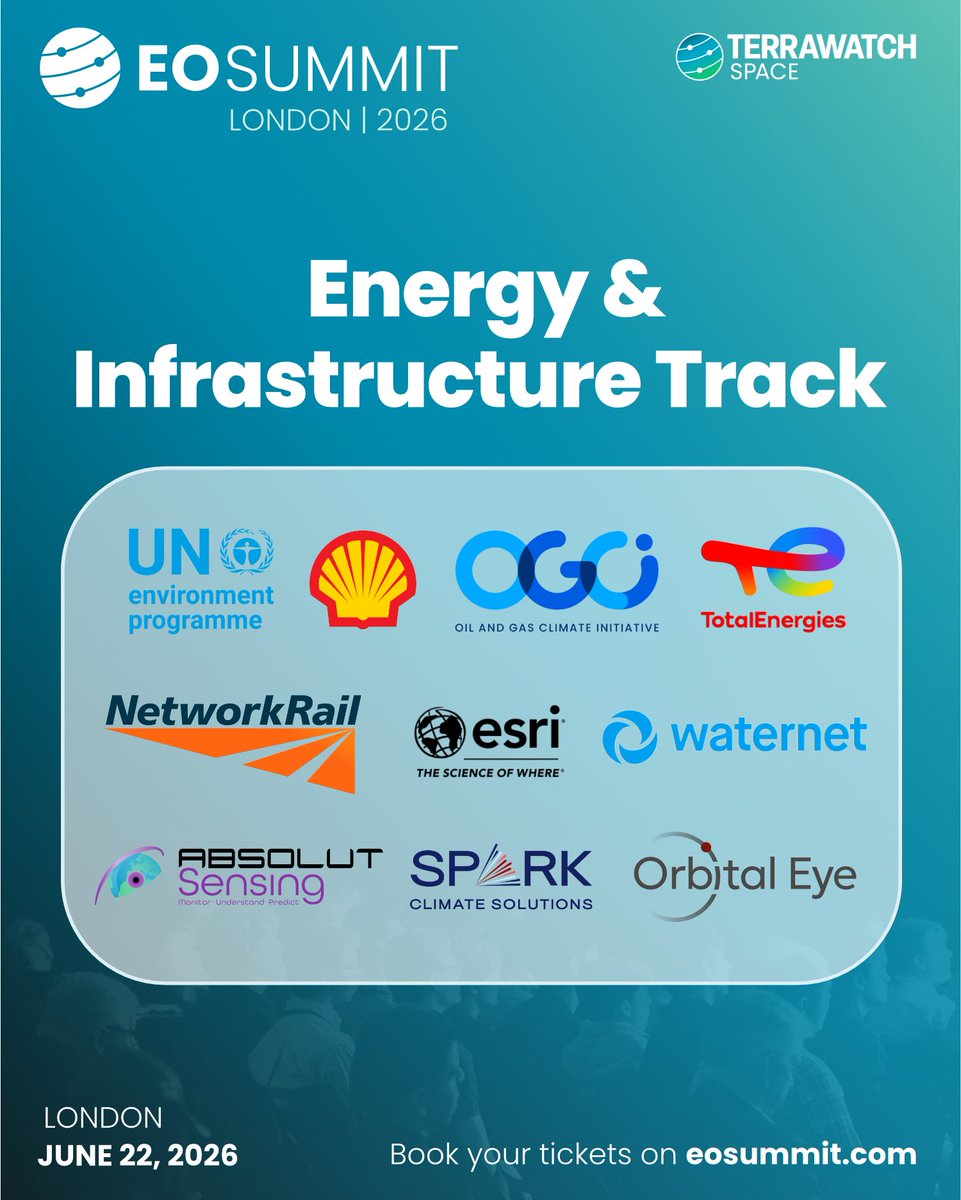
We are excited to welcome some leading players in the Energy & Infrastructure sector who will be participating in the EO Summit 2026 in London on June 22.
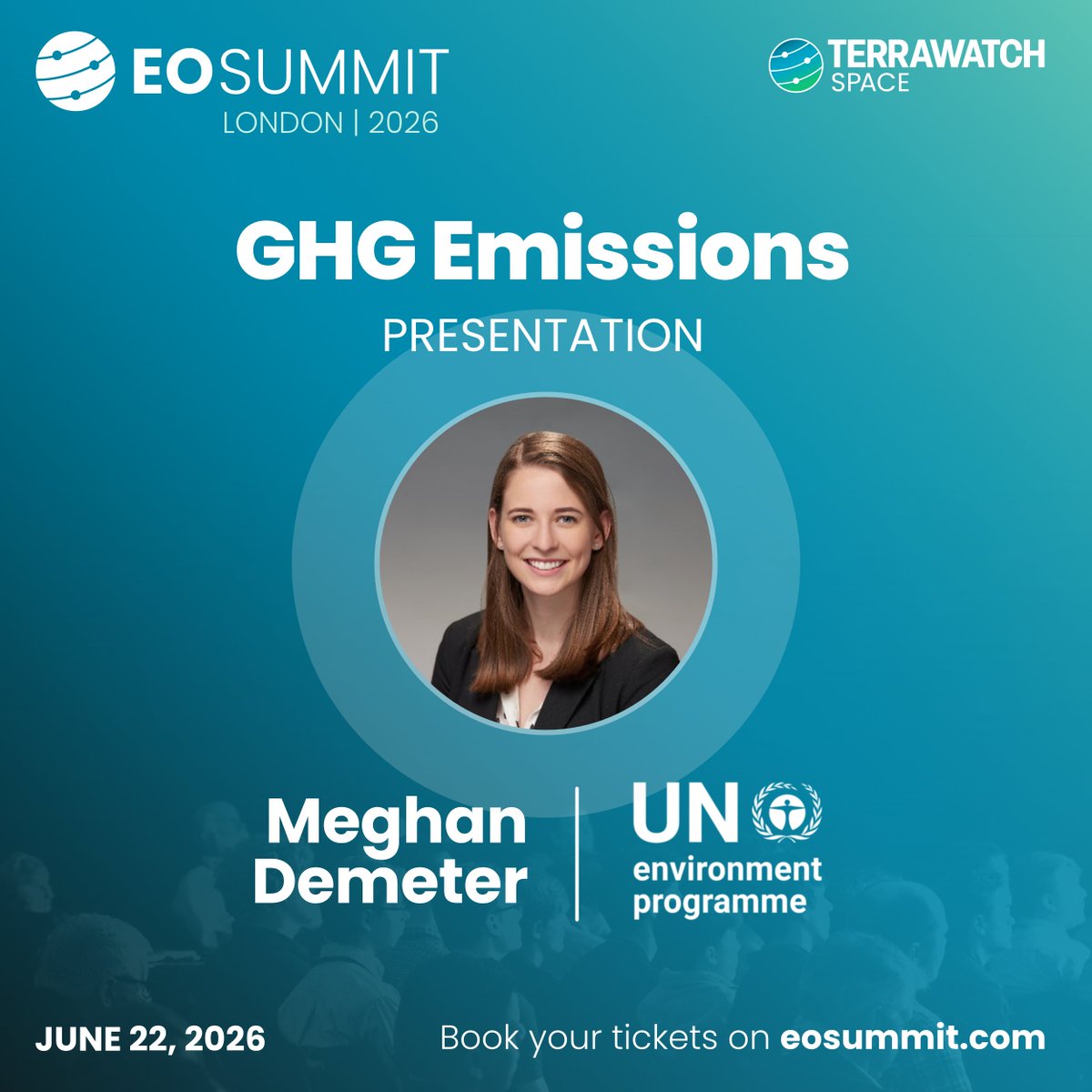
🏭 UN Environment Programme, TotalEnergies, OGCI (Oil and Gas Climate Initiative), Spark Climate Solutions and Absolut Sensing in the EO for GHG Emissions session
🏗️ Network Rail, Shell, Waternet, Orbital Eye and Esri in the EO for Asset Monitoring session
Register for @EOSummitConf and hear about the applications of satellite data for energy, utilities and infrastructure sectors!
2
3
240
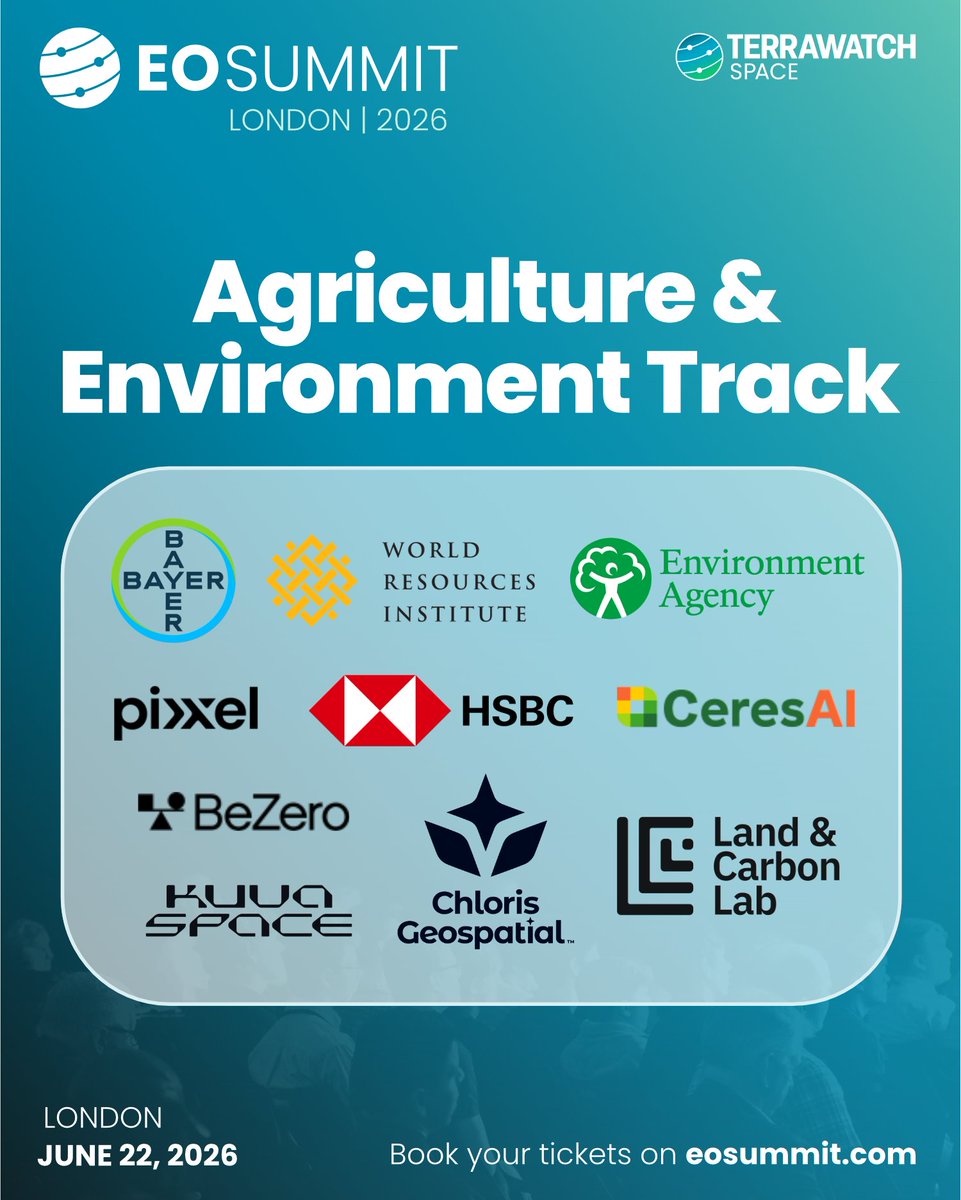
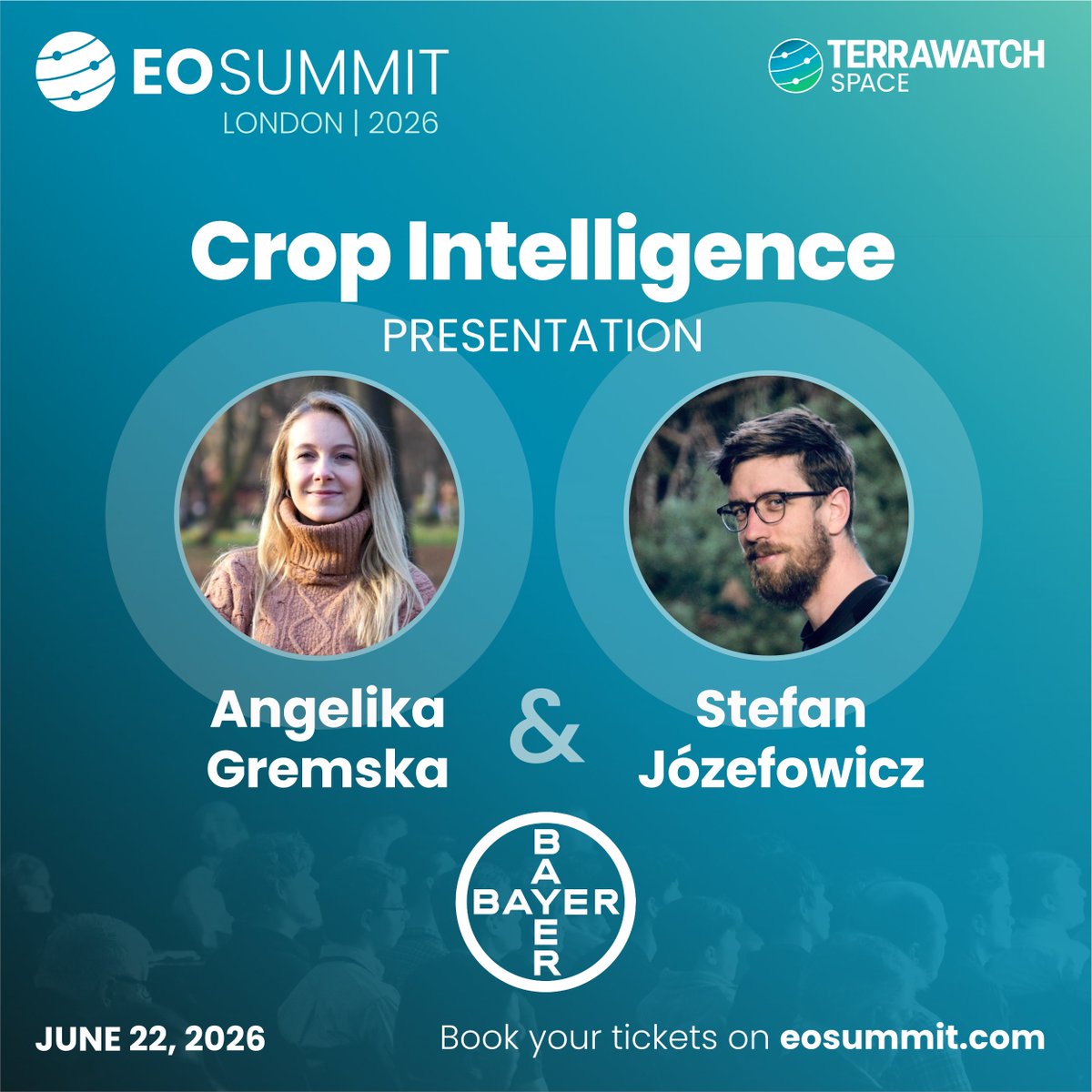
We are excited to welcome some leading players in the Agriculture & Environment sectors who will be participating in the EO Summit 2026 in London on June 22.
🌱 Bayer, Ceres, World Resources Institute, Environment Agency and Kuva Space will be speaking in the EO for Crop Intelligence session
🌳 Land & Carbon Lab, HSBC, BeZero Carbon, Chloris Geospatial and Pixxel will be speaking in the EO for Nature Monitoring session
Register for @EOSummitConf and hear about the use of satellite data for agricultural and environmental monitoring applications!
2
3
212
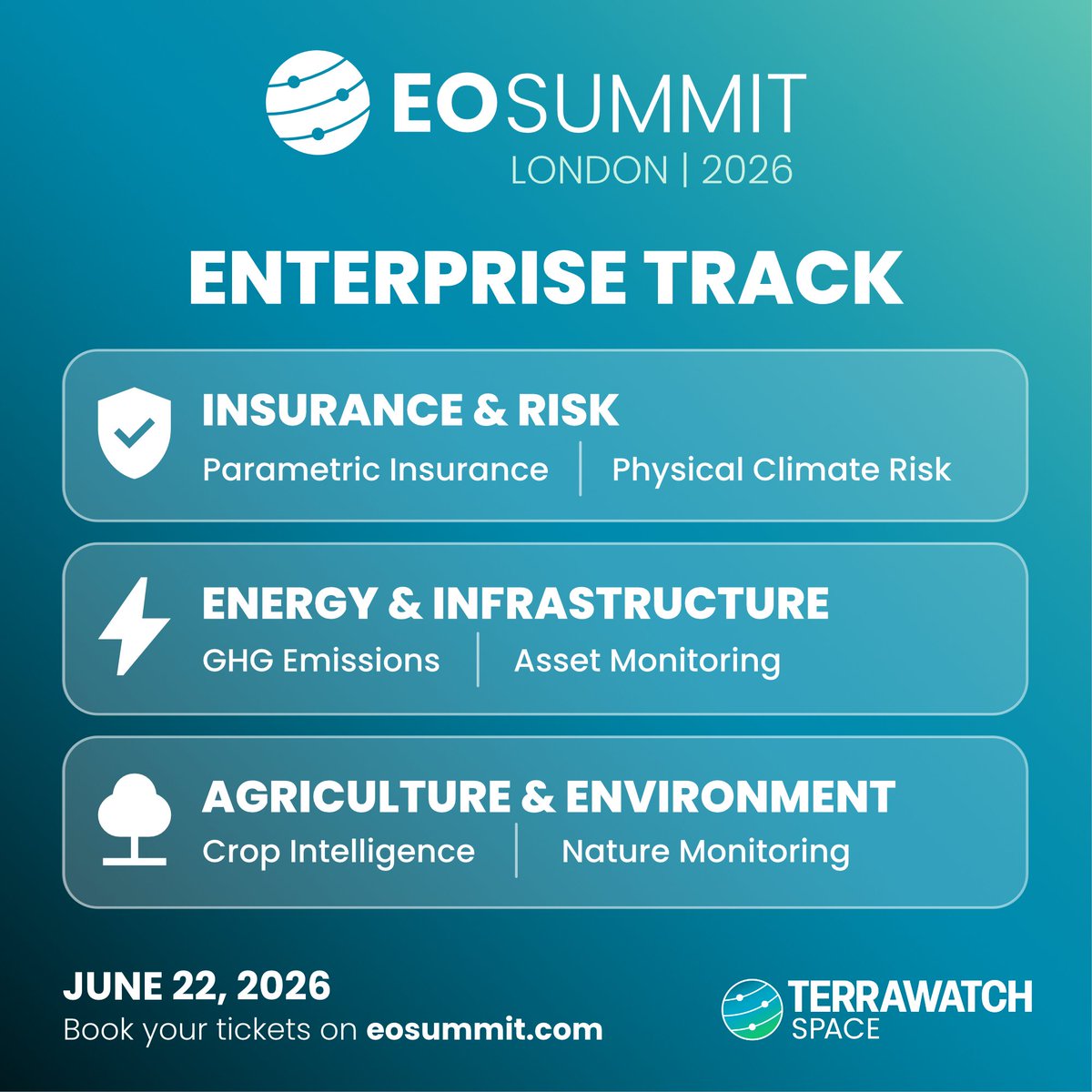
At the EO Summit 2026, we will cover applications of satellite data across various sectors.
The Enterprise Track at the Main Stage includes sessions on how EO is used for several use cases.
➡️ Insurance & Risk → ☂️ Parametric Insurance | 🌡️ Physical Climate Risk
➡️ Energy & Infrastructure → 🏭 GHG Emissions | 🏗️ Asset Monitoring
➡️ Agriculture & Environment → 🌱 Crop Intelligence | 🌍 Physical Climate Risk
Reserve your tickets for @EOSummitConf to learn about EO applications from actual end-users!
1
2
7
281
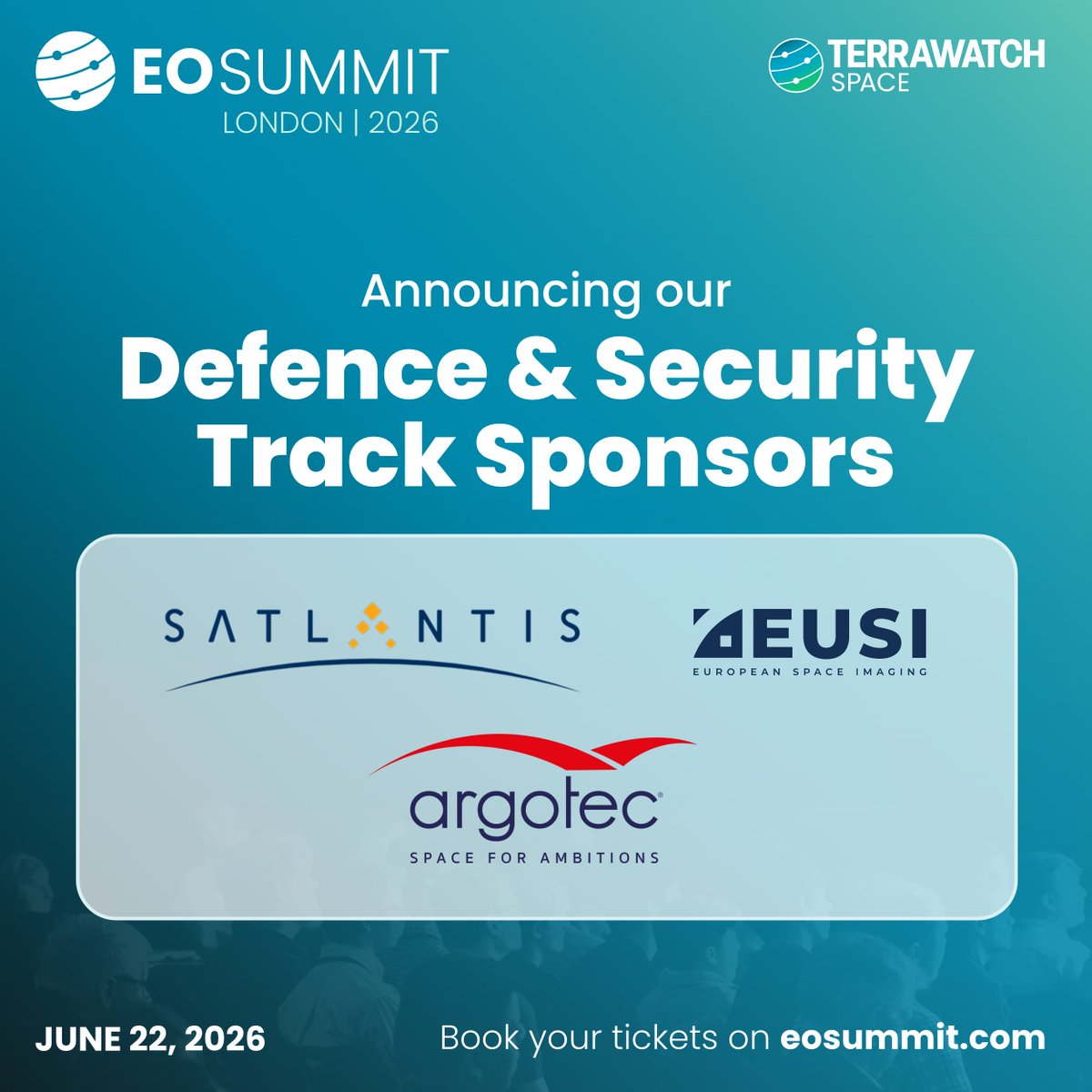
We are excited to announce the sponsors for the Defence & Security track at the EO Summit 2026 - SATLANTIS, EUSI and ARGOTEC.
All three organisations will be delivering short presentations about their capabilities and their work in the defence sector within the Innovation Track of the conference.
Register at eosummit.com to meet representatives from these companies!
125