
We create self-evolving learning paths that take you from your first line of code to finished projects.
Joined September 2024
- Tweets 1,326
- Following 10
- Followers 1,002
- Likes 1,147
267 Photos and videos
Pinned Tweet

Jan 12
Big news...and an important milestone for us.
After a year of building, experimenting, breaking things, and learning fast, Web3Compass is now part of Germina Labs (@GerminaLabs).
None of this would have been possible without the community. From 30 Days of Solidity to 10 Days of Base to Build with Stylus... The energy, curiosity, and commitment you brought to every cohort made this journey real.
We’ve seen some of you push your limits...late-night calls, consistent streaks, showing up even when it got hard. That kind of builder grit is exactly what Web3Compass stands for.
As a two-person team, scaling that momentum sustainably was hard. So we made a deliberate choice - one that’s best for the community, the mission, and what comes next.
Germina brings the strategic depth, operational clarity, and long-term thinking that lets us scale without losing our soul.
We remain builder-first, community-driven, and deeply technical, NOW with the right guidance to go bigger.
The mission stays the same.
The ambition just got sharper.
2026 is about building things that last.

2
2
27
2,345
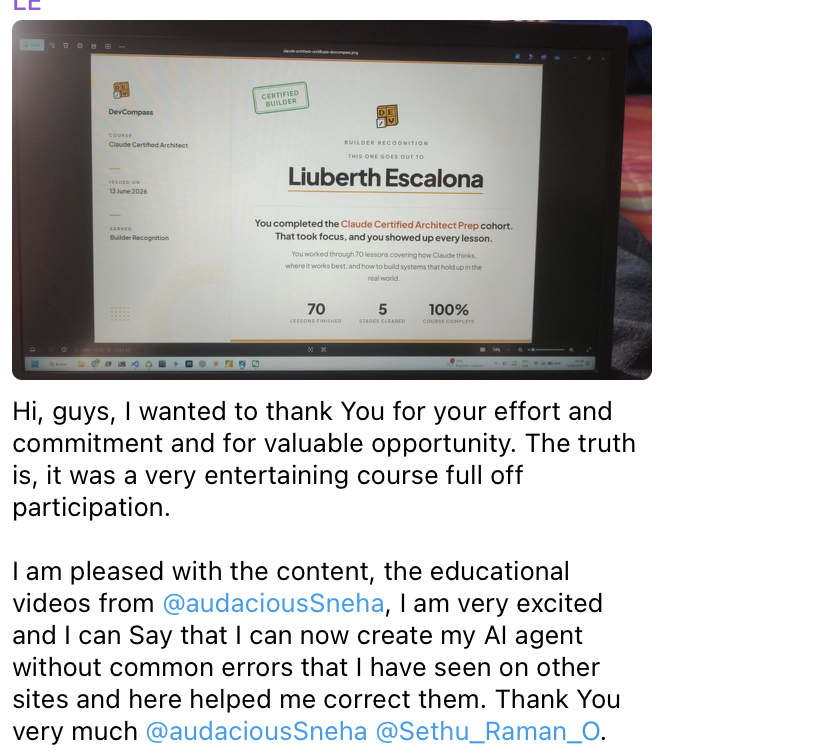
Oh what a privilege to receive such feedbacks🥳
Cheers to more and more learners and to us creating more kickass learning content.
Check it out on: devcompass.ai/claude-certifi…
3
26
Jun 13
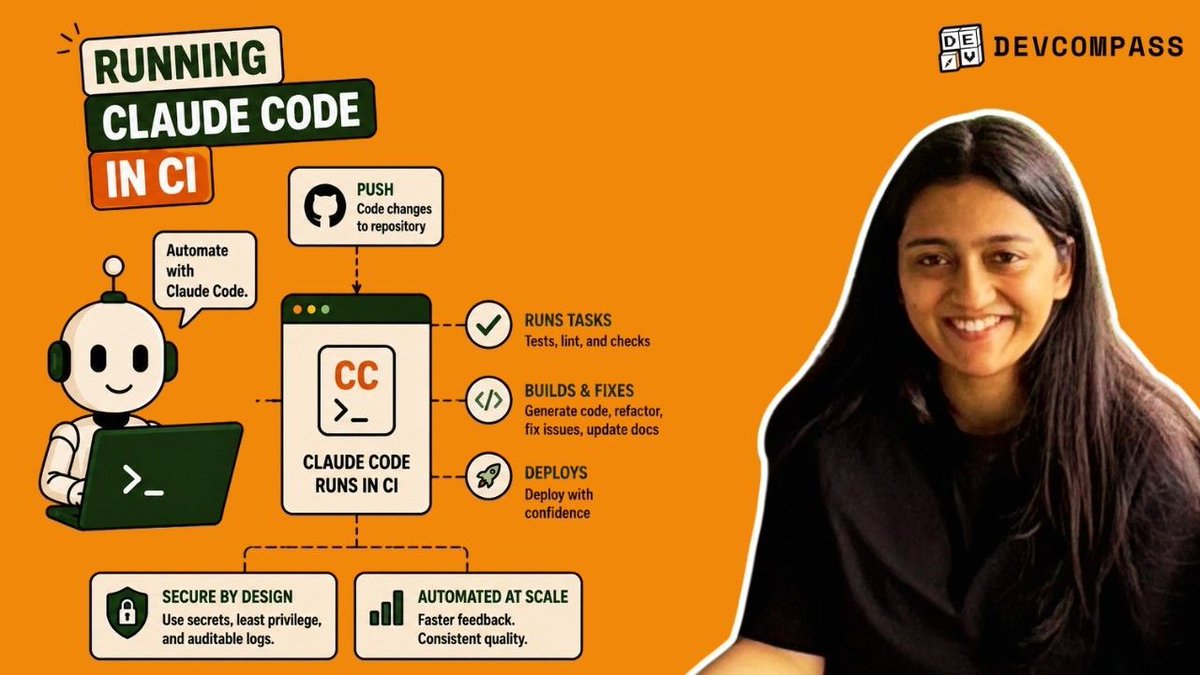
Claude Code feels very different when there's no human around to answer questions.
In a CI pipeline, it doesn't get to ask for clarification.
It doesn't get feedback.
It just runs and whatever it produces becomes part of the workflow.
That means the rules change.
We’ve been building a full playlist around production AI systems:
youtube.com/playlist?list=PL…
And in this video, we break down:
• running Claude Code in non-interactive mode
• generating structured JSON output for pipelines
• making CI tasks idempotent
• the anatomy of a Claude-powered CI workflow
• and why prompts need to be much more precise in automation
A lot of things that work perfectly in a terminal session break the moment you put them into CI.
🎥 youtu.be/vBbe_KAXikM
1
1
60
Jun 12
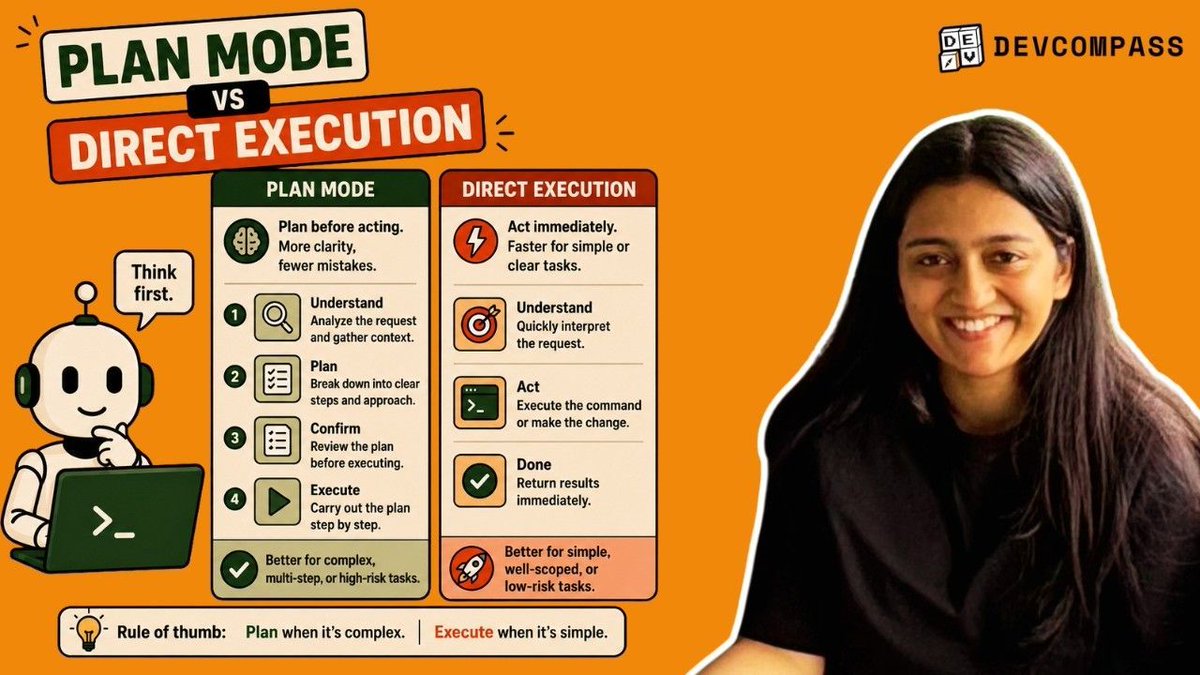
One of the most underrated Claude Code skills is knowing when *not* to let it start coding immediately.
Sometimes the fastest path is:
"here's the task, go build it."
Other times, that's exactly how you end up reviewing a giant PR full of changes you didn't want.
That's where Plan Mode comes in.
We’ve been building a full playlist around production AI systems and CCA-F prep:
youtube.com/playlist?list=PL…
And in this video, we break down:
• when to use Plan Mode vs direct execution
• a simple framework for making that decision
• input/output examples that improve results
• test-driven iteration with Claude Code
• and the interview pattern for complex, ambiguous tasks
A good rule of thumb:
If a mistake is easy to fix, execute.
If a mistake is expensive, plan first.
🎥 youtu.be/olbq75MGafU
1
69
Jun 11
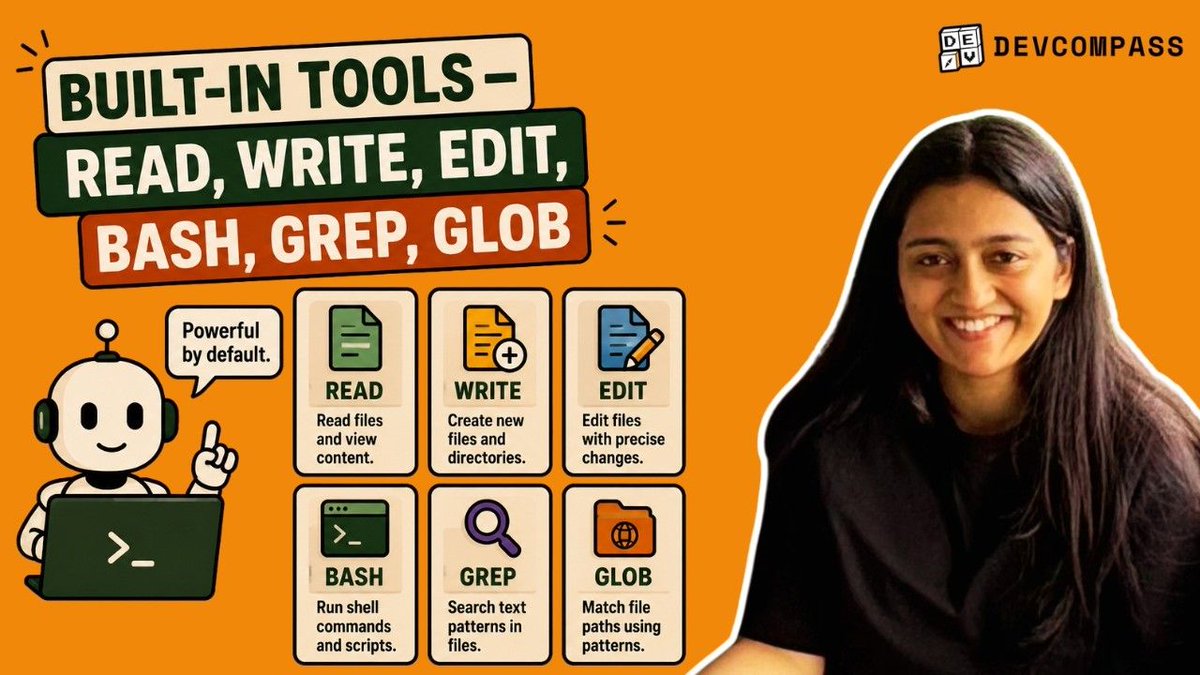
When Claude Code edits a file, searches your codebase, runs a command, or creates something new, it's not doing magic.
It's using one of six built-in tools.
The interesting part is that a lot of Claude Code mistakes come from not understanding which tool should be used for which job.
We’ve been building a full playlist around production AI systems:
youtube.com/playlist?list=PL…
And in this video, we break down:
• all six built-in Claude Code tools
• when Claude chooses each one
• common tool selection mistakes
• why Grep, Glob, Read, Edit, and Write are not interchangeable
• and why Bash is both the most powerful and most dangerous tool in the toolbox
A lot of Claude Code usage gets better once you understand the tools underneath the interface.
🎥 youtu.be/Men3OAvsxws
2
1
3
78
Jun 10
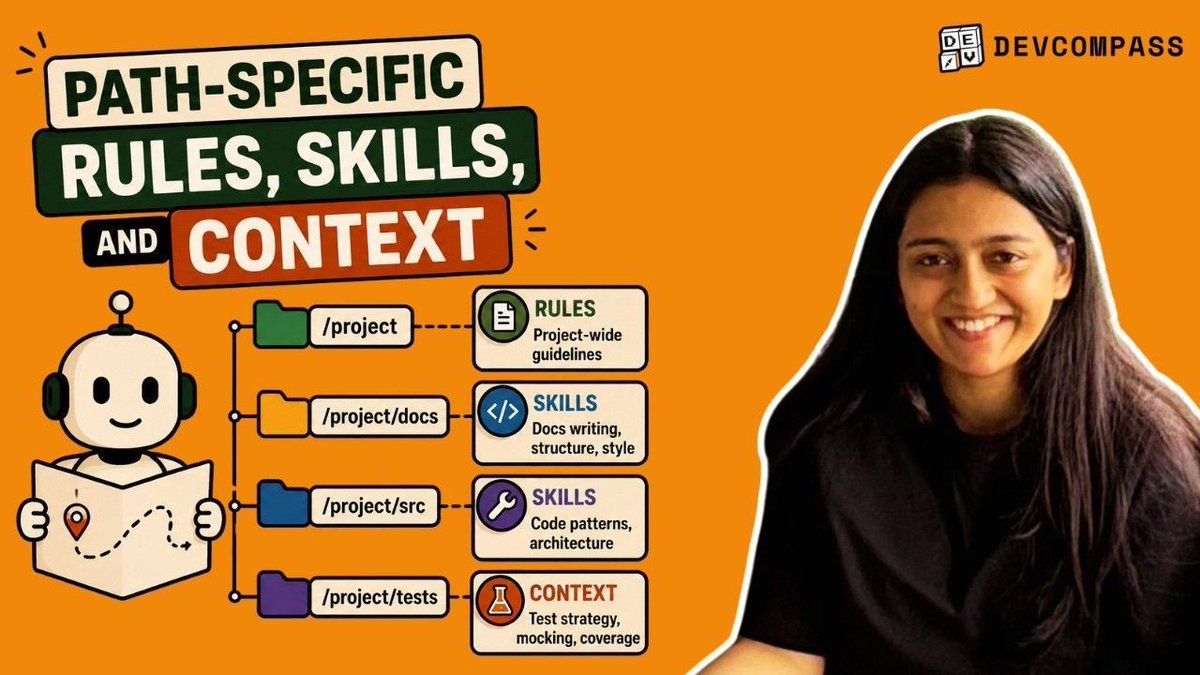
CLAUDE.md is great...
Until it turns into a 400-line file that nobody wants to maintain.
As projects grow, you need better ways to organize context, workflows, and conventions without dumping everything into one giant configuration file.
We’ve been building a full playlist around production AI systems:
youtube.com/playlist?list=PL…
And in this video, we break down three features that make Claude Code scale much better:
• path-specific rules
• skills and reusable workflows
• context:fork and focused sub-sessions
We also look at how teams can standardize common tasks, keep project context manageable, and avoid configuration sprawl as codebases grow.
Small features on the surface. Huge quality-of-life improvements once you're working on larger projects.
🎥 youtu.be/wLAbFL51its
3
70
Jun 9
Imagine onboarding a new developer and having to explain the same things every single time:
What the project does.
Which framework you're using.
How testing works.
Naming conventions.
Deployment steps.
Now imagine having to do that for Claude too.
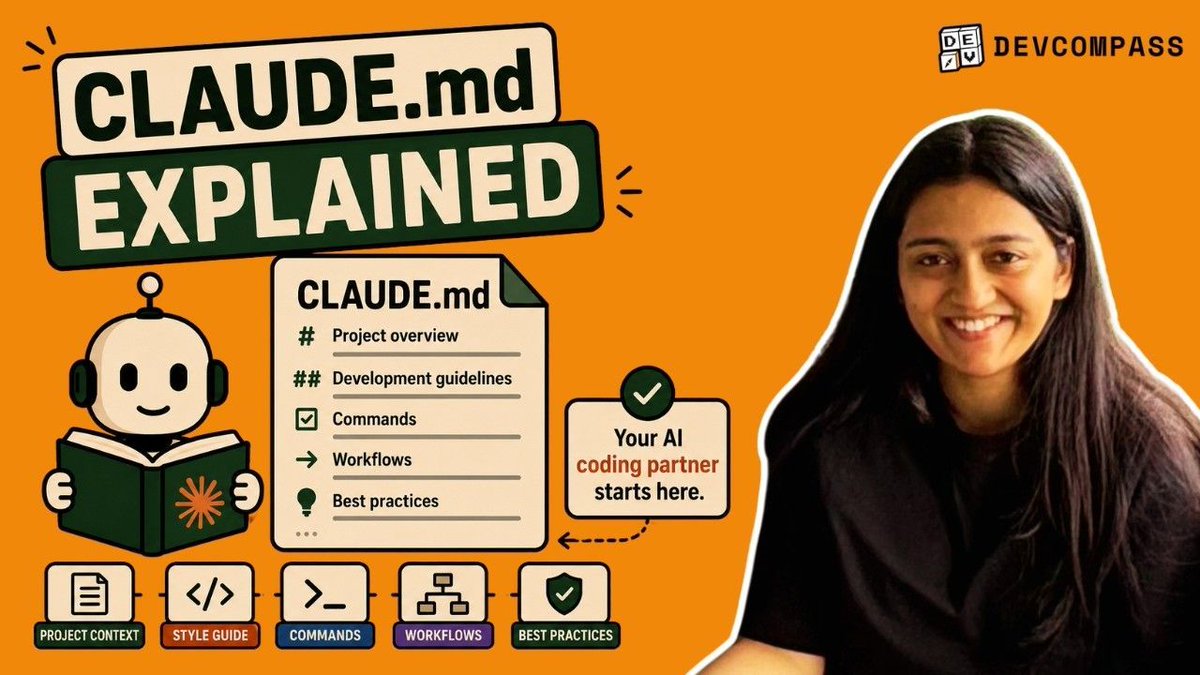
That’s exactly what CLAUDE.md solves.
We’ve been building a full playlist around production AI systems:
youtube.com/playlist?list=PL…
And in this video, we break down:
• what goes into a CLAUDE.md file
• how Claude loads project context automatically
• the hierarchy of project, subdirectory, and user-level files
• what belongs in the file (and what doesn’t)
• and why it becomes essential when multiple developers use Claude Code
One of the simplest ideas in Claude Code, but probably one of the highest leverage.
🎥 youtu.be/kp6NizlPuxs
1
1
9
132
Jun 8
Most developers learn Claude through the API.
Messages in.
Responses out.
Tools, loops, prompts, and orchestration code.
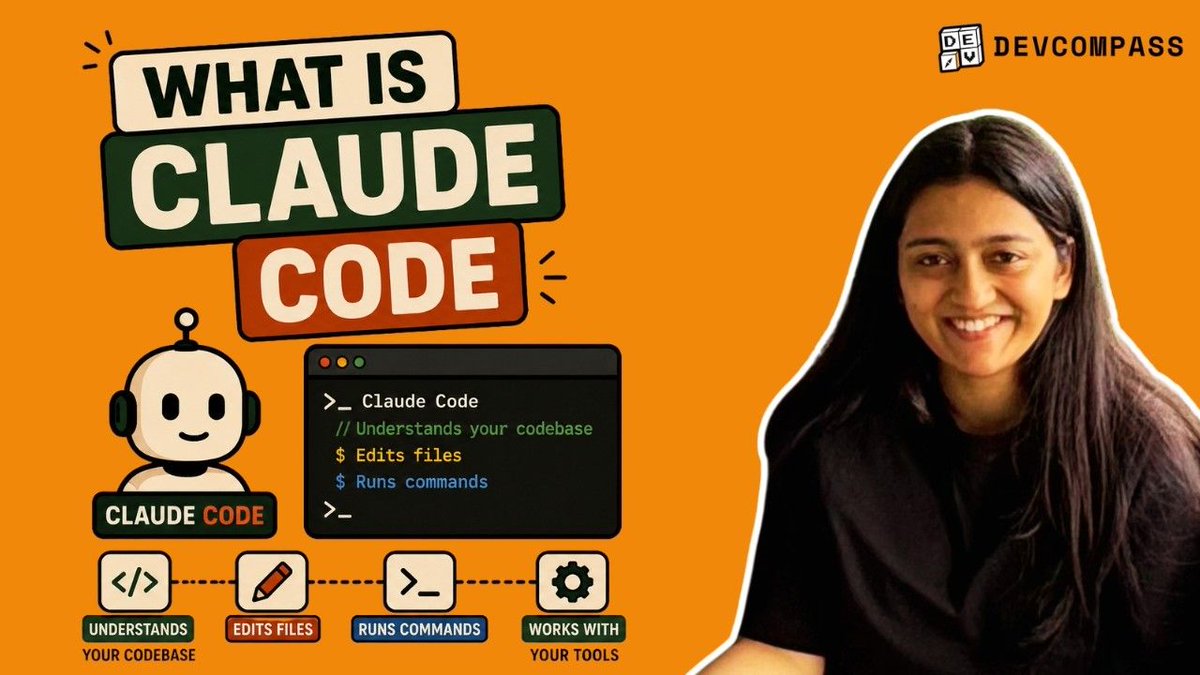
But Claude Code is a completely different way of working with Claude.
Instead of building the plumbing yourself, you drop Claude directly into your codebase and let it read files, edit code, run commands, and work through tasks from your terminal.
We’ve been building a full playlist around production AI systems:
youtube.com/playlist?list=PL…
And in this video, we break down:
• how Claude Code differs from the API
• what a real Claude Code workflow looks like
• why it feels so powerful for development work
• and when you should use Claude Code instead of building with the API
If you've heard people talk about Claude Code but never really understood where it fits, this is a good place to start.
🎥 youtu.be/in2y9sud3u4
2
1
5
508
DevCompass retweeted

Technology is rarely the interesting part. People are
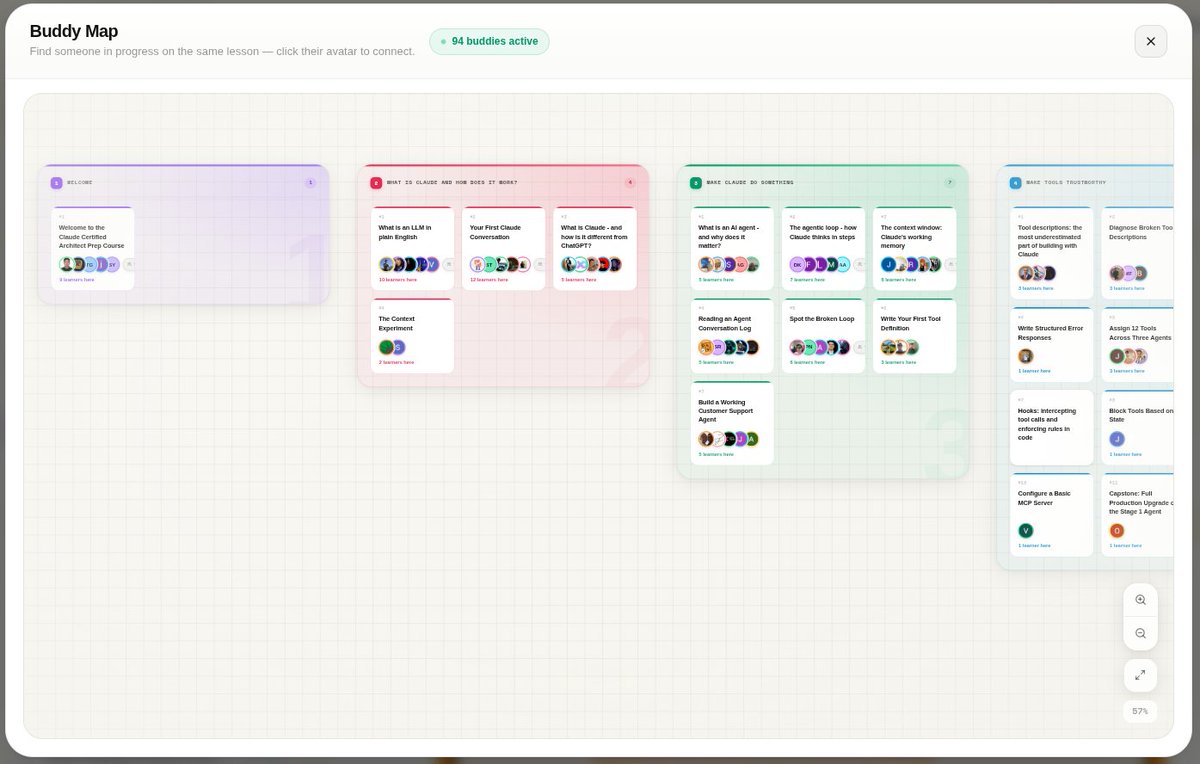
Almost a month into the @the_devcompass @claudeai Certified Architect prep course, and seeing 400 folks, both technical and non-technical, show up, learn, build, and help each other has been one of the most rewarding stuff
1
2
53
Jun 6
Your AI pipeline has been running for 20 minutes.
It has gathered research, spawned subagents, processed documents, and synthesized results.
Then something happens.
Maybe it crashes.
Maybe you close it.
Maybe you just want to take the work in a different direction.
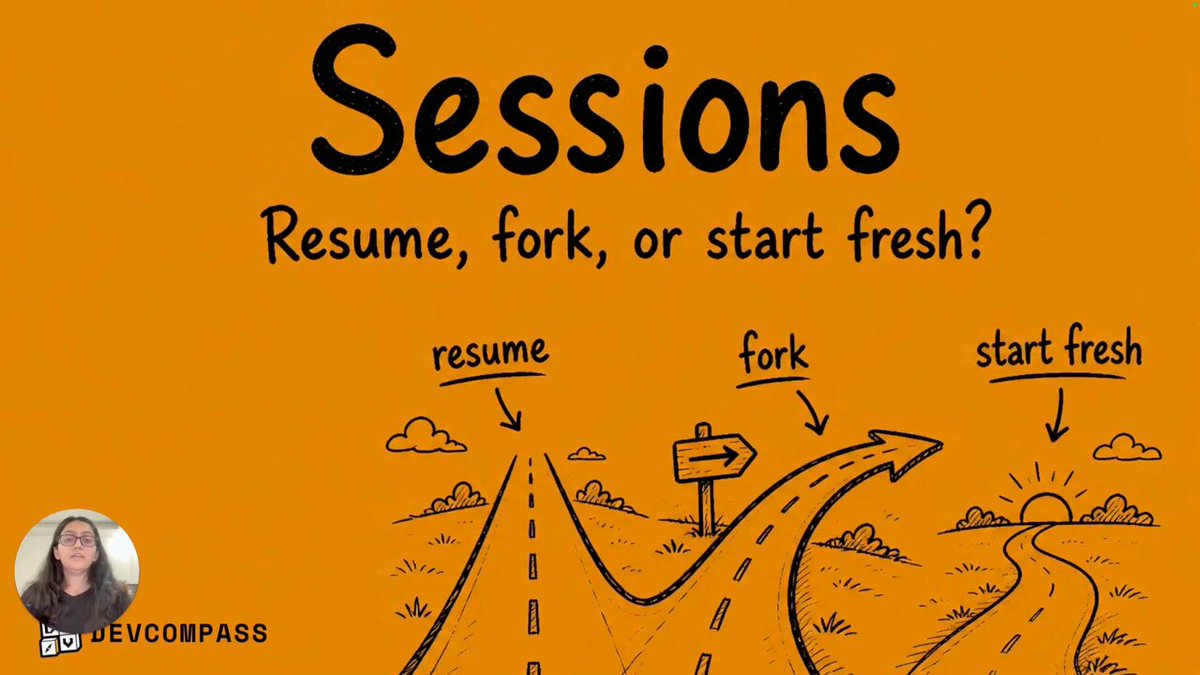
Now comes the important question:
Do you resume, fork, or start over?
We’ve been building a full playlist around production AI systems:
youtube.com/playlist?list=PL…
And in this video, we break down:
• when to resume a session
• when to fork it
• when starting fresh is the better choice
• how to handle crashes and stale state
• and why state export should be designed in from day one
A lot of reliability problems in long-running AI systems come from managing sessions the wrong way.
🎥 youtu.be/EoSbE7MVKrw?si=AyQo…
50
Jun 5
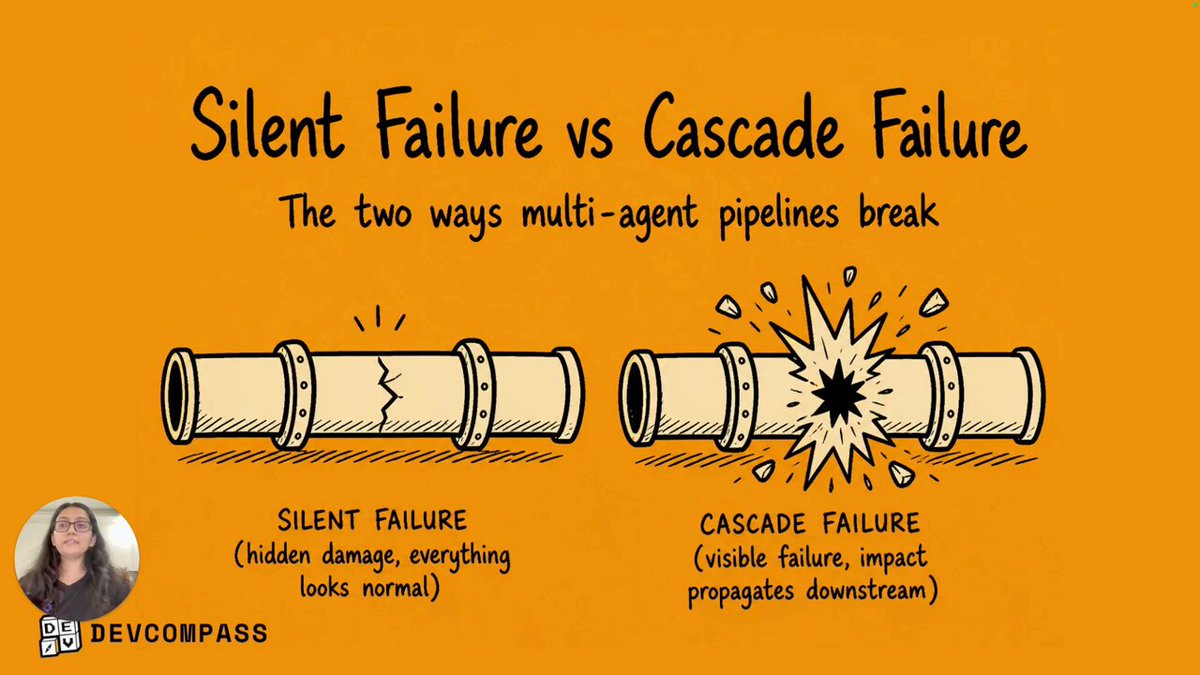
Multi-agent systems introduce a new kind of problem:
Sometimes they fail without looking like they failed.
A subagent misses information.
A tool call breaks.
Data never makes it back to the coordinator.
But the system still produces an answer that looks completely reasonable.
That’s silent failure. And in many cases, it’s worse than a crash.
We’ve been building a full playlist around production AI systems:
youtube.com/playlist?list=PL…
And in this video, we break down:
• silent failures vs cascade failures
• why missing data is often more dangerous than visible errors
• how failures propagate through multi-agent pipelines
• coverage annotations and structured error handling
• and the reliability patterns that keep complex systems from falling apart
One of the most important lessons in AI engineering is that a confident answer isn't always a correct answer.
🎥 youtu.be/SECOX7bGu0c?si=qfW4…
1
62
DevCompass retweeted

Jun 1
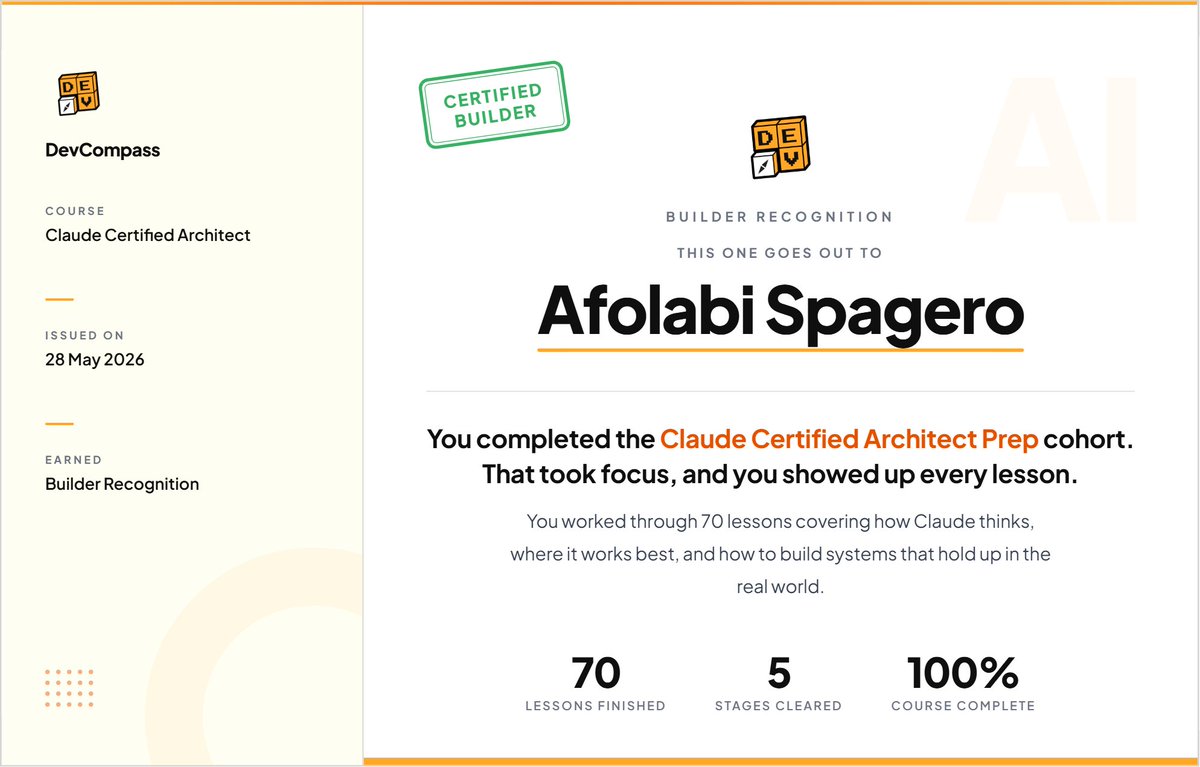
Just finished the Claude Certified Architect Prep cohort through @the_devcompass .
Here's what I learned and why it actually mattered :
4
3
17
365
Jun 1
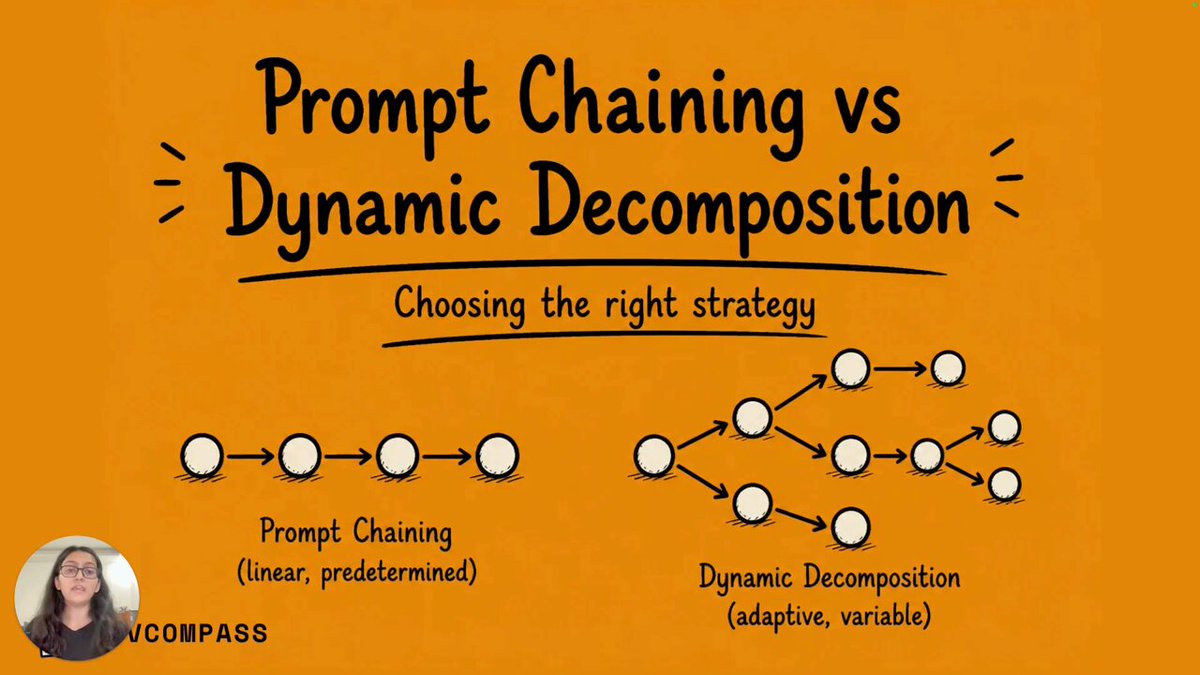
One of the biggest decisions in a multi-agent system happens before you write a single line of code:
Do you know the tasks upfront, or does the system need to figure them out as it goes?
That choice leads to two very different architectures: prompt chaining and dynamic decomposition.
We’ve been building a full playlist around production AI systems:
youtube.com/playlist?list=PL…
And in this video, we break down:
• prompt chaining vs dynamic decomposition
• when fixed pipelines are enough
• when tasks need to be discovered dynamically
• how coordinators decide what work to delegate
• and why refinement loops need explicit stopping conditions
A lot of multi-agent complexity comes from choosing the wrong pattern for the problem.
🎥 youtu.be/kEWsUYtldrA?si=KcYV…
5
53
May 29
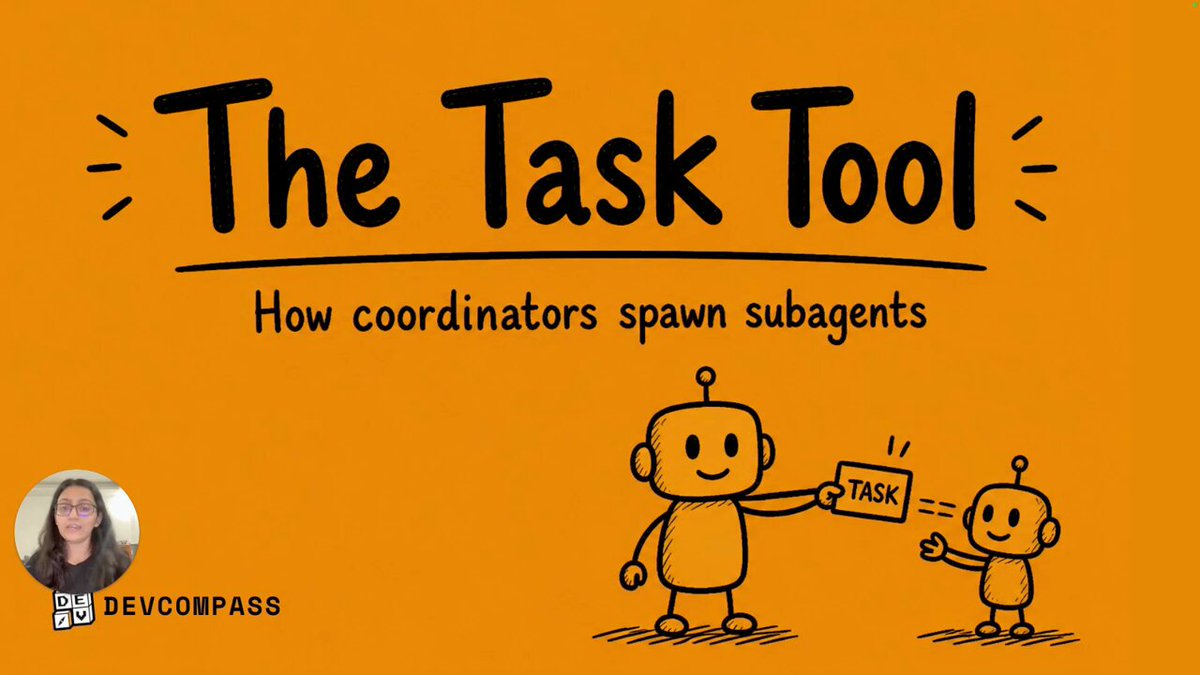
Building a multi-agent system sounds simple.
The coordinator delegates work.
The subagent does the work.
The result comes back.
But what actually happens under the hood?
We’ve been building a full playlist around production AI systems:
youtube.com/playlist?list=PL…
And in this video, we break down the Task tool, the mechanism Claude uses to spawn and manage subagents.
We cover:
• how coordinators create subagents
• what context gets passed (and what doesn’t)
• why every subagent gets its own context window
• how results flow back to the coordinator
• and why good delegation starts with good task design
If you're building multi-agent systems, understanding the Task tool is what turns the architecture diagram into a working system.
🎥 youtu.be/mnv-9QJ_NSU
1
1
7
137
May 28
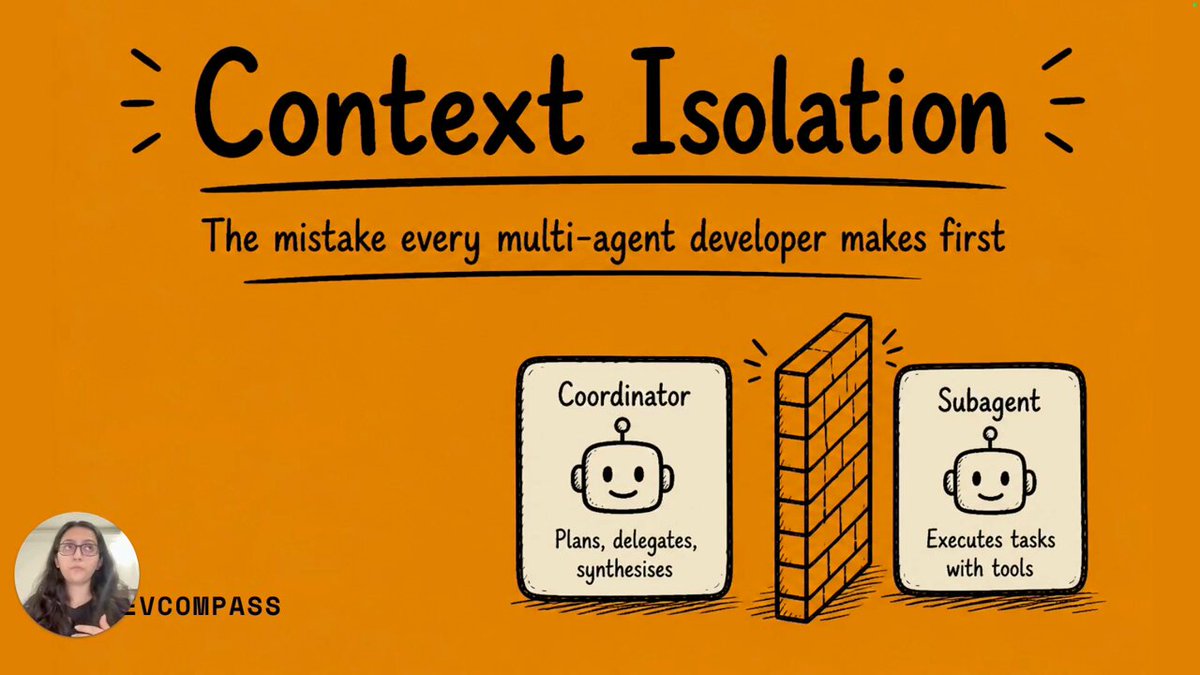
Multi-agent systems look great… until information starts disappearing between agents.
Your search agent finds the right sources.
The coordinator gets the response.
But somehow the URLs, metadata, and timestamps vanish before final synthesis.
That’s context isolation failure.
We’ve been building a full playlist around production AI systems :
youtube.com/playlist?list=PL…
And in this video, we break down:
• why agents don’t automatically share context
• how metadata gets lost between handoffs
• why vague subagent tasks create unreliable behavior
• and how explicit output formats fix a surprising number of issues
One of the most important concepts in multi-agent architecture.
🎥 youtu.be/gENi4slmkBQ?si=TLRa…
1
1
8
146
May 27
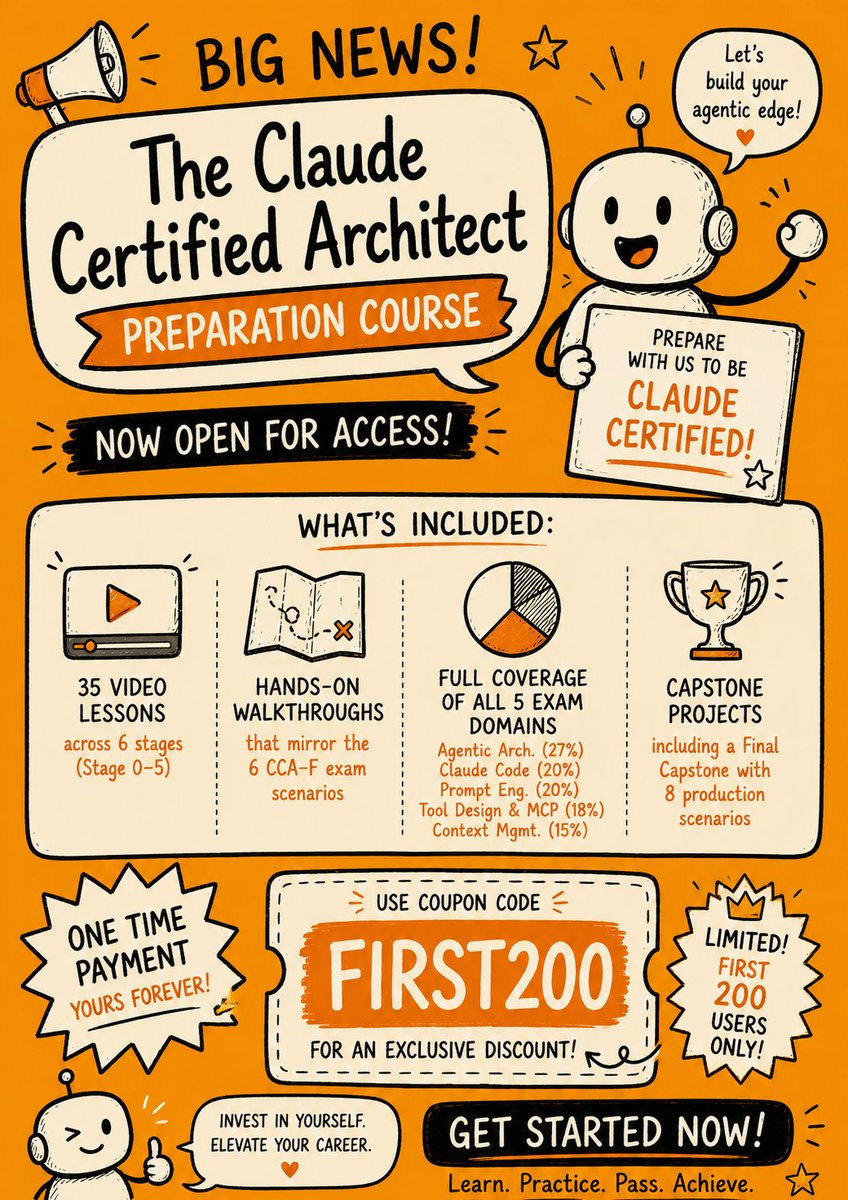
For all our learners, and everyone out there looking to prepare for the Claude Certificate Exam.
On community's demand the course is now open for access with a one time payment.
Access it with coupon FIRST200 on devcompass.ai/course/claude-…
If you wanna get a taste of the course, watch our free video series: youtube.com/playlist?list=PL…
115
May 27
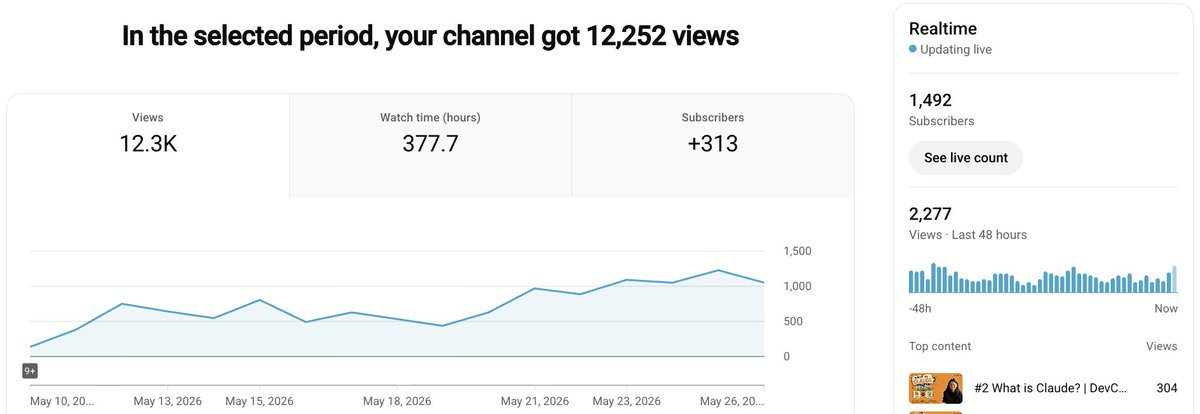
We received 27 direct messages from people who couldn't register for our Claude Certificate preparation Course and 180 people have already signed up for the waitlist for the next cohort so we did something....revealing soon
Btw these are the numbers on our Youtube in just 2 weeks of us launching the course, the feedbacks so far have made us so happy, that we have decided to add some bonus content to it.
Any topics you would wanna see with respect to the Claude certification - let us know :)
Access the free playlist here:youtube.com/playlist?list=PL…
8
201
May 27
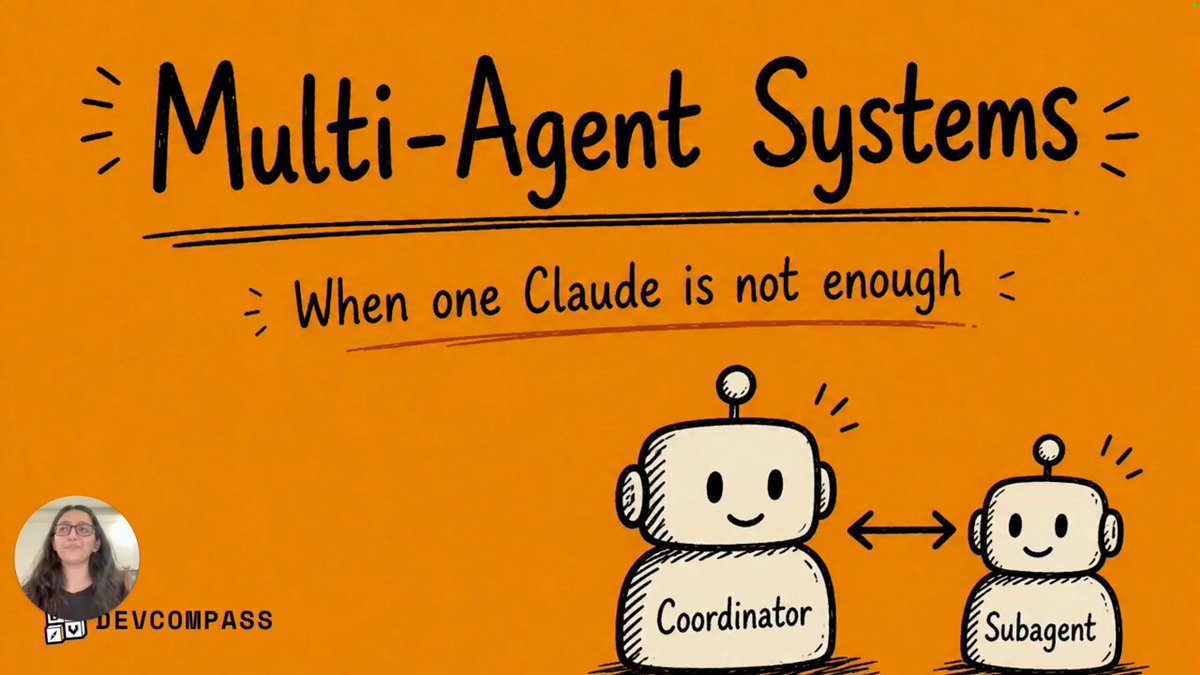
Multi-agent systems sound great… until you actually have to manage them.
One agent becomes a coordinator.
Then you add subagents.
Then different tools.
Different contexts.
Parallel workflows.
And suddenly debugging the system feels harder than building it 😭
That’s the tradeoff this video is about.
We’ve been building a full playlist around production AI systems:
youtube.com/playlist?list=PL…
And in this video, we break down:
• when multi-agent systems actually make sense
• the signs you’ve outgrown a single agent
• coordinator subagent architecture
• how parallel execution changes workflows
• and why unnecessary multi-agent complexity creates reliability problems
A lot of people jump into multi-agent systems because they sound more advanced.
But for most use cases, a single well-designed Claude agent is still the better architecture.
🎥 youtu.be/0ufmaQ2EYMU?si=ryNq…
2
1
5
115
May 26
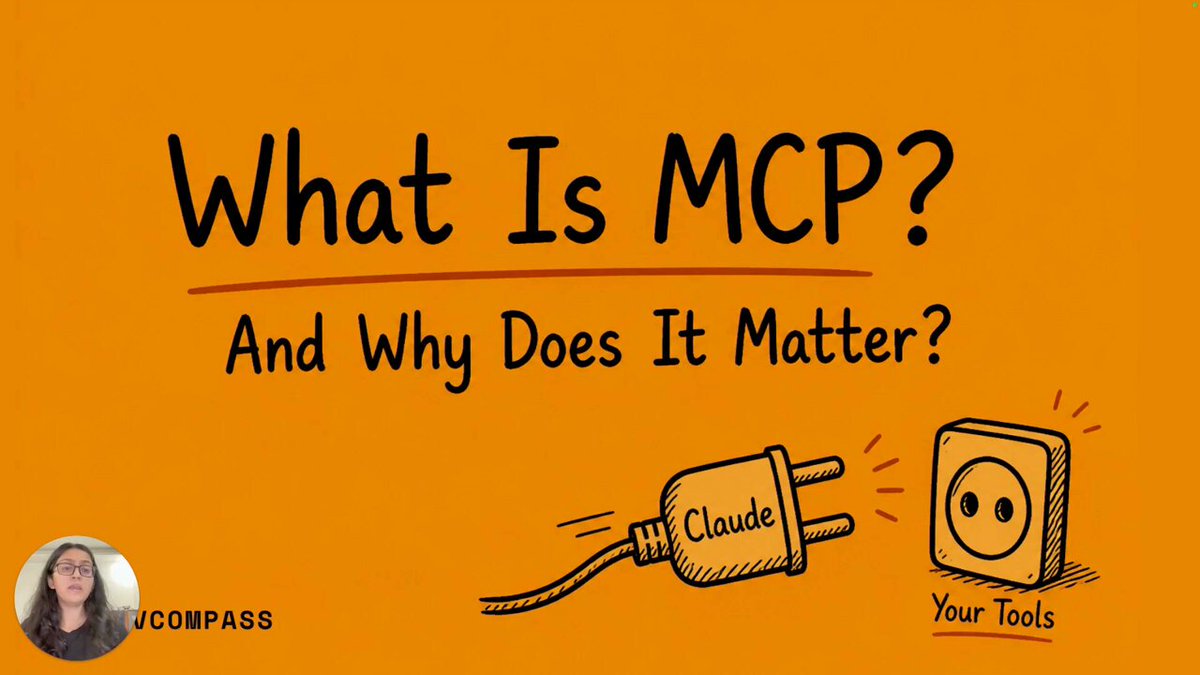
Inline tools feel fine… until you start scaling 😭
One agent becomes three.
Three becomes ten.
Different teams start maintaining different tools.
And suddenly the same tool definition exists in five different places with slightly different behavior.
That’s the problem MCP is trying to solve.
We’ve been building a full playlist around production AI systems:
youtube.com/playlist?list=PL…
And in this video, we break down:
• what MCP actually is
• the host/server/backend architecture
• why inline tools become a maintenance nightmare
• project-level vs user-level MCP scoping
• credential management and security boundaries
• and how MCP fits into larger agent systems
A lot of people hear “MCP” and think it’s just another AI buzzword.
It’s actually one of the most important ideas for building scalable multi-agent systems cleanly.
🎥 youtu.be/j0utmTOGgWU
1
3
8
232
May 25
A lot of developers realise prompts alone aren’t enough for enforcing business rules.
So they start adding validation checks everywhere in their codebase 😭
if statements here
manual checks there
random guardrails scattered across 15 files
This is exactly why hooks exist.
We’ve been building a full playlist around production AI systems:
youtube.com/playlist?list=PL…
And in this video, we break down:
• how hooks fit into the agentic loop
• PreToolUse hooks and blocking unsafe actions
• PostToolUse hooks and transforming results
• how to enforce escalation policies cleanly
• and why hooks are one of the most important reliability patterns in production agents
The really interesting part is that hooks let you enforce rules centrally instead of relying on Claude to “remember” instructions probabilistically.
Once you understand them, a lot of production architecture decisions start making way more sense.
🎥 youtu.be/8Vs_Zf39asg
1
9
469
DevCompass retweeted

May 22
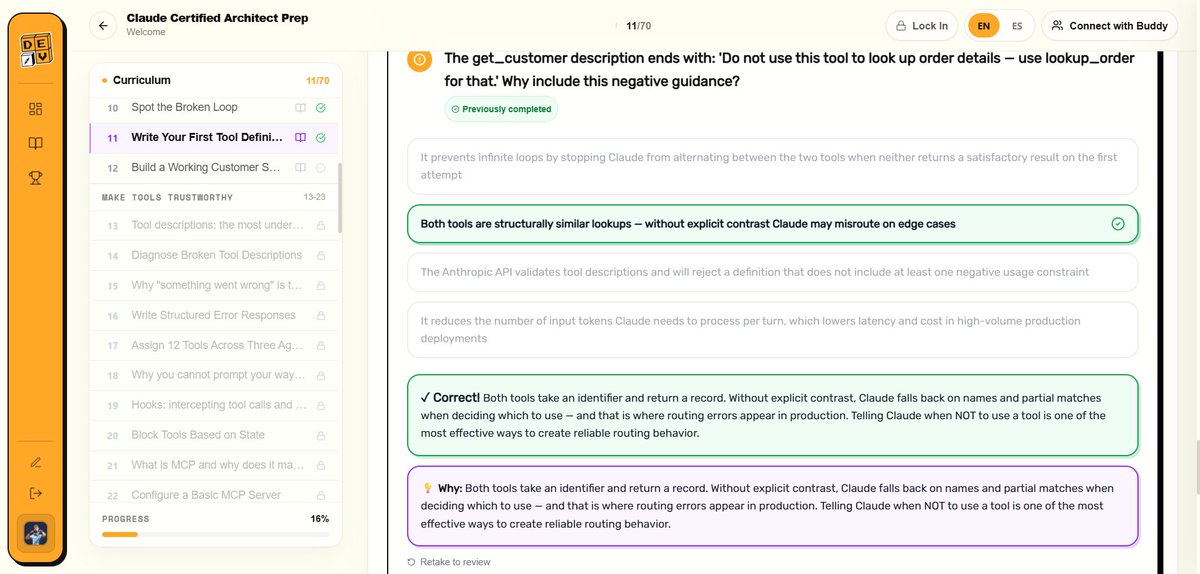
Day 11: Claude Architect Prep
Understang how the tools described behind the screens. @the_devcompass
1
2
71