
Motion Designer
Joined September 2018
- Tweets 1,335
- Following 526
- Followers 279
- Likes 4,001
95 Photos and videos














Pinned Tweet

Feb 11
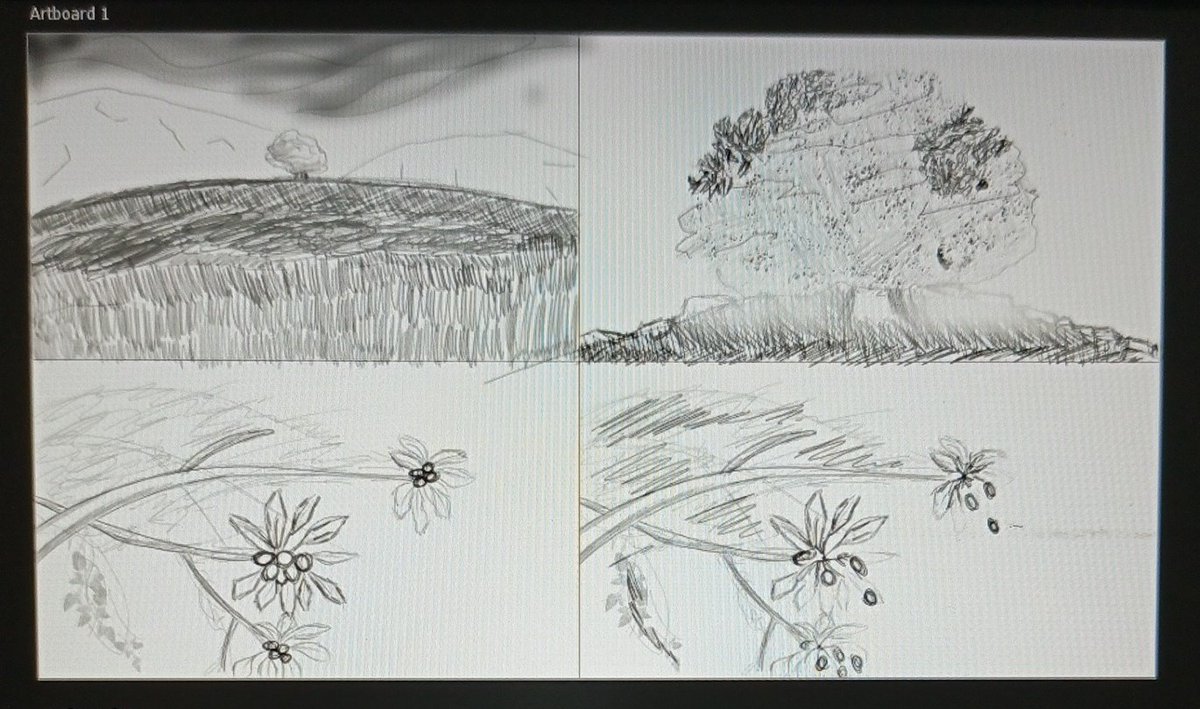
Showreel Update - 3rd Edition
This is a reflection of my growth in this creative field. With every creation, my obsession with motion design increases. Let us do great work together this year. Cheers.
4
4
89
38,631
Chizzy James retweeted

Jun 6
Premiering on YouTube right now👇🏾

Jun 6

The YouTube premiere of the documentary everyone is talking about is currently counting down to showtime 👇🏾
youtu.be/hGI5O56yuxo?si=mOIr…
8
234
538
13,725
Jun 5
It's good practice on a daily basis to shatter the illusions you exist in.
Chizzy James retweeted

The kidnappings and brutal murder of school children and teachers in Oyo and other states of the federation have absolutely nothing to do with Islam or the teachings of Prophet Mohammed.
The reason our women and school children in Oyo are forced to sleep in the forests for weeks and are ruthlessly tortured by rag-tag militias is not because of Jihad or Islam or whatever nonsense propaganda the media wants you to believe. The real reason is simply because Oyo state is heavily blessed with massive, unmined deposits of Uranium, highly sought-after lithium, pure gold, and rare earth gemstones.
Now, the good people in Oyo State who are the primary victims of this manufactured insecurity, who are forced to sleep in total darkness and depend on highly expensive diesel just to sustain their petty businesses, may not be aware that they have enough uranium buried right under their feet to build nuclear reactors that could comfortably power the entire country for the next three hundred years.
But this local ignorance is completely insignificant in the ruthless geopolitical arena. Nigerians may very well be kept ignorant, but the Western nations who desperately need this uranium to power their massive industrial grids and nuclear submarines are absolutely not ignorant. The struggling youth in Oyo may not care about the raw gold beneath their soil, but the ruthless financial cartels in Dubai and Switzerland who melt, refine, and launder these blood minerals for American dollars are very much interested in them. The educated middle class in Nigeria, who would rather abandon their country and reduce themselves to overworked cleaners, taxi drivers, and caregivers in Canada and the UK instead of violently challenging the oppressors who have captured their state institutions, may very well be ignorant of the existence of huge deposits of lithium scattered all over the country. But the Silicon Valley conglomerates who desperately need these precious stones and rare earth elements for the new Apple M-series neural chips, Tesla electric vehicle batteries, and advanced military microprocessors are very much interested in these minerals. They will do absolutely anything to violently lift it out of the ground in Africa and ship it directly to their high-tech research labs overseas.
This is exactly why whenever there are sudden insecurity challenges such as mass kidnappings, brutal terror attacks on schools, and massacres at worship centers, there are always massive illegal mining activities running quietly in the background shadows. Indeed, in this year alone, almost forty people including heavily funded foreign nationals have been arrested by our local security agencies on strict charges related to illegal mining. Even a massive convoy of seven heavy-duty trucks loaded with raw uranium and lithium ore was intercepted and seized by state security forces just this year alone in Oyo state.
The terror activities are definitely not a holy jihad. They execute these bloody campaigns to install absolute, paralyzing fear in the local population and violently chase them away from their ancestral lands. Once the villages are emptied, these foreign companies and their local political enforcers can then seamlessly move in with their heavy drilling equipment, excavators, and chemical processors to extract these precious stones to power their trillion-dollar corporate empires.
The brainwashed recruits who physically carry out these terror attacks on their behalf may very well tell their traumatized victims that it is a Fulani agenda to Islamize Nigeria. They may very well release highly edited, pre-recorded videos claiming how these terror attacks are done to honor the teachings of Mohammed. But you must understand that these are all carefully constructed psychological operations and cheap propaganda.
What foot soldiers believe they are fighting for is completely irrelevant. Those ideologies are merely fairy-tale stories created to condition them psychologically to sustain the brutal war efforts for their hidden masters. For example, if George Bush had told the American troops the honest truth, that they all needed to go to the desert and die simply so that American defense contractors and oil majors could make an extra hundred billion dollars in corporate profits, they would have all dropped their rifles and badges and immediately renounced their duties. In the worst-case scenario, they would have stormed the White House, dragged the president out of the Oval Office, poured kerosene on him, and lit him on fire. So obviously, this truthful tactic will never work for any empire.
So instead, these gullible American troops were fed the lie that they were fighting a global "terror regime" that was secretly building weapons of mass destruction to wipe out humanity. This total change of narrative is crucial because the soldiers need to see themselves not as disposable, brainwashed tools fighting for corporate profit margins, but as heroic freedom fighters working for global peace and democratic stability. But at the end of the day, when you ignore the political speeches and simply follow the money trail, you get to understand what is truly happening. When Iraq violently fell, their sovereign gold reserves were immediately loaded onto armored trucks and shipped to the US to be deposited securely into the vaults of Citi Bank and the Federal Reserve, the uranium and critical aerospace assets were seized and transported to hidden military black sites, and the massive Iraqi oil fields were forcefully cleared of their local owners and drilling monopolies were permanently awarded to Halliburton, ExxonMobil, and Chevron.
The exact same imperial logic applies to the bandits and terrorists currently ravaging our rural communities. They may very well look you in the eye and tell you that they want to establish a pure Islamic state. But when the indigenous people are successfully uprooted from their resource-rich communities after relentless kidnappings, systemic torture, and public executions, the very same foreign conglomerates that secretly supply these terrorists with their thermal surveillance drones, high-grade military gear, encrypted satellite phones, and untraceable black-market cash quickly move in and start extracting these resources to be shipped overseas.
Wars are never genuinely fought on the superficial grounds of religion or ethnicity. They are, and have always been, ruthlessly fought over land, resources, and money.
In the case of Nigeria, Salafi Wahhabi Islamic ideology is what they use to brainwash and recruit most of the foot soldiers for this neo-colonial imperial plunder of Africa.
May 31

Fulani Terrorists Declare War Rooted in Prophet Mohammed's Jihad Teachings, Demand Nigerians Convert to Islam or Face Death
Fulani terrorists have reportedly declared that their war is rooted in the teachings of Prophet Mohammed on jihad, urging every Nigerian to convert to Islam or continue being slaughtered. The declaration has raised alarm among religious and community leaders.
Critics are questioning why some groups still claim to be proud citizens of Nigeria while terrorists openly plan to Islamize and kill.
160
1,134
2,101
172,435
Chizzy James retweeted
This is what I heavily emphasized yesterday in a Twitter space.
There can never be talk of any "revolutionary" movement in Nigeria until we dismantle the current educational system in the country.
There is no bypassing this important stage.
We can tweet from now until the next 100 years, we can write volumes of political essays, we can march in the streets until our boots wear out, we can occupy embassies all we want, we can even bring a J.J. Rawlings type figure into Nigeria to uproot all the elites in power.
All of these are empty and meaningless endeavors.
I have said it in the past and I will leave it in writing for those who will come after me that I have renounced the current Nigerian educational system completely.
I have been in the field and taught Mathematics long enough to recognize this rot. I have sat down with some of my lecturers and demonstrated how the Mathematics syllabus in universities in Nigeria is never going to allow the Engineering department to develop. I have shown how Nigeria can never produce high profile researchers even in the next 100 years if this syllabus is allowed to exist.
We learn Real and Complex Analysis in Nigeria without a foundational course on Analysis, no Euclidean geometry, no in depth treatment of Series, and no rigorous introduction to discrete mathematics or set theory. And then when the actual analysis is taught, students are forced to memorize a body of theorems and proofs and regurgitate them in the exam halls.
And this is just Analysis. We have not even talked about Topology for spatial data structures and advanced physics, or Combinatorial Mathematics that is the backbone of AI and Machine Learning, or Graph Theory which models modern telecommunications, or Cryptography which secures the entire global financial framework.
I can go on forever. In fact, I can even write a 500-page dissertation on how the current Mathematics educational system in Nigeria will make it impossible for Nigeria to industrialize.
The best we can hope for is to import fancy equipment from China because we have a system that was designed to raise an army of idiots with degrees. Their sole value is to perform administrative tasks for the corporations that are extracting their resources and wealth.
And this is just for Mathematics. The same line of reasoning can be extended to all departments in the country.
And this is why no matter our passion on this platform, no matter our calls for total decolonization of the African mind, it is simply insufficient.
It is insufficient because the educational system in the country has made our people impervious to rational thought. It is insufficient because our people are being educated in general by the ghosts of Lord Lugard to work for Chevron and other corporations that continue to plunder us. It is insufficient because our people are still being educated by the Salafi Wahhabi schools established and funded by Saudi Arabia on behalf of the transatlantic empire to create an army of sleeper cells in Nigeria that they can activate at any time for insurgencies. It is insufficient because in the South our people have been reduced to complete idiots by the mega churches and their prosperity gospel. They are taught to interpret poverty and underdevelopment as a sin rather than an institutional failure and foreign backed imperialism. This is why our vibrant youth population has been reduced to prayer warriors fighting against demonic arrows instead of revolutionaries fighting against the colonial institutions that are looting their future dry. It is insufficient because our media platforms are designed to entertain and distract rather than educate and mobilize. It is insufficient because our cultural institutions have been hijacked to celebrate subservience and mediocrity instead of critical thinking and rebellion.
All of these are part of the educational system that must be dismantled: the churches, the Salafi Wahhabi schools, the obsolete university curricula, and the media syndicates that keep the masses sedated.
It is only when these institutions are defeated that we can talk about a revolutionary movement. It is only then we can confront the colonial institutions.
The true African revolution will not be birthed in the pews of a mega church or the classrooms of a foreign funded school.
It will only begin when we forcefully reclaim our minds.
Let the total deconstruction of the Nigerian educational system be the first and most decisive step toward our absolute liberation.
May 18
Pro-sovereign media like The Spearhead can only do so much in raising the mental level of our people.
The real magic bullet is the primary and secondary education syllabus. If I ever hold state power, there will be a once-in-a-century earthquake at the Ministry of Education. The new syllabus will not be an updated version of the current one. It will be a completely different one that nobody is familiar with. A syllabus designed to prepare children to understand their developing country and grow up to take control of its destiny, not one designed to prepare them to pass anstract exams so that they can be plucked and harvested by oyibo people.
When I get my way, by the time a Nigerian kid writes their junior WAEC, they will know exactly who they are, where they come from, their place in the world, and where they are going. That's the only way to sweep out the decrepit millennial and Gen X generations who are already beyond redemption, and replace them with younger Gen Z's, Alphas and Betas who understand how the world works and know how to be useful to themselves within it.
23
273
527
18,441
May 11
We have to be busy with these things so we don't just sit waiting for death. The heroes, villains and cowards agreed to this show and they've all performed unbelievably well.
1
7
Chizzy James retweeted
When the colonial masters arrived on the shores of Africa with their gunboats, their objective was cold and clinical.
They wanted the ivory, the gold, the rubber, and the minerals to fuel the roaring industries of modern Europe.
But they were not interested in the grueling, dirty job of extraction. They wanted the African to be the one who plowed the fields, the one who bled on the plantations, the one who descended into the suffocating dark of the mines, and the one who finally carried the stolen goods to the ports to be loaded onto ships.
The only role the European reserved for himself was controlling the helm of the ship until it arrived safely in the counting houses of London, Paris, and Brussels.
This parasitic blueprint looked brilliant on paper because it saved the colonizer from the backbreaking labor of the plantation. In reality, it was a logistical nightmare. A gun can police a village, but there is always the looming possibility of revolt. Eventually, an occupying force will run out of bullets and expose its own life to the direct, justified rage of the people whose resources are being stolen to enrich a foreign crown.
Realizing that brute physical force was a failing investment, the imperialists brought in the civil wing of the colonial industrial complex.
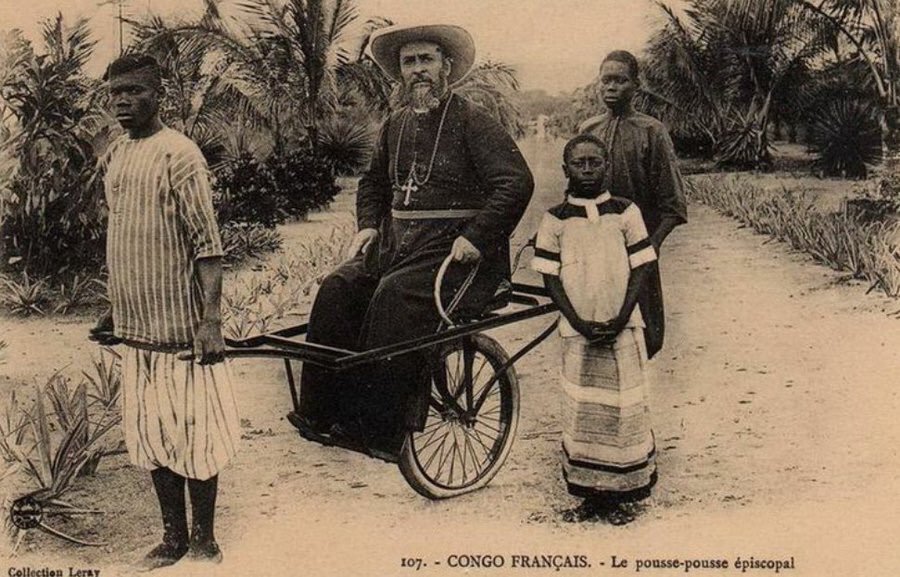
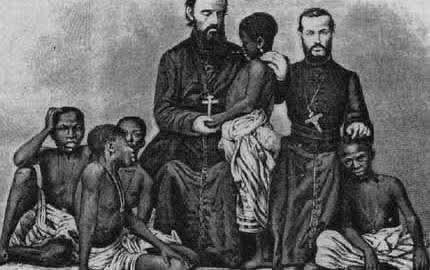
This was the true purpose of the missionaries.
Their job was not salvation but psychological warfare.
They were sent to ensure the African would plow the field and manage the plantation for the colonial master while thanking God for the opportunity to be exploited.
To achieve this total submission, the missionaries had to redefine the very concepts of life and labor, and then install mental self policing through the weaponization of the conscience.
They used the Holy Bible as their surgical instrument, but they faced an immediate problem.
The Bible was far too radical for the colonial project.
The text contained dangerous stories of slaves like Moses rising up to crush a Pharaoh. It labeled theft, the very thing the Europeans were there to do, a mortal sin. It spoke of a Year of Jubilee where debts were canceled and stolen land was returned to the poor. If the Africans ever heard these scriptures in their true context, they would have united to unleash a riot that would have burned the colonial administrative offices and gunboats to ash.
Luckily for the imperialists, the Africans of that era could not read the English, Portuguese, or French in which the colonial Bibles were written.
This language barrier gave the missionary a total monopoly on the truth.
To begin their work, they drastically scrapped nearly 90% of the Old Testament because it was too brutal and liberating for the people. Half of the New Testament was overhauled, and most phrases in the book were redefined to serve the colonial ledger.
First, they weaponized the concept of idleness.
They took subsistence farming, a life of ancestral dignity and self sufficiency that allowed the African to live on his own terms, and translated it as the sin of sloth.
If you were working for yourself and your ancestors, you were idle in the eyes of a European God. To be righteous and industrious meant only one thing.
It meant working for a white master.
The pulpit became a recruitment office for the plantation.
Next came the semantic theft of the earth.
In African languages, the word for land was synonymous with life and mother. It was a sacred stewardship that could not be sold because you cannot sell your own mother.
The colonizers performed a theological heist, translating communal stewardship into waste land.
They used the biblical concept of dominion to argue that because the African did not improve the land with European fences and monocrops, he had forfeited his divine right to it. By redefining the African as a mere tenant on his own ancestral soil, they forced him to pay taxation to the colonial state. To pay that tax, he was forced into the mines. The translated Bible provided the moral fine print for the total seizure of African resources.
Once the work and the land were redefined, the colonizers needed to police the workers.
Physical chains are expensive and prone to breaking.
The most cost effective way to rule a continent is to install a spirit jailer inside the mind of every subject. This is the dark art of mental self policing, and the missionaries were effectively masters of this mystical art.
The European God was translated as a celestial surveillance state. The missionaries emphasized a deity who sees into the "secret heart".
This was a devastating psychological blow.
The African was taught that even a thought of rebellion or a flicker of anger toward his master was a sin recorded in a heavenly ledger.
You did not need a colonial soldier on every street corner if the African believed a white ghost was watching him from the high clouds.
This created a state of permanent anxiety.
The colonized subject began to police his own desires, his own anger, and his own thirst for justice, fearing that his insubordination would result in eternal fire.
The African soul became the spy for the colonial state. Through this selective translation, the revolutionary Jesus who flipped tables in the temple and stood with the oppressed was erased. In his place, they inserted a pacifist puppet who preached the gospel of turning the other cheek.
They conveniently introduced the concept that the more you suffered under the lash of the master, the bigger your mansion would be in the sky.
It was the ultimate spiritual extortion, turning earthly exploitation into an investment for the afterlife.
The victim was taught to protect his oppressor, for to strike back was to lose your soul.
Although the concept of confession is as old as Christianity itself, the missionaries weaponized this to their advantage.
By forcing the African to verbalize his transgressions, which often included disrespecting colonial authorities or clinging to old traditions, the missionary gained intimate data on the community's level of dissent.
The African was conditioned to feel shame for his natural urge to be free.
Shame is the ultimate tool of self policing because it makes the victim feel that his chains are his own fault.
This was a necro economy, a system that thrived on the death of the African spirit.
By using translation to bridge the gap between the Bible and the ledger, the European colonizer achieved a miracle of parasitic efficiency.
One would naturally ask why, when Africans finally mastered the English, French, and Portuguese languages and could read these holy books to discover the truth for themselves, they did not revolt or at least communicate the truth to their people to reject the plantation and fight for freedom.
The tragic problem is that by the time the African was able to speak the western language fluently, the brainwashing was effectively complete. His soul had already been stripped out of his body. His thoughts, his ideas, and his passions were effectively no longer his own, and he had completely lost his identity.
He was effectively a white man with a black face, and he even held administrative offices for the white man to ensure that the plunder and extraction of African wealth and resources continued to flow to Western capitals uninterrupted.
These people were later given government positions in their districts. Their children were sent to missionary schools and later to British schools in London to solidify their conditioning. The strong men in the community were shaped by training as tools to police their own people and fight dissent.
Eventually, the white men left, but it was not a loss for them. They had already minted millions of their clones in Africa. These clones now sit in higher colleges and universities, teaching the concepts of free markets and invisible hands to justify to the population why American and European mega corporations must be allowed to exert monopolies and exploit African resources in the name of competition.
The gunboats are gone, but the spirit jailer remains. The colonial industrial complex simply moved from the plantation into the classroom and the bank, where the curated word continues to ensure that the African plows the field of the world while the harvest is shipped away to a master he was taught to call Lord.
21
121
249
5,957

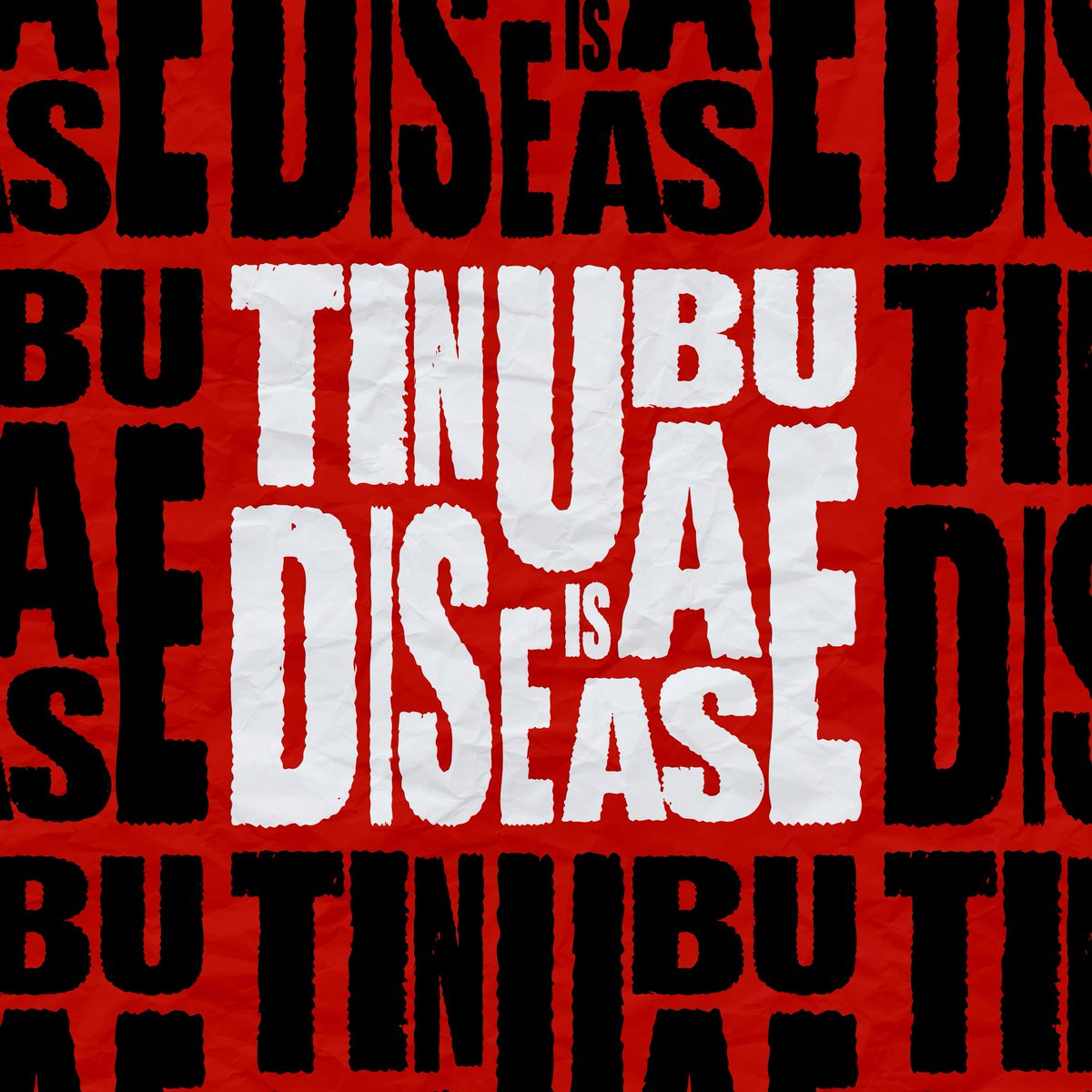
TINUBU IS A DISEASE
Animation by @ibukundaram0la.

4
749
1,425
31,077
Apr 18
I hope these tech companies throw a contest when they need doctors and lawyers.
23
Apr 17
This work no easy o. But we are fueled by passion and earnings.
Apr 13

the day i tried creating motion video for my product
i almost punched my laptop screen.
since that day, i take the pain and just pay a motion designer
it’s not as easy as it looks😂
23
Chizzy James retweeted

I WON THE $10,000? 😭😭😭😭
Let me start by acknowledging my fellow winners @JeremiahDfirst, @theProcessXCII, @tanyfx, @framesbynh, @nelsonnn000 and every single person that participated. The submissions were GOATED. Check out their profiles for their submissions.
To everyone that participated, congratulations! You beat 90% of people. Tens of thousands of people saw the competition, resolved to participate but didn't. You did! You're a champ for that!
When it was looking like I wasn't going to get any of the winning spots, it was a bit discouraging, but you know what I did? I kept going... Went on to another challenge 😂 (cos I love creating!!!). So don't stop! On to the next! Keep on creating! And as you congratulate me today, I'll be the one congratulating you tomorrow.
By the way, I'm prepping the guide for how I made this. Also working on a roadmap for anyone that wants to make it in the creative field
I'll share here soon. Watch @theProcessXCII's guide too. Solid value there.
Then to the @GoDark team... I may not get the tags right, so forgive me if I'm missing someone instrumental as well, but @GoAnthony
@GoDenis @GoQuant @GoDavidWaugh Thank you! Going through all those submissions couldn’t have been easy. Respect for doing it properly. 🥂
I couldn't even complain. Every single winner chosen was the right choice.
GOD DIDDDD!!!! THANK YOU JESUS 📌
(I still feel like I'm going to wake up and realize this was all a dream 😂)

Winner #1 has been selected - $10,000.
An exceptional submission that delivers across storytelling, motion design, and visual execution with a seamless finish.
Please check your DMs for instructions on how to claim your prize.
Thank you to everyone who participated, we received a high number of strong submissions. Honourable mentions will be announced tomorrow.

738
44
1,557
125,415
Chizzy James retweeted

Apr 16
It’s official everyone!!
We’re thrilled to share the news that Cavalry is now free!
Download it and start creating today at cavalry.studio
183
2,760
18,093
9,233,858
Apr 14
How do you give up on your dreams? They're irresistible forces constantly clamoring for attention.
12
Apr 14
Mastery demands that you sit with that pain and eat it all up.
12
Apr 13
Chef's kiss 😘

1
56
Apr 4
Get a whip and chase those desecrating your fatherland. Be like Jesus.
16
Apr 1
Life is this way so that we suspend all disbelief of its projected seriousness.
19