
Military ops & intel vet. Software engineer. I build signal infrastructure that shows you who's ready to buy before you scale. Founder, SignalStack.
Joined March 2015
- Tweets 511
- Following 94
- Followers 368
- Likes 33,460
10 Photos and videos
It's pretty bad when you have to be lectured by a formerly popular action hero who told America, "F@#! your rights," during COVID.
May 5

Imagine being so dishonest & biased you have to take lessons from Arnold….
2
12
Production isn't the foundation of a relationship for allies. Argue all you want about Israel on other grounds, but this argument doesn't hold water.

Iran would be a far better ally for the United States than Israel.
Iran produces oil, technology and food.
Israel produces nothing.
1
14
Scott Certain retweeted

Mar 30
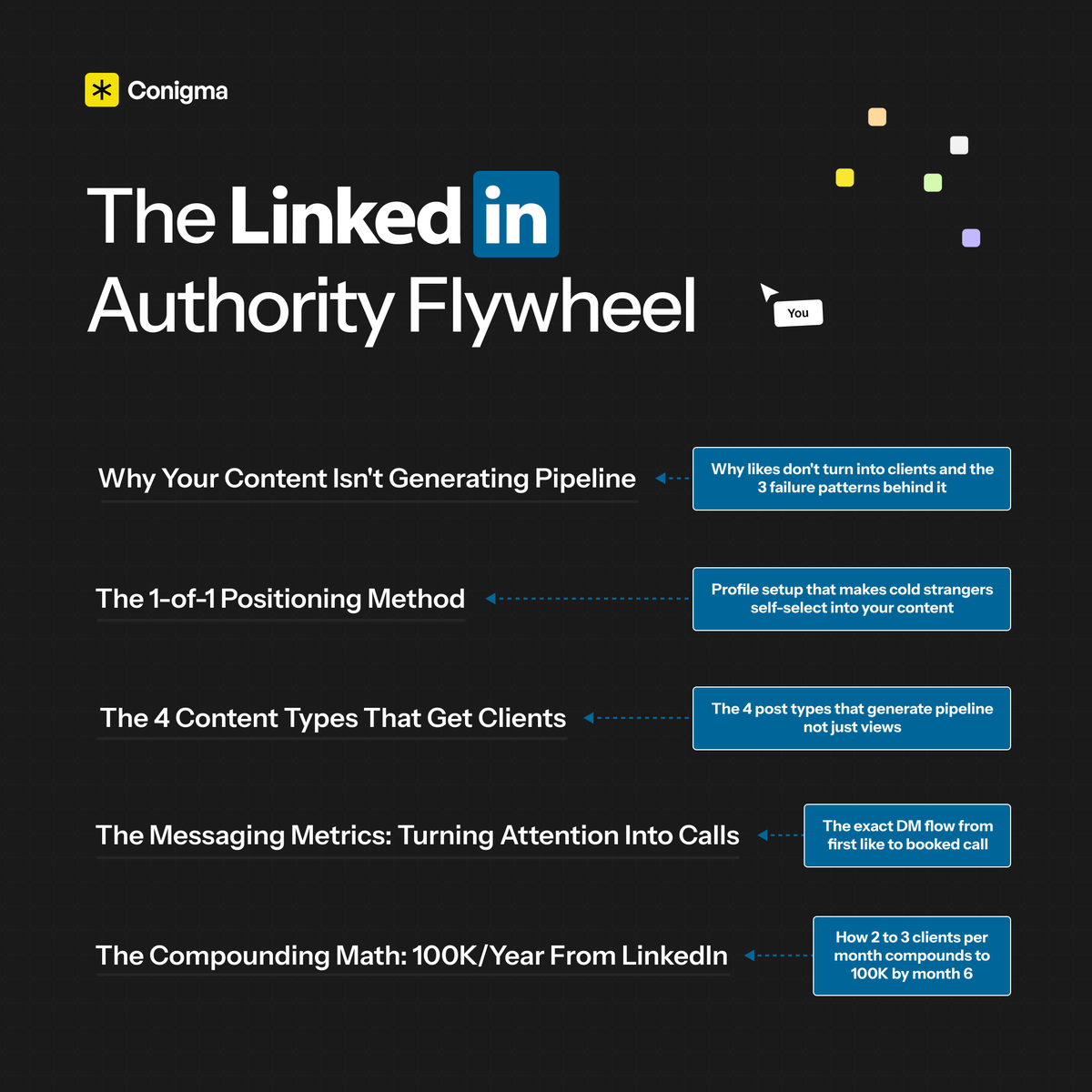
i will probably regret leaking this but f*ck it:
full free playbook on how we went from 16 calls booked in Q1 2025 to 300 calls across five accounts in Q1 2026 using LinkedIn alone
for 24h, i'm sending it to everyone who likes comments "FLYWHEEL"
(must be following repost for priority access)
156
39
150
8,740
Scott Certain retweeted

Mar 27
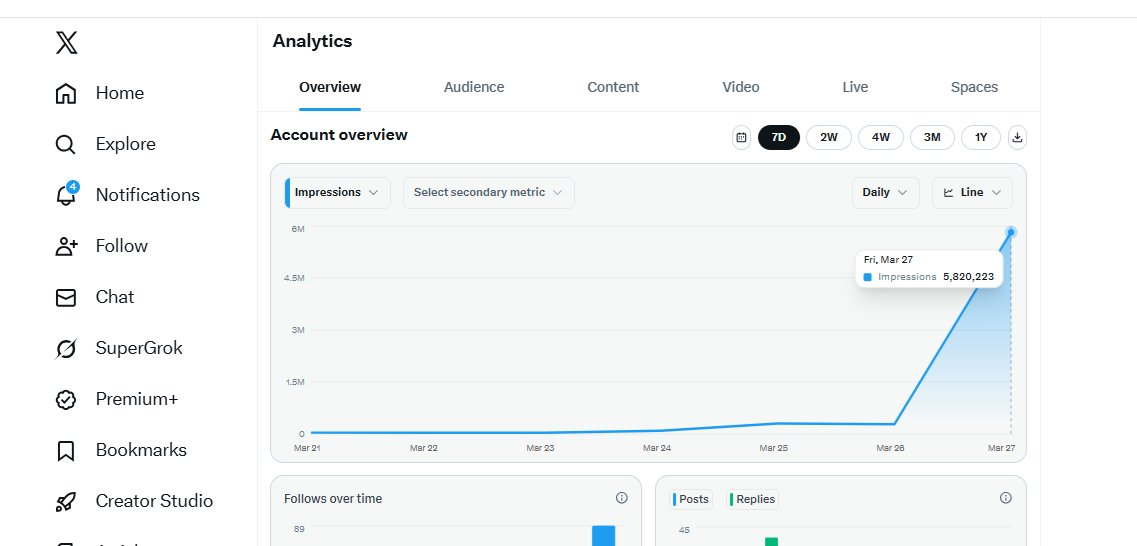
I started my X account 67 weeks ago.
Last month it added ~$20,000 in revenue to SEO Stuff.
seo-stuff.com/
Here's what is working as of March 2026:
Regular posts are now outperforming Articles in both engagement quality and conversions.
For me, Articles were always a nice little add-on, not a core revenue driver. That's what they are now.
By the way, if you want my full unfiltered cheat sheet with templates, structures, DM workflows and my posting system, follow me, repost this, and reply “X Growth Guide 2026.”
Now let’s talk posting timing.
I post 2 to 3 times per day, 7 days per week.
Morning is proof or a strong point of view tied to a real outcome.
Afternoon is a short thread or image post with a framework, teardown, or screenshots.
Evening is a repost, reply driven post, or short insight designed to spark conversation.
Lately I've been focusing on broader trending topics for the latter 2.
It has been very effective.
If I stop posting for 24 to 48 hours, reach drops immediately.
That pattern has been consistent for over a year.
Content formats working right now:
Short proof threads in the 3 to 6 post range.
Long threads underperform unless every line earns attention.
Multi image posts with a clean narrative flow.
Image 1 sets the hook.
Images 2 to 3 break down the system, example, or teardown.
Final image drives a specific action.
In repeated testing, this format outperforms text-only threads.
Screenshots and real numbers still matter.
Stripe dashboards.
Analytics.
Rankings.
DM screenshots.
Internal systems.
Anything that shows real work beats opinion-only content.
Copyable frameworks spread faster.
If someone can apply it in under 60 seconds, the post travels further.
Timely commentary backed by first-hand data works.
Posts reacting to platform shifts or niche news perform best when paired with your own metrics.
Reposting top performers still works.
Most followers never saw the original.
Repost every 1 to 3 weeks with a new hook and framing.
What is underperforming:
One line takes with no evidence.
Long threads where the core idea is buried.
AI-sounding content with generic phrasing.
Frameworks with no screenshots or outcomes.
Posts that send users off platform before engagement starts.
My engagement system:
Reply early to posts already gaining traction in your niche.
Add a specific insight, data point, correction, or extension.
Early replies still get disproportionate visibility.
Quote post daily with a breakdown, disagreement, or added context.
This works best when your audience overlaps with the original author.
Repost your best replies.
Replies that gain early likes often outperform main feed posts.
Build reply chains under your own posts.
Posts where replies trigger more replies stay visible longer.
Reply depth matters more than raw like count.
DMs system:
Track users who repeatedly engage.
Replies, likes, bookmarks, follows, repeat appearances.
DM something genuinely useful like a template, SOP, swipe file, or framework.
If they respond, open a loop by asking if they want the full system.
If they say yes, deliver the relevant offer, whether that is SEO Stuff, a breakdown, or a playbook.
The order never changes.
Value first.
Context second.
Offer last.
Profile still matters.
Your bio should be clear and benefit driven.
Your pinned post should show proof and tell people exactly what to do next.
Rotate your pinned post every 2 to 3 weeks based on clicks, replies, and DM volume.
Reply to every DM with substance.
The only metrics that actually matter on X right now:
Link clicks per post.
New followers per post.
DM replies tied to specific posts.
Repeat commenters.
Reply depth, meaning replies to replies.
Impressions look good in screenshots but do not drive revenue by themselves.
Here is a 30 day X growth plan that still works:
Post 2 to 3 times per day with at least 1 proof based post.
Reply to 5 to 10 posts per day in your niche.
Quote post 1 to 2 times per day with real insight.
Repost your best content every 2 to 3 weeks.
DM 10 or more new engagers each week with value first.
Track link clicks, replies, DMs and repeat commenters weekly.
Run this system for 30 days.
Screenshot your Day 31 results.
Tag me when inbound starts.
And if you want the full playbook with posting formats, DM workflows, and engagement loops that generate inbound, follow me, repost this, and comment “X Growth Guide 2026.”
You must do all 3 to get the DM.
16
8
38
11,799
Scott Certain retweeted
Mar 28
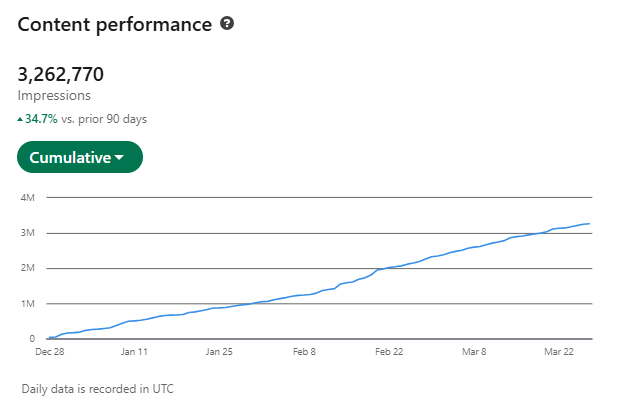
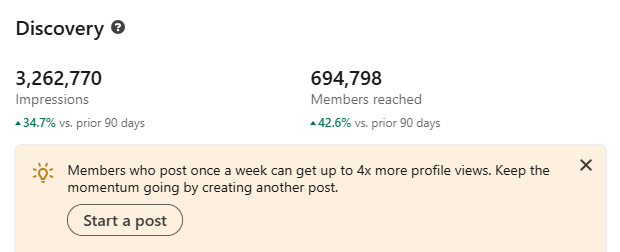
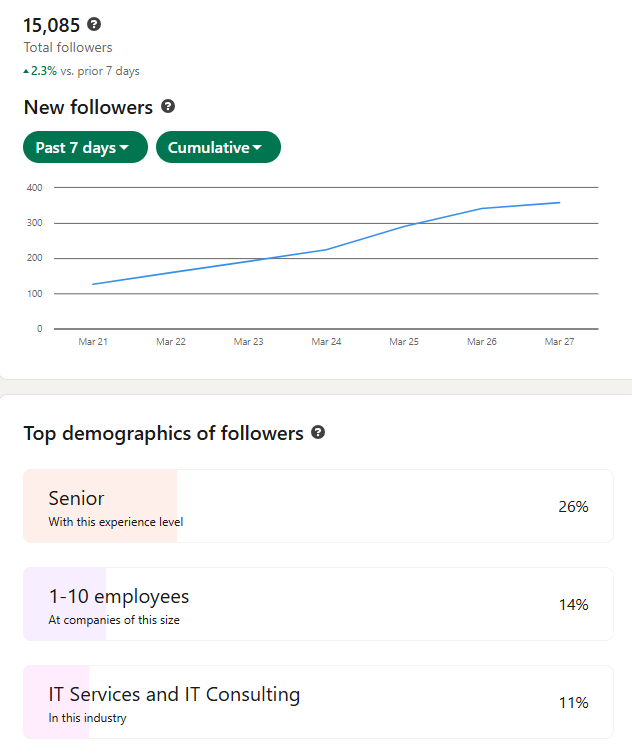
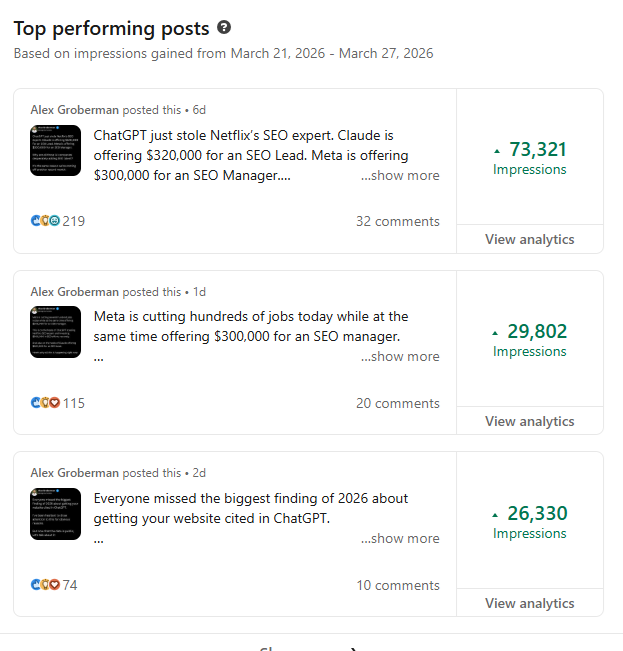
I created my LinkedIn account ~67 weeks ago.
Since then I’ve added $365,000 in direct revenue from LinkedIn and 15,000 followers.
Easiest algo to crack by a country mile.
And the absolute best social media for signing enterprise clients.
Here is the exact system I’m using right now...
Oh, and if you want my full unfiltered cheat sheet with engagement group templates, carousel structures, DM workflows, and my posting system, follow me, repost this, and reply “LinkedIn Growth Guide.”
You must do all 3 to receive the DM.
Let me start with what stays true after 66 weeks of daily testing:
Proof-based content still outperforms everything else.
By proof-based I mean posts that literally show a real metric, revenue, traffic, pipeline, booked calls, etc. and then add context with a clear business takeaway.
Use real numbers whenever possible.
Dwell time still plays a major role too.
If people read the entire post, swipe through multiple carousel slides, or pause on video, the post continues circulating longer.
First-hour replies from people outside your immediate network are still one of the strongest distribution signals you can influence.
On-platform formats beat outbound links in almost every case.
Text posts, carousels and native short video outperform link posts on average.
Link posts without setup consistently stall.
That said, a lower-reach link post with strong intent can still outperform in revenue.
Distribution and conversion are different games.
If you include a link, deliver value first and either modify the preview image or drop the link in the comments.
Topic consistency builds on itself over time.
Posting repeatedly around the same core theme strengthens how LinkedIn categorizes your profile.
Your content then gets shown to people already engaging with that topic.
That improves early engagement quality and comment depth.
Cross-niche engagement still expands reach.
Engaging consistently in two to three adjacent industries pushes your profile into overlapping networks.
Generic likes do almost nothing.
Thoughtful comments that add insight create second-level engagement and extend reach.
Reposting with a new hook still works extremely well.
Most of your followers never saw the original post.
Repost after one to three weeks with a sharper angle, updated numbers, or a clearer outcome.
Posts with replies to replies stay alive longer.
Multi-layer comment threads can extend post lifespan by days compared to shallow discussions.
My posting schedule has not changed.
I post three times per day, every day.
Morning is proof-driven or a strong point of view.
Afternoon is a carousel, teardown, or case study.
Evening is a lesson, system breakdown, or actionable walkthrough.
Skipping even one day reduces momentum for the next 24 hours.
Formats performing best right now:
Carousels with a bold first slide tied to a specific outcome or pain point.
Three to six concise slides with steps, visuals, or proof.
A final slide with a clear next step.
Short native videos under 60 seconds with subtitles.
The hook must land in the first two to four seconds.
Walkthrough and behind-the-scenes videos continue outperforming polished talking-head content when the information is concrete and tactical.
What is underperforming:
Link posts with no setup.
Metrics with no narrative.
Large, dense text blocks.
Generic advice that applies to everyone.
Posts where the author disappears after publishing and does not reply in the first hour.
My engagement strategy:
Comment on 20 to 30 posts per day with insight tied directly to the post.
Like 50 or more posts per day.
Reply to every comment on your own posts within the first hour.
DM five to ten people per day with context-first value tied to something they posted.
Ask follow-up questions inside comment threads to deepen discussion.
Repeated engagement from the same people increases future distribution.
Hooks performing best right now:
“I started this account 66 weeks ago. Here is what $350,000 in LinkedIn revenue actually looks like.”
“This 4-slide carousel booked 5 calls in 24 hours.”
“If I had to rebuild my LinkedIn from zero today, this is the exact system I would use.”
“My 3-post-per-day routine for consistent inbound.”
“I made X this month from LinkedIn. Here is the breakdown.”
Every hook must be backed by proof.
Without proof, credibility drops fast.
Here is a 30-day plan that still works:
Post three times per day with at least one proof-based post.
Comment on 20 to 30 posts daily with substance.
Like 50 or more posts per day.
Reply to every comment within the first hour.
Repost one winner each week with a new angle.
DM five to ten people per day with context-first value.
Track impressions, comment depth, leads, and repeating commenters weekly.
Test hooks, formats, and timing every week.
Run this system for 30 days.
Screenshot your Day 31 results.
Tag me when inbound starts.
If you want the full cheat sheet, follow me, repost this, and reply “LinkedIn Growth Guide.”
You must do all 3 to receive the DM.
62
43
100
13,949

Mar 27
blueprint
Mar 26

I helped raise a company from $493K to $1.6M in valuation, spending 70 hours building a $35M AI operations system for them.
The founder was working 58 hours weekly before he came to me
But now is down to 25 hour weeks. ~zero time in delivery.
( Profit margin also increased from 22% to 35% too )
> The founder was personally involved in 83% (exact % btw) of revenue.
> 7 employees and most decisions still found their way escalating to him
> couldn't take a weekend off without his phone blowing up
we mapped every function in his business. what's actually keeping clients vs what's just keeping him busy.
69% of the operation was DRAG. reporting. project setup. invoice follow-ups. QA reviews. status calls. onboarding ran from memory every time. Scattered client data across multiple softwares.
so we stripped it all and here’s what we built to replace it:
> custom dashboard replaced him checking 6 tools every morning.
> AI agents took over reporting, proposals, and client updates.
> decision frameworks so the team stops asking him every question.
> QA system so he's not reviewing every deliverable.
> onboarding automated with material collection and client context immediately ingested Day 1.
The result:
> decrease his work load from 58 hours to 25 hour weeks. ~zero time in delivery.
> profit margin raised from 22% to 35%.
> valuation increase from $493K to $1.6M. (proprietary data set, owned software infrastructure, new revenue channel via system installation fees)
same clients, smaller team, same revenue.
Now that his time is freed up , he’s taking on double the number of clients with this NEW AI architecture.
If you want me to do the same for you,
I’m giving away all of these for free: (today only)
1. How this $35M AI operations system works
2. Full Aerodynamics Audit — 75-question diagnostic that scores your business 0-100 on founder dependency, function maturity, systems infrastructure, revenue health, and AI readiness. Takes 60 minutes. You'll know your exact drag percentage down to the hour.
3. Drag Map — function-by-function breakdown showing which of your 10 core business functions are load-bearing vs. drag, rated 1-5 on maturity. Most founders discover 60-85% of their hours are drag.
4. Financial Impact Report — what your drag costs you per month in dollars, what your valuation looks like with vs. without systems, and the margin unlock if you strip it.
5. Build Sequence — the exact order to systematize your operations so nothing breaks. Which function first, which stays human, what gets built in week 1 vs. week 2 and so on based on 30 builds across 12 industries.
Comment "blueprint" to receive all 5 of these :)
( must follow RT so I can DM )
6
Mar 11
Today: Scrambling for attention every launch. Cold outreach. Starting from zero.
Six months from now: A DM from someone who's been reading your posts. They want to talk. They already trust you.
The shift isn't complicated.
1
7
Mar 11
30 minutes a day. Protected.
First thing. Before email. Before Slack.
One post. Shipped before 9am.
Do that for six months and attention starts finding you.
1
2
Mar 11
The founders who started six months ago are living this now.
The window to join them is still open.
Start tomorrow morning.
2
The Question That Changes Everything About Content for Founders
Most founders ask the wrong question about content.
They ask: "Why can't I be a content person?"
That question has no answer. It frames content as identity. Something you are or aren't. If you're not a content person, there's nothing to do but accept it.
Here's the question that changes everything: "What's my extraction system?"
That question has an answer. It frames content as process. Something you build, not something you're born with.
Watch what happens when you switch questions.
Old question: "Why can't I write?" leads to self-judgment, waiting for motivation, and evidence-gathering that you're not built for this.
New question: "What's my extraction method?" leads to recording calls, capturing Slacks, building templates, and separating steps.
Same founder. Same expertise. Different question. Completely different outcome.
The founders who post every week didn't answer the identity question. They skipped it entirely. They built systems: capture tools, writing blocks, publishing schedules. They made content mechanical instead of mystical.
You don't need to become a different person. You need to build a different process.
Stop asking why you can't. Start asking how you will.
The question you ask determines the answer you find.
The complete Translation Problem framework → x.com/thescottcertain/status…
Stay sharp.
Scott

3
Two founders. Same startup. Same 24 hours.
A schedules content for "after the important stuff." Posts nothing.
B blocks 30 minutes before email. Ships by 7:30am.
After one year:
1
8
Founder A: 12 sporadic posts. No audience. Cold outreach.
Founder B: 250 posts. Growing audience. Inbound leads.
Same time available. Same fires. Different sequencing.
2
7
A treats content as leftover work.
B treats it as first work.
Leftover time doesn't exist. First thing does.
Which founder are you being?
3
Every Week Founders Don't Publish, They Fall Further Behind
While you're figuring out what to post, your competitor posted three times.
Their audience grew. Yours didn't. The gap widened.
This is content compounding, and it's working against you every week you sit out.
Here's how it works. Founder A posts consistently and grows 2% per week. Doesn't sound like much. But 2% weekly compounds to 2.8x in a year. Founder B waits six months to start. Now they need to grow at 4% weekly just to reach where Founder A was when they began. They're not closing the gap. They're falling further behind.
The math is brutal because compounding only counts the weeks you show up.
It gets worse. Your future customers are building trust with the founders who post. They're following their content. Learning from their insights. Developing loyalty. By the time those same prospects discover you, they've already chosen.
You can't post harder to make up for the year you missed. There's no catching up. There's only limiting the damage.
Every week without content is a week your competitor's asset grows while yours stays at zero.
The market doesn't wait for you to feel ready. Start now. The compounding clock is already running.
Why you're stuck the system that fixes it → x.com/thescottcertain/status…
Stay sharp.
Scott
8
Feb 26
Two things went live today.
The Authority Gap Assessment is a free 15-question diagnostic that measures whether your business is growing on authority or bleeding money because it isn't.
3 minutes. Instant scorecard. Specific recommendations.
→ authoritygapassessment.com
Stop Burning Ad Spend is a free 5-day email course on the 5 mistakes owner-led businesses make trying to grow beyond referrals.
→ stopburningadspend.com
If you're an owner-led business where your expertise is the real differentiator but the market can't see it — these were built for you.
I'm building my own authority brand on this exact system. Not theory. Operating it.
Both free. No pitch.
1
35
Feb 23
Your competitor posted 50 times in the last four months.
You posted 5.
Now they have an audience. You have a pitch deck.
Here's the part that should keep you up at night:
1
35
Feb 23
The gap compounds.
Every week you skip, they post.
Every week they grow, you stay flat.
You're not just behind. You're falling further behind.
1
14
Feb 23
Same four months. Same calendar. Different priorities.
The best product doesn't win.
The best product people know about wins.
8
Feb 21
Why Founders Can Pitch Over Coffee But Freeze on the Page
You pitched an investor last week. Ten minutes. No notes. They asked questions, you answered. By the end, they wanted a follow-up meeting.
Now write that same pitch as a LinkedIn post. The page stays blank.
The difference is feedback.
In the coffee meeting, you weren't alone. Every sentence got a reaction. Confused face meant slow down. Lean forward meant keep going. Questions told you exactly what they cared about. You were building the pitch in real time with a co-pilot.
Writing has no co-pilot.
You're encoding ideas for an audience you can't see. No reactions. No questions. No signals telling you if you're on track. Your brain registers this as danger. Without feedback, it can't regulate output. So it freezes.
This is why articulate founders stare at blank pages. The ability didn't disappear. The scaffolding did.
The fix is to rebuild the feedback. Record yourself explaining the idea and transcribe it. Write to one specific person you know. Read sentences out loud and listen for where you stumble.
You don't need to become a better writer. You need to simulate the conditions where you already communicate well.
The feedback loop isn't a nice-to-have. It's the whole game.
The full Translation Problem breakdown → x.com/thescottcertain/status…
Stay sharp.
Scott
1
15