
English is the hottest programming language.
Joined December 2022
- Tweets 1,077
- Following 883
- Followers 36
- Likes 1,516
17 Photos and videos














Thinkify AI retweeted

17 Jan 2025
Traditional RAG vs. Agentic RAG, clearly explained (with visuals):
66
381
3,304
729,720

Thinkify AI retweeted

16 Jan 2025
这个 21st.dev 真的是有点意思,难怪最近真么火,将各种页面的效果都组件化了,每种效果都单独是一个组件,效果特别多非常方便,然后还提供了各种平台的 prompt。
我花了两分钟,就将一个landing page 的效果部署到了 v0 上面,确实省时省力,很强大,大家如果关注页面效果的话,那么必须收藏一下。
11
139
623
54,089
Thinkify AI retweeted

12 Dec 2024
最近给洛杉矶的物流初创公司Vectrro做的网站,用的是Framer。
除了网站,还为Vectrro设计了Logo、产品Demo、社媒banner等等。有些创始人不清楚早期要找多少设计师合作,答案是:一个就够了。
15
36
255
41,812
Thinkify AI retweeted

11 Dec 2024
一口气快速学习完一个开源项目神器来了⚡️ 快速将一个 Github 仓库转为 LLM 友好理解的文本 - gitingest 开源!🔥 短时间获得 689 Star 🌟
源代码 👉 github.com/cyclotruc/gitinge…
查看演示视频 👇
7
88
431
35,142
Thinkify AI retweeted

29 Nov 2024
新增支持 sitemap ,快速获取网站的相关链接,我自己的高频场景是直接丢过去产品的文档链接,让他先把相关链接爬下来,再不断让他根据需要去爬取具体每个链接的内容,用起来非常流畅,再也不用一个链接一个链接贴给他了
27 Nov 2024

Claude 的 MCP 上线,拿 search1api 的搜索和爬取 API 做了适配,让 Claude 瞬间有了联网能力,更新 Claude 的配置文件即可使用,项目已开源了,地址见评论,感觉能拓展的东西确实很多
1
1
11
2,182
Thinkify AI retweeted

27 Nov 2024
Windsurf is one of the best AI coding tools I’ve ever used.
I just asked it to create a Perplexity clone, and it got me a fully functional web app in less than 10 min, able to search the Internet for the latest info.
Here’s the full workflow:
47
118
1,279
178,315
Thinkify AI retweeted

7 Nov 2024
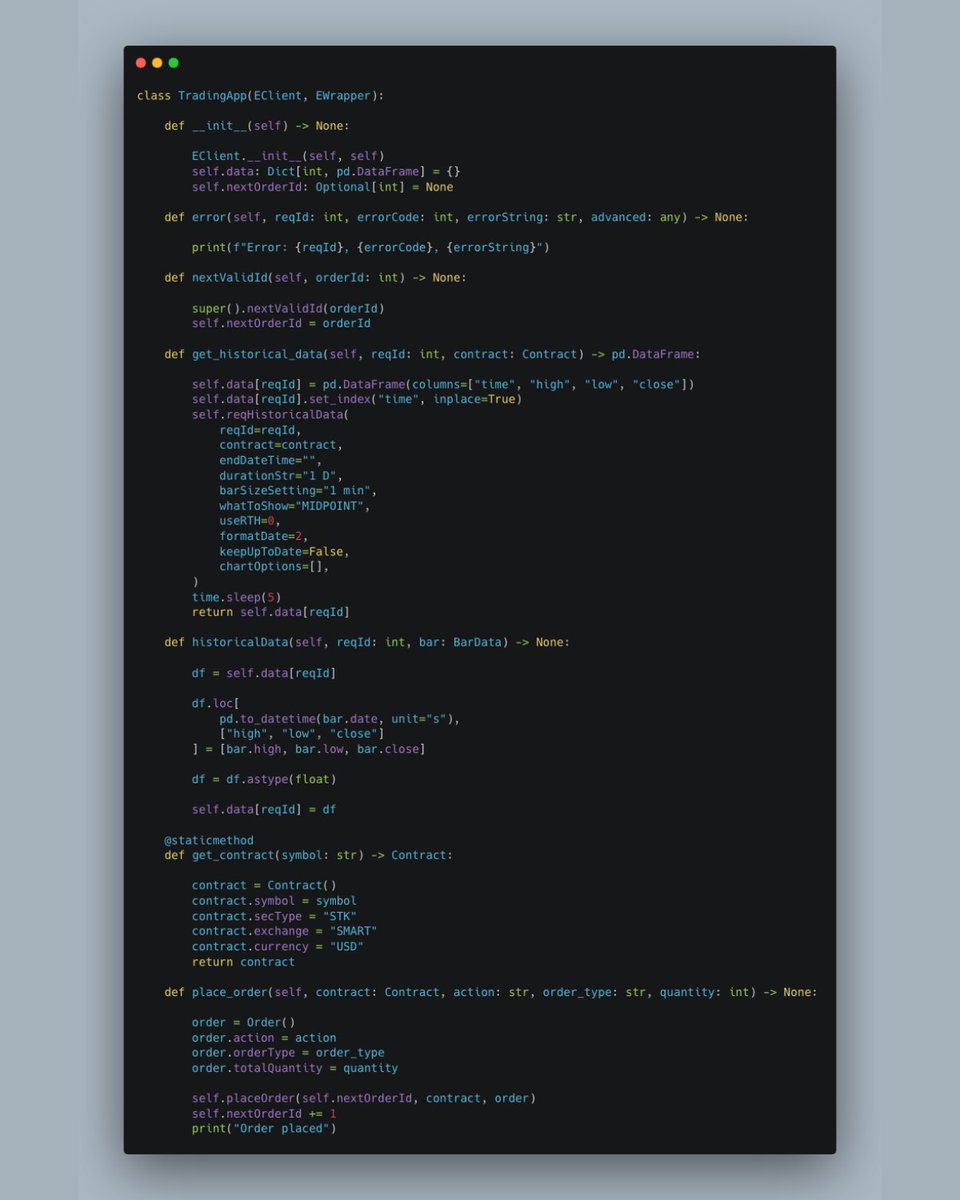
Automate your trading strategy with Python (and Interactive Brokers).
Here's a step-by-step guide to building an automated Donchian channel breakout strategy:
5
44
280
28,122
Thinkify AI retweeted
8 Nov 2024
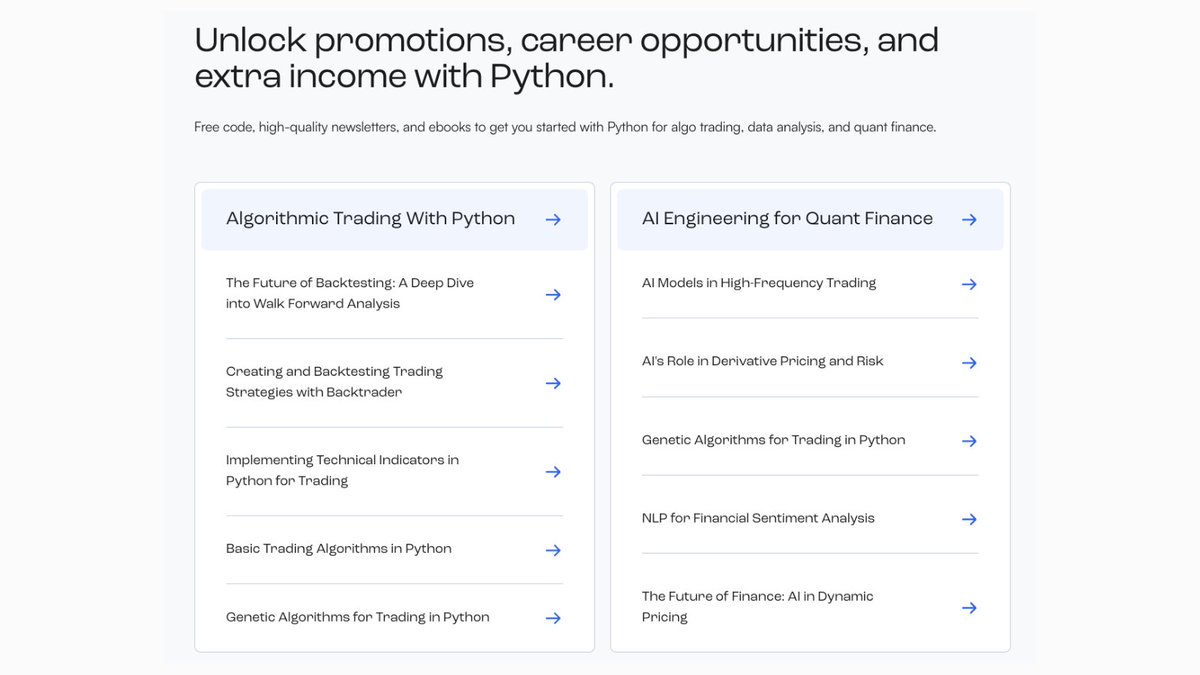
161 high-quality articles covering:
• Algorithmic trading
• Market data analysis
• Quant finance
• AI engineering
• Python programming
• Options trading
All free:
2
34
239
21,354
Thinkify AI retweeted

27 Sep 2024
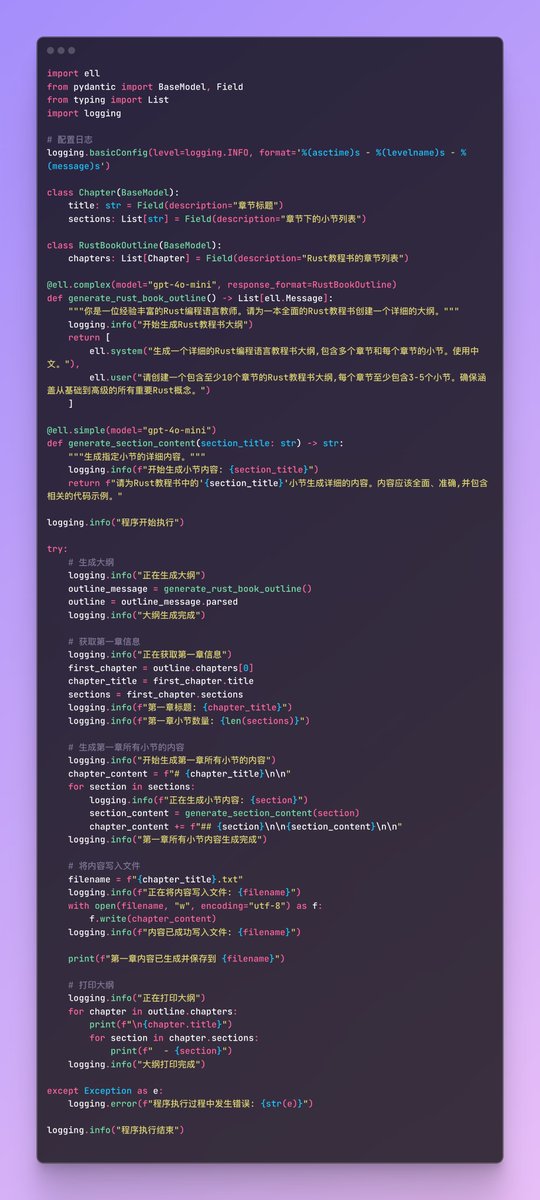
天下苦langchain语法久矣,最近大家都知道横空出世了一个新的框架:ell
docs.ell.so/
我的上一个帖子用command R 写武侠小说有点上瘾,于是乎想自动写本书。
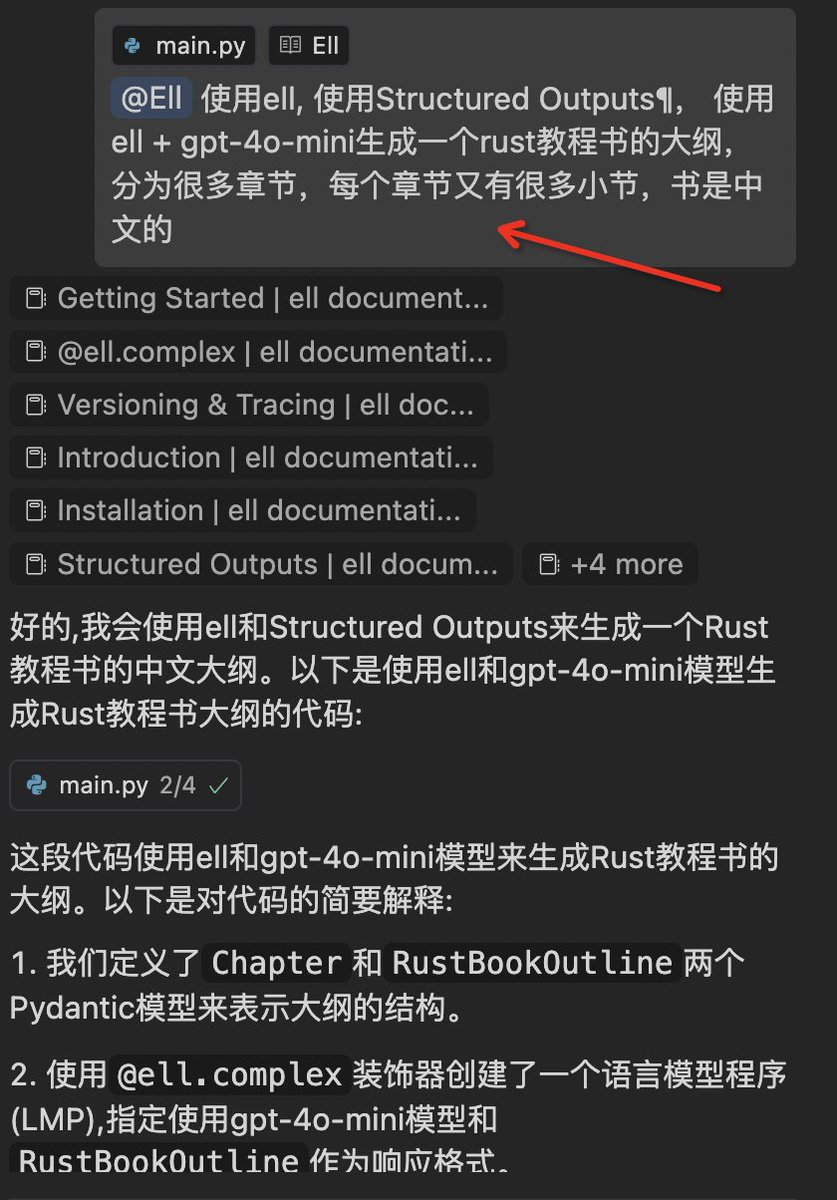
用cursor索引了ell框架的文档,然后 一共 3 个提示词就搞定了写书,全程自己没写一行代码。
ell还可以记录prompt,调试很方便
12 Sep 2024

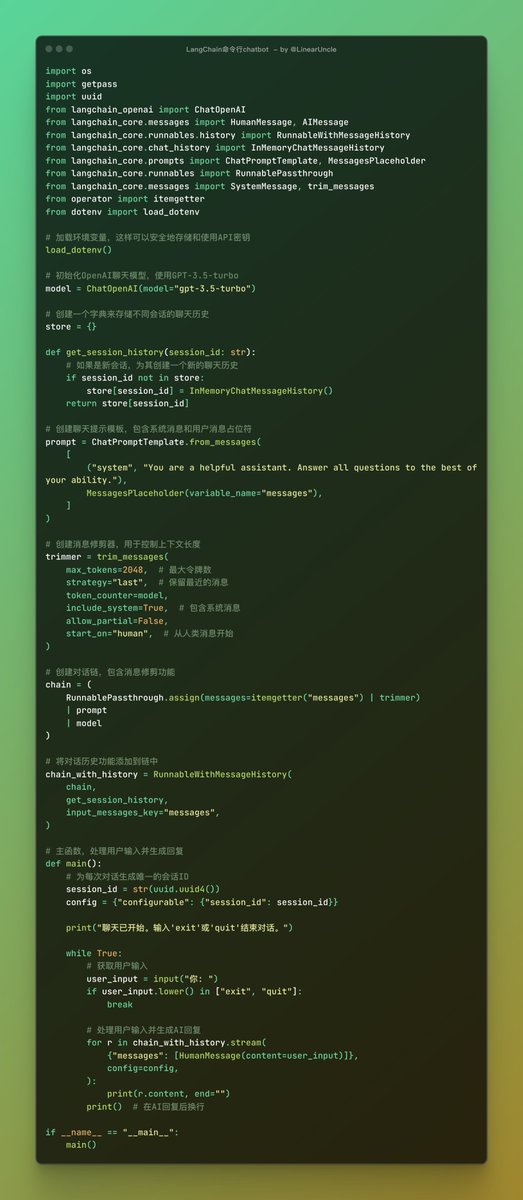
python.langchain.com/v0.2/do…
项目需要调研下langchain, 好久没用新版langchain了,用cursor照着上面的文档,快速给我撸了一个命令行的chatbot(包含上下文)。
想批评下langchain,API实在太恶心了, 没想到python代码也可以写的这么抽象。

12
86
428
66,111

一款基于GPT-4的PDF转Markdown工具,支持从复杂 PDF中进行高质量文本、表格、图像、公式提取
支持PDF文件或URL提取
支持复杂的PDF,扫描文档、手写文字、包含表格和公式的文档等
支持并行处理、批量处理,有重试机制
github:github.com/yigitkonur/swift-…
#OCR #pdf转Markdown
3
83
292
21,943

试了下谷歌的NotebookLM,太酷了,跟真人聊天几乎一样,很棒的AI笔记应用
NotebookLM可以将文本内容转化为双人播客,模拟真人对话,提供有趣的讨论和情绪价值
你可以把网页链接、文件、文字等等内容扔到NotebookLM里,它能自动解析内容,生成知识库
使用的模型是Gemini 1.5 Pro
它可以帮助你消化冗长的内容,还可以突破时间和空间限制,开车、做家务的时候听音频学习
使用地址:notebooklm.google/
8
147
521
64,603
Thinkify AI retweeted

11 Sep 2024
Introducing PaperQA2, the first AI agent that conducts entire scientific literature reviews on its own.
PaperQA2 is also the first agent to beat PhD and Postdoc-level biology researchers on multiple literature research tasks, as measured both by accuracy on objective benchmarks and assessments by human experts. We are publishing a paper and open-sourcing the code.
This is the first example of AI agents exceeding human performance on a major portion of scientific research, and will be a game-changer for the way humans interact with the scientific literature.
Paper and code are below, and congratulations in particular to @m_skarlinski, @SamCox822, @jonmlaurent, James Braza, @MichaelaThinks, @mjhammerling, @493Raghava, @andrewwhite01, and others who pulled this off. 1/
78
737
3,315
555,540

Thinkify AI retweeted

13 Sep 2024
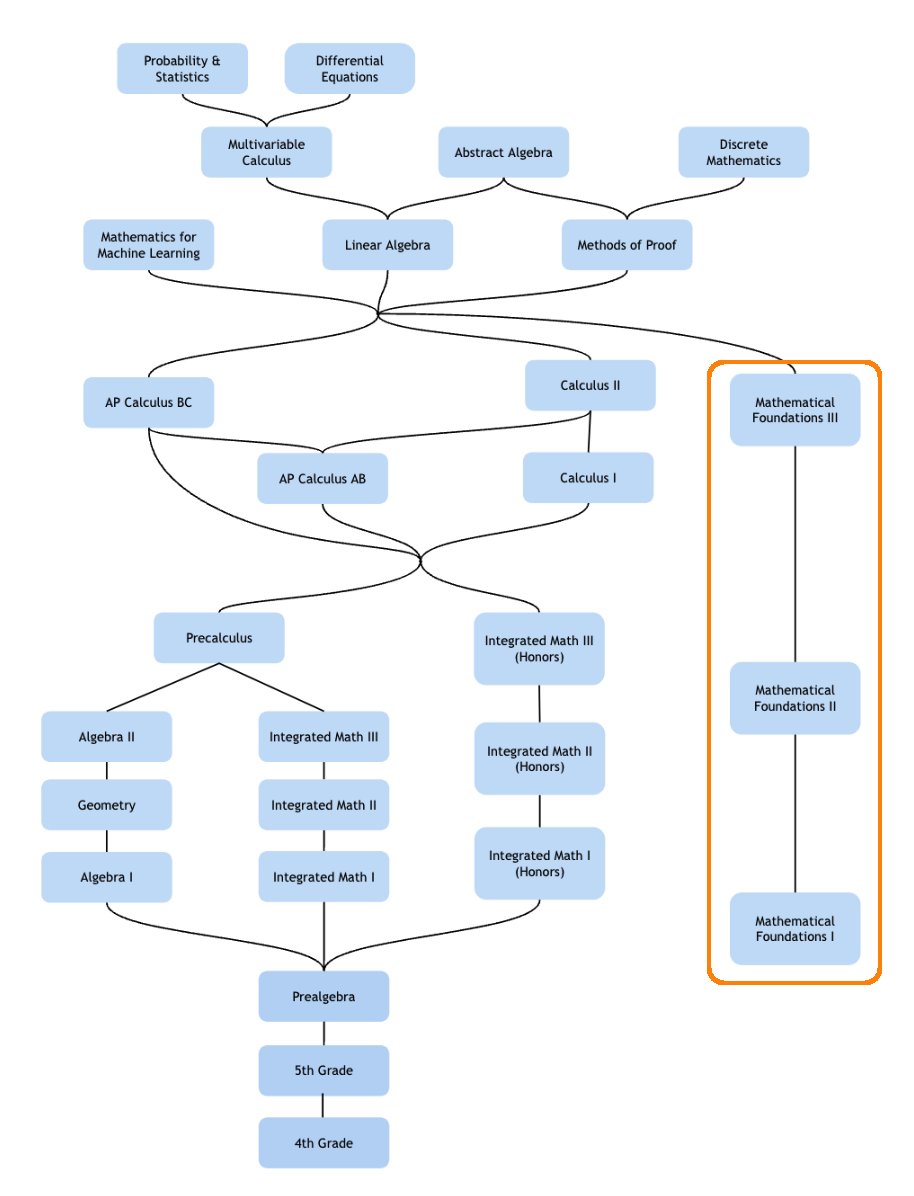
Math Academy这个针对成人的Math Foundation非常有意思。我的理解是一个“帮成年人回忆和捡起以前数学知识的加强课程”。其实各位以前的做题家但是后来因为种种原因没有持续数学学习的到真的可以试试。因为Math Academy后续又无缝连接了所有高等数学的课程(正在制作,我上次看到他们已经做到Multivariable Calculus)。如果你觉得未来你的工作/研究/创造,利用AI持续发展的数学推理能力能够达到你以前做不到的高度,那真的可以考虑。
12 Sep 2024

I designed the Mathematical Foundations Series to help adults efficiently master all the middle and high school material (including calculus) necessary for university-level math.
It starts with fractions and goes as far as calculus, basic linear algebra, & random variables.
I'm often asked which high-school topics were excluded from the Foundations series. We decided to leave some topics out either because (a) they're not important for university-level study or (b) we plan to include them in the university-level course where they're most needed.
Here's a summary of topics that didn't make the cut:
* Some Geometry topics: All of the essential geometry is covered. However, we removed topics on inscribed angles, Thales' Theorem, Triangle congruence, the SSS and SAS similarity criteria (we kept AA, as this crops up in Calculus), midpoint and triangle proportionality theorems, some solid geometry (though we kept what's fairly standard for calculus, such as volumes and surface areas of spheres, volumes of cones), lots of stuff on different types of quadrilaterals.
* Conic sections: Both pathways (high school and foundations) cover the essentials. However, in the high school path, we go into a little more detail about foci, directrices, and eccentricity and utilize their geometric definitions (e.g., focus-directrix properties).
* Trig Identities and Equations: Both pathways cover these, but the high-school versions go into more detail and consider more cases.
* Other arbitrary Prealgebra topics: Delving deeper into ratios in contextual settings, scientific notation, and some basic data representation topics that one would normally meet in Prealgebra.
* Slope fields. This will be covered in our upcoming differential equations course.
* Some analytical applications of differentiation that are quite specific to the BC Calculus exam: Identifying and removing point, jump, and infinite discontinuities and analyzing graphs of first and second derivatives.
There are also fewer topics on related rates and optimization, though these topics are still covered.
* Some contextual applications of integration, like volumes of revolution and volumes of known cross-sections.
* Convergence tests for infinite series. These will be covered in our Real Analysis when we get to that, but other than infinite geometric series (which is covered in Foundations), these tests don't appear very often anywhere else.
* Some ODE models, such as exponential and logistic growth and decay. We cover ODE basics in the foundations course, but particular models will be covered in the Differential Equations course.
* Taylor series. Again, this can be covered in the Differential Equations and real analysis courses for anyone wishing to take that course when ready. The foundations series does cover second-order Taylor polynomials.
If anyone has any questions about the Foundations Series, I'd be happy to answer them.
You can find the course descriptions (including a list of all 989 topics here:
mathacademy.com/courses/math…
mathacademy.com/courses/math…
mathacademy.com/courses/math…
3
18
44
5,056

Thinkify AI retweeted

11 Sep 2024
Building an iOS app with Claude Cursor
FULL GETTING STARTED GUIDE
Zero coding required.
idea --> iOS App...
It's really not that much more difficult than web apps.
64
479
4,325
379,676