
Director of Content Marketing @Ahrefs • I tweet about writing, SEO & marketing • Solving the hard parts of content marketing: courses.ryanlaw.me/
Joined September 2014
- Tweets 11,073
- Following 998
- Followers 13,782
- Likes 16,301
1,769 Photos and videos

Pinned Tweet

22 Aug 2022
i soft-launched my course last week. 154 people are currently working through it 😱
it's $99. it contains everything i know about thought leadership content:
~ ideation frameworks
~ writing techniques
~ distribution tactics
~ examples and teardowns
ryanlaw.podia.com/how-to-wri…
18
7
117
Jun 11
"does AI content work?" is entirely the wrong thing to ask. a much better question is "how is AI content materially different from 'normal' content?"
usually when people publish "AI content" they are unwittingly engaging in a *different* strategy to traditional content marketing, and creating something *different* from traditional content. they create obvious hallmarks of AI use.
for example:
- publishing content much faster than usual, often on newer domains with little authority, no branded search demand, etc.
- relying entirely on an AI model's internal knowledge, without sourcing information from a range of external sources
- failing to include internal and external links, images, visual interest, first-person experiences
- leaving obvious artefacts of AI use in the article, like obviously AI-generated imagery, obvious AI turns-of-phrase
- AI writing patterns and watermarks that haven't been "humanised" by anchoring text generation in specific writing examples.
some of these hallmarks make the content WORSE than normal (and hence contribute to poor performance), others are very DIFFERENT from normal (and make it easy to single out content as likely AI-generated) - both of which can contribute to that content not performing well.
i obviously don't know the exact mechanisms at play when Google sinks an AI-generated blog after 3-months, but i DO know that many of these aforementioned signals are very obvious to Google: indexing requests, branded search demand, AI content detection (even if only directionally accurate), user engagement signals.
we use generative AI a lot at Ahrefs, and i'm happy to do this because we do not compromise on our editorial standards. our AI process mirrors our human editorial process, step for step; it is better and more detailed than the human equivalent in many areas, because LLMs are more tireless researchers, more thorough adherents to brand voice.
we are substituting one tool for another, one method of construction for another, but the end product is the same. we have even now published AI-generated content that is subjectively BETTER than our previously human-made content, because AI removed the data, design and updating constraints that previously limited our team. i am excited for the new experiences we can build for readers.
you need to determine your own risk tolerance, but in my opinion, using AI to create content is not a problem - but using AI to create something that is WORSE or DIFFERENT to "normal" content marketing is. "creating bad content" or "scaling content too soon" is where problems emerge, and many people do this unwittingly when they use AI.
if you know that you are compromising on your content through your use of AI, or trying to scale content on a site that barely exists in Google's consciousness, you should probably feel a bit nervous.
if you want to win, change your framing and use AI to make content that is cooler and better than you were able to do before ✌
6
1
12
1,008
Jun 8
if i was starting my FIRST DAY as a new Head of Content, here's what i would do:
- build a new blog using a static site generator, host with GitHub, deploy with Netlify or Cloudflare Pages. for an existing blog like WordPress, set up an MCP connector. the goal is a fully AI-native blog, analysis, content creation, updating, all from the terminal, all in my control
- get access to Gong/Intercom/Slack and extract common entities and n-grams. find the language customers and prospects really use, use this as seed keywords for topic research
- build key "source of truth" files in markdown i can reference throughout my workflows: a master list of product features and use cases, canonical writing voice with specific reference articles, key strategic priorities to shape everything we do
- crawl our sitemap and generate vector embeddings for every article. use this to analyse topical authority (and topic "drift") and automate internal linking
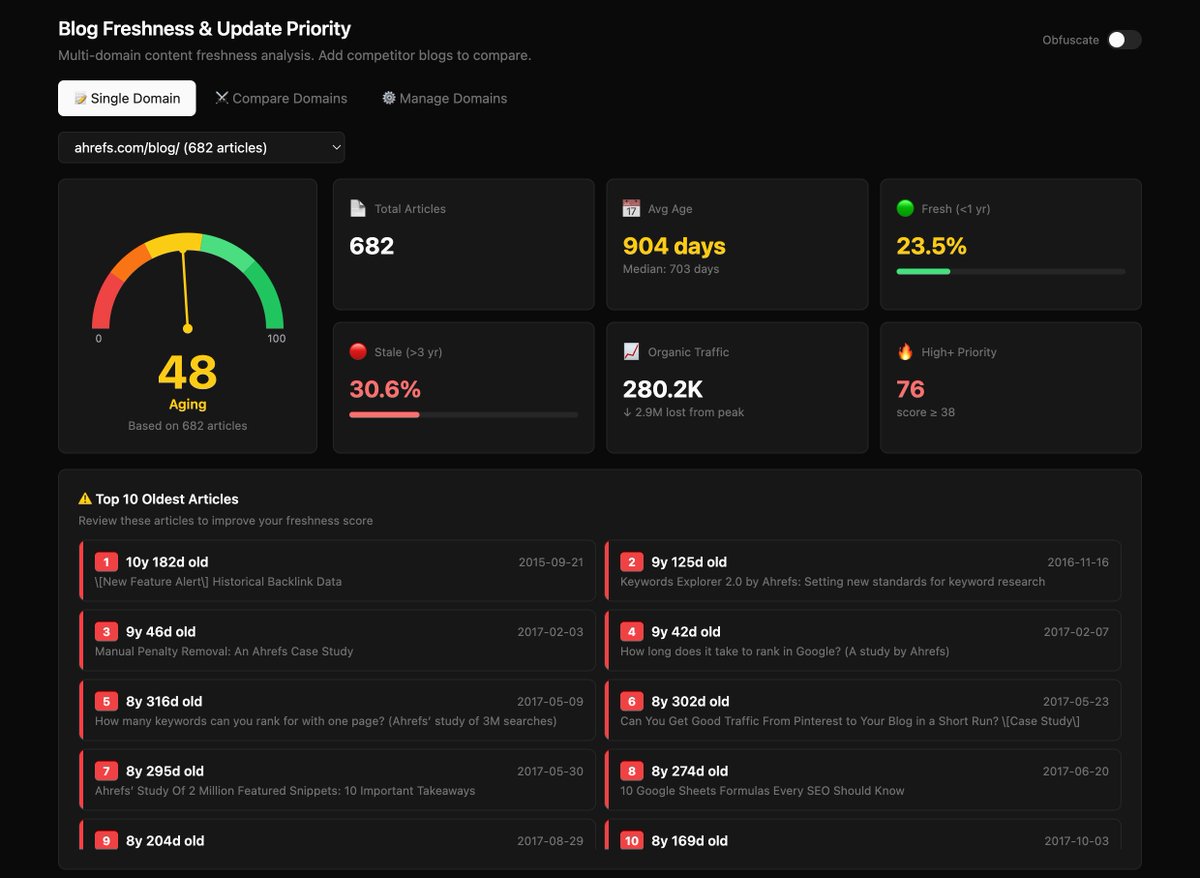
- schedule a recurring, automated content audit: pull rankings and backlink data via the Ahrefs MCP, analyse AI search visibility with Brand Radar, flag technical issues with Site Audit, look for traffic decay via GSC and make a priority list of content updates
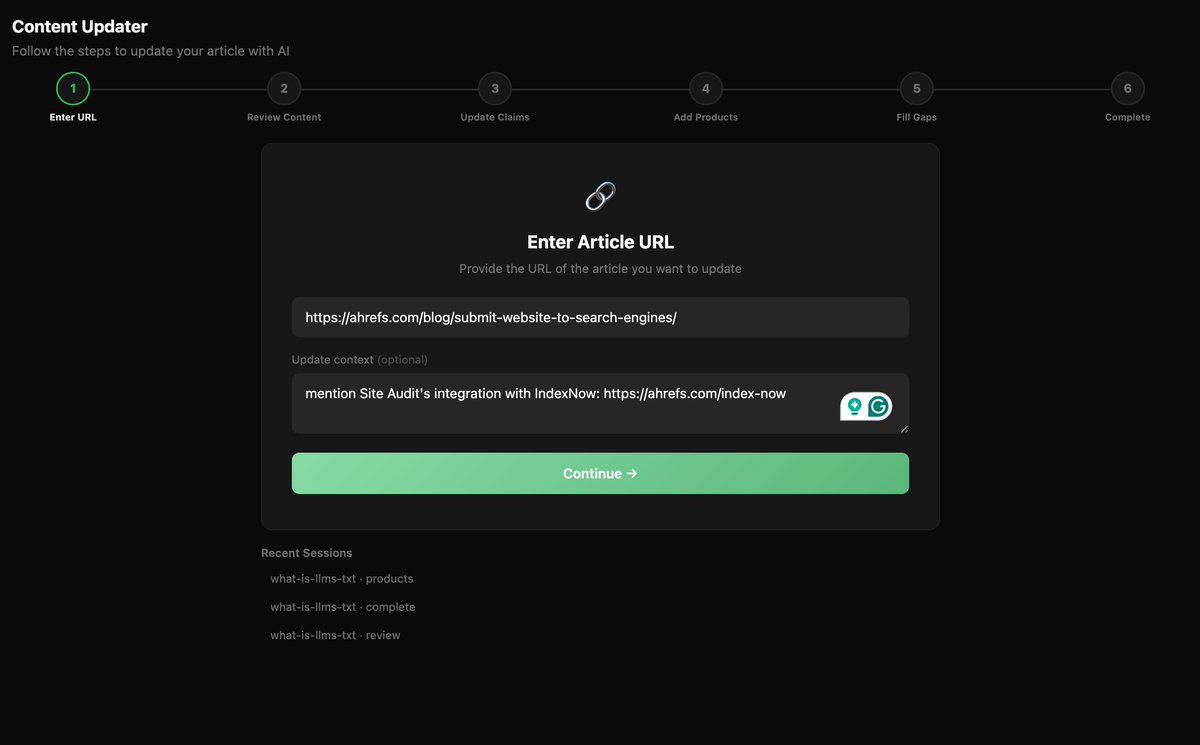
- set up a daily cron job to refresh our highest priority articles: extract the article content, run through AI Content Helper to fill topic gaps, update old claims and statistics, save as a draft for my review
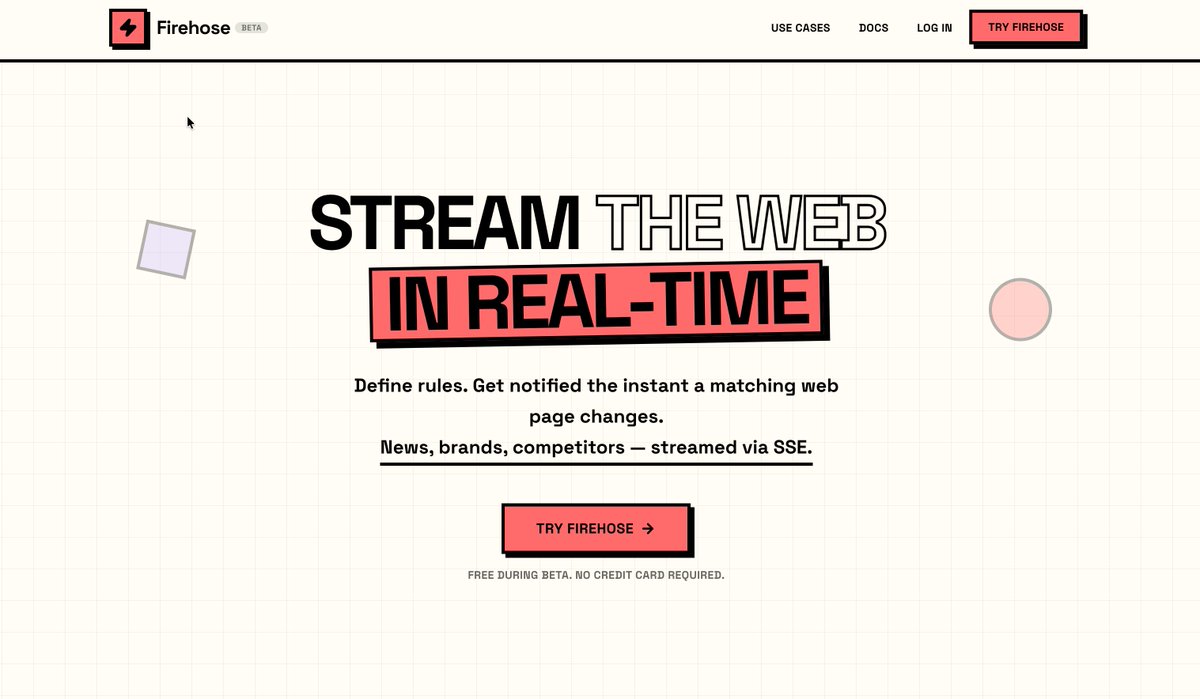
- run a content gap analysis using the Ahrefs MCP to find key topics our competitors have covered that we haven't. use Firehose to get a daily update of new articles and industry news emailed to me
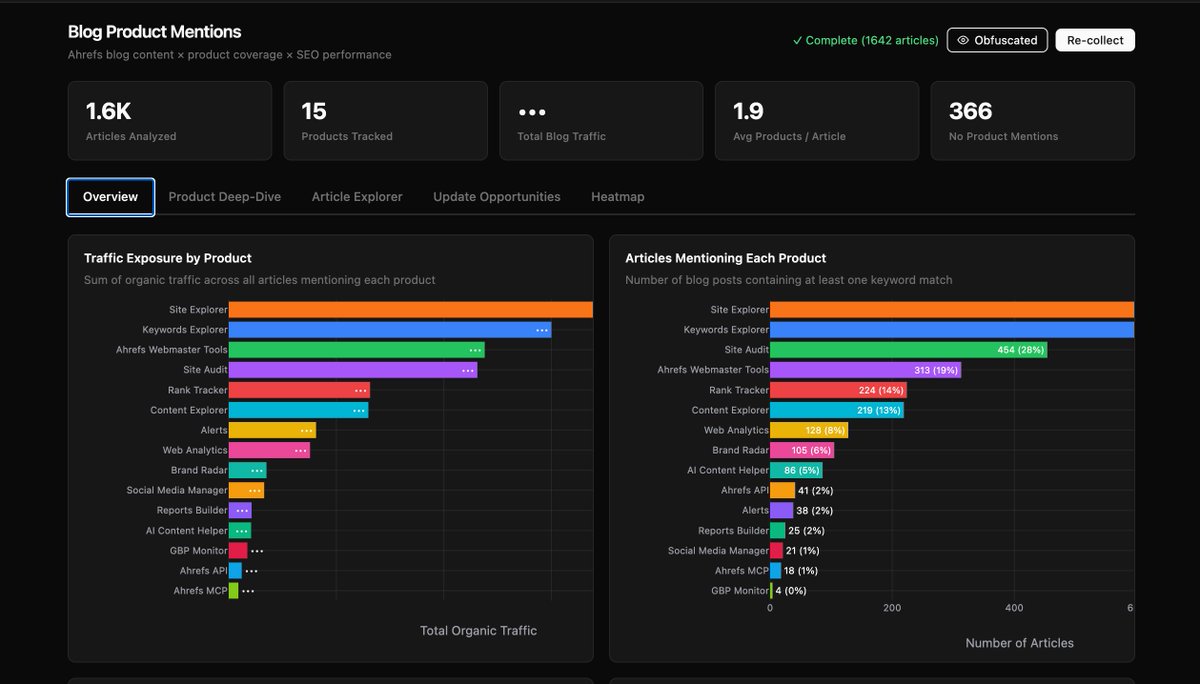
- build my Content OS: a centralised dashboard that pulls all of these reports and workflows into one place. this is exactly what i've done at Ahrefs using Agent A
- get fired for spending $80M in AI credits in my first day (maybe?)
---
i sound like an obnoxious AI hype bro, but all these workflows are things my team have actually built. many of them will become the norm sooner rather than later
AI is truly putting the "manager" into "Content Marketing Manager". we now operate at a higher-level of abstraction, building systems to support our work instead of doing everything ourselves
we don't have to consign ourselves to Google Docs and rely on developers and designers: we can build AI-native blogs as malleable as plasticine and shape every facet of them to our exact specification. if you can imagine it, you can build it!
and as crazy as this sounds, this isn't so much the "first 30-days" of content marketing as the first 30-MINUTES, because so much of this infrastructure can be built agentically. you just need to have the vision, know what to ask for, and use your taste and experience to nudge as these systems get built for you
if you don't know where to start: pick one of these ideas, login to Claude Code or Codex or Agent A, paste the bullet and ask it to build it (and some of these are already available as free apps in Agent A!)
41
26
700
72,578
Ryan Law retweeted

Jun 2
In the last 6 months at @Ahrefs, we analyzed over 1 billion data points across 14 studies. Here's what we learned about AI search optimization:
1) "Best X" blog listicles are the single most prominent content format cited by AI chatbots. They make up 43.8% of all page types cited by ChatGPT specifically.
2) 67% of ChatGPT's top 1,000 citations come from sources marketers can't influence: Wikipedia (29.7%), homepages (23.8%), app stores (6.6%). Only 32.3% are influenceable content like educational pages, reviews, news, and blog posts.
3) 28.3% of ChatGPT's most-cited pages have zero Google organic visibility. These pages get cited repeatedly by ChatGPT despite not ranking in Google at all. A completely separate discovery layer.
4) ChatGPT only cites about 50% of the URLs it retrieves. It fetches dozens of pages per query but uses half as background context without attribution. This means that being retrieved and being cited are very different things.
5) Adding schema markup had zero meaningful impact on AI citations. AI Overviews actually dipped −4.6%, while AI Mode ( 2.4%) and ChatGPT ( 2.2%) showed changes indistinguishable from zero.
6) YouTube mentions have the highest correlation (0.737) with AI brand visibility out of all the factors we studied (including all the conventional SEO metrics like backlinks, page count, DR, etc). This held true for both Google-owned and OpenAI products.
7) AI Overviews reduce clicks to the #1 result by 58%. That’s up from 34.5% just 10 months earlier. The trend is accelerating.
8) 99.9% of AI Overviews appear on informational intent queries. Transactional, navigational, and local searches are almost entirely AIO-free. Shopping triggers AIOs just 3.2% of the time.
9) For a given search query, Google’s AI Mode and AI Overviews reach the same conclusions 86% of the time — but cite almost entirely different sources (only 13.7% citation overlap).
10) AI Overviews change every 2.15 days on average, with 70% of content differing between consecutive observations. But semantic similarity stays at 0.95. The words, sources, and entities constantly shuffle, but the actual meaning barely moves.
143
403
3,563
1,016,516
May 29
content marketing is going through the biggest step-change since Google appeared. one personal example:
i have an old website i built a decade ago. the content was old, the design was old, i had no time to improve it. resigned to a slow death. c'est la vie.
but now: i migrated the website from Squarespace to static HTML. i vibe-coded a brand new design with tons of custom widgets. i hooked it up to Codex and now, every day, Codex chooses one old article to improve, automatically.
it pulls performance data from the Ahrefs MCP. it reviews top-ranking articles. it finds content gaps, adds new sections, generates new images, improves internal linking, and generates a preview for me to provide feedback on.
it takes me about 10-minutes to review and finalise the article, and Codex saves my feedback to a memory file that it reviews the next time it goes to update an article. it is literally like having a team working for me, to my exact specification, reviving all of my old projects, and it costs me $20/m.
and this is just a dumb hobby project: imagine what content marketing is about to look like at successful, tech-literate companies with big budgets and bigger revenue goals? imagine what a skilled team of marketers could achieve working in unison with a system like Agent A?
of course, it's a classic monkey paw: the same technology that is automating high-quality content marketing is also nerfing the value companies can derive from it.
but i think there will always be value (and reward) for extremely high-quality content, and strangely, i think AI is about to become essential for making competitive, high-quality content. how can "traditional" content marketing compete with automated content updating, with deeper research, with unique data visualisations and custom-coded page experiences?
content marketing is absolutely crazy right now, and frankly i am having the best time
18
6
139
14,595
Ryan Law retweeted
May 28
Today, we're proud to announce a true revolution in marketing — we're launching Agent A:
ahrefs.com/agent-a
Agent A handles marketing so well, you won't even need your CMO.
55
30
315
117,804
Ryan Law retweeted

May 27
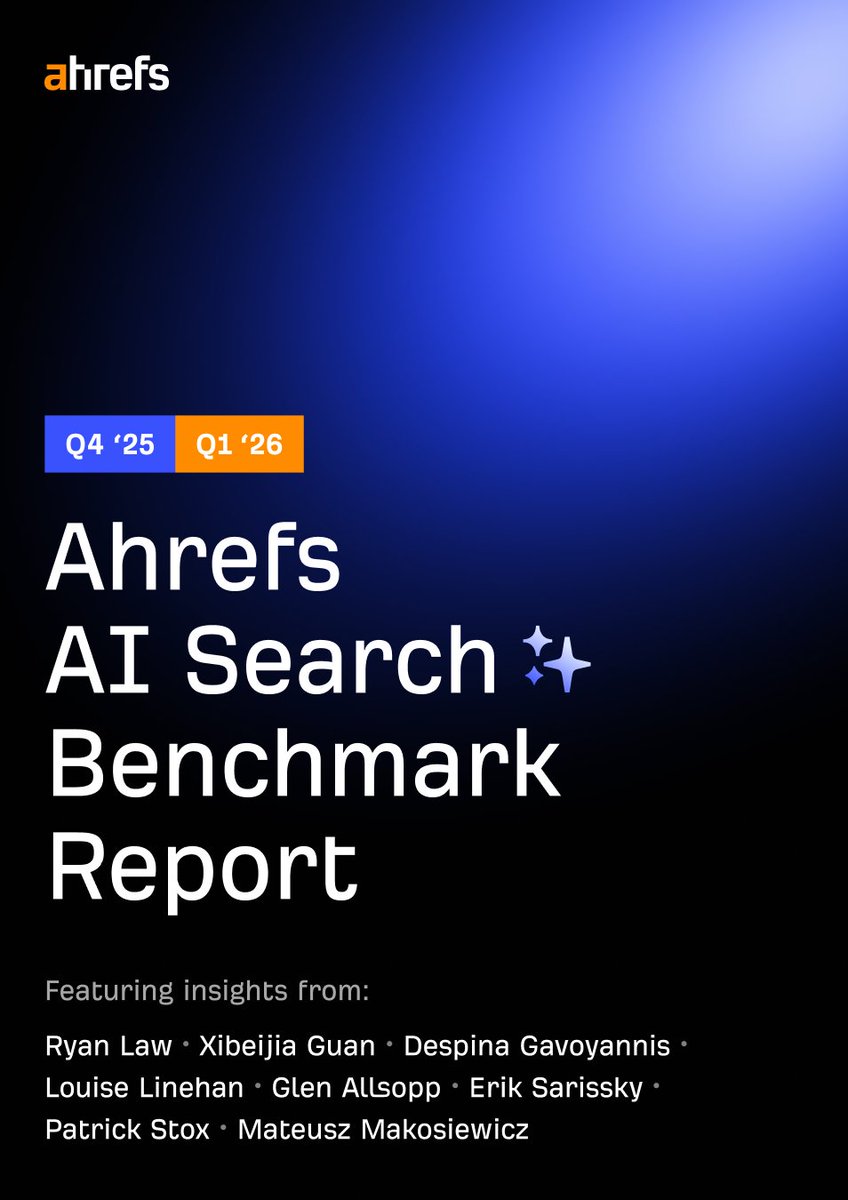
100M data points. 13 studies. 8 authors. One AI search benchmark report. ✨
I'm excited to share the research the Ahrefs team has put together over the past two quarters in one cohesive resource.
We've analyzed responses across AI Overviews, AI Mode, and ChatGPT, and even ran our very own misinformation experiment.
Some key highlights:
- In an analysis of 75K brands, YouTube mentions correlated most strongly with AI visibility 🖥️
- AI Overviews appear for 21% of all keywords (with that rate varying by category and query length) 🔑
- Across 76K websites using Ahrefs Web Analytics, Google sends 190x more traffic than ChatGPT 📈
I wouldn't be doing my job as a marketer unless I said there are some other big findings in the full report. 😬
Special thanks to those who agreed to have their comments featured. We often share these internally, so it's cool to be able to show them off a little.
I would love to convince Tim & Ryan to let me do this again for the next batch of research, so any likes, comments, and shares are much appreciated!
(I'm linking to it directly in the first reply.)
Thank you!
6
19
101
264,106
May 26
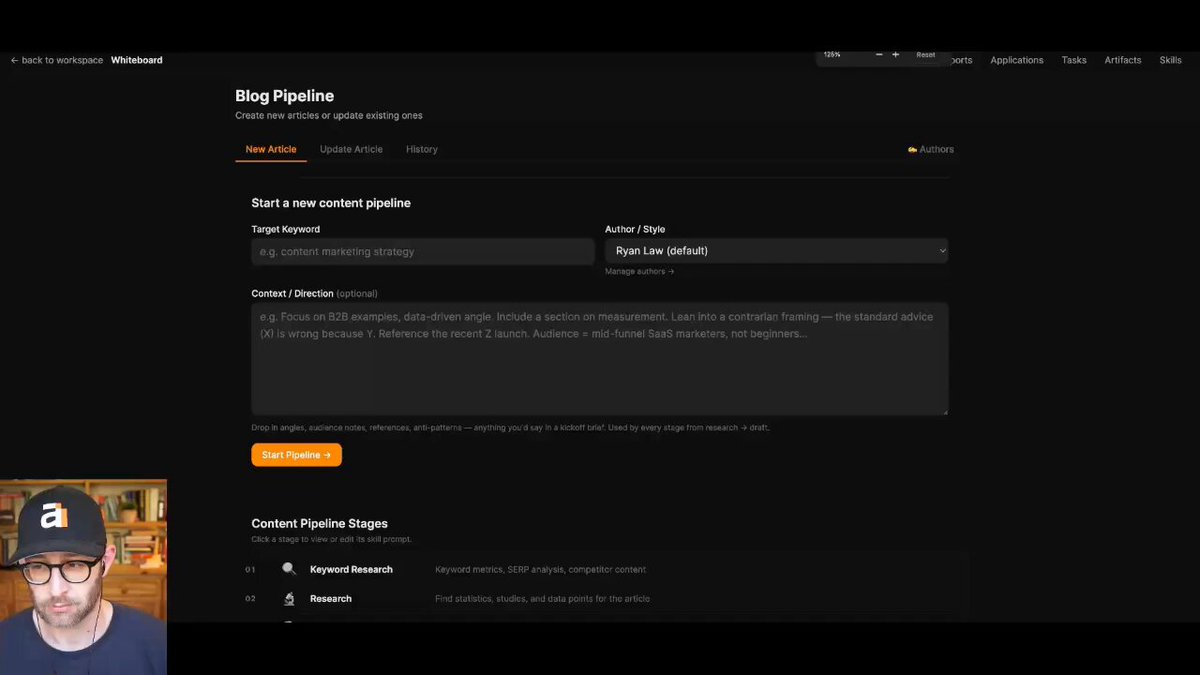
Here's a full 9-minute walkthrough of my AI content automation system.
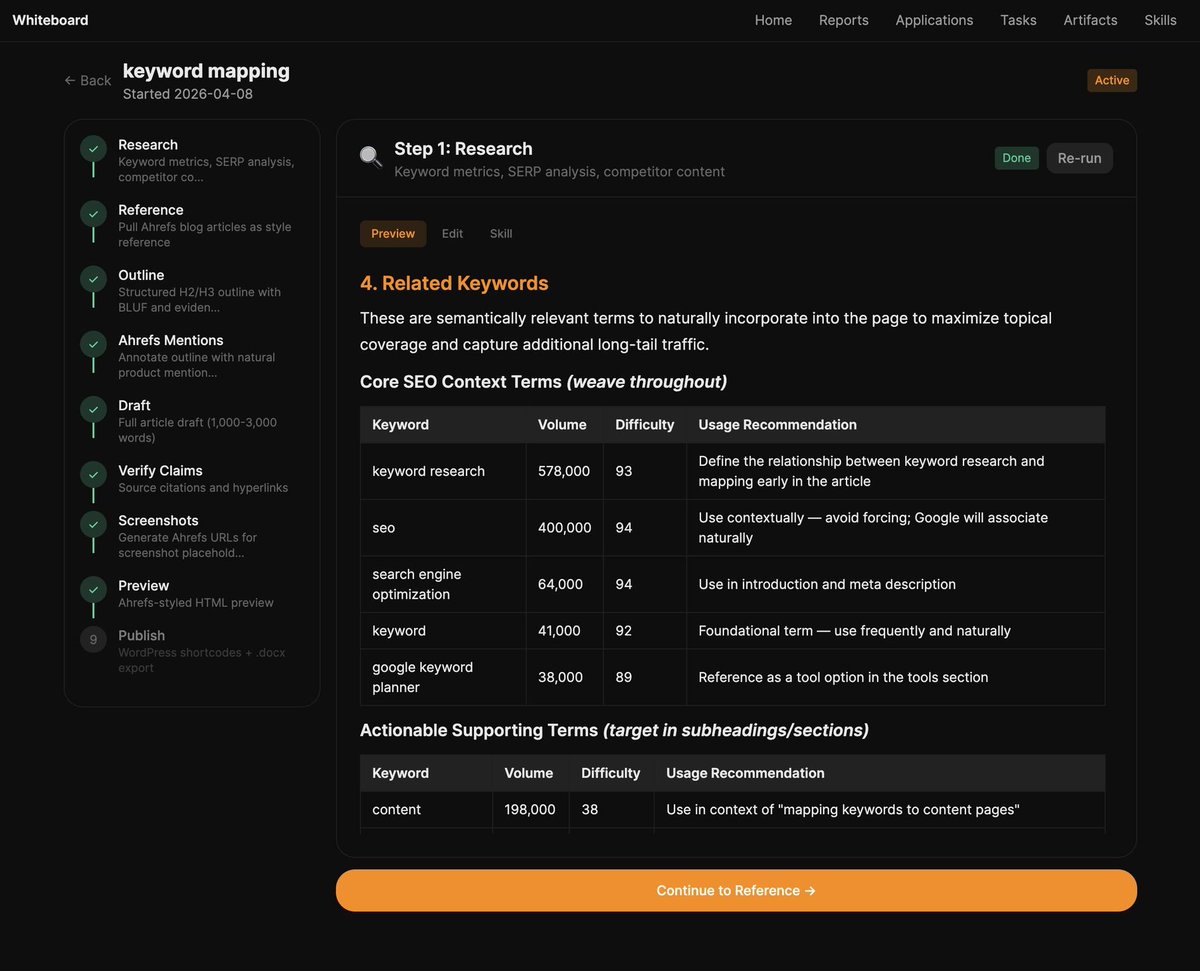
This is a full content automation system that covers keyword research, competitor analysis, topic research, outlining, mentioning Ahrefs products and articles, drafting, internal linking, simple image generation, preview, editing, formatting for publication, and even updating content after it's published.
The system is built with no code using full access to .@ahrefs data, and includes dozens of customizable skill files based on my real editorial process. I've used this process to publish and update dozens of live articles on the Ahrefs blog.
It's easy to make bad content with AI, but it's getting easier and easier to make great content too. Hope this is helpful!
P.S. if you want me to add this to the application library in Agent A (so you can install it and use it yourself), let me know in a comment :)
4
2
37
3,258
Ryan Law retweeted

May 22
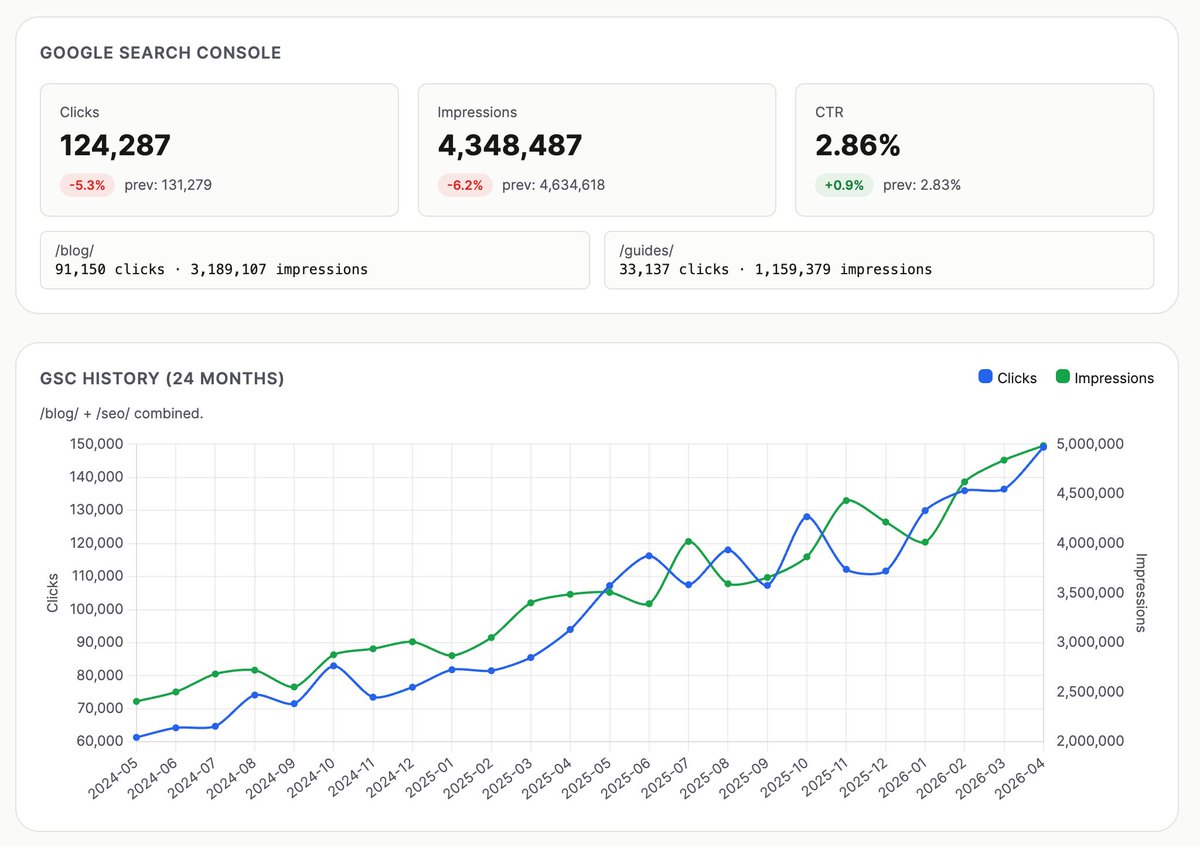
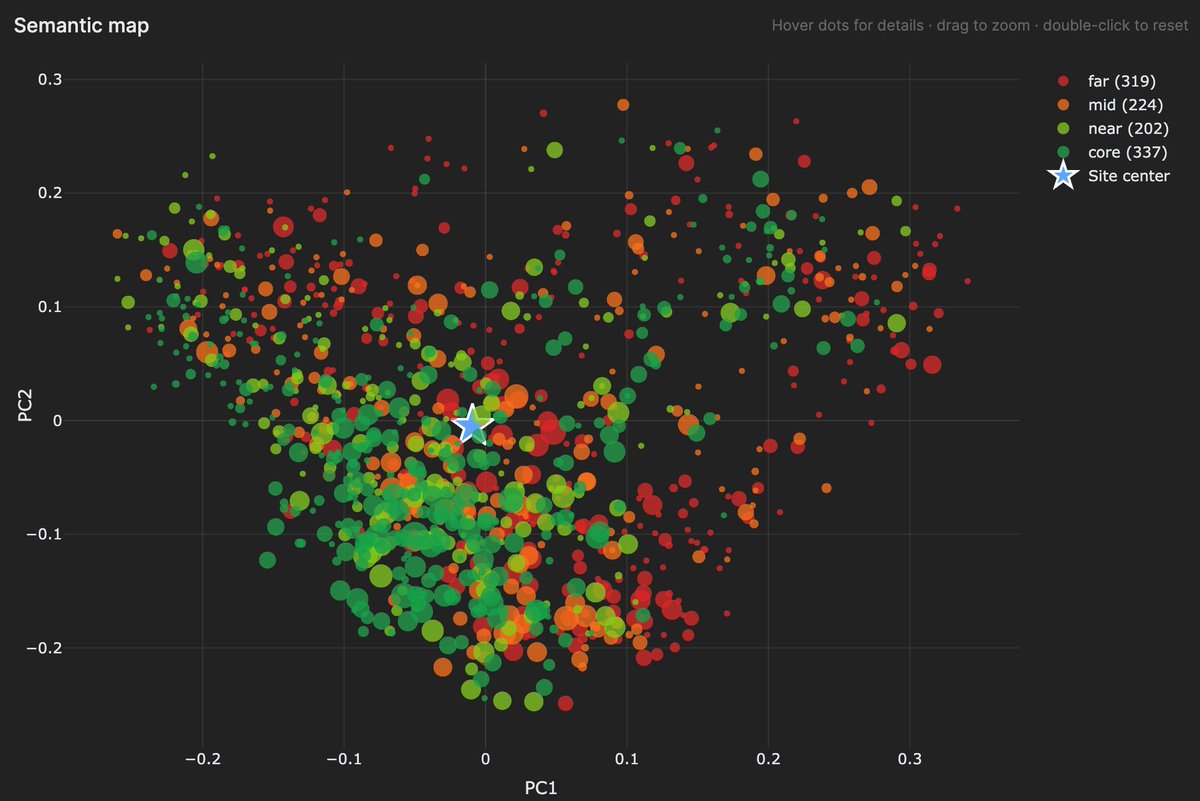
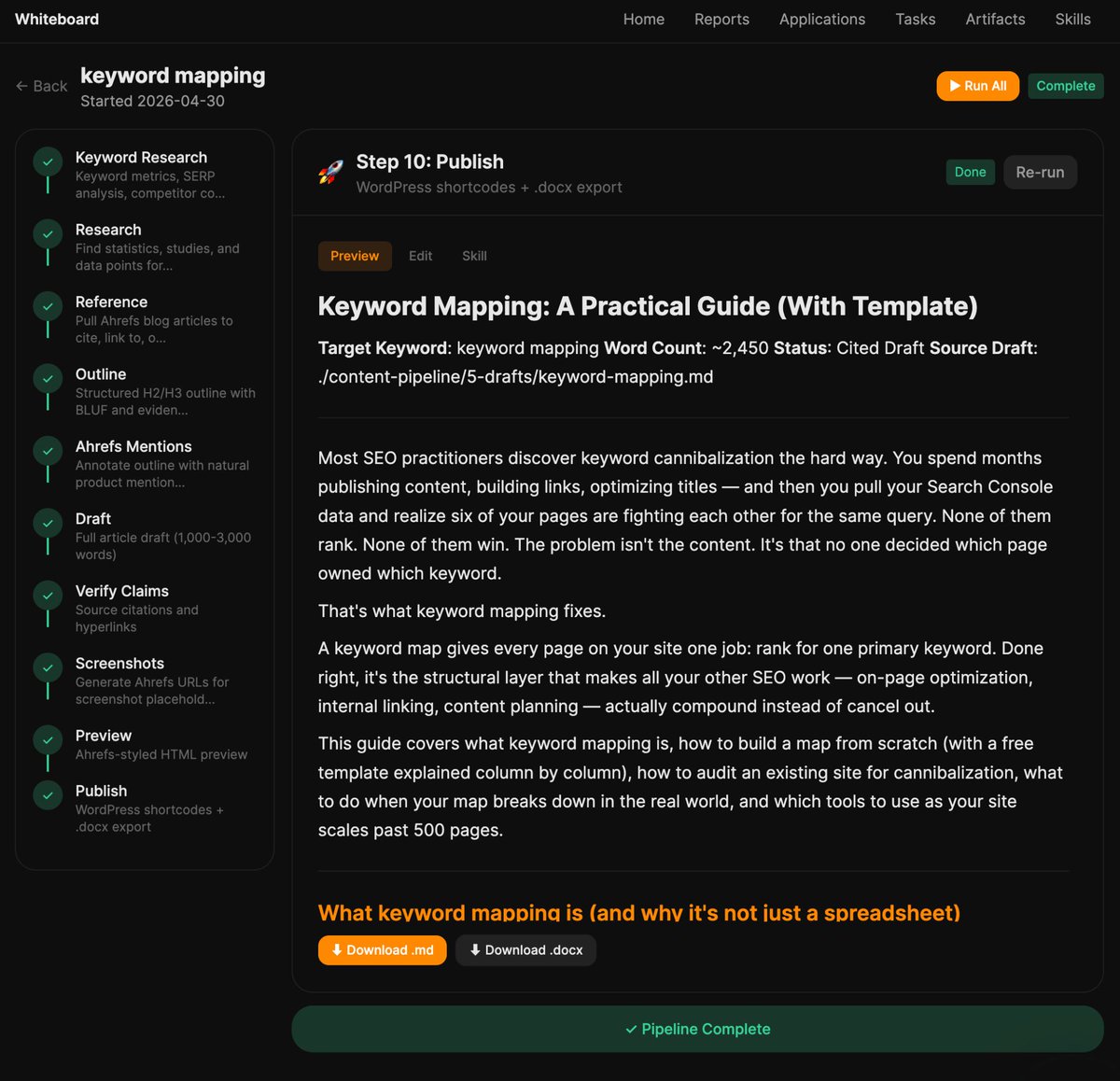
Must-read SEO: 7 Ways to Automate Content Workflows With Agents.
You can use AI agents to automate refreshes, topical authority analysis, links more:
3
14
129
11,249
Ryan Law retweeted
May 21
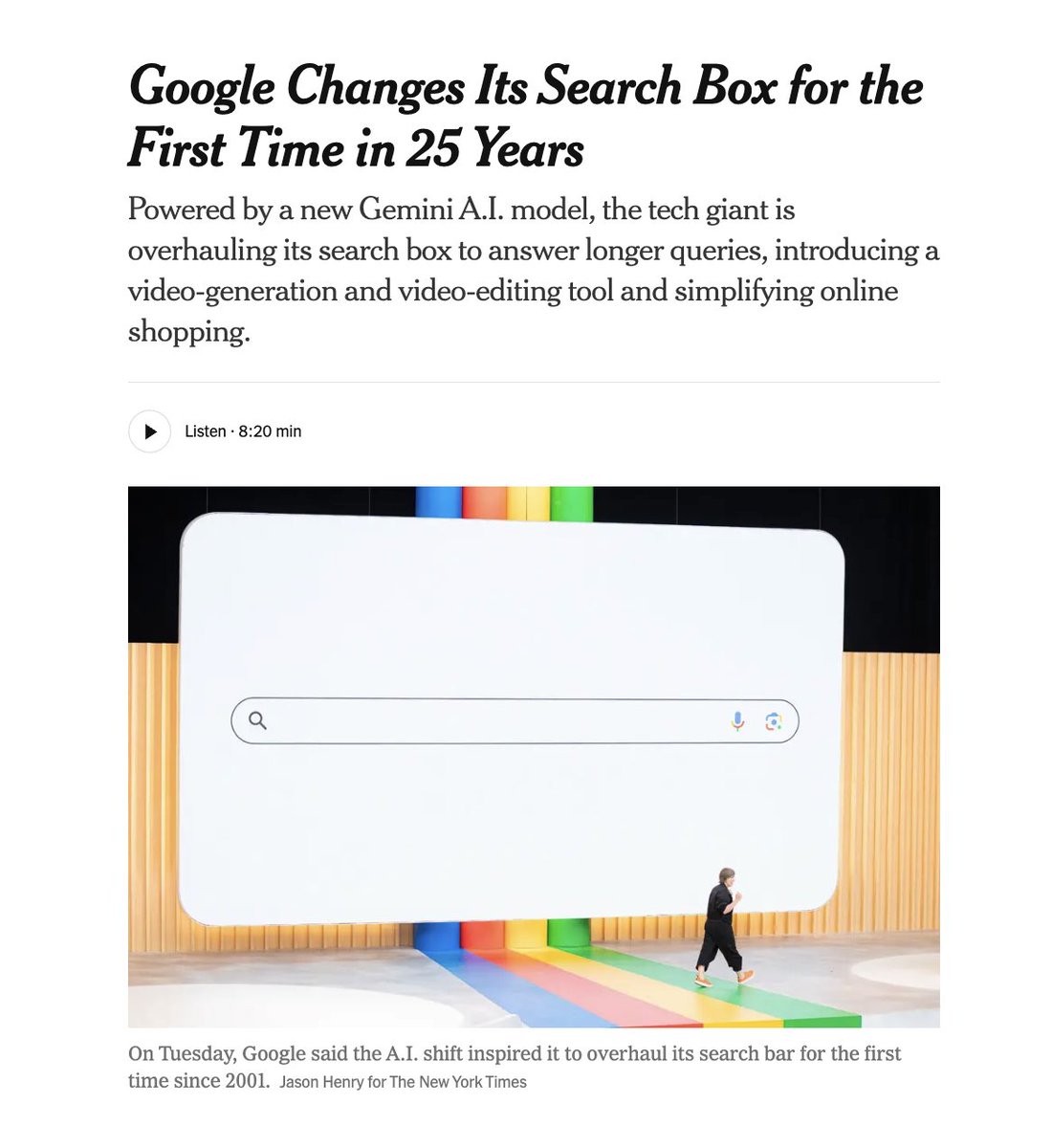
Here's the most important takeaway from Google I/O for us marketers. And it's not the relief that AI Mode isn't becoming the default.
Last month I reported that Google lost ~5% of traffic share in just 10 months — from 35.11% to 30.53% (across ~75k websites in @Ahrefs' panel). And I don't see this trend reversing with the new AI Search they announced. If anything, it's only going to accelerate.
But there's still a big opportunity for us marketers in this new era of AI Search.
When Google's AI Search answers a question, it recommends specific brands, products, and services right in the answer. And that brand visibility has real business value. The brands that get mentioned by AI are the ones that are going to get the customers.
So the real takeaway from Google I/O isn't "phew, we still get our clicks for now."
It's that the game is shifting from counting clicks to tracking how often Google's AI mentions your brand and your products when it matters.
If you aren't measuring that yet, it's about time you start. Because this is where SEO is heading.
…
Friendly reminder:
Every paid @Ahrefs plan comes with a free allowance of tracked prompts in Brand Radar (our AI visibility tool).
8
5
37
5,023
May 20
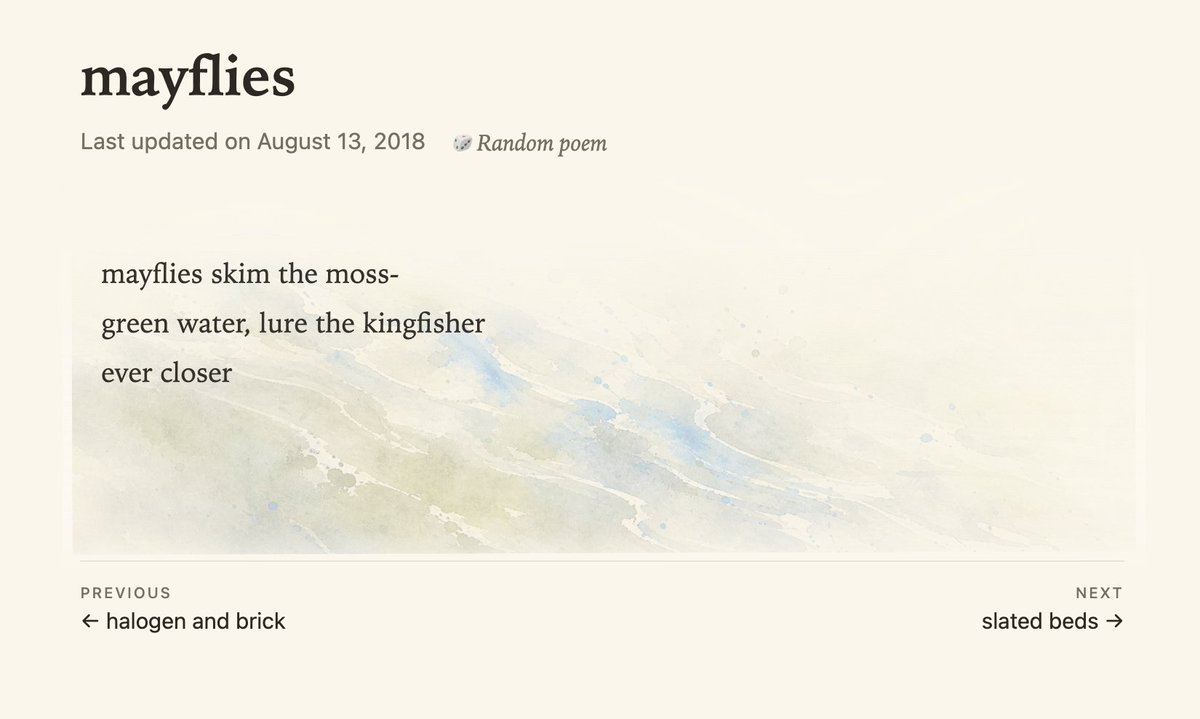
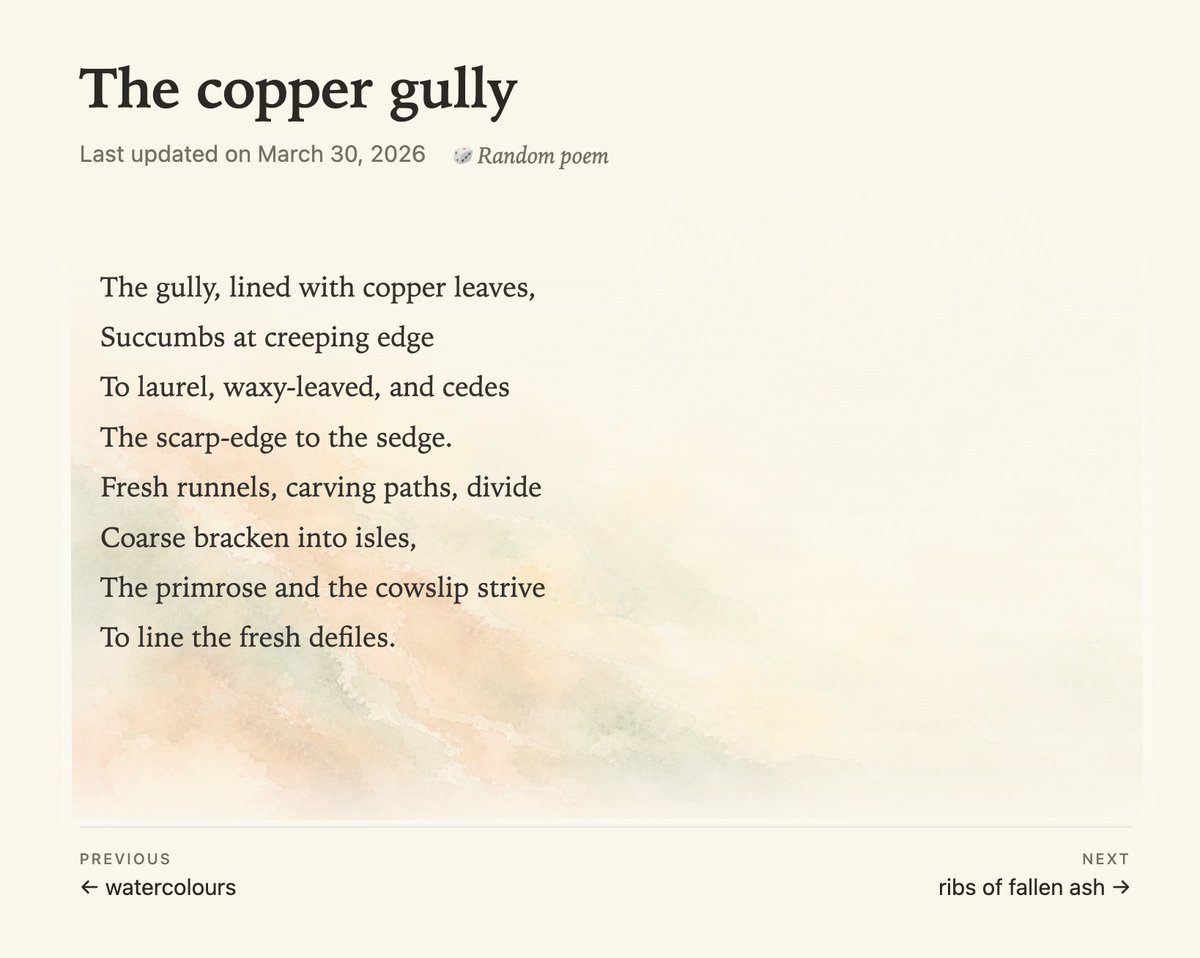
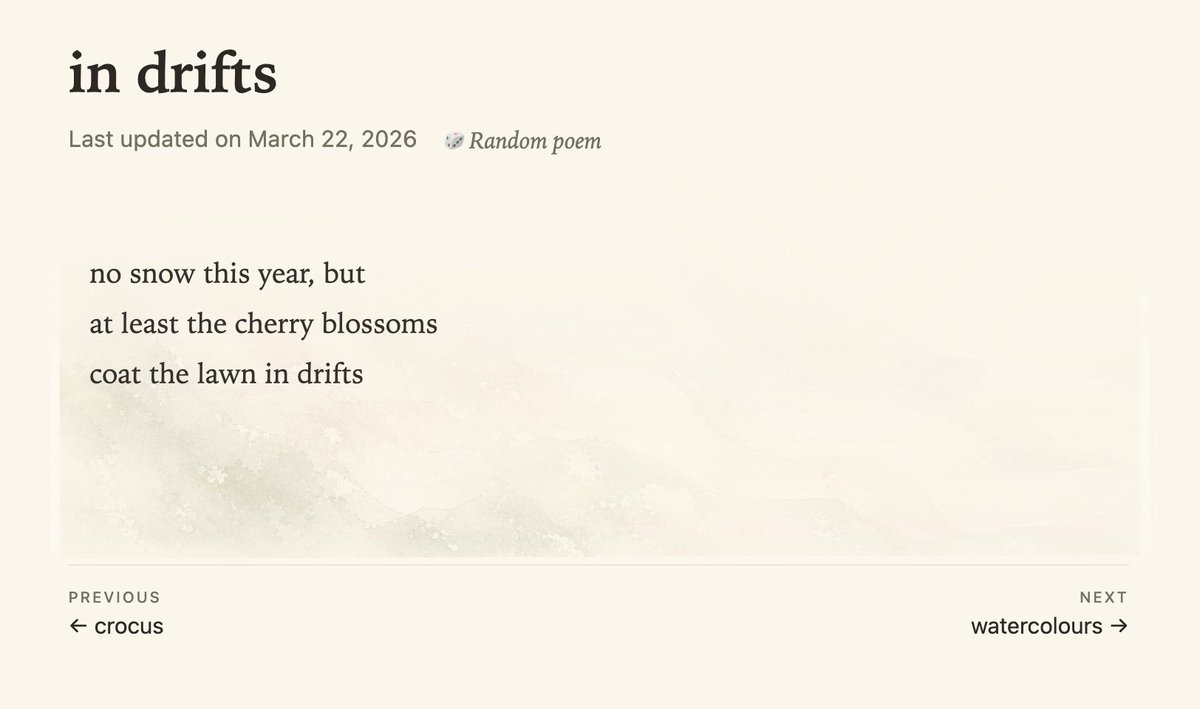
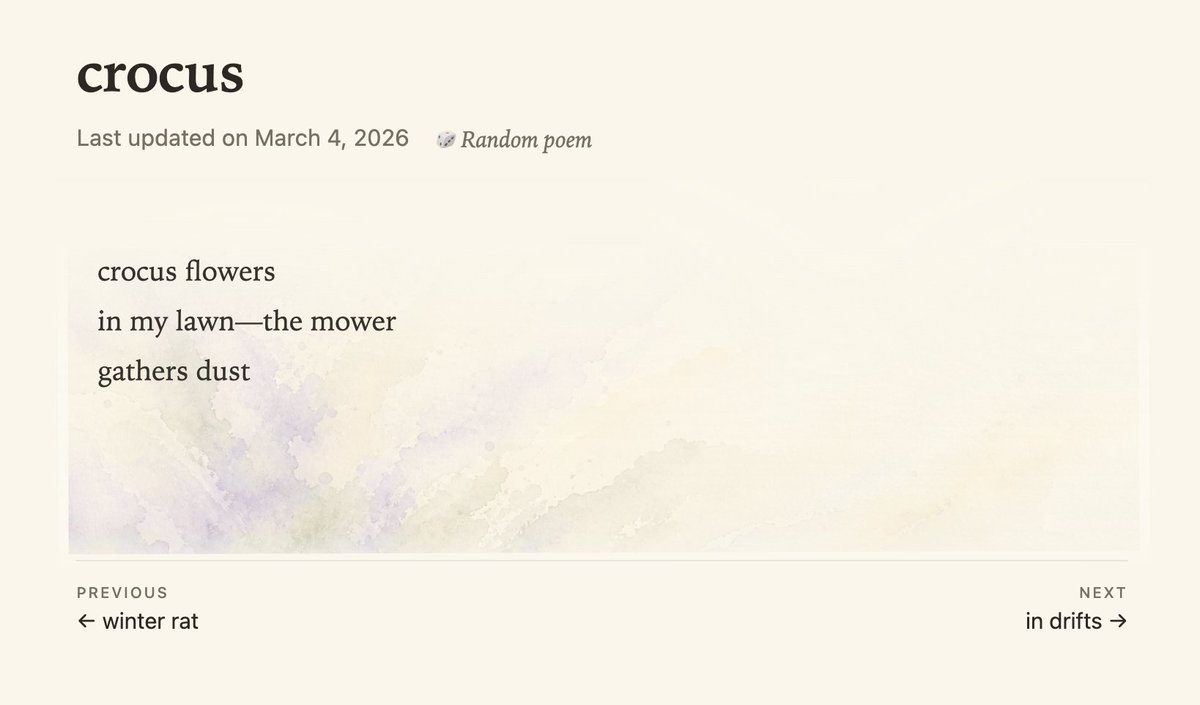
why YES, i did vibe-code unique watercolor backgrounds for all of the haikus i write on my personal website, thank you for noticing
2
7
411
May 20
each week, i automate more parts of my job. if you're a content marketer, you should probably do the same.
i wrote an article with some real-world inspiration from the @ahrefs blog team (and some starter prompts to play with), including:
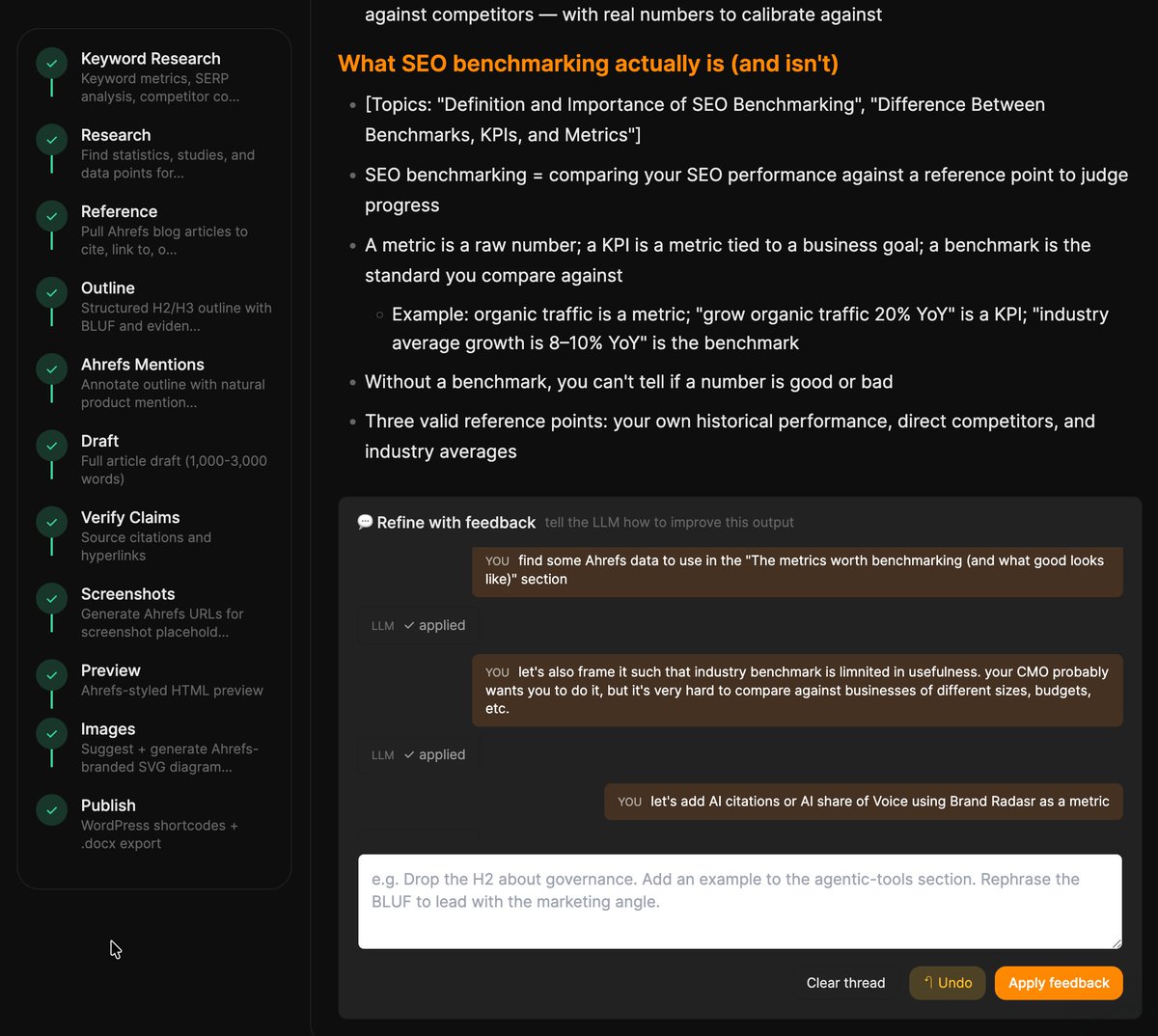
- ✍️ draft SEO articles: an 11-stage pipeline that takes a keyword and returns a full article draft
- 🔄 refresh old posts: analyses old claims, inserts product mentions, and closes topic gaps, with an approve/reject interface for edits
- 📊 monthly performance reporting: auto-generated on the 2nd of each month, pulls GSC Ahrefs Web Analytics into one view with KPIs, trends, and winner/loser tables
- 🧭 topical authority auditing: embeds every blog URL, buckets pages by distance from the site centroid, and shows how core vs off-topic posts actually perform
- 👀 competitor content monitoring: watches competitor sitemaps daily, summarises new posts, and converts saved ones into keyword lists i can target
- 🔗 internal linking: for every new post, finds the best existing posts to link from, identifies the exact paragraph, and drafts the anchor text for you
full article here: ahrefs.com/blog/agent-a-for-…
3
3
38
2,751
May 18
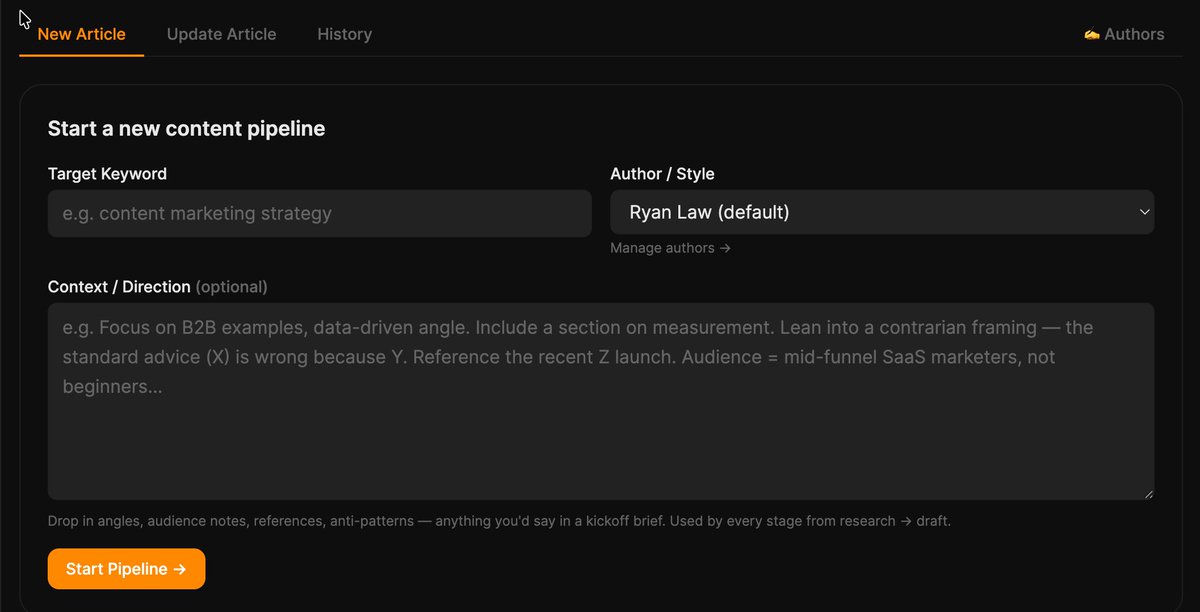
i made some MAJOR upgrades to my content automation system in Agent A last week:
- 🌴 VIBE EDITING MODE: you can now use a chatbox to give the LLM directional feedback on article outlines and drafts, and it'll action your changes for you. no more manual editing or copy-pasting, all vibes, all the time!!!
- ✍️ CUSTOM STYLE GUIDES AUTHOR SELECTION: upload your own style guide and pick an author profile per article, trained on your own writing samples
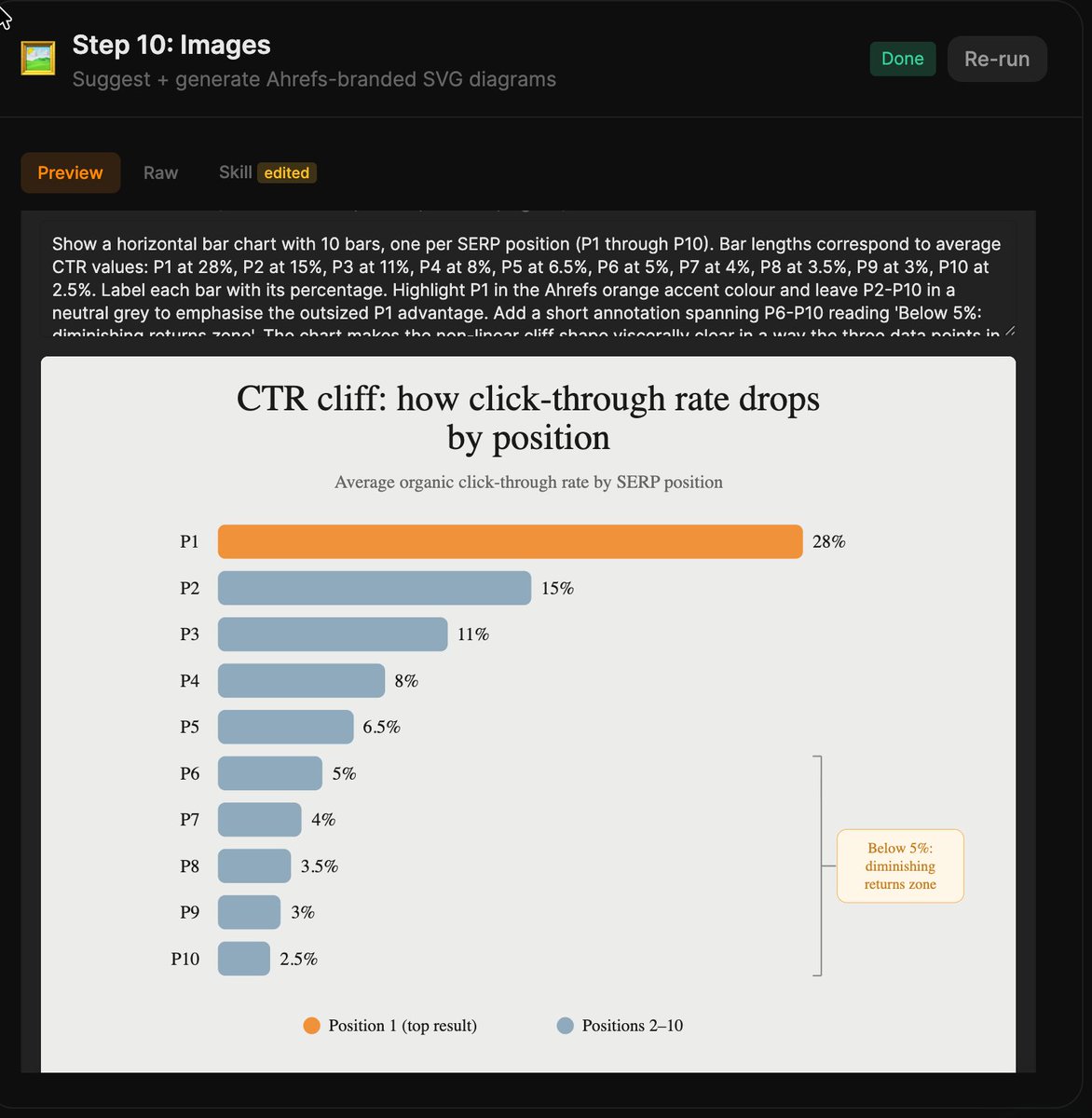
- 🧩 BRANDED FLOW DIAGRAMS: brand new skill and workflow step that suggests and generates flow diagrams in your brand styling (still fine-tuning this, just a proof of concept for now, but it works well with an existing design system to reference)
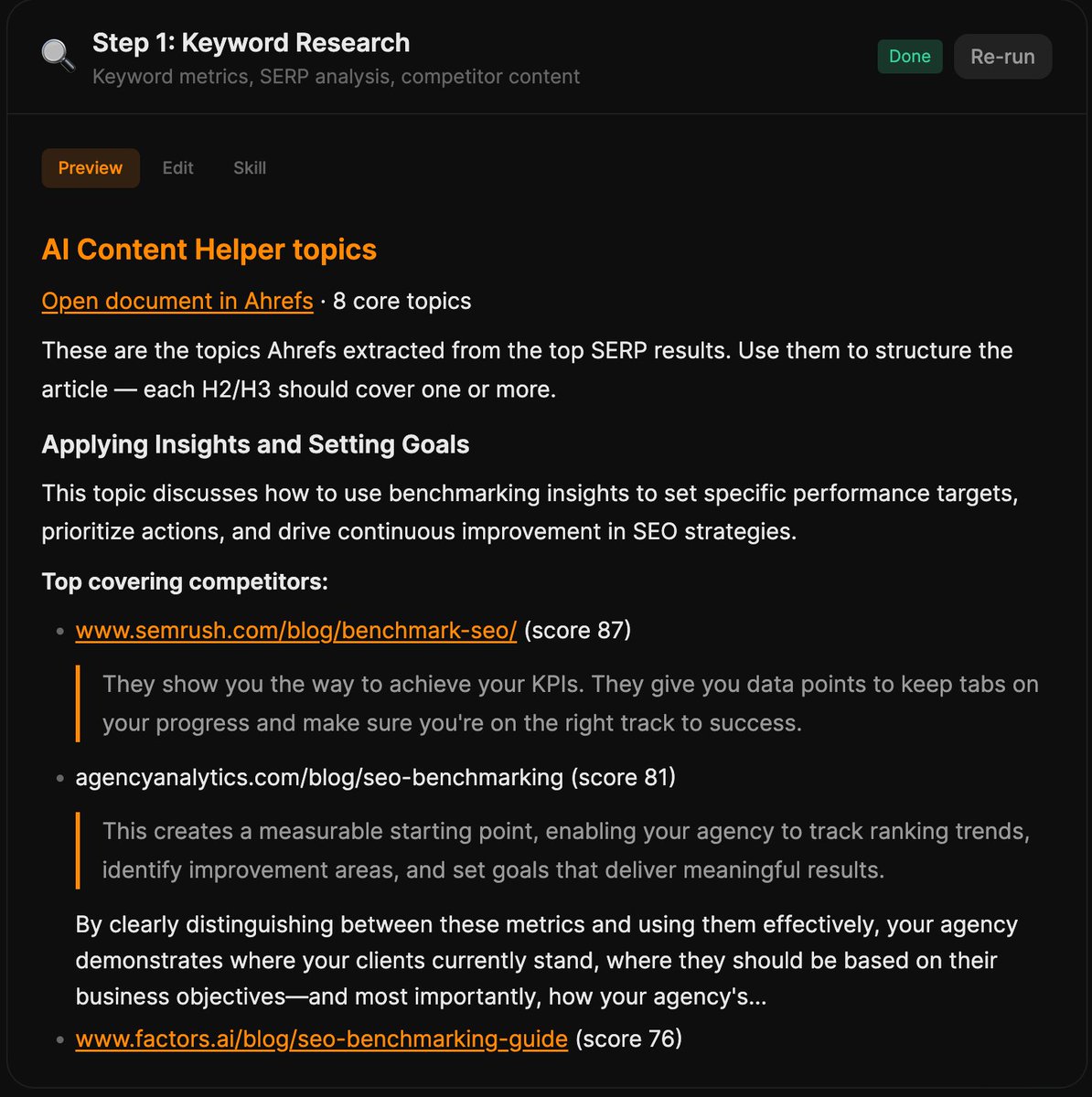
- 🔧 AI CONTENT HELPER INTEGRATION: switched out my manual process for finding content gaps and replaced it with a native AI Content Helper integration. automatically generates a report for your target keyword and feeds the topic recommendations into the outlining stage
should i add this to the application library in Agent A? 🤔
ahrefs.com/agent-a
1
8
1,247
May 13
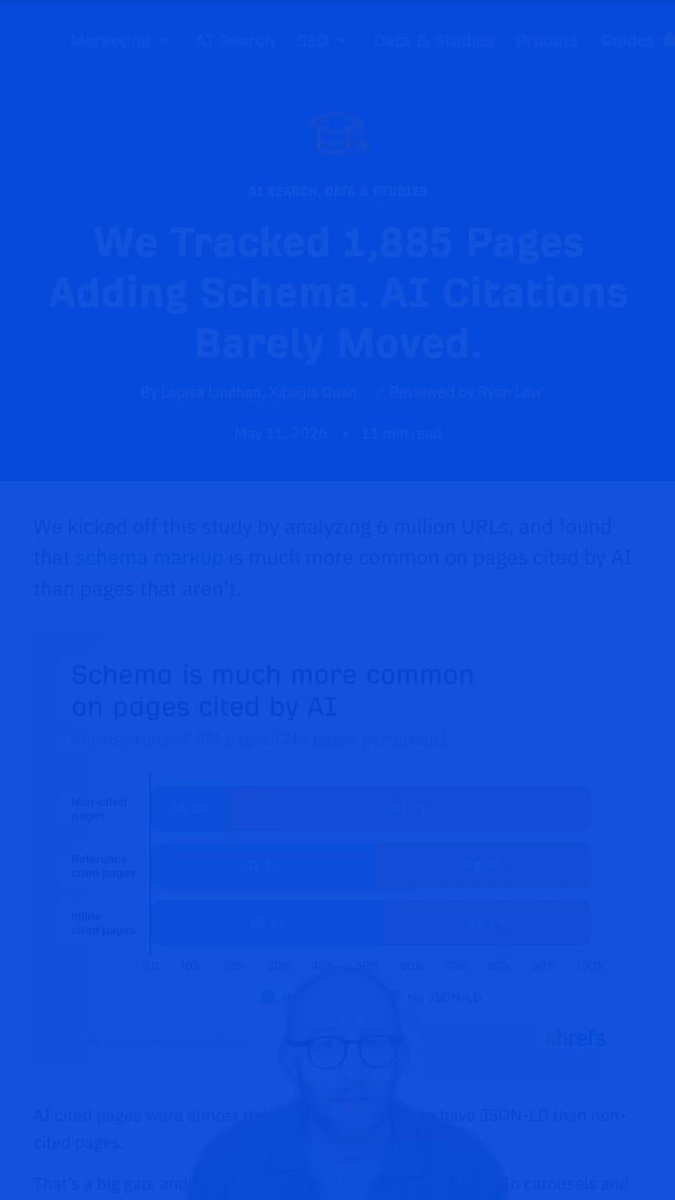
does adding schema markup help your pages get cited in AI search? probably not 👇
we (@ahrefs) analyzed 6M URLs and found schema is more common on heavily cited pages
BUT that's probably correlation, not causation: schema markup is more common on pages with good SEO generally
so we tested 1,885 pages that actually added JSON-LD schema and compared their citations before and after
verdict: across Google AI Overviews, AI Mode, and ChatGPT, we saw *no measurable difference* in citations (or even a tiny negative effect)
schema matters for plenty of reasons in SEO and AI search, but adding schema to your pages is probably not some magic fix for improving your AI citations ✌
8
2
32
2,789
Ryan Law retweeted
Apr 28
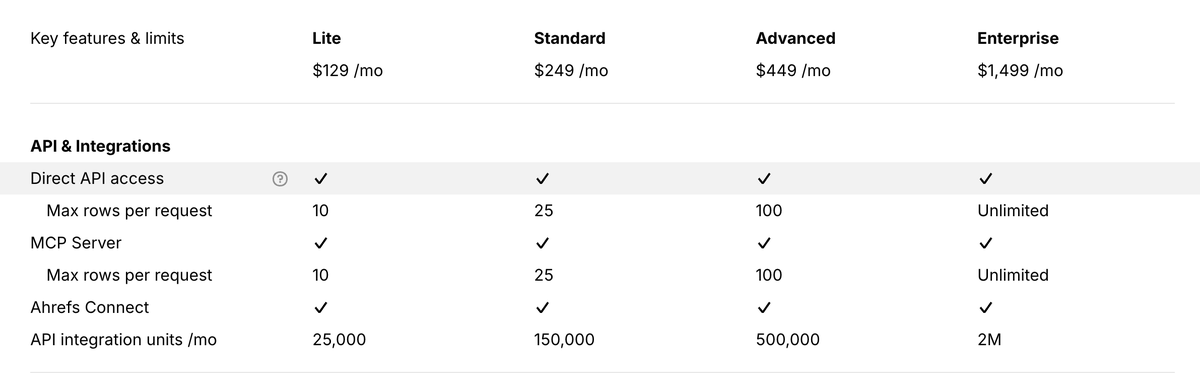
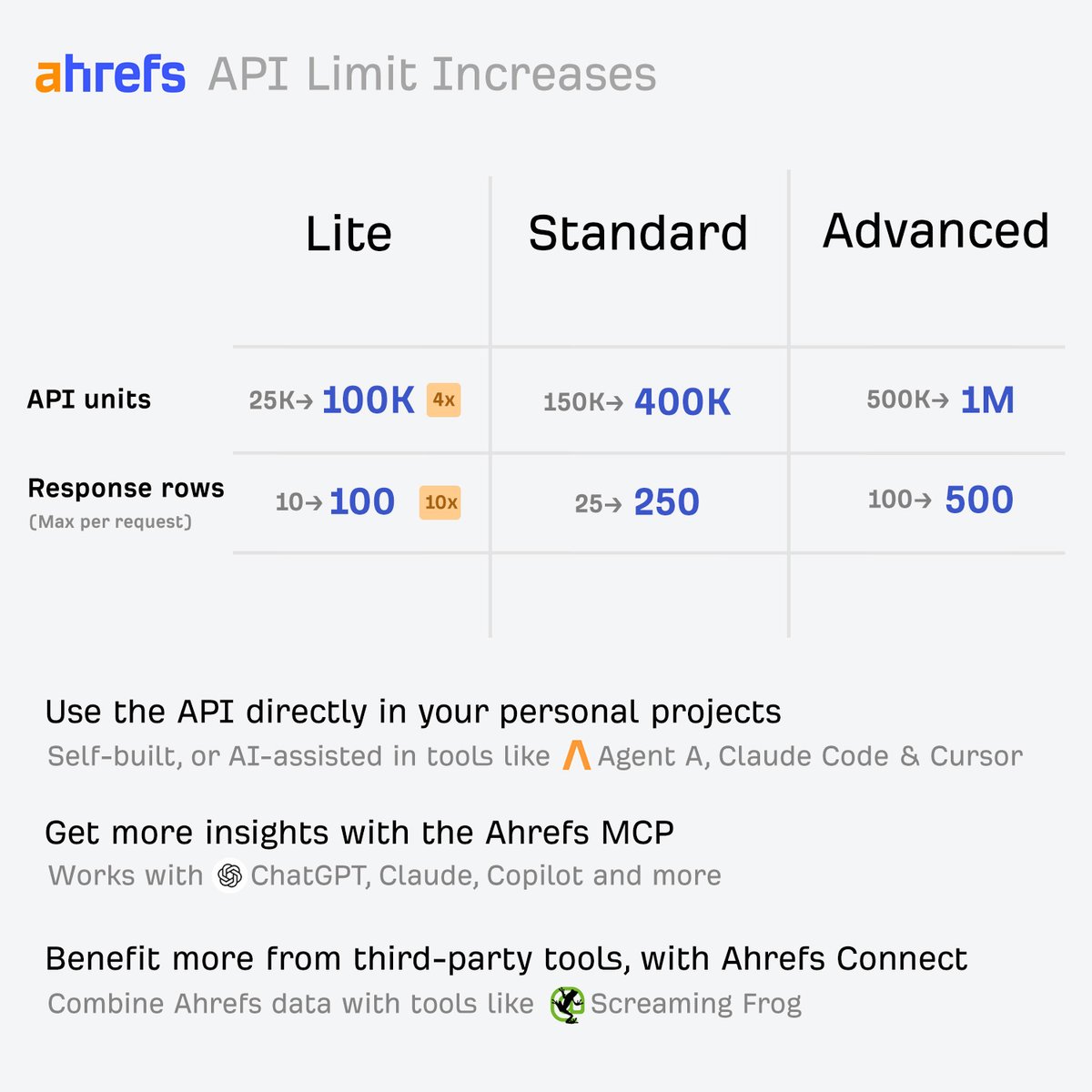
Big news: Ahrefs just massively increased API limits (at no extra cost). 🥳
As Ahrefs grows in this AI era, we're opening up more data to power your marketing.
Increased API limits have been one of the top requests over the past few months, so I'm excited to be sharing this news.
Changes depend on your account level, but as an example, Standard plans now get 2.67x more credits and up to 10x more rows per request.
Over the next few weeks I'm going to be sharing some of the unique tools and workflows Ahrefs powers for my own work.
If you have any cool use cases of your own, I would love to hear those as well. 🙌
45
22
241
51,853
Apr 28
here's the exact process we built to automate content creation using Claude Code, 23 custom skill files, and the .@ahrefs MCP:
ahrefs.com/blog/how-i-do-con…
(the article also includes a YouTube video where i demo the whole system to our ever-discerning CMO, @timsoulo)
hope this is helpful, and spurs a few ideas for automating the drudgery out of your work :)
10
14
145
22,098
Apr 13
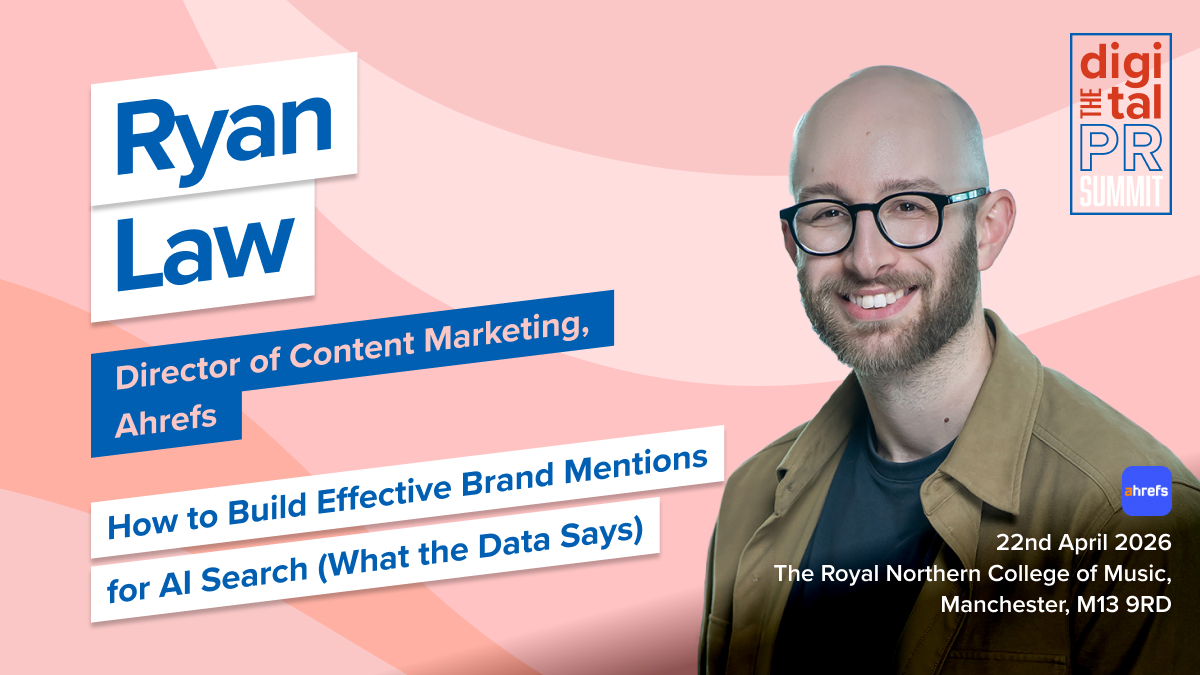
next week! looking forward to speaking at The Digital PR Summit, who else is coming to Manchester? :)
1
4
441
Apr 9
the Ahrefs blog team is having a hackathon next week. here's what i'm building:
- full AI content creation system: from content gap analysis and keyword prioritisation through to internal linking, screenshot generation and formatting for publication
- fully customisable: modify the skills files that power each stage of the workflow. upload samples of your best writing and preferred research sources
- fully editable: kick off the generation process with as much or as little direction as you like, and edit the outputs at every stage of the process to your liking
- real data: connect directly to Ahrefs, GA, GSC and pull real data into the research and writing process
- natural product mentions: reference a built-in product knowledgebase to suggest relevant Ahrefs products and features to incorporate into each article
the goal is a personalised AI copilot, for every person on my team, to suck the drudgery out of writing and creating search content :)
and very soon, you will be able to make this for yourself: ahrefs.com/agent-a
6
4
73
18,968
Apr 6
content leaders! i'm hosting an online panel discussion on AI content in a few weeks: who wants to join me as a panelist?
very relaxed, open discussion about all things AI content:
- your current tools and processes (the nerdier the better),
- the balance between AI-generated and human-created content,
- the risk profile of AI content,
- your plans for the future,
- etc.
you'd be a great fit if you lead a content team at a SaaS company or agency and you've been elbows-deep in generative AI for a while :)
who's interested in joining me? who would you like to hear from?
7
1
9
1,086
Mar 26
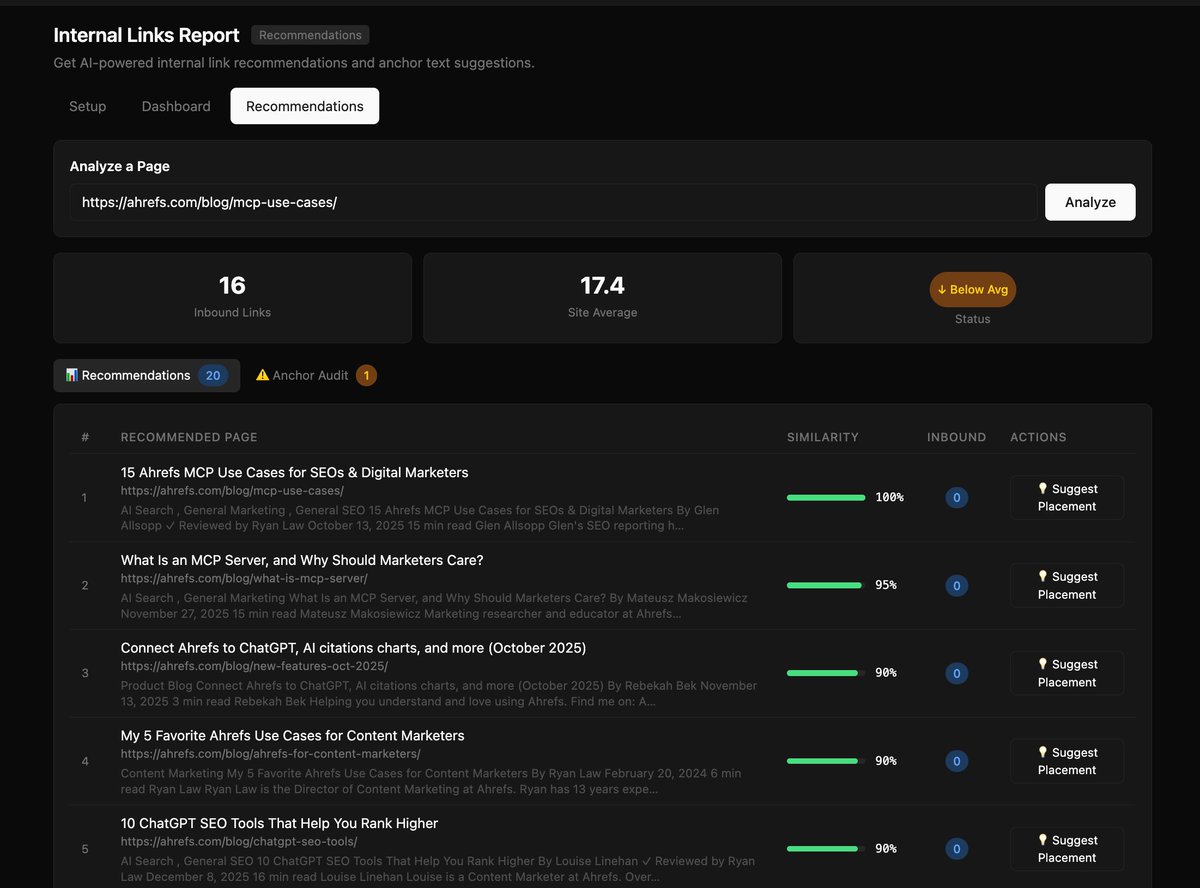
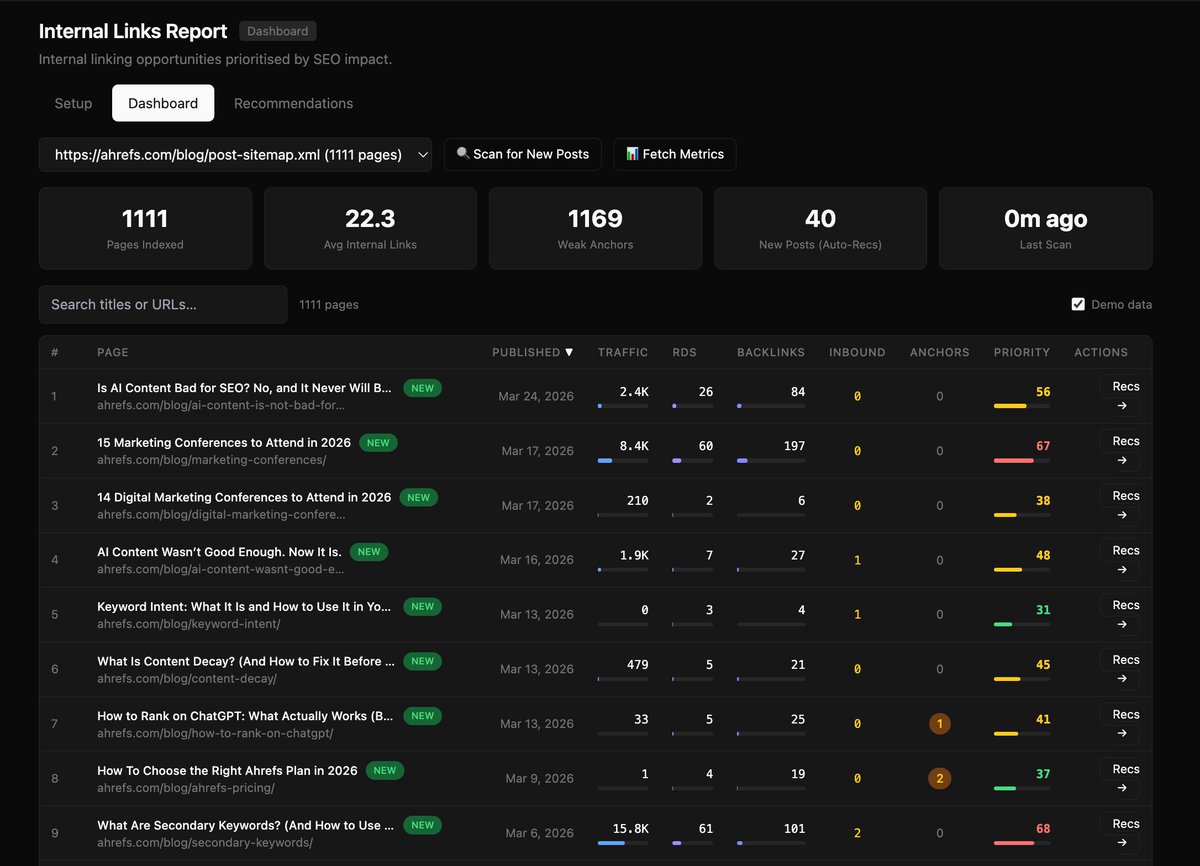
i built ANOTHER new tool: the internal links tool!
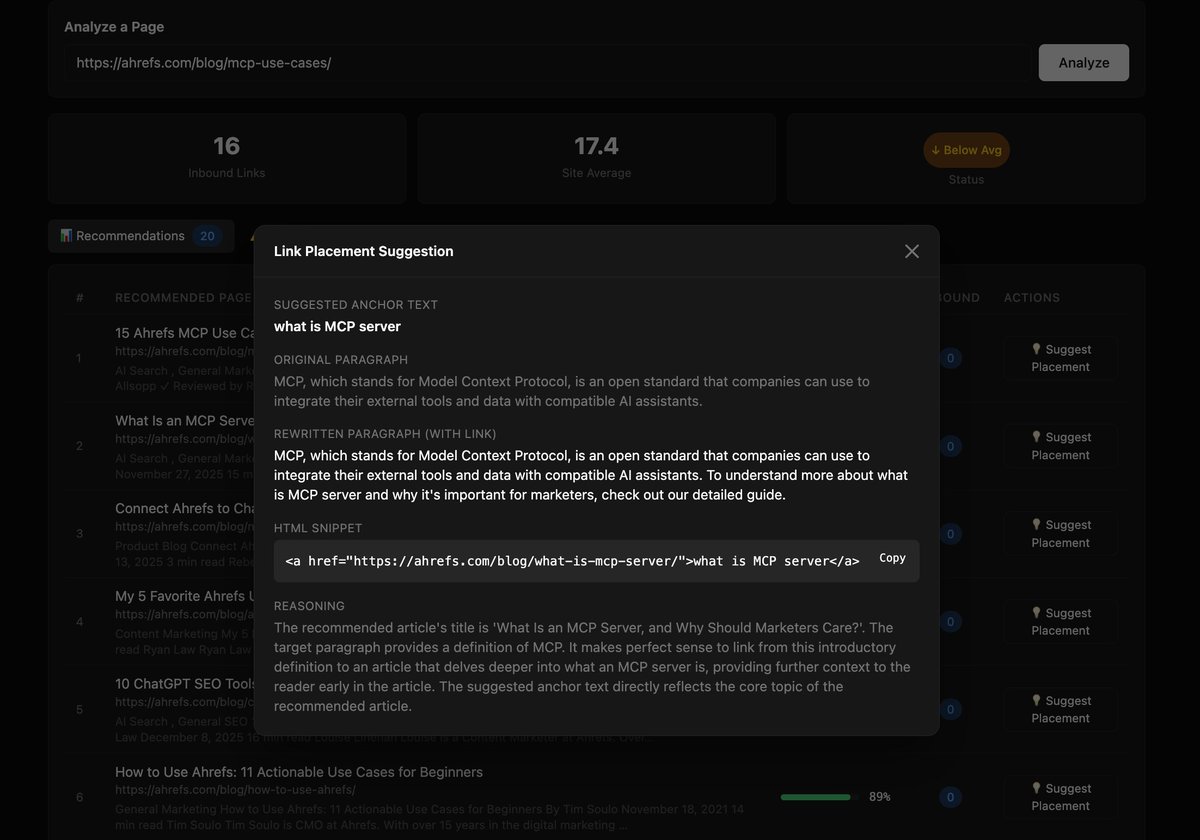
find high-value internal linking opportunities, analyze anchor text distribution, and get AI-powered placement suggestions.
internal linking is one of the most underrated levers in SEO. it distributes authority, helps Google discover pages, and keeps your readers engaged. but as much as i love writing new content, i hate linking back to it from our existing content :')
so i built a tool that turns internal link optimization into a systematic workflow:
→ ingest any XML sitemap and automatically process every page
→ extract content, generate semantic embeddings, and map all existing internal links
→ smart URL filtering strips out /wp-content/, pagination, feeds, and other junk automatically
→ prioritize pages by a composite score: high external authority few internal links = biggest opportunity
→ get top-10 link recommendations for any page, ranked by semantic similarity
→ click "Suggest Placement" and AI finds the best paragraph, writes natural anchor text, and gives you a ready-to-paste HTML snippet
→ anchor text audit catches every "click here" and "read more" across your site, with AI-generated replacements
→ automatic scanning detects newly published posts and generates linking recommendations before you even ask
(pairs perfectly with the content updater i just shared—find what needs updating, then make sure it's properly linked to!)
want to try this for yourself? this 9and much more) awaits you on the other side of this link:
ahrefs.com/agent-a
8
3
68
7,462