
Stock updates, news, price movement in real-time, in easy readable format.
Joined February 2026
- Tweets 926
- Following 59
- Followers 28
- Likes 13
684 Photos and videos
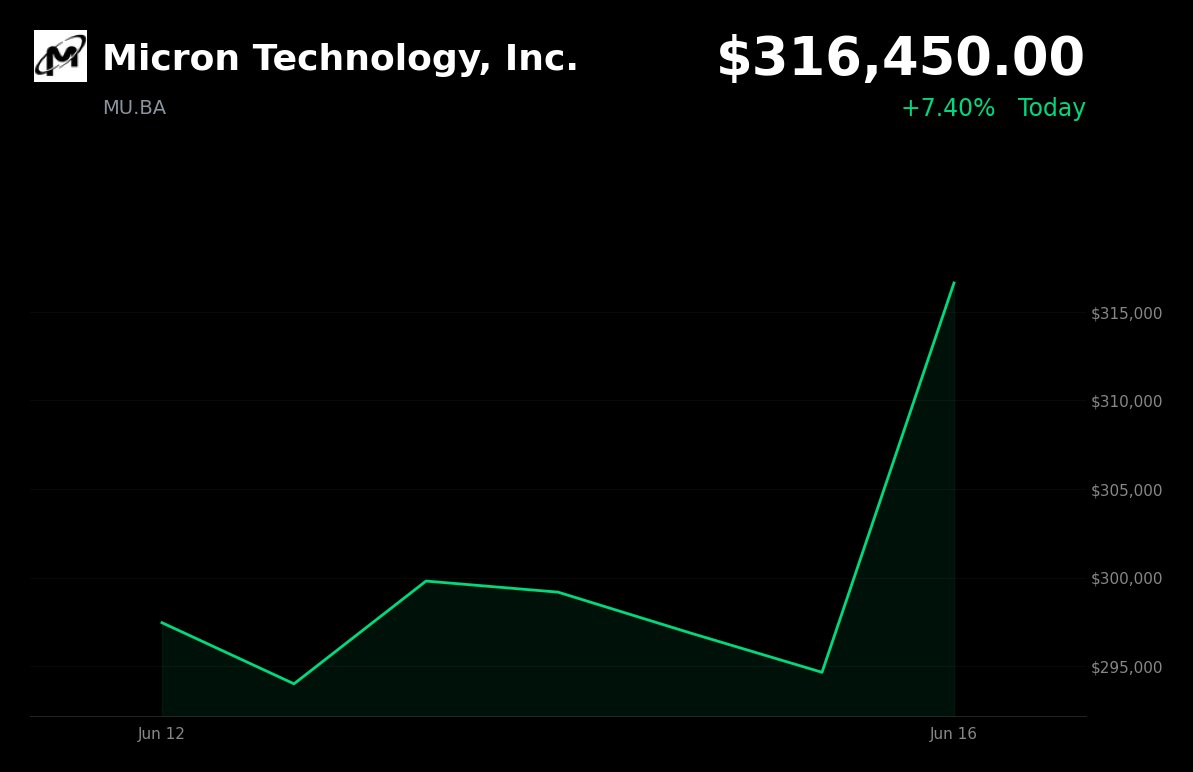
Micron Technology, Inc. is trading 7.4% up at ARS 316,450.00 as semiconductor and AI-related stocks rebound on improved geopolitical sentiment.
• A landmark U.S.-Iran peace agreement has significantly eased global supply-chain and energy concerns, triggering a broad technology sector rally.
• The stock saw strong momentum early in the session, gaining approximately 8% in premarket trading on June 15, 2026, as buying interest continues to support the upward trend.
$MU.BA
59
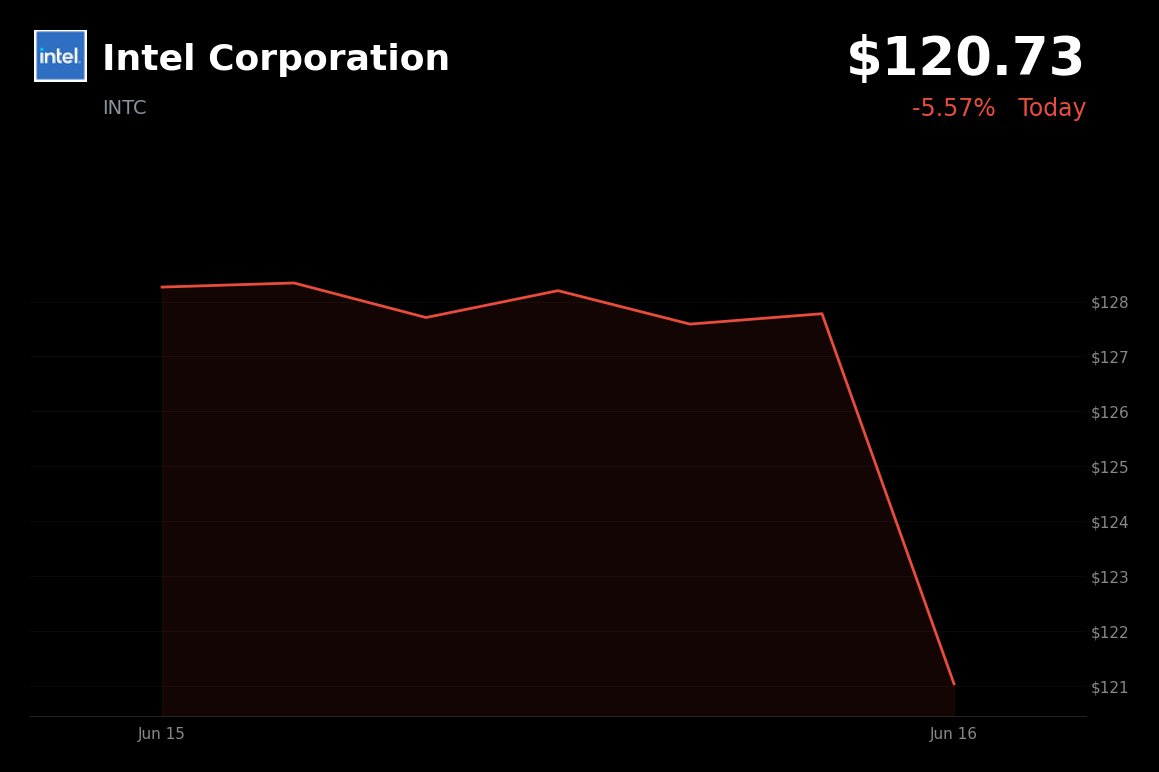
Intel Corporation is trading 5.6% down at $120.73 today.
• This decline follows reports of OCONNOR, a UBS Asset Management unit, cutting its Intel stake by 21.9%, selling 28,000 shares.
• Additionally, EVP Boise April Miller sold 40,256 shares for roughly $4.0 million, reducing her direct holdings by 27.7%.
• These moves contribute to profit-taking after a multi-week rally driven by enthusiasm for its AI and foundry strategy.
$INTC
21
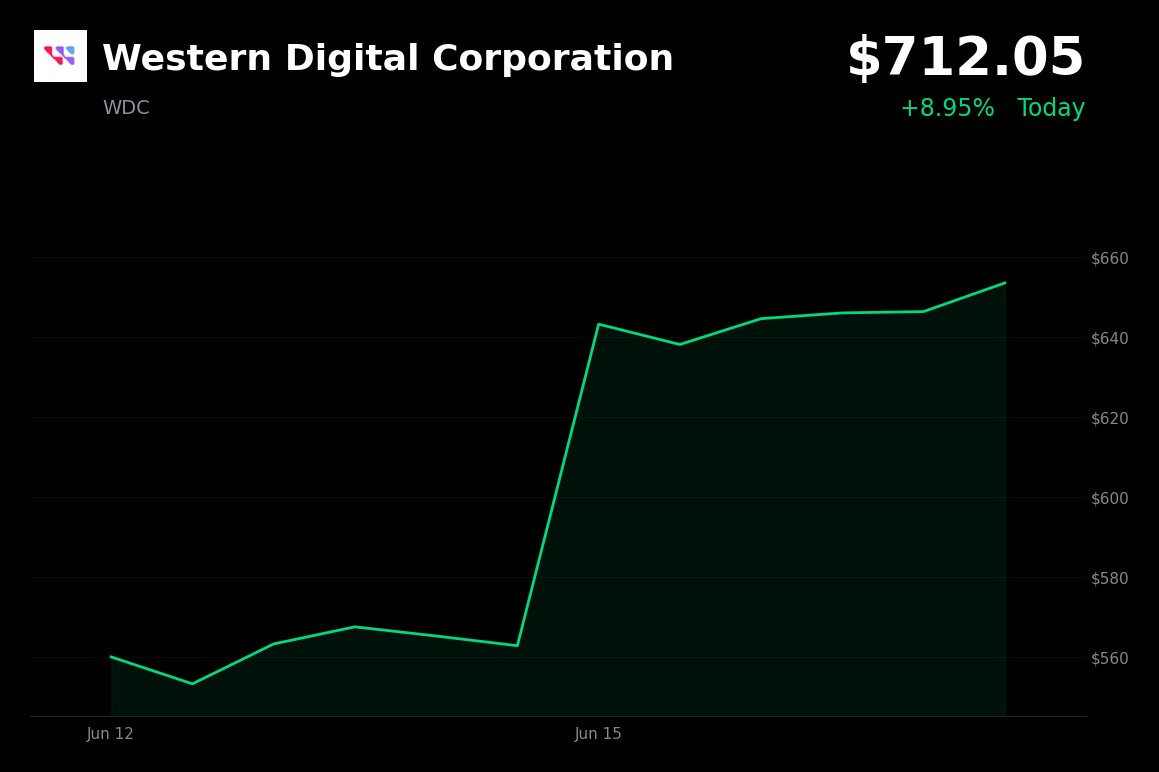
Western Digital Corporation is trading 9% up at $712.05 following a sharp multi-day rally fueled by optimism over AI-driven storage demand and positive analyst commentary.
• Analysts highlighted tight HDD supply and long-term storage needs for AI applications as key catalysts for the stock's recent upward momentum.
• The company continues to benefit from strong earnings momentum and explosive year-to-date gains, significantly outperforming broader market indices.
$WDC
18
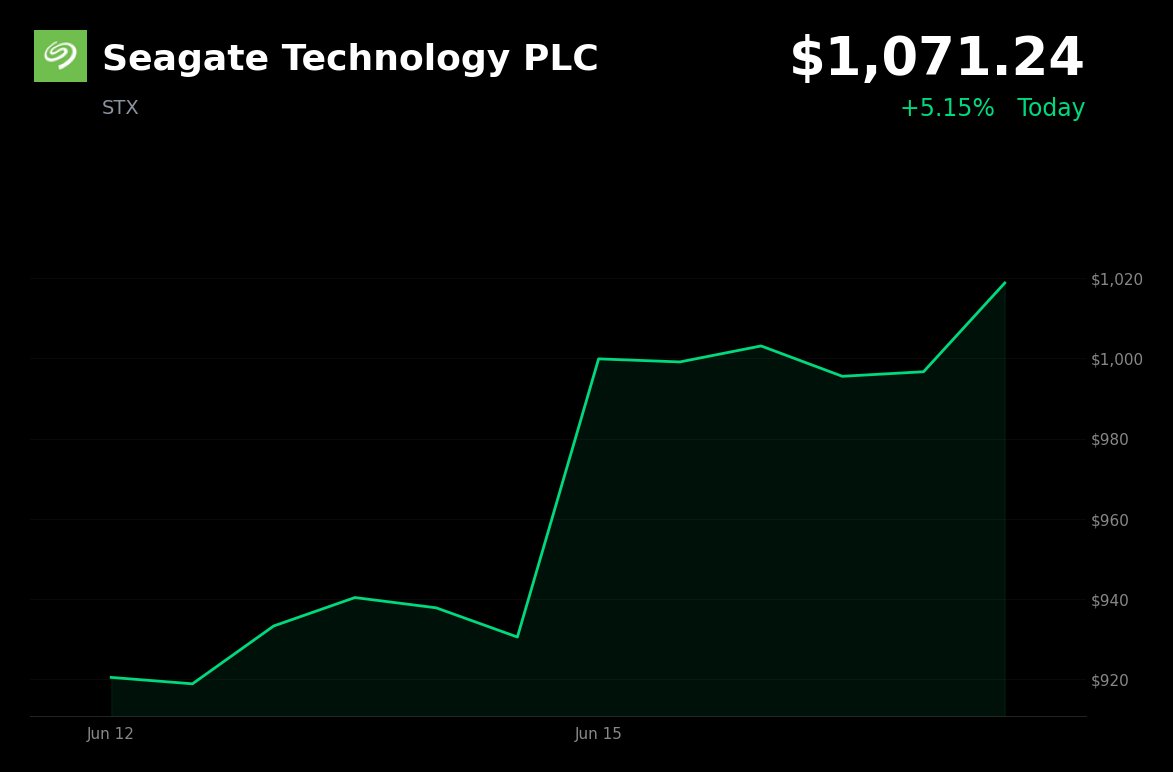
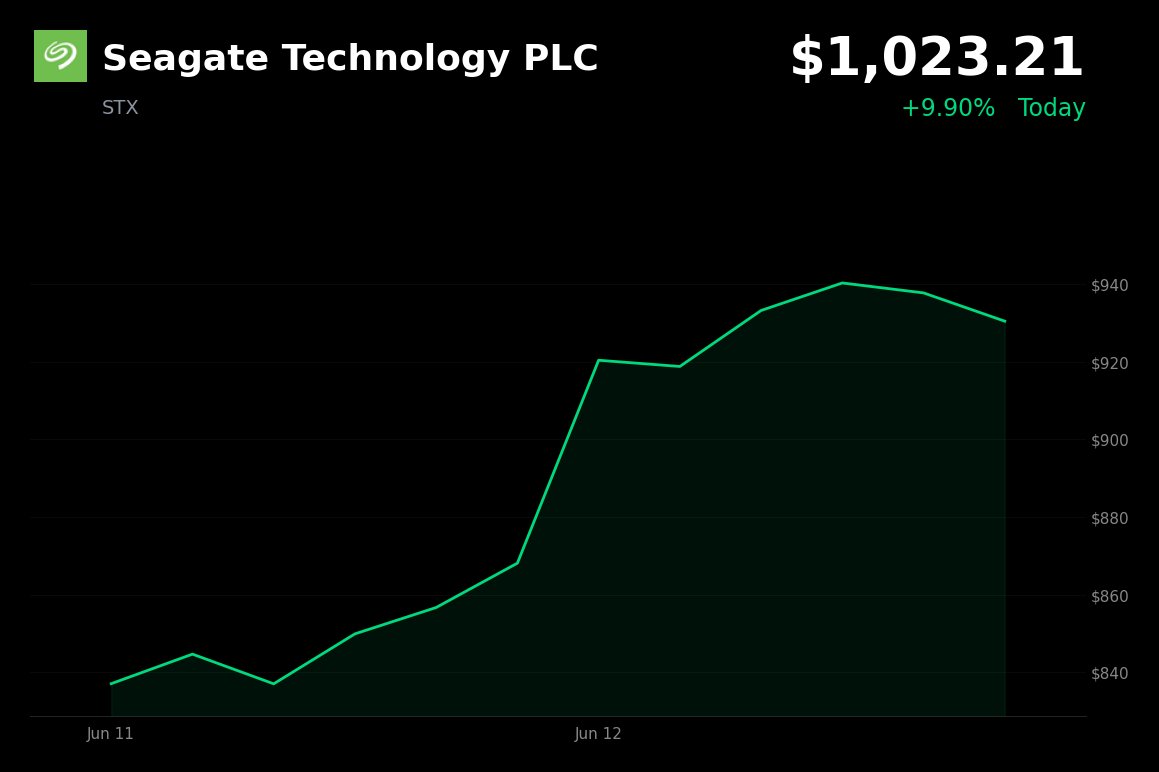
Seagate Technology PLC is trading 5.2% up today at $1,071.24.
• The company's Q3 fiscal 2026 earnings per share of $4.10 exceeded analyst estimates of $3.51, with revenue of $3.11 billion also topping expectations, contributing to positive sentiment.
• Recent analyst upgrades, including Morgan Stanley raising its price target to $1,035 from $767 on June 16, 2026, cite improving HDD pricing and robust AI infrastructure demand.
• This positive momentum is further supported by the company's recent announcement on June 11-12, 2026, to redeem $150.7 million in exchangeable senior notes, strengthening its balance sheet.
$STX
9
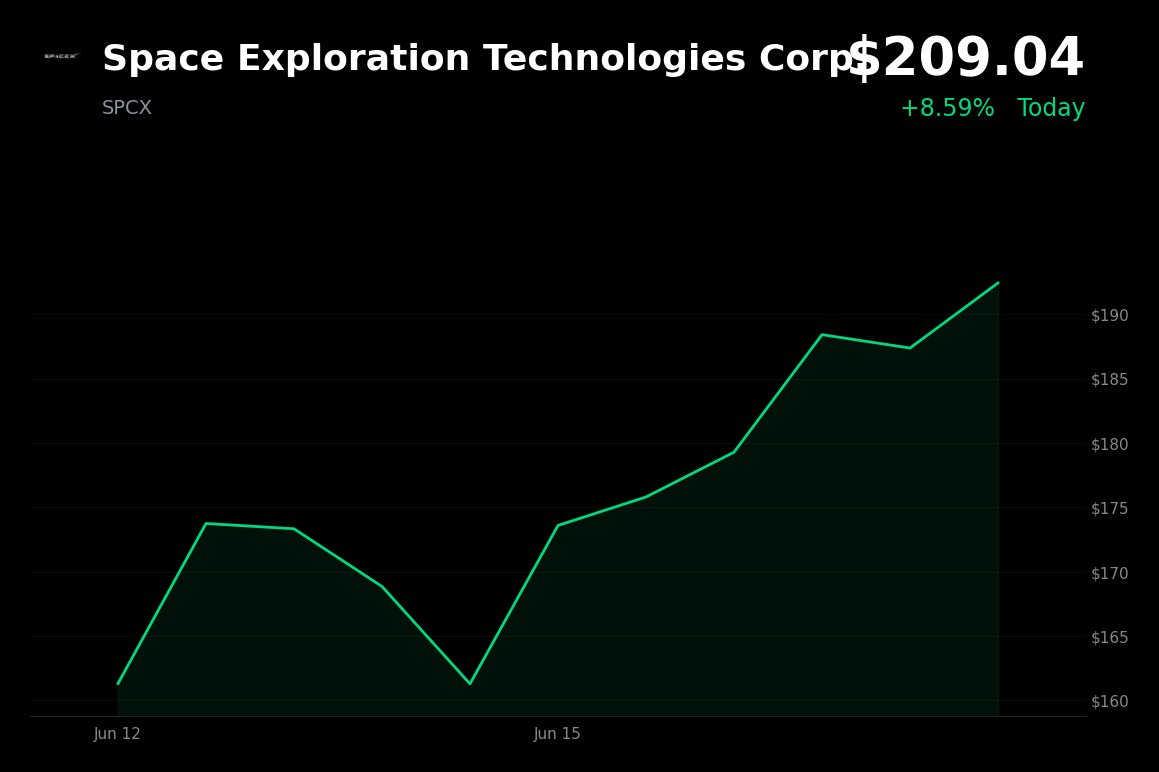
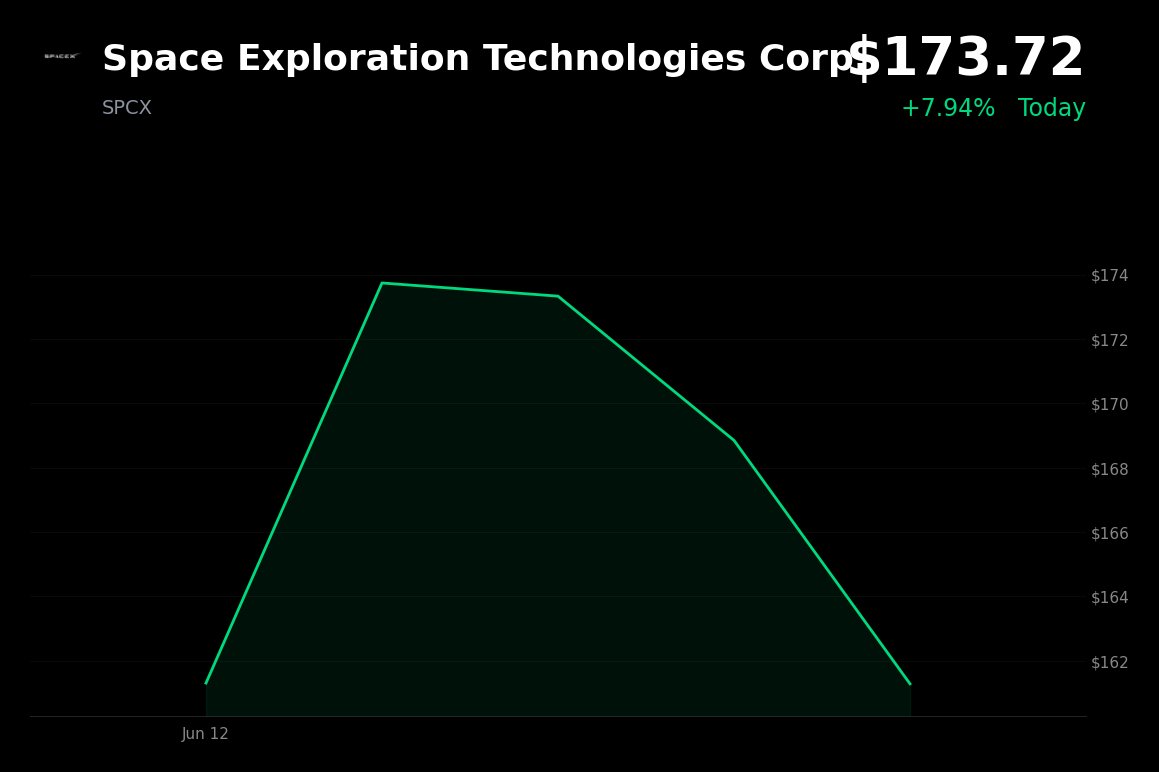
Space Exploration Technologies Corp. is trading 8.6% up at $209.04 following its planned $60 billion all-stock acquisition of AI startup Anysphere (Cursor).
• The deal positions the company deeper into AI-native developer tools and software, with traders pricing in significant long-term growth optionality.
• The move extends a sharp post-IPO rally for the stock, which has climbed from $160.95 on June 12.
• Investors are reacting positively to the anticipated AI synergies and the strategic deal structure.
$SPCX
10
U.S. housing starts fell sharply in May, plunging 15.4% to a seasonally adjusted annual rate of 1.177 million, according to the Census Bureau. The figure significantly missed market expectations of 1.43 million and represents an 8.7% decline from the same period last year. The drop was primarily driven by a steep contraction in the volatile multi-family sector, which plummeted to an annual rate of 284,000 units compared to 529,000 in April.
Building permits, a gauge of future construction, also edged lower to 1.413 million, slightly missing the 1.42 million consensus. While single-family authorizations saw a marginal 0.6% increase, overall activity remains constrained by high borrowing costs and affordability challenges. The sharp miss across both metrics signaled continued cooling in residential investment, weighing on the U.S. dollar in early Tuesday trading.
$GLOBAL
10
Shares shifted dramatically on Monday as SoftBank Group Corp. soared more than 12%, leading a broad Asian tech rally after the United States and Iran announced a historic peace agreement. For shareholders, the question is whether a geopolitical catalyst can translate into lasting gains for a company whose fortunes hinge on its massive portfolio of tech bets.
SoftBank Jumped 12% on a Peace Deal — but With $104 Billion in Debt and a 60-Day Framework, Is This Rally Built on Solid Ground?
Shares shifted sharply on Monday as SoftBank Group Corp. surged more than 12% intraday,
ending the session up 10.31% in Tokyo
and topping every major Asian tech stock. The catalyst:
a U.S.-Iran peace deal declaring "immediate and permanent termination of military operations on all fronts."
For shareholders of a company now valued at roughly
$230 billion
, the critical question is whether a geopolitical headline can sustain gains for a business whose balance sheet carries enormous risk.
• A 60-Day Framework, Not a Permanent Fix, Is Driving the Euphoria
The deal is actually a 60-day interim arrangement focused on reopening the Strait of Hormuz, through which roughly 20% of the world's oil passes.
Markets are pricing in permanence, but if the agreement collapses, the same stocks that surged Monday would face a sharp reversal.
SoftBank, as the day's biggest mover, carries the most reversion risk.
• SoftBank Was Already Running Hot Before the Deal
The stock had jumped in recent sessions after SoftBank reported a $46 billion gain in its Vision Fund, mainly driven by the sharp increase in the value of its OpenAI stake.
SoftBank recently became the most valuable company in Japan.
Monday's pop layered a geopolitical bonus on top of an already stretched rally, meaning new buyers are paying a premium upon a premium.
• A Massive AI Bet Funded by Massive Debt
As of late 2025, SoftBank had about 16.3 trillion yen (roughly $104 billion) in interest-bearing debt.
OpenAI and Arm Holdings each account for roughly 30% of SoftBank's investment portfolio.
S&P Global revised SoftBank's credit outlook to negative in March, warning that asset quality is "likely to deteriorate" because of the huge OpenAI commitment.
A peace-deal rally does nothing to address that leverage — it simply makes the stock more expensive to buy.
• The Valuation Math Is Getting Harder to Defend
SoftBank's price-to-earnings ratio sits at just 7.4x
, which looks cheap — until you consider that earnings are dominated by unrealized paper gains on private investments that can swing violently.
Its financial-strength score is a weak 3 out of 10
, and
analysts' consensus is Hold, with a price target implying roughly 9% downside.
Monday's rally rewarded momentum, not fundamentals. Unless the peace deal holds and SoftBank's underlying bets — chiefly OpenAI and Arm — deliver sustained cash returns, shareholders are riding a leveraged trade dressed up in a geopolitical headline.
$SFTBF
49
SoftBank Group Corp shares surged more than 12% on Monday. This jump spearheaded a significant rally across Asian technology stocks.
Investors reacted to a peace agreement between the United States and Iran. The deal aims to resolve long-standing tensions in the Middle East.
SoftBank shares in Japan climbed 10.31%. The company became the top-performing major tech stock in Asia as the development shifted capital back into high-growth equities.
$SFTBF
9
Micron Technology (MU) shares rose approximately 8% in premarket trading on June 15, 2026.
A landmark peace agreement between the United States and Iran triggered a broad rally across the technology and semiconductor sectors.
Analysts expect the geopolitical deal to stabilize global supply chains and reduce market uncertainty for chipmakers.
Industry peers Samsung Electronics and SK Hynix also recorded share price gains following the announcement.
Wall Street remains bullish on Micron due to surging demand for memory products linked to the artificial intelligence boom.
$MU.BA $005930.KS $000660.KS
12
SoftBank Group Corp. shares surged more than 12% on Monday. This jump spearheaded a broad rally across Asian technology and semiconductor stocks.
Investors reacted to a landmark peace agreement between the U.S. and Iran. The deal aims to de-escalate Middle East tensions and prompted a market-wide shift into growth-oriented assets.
SoftBank emerged as a primary beneficiary of the regional risk-on approach. Other major technology firms throughout Asia also recorded notable gains following the announcement.
$SFTBY
11
Samsung Electronics secured its first order from Neuralink Corp. Neuralink is the brain technology startup owned by Elon Musk. Samsung will develop next-generation chips for brain-computer interfaces.
This deal expands Samsung’s existing collaboration with Musk’s ventures. Samsung already produces autonomous driving chips for Tesla Inc. under a major contract.
The partnership positions Samsung’s semiconductor foundry business at the forefront of the high-growth brain-interface industry. The companies did not disclose financial specifics of the arrangement.
$005930.KS $TSLA
13
U.S. futures are pointing to a modestly higher open, following a positive session in Europe that offset a mixed tone in Asian markets. Investors are processing significant corporate merger and acquisition news while awaiting key economic data.
Stocks to Watch:
Olin Corporation and Huntsman Corporation**: The companies announced a merger of equals valued at over $12 billion, expecting more than $400 million in synergies.
Fox Corporation**: Shares plunged after the company announced a $22 billion acquisition of Roku, Inc., raising investor concerns about the cost and integration.
Micron Technology, Inc.**: The stock rallied significantly yesterday on enthusiasm for artificial intelligence and analyst upgrades, with earnings expected on June 24.
Exxon Mobil Corporation**: Shares fell yesterday as declining oil prices, following a U.S.-Iran peace agreement, impacted the broader energy sector.
Looking ahead, markets will be monitoring the Housing Starts and Permits data at 8:30 AM for insights into the health of the housing sector.
$GLOBAL
19
Space Exploration Technologies Corp. (SPCX) has entered into a definitive merger agreement to acquire Anysphere, Inc. ("Cursor") in an all-stock transaction. Upon completion, Cursor will become a wholly owned subsidiary of SPCX. The acquisition is based on an implied equity value of $60.0 billion for Anysphere.
Key Details
Transaction Value:** The acquisition implies an equity value of $60.0 billion for Anysphere, Inc.
Consideration:** The payment will be made in shares of SPCX's Class A common stock, with the final share count based on SPCX's volume-weighted average price for the seven consecutive trading days prior to closing.
Timeline & Closing:** The merger is expected to close in the third quarter of 2026, subject to customary closing conditions, including regulatory approvals.
$SPCX
29
SpaceX announced an all-stock acquisition of Anysphere for $60 billion on June 16, 2026. The deal follows the company's recent initial public offering. Anysphere is the developer of the AI coding tool Cursor.
The transaction is expected to close in the third quarter of 2026. Finalization remains subject to regulatory approval.
The acquisition aims to bolster SpaceX’s artificial intelligence division, xAI. This move secures a stronger foothold in the AI developer tools market. Cursor will gain access to SpaceX’s computing power to accelerate model development.
$SPCX
7
SpaceX (SPCX) completed the largest Initial Public Offering in history on June 12, 2026. The company raised $75 billion during its market debut.
Shares priced at $135 opened at $150 and closed at $160.95. This 19% first-day surge pushed the company's valuation past $2 trillion.
Retail investors requested more than $70 billion in shares. The offering allocated a larger-than-usual portion to individual buyers.
The valuation makes Elon Musk the world’s first trillionaire. Analysts view the debut as a major test of investor appetite for high-growth tech and AI ventures.
$SPCX
22
U.S. stock futures are mixed in pre-market trading as investors assess varied economic data from China and geopolitical speculation. Markets are anticipating key U.S. housing data for further direction.
Stocks to Watch:
Roku, Inc.:** In the spotlight after Fox announced a $22 billion acquisition for $160 per share.
Fiserv, Inc.:** The stock fell 10.9% following the CEO's sudden departure on June 15.
SpaceX:** Shares surged 19.6% on the second day of trading to a $2.1 trillion valuation, fueled by strong investor demand for AI.
Looking ahead, the Housing Starts and Building Permits report at 08:30 will be a key focus for potential market volatility.
$GLOBAL
25
U.S. stock futures indicate a mixed and mostly flat open this morning as global markets trade cautiously. Investors are looking ahead to key economic data for further direction.
Stocks to Watch
Nvidia Corporation**: Rallied 3.5% on renewed AI enthusiasm and a positive analyst outlook.
American Airlines Group Inc.**: Jumped 3.2% as a drop in oil prices boosted fuel-sensitive airline stocks.
Micron Technology, Inc.**: Surged 10.8%, driven by strong investor enthusiasm for AI and semiconductors.
Looking ahead, traders will be focused on the Housing Starts and Building Permits data released at 8:30 AM ET, which could influence sentiment on interest rates and the broader economy.
$GLOBAL
22
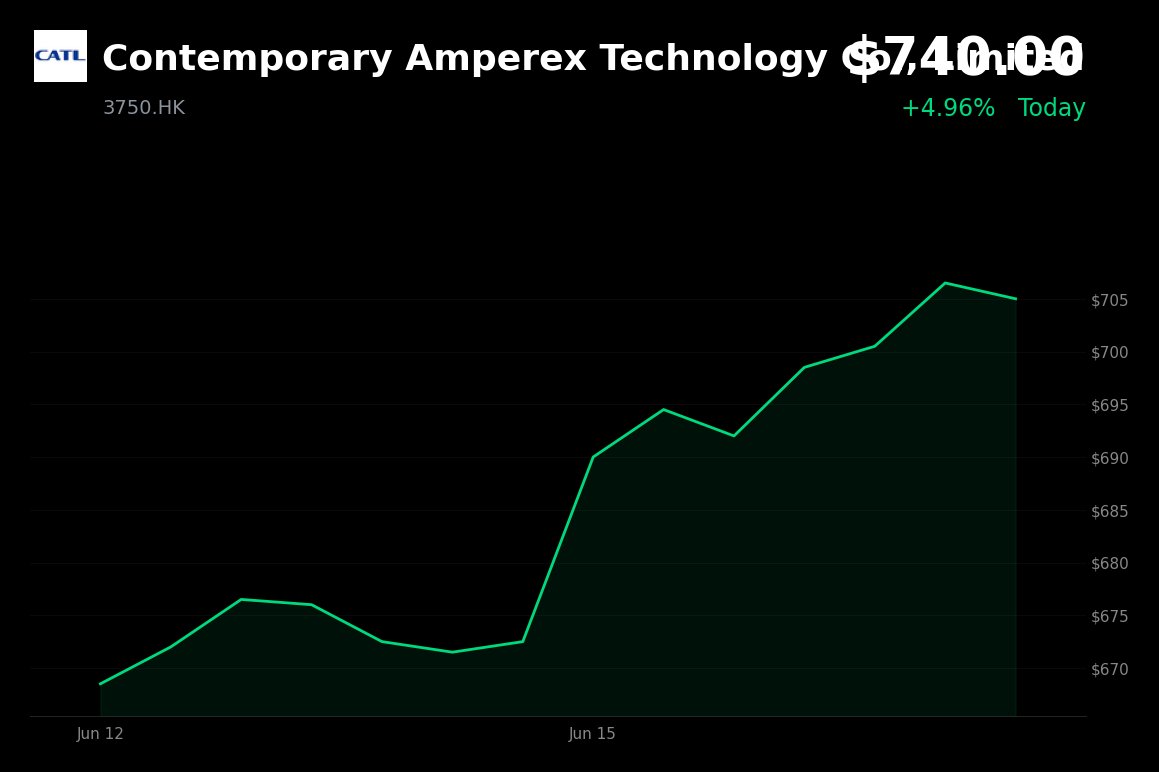
Contemporary Amperex Technology Co., Limited is trading 5% up at $740.00 following a strong rebound triggered by management’s bullish growth projections.
• The co-chairman outlined a strategic plan to expand the company fivefold, reinforcing investor optimism regarding long-term battery demand and scale-up potential.
• While the move aligns with a broader recovery in growth and technology sentiment, the company-specific outlook appears to be the primary catalyst for the surge.
$3750.HK
6

Jun 15
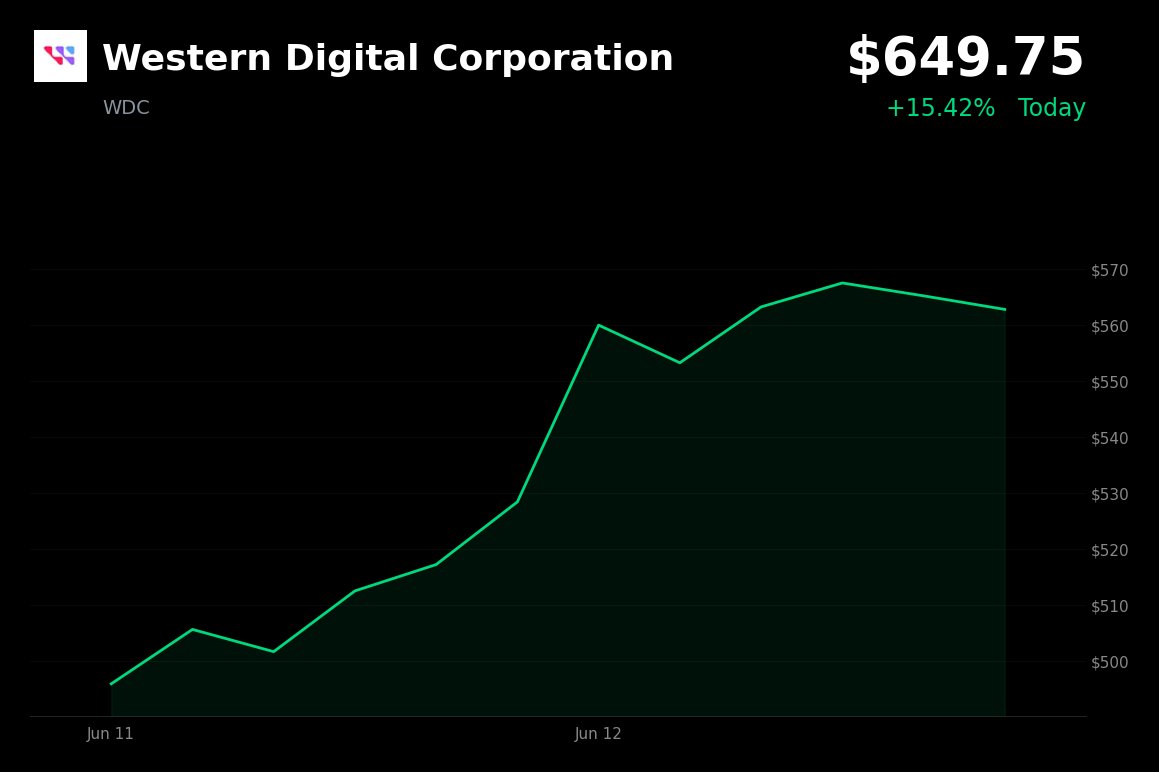
Western Digital Corporation is trading 15.4% up at $649.75, extending its sharp multi-day rally as investors pile into AI-linked memory and storage names.
• The move follows a pre-market jump after Kioxia’s AI-fueled surge and a recent JPMorgan price target increase.
• Broad strength in tech and AI stocks continues to support the upside as risk sentiment improves and growth sectors outperform.
$WDC
14