
Founder / CEO / Crusher of Soulcrushers. I help leaders be more successful at work, by making that work more enjoyable.
Joined June 2009
- Tweets 7,780
- Following 291
- Followers 9,318
- Likes 4,012
289 Photos and videos
Pinned Tweet

21 Oct 2019
I can’t emphasize this enough. A well-rounded diet is key. If you’re only eating clients, your body probably isn’t getting enough fiber or folic acid.
11
142
621
Tim Leake retweeted

23 Apr 2025
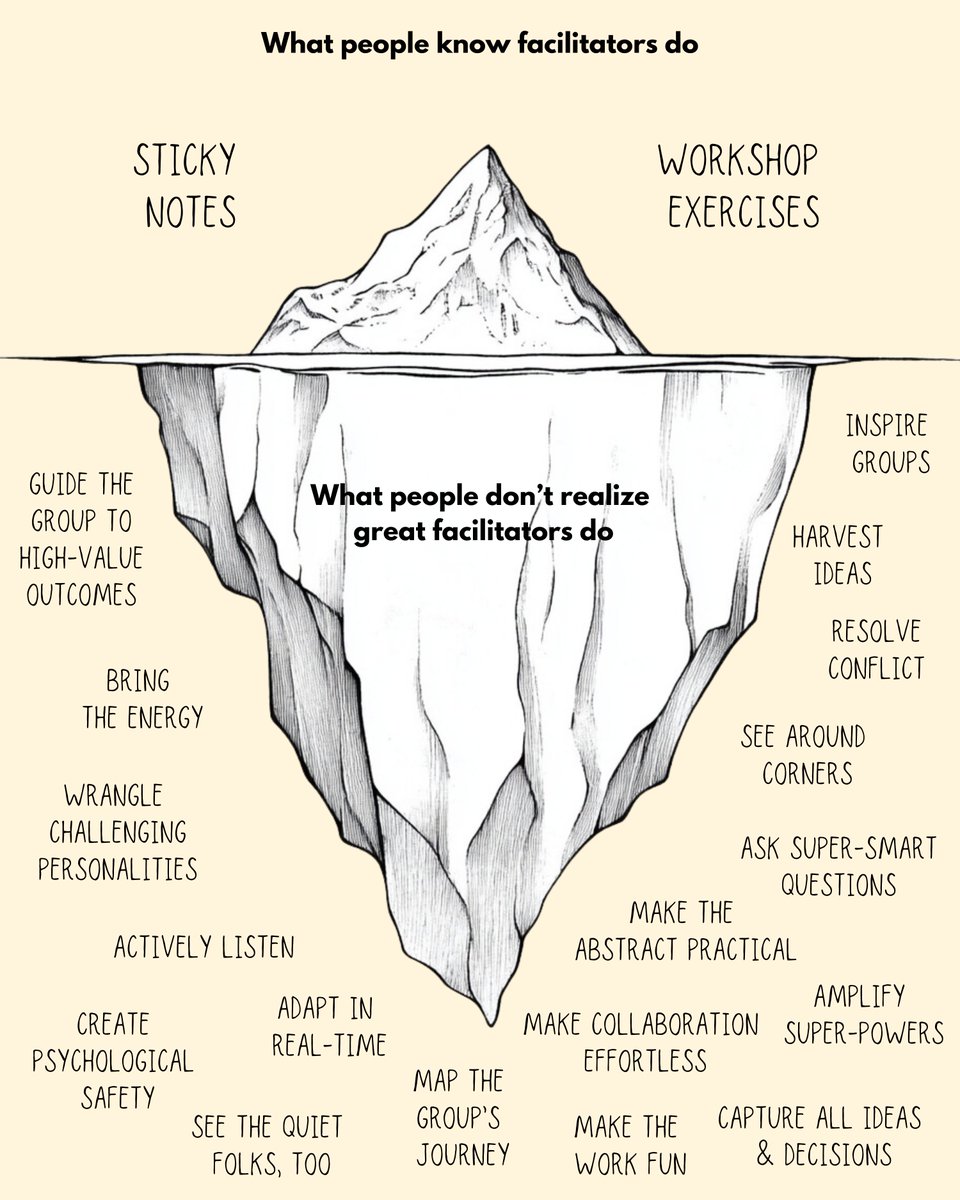
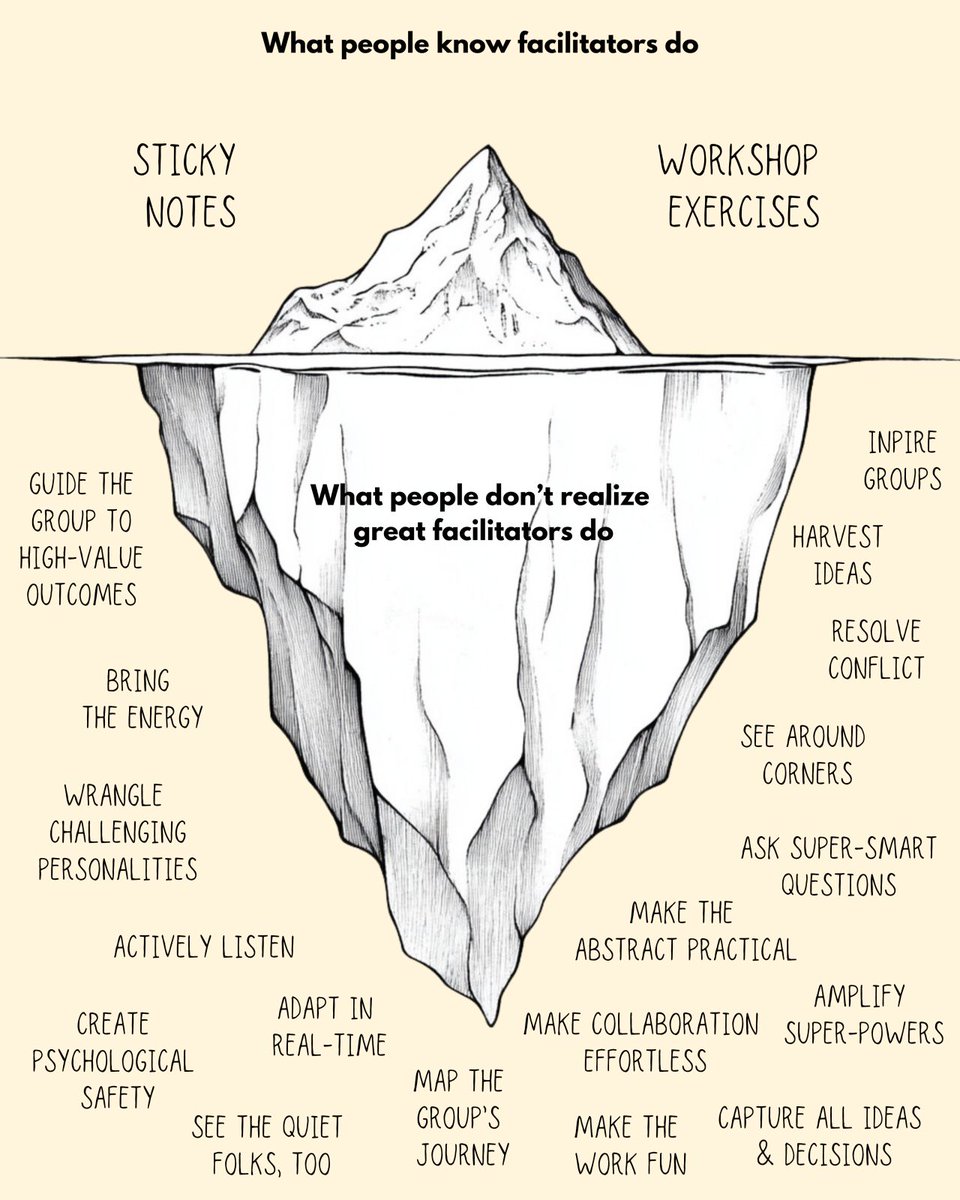
High-level facilitation is like an iceberg 🧊. The visible aspects—such as guiding workshop exercises—are just the tip. The deeper, unseen work involves creating spaces with psychological safety, steering the group toward high-value outcomes, and more.
Shoutout to @tim_leake!
10
16
1,430
21 Apr 2025
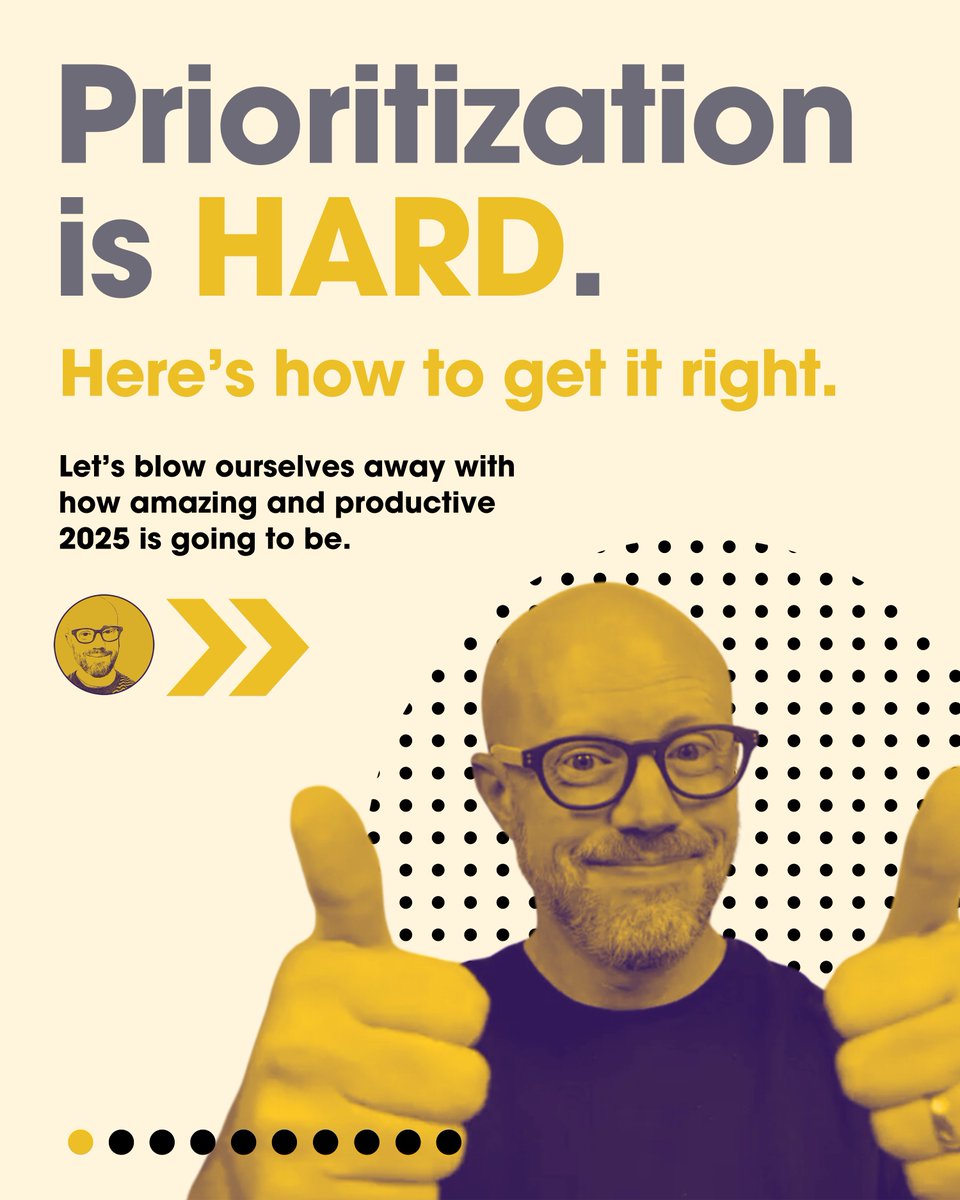
Prioritization Is Hard.
Here’s How to Get It Right.
Let’s blow ourselves away with how amazing 2025 will be.
Every organization has the same problem:
Too much to do, not enough time to do it.
Deciding what deserves our focus feels overwhelming — but doing it well is a superpower that unlocks huge progress in record time.
Let’s break it down with some simple, practical systems that actually work:
Start with a prioritization matrix.
Ask, “What moves the needle?”
For big stuff, use the RICE method.
Map everything to team goals.
Commit to short-term sprints.
Host a prioritization party.
Make it obvious.
117
19 Apr 2025
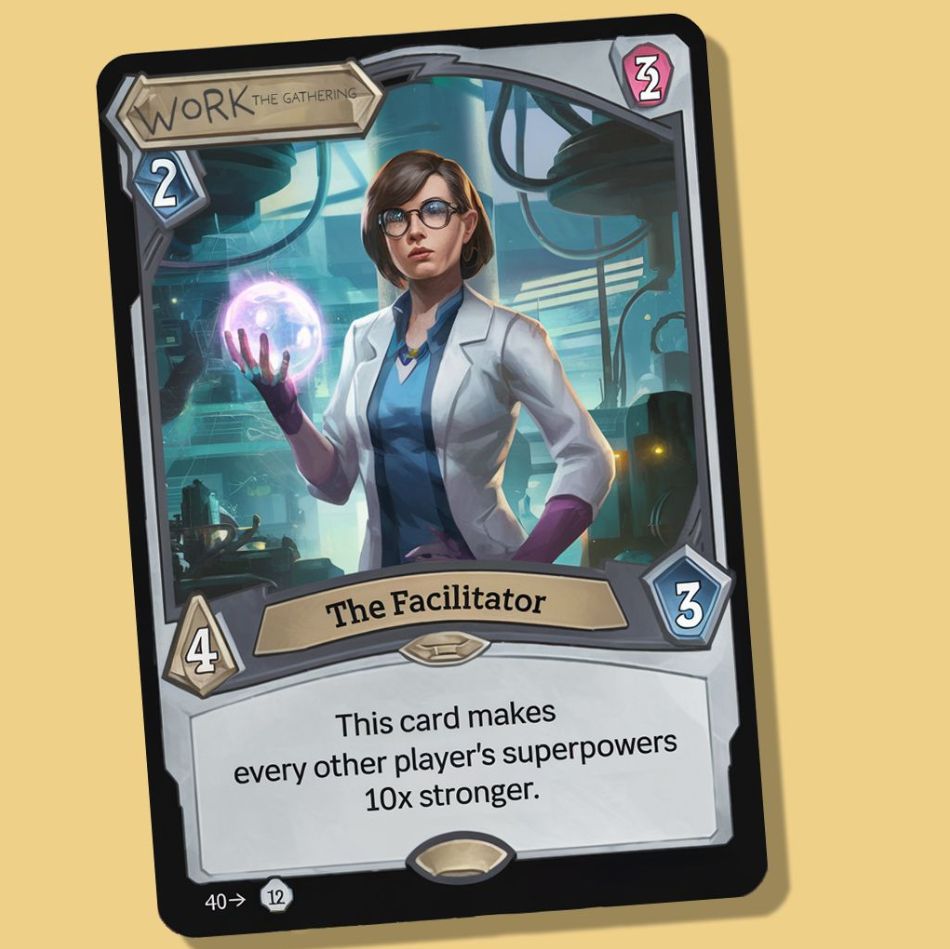
What I love most about my superpower is that it makes everyone else's superpowers 10x stronger. 💪
Because high-level facilitation gets all the BS of group collaboration (which most of us suck at) out of the way — so people can actually do the stuff they're good at, get things done quickly, and have a lot of fun doing it.
When people build this skill, they're raising the value of everyone else around them. Which makes it a super-valuable skill to build.
#facilitation #facilitatorpro #HighROIOffSites
143
17 Apr 2025
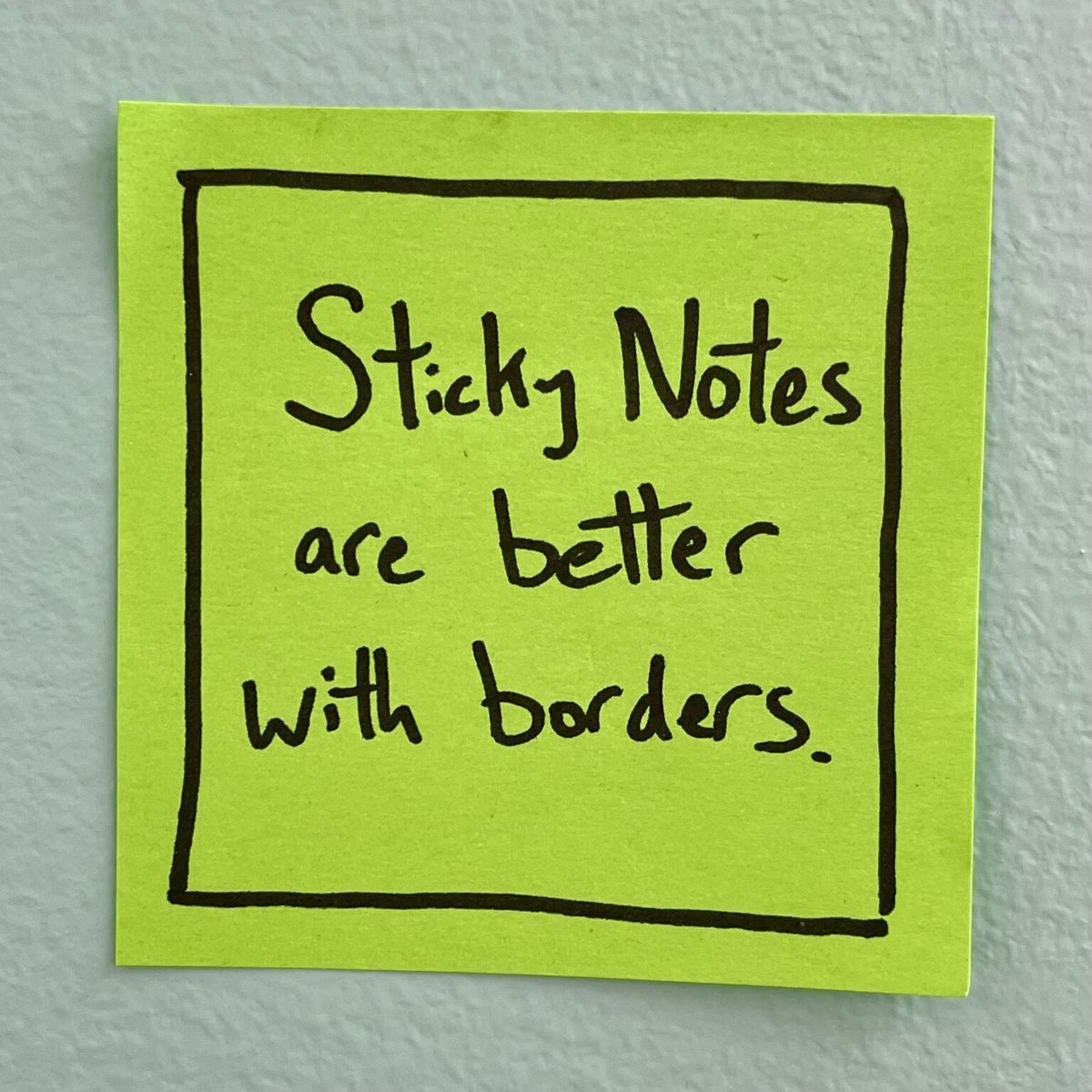
People who know me well know I believe this ⮕ Sticky notes are ALWAYS better if you draw an extra border on them.
A friend did it that way, believed passionately it was better, and I agree completely.
Why is it better? Dunno. It just is.
It only takes a few extra seconds, but somehow the border makes all the words on the note feel more clear and meaningful.
Unbordered sticky notes, in contrast, feel sloppy and lacking in confidence.
Try it, and let me know what you think.
(This is not one of the deeper posts about workshop facilitation I'll ever do — but it's inspired some passionate in-person discussions, that's for sure.)
1
90
14 Apr 2025
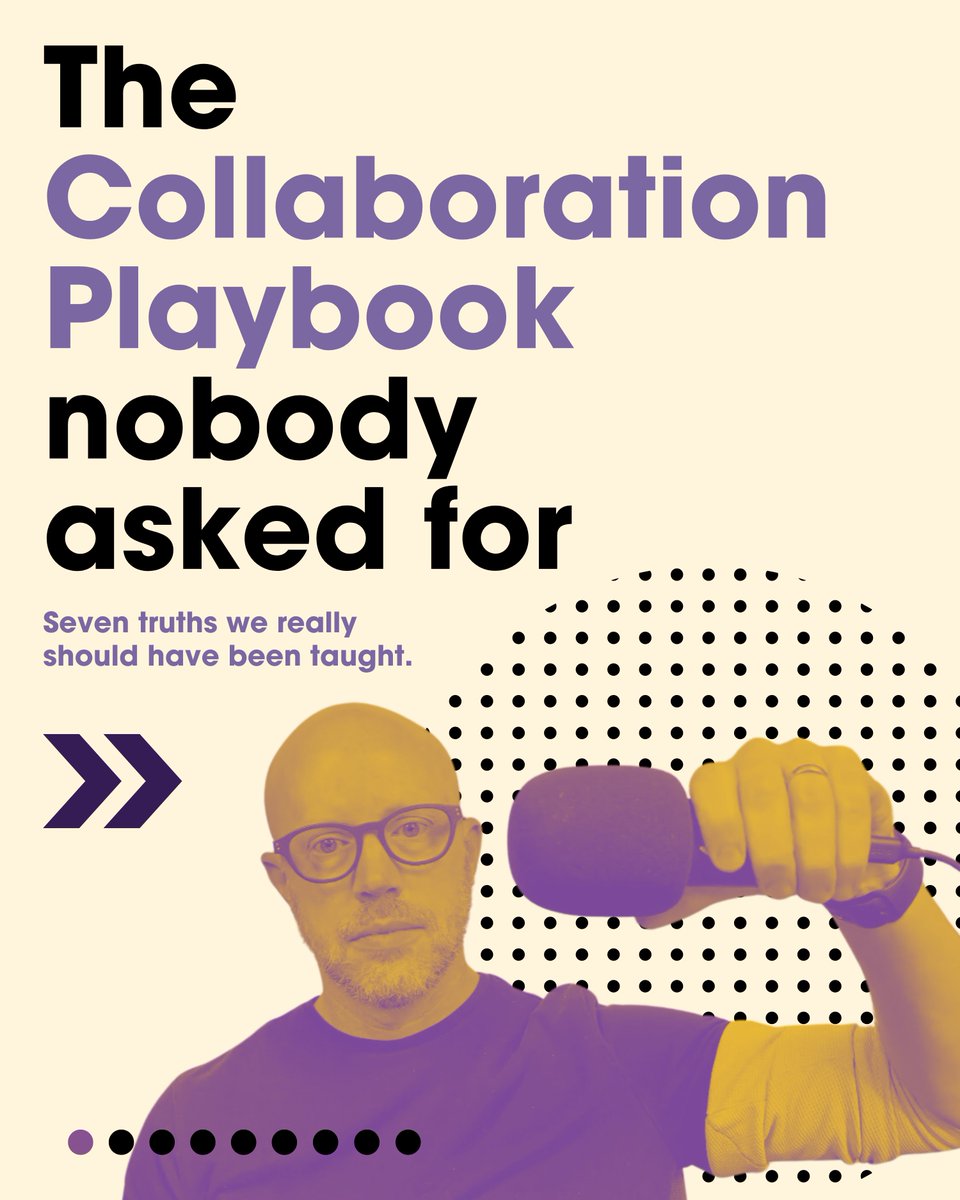
Seven truths we really should have been taught.
⭐ 1. Consensus is a dumb way to make decisions
The Truth:
If everyone has to agree, progress grinds to a halt. (And the ideas get worse.)
Tips:
- Appoint a decision-maker upfront.
- Everyone should be HEARD. But not everyone will agree.
⭐ 2. Collaboration can feel like chaos
The Truth:
Great teamwork is messy, with lots of disagreement and overlap before clarity emerges.
Tips:
- Embrace the mess as part of the process.
- Trust that clarity will emerge (it always does) — and enjoy the ride.
⭐ 3. Big egos sink teams
The Truth:
When individual agendas dominate, the team suffers.
Tips:
- Reward team wins over individual accolades.
- Be transparent about what motivates each member of the team. Respect that, but don’t be trapped by it.
⭐ 4. Teams waste time on what’s comfortable, not what’s important
The Truth:
It’s tempting to get distracted by easy topics — while avoiding the hard, meaningful ones.
Tips:
- Prioritize high-impact actions first.
- Regularly revisit those priorities to stay aligned.
⭐ 5. Feedback stings — but it’s essential
The Truth:
Nobody likes hearing they’re wrong, but progress and greatness depends on it.
Tips:
- Remind the team that feedback is a gift
- The best response to receiving a gift is to say “thank you”
⭐ 6. Speed breeds mistakes, but be cool with it
The Truth:
Moving fast means errors will happen — but perfection is the enemy of progress.
Tips:
- Treat mistakes as learning opportunities, not failures.
- Be robust in thinking, and accepting that we’ll never predict everything
⭐ 7. Not everyone deserves a seat at the table
The Truth:
The wrong people can drain momentum and derail progress.
Tips:
- Choose team members based on skill and alignment.
- Be willing to make tough decisions about who stays.
—
This is the part where I ask you to follow me, Tim Leake
And to share a comment.
Or at least click the like button.
(Likes are free 💛)
3
108
10 Apr 2025
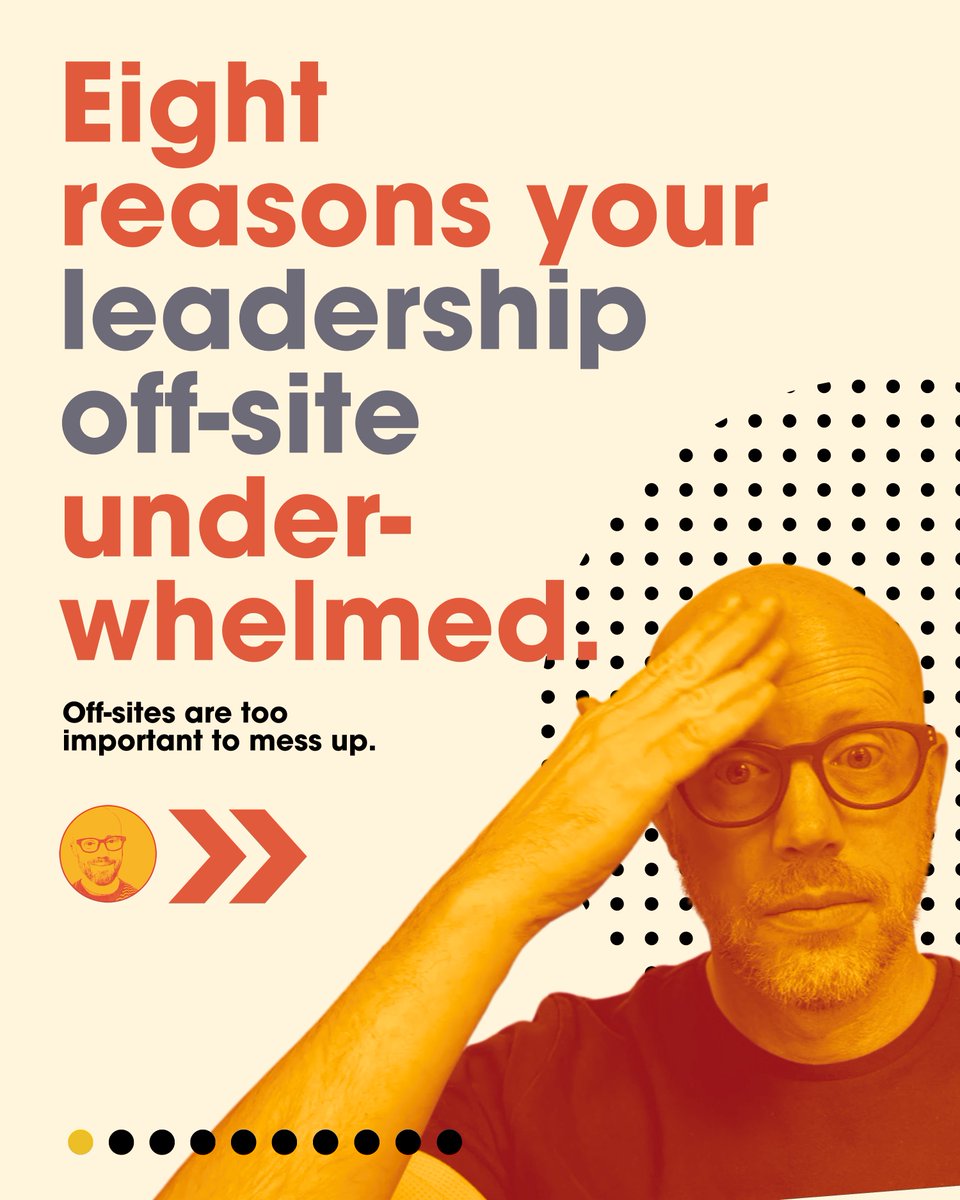
Eight Reasons your leadership off-site underwhelmed. And how to ensure your time together brings the highest value, instead.
1️⃣ Nobody defined success
WHY IT UNDERWHELMED:
The agenda was filled with “discussions” — so nobody knew what “done” looked like
WHAT TO DO INSTEAD:
Start with clear, measurable outcomes for the off-site. Make sure they’re the highest-value outcomes for everyone’s time.
2️⃣ The Agenda Was Overstuffed
WHY IT UNDERWHELMED:
The group tried to do everything and accomplished nothing.
WHAT TO DO INSTEAD:
Prioritize only 1 to 3 highest-impact goals and build everything around them.
3️⃣ It wasn’t fun
WHY IT UNDERWHELMED:
It felt like a long meeting in a different room.
WHAT TO DO INSTEAD:
Infuse creativity, play, and energy into the actual work.
4️⃣ It was too fun
WHY IT UNDERWHELMED:
The whole thing was more about “team bonding” and “mandatory fun” than making real progress.
WHAT TO DO INSTEAD:
Make the work itself enjoyable, and save any other activities for the evenings.
5️⃣ Nobody made a decision
WHY IT UNDERWHELMED:
People left with lots of discussion and ideas, not clarity.
WHAT TO DO INSTEAD:
Make sure someone is empowered to make a final decision, even when there’s still disagreement.
6️⃣ Too much winging it
WHY IT UNDERWHELMED:
Lack of preparation led to chaos, confusion, and a whole lot of discussions-running-long.
WHAT TO DO INSTEAD:
Sweat the details, including timing and desired outcomes — but stay flexible.
7️⃣ The team was multi-tasking
WHY IT UNDERWHELMED:
Everyone’s busy, so they checked email, kept laptops nearby, and stepped out when needed for other meetings.
WHAT TO DO INSTEAD:
Set clear expectations for engagement —> Block off schedules. No electronics outside of breaks.
8️⃣ No follow-through
WHY IT UNDERWHELMED:
The momentum fizzled when people returned to their day-to-day.
WHAT TO DO INSTEAD:
Make sure clear action plans and important strategic decisions are handled while everyone’s together.
This is the part where I ask you to follow me, Tim Leake.
And to share a comment.
Or at least click the like button.
C'mon — likes are free.
1
69
7 Apr 2025
Here's what a lot of folks don't realize when it comes to creativity at work.
1. Most Ideas Won’t See the Light of Day
➡️ The Truth: Many of our projects will stay unfinished or unnoticed.
➡️ Tip: Focus on the process, not just the results.
2. Self-Doubt Never Fully Goes Away
➡️ The Truth: Even seasoned creatives question their abilities.
➡️ Tip: Learn to work through the doubt; confidence comes with doing.
3. Originality Is Overrated
➡️ The Truth: Most ideas are re-imaginings of what’s already been done.
(Even when we don’t realize it.)
➡️ Tip: Focus on making our version unique and personal.
4. Deadlines Don’t Wait for Inspiration
➡️ The Truth: We can’t afford to sit around waiting for the “right mood.”
➡️ Tip: Treat creativity like a discipline, not just a feeling.
5. Rejection Is Part of the Job
➡️ The Truth: Even our best work won’t always resonate with others.
➡️ Tip: View rejection as redirection and learning — and keep moving forward.
6. Collaboration Can Be Messy
➡️ The Truth: Working with others often leads to conflict and compromise.
➡️ Tip: Learn to communicate and embrace different perspectives.
7. Not All Feedback Is Useful
➡️ The Truth: Some opinions will confuse more than clarify.
➡️ Tip: Learn to figure out which feedback aligns with our vision.
211
5 Apr 2025
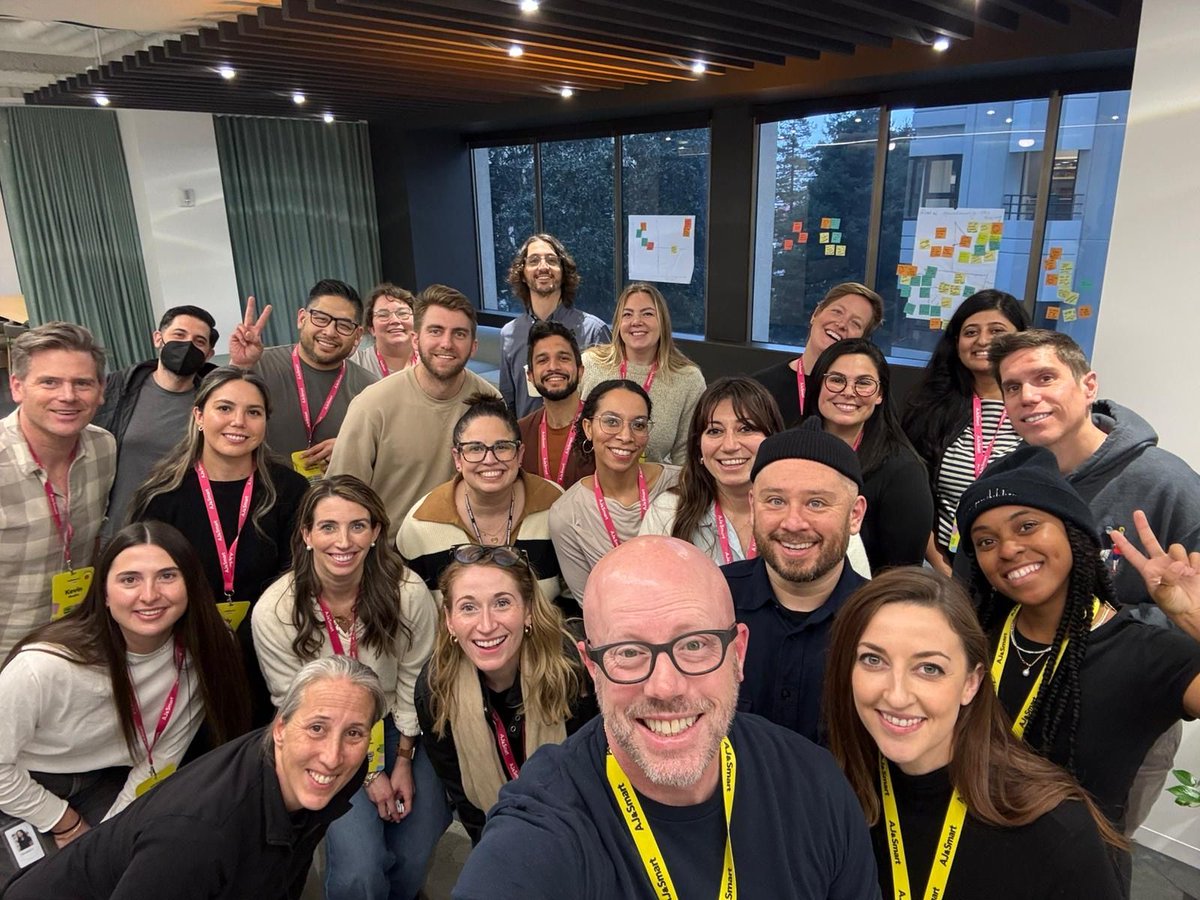
One of the best parts about facilitating workshops is that I also get to learn from everyone else along the way.
And I learned a ton from this group of smart folks from Grammarly and Coda last week. (Technically, they’re all Grammarlians now — but Coda is a pretty sweet platform, so gotta give them some love too.)
There was none of the usual, “wait, what exactly are we supposed to be doing?” kinds of questions. Just teams that jumped right into action full-force — making things happen, pushing themselves out of comfort zones, choosing “advanced mode” whenever given the opportunity, and doing it all with laughter and smiles.
Big high-fives to these folks.
And even more high-fives to Rebecca Courtney and Coco Curry, my comrades-in-arms, who I had to pleasure to learn a ton from as well.
A lot of fun — and very fulfilling. Exhausting, but fun and fulfilling.
95
3 Apr 2025
High-level Facilitation is like an iceberg. There's the part you see, and the much bigger part you don't.
2
81
1 Apr 2025
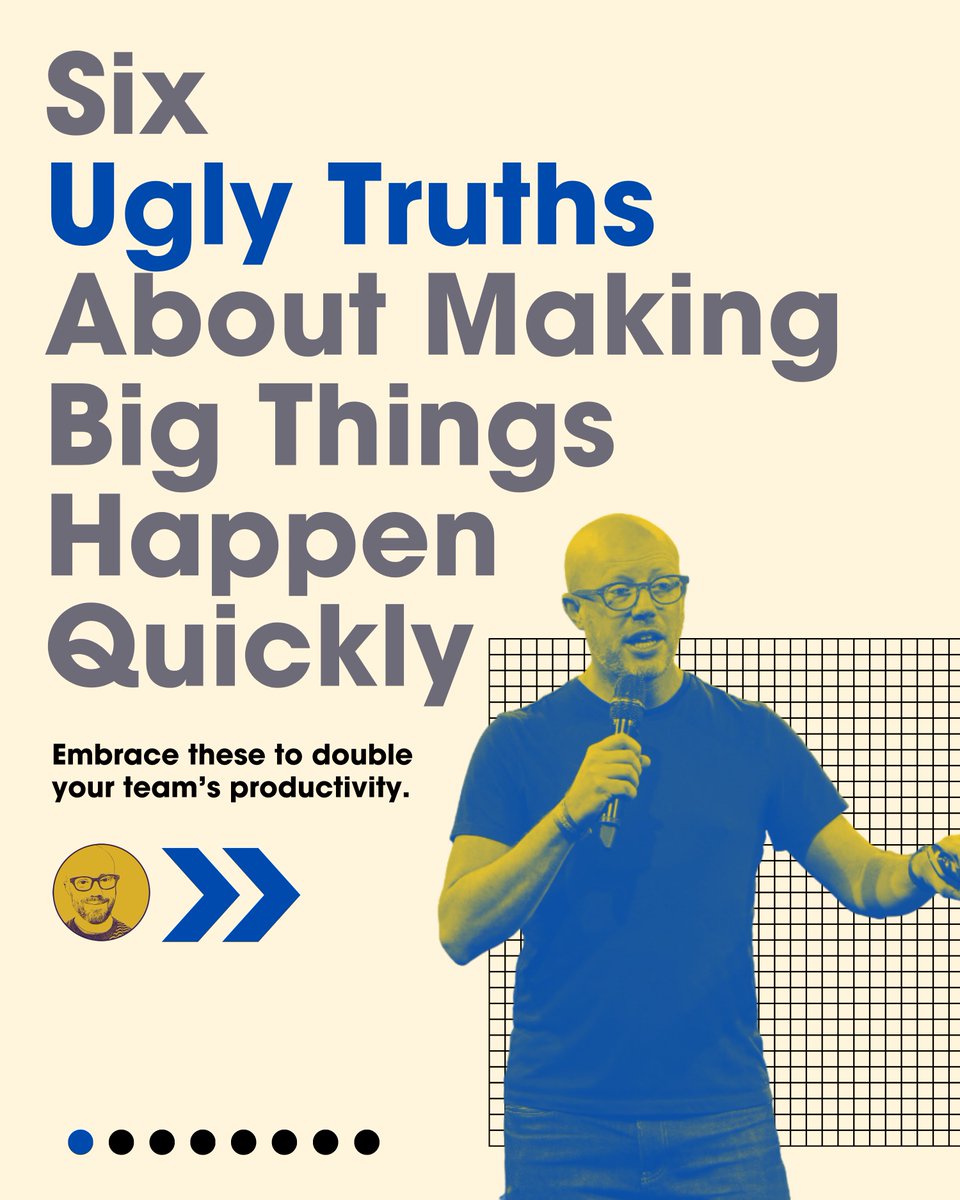
Six ugly truths about making big things happen quickly. A few tips for teams who want to move fast.
1️⃣ ACTION BEATS DISCUSSION
The Truth:
➭ Groups love to plan but hate to execute. Without action, ideas are meaningless.
Tips:
➭ Reward action over endless discussion
➭ Be clear about what decisions need to be made — and make them
2️⃣ Consensus kills momentum
The Truth:
➭ Waiting for everyone to agree slows everything down. Because it’s impossible.
Tips:
➭ Make sure everyone is heard and able to make their case.
➭ Identify a clear decision-maker.
➭ Set deadlines for decisions to avoid endless debates.
3️⃣ Groups love to over-think
The Truth:
➭ Overanalyzing kills speed, and waiting for perfect information leads to missed opportunities.
Tips:
➭ Optimally-think through each issue — don’t over-think, don’t under-think
➭ Empower the group to make decisions with 80% of the information.
4️⃣ Speed requires trust
The Truth:
➭ Groups that lack trust waste time on micromanaging and second-guessing.
Tips:
➭ Invest time upfront to build trust.
➭ Allow autonomy where possible to speed things up.
5️⃣ Confusion is the default setting
The Truth:
➭ Without clarity, groups will flounder in a sea of assumptions and contradictions.
Tips:
➭ Start with a clear, shared goal.
➭ Regularly check alignment to ensure everyone stays on track.
6️⃣ Leadership is non-negotiable
The Truth:
➭ Without strong leadership, groups will meander and fail to make tough decisions.
Tips:
➭ Appoint a clear leader or facilitator to guide the process.
➭ Appoint a clear decision-maker to listen to all voices, then ultimately be decisive.
----
This is the part where I ask you to follow me Tim Leake.
And to share a comment.
Or at least click the like button.
C'mon — likes are free.
1
100
29 Mar 2025
Need a better way to brainstorm?
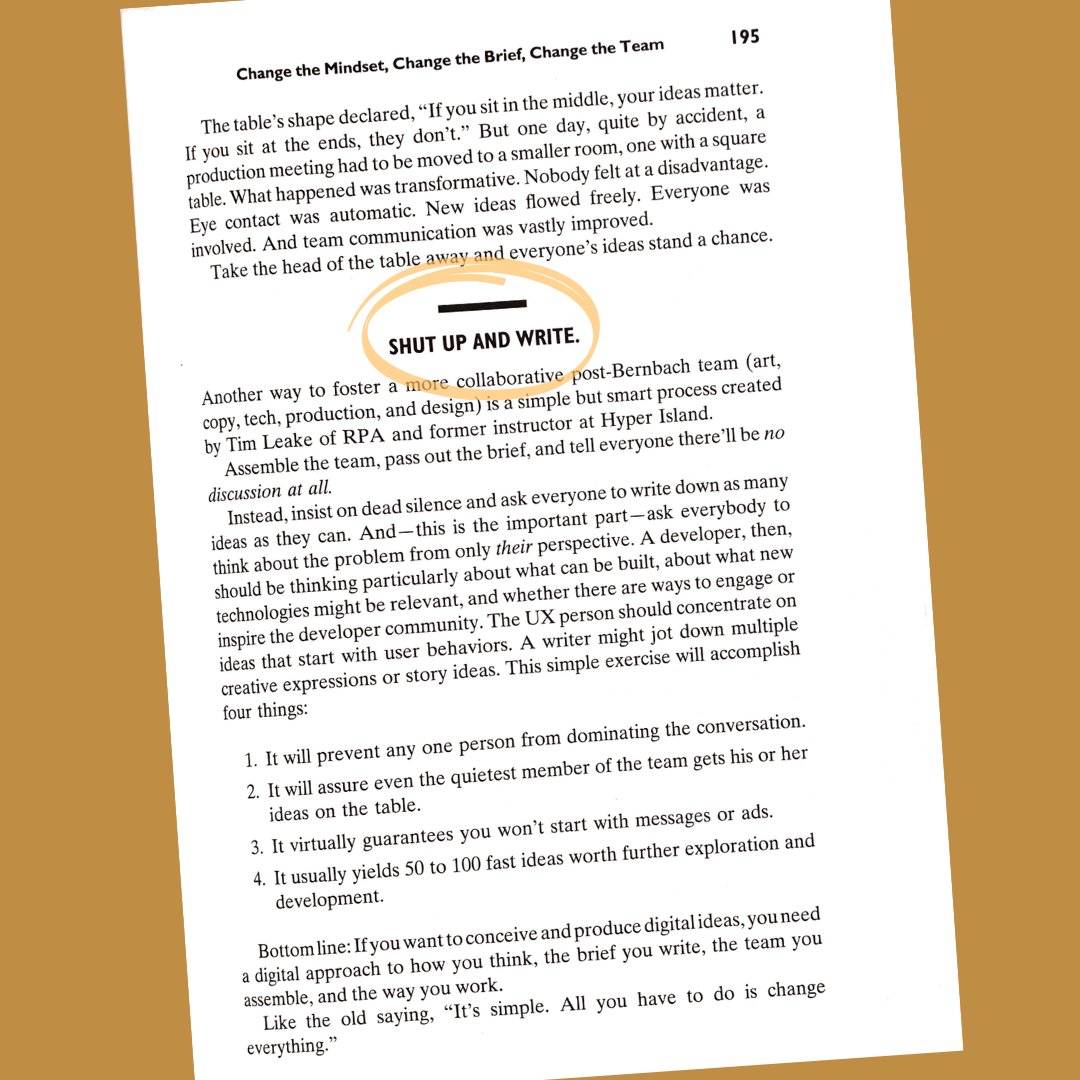
Shut Up and Write.
This is a technique I developed a decade ago, based on my experience over roughly 100 executive workshops with Hyper Island. Though I'm hardly the only one to have figured it out.
Jake Knapp calls it "working alone, together" in his book, Sprint. (h/t to Jonathan Courtney, who I first heard this phrasing from.)
A while back, I shared the approach with Edward Boches — who later included it when he co-authored the 5th Edition (2016 version, I think) of the classic how-to-do-great-advertising-ideas book, Hey Whipple, Squeeze This.
(I increasingly wonder if today's younger readers have any idea what that title is referencing... but I digress...)
The page below is from that book. His write-up leans into "ad ideas," of course, but it works brilliantly for ANY kind of ideation and brainstorming — and I've found that it inspires 10x more ideas, better ideas, and more diverse thinking than "just letting people throw ideas out there."
THE WAY I USUALLY RUN IT:
- Tell folks what they're working on
- Set a timer for five minutes and have them write down as many ideas as possible on their own, in a notebook. (This is the Shut Up & Write part)
- One at a time, have people share what they wrote down — and I encourage other participants to "yes and" along the way. An "okay" idea often becomes a "kick ass" idea when it sparks something in someone else.
- Document these ideas on stickies as they're shared
- Keep going until everyone has been heard. (This phase is all about idea generation. Curating down to the best ideas and action planning them is another thing.)
If you try it (or have tried it), please share your experience!
--
I write and share about Working Fast, Working Fun, and Working Creatively. I'm geeky about the future of collaboration. Please comment, like, follow, and share — because apparently more people do so when I ask. 😊
#brainstorming #collaboration #facilitatorpro
1
163
27 Mar 2025
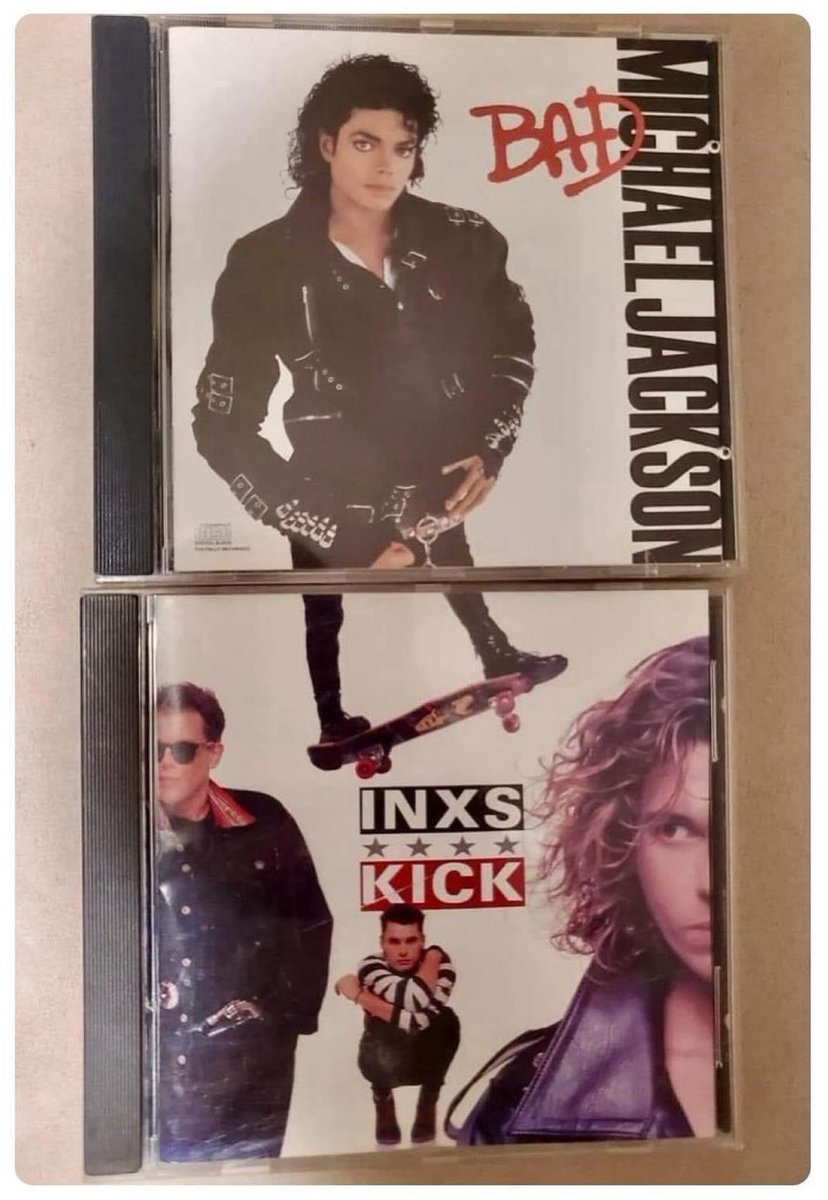
Sometimes putting two unrelated ideas together sparks something new and brilliant.
1
1
89
24 Mar 2025
Ever had a leadership off-site feel under-whelming?
Here’s what likely went wrong, and how to fix it.
Check the video for details — but here's the cheat-sheet:
1️⃣ Nobody defined success
2️⃣ The Agenda Was Overstuffed
3️⃣ It wasn’t fun
4️⃣ It was TOO fun
5️⃣ Nobody made a decision
6️⃣ Too much winging it
7️⃣ The team was multi-tasking
8️⃣ No follow-through
—
I share stuff on social about working fast, working fun, and working creatively.
And I hate asking people to follow me, but if you like it...
200
20 Mar 2025
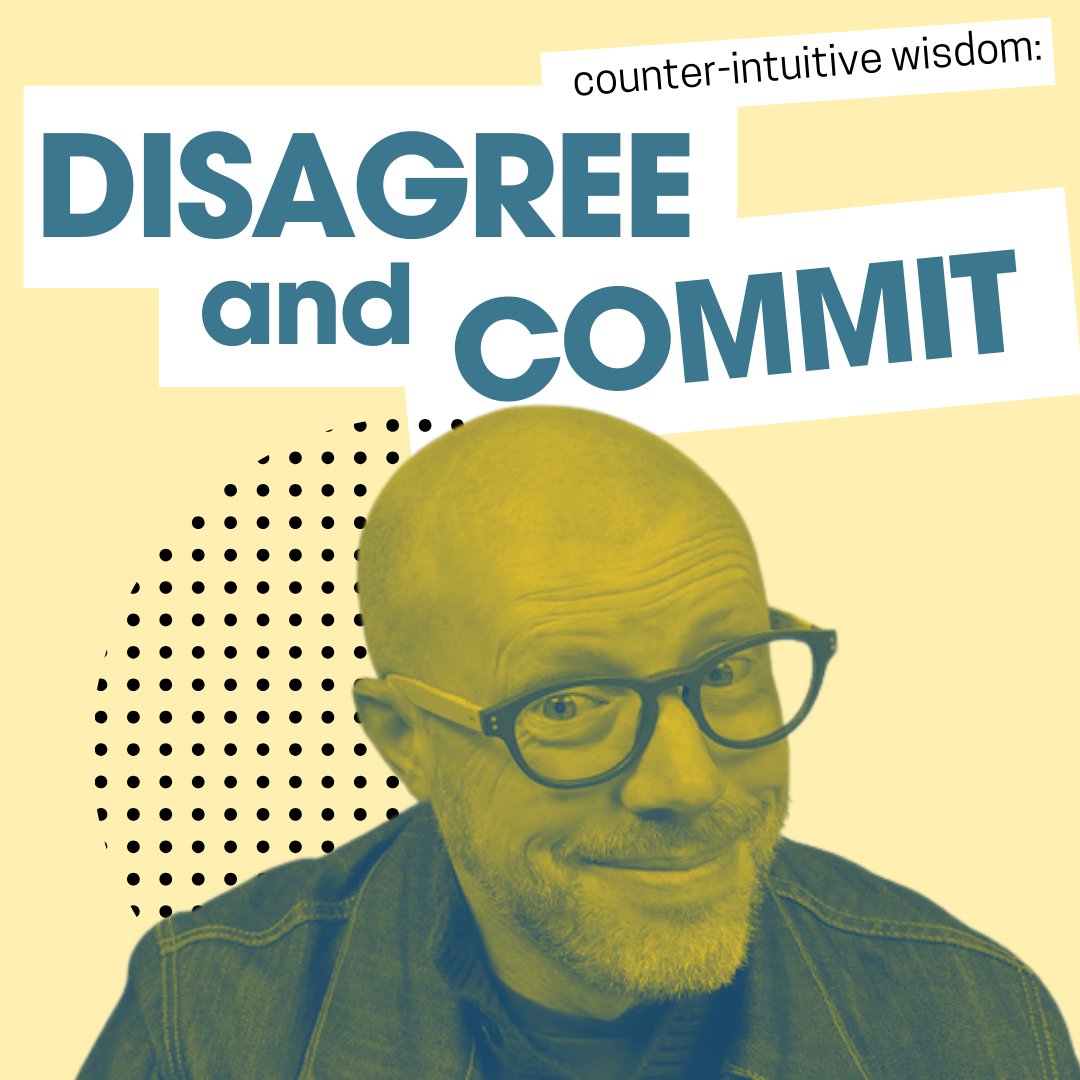
Three magic words on the path to enjoyable and productive work:
“Disagree and Commit”
Because you know what’s the WORST? Trying to get everyone to agree on everything.
It’s not just the worst, it’s impossible. Smart teams will ALWAYS have smart differences of opinion.
Always always always.
So trying to appease everyone is a recipe for mediocrity and “fine I’m tired of talking about this can we please move on?” resignation that leads to nobody being happy and nobody being committed.
Disagree and Commit accelerates the process, makes sure everyone is heard, and rallies the team around the decision — ACCEPTING that not everyone agrees and we’re cool with it.
The concept was originated by Andrew Grove from Intel, but popularized even further by a guy named Jeff Bezos.
A SIMPLIFIED VERSION OF HOW IT WORKS:
When discussing a challenge or proposed solution, make sure everyone has a chance to share their views — and make their case
Empower someone to make an actual decision based on the information the group has at hand.
The group Disagrees and Commits — meaning there might they will all do their utmost to make it a huge success.
While it goes many ways, the strongest leaders are often the ones doing the disagreeing — but willing to listen to their team and commit anyway.
1
2
116
17 Mar 2025
Most companies (and people) think the wrong way when it comes to making work more enjoyable. I call it "fun perfume."
They attempt to put fun stuff AROUND the work — but don't look for ways to make the WORK ITSELF fun. So all it does is temporarily mask the scent of problems lying underneath.
Fun Perfume might look like wacky furniture, team happy hours, or ping-pong tables in the office. (Mind you, I have no problem with any of these things. It's just that they aren't a solution on their own.)
Then people get bored or burnt-out or frustrated — because they aren't enjoying the actual work. The perfume wasn't enough to cover the stench.
When we find ways to enjoy the actual things we're getting paid to do (and which create value for others as well), things get so so so much better.
1
3
217
15 Mar 2025
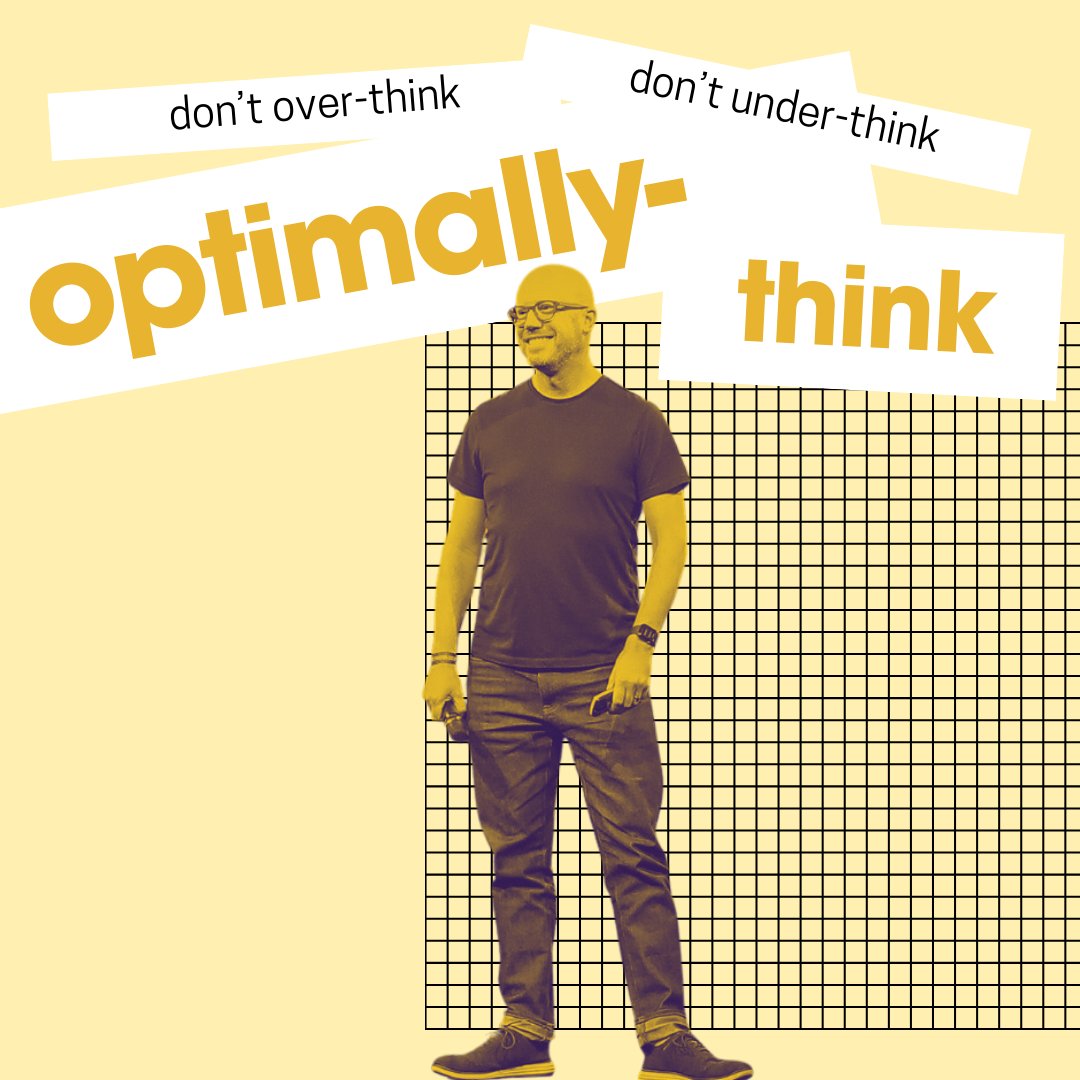
Here’s one of the keys to success when it comes to making progress quickly: 𝗢𝗽𝘁𝗶𝗺𝗮𝗹-𝘁𝗵𝗶𝗻𝗸 𝘁𝗵𝗶𝗻𝗴𝘀.
Don’t over-think things.
Don’t under-think things.
Optimal-think things.
In the business world, we looooooove to over-think ideas.
This is often part of a CYA strategy (google it if you don't know), because it helps leaders protect themselves from blame or negative consequences. We can’t fail if we just keep talking about it!
And this comes at the expense of speed, efficiency, and decision-making clarity. Overthinking takes forever, grinds momentum down, and is rarely effective at avoiding future mistakes. It’s slowness, disguised as “being smart.”
In the world of workshops, we loooooove to under-think ideas.
We put a lot of ideas on the wall — and quickly get excited about things that turn out to be shallow solutions, lack needed perspectives, have fatal flaws, or be filled with details that still need sweating.
I believe we should optimal-think ideas.
Not too reckless. Not too overwhelming.
When I run Off-Sites and Solution Sprints with leadership teams, a key phase is “optimal-thinking.” It’s a structured process during which the group analyzes, evaluates, and pressure-tests the ideas that have strongest potential.
The process ensures we don’t skip anything important — or miss out on important feedback. But it also ensures that discussions don’t drag on needlessly.
This empowers the team to be confident, quickly — so they can make real progress, instead of entering a death spiral of endless discussions and devil’s advocates.
As Napoleon Bonaparte said:
“𝘛𝘢𝘬𝘦 𝘵𝘪𝘮𝘦 𝘵𝘰 𝘥𝘦𝘭𝘪𝘣𝘦𝘳𝘢𝘵𝘦, 𝘣𝘶𝘵 𝘸𝘩𝘦𝘯 𝘵𝘩𝘦 𝘵𝘪𝘮𝘦 𝘧𝘰𝘳 𝘢𝘤𝘵𝘪𝘰𝘯 𝘩𝘢𝘴 𝘢𝘳𝘳𝘪𝘷𝘦𝘥, 𝘴𝘵𝘰𝘱 𝘵𝘩𝘪𝘯𝘬𝘪𝘯𝘨 𝘢𝘯𝘥 𝘨𝘰 𝘪𝘯.”
1
152
13 Mar 2025
I’m the poster child for trying to do 22 1/2 things simultaneously.
I have learned from experience (and plenty of advice I didn’t listen to soon enough) that it doesn’t work.
I want everything done 👏🏼 right 👏🏼 now.
Of course I do.
But when I try to do everything now, I achieve nothing.
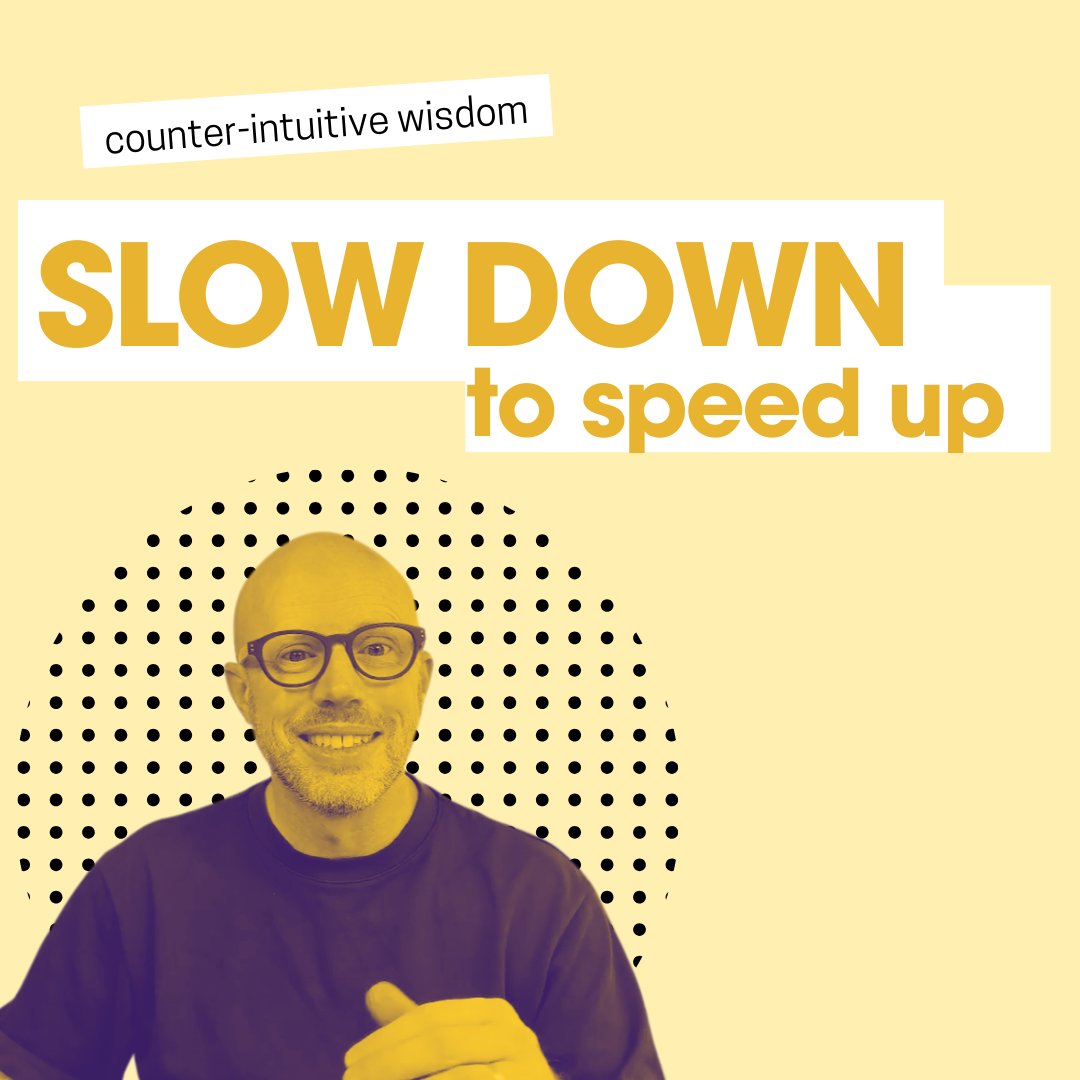
It requires a bit of deep breathing and getting my brain to calm the F down... but the best way I’ve found to make big progress quickly on big projects is to go slower.
(True when it’s just me. True when it’s a team project.)
Going slower means pushing other projects out of the way for a bit, and letting my brain sink into what I’m focused on. It gives me time to think clearly. To let my mind wander and explore. To play. To regroup. To dabble. To experiment. And it gives me the space to put all the pieces together just-so… to unlock solutions.
Then I looked up and realized I had just made a ton of progress in a day or two.
1
99
2 Oct 2024
I'm heading to the #secondbrainsummit over the next few days and it looks amazing. If you'll be there, dm or say hi.
1
285
Tim Leake retweeted

26 Feb 2024
It’s enough to just say, “I make my work this way because it’s what i want to see more of in the world.” No further diagnosis or justification is necessary.
4
24
138
10,550