
My son @michaelkellers posts here on my behalf (see pinned note). Founder of @redeemernyc. Co-Founder of @redeemerctc and @tgc. Loved New York City.
Joined January 2013
- Tweets 14,527
- Following 109
- Followers 500,484
- Likes 1,654
423 Photos and videos

Pinned Tweet

2 Jun 2023
Hello everyone, Michael Keller here (the son that's helped run Dad's social media since we started in 2013). Thank you so much for all the beautiful memories, stories, and tributes written over the past two weeks about Dad. The original vision for creating these social media 1/3
130
156
4,579
438,442
Idolatry is not just a failure to obey God; it's a setting of the whole heart on something besides God.
1
25
231
9,644
1) ‘Moderation in all things’ is not Christian counsel. Middle positions can compromise the truth. (2) But Bavinck ("Christian Worldview") shows how Christianity prevents the reductionisms that usually mark the extremes as well. Example: Jesus' teaching on the kingdom of God (G.Vos) was not half-way between the Pharisees' and the Saducees' view. In both its coming ('already but not yet') and its character (spiritual yet social) it was simply off the spectrum.
2
6
55
8,168
The first 9 chapters dive into the book of Jonah, looking at every verse. Chapters 10-12 switch gears by taking some of the major themes of the book and applying them to contemporary society. buff.ly/3GLuO1c?amp=1
3
19
4,923
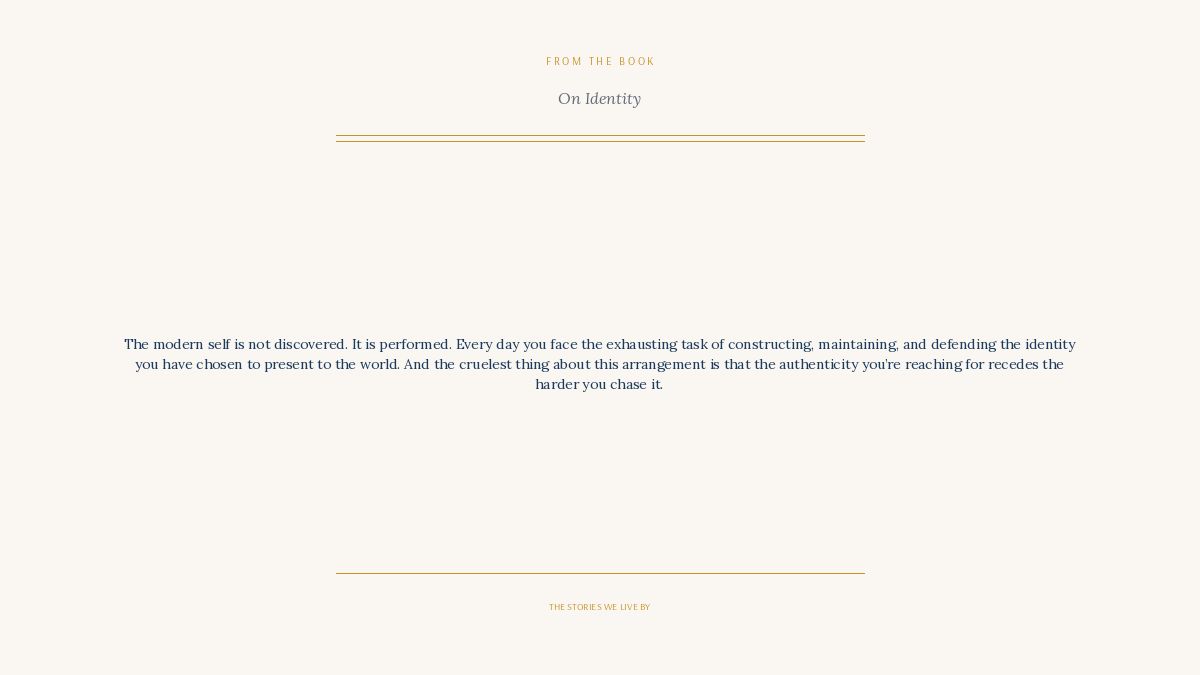
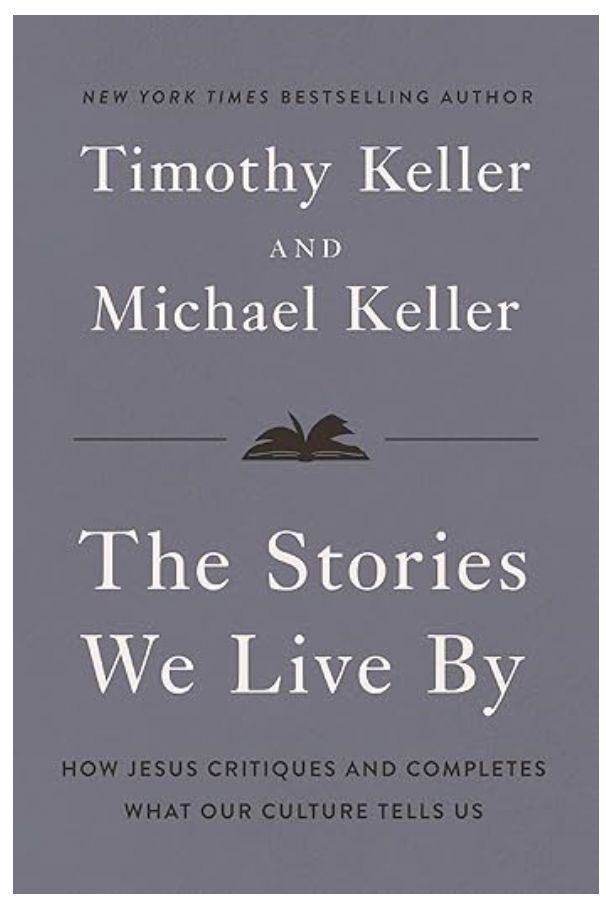
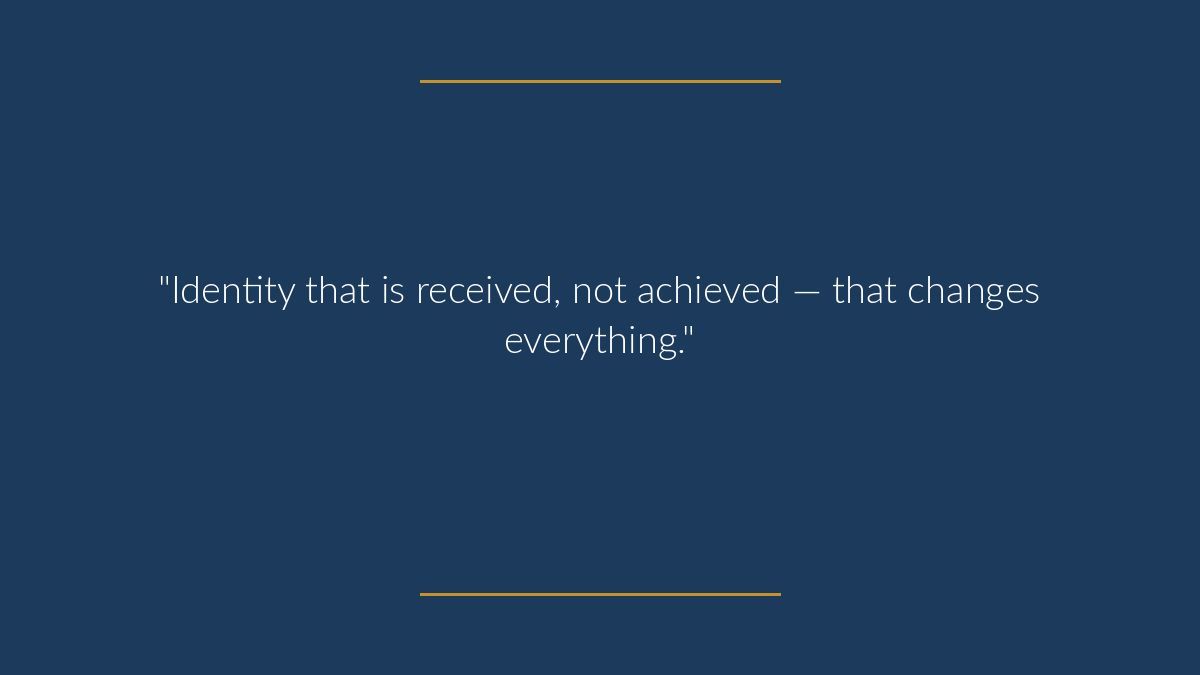
From the Identity chapter of The Stories We Live By. What Dad noticed about the modern self, and what I've watched play out in real people's lives in Manhattan, is that the self you're performing is never quite finished. There's always more to express, more to defend, more to get others to see. The exhaustion is structural, not incidental. Pre-order: buff.ly/9OM6zQT . -Michael Keller
2
4
33
6,216
To insist doctrine doesn't matter is a doctrine itself. It's the doctrine that doctrines don't matter.
2
20
158
9,775
Read this article about what's wrong with progressive Christianity. buff.ly/ZC7pRmH. Three very different figures-- Dean Kelley, J. Gresham Machen, and George Marsden agreed on a basic critique of mainline Christianity. It has proven to be true.
5
25
6,097
The importance of J. Gresham Machen. See buff.ly/ZC7pRmH. And read "Christianity and Liberalism" by Machen. Everyone should.
4
22
5,857
The Gospel is good news, not good advice.
6
82
478
15,945
Many believe: "If you have a different view than mine, you couldn't have reached that conclusion through good faith reasoning. You must have bad motives for your view--a need for approval and power." But see Westminster Larger Catechism 144/145 and Scripture citations.
2
5
62
8,038
Every new generation must find ways to communicate the gospel clearly and strikingly, distinguishing it from its opposites and counterfeits.
1
19
93
8,805
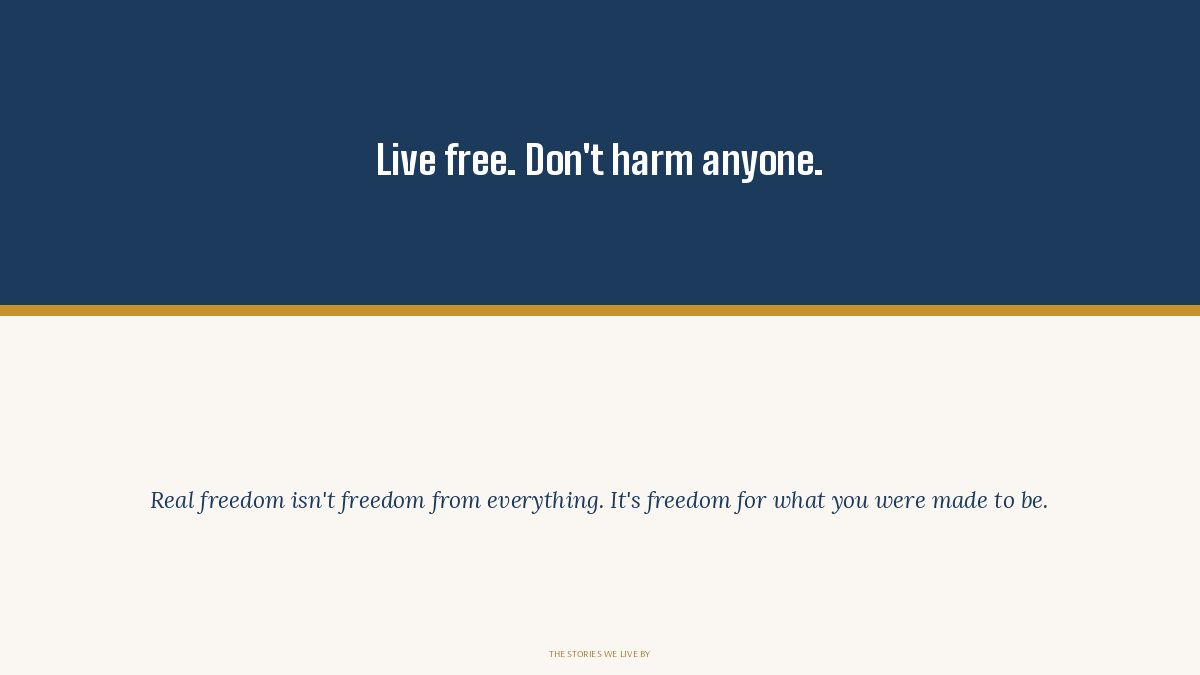
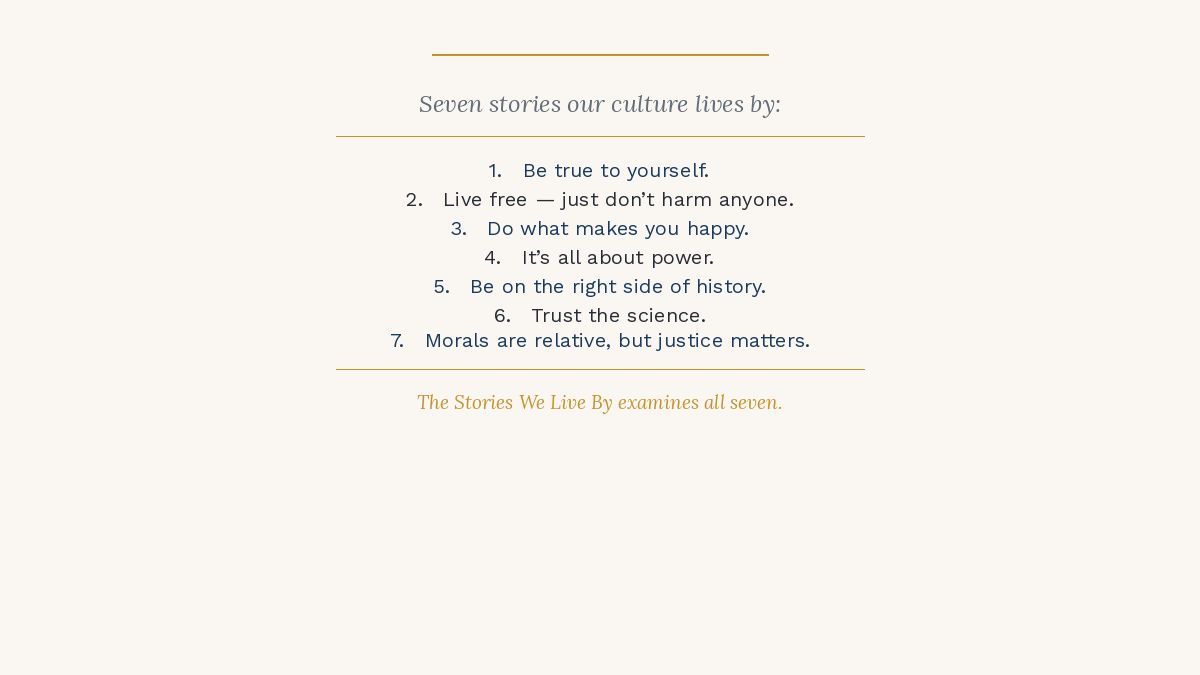
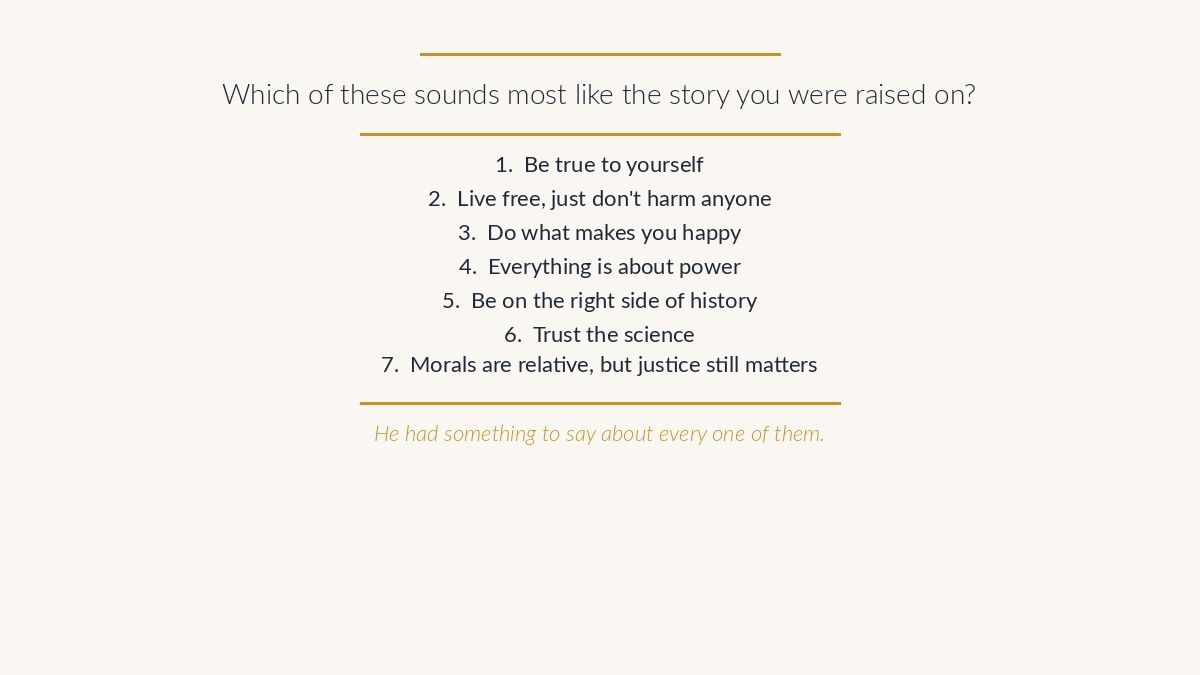
This is the argument at the center of The Stories We Live By. Every narrative our culture runs on-identity, freedom, happiness, power, progress, science, justice-is pointing at something real. Something true. Something worth longing for. But does the story we live by really deliver what it promises? The short answer is that none of them can. Not because the longings are wrong. Because the stories are too small.
Pre-order: buff.ly/ORb2moi . -Michael Keller
14
61
7,513
Summing Nietzsche: Not truth but power matters, and power goes to those whose followers feel the most ressentiment. If you are part of the outrage machine, you are a pawn.
buff.ly/YvbRPI4
2
9
35
7,152
We want the storyline of our lives to go from strength to strength, from success to success, and end happily ever after. But throughout the Bible we see something completely different — a persistent narrative pattern of life through death or triumph through weakness.
4
29
203
10,519
Christians are neither moderate nor extremist, but ‘fully orbed fanatics’—fanatically committed to all Jesus’ teaching--fanatically truthful but also fanatically loving. Fully orbed fanatics will not appear to be either moderates or extremists. (M.Griffiths)
2
12
83
7,750
Seven chapters. Seven questions. One invitation. The Stories We Live By releases September 22, and between now and then, we'll keep going deeper into each narrative and what Dad had to say about it. The book will give you language for conversations you've already been having. For questions you've been carrying. For tensions you've felt but couldn't name. To pre-order: buff.ly/8HiiZEL -Michael Keller
2
28
5,481
Because God loves me and accepts me, I do not have to do things to build up my resume.
7
20
248
10,558
Years ago, I read the chapter “Balance or Fanaticism?” in Michael Griffith’s “Take My Life.” It is still available and inexpensive. His answer to the title question is for Christians to be neither. He argues that “balanced” and moderate Christians are lukewarm, and Jesus was not that. Other Christians seem like fanatics—always denouncing and calling out others. But while they may be fanatically like Christ in being truthful and seeking justice, they are not fanatically humble and loving as he was as well.
They are failing to be “fanatical” about ALL the teachings and character of Christ. For example, to be fanatically committed to calling out sin and injustice in society must be joined with just as fanatical an awareness of one’s own sinfulness and limits in understanding.
Griffith concludes that Christians should be neither lukewarm/moderate nor extremists but rather “fully-orbed fanatics”. These fanaticisms-held together-prevents you from being either moderate or extreme. It makes you something off the spectrum altogether.
buff.ly/O43JQni
2
7
26
6,024
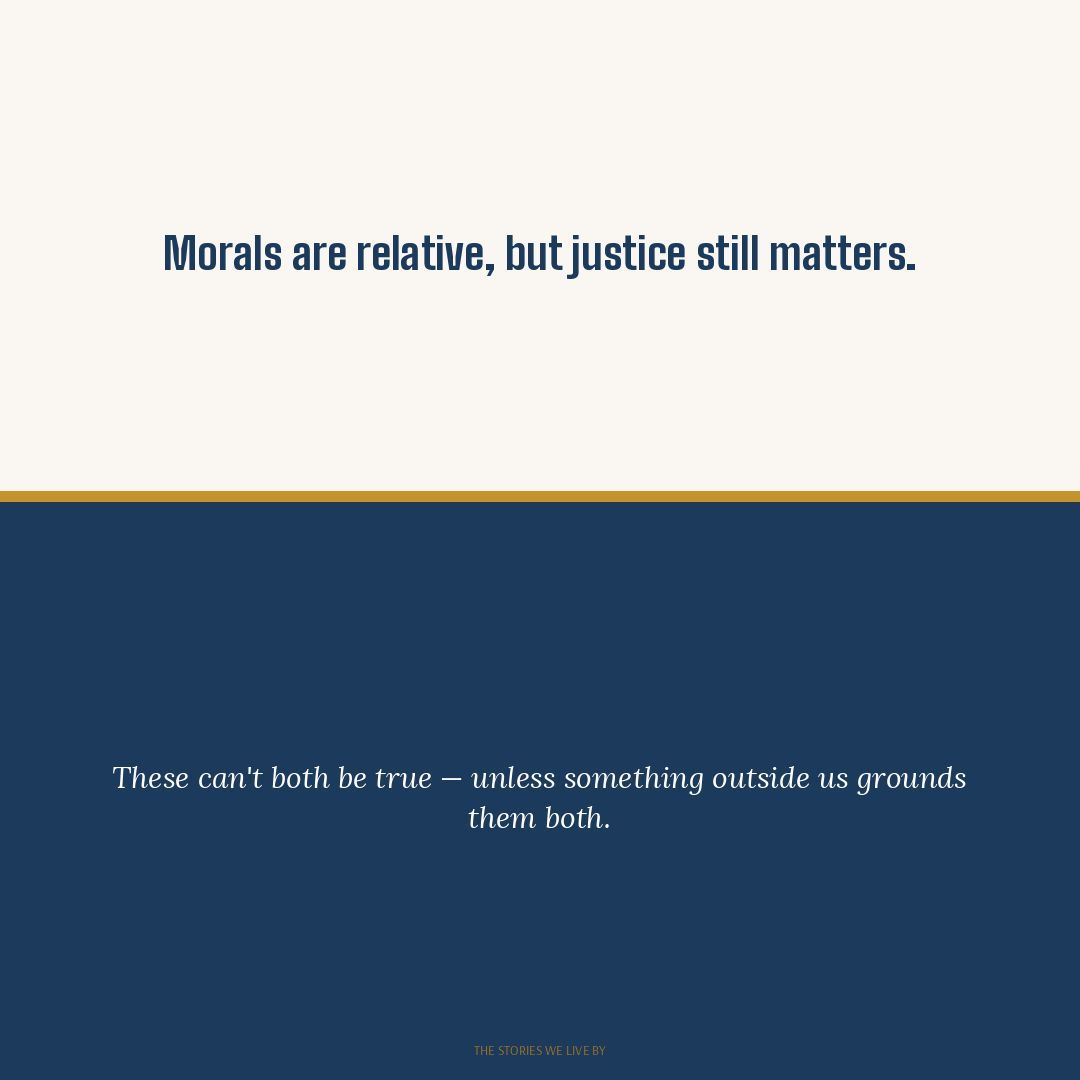
We live in an era that believes morality is relative and is the product of culture and evolution. We also live in an era of intense moral conviction. The demand for justice is real. These two convictions are in direct tension. You can't fully hold both. Dad and I spend a whole chapter asking what makes justice possible when morality is said to be relative, and what kind of foundation you actually need for the moral clarity most people already believe in. Pre-order here: amzn.to/4fWAJ7o -Michael Keller
6
29
4,940
All work has dignity because it reflects God’s image in us, and also because the material creation we are called to care for is good.
1
17
174
6,987