
Co-director Carnegie Nuclear Policy Program (@CarnegieNPP), co-author NOT WAR, NOT PEACE? (bit.ly/32aelhK), Gooner, rather be fly fishing.
Joined May 2011
- Tweets 7,551
- Following 468
- Followers 4,086
- Likes 3,018
278 Photos and videos




Toby Dalton retweeted

Apr 7
🚨Episode 4 of the #NukeChat podcast is now live! Tune in as @toby_dalton and I discuss nonpro and nuclear responsibilities - covering everything from Iran, nuclear-sharing, nuclear latency, naval nuclear propulsion and more👇🏻
@ustirhistpol @CarnegieEndow @BASIC_int
Apr 7

🎤 In the fourth episode of the NukeChat podcast, Dr @meganjanedee (@ustirhistpol) and Dr @toby_dalton (@CarnegieEndow) explore nuclear responsibilities as they relate to nuclear non-proliferation (1/3) buff.ly/J2tul1s
5
3
630
Toby Dalton retweeted
It's always an awkward conversation when your friend tells you they want a nuclear weapon... @toby_dalton breaks down the ongoing discourse on "friendly" nuclear proliferation for @TWQgw.
Check it out here: tandfonline.com/doi/full/10.…
7
21
1,904

Mar 30
Thanks to @atjlennon @TWQgw for the opportunity to take on the “friendly” nuclear proliferation discourse in a new article: twq.elliott.gwu.edu/files/20…. Fun to write but hard to resist the temptation of excessive wordplay.
2
274
Toby Dalton retweeted

7 Oct 2025
In their new report, @toby_dalton, Sarah Frazar, Lindsey Gehrig, Ariel (Eli) Levite, and Mackenzie Schuessler recommend a broader agenda for nuclear energy development to ensure that a significant expansion of nuclear energy will deliver all the claimed benefits for its users.
1
1
1
800
1 Oct 2025
I’m not here much, but just to say big thx to @pranayrvaddi for having us on the pod to talk about the Carnegie/Harvard/NTI task force on nuclear proliferation and US natsec. Give it a listen here - strategicsimplicity.substack…
1
3
271
1 Oct 2025
And for those that want more (so many words), full report here - carnegieendowment.org/resear…
196
Toby Dalton retweeted

1 Oct 2025
Two in one week - another Strategic Simplicity Podcast, this time with Toby Dalton, Francesca Giovannini, and Eric Brewer to discuss a new bipartsan task force report on preventing proliferation: "Preventing an Era of Nuclear Anarchy."
Link below.
1
4
6
1,217
Toby Dalton retweeted

27 Nov 2024
Why did Russia update its nuclear doctrine?
The update seems to reduce the nuclear use threshold by incorporating conditions tied to sovereignty. But @NicoleGrajewski argues that the doctrine isn't a blueprint for war—it's a tool of manipulation ⬇️
carnegieendowment.org/emissa…
1
14
18
5,452

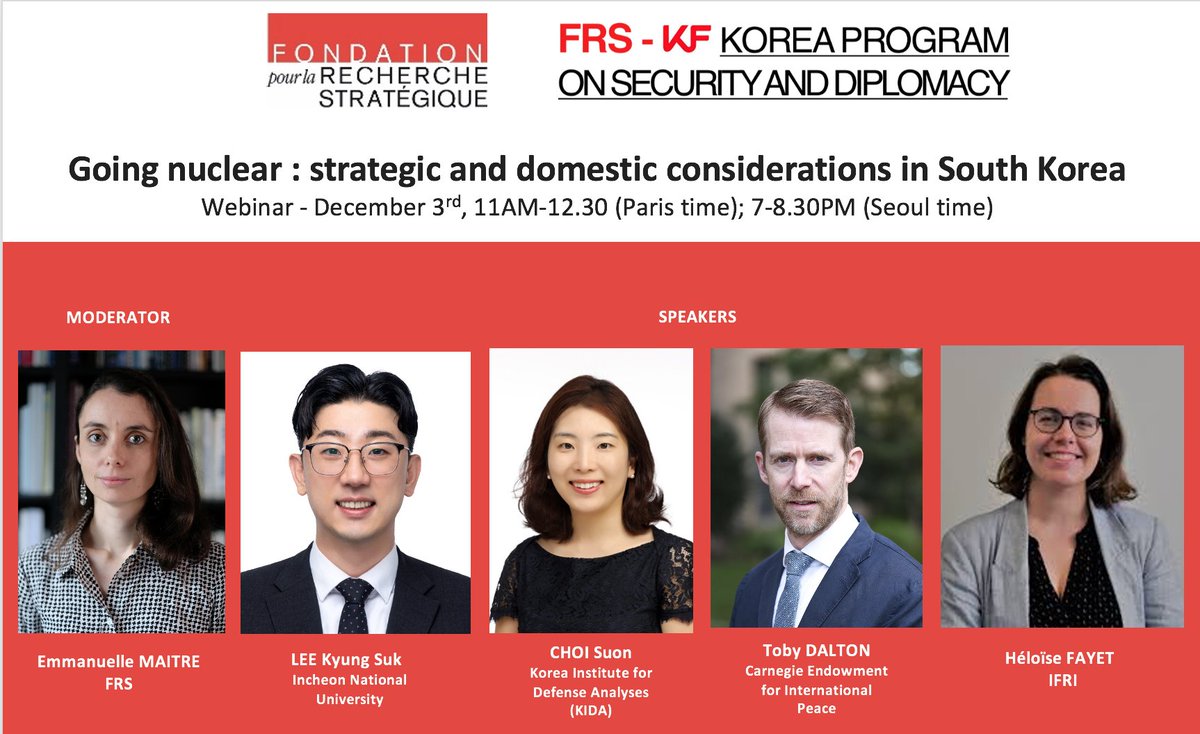
🔴 @FRS_org invites you to a webinar entitled: "Going nuclear: strategic and domestic considerations in South Korea". 🇰🇷
➡️Tuesday, December 3, from 11:00 am to 12:30
➡️Register: us02web.zoom.us/webinar/regi…
1
8
11
4,854
Toby Dalton retweeted

26 Nov 2024
Calling all PhD students and recent grads interested in advancing your policy-relevant research! Applications to join @CarnegieEndow @carnegienpp as a Stanton Nuclear Security Fellow are out now. Apply by 20 December!
carnegieendowment.applicantp…
3
19
32
15,837
Toby Dalton retweeted
19 Nov 2024
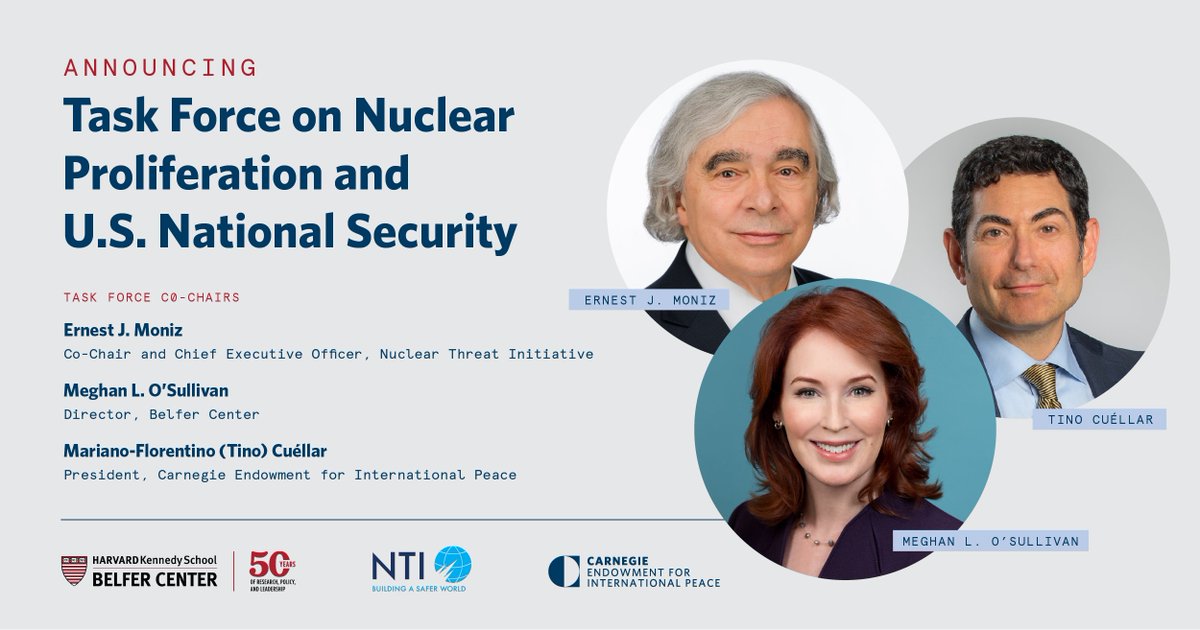
Today, along with our partners at @BelferCenter & @NTI_WMD, Carnegie is pleased to announce a new high-level Task Force on Nuclear Proliferation and U.S. National Security. carnegieendowment.org/posts/…
1
8
8
3,533
Toby Dalton retweeted

13 Nov 2024
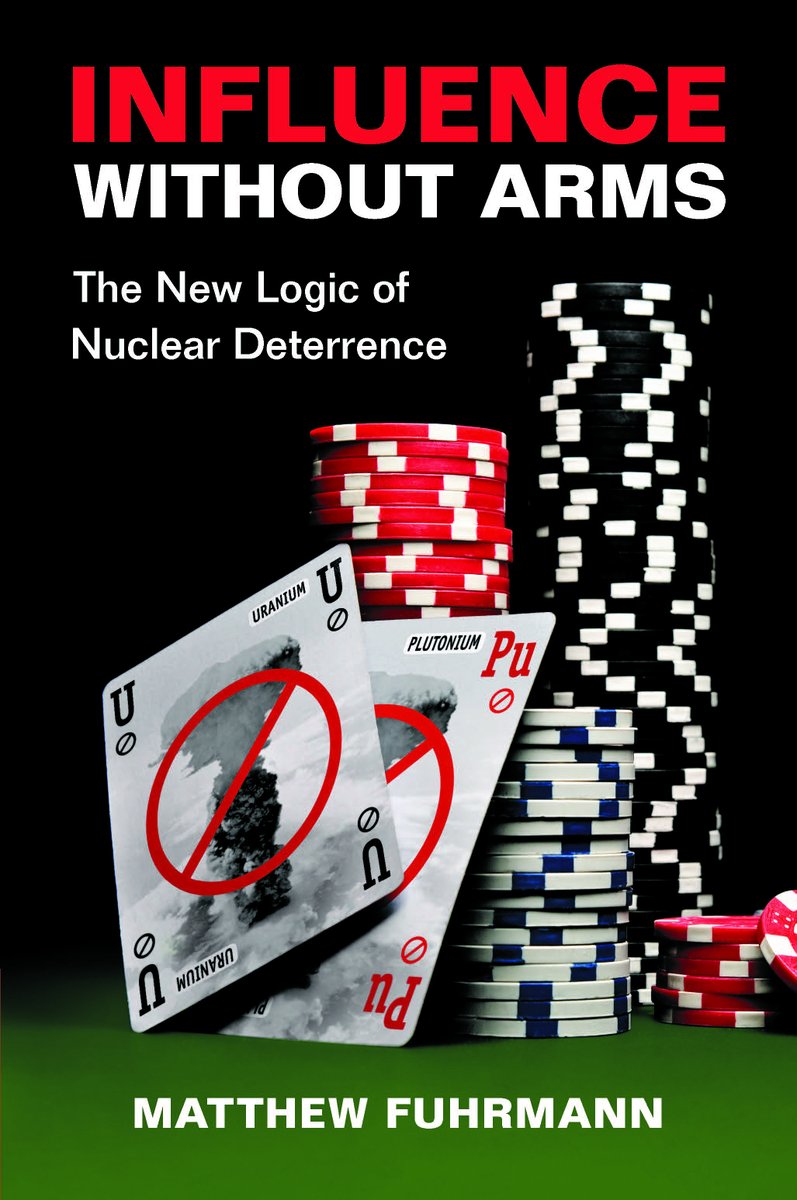
It's publication week! Influence Without Arms: The New Logic of Deterrence is now available with @CUP_PoliSci: cambridge.org/9781108824071. The book examines the role of nuclear technology in international relations.
11
34
112
13,198
Toby Dalton retweeted
4 Nov 2024
Will Iran withdraw from the NPT?
@NicoleGrajewski and I argue that the conflict between Iran and Israel significantly increases the odds. Withdrawal would deal a serious blow to efforts to constrain Iran's program and the nonpro regime as a whole (1/n)
warontherocks.com/2024/11/wi…
2
10
21
3,394
Toby Dalton retweeted

1 Nov 2024
These warnings — probably quite deliberately — are coming from people ever closer to Khamenei. Which is possibly significant.
1 Nov 2024

2
4
6
2,575
1 Nov 2024
Zing
1 Nov 2024

Others said Taiwan couldn’t trust Musk because of his politics—noting his analogy of Taiwan to Hawaii. That comment last year drew a pointed response from Taipei: “We can’t tell whether or not Musk’s free will is for sale. But Taiwan is not for sale.”
wsj.com/tech/taiwans-race-fo…
224
Toby Dalton retweeted

31 Oct 2024
Excellent pragmatic recommendations for how the U.S. can restrain Iran's nuclear program and "prevent a descent into a far more chaotic and violent period in the Middle East." From the knowledgeable @toby_dalton and Eli Levite
31 Oct 2024

How can a nuclear crisis with Iran be averted?
@toby_dalton & Ariel (Eli) Levite argue that repeating the secret U.S.-Iran dialogue that yielded an interim nuclear restraint agreement in 2013 & eventually the JCPOA offer a playbook to prevent a catastrophic chain reaction involving Iran, Israel, and the United States.
Read now: carnegieendowment.org/emissa…
2
1
1,598
Toby Dalton retweeted
31 Oct 2024
How can a nuclear crisis with Iran be averted?
@toby_dalton & Ariel (Eli) Levite argue that repeating the secret U.S.-Iran dialogue that yielded an interim nuclear restraint agreement in 2013 & eventually the JCPOA offer a playbook to prevent a catastrophic chain reaction involving Iran, Israel, and the United States.
Read now: carnegieendowment.org/emissa…
2
6
3,356
31 Oct 2024
If… and it’s a big if… Israel and Iran can find a way out of the revenge trap in which each seeks to “restore deterrence” following an attack, it is critical to find a way to again bound Iran’s nuclear program. Eli Levite and I have a few thoughts. carnegieendowment.org/emissa…
3
3
11
1,936
31 Oct 2024
Basic idea is to go back to the JPOA, the oft-forgotten precursor to the JCPOA, which comprised a set of reciprocal unilateral commitments and restraints. That approach might work in the narrow window available for diplomacy.
2
153