
Tom Wheelwright, CPA is an international speaker and worldwide authority on cutting taxes and building wealth.
Joined March 2020
- Tweets 1,225
- Following 14
- Followers 2,904
- Likes 25
744 Photos and videos


May 16
Comment “TAP” to secure your spot at the next Tax & Asset Protection Bootcamp
1
2
145
May 15
Comment “TAP” to secure your spot at the next Tax & Asset Protection Bootcamp
92
Comment “TAP” to secure your spot at the next Tax & Asset Protection Bootcamp
2
149
Comment “TAP” to secure your spot at the next Tax & Asset Protection Bootcamp
2
142
Feb 17
Tax tricks are tempting… but they’re not a tax plan 👀
A true strategy connects every part of the tax law into one long-term system designed to work in your favor. Tools like hiring your kids or the Augusta Rule are powerful, but only when they fit inside a bigger, intentional structure.
Random write-offs create exposure. Coordinated strategy builds confidence.
Comment “READY” if you want to do it right.
1
6
256
Feb 17
After 40 years as a CPA, I've reduced tax planning to three questions.
Answer these, and your tax strategy writes itself.
𝐐𝐮𝐞𝐬𝐭𝐢𝐨𝐧 𝟏: 𝐇𝐨𝐰 𝐝𝐨 𝐲𝐨𝐮 𝐦𝐚𝐤𝐞 𝐲𝐨𝐮𝐫 𝐦𝐨𝐧𝐞𝐲?
→ W-2 income? Highest tax, fewest deductions.
→ Business income? High tax, lots of deductions.
→ Investment income? Lower rates, different strategies.
→ Real estate income? Depreciation shields, passive income treatment.
Your income source determines which strategies apply to you.
You can't use business deductions on W-2 income.
You can't use passive loss rules on business income.
Know your income type.
𝐐𝐮𝐞𝐬𝐭𝐢𝐨𝐧 𝟐: 𝐖𝐡𝐚𝐭 𝐰𝐢𝐥𝐥 𝐲𝐨𝐮 𝐝𝐨 𝐰𝐢𝐭𝐡 𝐲𝐨𝐮𝐫 𝐦𝐨𝐧𝐞𝐲?
→ Save it? Use retirement accounts for tax deferral.
→ Invest it? Choose investments with tax incentives.
→ Spend it? At least get business deductions on spending.
→ Give it away? Use charitable strategies for maximum deduction.
The wealthy don't just make money. They deploy money strategically.
Deployment determines tax treatment.
𝐐𝐮𝐞𝐬𝐭𝐢𝐨𝐧 𝟑: 𝐖𝐡𝐞𝐧 𝐰𝐢𝐥𝐥 𝐲𝐨𝐮 𝐮𝐬𝐞 𝐲𝐨𝐮𝐫 𝐦𝐨𝐧𝐞𝐲?
→ This year? Accelerate deductions, defer income.
→ Next year? Defer deductions, accelerate income (if rates are dropping).
→ Retirement? Use tax-deferred or tax-free accounts.
→ Never (leaving to kids)? Estate planning and basis step-up strategies.
Timing is everything in tax planning.
Real example:
𝐁𝐮𝐬𝐢𝐧𝐞𝐬𝐬 𝐨𝐰𝐧𝐞𝐫 𝐚𝐧𝐬𝐰𝐞𝐫𝐬...
👉 How: Business income ($500K/year)
👉 What: Invest in real estate
👉 When: Build wealth for 20 years, then transition to passive income
Strategy that follows automatically:
→ S-Corp election (reduce self-employment tax)
→ Cost segregation on properties (accelerate depreciation)
→ Real estate professional status (convert passive to active losses)
→ Defined benefit plan (defer income to retirement)
Same three questions, different answers...
𝐖-𝟐 𝐞𝐦𝐩𝐥𝐨𝐲𝐞𝐞 𝐚𝐧𝐬𝐰𝐞𝐫𝐬...
👉 How: W-2 income ($200K/year)
👉 What: Max out retirement, save for kids' college
👉 When: Retire in 15 years
Strategy that follows:
→ Max 401(k) and HSA (only available deductions)
→ 529 plans for kids (state tax deduction tax-free growth)
→ Tax-loss harvesting in taxable accounts (reduce cap gains)
→ Roth conversions in low-income years
Different questions. Different answers. Different strategies.
Most people fail at tax planning because they skip the questions.
They jump straight to tactics:
🤔 "Should I have an LLC?"
🤔 "Should I buy equipment?"
🤔 "Should I do a Roth conversion?"
Wrong approach.
Answer the three questions first.
Then the strategies become obvious.
Tax planning isn't complicated.
It's just systematic.
How do you make it?
What will you do with it?
When will you use it?
Answer those three questions, and I'll cut your tax bill in half.
5
212
Feb 17
Everyone says diversify.
But most people miss this: diversification protects wealth, it doesn’t build it.
To become a professional investor, you need focus, a deep understanding of your investment, and a clear target you can hit repeatedly. Scattered money creates scattered results, while focus drives growth and moves you from employee or self-employed to investor.
Comment “READY” if you want to think like an insider.
2
182
Feb 17
Rich people use trusts to avoid estate tax.
Wealthy people use trusts for control.
Big difference.
Most people think trusts are for when you die.
Wrong.
Trusts are for while you're alive.
Here's what trusts actually do...
𝐀𝐬𝐬𝐞𝐭 𝐩𝐫𝐨𝐭𝐞𝐜𝐭𝐢𝐨𝐧:
→ Assets in properly structured trusts are outside your personal liability exposure
→ Lawsuits against you don't reach trust assets
→ Protects from creditors, divorce, business failures
𝐄𝐬𝐭𝐚𝐭𝐞 𝐭𝐚𝐱 𝐫𝐞𝐝𝐮𝐜𝐭𝐢𝐨𝐧:
→ Removes asset growth from your taxable estate
→ $13.61M estates face 40% tax (2026)
→ Trust ownership freezes value at transfer date
𝐈𝐧𝐜𝐨𝐦𝐞 𝐬𝐡𝐢𝐟𝐭𝐢𝐧𝐠:
→ Trust can own businesses and investments
→ Distributes income to beneficiaries in lower tax brackets
→ Same family wealth, lower family tax bill
𝐂𝐨𝐧𝐭𝐫𝐨𝐥 𝐦𝐚𝐢𝐧𝐭𝐞𝐧𝐚𝐧𝐜𝐞:
→ You can be the trustee
→ You control investments, distributions, management
→ You own nothing personally but control everything
But here's what nobody tells you...
Trusts are useless if:
❌ You fund them incorrectly (assets must be legally transferred)
❌ You mix trust and personal funds (destroys legal separation)
❌ You don't maintain them (annual filings, separate tax returns)
❌ You set them up too late (can't protect assets from existing creditors)
When to use trusts?
🚫 Under $5M net worth: Probably don't need complex trust structures yet.
📊 $5M-$15M net worth: Trusts start making sense for estate planning and asset protection.
🛡️ $15M net worth: Complex multi-trust structures pay for themselves.
𝐓𝐲𝐩𝐞𝐬 𝐨𝐟 𝐭𝐫𝐮𝐬𝐭𝐬 𝐟𝐨𝐫 𝐛𝐮𝐬𝐢𝐧𝐞𝐬𝐬 𝐨𝐰𝐧𝐞𝐫𝐬:
→ Revocable Living Trust (avoid probate, maintain control)
→ Irrevocable Life Insurance Trust (remove life insurance from estate)
→ Intentionally Defective Grantor Trust (freeze estate value, maintain income)
→ Dynasty Trust (multi-generational wealth transfer)
This is pattern I see with wealthy families.
❌ They don't own real estate personally.
✅ The trust does.
❌ They don't own businesses personally.
✅ The trust does.
❌ They don't own investment accounts personally.
✅ The trust does.
𝐓𝐡𝐞𝐲 𝐜𝐨𝐧𝐭𝐫𝐨𝐥 𝐞𝐯𝐞𝐫𝐲𝐭𝐡𝐢𝐧𝐠. 𝐓𝐡𝐞𝐲 𝐨𝐰𝐧 𝐧𝐨𝐭𝐡𝐢𝐧𝐠.
This isn't about hiding assets. It's about protecting them.
Structure now, before you need it.
Because once the lawsuit is filed, it's too late.
4
217
Feb 16
Trust strategies can be tricky. Learn which are safe and which to avoid.👀
Comment “TAXES” to get guidance.
3
128
Feb 16
What you do with your money matters more than how you make it.
This is the most important tax principle I can share.
Most people obsess over how they make money...
"Should I be an S-Corp or LLC?" 🤔
"How do I structure my compensation?" 💭
"What entity should I use?" 📋
These matter.
But they're Question #1.
Question #2 matters WAY more...
𝐖𝐡𝐚𝐭 𝐝𝐨 𝐲𝐨𝐮 𝐃𝐎 𝐰𝐢𝐭𝐡 𝐲𝐨𝐮𝐫 𝐦𝐨𝐧𝐞𝐲?
Let me show you why...
𝐏𝐞𝐫𝐬𝐨𝐧 𝐀:
👉 Makes $500,000 in well-structured S-Corp
👉 Saves money in bank accounts
👉 Spends on lifestyle
👉 Contributes to 401(k)
💸 Result: Pays $150,000 in taxes
𝐏𝐞𝐫𝐬𝐨𝐧 𝐁:
✅ Makes $500,000 in same S-Corp structure
✅ Invests in rental real estate
✅ Qualifies as real estate professional (750 hours annually)
✅ Gets depreciation deductions
✅ Offsets business income with real estate losses
📈 Result: Pays $20,000 in taxes
Same income. Same structure for HOW they make money.
Completely different tax outcome.
The difference?
What they DID with the money 🎯
𝐈𝐦𝐩𝐨𝐫𝐭𝐚𝐧𝐭 𝐧𝐨𝐭𝐞: Person B's strategy only works because they qualify as a real estate professional. For passive investors, real estate losses only offset passive income, not active business income. But the principle remains: strategic deployment of capital creates massive tax benefits.
After 40 years, Question #2 has 5-10X more impact than Question #1
⚠️ Optimize how you make money: Save $20,000-$40,000 annually
📈 Optimize what you do with money: Save $100,000-$200,000 annually
Yet 95% of people only focus on Question #1.
They perfect their entity structure.
Then save or spend their money in ways that provide zero tax benefits.
Stop obsessing over income structure alone.
Start obsessing over what you do with money AFTER you earn it.
That's where the real tax savings exist.
3
195
Feb 16
Selling gold or silver? You're getting taxed at 28% unless you use one of these three strategies.
Comment "TAXES" to learn how to offset the gains and keep more of your money.
2
166
Feb 16
The biggest mistake I made early in my career...
🚫 Don't delay.
After 40 years, this lesson cost me and my clients dearly.
⚠️ I remember telling a client on April 14th that he owed $100,000 on April 15th.
I was terrified to give him the bad news.
I delayed telling him because I was scared.
He wasn't angry that he owed $100,000.
He was furious that I told him the day before.
Don't delay anything related to taxes or money.
❌ Don't ignore IRS notices → Pay attention immediately and handle them
❌ Don't ignore your tax situation → Don't set it aside saying "I'll deal with that later"
❌ Don't ignore your investing → Don't say "I'll invest when I get around to it"
❌ Don't delay anything financial
Why?
Because your wealth depends on compounding.
📊 Compounding your savings
📊 Compounding your investing
📊 Compounding your tax savings
That compounding effect is what drives wealth creation and personal financial freedom.
For example...
You started investing at age 25. $500/month at 8% = $1.7 million at 65.
Delay until age 35: $500/month at 8% = $745,000 at 65.
Ten-year delay cost: $955,000.
Same principle with tax savings...
✅ Start tax strategy today: Save $30,000/year for 20 years = $600,000 saved
❌ Delay 5 years: Save $30,000/year for 15 years = $450,000 saved
Five-year delay cost: $150,000.
Delaying is a wealth killer.
Every year you delay tax strategy costs you.
Every month you delay investing costs you.
Every week you delay addressing problems makes them worse.
Don't delay.
Act immediately.
Even bad news is better delivered early when you can still do something about it.
That's the lesson that took me 40 years to fully understand.
1
4
314
Feb 15
Some legal strategies are risky. Learn safe ways to reduce your taxes.
Comment “TAXES” and I’ll show you safe, effective ways to reduce your taxes.
4
144
Feb 15
Wealthy people all do one thing that almost no one else is taught.
They all have a long-term tax strategy with a great tax adviser.
Notice I said ONE thing. Because you cannot separate those two.
❌ You cannot have a great tax strategy without a great tax adviser
❌ You cannot have a great tax adviser who doesn't do great tax strategy
That is ONE thing.
They work together.
Wealthy people always have this combination.
They always have somebody looking out for them who understands strategy, not just compliance.
Another thing I noticed?
My wealthiest clients ask me the most questions.
They're constantly thinking about taxes:
💭 "How does this investment affect my taxes?" 💭
💭 "Should I structure this differently?" 💭
💭 "What's the tax impact of this decision?" 💭
I'm also planning for them without them even knowing, then we discuss it.
They have questions for me. I have questions for them.
We work together as a team.
It's that partnership between you and your tax strategist (preferably a CPA) that creates magic.
Compare this to the average person...
❌ They see their accountant once per year
❌ They ask zero tax questions throughout the year
❌ They make major decisions without tax input
❌ They find out the tax consequences AFTER it's too late to fix
The wealthy treat tax strategy as an ongoing partnership.
Not an annual chore.
They have someone who knows their situation intimately and plans proactively.
The average person treats taxes as something that happens TO them once per year.
The wealthy treat taxes as something they CONTROL year-round.
That difference compounds into millions over decades.
Get a great tax strategist. Build a real partnership. Ask questions constantly.
That's what the wealthy do.
1
4
236
Feb 15
Same work. Same car. Totally different tax result.
Comment "READY" and I'll show you how to turn your car into a write-off starting today.
4
144
Feb 15
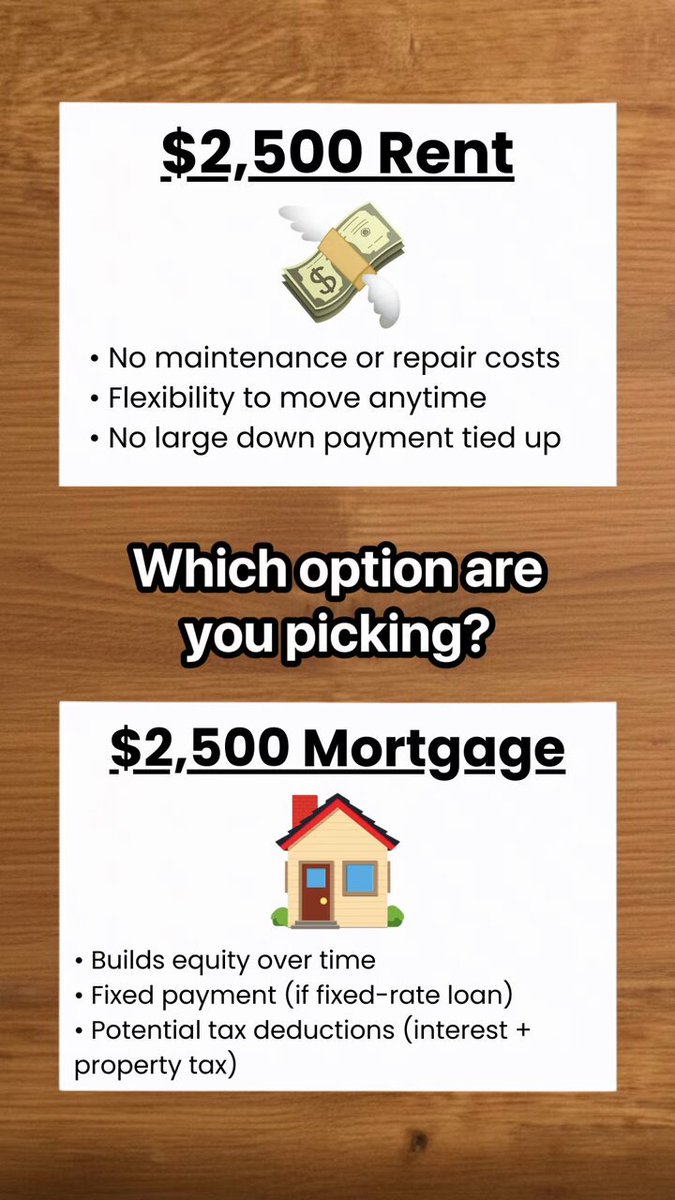
Rent or buy for $2,500 a month? One keeps your cash free. The other grows your wealth.
Comment “PLAYBOOK” to see how investors reduce taxes by up to 30%
2
111