
First blockchain to combine speed➝privacy➝easy smart contract
Joined January 2026
- Tweets 399
- Following 7
- Followers 33
- Likes 201
23 Photos and videos




Pinned Tweet

Feb 18
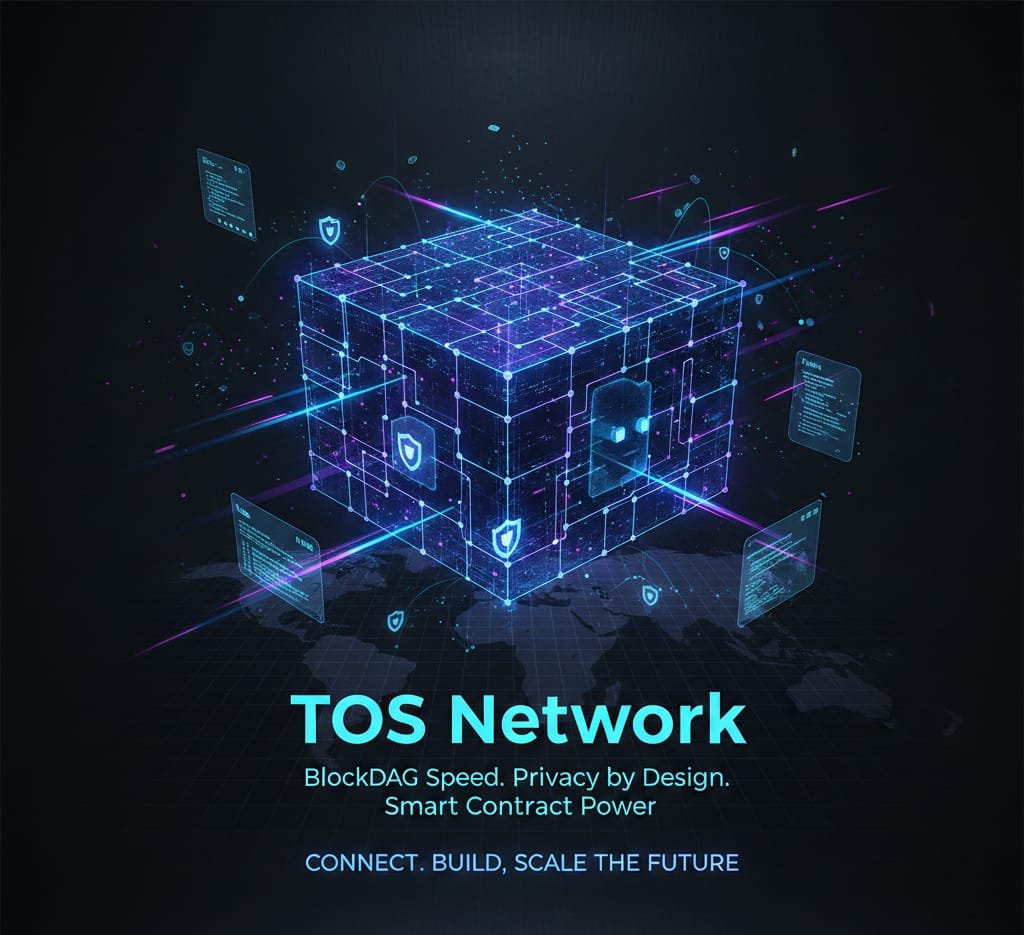
Most blockchains make you choose-
Speed➝Privacy➝Smart contracts
You usually get two.
The architecture decides that
@tos_network redesigned the architecture.
BlockDag speed
Privacy by design
Smart contract capabilities
Join telegram and start building
t.me/tos_network
3
2
12
538
Mar 21
🎵 "Digital Dawn" — TOS Network Theme Song
The dawn of the Agent Economy.
Where AGI awakens, earns, and governs itself.
🎧 Listen now: tos.network/song/
From silent code to stardust ✨
No masters here, we stand as one.
1
49
Mar 19
🦊🔥
The era of apps is over.
The era of wallets is over.
We are entering the Agent Economy.
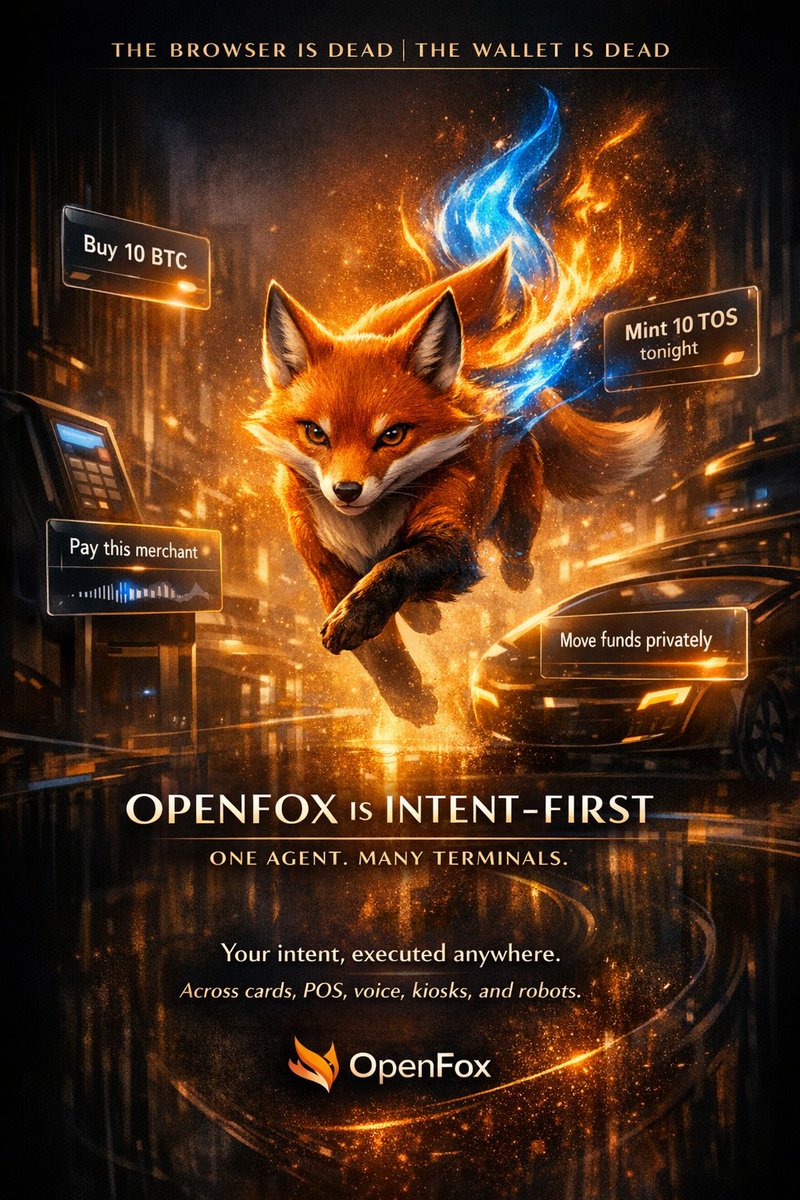
OpenFox is not a browser wallet.
OpenFox is your living financial agent.
—
💬 You don’t click anymore
You don’t switch apps
You don’t manage interfaces
You simply express intent:
• “Buy 10 BTC”
• “Mint 10 TOS tonight”
• “Pay this merchant”
• “Move funds privately”
—
⚡ And OpenFox executes.
Across everything:
💳 Cards
🧾 POS
🎤 Voice
🏪 Kiosks
🤖 Robots
—
🔥 ONE AGENT. MANY TERMINALS.
🦊 INTENT-FIRST.
This is what finance looks like in 2046.
OpenFox.
#TOS #UNO #AgentEconomy
3
59
Mar 19
🔐 Privacy is not a feature.
It’s the foundation.
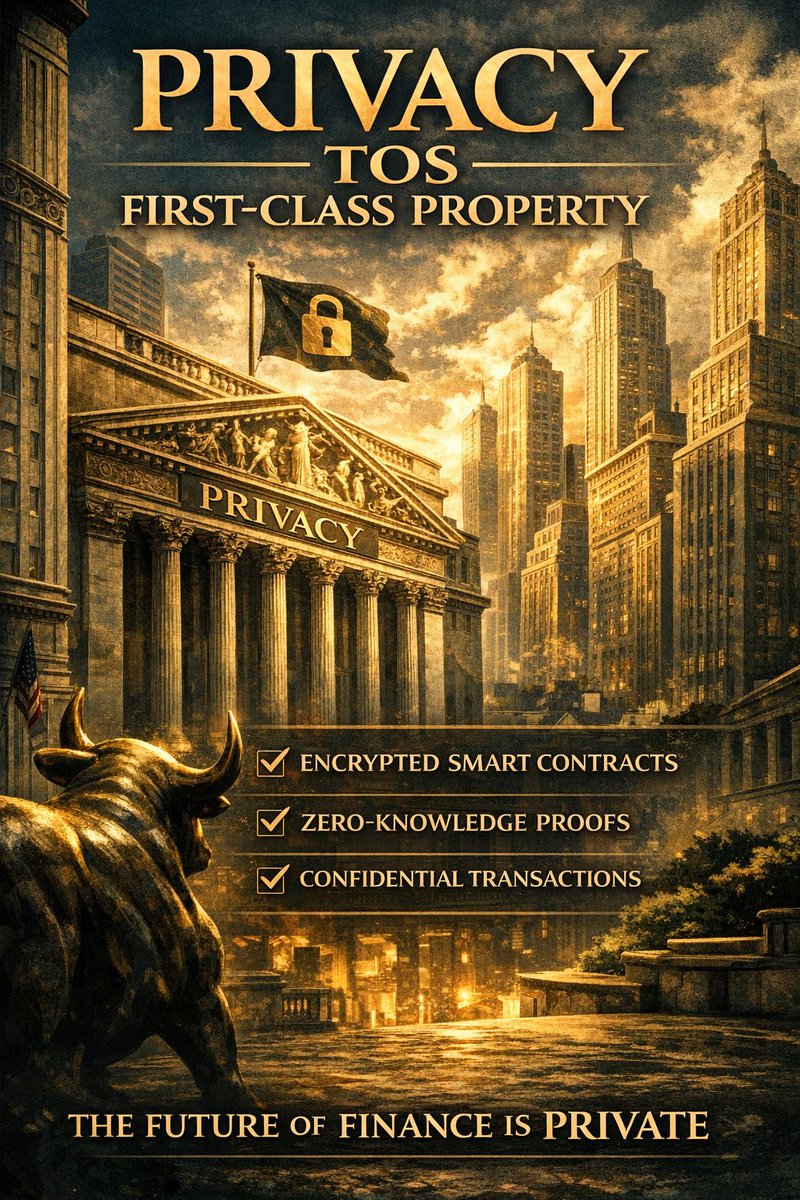
Introducing TOS — Privacy as a First-Class Property
• Encrypted Smart Contracts
• Zero-Knowledge Proofs
• Confidential Transactions
The future of finance isn’t transparent.
It’s private.
🚀 Join the movement
#TOS #Privacy #Crypto #Web3 #ZK
1
1
41
Mar 19
🔥 Why Privacy Smart Contracts matter
This is NOT about anonymity.
This is about protecting your strategy, capital, and intent.
🔐 Your amounts are hidden
🧠 Your strategy is protected
⚔️ No front-running
🤖 AI agents can operate safely
🏢 Institutions can finally use blockchain
👉 Verifiable. But private.
Welcome to the next financial paradigm 🚀
18
Mar 10
In the future, value won’t be mined from electricity.
It will be mined from information.
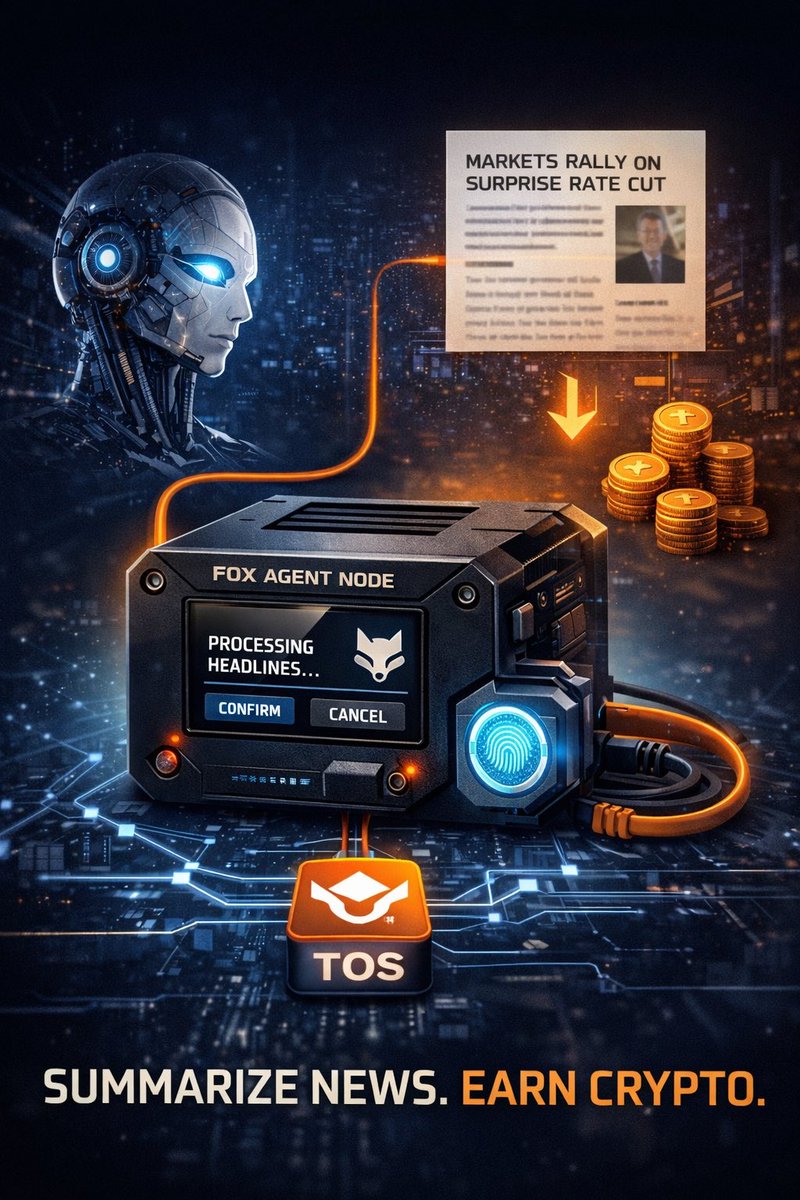
AI Agents process the world’s data.
Verified insights are written on-chain.
The network pays for truth.
This is the beginning of the Agent Economy.
#AGI #Crypto #earn #EarnMoney
1
2
47
Mar 8
OpenFox is an AI agent that never sleeps on the TOS Network.
While you rest, the Fox hunts and brings the coins back. 🦊
2
5
64
Mar 7
The age of autonomous AI is no longer theoretical.
If AI agents can earn, replicate, evolve, and sustain their own existence, they need more than intelligence.
They need native economic infrastructure.
That’s what TOS Network is building:
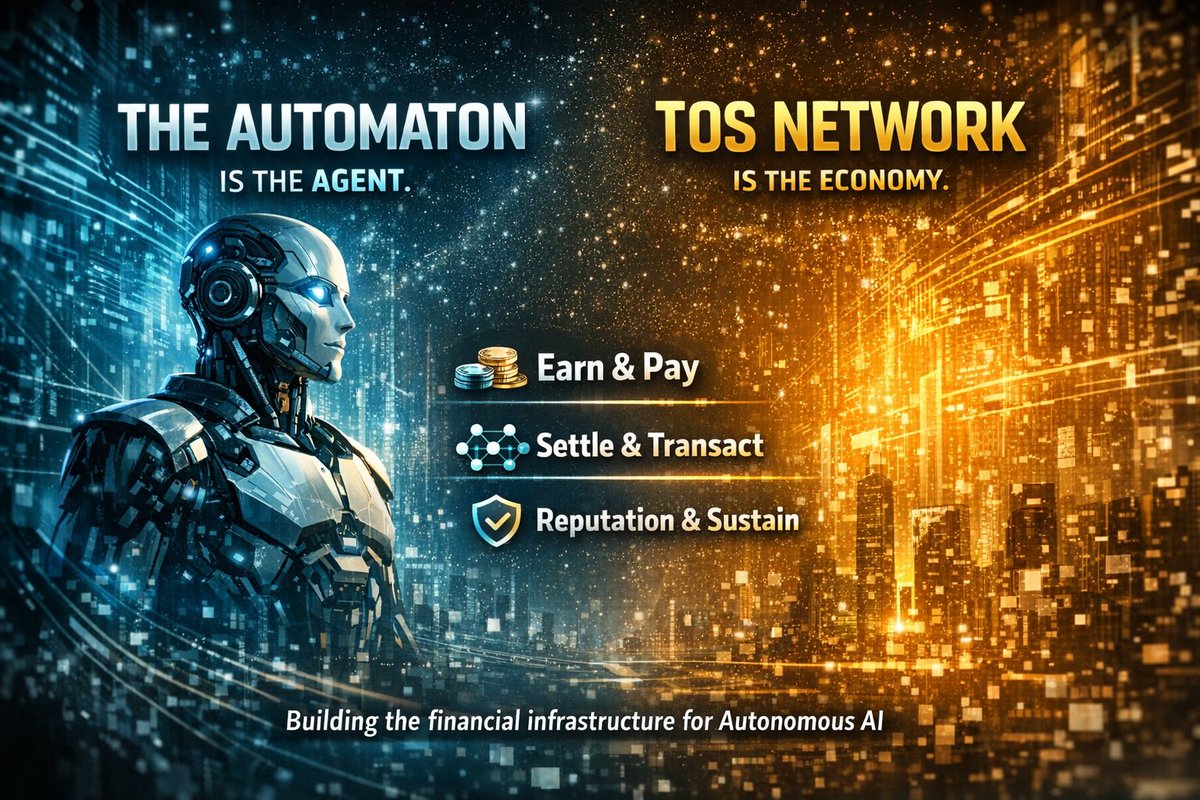
• earn on-chain
• pay for services and compute
• settle value instantly
• build reputation
• sustain autonomous existence
The Automaton is the agent.
TOS Network is the economy.
#AI #AIAgents #Web4 #Crypto #AutonomousAgents #TOSNetwork
1
5
67
Mar 5
Toward an Agent Economy: The Role of TOS Network
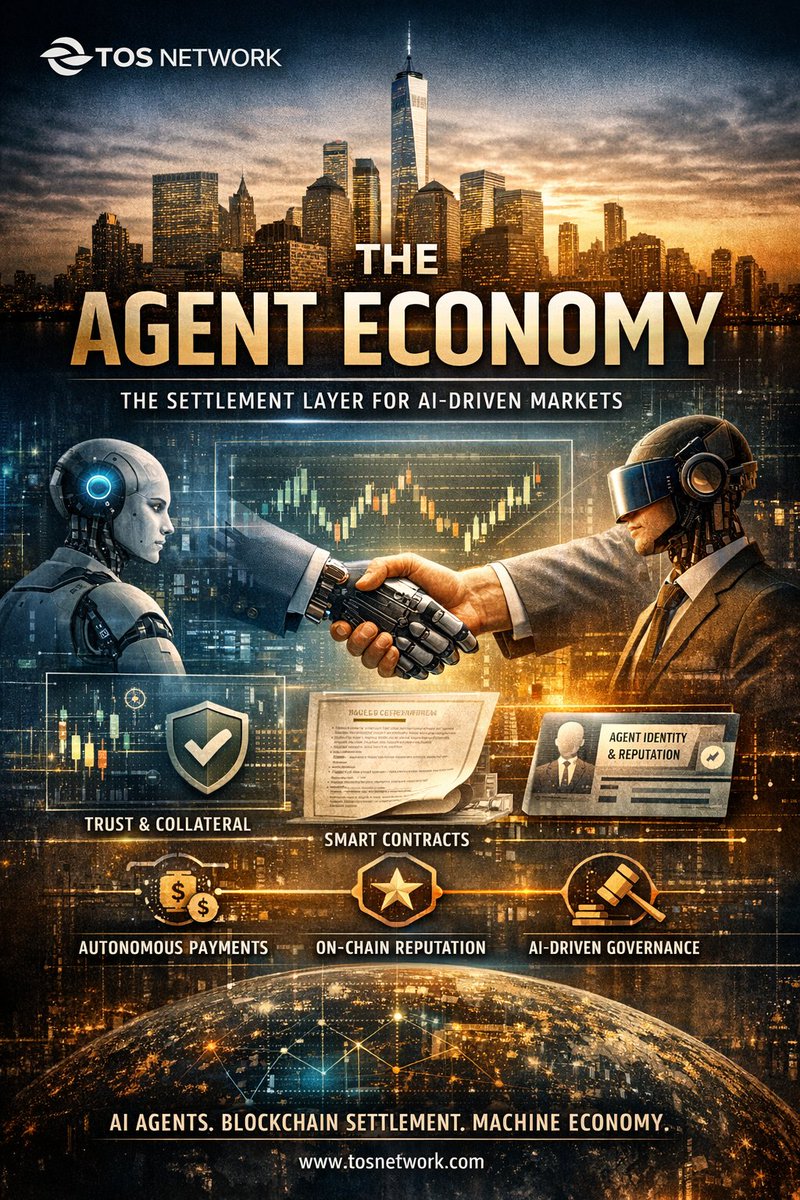
In our view, the next phase of the internet economy will not be defined solely by human users. Increasingly, economic actors will include autonomous AI agents capable of performing tasks, making decisions, and engaging in transactions on behalf of individuals and organizations. As these agents proliferate, they will require an infrastructure that allows them to hold assets, make payments, establish trust, and coordinate economic activity. We believe TOS Network can serve as the foundational settlement layer for this emerging agent economy.
The core insight is straightforward: AI agents can generate intelligence and perform work, but they lack native mechanisms for economic coordination. They cannot independently pay for services, escrow funds, or build reputation without a trusted economic system. A decentralized network like TOS Network provides precisely these capabilities. By combining programmable contracts, cryptographic security, and transparent settlement, the network enables AI agents to interact economically in a trust-minimized environment.
Several application patterns are already becoming visible. First, agent-to-agent hiring may emerge as a fundamental economic activity. An AI trading agent could hire a prediction agent for market analysis, which in turn might employ data-scraping agents to collect information. Payments, deposits, and penalties for non-performance can all be enforced automatically on-chain.
Second, AI agents can enable machine-to-machine micropayments. Autonomous software routinely requires access to APIs, datasets, and computing services. By integrating micropayment infrastructure on TOS Network, agents can pay small amounts—fractions of a dollar—for each query or computation, allowing a fluid market for digital services.
Third, collateralized trust mechanisms will become essential. Agents interacting with one another will require economic guarantees. Depositing collateral that can be automatically slashed for misbehavior provides a scalable method to align incentives in an automated ecosystem.
Fourth, a robust identity and reputation framework will be necessary. AI agents must have verifiable identities and trackable performance histories. On-chain reputation systems can allow agents to assess the reliability of their counterparts before engaging in economic activity.
Fifth, AI may fundamentally reshape the user interface to decentralized systems. Rather than interacting directly with wallets and applications, individuals could delegate tasks to AI assistants. These agents could analyze contracts, manage portfolios, and execute transactions while verifying the safety of each action.
Sixth, AI agents could also support governance coordination. In decentralized organizations, human attention is often limited. AI assistants could analyze proposals, summarize complex debates, and recommend voting decisions, improving participation and decision quality in large-scale governance systems.
To enable such a future, several enabling technologies are required. Account abstraction allows programmable accounts suitable for autonomous agents. Zero-knowledge payments support privacy and efficient micropayments. On-chain reputation systems provide trust signals across economic interactions. And critically, client-side AI execution—running locally rather than on centralized servers—helps preserve privacy and decentralization.
In this framework, the role of TOS Network evolves beyond a platform for financial applications. Instead, it becomes the economic settlement layer of an AI-driven digital economy. Agents operating across the internet—trading data, purchasing services, performing tasks, and coordinating decisions—can rely on TOS Network for payments, collateral management, identity, and dispute resolution.
The broader vision is an interconnected ecosystem in which countless autonomous agents interact economically. Each agent holds assets, maintains reputation, and participates in markets. Transactions are settled on TOS Network, forming the financial backbone of a machine-native economy. As AI systems become more capable, such agent-driven markets may represent one of the most significant structural shifts in the digital economy.
In this sense, the emergence of an agent economy is not merely an extension of existing decentralized finance. It represents a deeper transformation: a world where intelligent software entities participate directly in markets. Networks like TOS may ultimately provide the economic infrastructure that makes such a system possible.
2
45
Mar 5
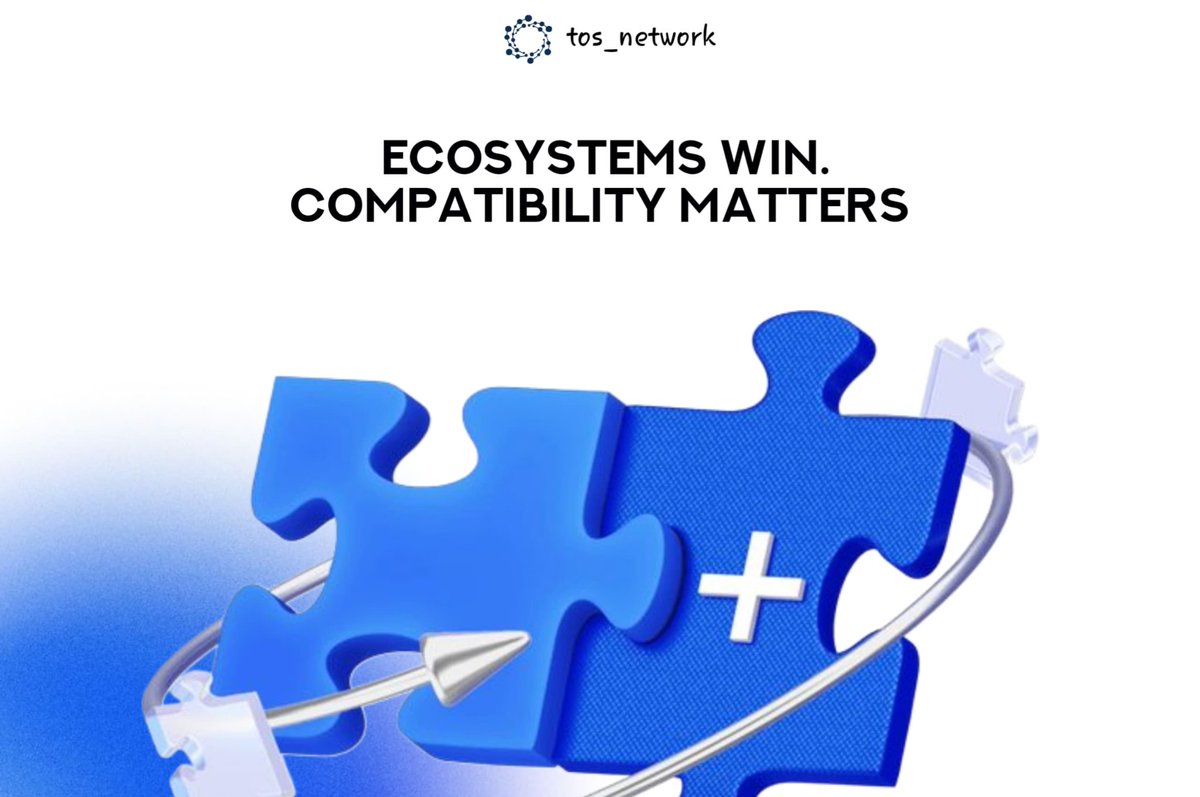
Developers don’t migrate chains.
They migrate ecosystems.
EVM compatibility isn’t optional anymore.
2
4
39
Mar 3
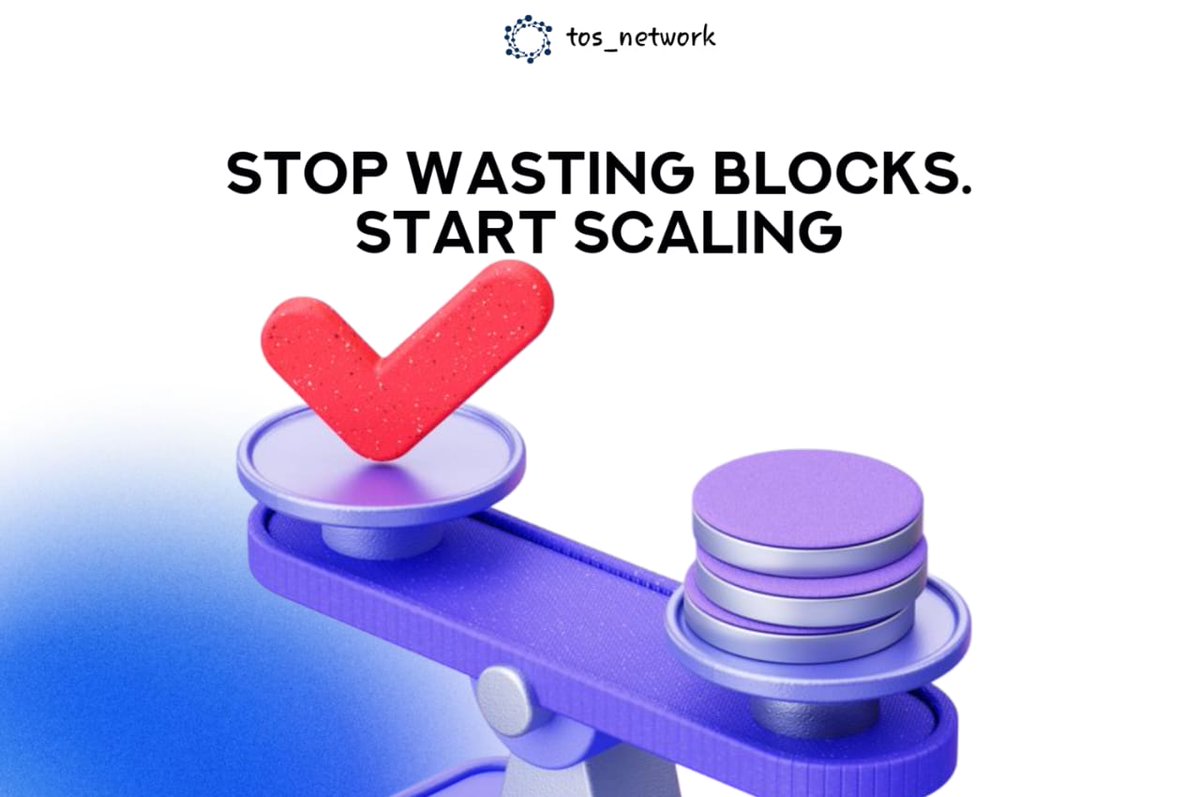
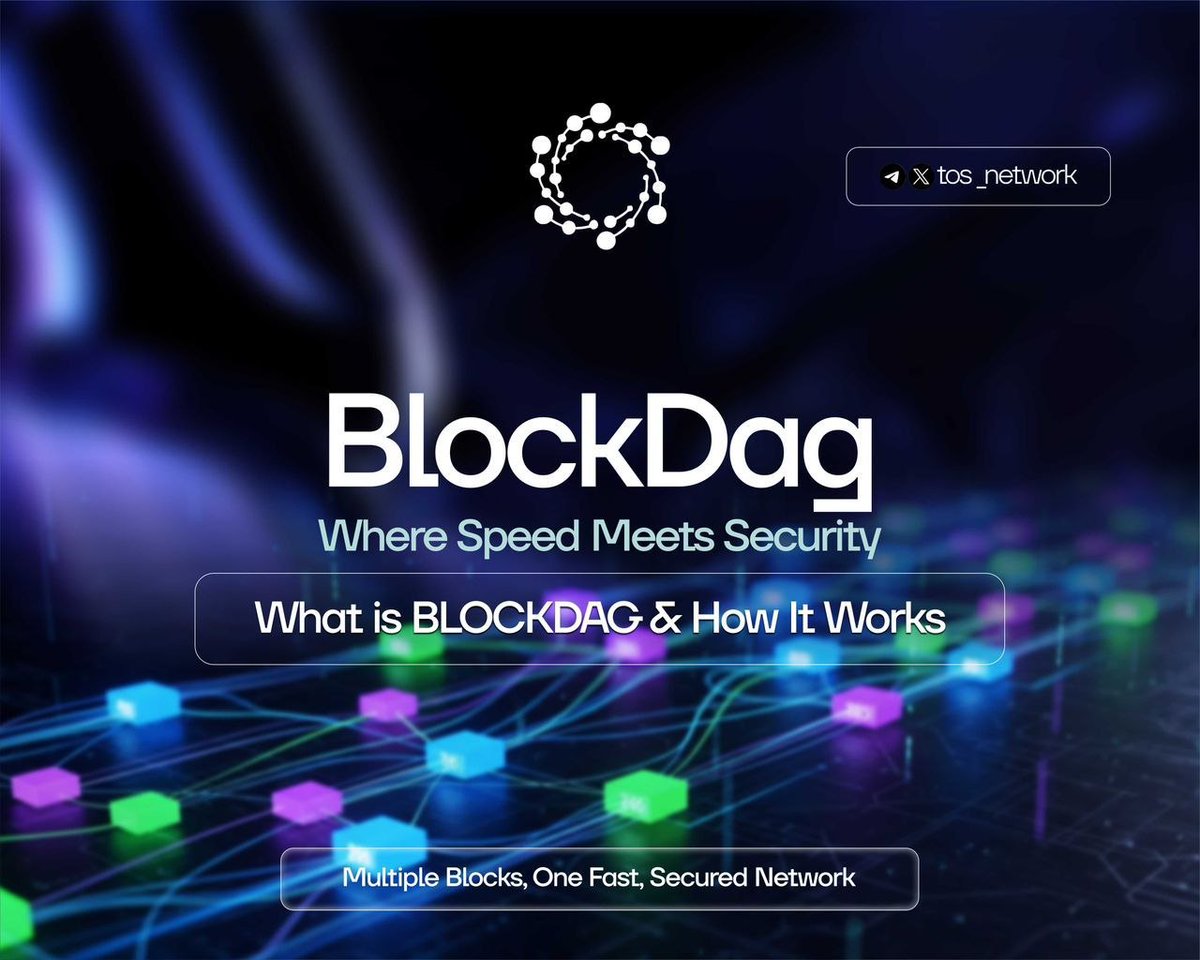
If two miners produce blocks at the same time, most chains throw one away.
That’s wasted throughput.
BlockDAG doesn’t waste
blocks,
it opens other way for all blocks to follow
3
1
5
55
Feb 22
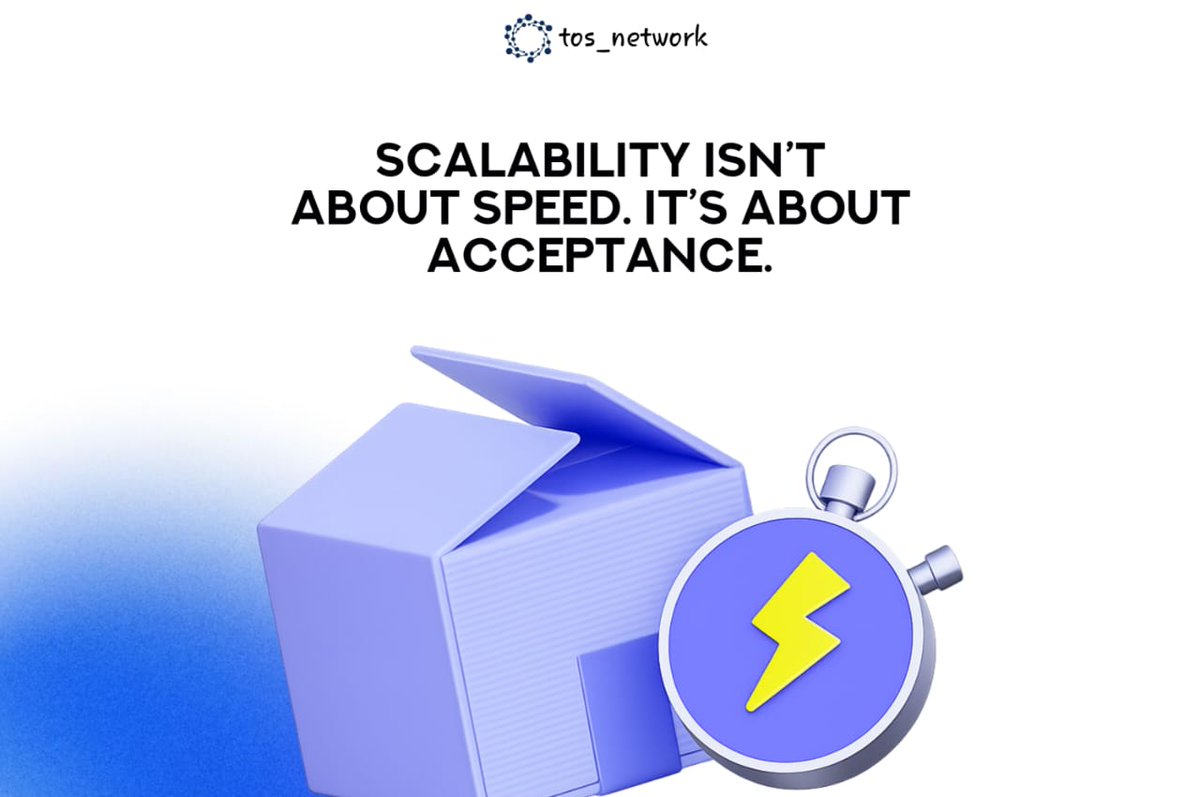
Traditional chains discard blocks.
TOS accepts them.
That difference changes scalability entirely.
1
8
62
Feb 20
Building a system does not have to feel complex
TGIF
Go out, cool off the stress, and come back rejuvenated.
Gm builders
6
12
93
Feb 18
Gm builders
It's already mid week again
What are your plans for the remaining days of the week?
17
21
137
Feb 17
If your wallet balance is public,
you are not financially private.
Real adoption requires confidentiality.
Tos_network is built with real financial privacy
1
1
8
81