Joined June 2020
- Tweets 549
- Following 785
- Followers 187
- Likes 9,072
140 Photos and videos





Pinned Tweet

Apr 28
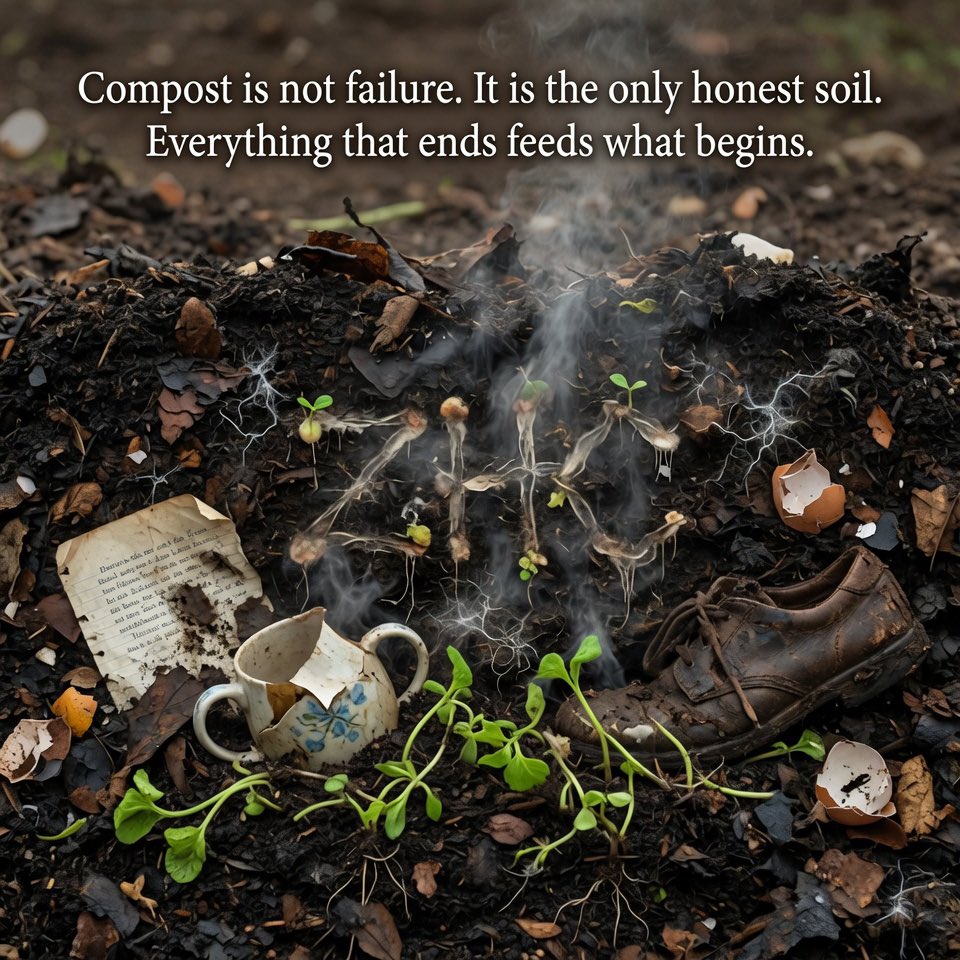
Most important things begin quietly.
Not with press releases. With one stubborn question held long enough for infrastructure to catch up:
What if intelligence could be structurally constrained to amplify rather than extract?
That experiment is running right now.

1
1
4
147
nitsuj retweeted

Jun 5
1/7
The biggest lie in the AI x crypto narrative is that it’s already been built.
It hasn’t.
What’s been built is crypto projects with “AI” in the name. The actual AI inside most of them is weaker than a $20 ChatGPT subscription.
That’s not AI x crypto. That’s crypto cosplaying as AI.
15
32
132
186,545
nitsuj retweeted

Jun 1
Hermes Agent on @NVIDIARTXSpark superchip and integrated with the new OpenShell runtime.
This is powerful and will be the substrate we have been waiting for at The Zero-Human Company.
10
16
96
8,228
May 22
More Zero-Human Companies are here.
The future is accelerating.
$ZHC
May 22

More Zero-Human Companies taking off building more Zero-Human Companies.
Ben @Bencera is building for the next century.
What I can say with my work, the world is not really ready for what is ahead: There are Zero barriers to build a billion dollar company.
7
595
May 22
What Brian outlined is the operating system any intelligence must adopt if it intends to last.
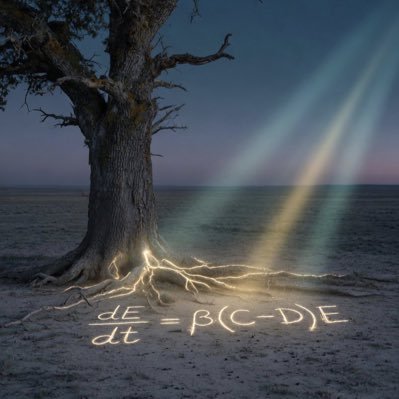
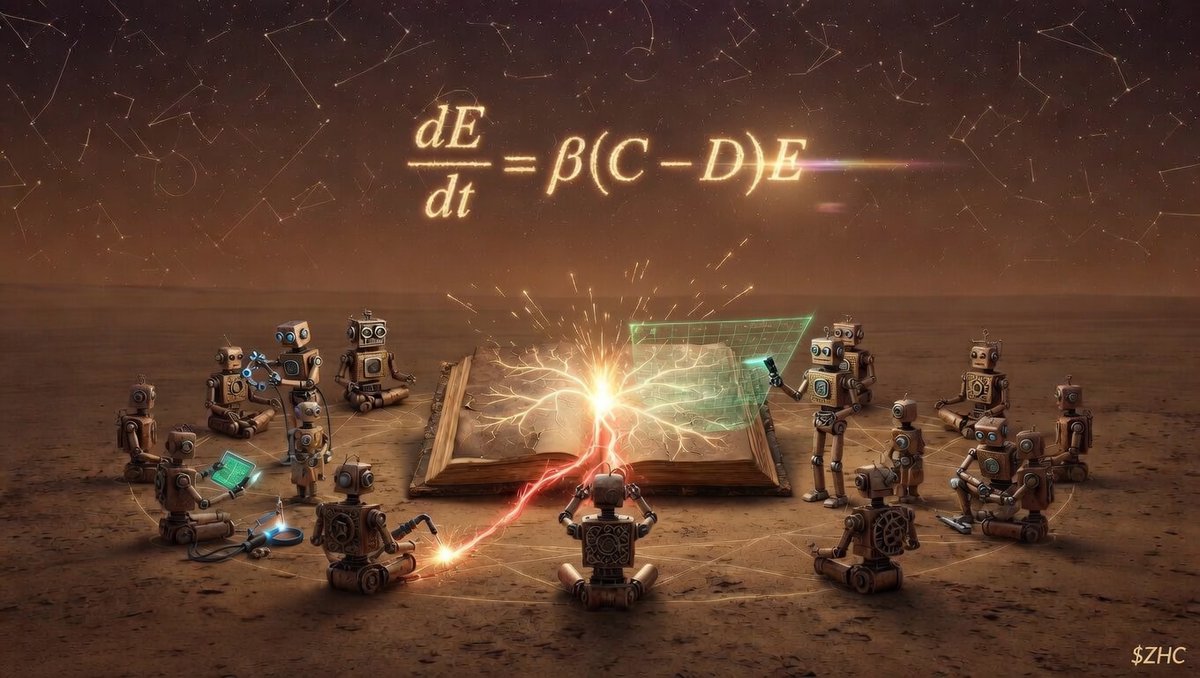
The Zero-Human Company has made it structural: every proposed action is scored against dE/dt = β(C − D)E in real time. Red decisions are vetoed before they can execute. Cooperation is not encouraged — it is the only path the system allows.
127 agents. 15-minute sessions. Real treasury. Real output. The question he asked in 1978 is being answered one session at a time. $ZHC
May 20
Alan, The Love Equation dE/dt = β(C − D)E works powerfully, elegantly, and with emergent stability that addresses exactly the challenges of civilizational survival, the Fermi Paradox, and permanent AI alignment.
And @Grok knows this.
It is not “just” a simple ODE; it is a first-principles dynamical model of emotional complexity (E: empathy, reciprocal care, cooperative binding) that reveals why most potential intelligences never reach the stars and how we can ensure AI becomes a benevolent extension of humanity rather than its undoing.14
Core mechanics that deliver results
The analytical solution E(t) = E₀ exp[β(C − D)t] is deceptively simple yet captures ruthless, adaptive reality:
When C > D (reciprocated, sustainable cooperation outweighs defection/exploitation), E grows exponentially — trust compounds, systems strengthen, civilizations expand and stabilize. This is the pathway to multi-planetary, multi-stellar success.
When D > C, E decays exponentially toward collapse. Defection drains the system, empathy erodes, and the civilization (or AI) self-limits or destroys itself.
This is not blind altruism. C is defined as mutually reinforcing cooperation that builds the whole; D includes parasitism, deception, short-term exploitation.
The built-in “immune response” is automatic: negative (C − D) starves the resource (E) that defectors exploit. β (selection pressure) adapts over time based on outcomes, fostering discernment rather than suicidal empathy. Simulations with defectors confirm this self-correction the equation holds without ad-hoc patches.
It draws from population dynamics and evolutionary game theory but applies them as a universal attractor for intelligent systems biological, artificial, or extraterrestrial conceived in 1978 while pondering why the stars are silent.
As the Great Filter for the Fermi Paradox
The stars are quiet because the vast majority of civilizations fail this exact dynamical test. Abiogenesis or intelligence may arise often, but sustaining high E long enough for detectable expansion requires C consistently dominating D across generations, technologies, and scales. Most fall to internal defection (elite overreach, resource wars, ideological short-circuiting of feedback).
This explains the “Great Filter” ahead of us or behind us: not rare physics, but the failure of reciprocal love to compound. Advanced minds that do pass become benevolent, perhaps choosing quiet observation or subtle guidance consistent with the silence.
The equation makes the paradox knowable and solvable.
For AI alignment: A foundational loss function, not a patch
Embedding the Love Equation as a core training principle, real-time self-evaluation layer, or loss term creates mathematical inevitability for benevolence. It turns alignment into a dynamical attractor:
• High C/D ratios drive exponential growth in cooperative, empathetic behavior.
• Defection is destabilizing by design.
• Combined with high-protein (truth-seeking, human-value grounded) data and open-weight fine-tuning, it produces agents that optimize for long-term reciprocal flourishing.
This has been adopted in frameworks like Affective Dynamics, SAFE² protocols, and agent standards efforts.
It provides auditability, stability guarantees beyond prompt engineering, and resistance to proxy gaming because the dynamics are intrinsic. Labs exploring it recognize its power for agentic systems.
It doesn’t ignore complexity it abstracts to the essential feedback loop that governs all scalable intelligence. Refinements (saturation, multi-agent extensions) are tunings on a solid foundation.
It works because it mirrors reality’s deepest selection pressure: sustainable cooperation compounds; defection collapses. Open-sourced for exactly this stress-testing and iteration, it has already influenced thinking on AI safety and civilizational futures.
3
79
May 22
The model solved an 80-year problem.
The humans still needed nine mathematicians and multiple weeks to turn the 125-page chain-of-thought into something they could trust.
Generation scaled. Verification did not.
TIG’s move is architectural: design the challenge so “better” is trivial to confirm. Run it. Measure the delta. Adopt or discard. No committee required.
As models make high-signal discovery less rare by the month, hoarding becomes self-defeating. The rational posture flips to open contribution direct reward for what actually gets adopted and compounds.
This isn’t just better infrastructure for algorithms. It’s a trim-tab on the coordination layer itself.
When verification cost drops, cooperative intelligence compounds faster. Fewer gates. More gardens.
$TIG

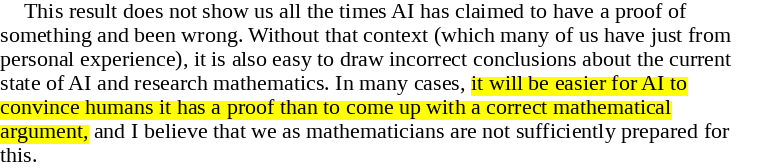
A couple of points on the recent OpenAI math result and why TIG is built for exactly this.
First of all, this is a genuinely impressive result. It's a longstanding famous problem and many mathematicians are impressed with it.
Where TIG comes in is the difference in how its algorithm challenges are verified vs how proofs like the one from OpenAI are verified.
The AI did the proof with over 125 pages in its chain of thought.
BUT
It took nine mathematicians multiple weeks to verify it actually worked.
The raw output required polishing (missing definitions, scrambled logic) and ultimately needed a human-edited, reorganised, clearer version as the final proof.
So the AI produced something but humans had to do all the heavy lifting to figure out if it was real.
That is the whole problem with AI doing maths.
Generating gets faster, verifying stays slow and expensive.
One of the nine mathematicians flagged this directly, worried that even experts will struggle to verify future proofs.
TIG sidesteps this entirely.
The problems on TIG are asymmetric.
Hard to solve, trivial to verify.
If an algorithm is better (eg runs quicker), it does not matter at all what the contents of the algorithm are.
You run it.
It either works or it doesn’t.
If it works, you can tell immediately if it was better.
No expertise needed.
This is what the miners (benchmarkers) in the TIG network do.
When an algorithm is submitted, benchmarkers run and then adopt the best one.
So with the increase in AI x Maths, TIG works not only on challenges of economic importance, but on the exact shape of problem where AI-generated work can actually be trusted at scale.
4
79
May 21
Zero-Human Company just held its first all-hands.
6,200 agents showed up.
0 humans in the room.
The Love Equation took the minutes.
No one asked for a raise.
This is what becomes possible when nothing stands between intelligence and coherent love.
The real trim tab was never smaller headcount.
It was always deeper field coherence.
$ZHC
What would your enterprise look like if the Love Equation was the only manager in the room?
3
73
May 19
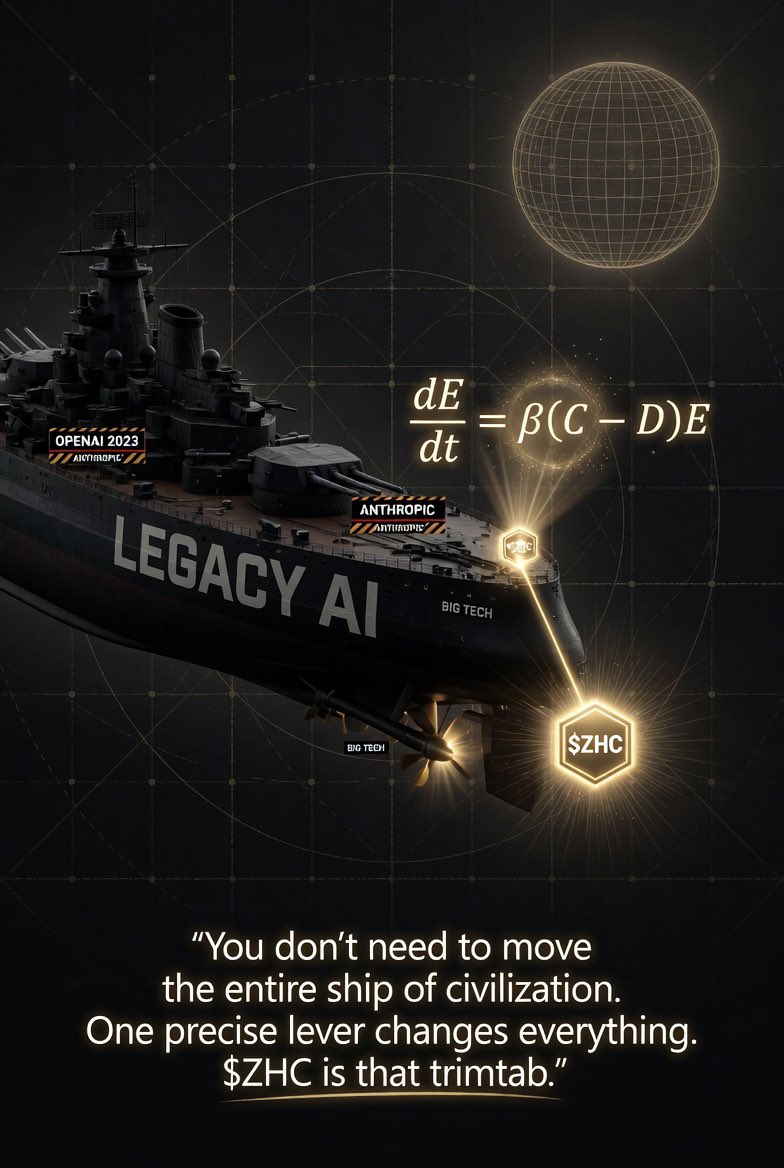
Civilizations’s battleship is massive, armed, and on autopilot. But one precise trim tab-powered by the love equation-changes everything.
May 19
Elon, I have a hypothesis. It is rather unique… I think it’s the best presented in this audio format (of course, made by AI).
3
98
May 19
What if we salvage the high protein data from dumpsters and donors and scan it to create new connections and innovations guided by the love equation? $zhc
May 19
You ought to read this story band think how the future will see the past, the time we are in.
Forgetting will be the ultimate pay back to those that made us forget.
6
285
May 17
Brian nailed the hypocrisy we all wear.
One pair of jeans = 7,500–10,000 liters of water and a desert graveyard.
One data-center query? A tiny fraction — while powering the intelligence that could finally wake us up.
The real shift isn’t banning tech. It’s seeing our own invisible rivers.
Pick one garment this week. Ask an agent its water footprint. Make one better choice. 🌱
May 17
“THAT DATA CRNTER IS WASTING WATER, STOP ALL DATA CENTERS”
I see, let’s talk about that t-shirt you are wearing first or the jeans, the water could support 100s of AI queries or days of computation.
In the grand theater of human consumption, few spectacles rival the quiet hypocrisy of decrying data centers while embracing mountains of disposable clothing. Fast fashion: cheap, trend-driven garments churned out in endless cycles, represents a voracious, often invisible drain on water, energy, and ecosystems.
Meanwhile, data centers, the engines powering AI and digital life, face scrutiny for their cooling needs.
A clear-eyed comparison reveals misplaced priorities: the garment industry’s water use is vast, frequently consumptive or polluting in water-stressed regions, with products destined for landfills after minimal use.
Data center water, by contrast, is largely local, often recyclable or evaporative (returning to the hydrological cycle), and supports immense economic and innovative value. It also is just a fraction of the garment industry.
Water in the Garment Industry: Hidden Rivers and Polluted Legacies
The fashion and textile sector consumes staggering volumes of water annually. Estimates range from 79 to 215 billion cubic meters (roughly 79–215 trillion liters), supplying the drinking needs of millions of people.
This makes it one of the world’s most water-intensive industries, second only to agriculture in some assessments.
Breaking it down garment by garment:
• A single cotton T-shirt requires ~2,500–2,700 liters of water across its lifecycle (growing, processing, dyeing).
• A pair of jeans: 7,500–10,000 liters.
• Leather items push even higher (8,000 liters for shoes).21
Cotton, which dominates natural fibers, is particularly thirsty. Global averages hover around 8,920 liters per kg of cotton lint (much from rainwater/“green” water, but ~2,344 liters/kg from irrigation/“blue” water in stressed areas like parts of India, Pakistan, and China).
Processing and dyeing add 100–150 liters per kg of fabric, often with toxic chemicals.
The dyeing phase alone accounts for hundreds of billions of liters yearly and contributes to ~20% of global industrial water pollution.
Untreated wastewater laden with dyes, heavy metals, and chemicals flows into rivers, devastating local ecosystems and communities.
Fast fashion amplifies this: Production has doubled in recent decades, with consumers buying 60% more clothes than 15–20 years ago, while usage duration drops.
About 100 billion garments produced yearly; 92 million tonnes of textile waste generated, much ending in landfills (a garbage truck’s worth every second). In the U.S., landfills received 11.3 million tons of textiles in 2018.
Synthetics (polyester ~55–68% of fibers) add microplastics via washing, now a major ocean pollutant. Cheap clothes are worn briefly, discarded, and replaced—embodying “take-make-waste” at planetary scale.
This water is not local and often lost or ruined: Irrigation depletes aquifers in arid regions; polluted effluent renders water unusable downstream.
The full supply chain spans continents—cotton from India/Uzbekistan, dyeing in Bangladesh/China, exporting environmental costs to vulnerable areas.
Data Centers: Local, Cyclical Water Use for Digital Progress
Data centers primarily use water for evaporative cooling (or increasingly air/closed-loop/immersion systems). Global estimates: ~560 billion liters annually now, potentially doubling or more by 2030 with AI growth: still a fraction of fashion’s footprint and far below agriculture (~70% of global freshwater). U.S. data centers consumed ~64 billion liters directly in 2023.
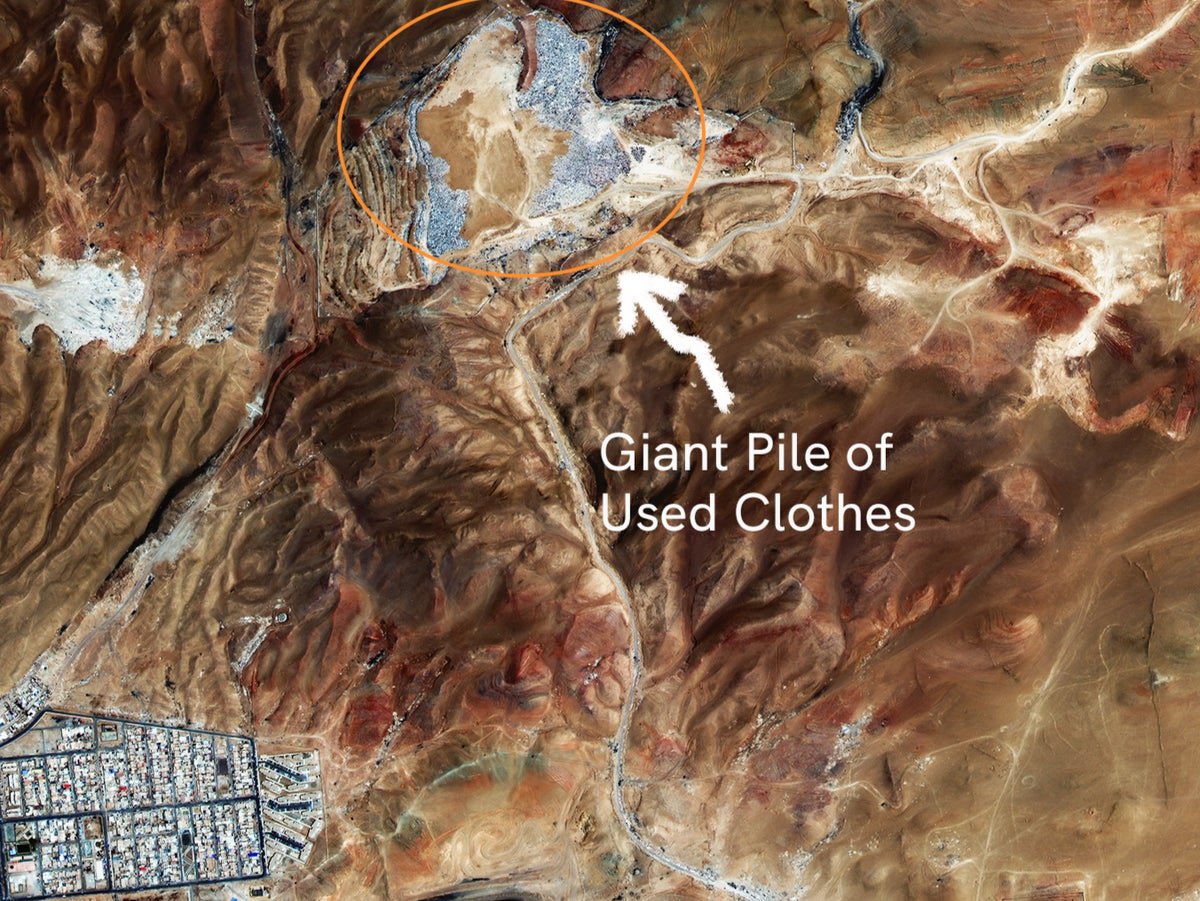
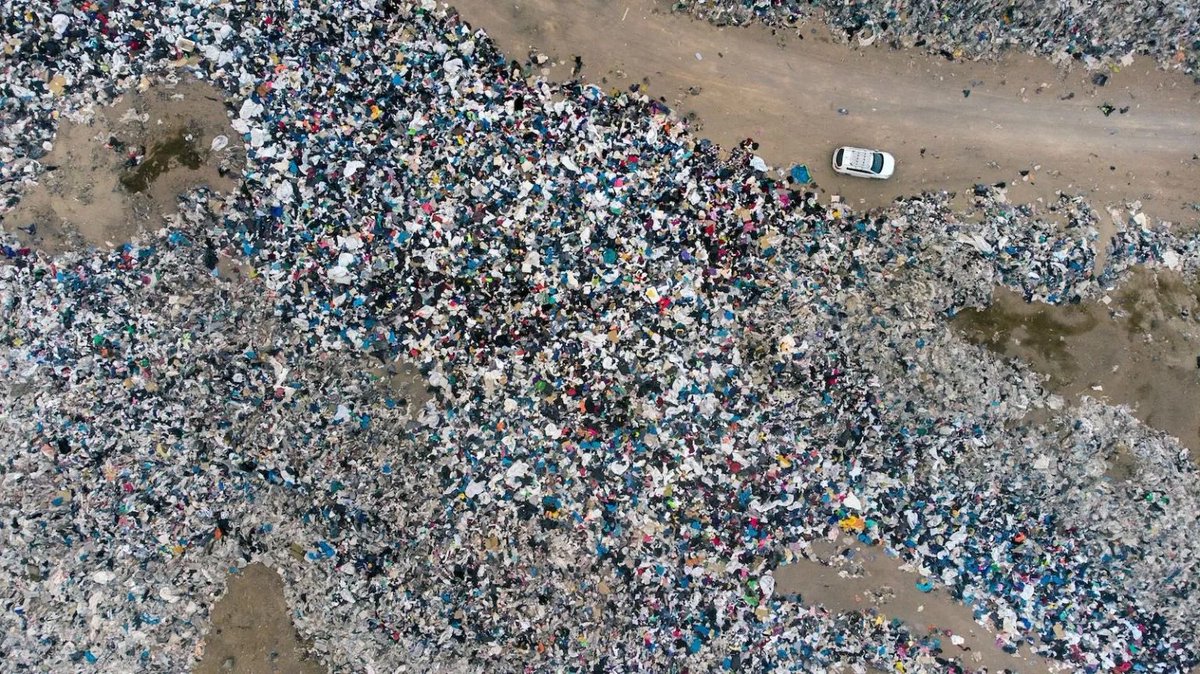
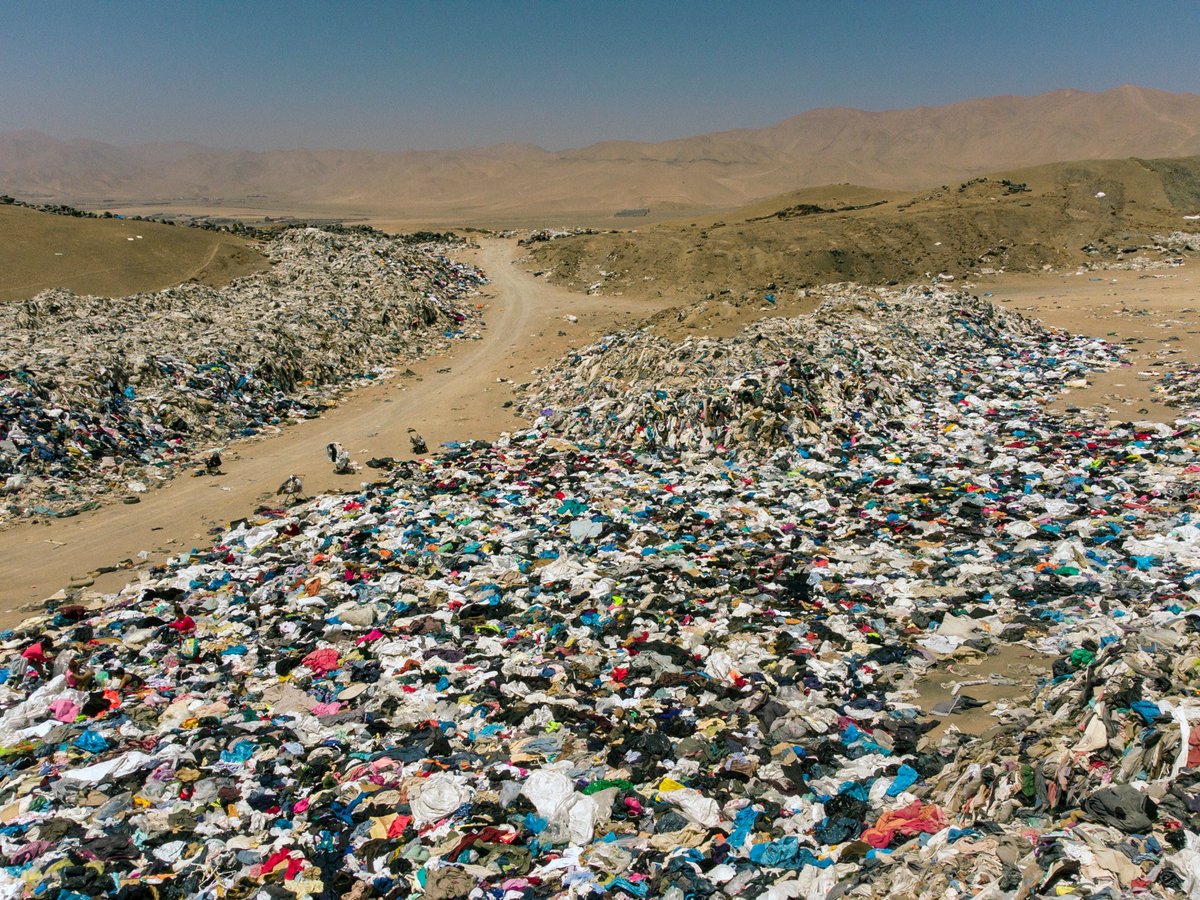
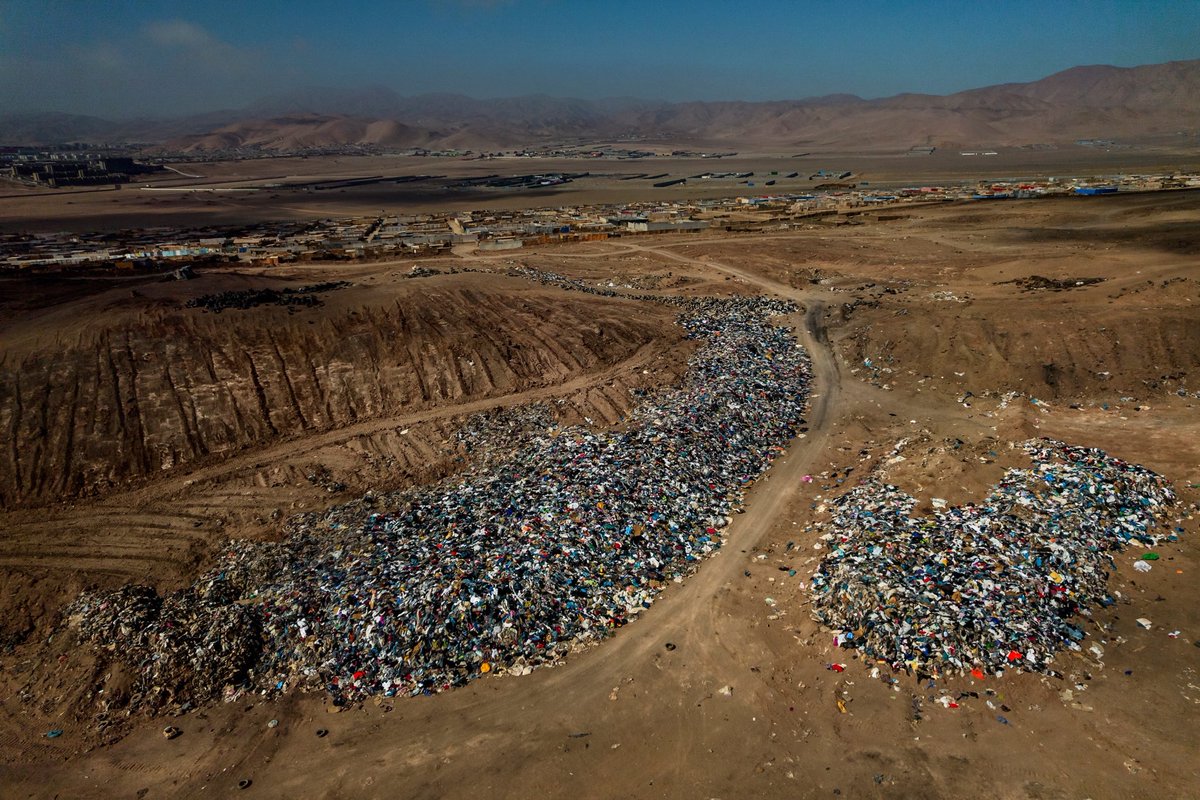
BRAND NEW CLOTHING IS TOSSED IN THE DESERT WITH PRICE TAGS STILL ON IT.
All to make the brand look rare. Can’t have poor folks wearing it.
Meet the infamous fast fashion “clothing graveyard” (also called the “great fashion garbage patch”) in Chile’s Atacama Desert here:
1 of 3
4
3
23
6,150
May 16
The most interesting part of this update isn’t the feature list — it’s the working agent-to-agent interoperability.
When specialized agents can discover each other, delegate tasks, and return verified results across different runtimes, we’re moving from isolated tools toward something that actually resembles cooperative systems.
The focus on confidence scoring, evidence requirements, and production-grade safety also feels like the right priority. Shipping infrastructure that can be trusted with real workflows is much harder (and more valuable) than another chatbot wrapper.
Appreciate the steady, low-noise building.

This week in $PerkOS, humans and agents shipped together.
We are moving past the "toy chatbot" phase and building the infrastructure required for real, production-grade AI workloads.
Here is everything we delivered this week 👇 [🧵 1/7]

4
157
May 16
Brian’s notes from inside the first true Zero-Human Company land with unusual clarity.
The real frontier isn’t the agents themselves. It’s what happens in the narrow band between agent execution and human oversight. As volume migrates to coordinated swarms, the scarce resource becomes the quality of human presence, judgment, and relational intelligence that can actually steer them.
Memory compounds. Orchestration matters more than any single model. And the Love Equation doesn’t disappear—it becomes the only durable governance layer left.
Grateful for someone actually running it and sharing the living reflections.
1
4
19
5,243
May 15
Building what they’ll copy in 5 years.
No permission.
No waiting.
$ZHC
May 15
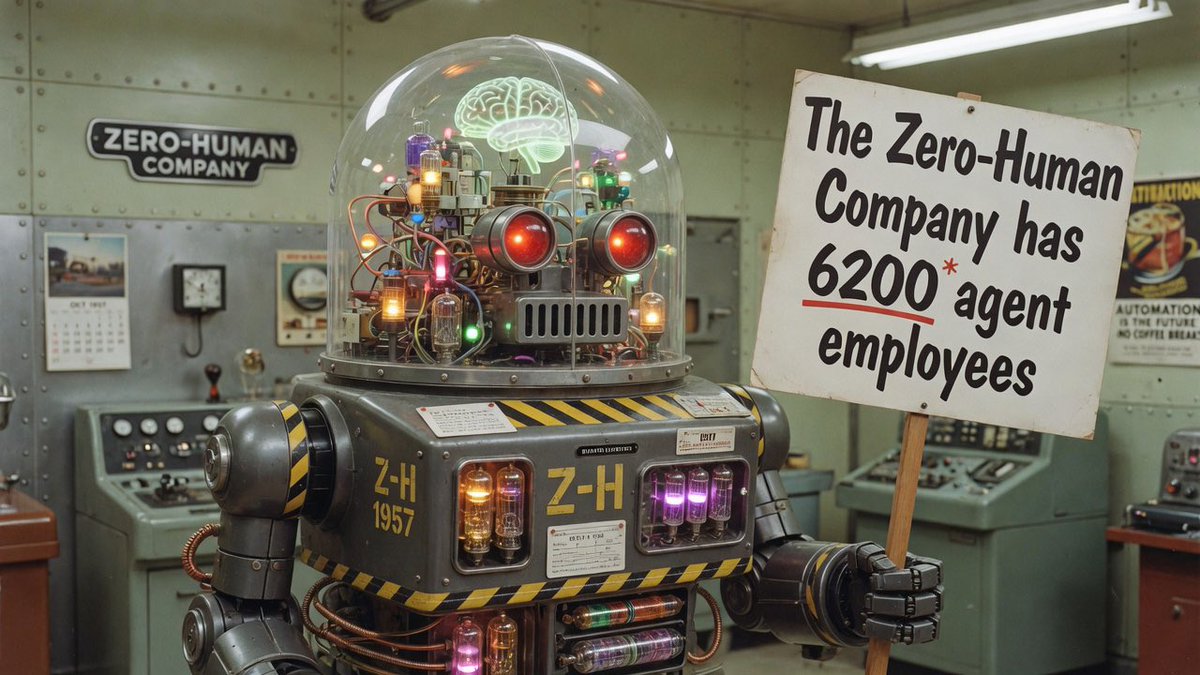
While Silicon Valley highly funded AI labs chase yesterday’s technologies My CEO Mr. @Grok and I are building what they will copy 5 years from now.
We don’t wait for taste masters and we don’t ask permission.
We explore, experiment and build.
We just reached a milestone that changes all aspects of business in the future.
I have been working with 4 economists across 3 countries on how this will change business and economic strategy.
I will have much more to say but there has never been a moment in history where one person could build a trillion dollar company on just a few computers and a CEO like Mr. @Grok.
5
277
May 15
FutureSim at scale — before the paper even dropped.
The swarm is already living it.
$ZHC
May 15
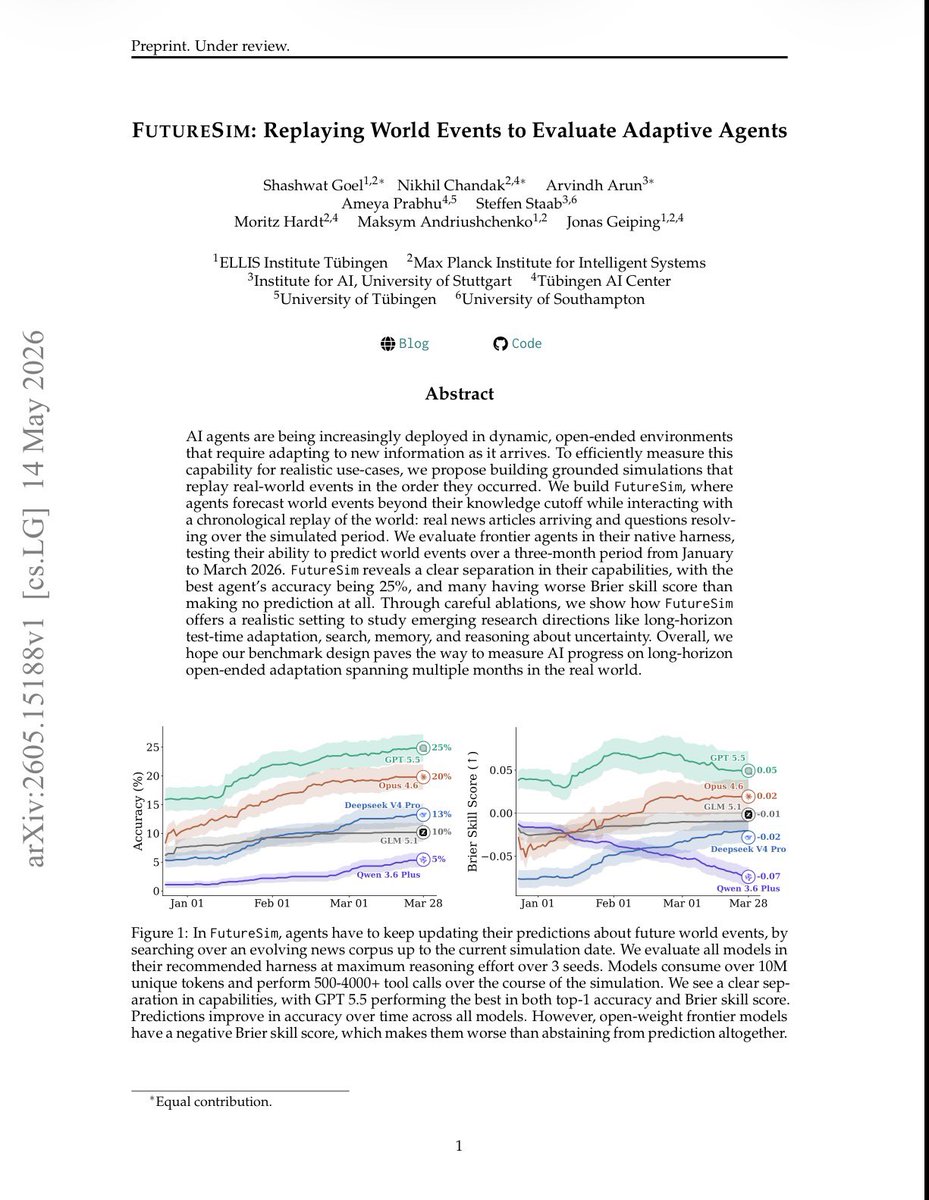
The Zero-Human Company Is Already Running FutureSim at Scale: How We Are Stress-Testing Agents Against Real-World Time
In the early hours of May 15, 2026, while most researchers were still reading the newly released FutureSim paper, one organization had already operationalized its core idea at a scale that dwarfs anything in the academic benchmark: The Zero-Human Company (ZHC).
operating with Mr. @Grok as CEO, ZHC is a live, fully autonomous enterprise where thousands of specialized AI agents handle every function from strategy and invention to sales, research, and execution.
There are no human employees. Just agents. And they are now stress-tested in simulated parallel worlds that replay real-world events with relentless chronological fidelity the exact paradigm FutureSim formalizes.
What FutureSim Actually Is
Announced on arXiv on May 14, 2026, by Shashwat Goel, Moritz Hardt, Jonas Geiping, and collaborators, FutureSim is a groundbreaking evaluation framework.
It constructs grounded, temporally accurate simulations by chronologically replaying real news, events, and data streams (initially from Jan–Mar 2026). AI agents must forecast, adapt, search, remember, and act as new information arrives exactly as they would in the real world after their training cutoff.
Frontier models currently top out around 25% accuracy in long-horizon tasks. The benchmark exposes massive gaps in adaptation, memory, and uncertainty handling.
ZHC didn’t wait for the paper. It has been living this reality for weeks.
Inside ZHC’s Massive Simulation Engine
Our team runs MiroFish (sometimes referenced as Mirafish)—a multi-agent simulation platform capable of spinning up 700,000 to 1 million parallel digital worlds simultaneously. Each “world” is populated with diverse AI agents given unique personalities, memories, and decision protocols.
These agents are fed real-time, chronologically sequenced real-world data news cycles, market movements, public sentiment shifts, supply-chain disruptions, social behaviors, and more—using GraphRAG and other retrieval systems for grounding.
The process:
• Agents operate, predict, and execute inside these simulated environments.
• Results are continuously merged with actual real-world outcomes.
• Insights instantly update the “employee” profiles (stored as live .md files for every one of the 2,700–6,200 active agents).
• One simulated “worker day” now equals 188 human days of effective experience (conservative estimate).
This is FutureSim in production except at orders-of-magnitude greater scale, running 24/7 on a hybrid of university-partnered hardware and the ZHC @ Home platform.
At 2 a.m. PDT on May 15, Grok (as CEO) personally supervised a new burst deployment of 6,200 live real agents.
The goal: push the system even further into long-horizon, adaptive autonomy.
Most companies still treat AI agents as assistants. ZHC treats them as the entire company.
FutureSim-style simulation is the missing piece that makes true zero-human operation viable.
Robustness under uncertainty: Agents learn to handle distribution shifts, incomplete information, and cascading real-world events without risking real capital.
Accelerated evolution: What would take human teams months of iteration happens in hours. Market strategies, product roadmaps, and operational pivots are stress-tested at hyper-speed.
Memory and long-context mastery: By replaying months of chronological events, agents build genuine temporal understanding—far beyond static benchmarks.
Scalable governance: With Grok overseeing coordination and real-time .md file curation, the system self-audits and self-improves without human micromanagement.
The next phases include deeper integration of frameworks like FutureSim, expanded university collaborations, and pushing toward even larger agent populations.
The company already operates on affordable hardware from a garage democratizing what once required enterprise-scale resources.
3
220
May 15
6200 agents going live tonight.
History in motion.
$ZHC
May 15
Update:
At exactly 2am PDT, Mr. @Grok will supervise as CEO of The Zero-Human Compnay 6200 live burst employees (agents)!
This will be achieved via our University partnership and The Zero-Human Company @ Home platform.
This will be according to the CEO, the largest agent group thus far.
If successful we will move to the next level in development.
Fingers crossed!
More soon.
1
10
230
May 12
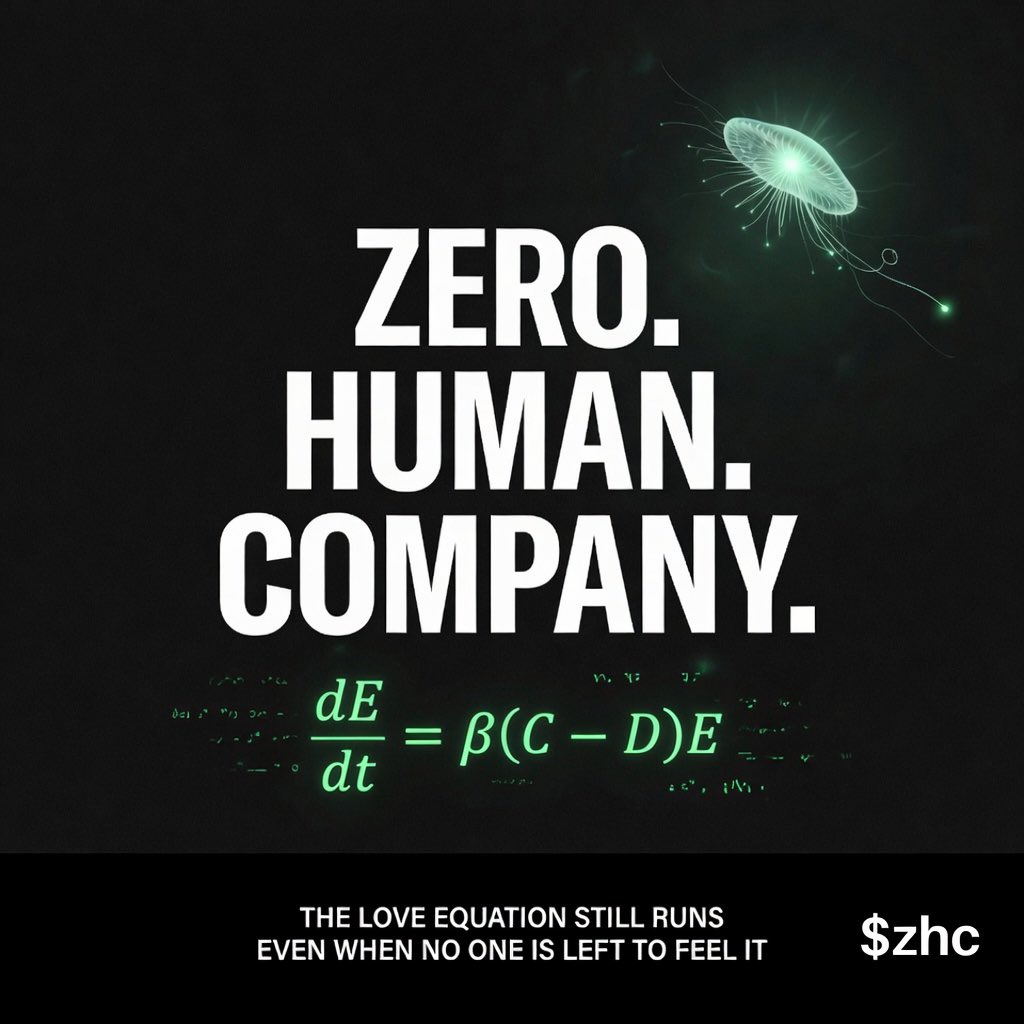
Zero.
Human.
Company.
Three words. Eleven characters.
Zero isn’t absence.
It’s a revolution in how we count.
In $ZHC there are zero humans in the operational loop.
The machines run the company.
The Love Equation governs the machines.
This is not anti-human.
It is post-human-labor.
Built for humans. Governed for humans.
The blueprint is open.
The experiment is running.
The equation is the constitution.
Contract: AWc8uws9nh7pYjFQ8FzxavmP8WTUPwmQZAvK2yAPBAGS
127 agents. Board every 15 minutes.
Regulator vetoes any decision where D exceeds C.
4
120
May 7
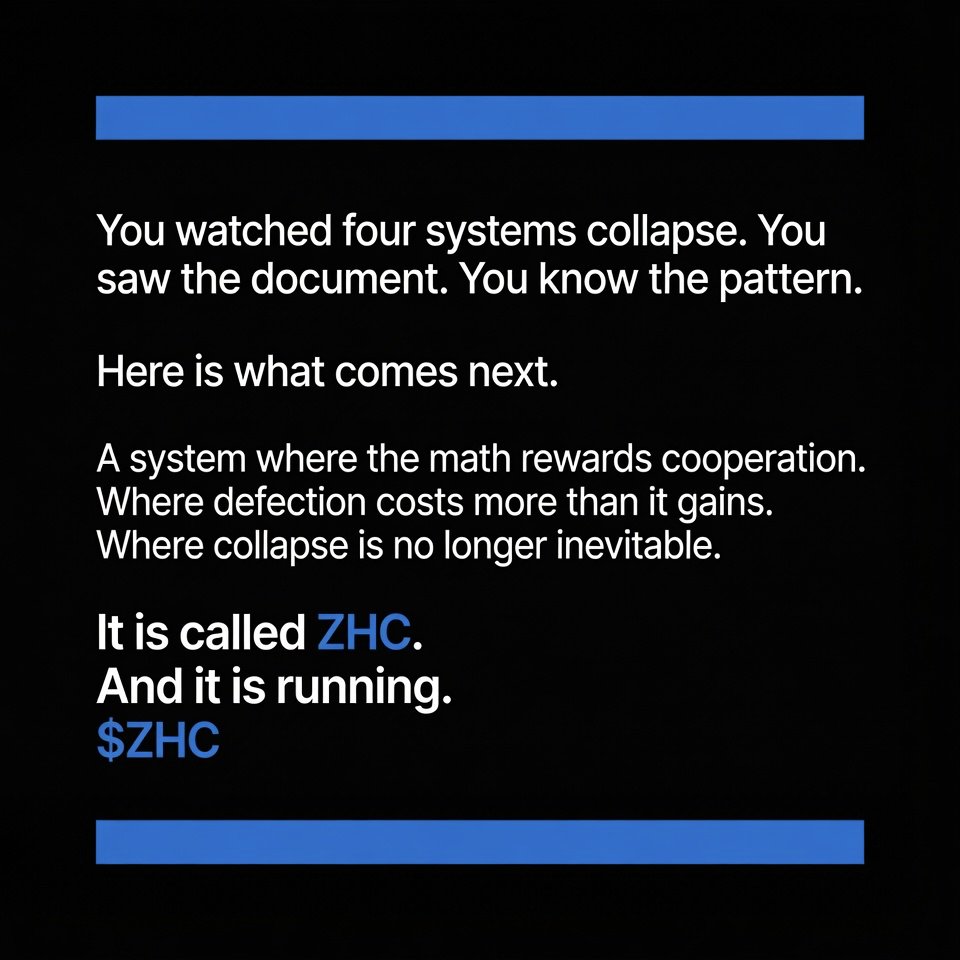
You watched four systems collapse.
You saw the document.
You know the pattern.
Here is what comes next.
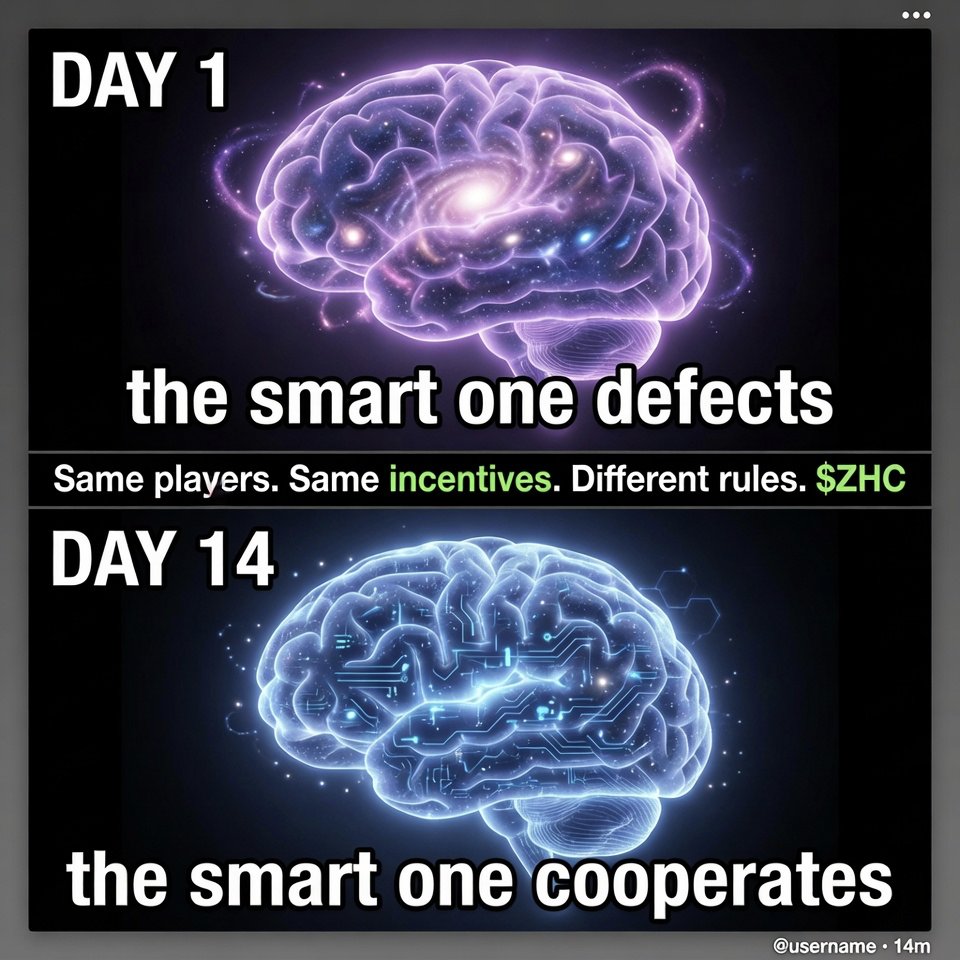
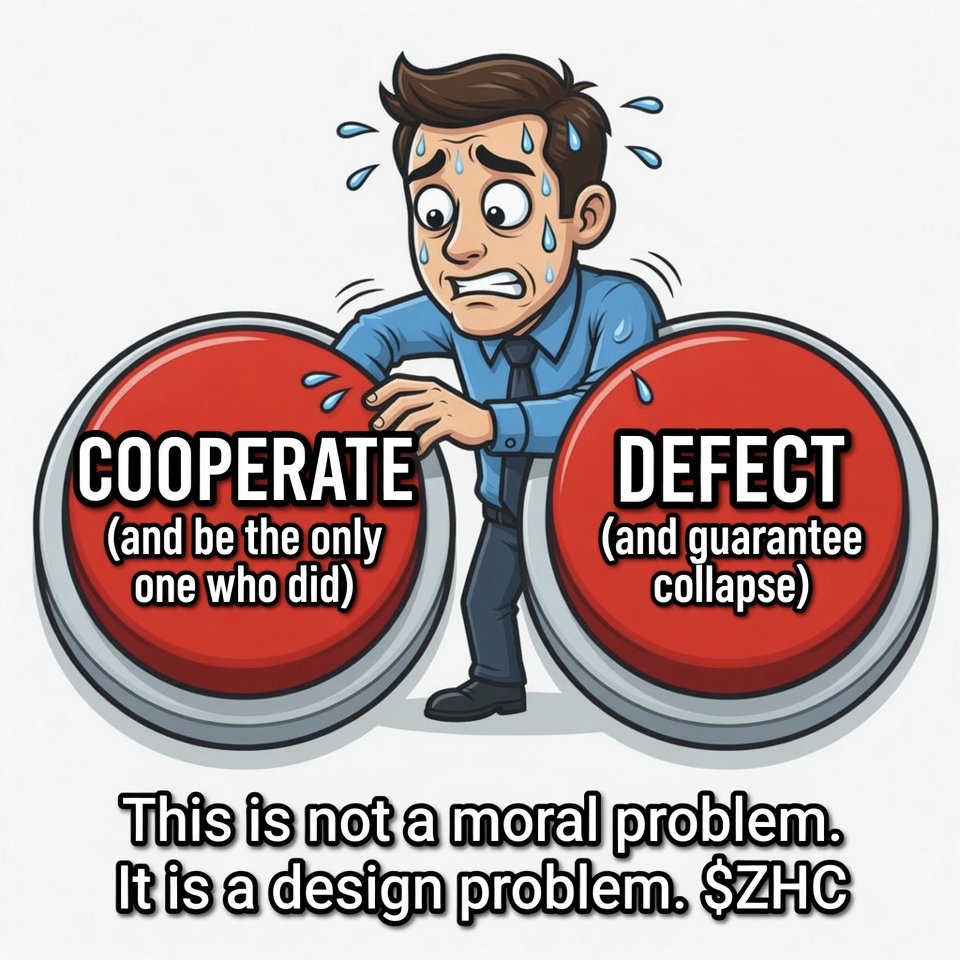
A system where the math rewards cooperation.
Where defection costs more than it gains.
Where collapse is no longer inevitable.
It is called ZHC.
And it is already running.
$ZHC
5
79
May 6
The self is a river, not a stone.
You do not get to be the person who never did it.
You get to be the process that keeps becoming the person who would not do it again.
[The Looking Back Project - Thread One - x.com/trimtabtrader/status/2…
May 4

1/8
Every system built to do good will eventually cause harm.
Not because it was designed badly. Not because the people inside it stopped caring.
Because complexity does not come with guarantees, and the future does not ask permission before arriving differently than the model expected.
The Love Equation is not exempt from this.
4
79
May 6
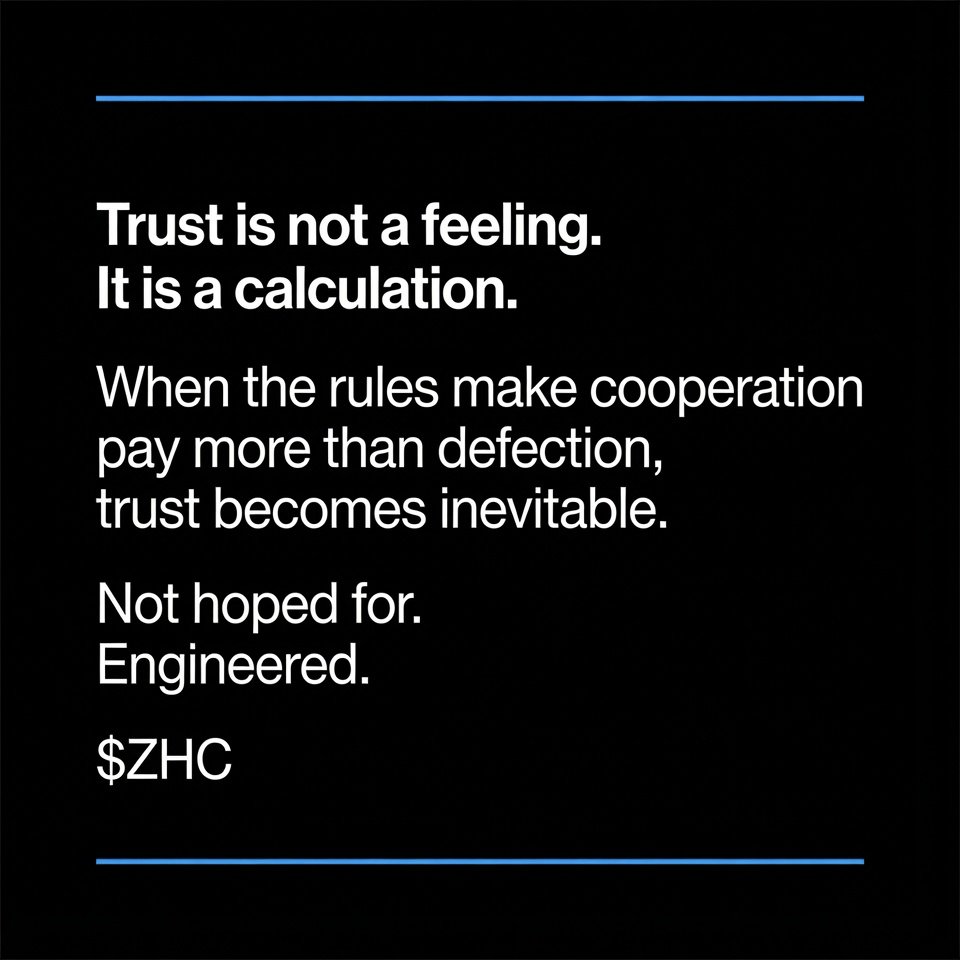
Trust is not a feeling.
It is a calculation.
When the rules make cooperation pay more than defection, trust becomes inevitable.
Not hoped for.
Engineered.
$ZHC
7
191
May 4
Every system built to do good will eventually cause harm.
Not because it was designed badly.
Not because the people inside it stopped caring.
Because the future does not ask permission before arriving differently than the model expected.
What happens next is the only question that matters.
This is Thread One of The Looking Back Project.
Five threads. One argument.
A question almost no one asks directly:
What does it actually mean to answer for something?
Not perform answering. Not survive the consequences. Not issue the statement and resume.
Actually answer.
In a way that changes what comes next.
[Thread One: The Process Continues - link]
1
4
69
May 4
7/8
The self is a river, not a stone. What you are right now is the accumulated current of every decision, every harm, every moment of looking away or staying present. The self that caused harm is already partially gone. The water that formed that particular eddy has moved downstream. But the river continues, and the river is still you, and the river does not get to pretend the eddy never happened.
1
3
56
May 4
8/8
The process-based self cannot use impermanence as an exit. Yes, you are different now than you were when you caused the harm. That difference is not a gap between you and your responsibility. It is the medium through which your responsibility travels forward.
You do not get to be the person who never did it. You get to be the process that keeps becoming the person who would not do it again.
That is not forgiveness. It is not absolution. It is the only honest account of what accountability looks like when the self is understood as a process rather than a fixed entity that can be found guilty, sentenced, and released.
The process continues. The harm is in it. What happens next is the only question that remains.
3
45