
PhD Student @MDC_Berlin | @pytorch_ignite
Joined August 2017
- Tweets 686
- Following 2,303
- Followers 130
- Likes 2,712
18 Photos and videos










PyTorch 2.12 introduces major updates across compilation, export, distributed training, and accelerator support.
Highlights include up to 100x faster batched linalg.eigh on CUDA, the new torch.accelerator.Graph API, Microscaling quantization support in torch .export.save, and fused Adagrad.
The release includes 2,926 commits from 457 contributors since PyTorch 2.11.
Have questions? Join @AndreyTalman (@Meta), @albanDesmaison (@Meta), and @joespeez (@reflection_ai), moderated by @Chris_AI_HPC (@Meta), on May 20 at 10:00 AM PT for a live Q&A covering the release and answering questions from the community.
🔗 Read the release blog and register for the webinar: pytorch.org/blog/pytorch-2-1…
#PyTorch #OpenSourceAI #MachineLearning #AIInfrastructure
4
34
263
29,488
Taras Savchyn retweeted

Apr 20
Bacteria move around using a molecular machine called the flagellar motor that rotates faster than the flywheel of a race car engine and switches directions in an instant. After 50 yrs, scientists have finally figured out how it works. “My lifelong quest is now fulfilled.” Link⤵️
527
4,369
32,598
6,117,743
Taras Savchyn retweeted

Mar 28
My new trillion-dollar startup provides security for AI agents. It's called Codebusters.
29
4
86
7,107
PyTorch 2.10 is now available, with updates focused on performance, determinism, and numerical debugging for modern training and post-training workflows.
Highlights include Python 3.14 support for torch.compile(), reduced kernel launch overhead in TorchInductor, a new varlen_attn() op for variable-length sequences, and improved tools for tracking numerical divergence.
🖇️ 🔥 Read the PyTorch 2.10 release blog and release notes: hubs.la/Q03_NHfT0
#PyTorch #OpenSourceAI #AIInfrastructure
16
87
687
50,344
PyTorch 2.9 is now available, introducing key updates to performance, portability, and the developer experience.
This release includes a stable libtorch ABI for C /CUDA extensions, symmetric memory for multi-GPU kernels, expanded wheel support to include ROCm, XPU, and CUDA 13, and enhancements for Intel, Arm, and x86 platforms.
With 3,216 commits from 452 contributors, PyTorch 2.9 continues to advance open source AI for developers worldwide.
🔗 Read the full release blog: hubs.la/Q03NNKqW0
#PyTorch #OpenSourceAI #AI #Performance
21
183
1,449
123,818
Taras Savchyn retweeted

7 Oct 2025
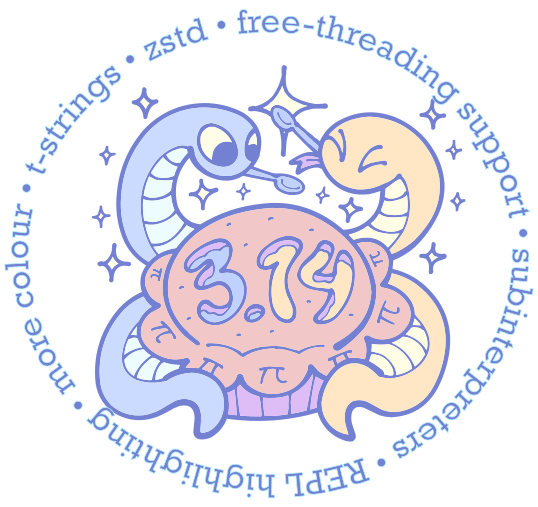
🐍 Python 3.14 is here! 🎉
✨ Template strings (t-strings)
🚀 Free-threaded Python officially supported
🎨 Syntax highlighting in the REPL
📦 Zstandard compression in stdlib
🔍 Remote PDB debugging
Full release notes: docs.python.org/3.14/whatsne…
3
38
173
12,495

Compiling large #PyTorch models at Meta could take an hour . Engineers cut PT2 compile time by 80% with parallel Triton compilation, dynamic shape marking, autotuning config pruning, and cache improvements now integrated into the stack.
🔗 hubs.la/Q03J-6P20
3
50
8,821
As #training jobs grow, failures like preemptions and crashes cause costly delays. Efficient distributed #checkpointing is key. #PyTorch @Google built a local checkpointing solution using DCP to cut overhead, reduce rollbacks, and boost training goodput.
🔗 hubs.la/Q03J1b110
🖋️ @meta & @Google
3
10
25
9,780
Taras Savchyn retweeted

14 Aug 2025
Introducing DINOv3: a state-of-the-art computer vision model trained with self-supervised learning (SSL) that produces powerful, high-resolution image features. For the first time, a single frozen vision backbone outperforms specialized solutions on multiple long-standing dense prediction tasks.
Learn more about DINOv3 here: ai.meta.com/blog/dinov3-self…
343
750
4,421
899,443
Taras Savchyn retweeted

26 Aug 2025
The *full* Python Documentary will be released this Thursday (Aug 28) at 10am PDT / 19:00 CET. More at discuss.python.org/t/python-… Don't miss the online release party / chat! @TECHDOCU
17
192
917
96,971
Update from #PyTorch maintainers: 2.8 is out now.
🔹A limited stable libtorch ABI for third-party C /CUDA extensions
🔹 High-performance quantized LLM inference on Intel CPUs with native PyTorch
& more!
📄 Release notes: hubs.la/Q03BDn_40
🔗 Blog: hubs.la/Q03BDmT50
8
41
277
17,956
Taras Savchyn retweeted

22 Jul 2025
Ozzy Forever!

3,081
88,018
389,781
9,335,973
Taras Savchyn retweeted

5 Jul 2025
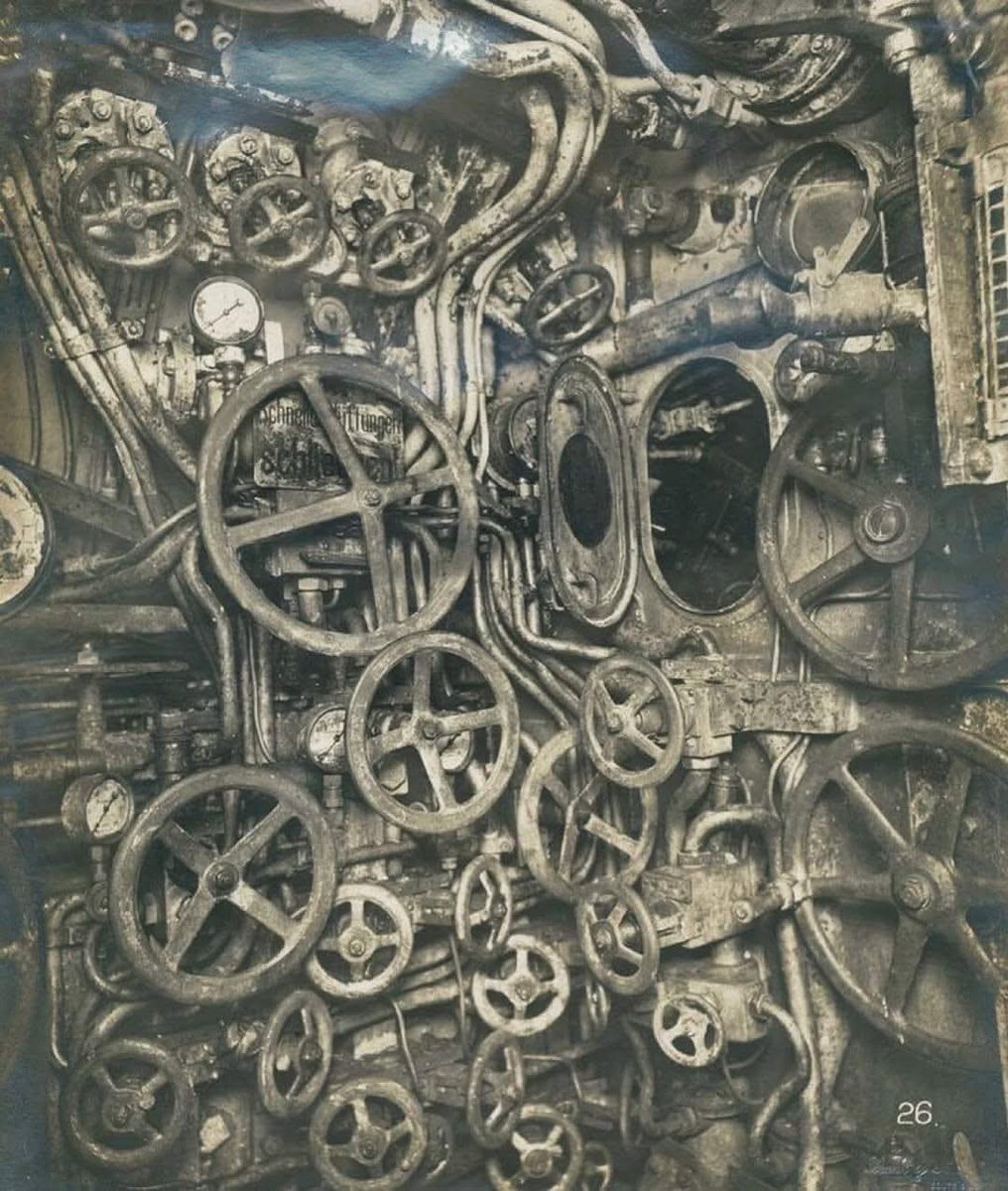
In 1918, the control room of a German submarine, or U-boat, represented the pinnacle of naval engineering during WWI. Packed into the compact space were a multitude of valves, gauges, levers, and wheels, each essential for the operation of the vessel. The control room served as the nerve center, where the captain and crew managed the submarine’s movements, depth, and communication with other parts of the vessel. Periscopes extended through the hull, allowing for surface and aerial observation, while rudimentary sonar systems began to appear, showcasing the early strides in underwater warfare technology.
The design of the control room emphasized functionality and efficiency, as space aboard a U-boat was at a premium. Crewmembers had to maneuver carefully in the cramped quarters, often working shoulder-to-shoulder during combat or emergency situations. Key instruments included the depth gauge, which monitored the submarine's position in the water, and the dive planes, used to control the ascent and descent. The ballast tanks, crucial for submerging and surfacing, were controlled from this room, requiring constant attention from the crew. The smell of oil, metal, and sea permeated the air, a testament to the harsh and demanding conditions inside.
By the final year of WWI, German U-boats had become a significant threat to Allied shipping, employing advanced tactics like unrestricted submarine warfare to disrupt supply lines. However, they also faced increasing countermeasures, including depth charges and improved convoy systems. The control room was often a scene of intense activity during such encounters, as the crew worked tirelessly to evade detection and execute attacks. The ingenuity and determination within these control rooms underscored the technological race that defined much of the naval warfare during the Great War.
© History Pictures
#archaeohistories
4
30
135
13,568
Update from the PyTorch ecosystem: The latest @nvidia DALI release adds DALI Proxy—making it easier to accelerate parts of your PyTorch DataLoader pipeline without a full refactor.
Highlights:
- Better GPU use in multiprocess mode
- Selective pipeline offloading
- New video decoding features
🔗 hubs.la/Q03rmCc80
#PyTorch #OpenSourceAI #DataPipelines #DeepLearning
1
14
88
12,653
Update from the PyTorch maintainers: 2.7 is out now.
🔹 Support for NVIDIA Blackwell (CUDA 12.8)
🔹 Mega Cache
🔹 torch.compile for Function Modes
🔹 FlexAttention updates
🔹 Intel GPU perf boost
🔗 Blog: hubs.la/Q03jBPSL0
📄 Release notes: hubs.la/Q03jBPlW0
#PyTorch #OpenSourceAI
12
87
503
62,536
Taras Savchyn retweeted

28 Feb 2025
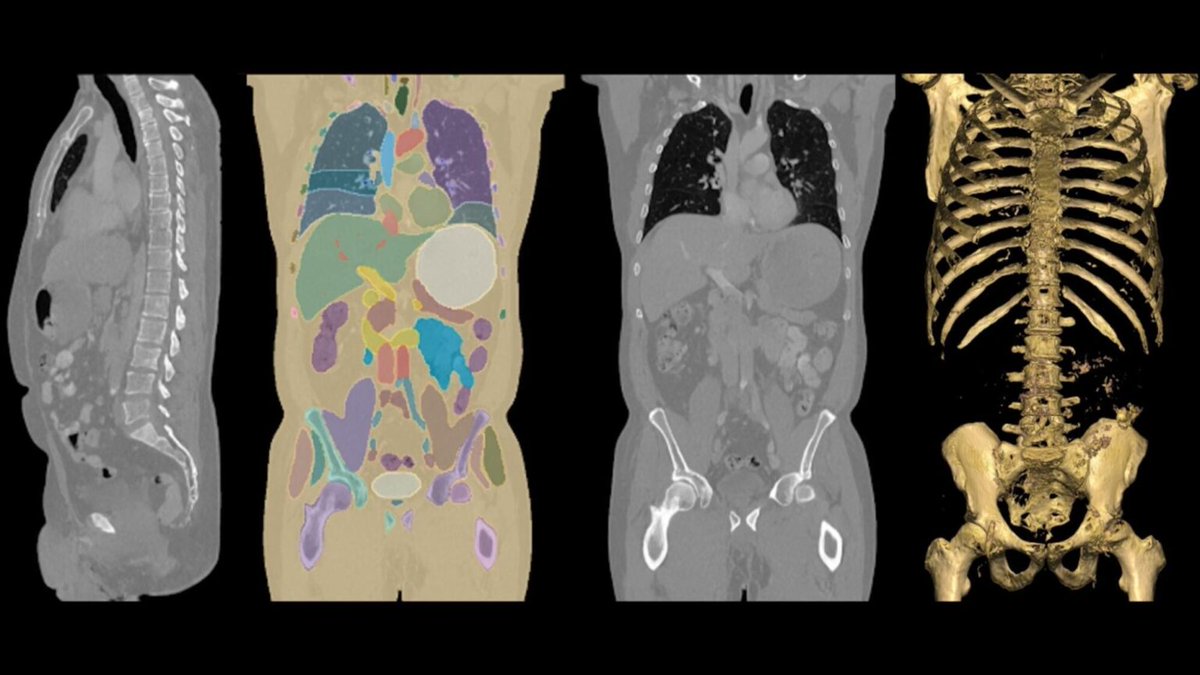
👀 3.6 billion medical imaging tests are performed globally each year.
See how @databricks Pixels 2.0 and #MONAI are reducing data labeling time by up to 75% using active learning. #NVIDIAhealthcare
Get the details 👉 nvda.ws/4hY35wq
3
24
107
6,040
Taras Savchyn retweeted

3 Feb 2025
AI made in 🇪🇺
OpenEuroLLM, the first family of open source Large Language Models covering all EU languages, has earned the first STEP Seal for its excellence.
It brings together EU startups, research labs and supercomputing hosts to train AI on European supercomputers ↓

ALT A stylised infinity symbol made up of small flags of various European countries, with a heart featuring the EU flag at the bottom center. Below, text reads "Bridging European languages with European AI." A small European Commission logo is in the bottom right corner.
1,072
842
5,930
1,442,875
