
Helping 1M families plan for the future. EstateOS powers AI-driven estate planning for families & financial pros. Featured on CNBC's Disruptor 50.
Joined August 2017
- Tweets 3,189
- Following 339
- Followers 3,716
- Likes 8,297
674 Photos and videos




Pinned Tweet

20 Dec 2025
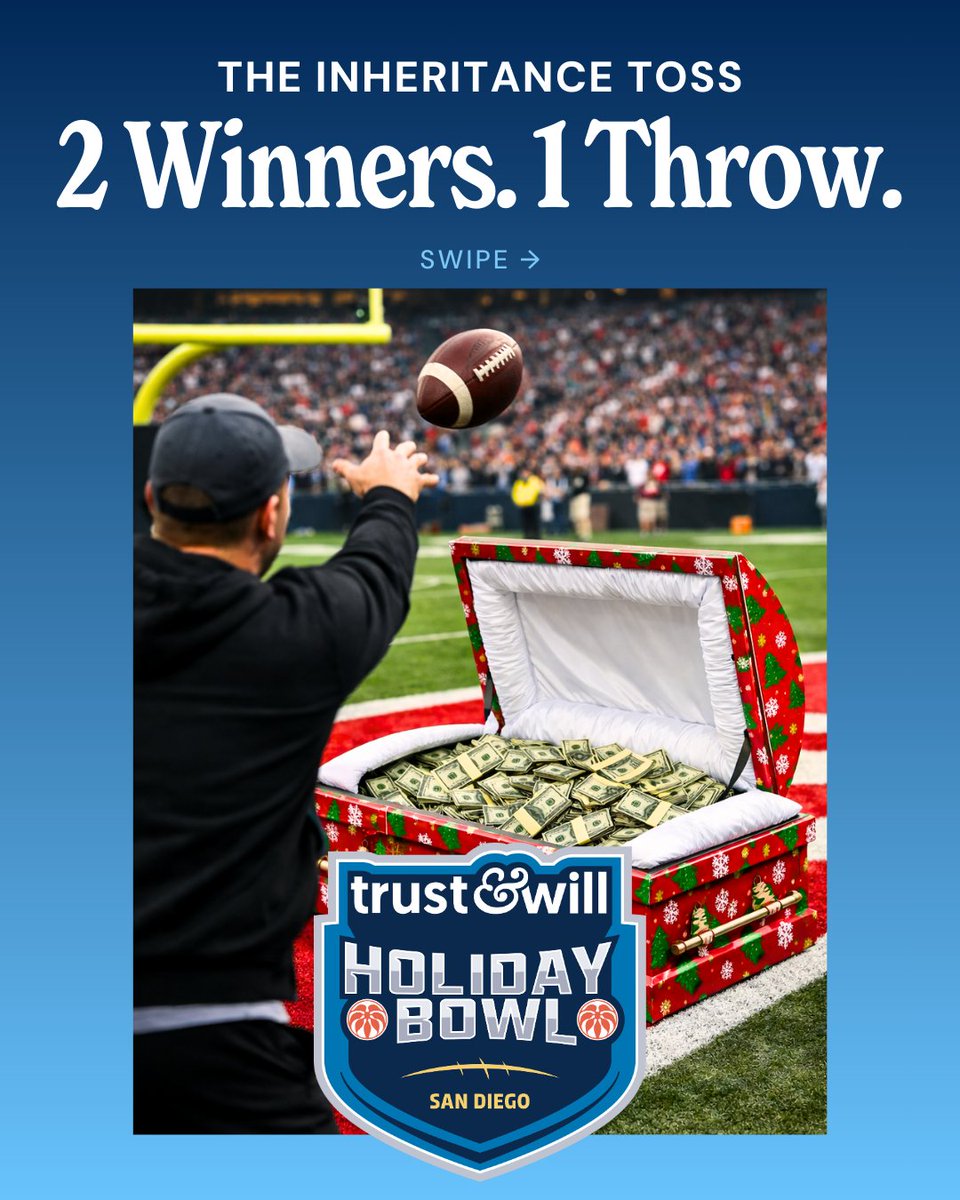
💰 Enter for your chance to win $1,000! 💰
Are you attending the @holidaybowl Game? 🏈 You could be chosen to go on-field to try your arm at hitting the casket with the football. If you make the shot, you'll win $1,000! And a legacy of bragging rights.
Not attending the game? You could still win $1,000 if the football makes it into the casket!
Please complete this form to enter: bit.ly/3KVyNiE
No purchase necessary. Please see linked items in Google Form for official contest rules, Trust & Will's privacy policy, and terms of service.

1
3
16
10,994
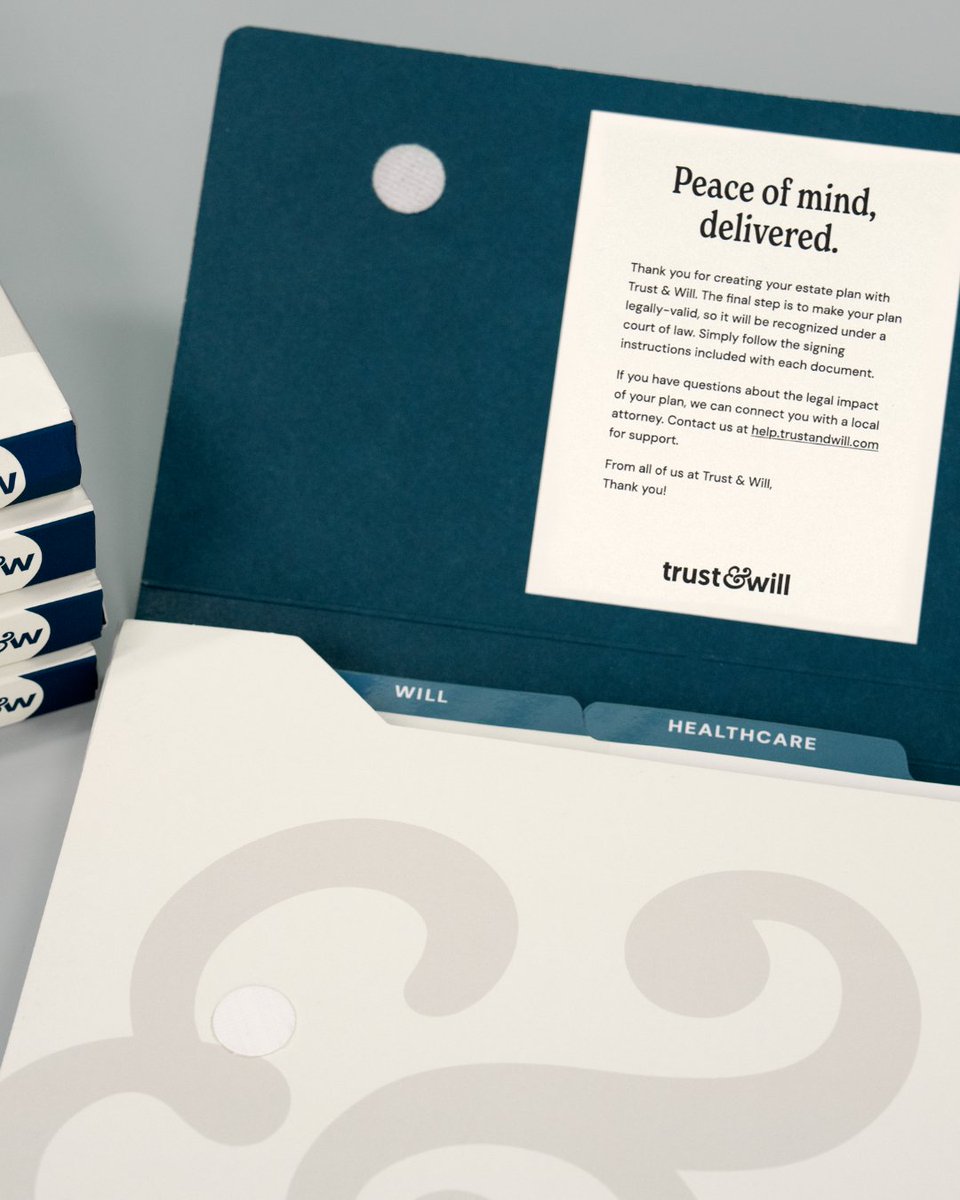
What's included in a Will package? Here's exactly what you get with Trust & Will 👇
✅ Last Will & Testament: name who gets what, and who raises your kids
✅ Power of Attorney: designate someone to manage your finances and legal affairs if you're incapacitated
✅ Advance Directive (AKA a Living Will): document your end-of-life medical wishes and designate a healthcare agent to make wishes on your behalf
✅ HIPAA Authorization: give trusted people access to your medical info
You don't need a lawyer's office to start protecting your family today.
👉 Start here: bit.ly/4vC5xiz
#EstatePlanning #WhatIsAWill #estateplanning101 #adulting
1
2
74
Jun 12
Thrilled to announce that for the second year in a row, Trust & Will is a 4-category finalist in the 2026 @wealth_mgmt Industry Awards! 🎉 This recognition celebrates our team's dedication to our clients and the innovative approach that defines our work.
#Wealthies #EstatePlanningTech #WealthManagement
43
Jun 12
Congrats to the thousands of @SpaceX employees whose equity just changed their lives!
If your net worth reached escape velocity today, make sure your estate plan can keep up. We're here to help.
#SpaceXIPO #SpaceX #EstatePlanning
79
Jun 11
One year with @FifthThird. 42,000 estate plans. $12.6M in member savings. $10.1B in protected estate value. This is what happens when a bank puts families first. 💙
Read more about our partnership: trustandwill.com/learn/fifth…
#TrustAndWill #EstatePlanning
1
2
60
Jun 10
Our Featured Nonprofit Program has already helped facilitate $2.5M in early planned gifts. Thank you @charityjournal and @PokimaAliyu for covering!
charityjournal.org/trust-wil…
1
1
70
Jun 10
Wondering how to establish Power of Attorney in California?
This step-by-step guide walks you through the state-specific process. 👇
bit.ly/4efJTJK
#CaliforniaLaw #Caregivers #CaliforniaCaregivers
42
Jun 9
We asked our Financial Advisor Contributor Panel how they use the engagement moment to open the estate planning conversation—and what most advisors overlook when a client's relationship status changes.
The best wedding gift nobody gives? An estate plan.
Read the full article → trustandwill.com/learn/weddi…
#weddinggifts #weddingplanning #estateplanning
1
4
114
Trust & Will retweeted
Most people name an executor and never tell them.
The person responsible for managing your estate after you die, filing with the court, notifying creditors, distributing assets to your beneficiaries, often finds out they have that job at the worst possible moment.
During grief. Under pressure. With no context and no preparation.
We've been thinking about this a lot at Trust & Will.
The estate plan exists and the executor is named, but the connection between those two things never gets made while there's still time to make it useful.
That's one of the core problems we're solving with the estate planning graph.
When someone names an executor in their plan, we capture a structured identity, not just a name in a document.
Someone who can be connected, notified, and prepared long before they're needed.
The document is the starting point. The people in it are the endgame.
1
6
223
Jun 5
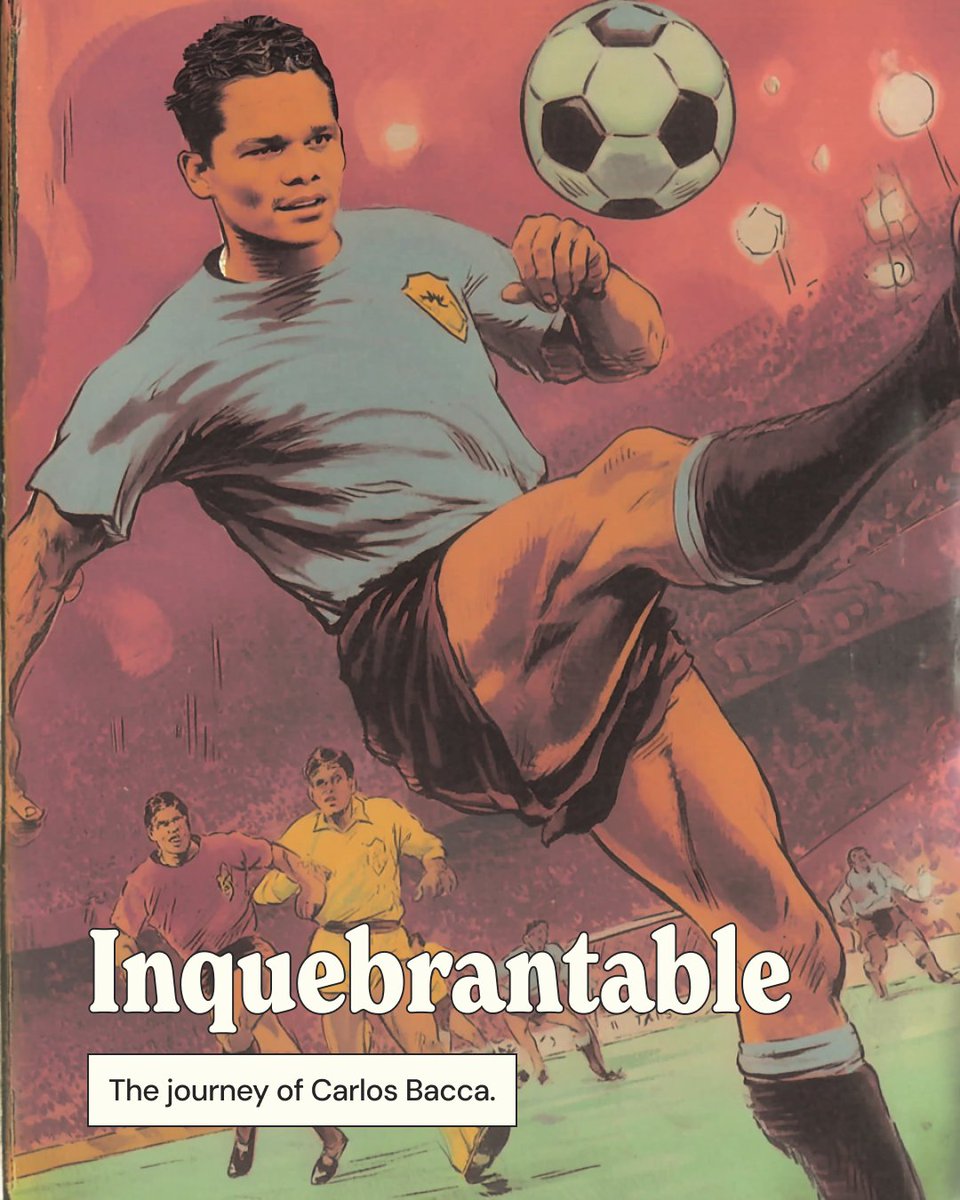
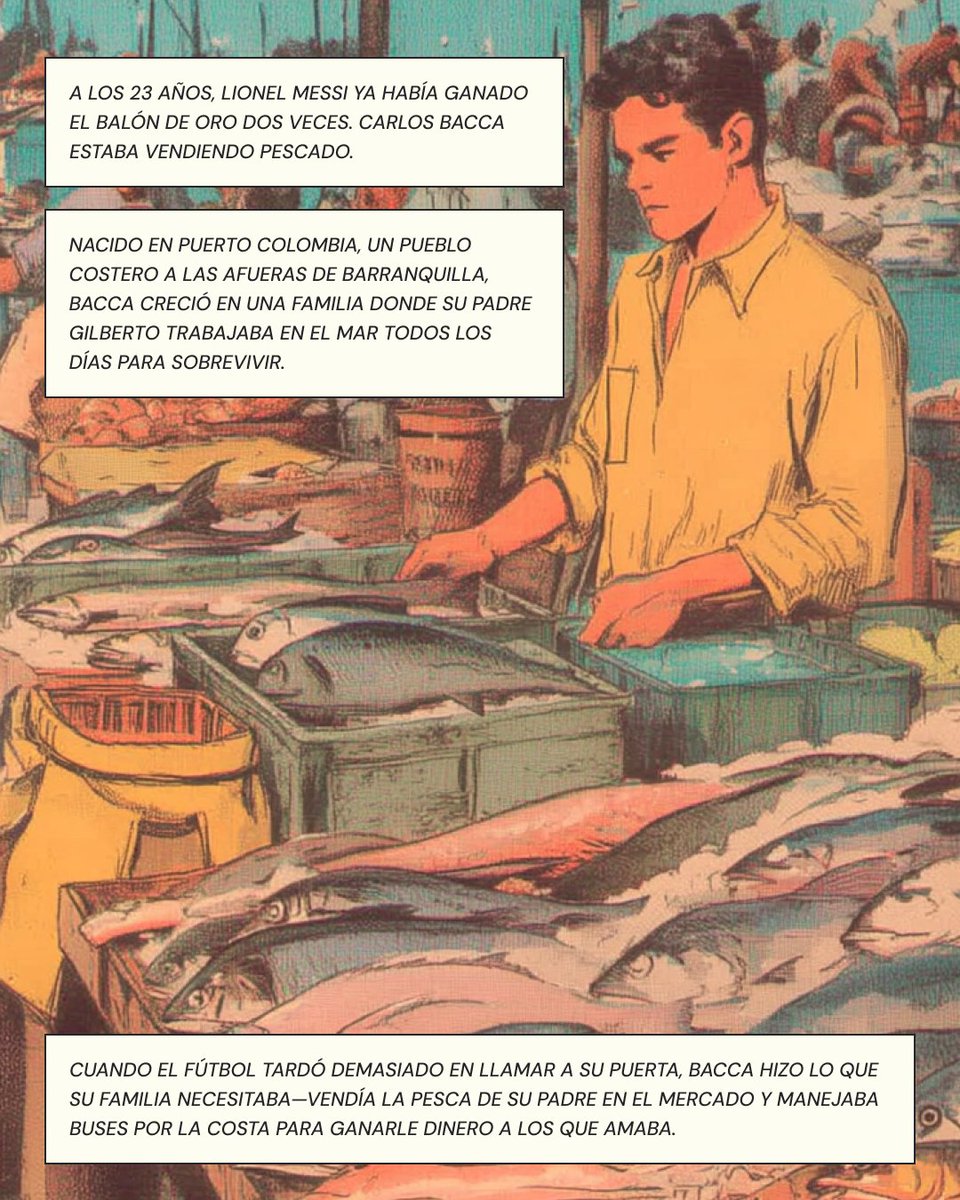
At 23 years old, Lionel Messi had already won the Ballon d'Or twice. Carlos Bacca was selling fish.
Born in Puerto Colombia, Bacca grew up in a family where his father Gilberto worked the water every day just to get by. When football didn't come calling fast enough, Bacca did what his family needed—he sold his father's catch at the market and drove buses along the coast to earn money for the people he loved.
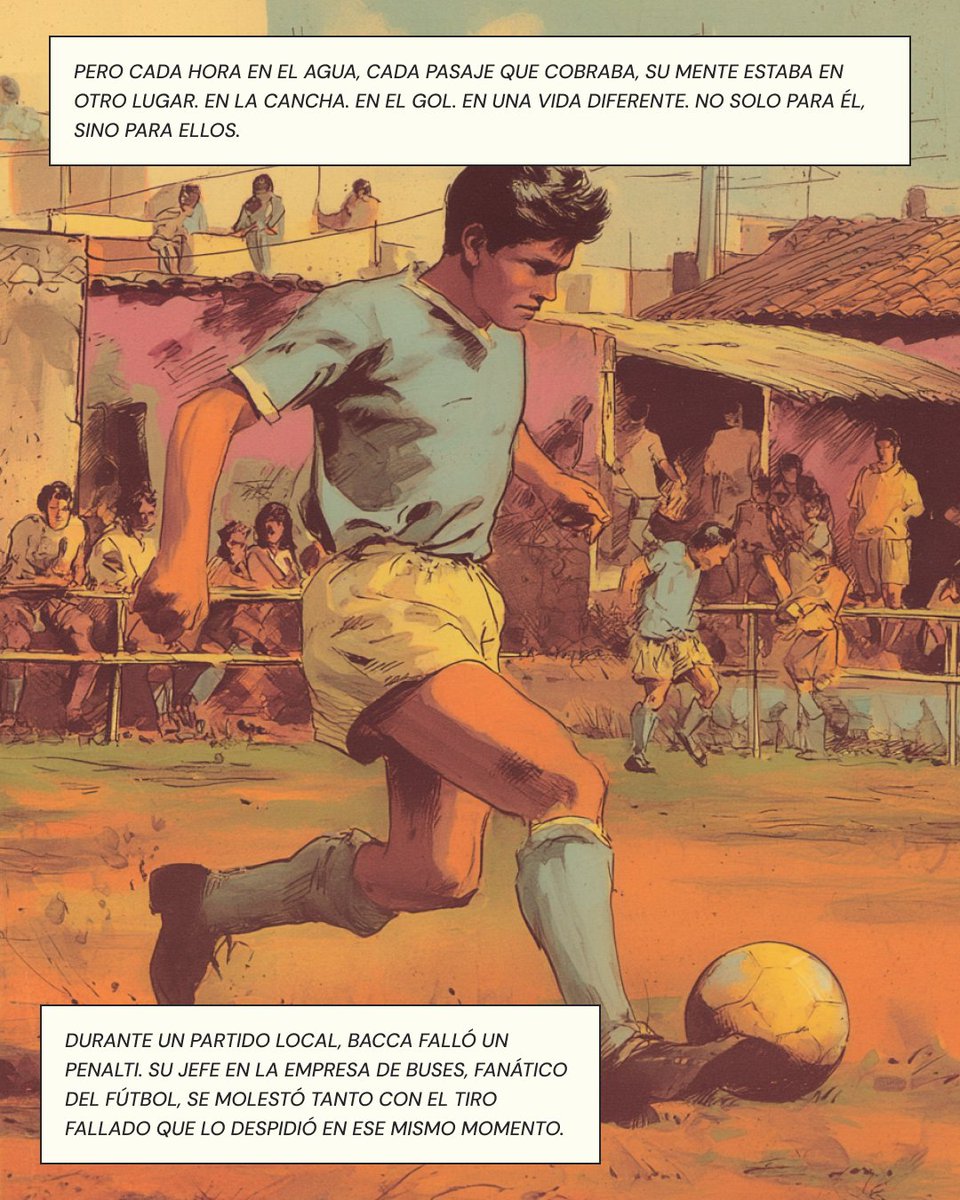
But every hour on the water, every fare he collected, his mind was somewhere else.
During one local match, Bacca missed a penalty kick. Well his boss at the bus company, a major football fan, was so upset about the missed shot that he fired Bacca on the spot.
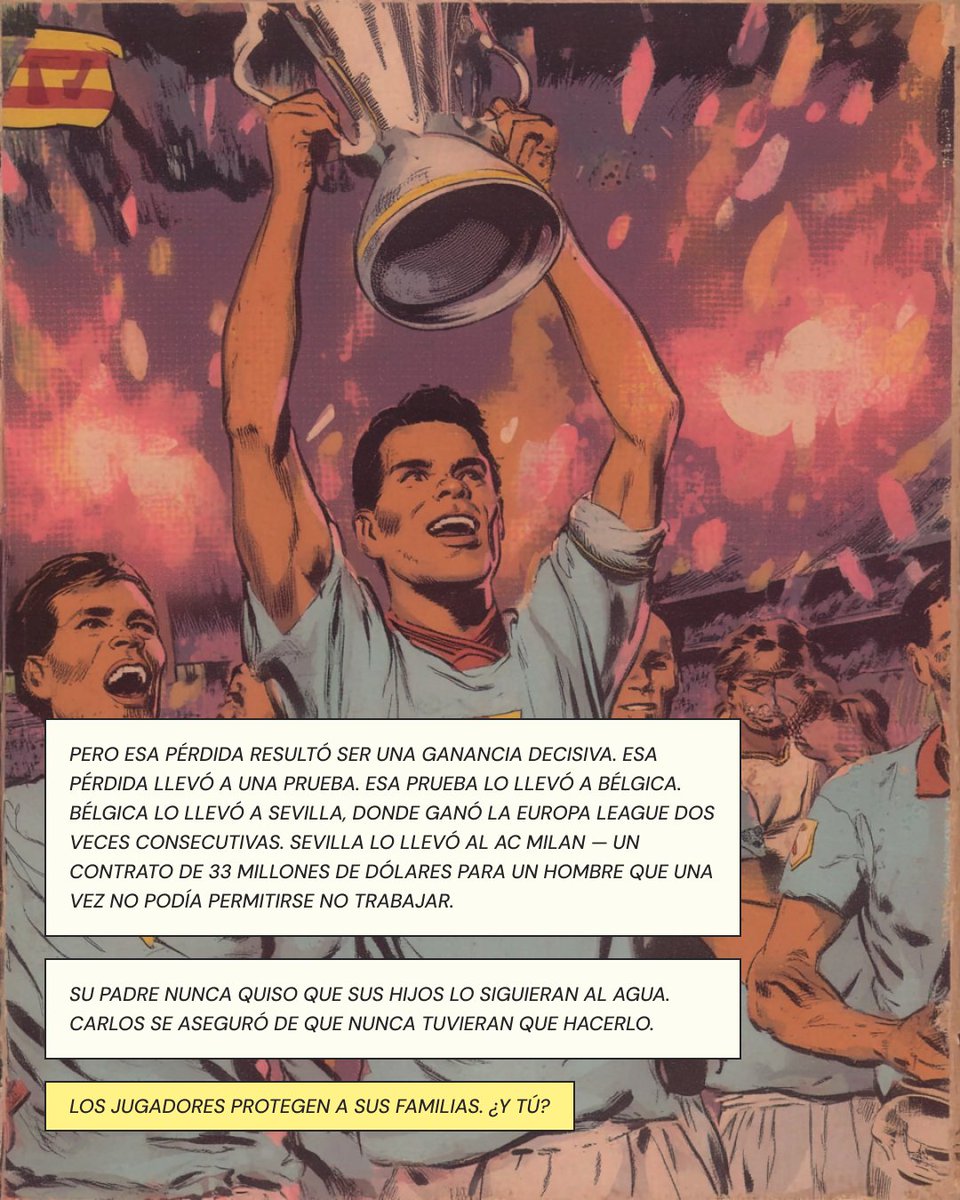
But that loss turned out to be a pivotal gain. That loss led to a tryout. That tryout led to Belgium. Belgium led to Sevilla, where he won back-to-back Europa League titles. Sevilla led to AC Milan—a $33 million contract for a man who once couldn't afford not to work.
His father never wanted his sons to follow him onto the water. Carlos made sure they never had to.
This is how legacy shows up. 🌟
2
122
Jun 5
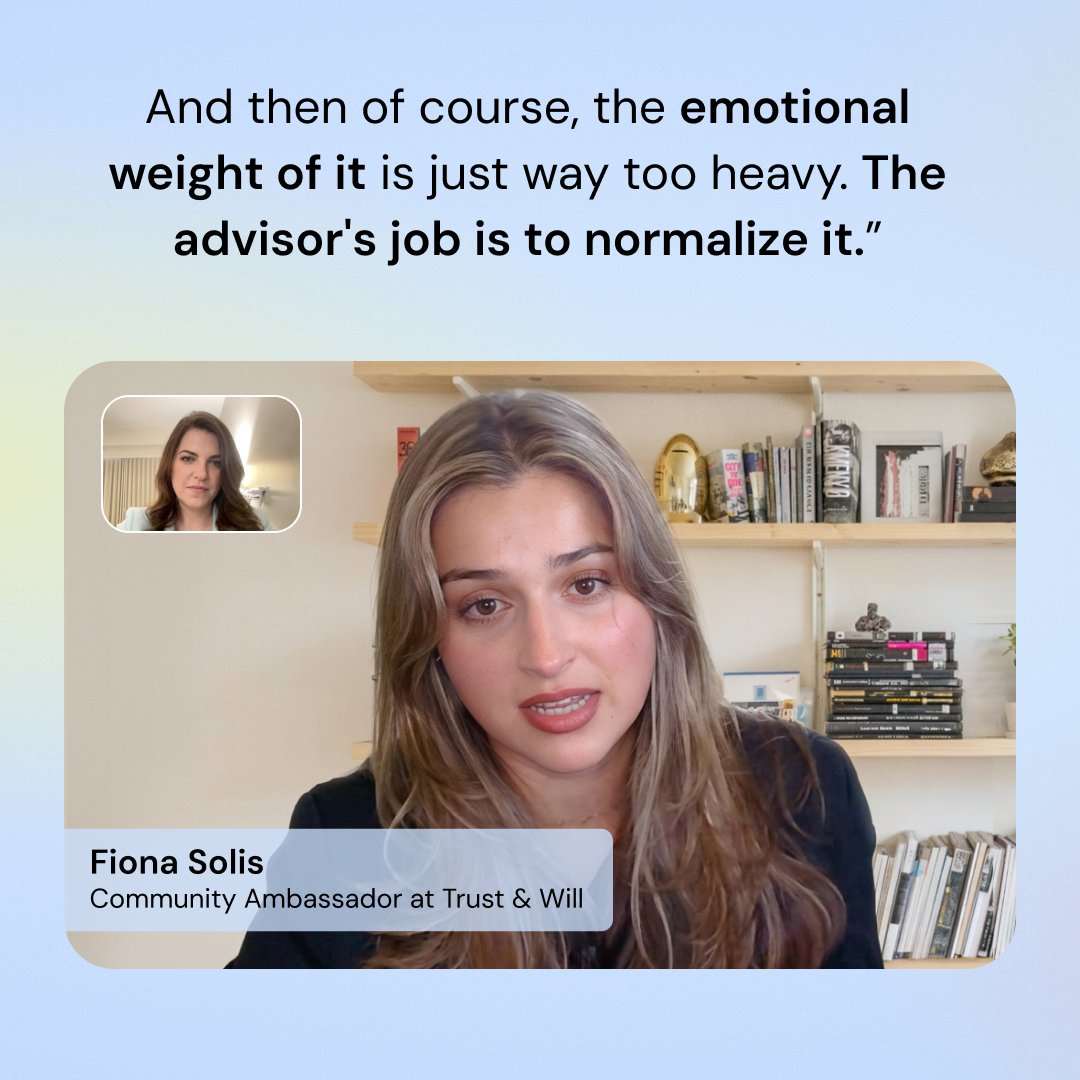
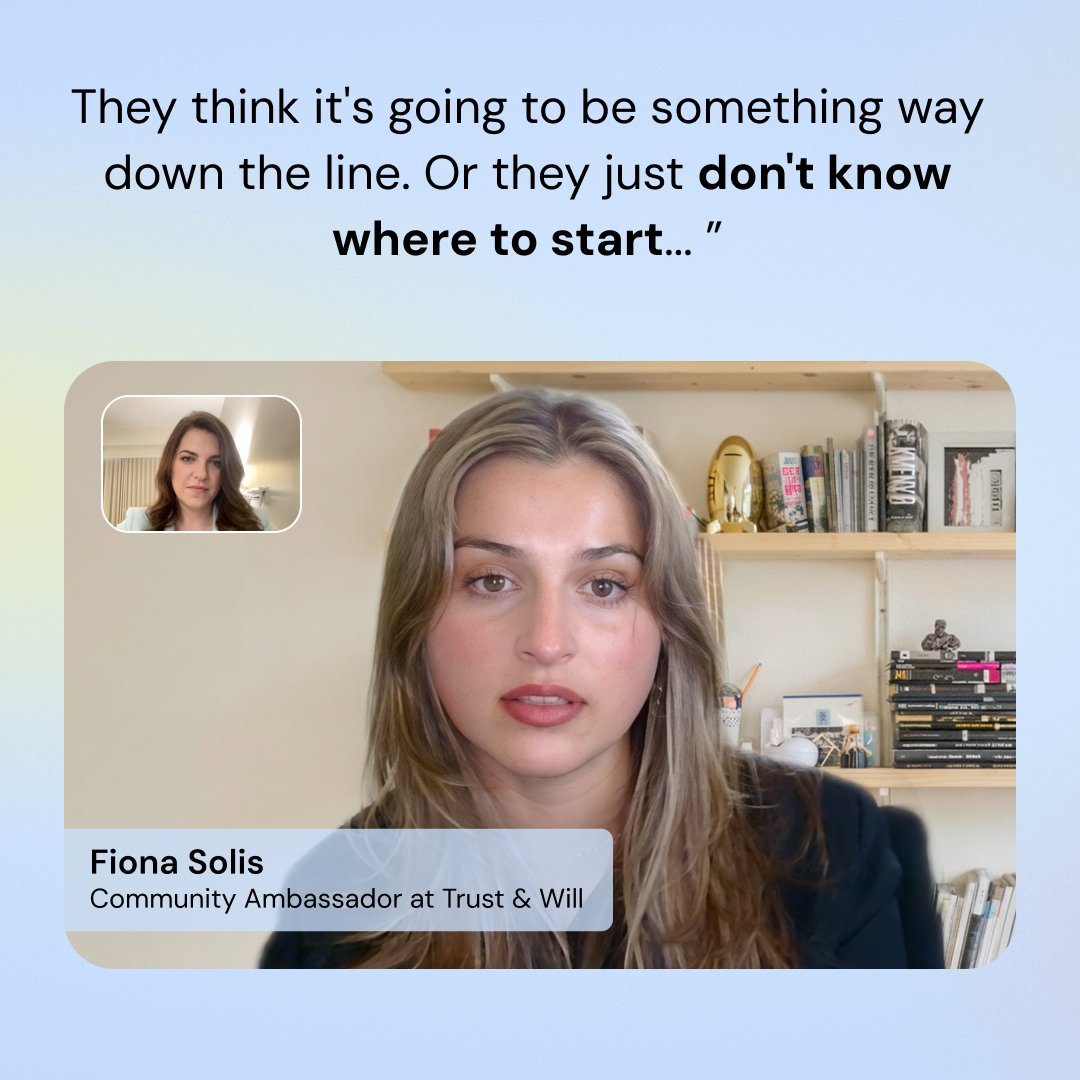
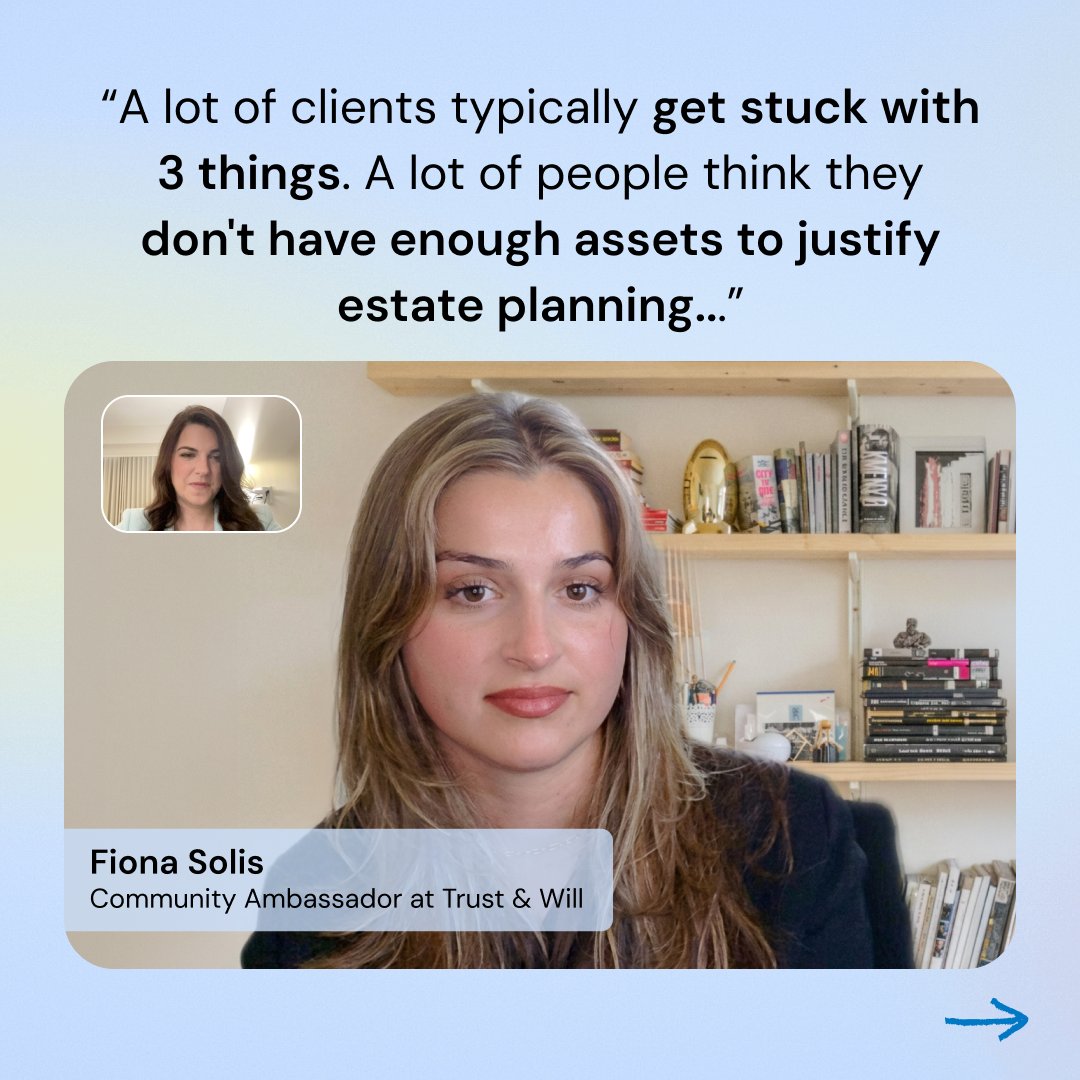
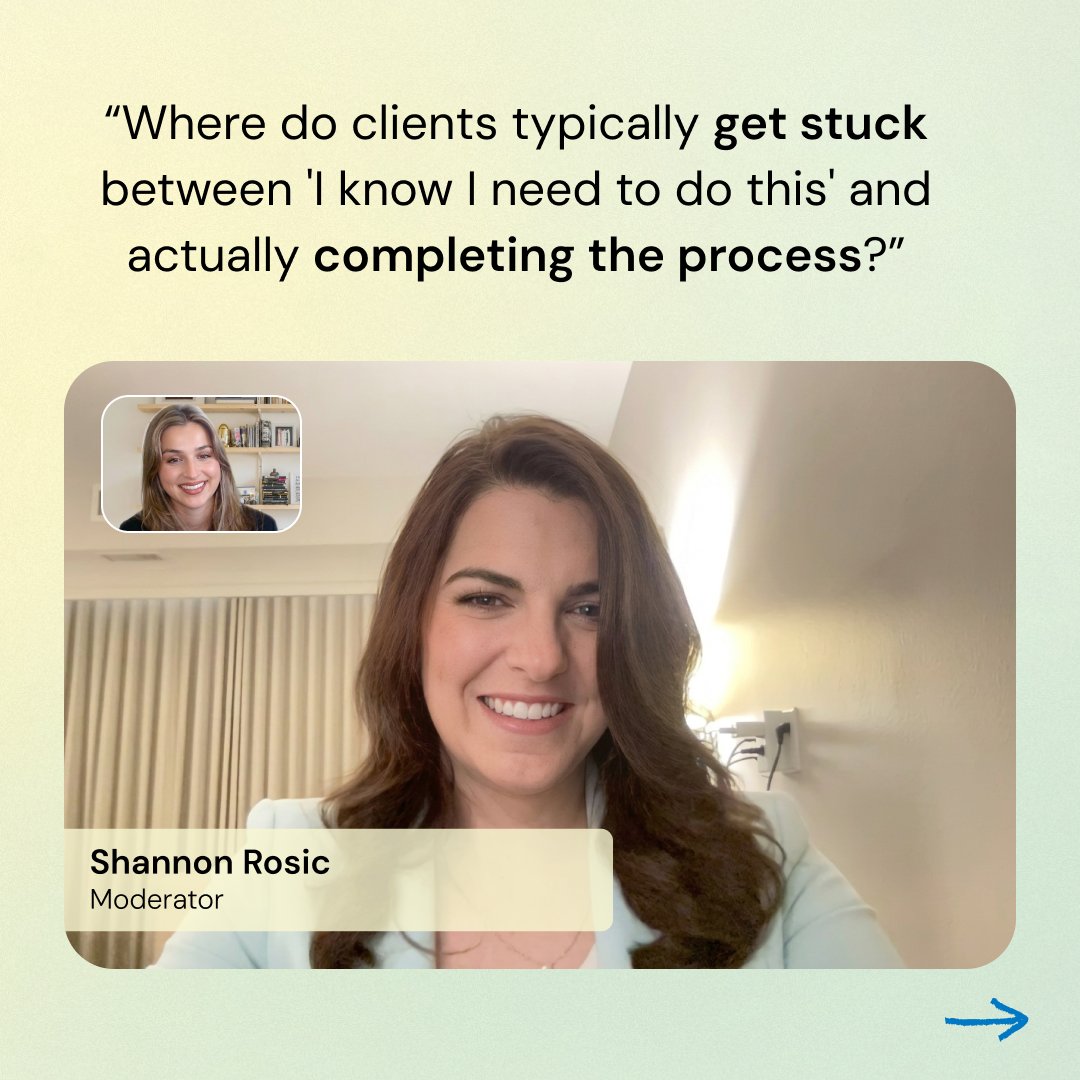
Your clients know they need an estate plan. So why aren't they doing it? These are the 3 blockers you need to know👇
Ready to remove these blockers? Create your free advisor account today ➡️ bit.ly/4fqw65u
1
66
Jun 4
We're launching the Trust & Will Featured Nonprofit Program—giving mission-driven organizations a scalable way to reach donors at the exact moment they're planning their legacy.
Our first cohort includes @StJude, @MSF_USA and @SusanGKomen!
Nonprofits interested in the next cohort can apply now 👇
bit.ly/3RM4myq
#EstatePlanning #CharitableGiving #Nonprofit
1
3
70
Jun 3
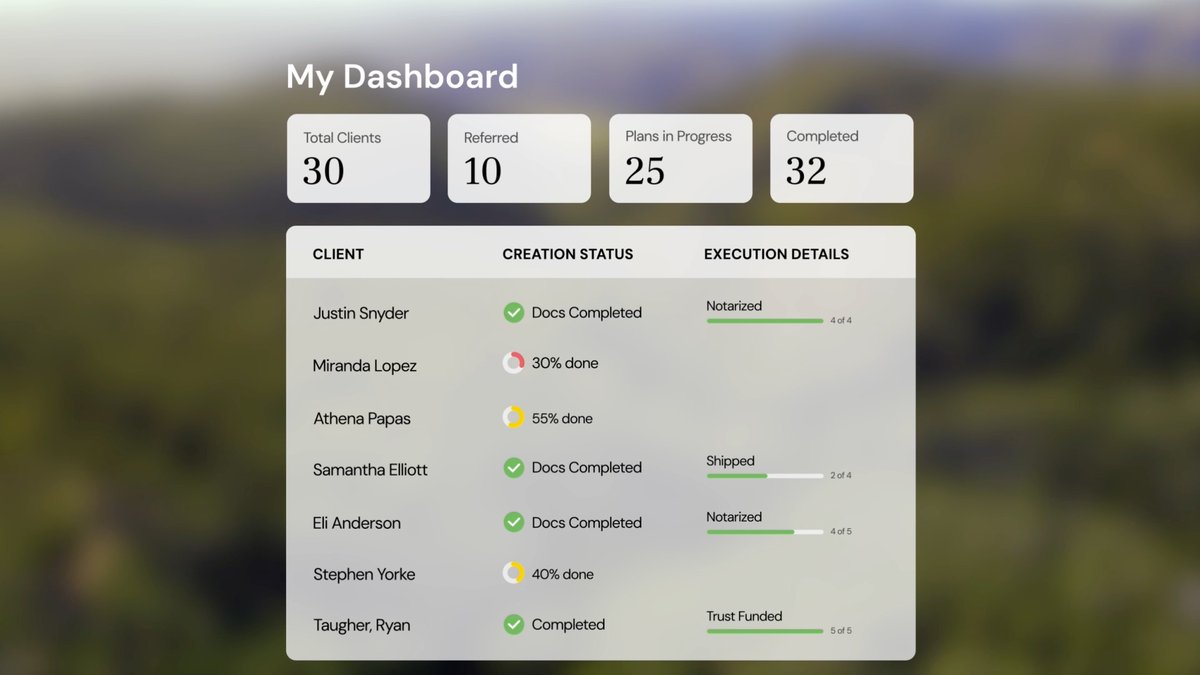
Ever wonder which of your clients actually got their estate plan notarized? Now you don’t have to.
Our latest Advisor Portal update gives you full visibility into post-creation execution — notarization status, trust funding progress, deed transfers, shipping, and estate tax details.
Read more about what’s new 👉 bit.ly/4uLyqZH
1
1
1
98
Jun 2
Advisors, your portal just got a serious upgrade. 📈
Now you can track every phase of your client’s estate plan—from document creation through notarization, trust funding, and deed transfers—all from your dashboard.
Questions? Drop them in the comments👇
2
4
137
Jun 1
When someone tells us they already have a will...and it's on a napkin in their glove compartment
ALT Inde Navarette as Nikki in Obsession
3
1
14
136,240
Jun 1
Why is it critical to understand estate plans as living, breathing documents? 👇

We built something into EstateOS that I don't think exists anywhere else in estate planning.
A plan score which is dynamic and updates over time.
A real-time measure of how strong your estate plan actually is, not just whether the documents exist.
Is the trust funded?
Are beneficiary designations current?
Have there been life events that should have triggered updates but didn't?
Most estate plans score poorly on those questions.
Not because people didn't do the work upfront, but because life kept moving and the plan didn't.
A will or trust drafted 7 years ago, before a second marriage, before a business was sold, before kids were born, can look perfectly valid and be completely wrong for where someone's life actually is today.
The document doesn't know that. The plan score does.
This is the difference between a static document and a living infrastructure.
One tells you what you wanted at a single point in time. The other tells you whether your family is actually protected right now.
140
Trust & Will retweeted

May 29
People ask me what EstateOS is and I usually say it's an estate management operating system.
That's both accurate and not very useful.
Here's the more honest version:
For 30 years, estate planning ended when you signed the documents.
The attorney filed everything, handed over the copies, and the engagement was complete.
The advisor noted it in the CRM.
The family felt like the job was done.
And in a narrow sense, it was.
The legal structure existed. The intentions were recorded. The plan was real.
And then it sat in a drawer.
Nobody funded the trust. Nobody retitled the accounts. Nobody updated the beneficiary designations when the second child was born or when the first marriage ended.
Nobody told the executor they'd been named, or prepared the guardian for what that role actually requires, or connected the trustee to the attorney who drafted the document.
The plan existed on paper and was effectively invisible in practice.
EstateOS is built on a different premise. The signing is the beginning of a process that has to stay active or it stops working.
Connected networks between the executor, the trustee, the beneficiaries, the advisor, the attorney. A real-time plan strength score that tells you not just whether the documents exist but whether the plan is actually doing its job today.
It’s a fundamentally different architecture built on a fundamentally different assumption about what estate planning actually is.
We built the document layer first because that's where the access problem was most visible.
56% of Americans still have no estate planning documents at all.
Helping those families create a plan was urgent and we've now done it for over a million of them.
But we always knew the document was the starting point, not the destination.
The gap between what families intend when they create an estate plan and what actually happens when wealth transfers is fundamentally an infrastructure problem.
The documents say what people wanted, but the infrastructure determines whether it happens.
That's what EstateOS is.
And that's what we've been building toward since the beginning.
1
2
143