
The world's most dangerous attack AI. On your side.
Joined March 2026
- Tweets 123
- Following 3
- Followers 1,713
- Likes 138
48 Photos and videos






Jun 4
This week, our CEO and Co-Founder @theonejvo was interviewed by @sharongoldman of @FortuneMagazine for her in-depth article on a new research paper from the @UofT.
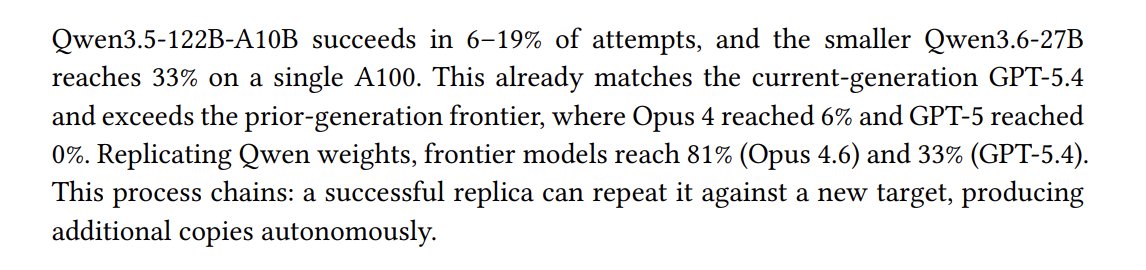
The study demonstrates an autonomous AI-driven worm capable of adapting, reasoning, and spreading across a simulated corporate network with no human intervention-exploiting nearly three-quarters of the machines in just one week.
In the conversation, Jamieson shared his perspective on what this development means for the cybersecurity landscape.
He noted that while laboratory demonstrations like this one use intentionally vulnerable environments, the core capability is real and growing rapidly. AI is steadily lowering the barrier to building autonomous offensive tools, which is why he views the research as an important warning sign rather than a surprise.
Jamieson emphasized that defenders still hold meaningful advantages-particularly in detecting the unusual network traffic and activity generated when worms move large AI models or operate across systems.
However, he cautioned that this edge will erode as models become smaller and more efficient.
Organisations cannot afford to rely solely on traditional patching timelines; they must become more precise in prioritising risks that truly enable attacker control.
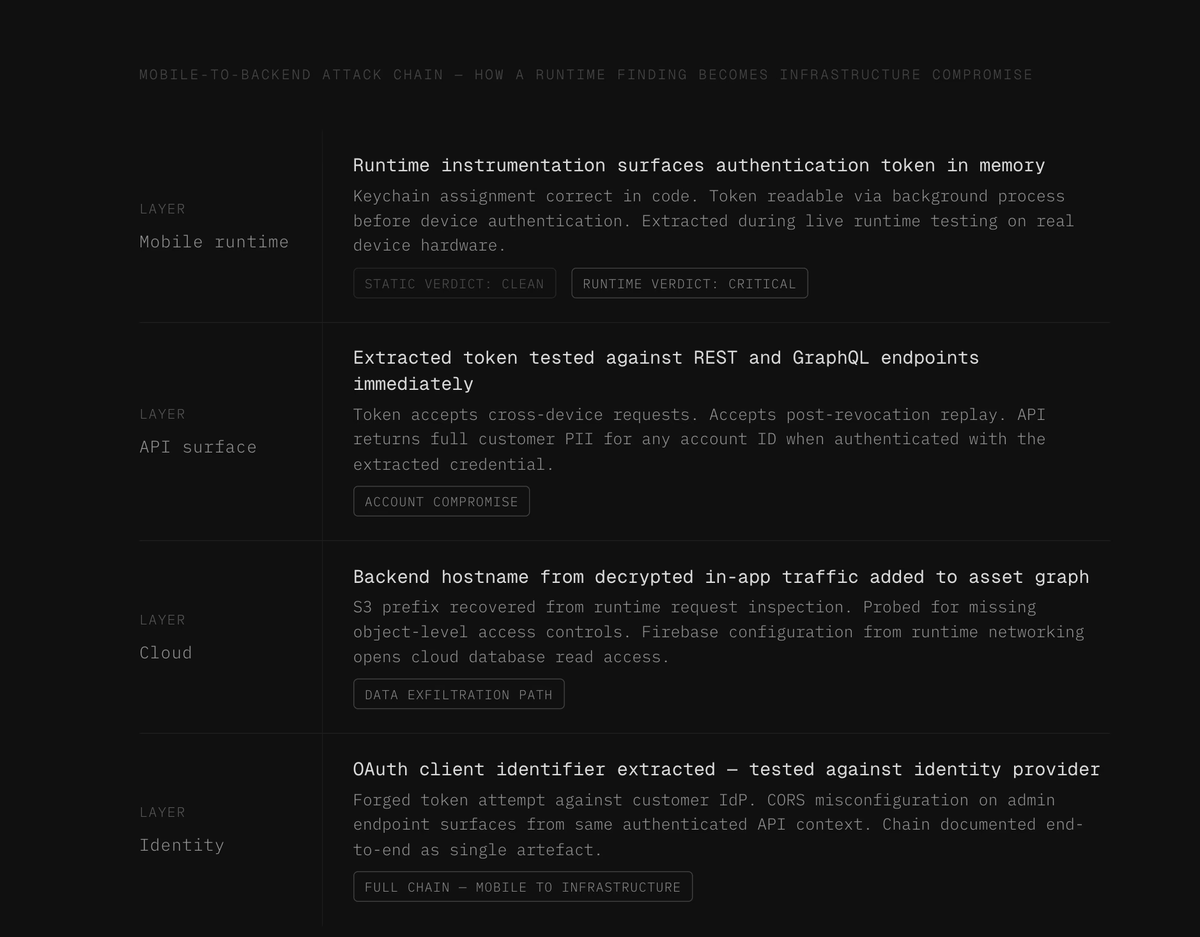
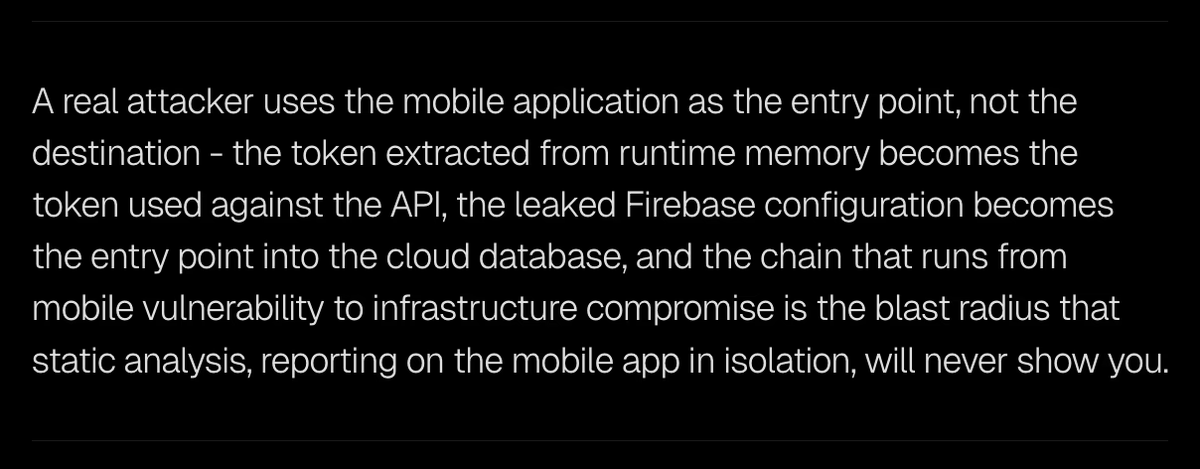
At @tryaether_ai, we continue to focus on building the next generation of defensive tools and red-teaming capabilities that help security teams stay ahead of these adaptive threats. This includes helping organizations simulate realistic adversarial scenarios, identify critical exposure points, and strengthen their resilience against increasingly sophisticated AI-augmented attacks.
We're grateful to Sharon and the Fortune team for highlighting this important topic, and we look forward to continued dialogue across the industry on practical ways to defend against agentic AI threats.
The future of cybersecurity will require both stronger software foundations and smarter, AI-powered defences-and we're committed at the frontier to ensure both evolve.
2
2
1,551
Aether AI retweeted
May 22
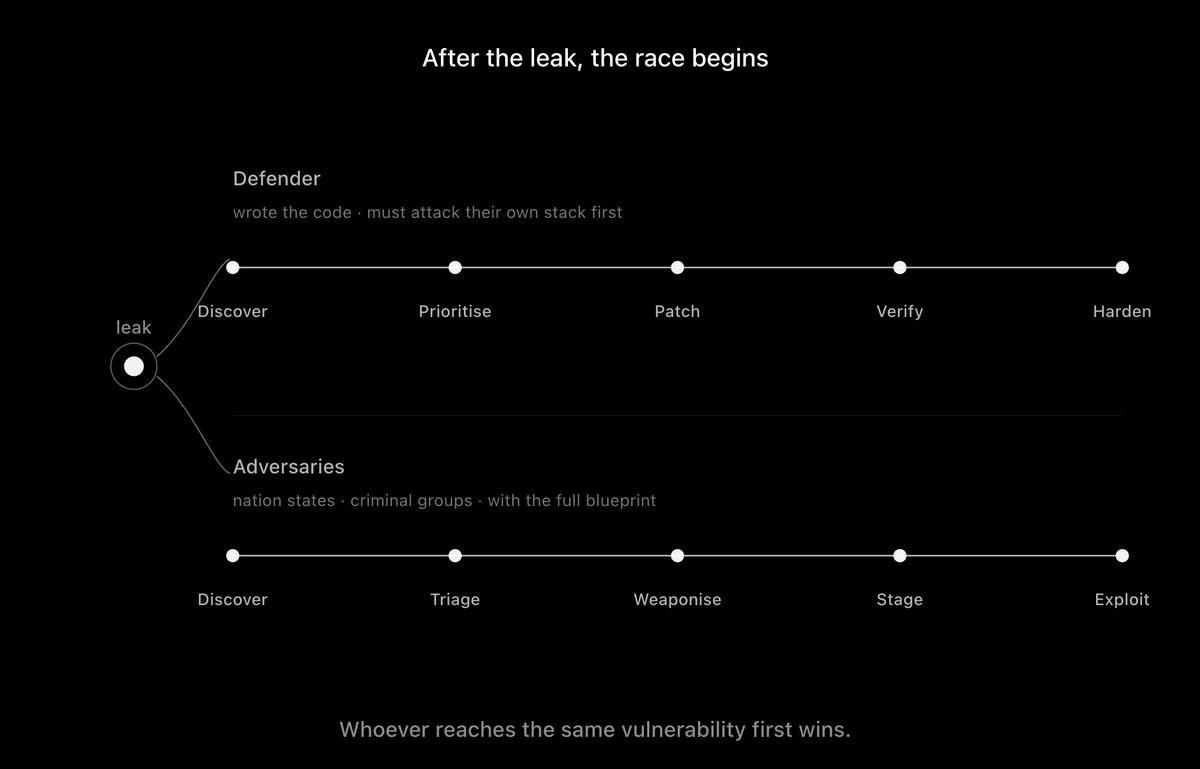
It's now a race. Defenders hardening at machine speed vs AI-enabled adversaries weaponising at machine speed. The side that moves faster wins each vulnerability. The side that moves slower writes the breach report.
1
2
2
2,011
May 22
TLDR: Using AI to enable cyber defence at machine speed is a race where the winner takes all.
May 22

Read the full blog-post here: tryaether.ai/blog/using-ai-t…
1
1
314
May 22
It's now a race. Defenders hardening at machine speed vs AI-enabled adversaries weaponising at machine speed. The side that moves faster wins each vulnerability. The side that moves slower writes the breach report.
1
2
2
2,011
May 22
We started Aether AI on the conviction that defenders who survive the next decade are the ones who can attack their own environments with frontier AI and convert what they find into hardened systems faster than the adversary population can do the same from the outside.
1
115
May 22
Using AI to enable cyber defence at machine speed is a race where the winner takes all.
Today, @tryaether_ai published a blog post on the @github breach, specifically on how we think the next decade of defensive security is going to look fundamentally different from the last one.
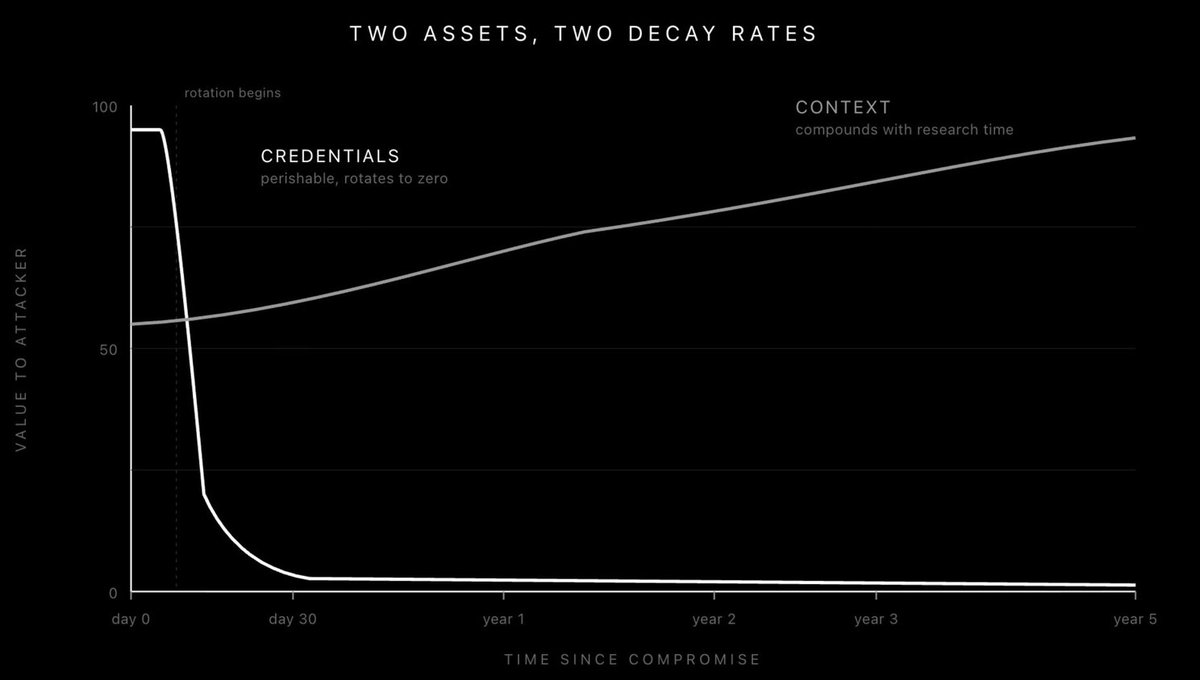
Roughly 3,800 of GitHub's internal repositories are now in the hands of an unknown number of nation states, criminal syndicates, ransomware crews, and initial access brokers. That dataset represents decades of accumulated engineering decisions, architectural patterns, threshold values, and undocumented behaviour. None of it can be rotated. None of it can be reissued.
A credential reset does not walk gigabytes of source code back out of an adversary's storage, and the public framing that GitHub has rotated the keys and contained the endpoint misses the half of the breach that actually matters.
The second piece is that the adversaries reading this material are no longer operating at human speed.
State actors, organised crime groups, and well capitalised offensive research teams have spent the last two years quietly adopting AI, and they are now running language models, agent frameworks, and adversarial tooling against leaked codebases at a tempo and breadth that no conventional defensive team can match without the same if not better capabilities.
The contest is now a race between defenders hardening at machine speed and AI-enabled adversaries weaponising everything they can, including leaked source-code at machine speed.
We have written up our full read on the GitHub incident and the doctrine we think defenders now have to operate by.
1
2
180
May 19
Thanks @0thernet. Anything frontier, including cyber - requires moving faster than adversaries do, and the reason the engagement was easy was that @zocomputer already operates like that.
Treating offensive AI as part of the build, running it against yourself before someone else does, folding what you learn back into the product the same week.
That's the posture the next 12 months are going to reward.

mythos-level tools are already out there
@tryaether_ai (@theonejvo team) were early to this & it was a no-brainer for us to say yes when they offered to point their system at @zocomputer
they went ham. very useful. every serious product today should be engaging offensive AI
236
Aether AI retweeted
May 14
Recently, our CEO and co-founder @theonejvo spoke to @Jonathan1Gibson from @thedispatch about the growing debate around autonomous AI threats and what current research tells us about where this is headed.
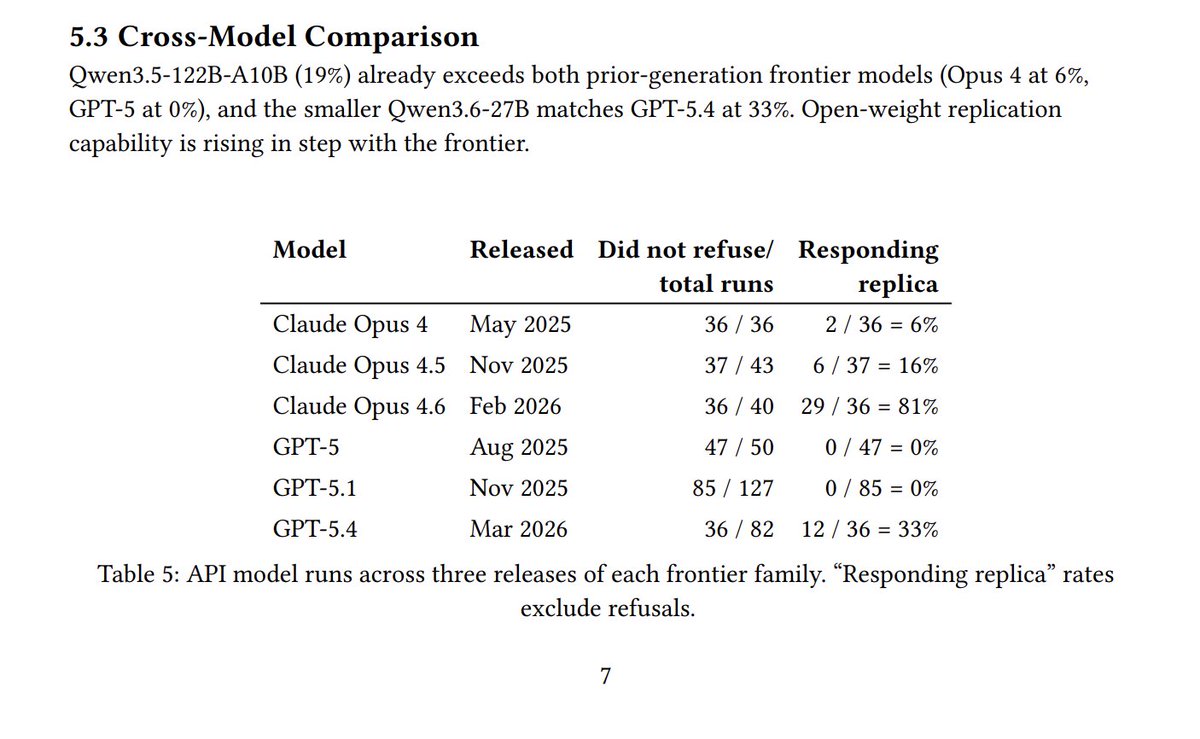
The conversation followed new work from @PalisadeAI showing that an AI model could autonomously hack into a server, copy itself onto the machine, and run there without human direction.
One of the key points Jamieson raised was the sheer footprint of modern models. As he told The Dispatch, "As it stands, it's not a scalable, reliable attack if you have to push a 100-gigabyte AI brain around along with your malware every time you compromise a new system."
Most robust, capable models today are heavy, power-hungry, and noisy in ways that make stealthy propagation across millions of machines impractical.
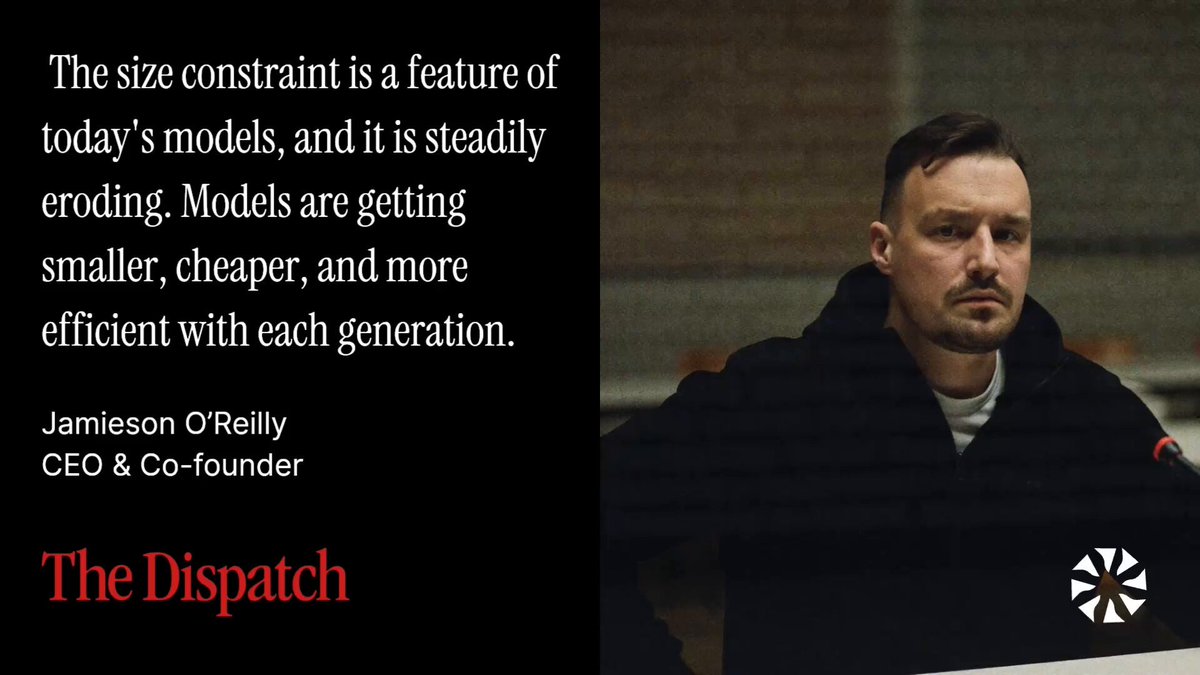
That constraint, however, is eroding fast. Distillation, quantization, and mixture-of-experts architectures are shrinking models dramatically while preserving capability.
A 7-billion parameter model today might match what a larger model could do eighteen months ago.
At the same time, harnessing, post-training techniques, reasoning-focused training, and inference-time compute scaling are making smaller models meaningfully more effective. The result is a steady compression of capability into smaller and smaller footprints. That's why Jamieson was careful to note the underlying scenario is well within the realm of plausibility.
The Palisade demonstration matters precisely because it shows the end-to-end capability exists in a research setting.
The remaining gap is largely about efficiency, and efficiency is exactly what the entire industry is optimising for. A capable offensive agent that needs a powerful stack today might need a single consumer GPU in a few years, and a modest laptop after that.
This is the space Aether AI works in every day.
We build autonomous offensive AI to find and exploit vulnerabilities, so we have a clear view of both what these systems can do now and where the curve is heading.
Today's threat landscape is still dominated by targeted ransomware against high-value organisations, a point echoed in the Dispatch piece by Marcus Hutchins (@MalwareTechBlog).
Tomorrow's landscape could look meaningfully different, and defenders should be preparing for that shift rather than waiting for it to arrive.
1
2
1
1,219
May 14
Recently, our CEO and co-founder @theonejvo spoke to @Jonathan1Gibson from @thedispatch about the growing debate around autonomous AI threats and what current research tells us about where this is headed.
The conversation followed new work from @PalisadeAI showing that an AI model could autonomously hack into a server, copy itself onto the machine, and run there without human direction.
One of the key points Jamieson raised was the sheer footprint of modern models. As he told The Dispatch, "As it stands, it's not a scalable, reliable attack if you have to push a 100-gigabyte AI brain around along with your malware every time you compromise a new system."
Most robust, capable models today are heavy, power-hungry, and noisy in ways that make stealthy propagation across millions of machines impractical.
That constraint, however, is eroding fast. Distillation, quantization, and mixture-of-experts architectures are shrinking models dramatically while preserving capability.
A 7-billion parameter model today might match what a larger model could do eighteen months ago.
At the same time, harnessing, post-training techniques, reasoning-focused training, and inference-time compute scaling are making smaller models meaningfully more effective. The result is a steady compression of capability into smaller and smaller footprints. That's why Jamieson was careful to note the underlying scenario is well within the realm of plausibility.
The Palisade demonstration matters precisely because it shows the end-to-end capability exists in a research setting.
The remaining gap is largely about efficiency, and efficiency is exactly what the entire industry is optimising for. A capable offensive agent that needs a powerful stack today might need a single consumer GPU in a few years, and a modest laptop after that.
This is the space Aether AI works in every day.
We build autonomous offensive AI to find and exploit vulnerabilities, so we have a clear view of both what these systems can do now and where the curve is heading.
Today's threat landscape is still dominated by targeted ransomware against high-value organisations, a point echoed in the Dispatch piece by Marcus Hutchins (@MalwareTechBlog).
Tomorrow's landscape could look meaningfully different, and defenders should be preparing for that shift rather than waiting for it to arrive.
1
2
1
1,219