The Turkish Trade Compliance and Sanctions Network (TTCSN) is a not-for-profit organization dedicated to promoting best practices in trade compliance.
Joined April 2023
- Tweets 1,906
- Following 17
- Followers 118
- Likes 123
1,790 Photos and videos

The U.S. Department of the Treasury’s Office of Foreign Assets Control (OFAC) has issued General License (GL) 55F and General License 115D, extending important authorizations related to Russia’s energy and civil nuclear sectors through 18 December 2026.
#TTCSN #TürkiyeTrade
1
5
The European Union has announced that a number of third countries have aligned themselves with recent EU sanctions measures targeting members of Hamas’ Political Bureau and individuals and entities linked to serious human rights abuses in the West Bank.
#TTCSN #TürkiyeTrade
10
Polish prosecutors have charged two individuals—a Russian citizen and a Polish citizen—for their alleged involvement in an organized criminal group that exported controlled dual-use goods to Russia in breach of European Union sanctions and export control regulations.
#TTCSN
5
The United Kingdom, Canada, France, Australia, and Norway have announced coordinated sanctions against individuals and entities linked to extremist settler violence in the West Bank.
#TTCSN #TürkiyeTradeCompliance #ExportControl #SanctionsUpdate #USA #OFAC #EU #UK #BIS #OFSI
9
OFSI has updated its sanctions guidance by introducing FAQ 187, providing further clarification on how firms should determine the “date of issue” of transferable securities and money market instruments under the Russia and Belarus sanctions regimes.
#TTCSN #TürkiyeTrade
5
The European Commission has issued reasoned opinions to Spain, France, and Austria for failing to fully transpose the Directive on the criminalisation of violations of Union restrictive measures, formally known as Directive (EU) 2024/1226.
#TTCSN #TürkiyeTradeCompliance
17
The U.S. House of Representatives has passed the Ukraine Support Act, advancing legislation that would significantly expand the sanctions authorities available to the President in response to Russia’s actions against Ukraine.
#TTCSN #TürkiyeTradeCompliance #ExportControl
7
The United Kingdom has removed Limited Liability Company RBRU Specialised Depository from its Russia sanctions list, marking a further amendment to the sanctions measures implemented under the Russia (Sanctions) (EU Exit) Regulations 2019.
#TTCSN #TürkiyeTradeCompliance
29
U.S. authorities have arrested Jamshid Ghomi, a dual U.S.-Iranian national and chief executive of Faraz Pardaz Rayaneh Co Ltd, on federal charges alleging conspiracy to violate the International Emergency Economic Powers Act (IEEPA) and U.S. sanctions regulations.
#TTCSN
17
French authorities have imposed targeted financial sanctions against Mahmut Yilmaz under France’s autonomous counterterrorism sanctions framework.
#TTCSN #TürkiyeTradeCompliance #ExportControl #SanctionsUpdate #USA #OFAC #EU #UK #BIS #OFSI #Herdem #ComplianceNetwork #Turkish
1
44
OFAC has expanded its Cuba sanctions programme by designating five individuals and five entities pursuant to Executive Order 14404, while also issuing a new Cuba-related Frequently Asked Question (FAQ 1258) to provide additional compliance guidance.
#TTCSN #TürkiyeTradeCompliance
10
Turkish Trade Compliance & Sanctions Network retweeted

Jun 3
𝗢𝗙𝗔𝗖 𝗝𝘂𝘀𝘁 𝗥𝗲𝗹𝗲𝗮𝘀𝗲𝗱 𝗮𝗻 𝗨𝗽𝗱𝗮𝘁𝗲𝗱 𝗜𝗻𝘁𝗿𝗼𝗱𝘂𝗰𝘁𝗶𝗼𝗻 𝗚𝘂𝗶𝗱𝗲 - June 1, 2026.
For compliance officers, legal counsel, and international trade professionals, here are the key details worth noting in this latest version:
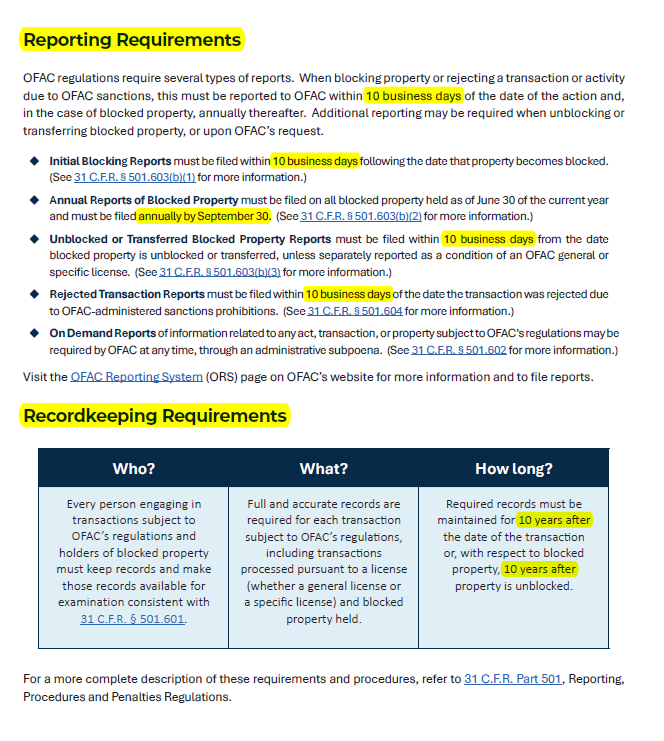
📌 Updated Civil Penalty Figure The maximum civil monetary penalty per IEEPA violation, as of January 15, 2025, stands at $377,700 per apparent violation — adjusted annually for inflation.
📌 Extended Enforcement Statute of Limitations OFAC may now commence enforcement actions for IEEPA- or TWEA-based violations within 10 years of the latest violation date (where that date falls after April 24, 2019). Other violations carry a five-year window.
📌 Secondary Sanctions — Expanding Scope The guide reaffirms that the explicit use of secondary sanctions targeting non-U.S. persons has become increasingly common — no longer limited to Iran-focused programs.
📌 The 50% Rule — Still a Blind Spot for Many A company not appearing on the SDN List can still be fully blocked if sanctioned persons own 50% or more of it, directly or indirectly. Due diligence must go beyond name-matching.
📌 Voluntary Self-Disclosure Incentive Reaffirmed Proactively disclosing apparent violations can reduce proposed civil penalties by 50%. Full report expected within 180 days of initial notification.
📌 Recordkeeping: 10-Year Obligation All transactions subject to OFAC regulations must be documented and retained for 10 years — including those processed under a license.
This updated guide is a timely reminder to revisit your screening protocols, KYC procedures, and internal reporting timelines. shorturl.at/YAjIW
#herdem
1
54
The United States has imposed counterterrorism sanctions on 13 individuals and entities connected to an Iran-based procurement network accused of acquiring sensitive goods and technology on behalf of sanctioned Iranian actors.
#TTCSN #TürkiyeTradeCompliance #ExportControl
15
UK has updated its financial sanctions guidance to provide additional clarification regarding the designation of Huobi Global S.A., also known as HTX, which was added to the UK sanctions list on 26 May 2026 as part of a broader package targeting Russia-linked financial networks.
36
BIS issued guidance on 31 May 2026 confirming that a licence is required for the export, re-export, or transfer of certain advanced computing items to entities headquartered in countries listed in Country Group D:5, including the People’s Republic of China.
#TTCSN #TürkiyeTrade
5
FTI Consulting has entered into a settlement agreement with the U.S. Department of the Treasury’s Office of Foreign Assets Control (OFAC), agreeing to pay $1,050,000 to resolve potential civil liability arising from apparent violations of U.S. Russia-related sanctions.
#TTCSN
26
The United States has announced a new round of sanctions targeting a network involved in the sale, transportation, and marketing of Iranian oil and petrochemical products, intensifying efforts to disrupt revenue sources connected to Iran’s military and sanctioned entities.
#TTCSN
1
9
A U.S. District Court in Washington, D.C., has dismissed claims brought against cryptocurrency exchange Binance by victims of the 7 October 2023 Hamas attacks, ruling that alleged deficiencies in the company’s sanctions and anti-money laundering controls
#TTCSN #TürkiyeTrade
10