
Chrome Dev Rel helping make the web go faster!. All opinions my own. I’m primarily on 🦋 these days.
Joined July 2015
- Tweets 11,566
- Following 903
- Followers 6,258
- Likes 11,325
655 Photos and videos

Pinned Tweet

16 Jun 2019
Interested in how the modern web works? Think #webperf is important? Then check out my book “HTTP/2 in Action” with @ManningBooks at manning.com/books/http2-in-a…
And if you’ve ever considered writing a book then check out the story behind the book at tunetheweb.com/blog/writing-…
#http2

ALT HTTP/2 in Action cover - front and back
5
26
117
Barry Pollard retweeted

Track exactly when blocks of content load in our new origin trial → goo.gle/49nSTL9
Container Timing extends Element Timing so you can measure when entire components like widgets or sidebars are available to your users.
1
15
94
11,628
Barry Pollard retweeted

Feb 28
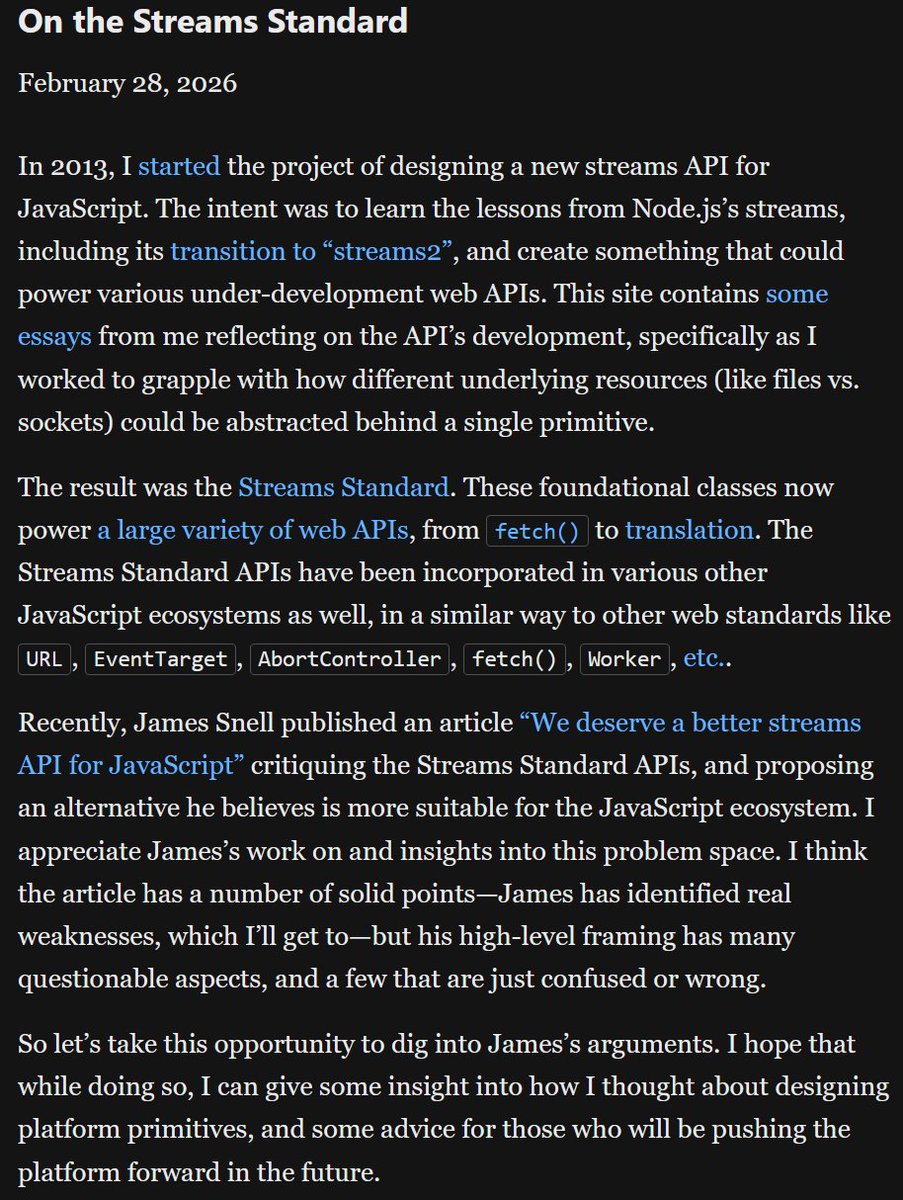
Alright, I wrote it. domenic.me/streams-standard/
Feb 28

Very tempted to write up a response to blog.cloudflare.com/a-better…... It has some good points but a lot of questionable ones and some that are just confused and wrong. But I'm not sure I want to get pulled back into that world.
3
31
202
30,448
Feb 9
Don't suppose anyone in my circle knows anyone working at X engineering? Need to discuss a potential issue preventing some users from Chrome 146 logging in. @XDevelopers @engineering
2
2
678
Feb 8
Is there anything more frustrating in the world that trying to create a child's @EA games account? Inconsistent login options (Google sometimes appears, sometimes doesn't), you need a desktop app not a mobile app, you can't login using EA ID online, but can't set an email. Sigh…
4
481
Barry Pollard retweeted

23 Dec 2025
Web Performance Calendar day 23 with @tunetheweb on configuring caches to ignore non-content-affecting URL params and reclaim performance. No more of this query string = cache miss nonsense.
calendar.perfplanet.com/2025…
2
13
1,138
9 Dec 2025
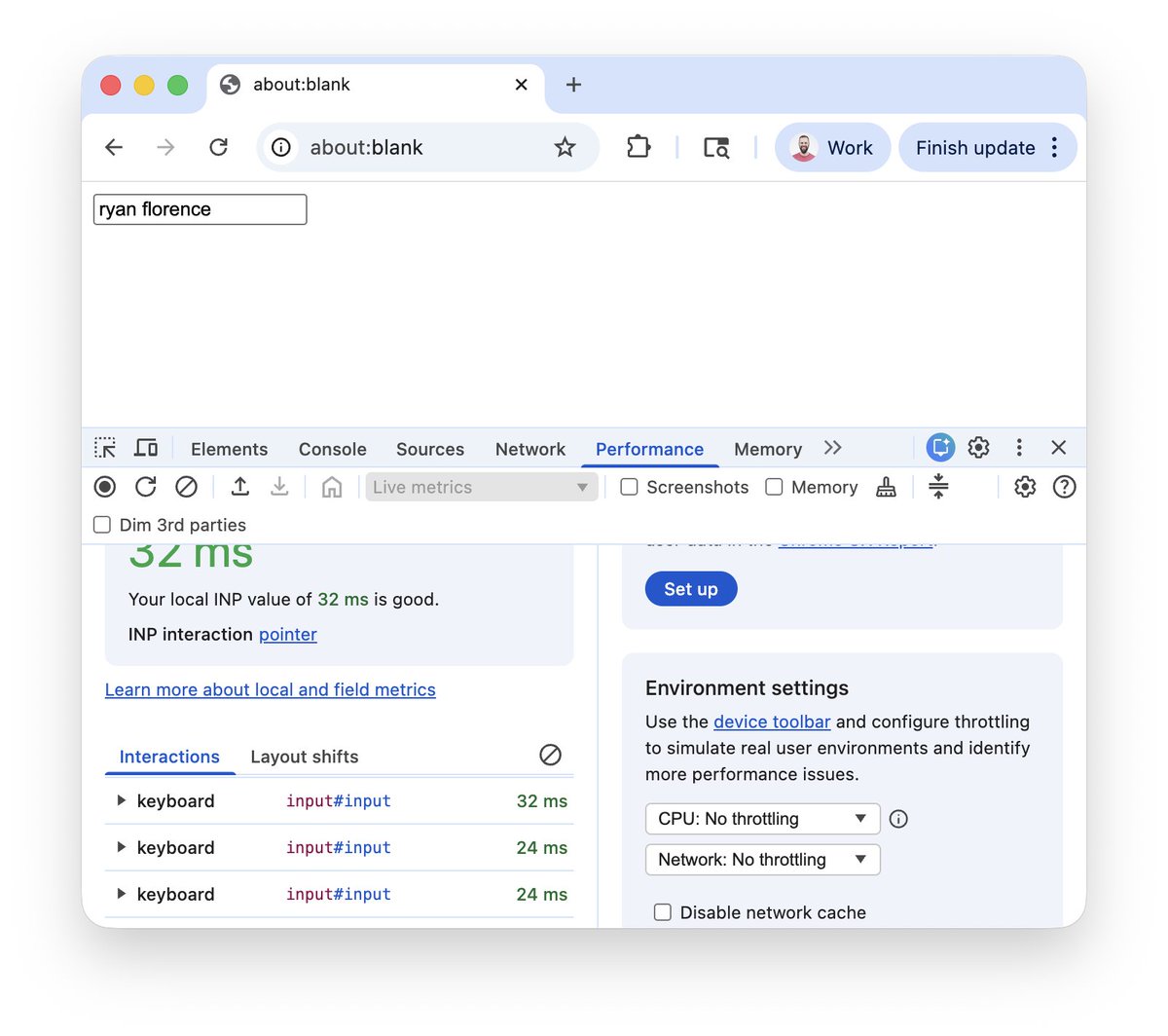
So @ryanflorence had a good chat with @mmocny on this yesterday, but for the rest of you out there here's some things to know.
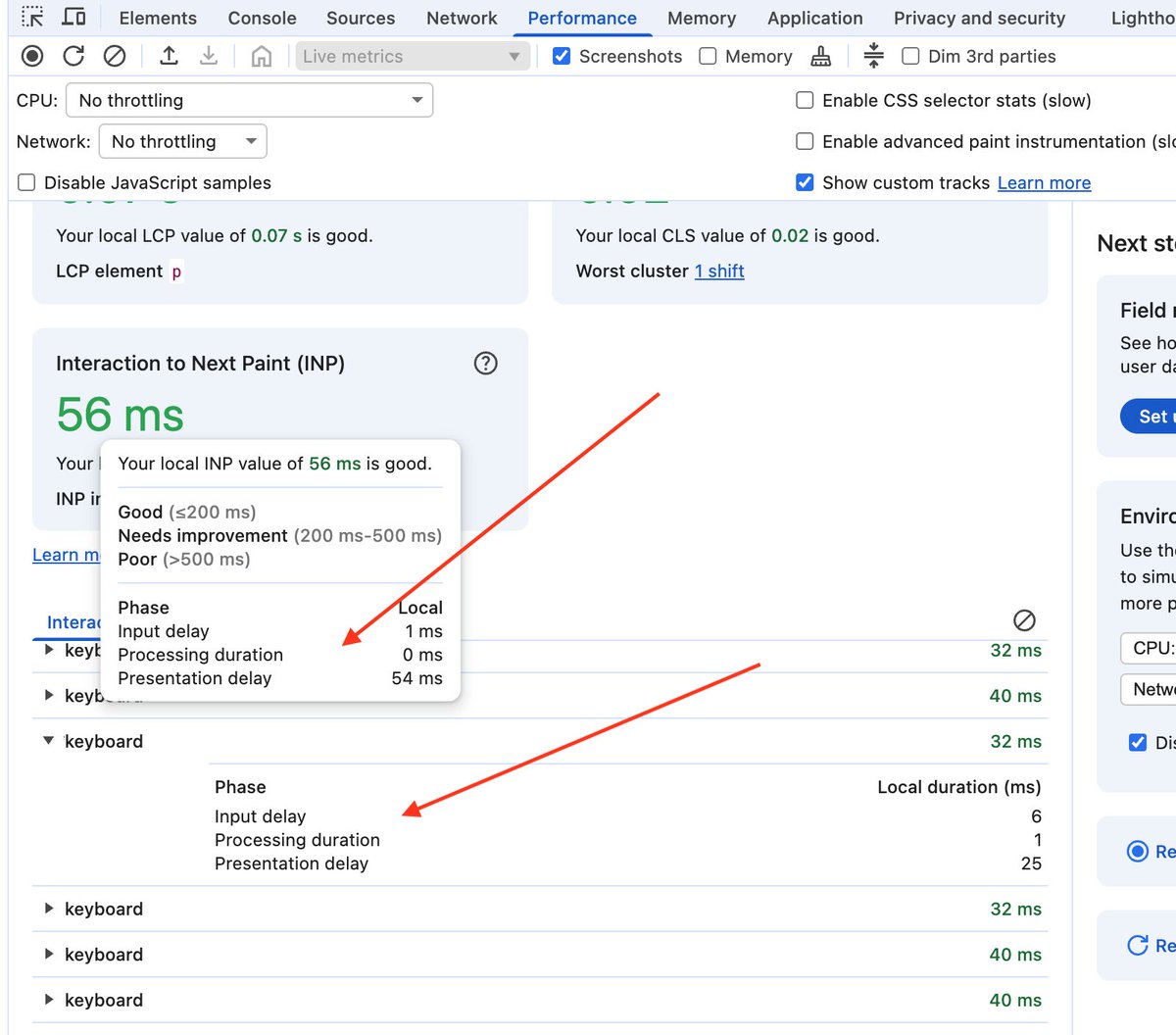
INP measures (as much as possible) from the moment you interact (click a button, type a key...etc) until the pixels actually update.
🧵 1/12
8 Dec 2025

I have no idea why, but it is consistently over 20ms for me. Makes me wonder if I actually understand what INP really is.
2
8
920
9 Dec 2025
Also performance APIs (like Event Timing which is what's used here) only measures >= 16ms but also round to nearest 8ms.
So that 16ms you see may be 8.1ms (or even 31.9ms). And you may not see <8ms interactions—though as I say given all of the above they're probably rare.
6/12
2
1
355
9 Dec 2025
Oops this one should really say 12.001ms to 19.999ms and not 8.1ms to 31.9ms. Sorry for the confusion!
We round to the nearest multiple of 8ms (so 8, 16, 24, 32...etc) so <=12 is rounded to 8, >=20 is rounded to 24 and numbers in between are rounded to 16.
255
9 Dec 2025
So if you're getting 16ms or even 32ms in this rounded, filtered, end to end, measure we show here, that's about the lowest you can expect on the web and is actually very good, even if it seems like it should be shorter!
Also check what else you're doing on your machine!
11/12
1
1
246
9 Dec 2025
We set a 200ms "good" threshold for INP, but a lot of that is based on achievability (esp. on mobile)—there's no point having a target people can't reach.
web.dev/articles/defining-co…
So you really wanna look at the 100ms interactions—that's where your real problems are!
12/12 🏁
1
282
Barry Pollard retweeted

7 Nov 2025
Your browser’s already loading the next page… before you click it.
Faster loads by predicting what you’ll do next. @tunetheweb shares the magic behind Chrome’s new Speculation Rules API.
YT: buff.ly/Z5ma0cl
Apple: buff.ly/ezPrW1Q
Spotify: buff.ly/woBqWvk
3
7
569
1 Aug 2025
We’re investigating an issue with PageSpeed Insights. Will get it working again soon…
2
1
21
1,761