OCA/OCP 8 Certified | Java 8/11/17 | Are you learning Java or studying for the exam and need some help? | Hit me up and I’ll try and answer it
Joined April 2022
- Tweets 32
- Following 105
- Followers 13
- Likes 55
Photos and videos
JavaTutor retweeted

19 May 2022
Feedback on the new OCP Java 17 Certification exam 1Z0-829:
bit.ly/38vm1UV
2
5

14 May 2022
If you're planning on sitting an #OCP exam, I highly recommend the study guide by @ScottSelikoff and @jeanneboyarsky.
Once you're done with the book, I suggest you take practice exams @Enthuware. And I can't stress this enough.
1
14 May 2022
The exam is hard! And mainly because:
- The topic list is very long (there is a lot to learn).
- The time to answer a question is very short (less than 2 mins per question).
- The examiners try to trick you.
So you really have to be on your game.
1
14 May 2022
But this is not meant to scare anyone away.
If you prepare well and study well, you'll be fine.
And plus, I'm here.
Hit me up with a question if you get stuck.
JavaTutor retweeted

11 May 2022
Want to win our newest #java 17 book for #free? Four copies are up for grabs this week on @coderanch! Just post a question in the #OCP forum between now and Friday for a chance to win! @jeanneboyarsky coderanch.com/f/24/java-prog…
5
14
JavaTutor retweeted

10 May 2022
If you know anyone that is interested in learning about #Java, check out @Microsoft's curated Java for Beginners playlist on youtube. bit.ly/39RNU9U @JavaAtMicrosoft
1
27
103
JavaTutor retweeted

10 May 2022
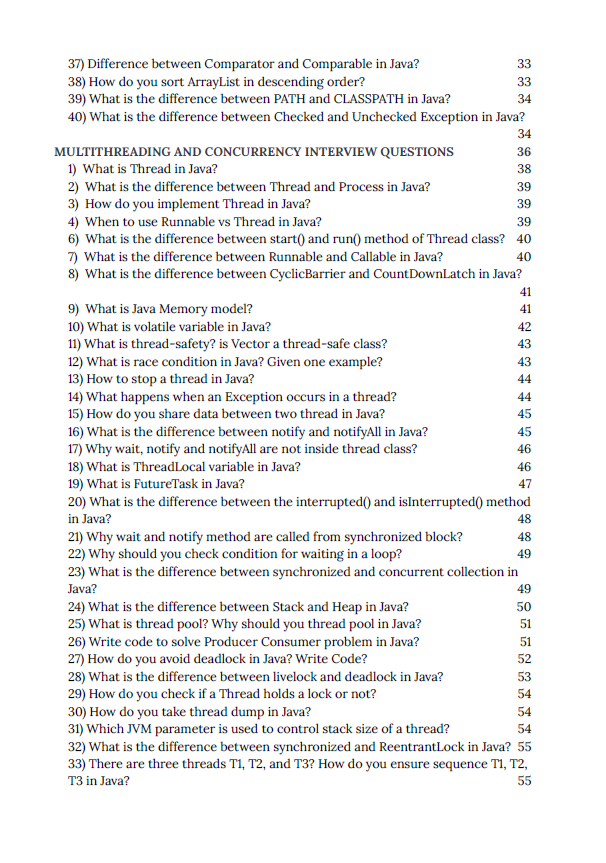
Preparing for Java Developer interview?
our book Grokking the Java Interview can help, it covers
- oop
- multithreading
- collections
- design patterns
- gc
download the sample PDF for FREE - javinpaul.gumroad.com/l/HMOA…
#Java #Programming
16
79
JavaTutor retweeted

10 May 2022
Book promo week at the Ranch! Win a copy of @ScottSelikoff and my latest book. Or just stop by and say hi!
10 May 2022

Win free book from @Sybex ; 4 copies of "OCP Oracle Certified Professional Java SE 17 Developer Study Guide: Exam 1Z0-829" giveaway in #coderanch #OCP forum coderanch.com/f/24/java-prog…
3
6
2 May 2022
static vs instance (non static)
If we had a class:
public class JavaTutor {
public int followers = 0;
}
And we created 3 objects of that class:
JavaTutor jt1 = new JavaTutor();
JavaTutor jt2 = new JavaTutor();
JavaTutor jt3 = new JavaTutor();
1
2 May 2022
But if followers was static:
public class JavaTutor {
public static int followers = 0;
}
And we did the same thing as before by changing followers in jt1 from 0 to 1.
1
2 May 2022
Now, followers in tj2 and tj3 are also 1.
So by setting our field to static, all objects of JavaTutor now share the same copy of followers.
Changing the field in one object is reflected in all objects of JavaTutor.
25 Apr 2022
To print in Java we use:
System.out.println()
Let’s break it down:
1. System is a class.
2. Within that class is the static field - out, of type PrintStream.
3. Within the PrintStream class is the method println().
25 Apr 2022
The eight primitive data types in Java:
- byte
- short
- char
- int
- long
- float
- double
- boolean