
TX Labs supports projects that disrupt the service boundaries of Web3. Building @theBlockless.
Joined September 2021
- Tweets 127
- Following 3
- Followers 718
- Likes 176
1 Photos and videos
TX Labs retweeted

8 Jan 2024
Our litepaper is now live.
For the first time ever, you'll be able to power applications just by using them.
blockless.network/litepaper
14
51
149
31,548
TX Labs retweeted
12 Dec 2023
🕸️ Join us on Thursday where we'll be talking about the role of WASM (with all of its wonderful quirks) in Web3. Featuring WASM royalty @lastmjs @juntao and our very own @dmikeyanderson 🕸️
x.com/i/spaces/1dRKZEpZanrxB
4
7
22
8,984
TX Labs retweeted
27 Oct 2023
Legacy off-chain networks have been designed holistically, but with @eigencloud a more modular approach is allowed.
With EigenLayer taking care of economic security for off-chain networks, in our AMA @imliamzhang discusses how Blockless provides technical security and standardized frameworks to build these networks in an efficient manner.
4
7
24
4,279
TX Labs retweeted
19 Oct 2023
Our Q&A with @eigencloud on how to build and secure Actively Validated Services (AVS) is now live.
You can watch it below.
youtu.be/EQBI7xzu2W4
3
5
12
2,419
TX Labs retweeted
19 Oct 2023
If you're wondering what a Network Neutral Application is, and how our nnApps are different to dApps, we've provided a quick breakdown below... 💤💤
Decentralized applications have played their part in rendering a future for web infrastructure. Limitations in terms of performance, scalability or use-cases aren’t the fault of developers (who make up some of the finest minds in this space) but rather the networks that they use.
Network Neutral applications, or nnApps, place an emphasis on what applications do workload-by-workload, enabling them to operate beyond the rules of those networks, without having to leave them.What does this mean for applications?
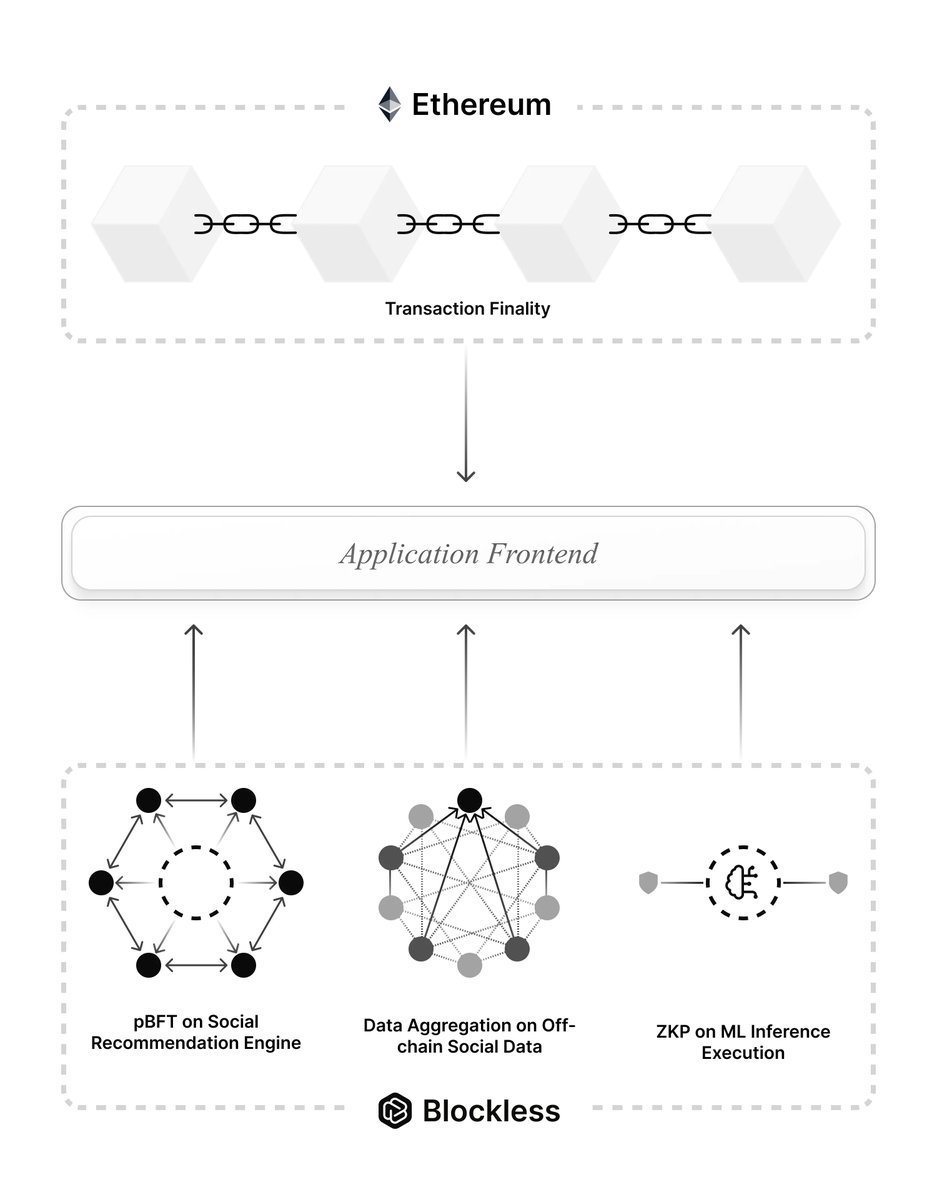
It means running stable diffusion models, processing arbitrary real-world data and executing complex financial models are just a few of the things that can now take place off-chain, whilst retaining the security of Ethereum, Solana, or any other network.
It looks like this:
How?
Each nnApp has its own dream network, an app-specific network of nodes dedicated to running the computations. These nodes aren’t allocated at random to perform different workloads, but are selected based on their suitability.
Blockless then allows you to select which consensus or verification algorithm you want to verify/validate each workload. That might be RAFT, pBFT, ZKPs, or a combination of a few.
Put simply, nnApps consist of:
1. Your Code
2. Our network of nodes (with our orchestration mechanism directing them)
3. Your Choice of Consensus/Verification Algorithms
By breaking an application down to its workloads, the nodes that process these workloads, and the security mechanisms they use to do so, we create the first modular application architecture - allowing for an efficient, scalable and performant application.
Interested in how these mechanisms work? Read on here: blockless.medium.com/what-co…
3
7
25
2,248
TX Labs retweeted
10 Oct 2023
Set a reminder and join us this Thursday!
x.com/i/spaces/1PlJQDRNaNXGE
2
4
10
1,631
TX Labs retweeted
10 Oct 2023
Stake secured!
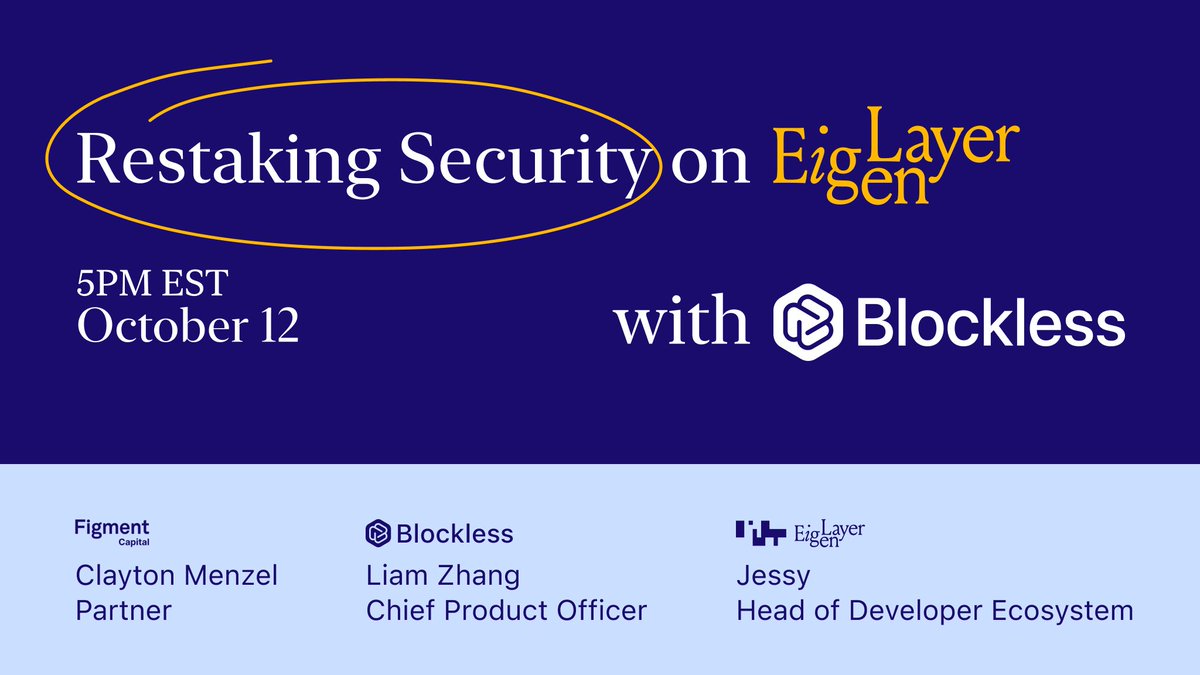
This Thursday 5PM EST, our CPO @imliamzhang will be leading a deep-dive with EigenLayer's Head of Dev Ecosystem @13yearoldvc on how we're making restaking and building on @eigencloud as safe, quick and easy as possible.
Moderated by our favorite @menzel_clayton
4
14
57
12,089

It’s nnApp time
6 Oct 2023

We’ve just gone live with our vision for the future of decentralized applications, and it sounds pretty similar to a midday snooze…
You can read about nnApps (network neutral applications), what they’re made from, and why they’re needed below.
blockless.medium.com/what-co…
2
3
214
TX Labs retweeted
10 Sep 2023
Here comes the v0.3 release of Blockless (b7s) Protocol! We’ve now introduced pBFT as one of the consensus mechanism available for builders on Blockless! 🚀
So what is pBFT and why does it matter? Let’s dive in 👇
github.com/blocklessnetwork/…
4
5
10
1,625
TX Labs retweeted
8 Aug 2023
Here comes v0.2.0 of Blockless Runtime 🚀
With this release, WASM modules on Blockless are now reusable.
You can build a WASM module once in a single language (e.g. C), and then reuse that with any other language (e.g. Javascript).
Full change log: github.com/blocklessnetwork/…
2
7
15
1,337
TX Labs retweeted
11 Jul 2023
We’re moving our monthly progress updates over from Discord so that we can share the good news with more of you!🚨🗞️
This Saturday at 9am PST, or 6pm for everyone tuning in from EthCC 🇫🇷
See you soon!
x.com/i/spaces/1PlJQppRLkVGE
7
74
76
2,122
TX Labs retweeted
14 Jun 2023
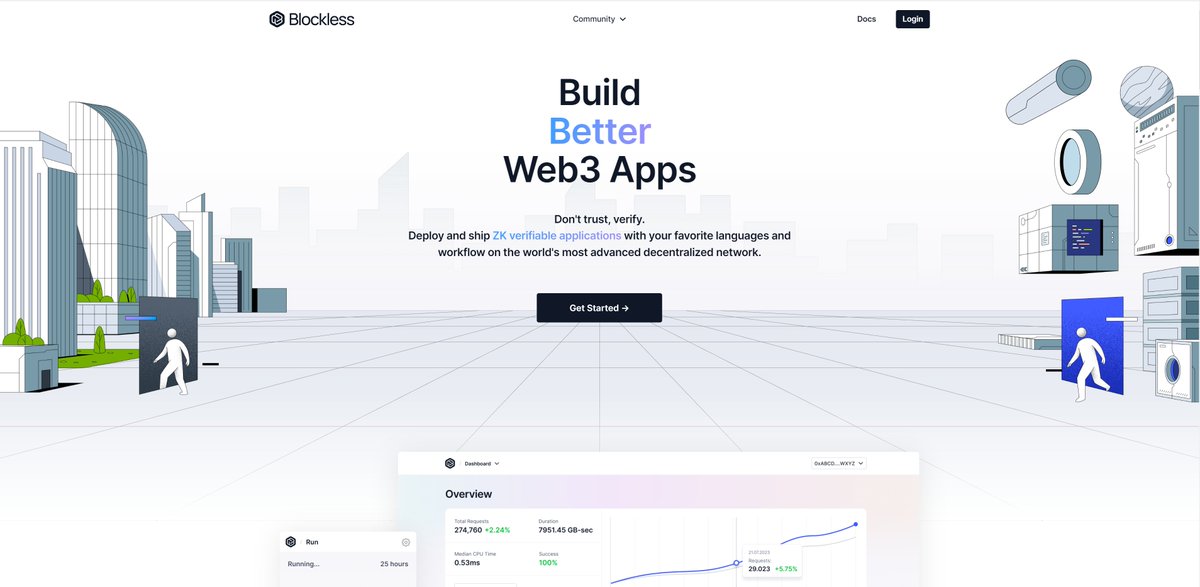
Here comes our renewed landing page to reflect our progress💪
Check this out👇
blockless.network/
3
5
20
2,237
TX Labs retweeted
13 Jun 2023
🥳A quick recap of major events over the past month:
1. Blockless Sites now live
2. Announced Blockless Initial Node Offering
3. Announced collaboration plan with @eigencloud
4. Blockless Protocol keynote at @OpenSourceNorth
Details here
⏬
blockless.medium.com/blockle…
3
8
20
4,351
TX Labs retweeted

8 Jun 2023
The future of Web3 should be a place where all apps are politically independent and democratically managed.
As we build towards this future at @theblockless, today we introduce Blockless Sites to bring your app's frontend into Web3.
1
2
6
3,414
TX Labs retweeted
8 Jun 2023
We are proud to share that from now on, you can have your dApp frontend run on Blockless as well!
Here comes a new era of community ownership for Web3 👇
blockless.network/docs/sites
8 Jun 2023

The future of Web3 should be a place where all apps are politically independent and democratically managed.
As we build towards this future at @theblockless, today we introduce Blockless Sites to bring your app's frontend into Web3.
3
9
16
2,496
TX Labs retweeted
6 Jun 2023
Unveiling Blockless Initial Node Offering: A Web3 We Haven't Bargained for.
Ever wondered what a truly decentralized Web3 could look like? This is a call to envision a digital space where every participant has an equal voice:
blockless.medium.com/a-web3-…
4
7
10
2,029
TX Labs retweeted
24 May 2023
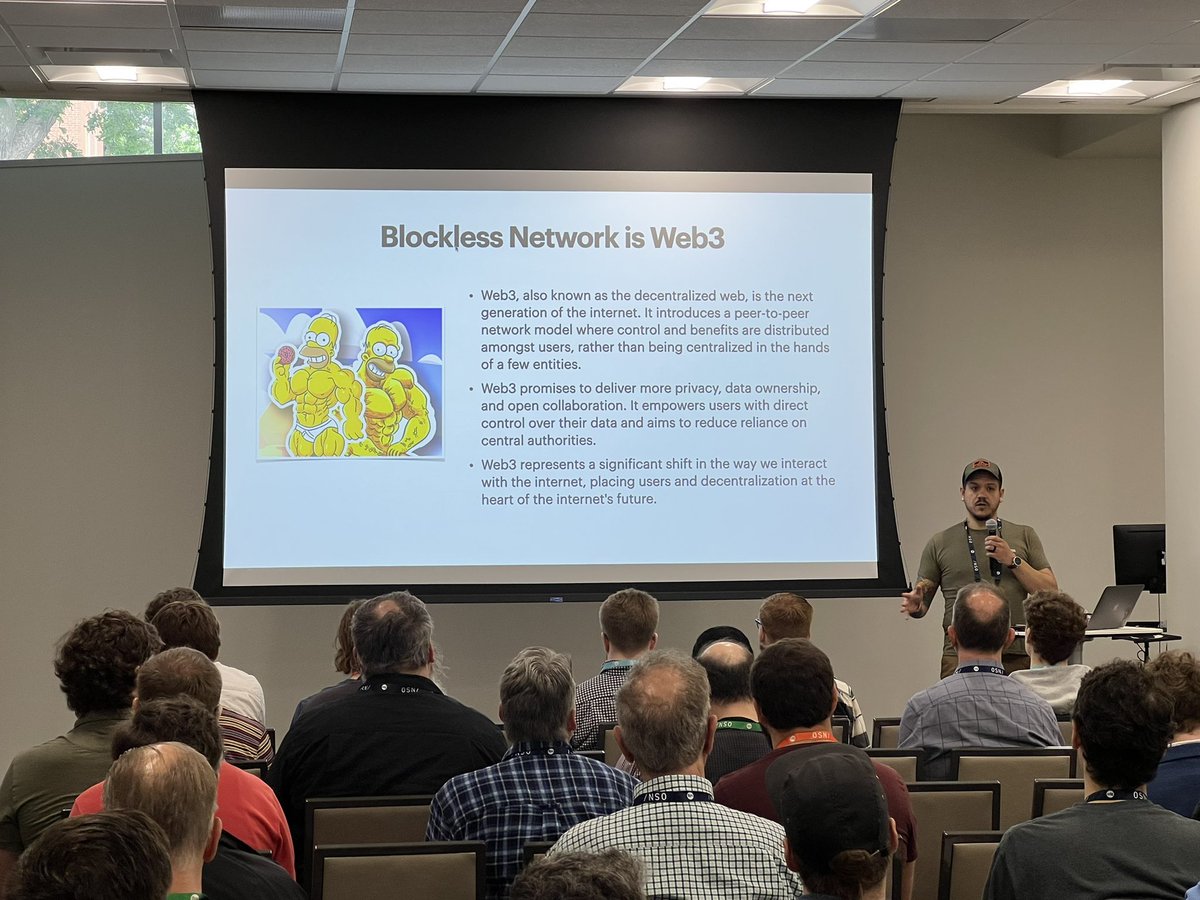
Honored to be the Web3 company selected by @OpenSourceNorth to spread the word about the next generation of internet and how we empower the individuals & communities at Blockless!
3
5
14
1,309
TX Labs retweeted
16 May 2023
🔥Exciting News!📷 Blockless is thrilled to announce a strategic partnership with @DeployOnStackOS , pioneering decentralized computing's future! 📷
blockless.medium.com/blockle…
3
8
20
2,798
TX Labs retweeted
10 May 2023
What is Blockless Protocol and what’s so innovative about it?
Thread #3
Randomized Subnet Formation
2
2
7
962
TX Labs retweeted
10 May 2023
This wraps up the #3 post in our explainer series!
Tomorrow, we will discuss the Blockless Extension system, and a world of new possibilities we enable by allowing dApps to direct access external resources.
Stay tuned and join our Discord family here!
discord.gg/zF3GmE7c
1
2
3
396