Father, educator and wordsmith. Love me some Yankees. Hail Sagan. Chuck Woolery blocked me, so I’m pretty important.
Joined July 2008
- Tweets 5,606
- Following 1,421
- Followers 286
- Likes 19,928
2,345 Photos and videos
















tyrez retweeted

29 Oct 2024
The “floating garbage” line was no accident. This is what Trump truly thinks of Puerto Ricans. On November 5th show him what you think of him.
1,160
6,648
16,612
1,520,658
tyrez retweeted

23 Oct 2024
Reposting for no particular reason
789
7,324
20,269
1,124,093
tyrez retweeted

21 Oct 2024
Happy Monday & FUCK trump.
1,056
8,899
66,477
1,705,550
tyrez retweeted

21 Oct 2024
🚨🚨🚨MAJOR BREAKING: Central Park Five members have just SLAPPED Donald Trump with a defamation lawsuit after his debate comments on the 1989 case.
Below, one of the litigants explains how Donald Trump ruined his life.
They should take him for everything he’s worth!
More: The five men claim in a 20-page federal lawsuit that Trump knew he was acting with “reckless disregard” for the truth when he said during the September debate with Vice President Kamala Harris that they pleaded guilty.
They never plead guilty.
“Defendant Trump’s statements were false and defamatory in numerous respects,” attorneys for the men, now all in their 50s, wrote in the lawsuit.
We stand with them. 💙
567
5,469
21,073
939,525
tyrez retweeted

20 Oct 2024
"We've forgotten how to be polite. We've forgotten how to be respectful of different opinions and I know that President Trump will get us back there. He really will."
-Alina Habba
🤔
19 Oct 2024

Trump: You have to tell Kamala Harris that we can't stand you. You're a shit vice president. Get the hell out of here Kamala.
77
495
1,812
153,977
tyrez retweeted

18 Oct 2024
So many are missing this. 67% of HBCU students receive Pell Grants. This would devastate the sector.
18 Oct 2024

Dismantling of Dept. of Eduction also includes the loss of Title I funds for high-poverty schools ($18B a year), and Pell Grants ($28B a year).
69
1,802
3,251
151,178
tyrez retweeted

17 Oct 2024
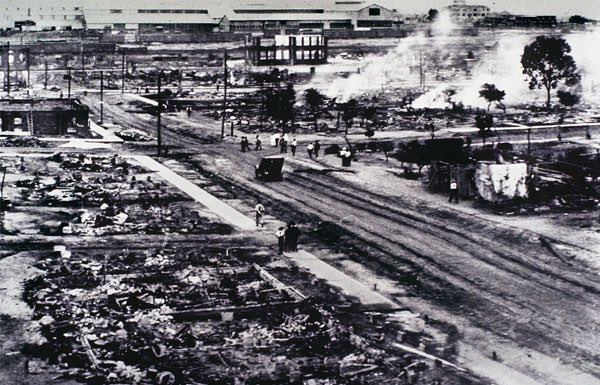
Denial of Justice: The Tulsa Race Massacre Survivors’ Fight
The 1921 Tulsa Race Massacre decimated Greenwood, a prosperous Black community known as “Black Wall Street,” when white mobs, supported by local authorities, launched a devastating attack.
In just two days, hundreds of Black residents were killed, and more than 1,000 homes and businesses were destroyed. While many survivors tried to rebuild their lives, they were met with a series of systemic barriers, including the denial of insurance claims for the damages they suffered.
Insurance companies invoked “riot” exclusion clauses, claiming the destruction was part of a riot, not compensable damage, leaving survivors with no financial support despite the immense loss of property.
The media also played a role in the cover-up, with local newspapers either downplaying the event or labeling it as a race “riot,” which contributed to its erasure from public memory.
For decades, the massacre was virtually ignored in historical accounts and public discourse. Many survivors, left impoverished, received no government assistance, and no one was prosecuted for the massacre.
The Tulsa Race Massacre is now widely recognized as an act of racial terrorism, akin to pogroms seen in Eastern Europe. Like those violent, state-sanctioned attacks, the massacre targeted an entire racial group with the intent of destroying their community. The terror and destruction left long-lasting scars, not just on the physical landscape of Tulsa but on the lives of the survivors and their descendants, who were robbed of generational wealth and opportunity.
In recent years, survivors like Lessie Benningfield Randle and Viola Fletcher, who are both over 100 years old, sought justice through a 2020 lawsuit.
The suit argued that the massacre and its long-term effects amounted to a public nuisance that continues to harm the Black community in Tulsa. However, in 2024, the Oklahoma Supreme Court dismissed the case, ruling that the claims didn’t meet the legal requirements under the state’s public nuisance law. This decision dealt yet another blow to the survivors’ long-standing efforts for justice and reparations.
Despite the dismissal, the fight for justice continues to spark conversations about reparations and the need to address the historical wrongs that still affect Tulsa’s Black community today.
The massacre remains a stark reminder of the racial violence and systemic injustice that have defined much of American history, leaving many to call for broader, more meaningful reparations beyond the courtroom.
5
121
230
18,800
tyrez retweeted

17 Oct 2024
I wrote this cause it’s what I always wanted to say about Trump pretending to be a tough guy. But we got the amazing @DaveBautista to say it SO much better. Thanks Dave. #TrumpIsAWeakLittleBabyBitch
3,487
16,509
53,652
5,012,329

tyrez retweeted

14 Oct 2024
Today would be a good day for @realDonaldTrump to release his tax returns.
Today would be a good day for @realDonaldTrump to release his medical records.
59
370
1,238
35,853
tyrez retweeted

13 Oct 2024
Hillary Clinton called MAGA a “basket of deplorables” at a fundraiser and the media had a meltdown for years.
Donald Trump calls VP Kamala Harris “a ret@rd” at a fundraiser and the media is relatively silent.
Shameful.
3,797
12,024
66,652
1,194,664
tyrez retweeted

13 Oct 2024
"Deplorables", which was said at a private function, was made into a major campaign narrative. Meanwhile, this dude is just openly calling the left 'enemies from within' and vowing to crush them with the military and it's all crickets.
13 Oct 2024
Trump to Bartiromo on what worries him about election day: "I think the bigger problem is the enemy from within ... sick people, radical left lunatics. And it should be easily handled by, if necessary, by National Guard, or if really necessary, by the military."
79
1,644
6,461
299,589
tyrez retweeted

23 Aug 2024
A message to every MAGA Patriot on X: Donald Trump lied to you.
Donald Trump told you that Republicans would steal the 2016 primary for Ted Cruz. He wanted you to call it fraud if Ted Cruz won, so he lied to you.
He told you Democrats would steal the 2016 general election for Hillary. He wanted you to call it fraud if she won, so he lied to you.
He told you they would steal it again in 2020, through mail-in voting, “illegals,” “ballot harvesting,” Dominion voting machines, and more.
He wanted you to call it fraud if Biden won, so he lied to you.
He expected to lose every time. When he finally did, you still fell for it. But it’s not your fault.
Every single person, news outlet, and organization who would profit off a second Trump term repeated his lies so you’d stay firm in your belief and so you’d distrust our system.
They thought if they lied enough and got you angry enough, you would help Trump stay in office by doing something crazy... something like storming the Capitol during the electoral college certification.
Then they lied to you and said J6 was Antifa and the FBI in disguise, not real Trump supporters. Four years later, Trump is planning a ceremony next month to thank the MAGA supporters who were there that day.
If you look at the actual facts and ignore everything Trump and people on TV and social media have said to you to trick you… Here is what we know:
Every Trump administration official who testified under penalty of perjury about the 2020 election confirmed there was no evidence of widespread voter fraud or illegal voting.
Every lawsuit regarding the 2020 election was dismissed, even by Trump-appointed judges.
The only reason you think that you can’t trust our election results, that there is widespread voter fraud, or that Democrats can somehow rig elections is that Trump lost ONE TIME. That’s it. Just once.
Is that really so hard to believe, especially considering that so many Americans knew someone who had died from COVID?
Folks, he’s already lying to you again.
Trump’s team is working on new phony lawsuits for November. They’re even filing lawsuits early to un-enroll tens of thousands of voters in swing states like Arizona. so the margin of victory is close enough to claim “FRAUD!” when he loses.
Trump’s team also has a plan to end all election monitoring if he’s re-elected, so Republicans can yell “FRAUD!” again in 2028 with no way for the government to tell if there was fraud or not.
They are doing exactly what they accuse Democrats of doing: destroying the integrity of our elections. Don’t. Fall. For. It.
If you still can’t believe it, think about this...
Here’s Trump last month saying that the Republican Party will have lawyers at every poll booth in November.
He’s still going to say there was widespread fraud despute attorneys watching every voting location and despite telling Fox News viewers that he doesn’t need their votes.
If you think he’s telling the truth, then you should trust that the election will be safe and secure. The lawyers will stop non-citizens from voting and stop Americans from voting twice. You have nothing to worry about, right?
So if he still blames widespread fraud for losing, then he’ll be lying, won’t he?
On the other hand, if you agree that having a lawyer at every poll booth isn't possible, then you know he’s lying to you already, right?
There IS a corrupt, globalist elite who want to destroy our country and our democracy. But it isn’t the Democrats.
It’s the party led by the man who has over a dozen countries around the globe invested in his companies and his presidency.
If you are a Trump supporter and this post has made you start to wonder, even a little bit, if it’s true that Trump has been a conman this entire time, you might find some answers at our website.
Wishing you all a safe and healthy future,
TrumpFile.org
11,611
14,875
36,743
25,821,810
tyrez retweeted

8 Oct 2024
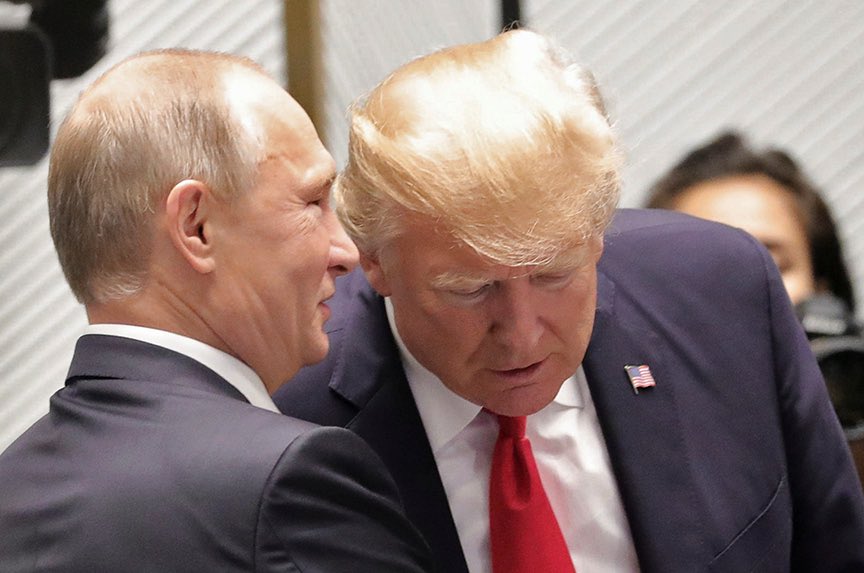
Trump’s @realDonaldTrump 7 meetings with Putin…
It is reasonable there is a recording of these calls in an exquisite intel program. Trump would not be the target of the collection, but because Putin is a high-value target, Trump would be caught in the collection. The Russians definitely have a recording of every call.
7 calls with Putin, including during the full-scale Russia-Ukraine war, helps explains why Trump continues to be an ardent supporter of Russia and such a vocal critic of Ukraine.
Trump’s 7 calls with Putin also explain why Putin was emboldened to launch the full-scale invasion of Ukraine and sustain more than 2 years of war. Putin has made a huge investment in Trump and expects that investment to payoff.
It’s clear now more than ever that @realDonaldTrump was the decisive factor in convincing Putin to wage a wider war on Ukraine. Trump has taken the world to the brink of Armageddon. A second Trump term would have America—& with it the entire world—go over the precipice. Trump was, is, & will be a clear & present danger to the United States.
739
5,061
11,649
363,851
tyrez retweeted

9 Oct 2024
It cannot be overstated how big a political scandal this would have been in any other era
Watergate-level
8 Oct 2024

A new report from Sen. Sheldon Whitehouse finds fresh evidence the Trump White House tightly controlled the FBI investigation into the sexual assault claims against Brett Kavanaugh.
The Trump White House never authorized the agency to independently probe the assault allegations. washingtonpost.com/politics/…
506
6,700
30,275
844,290
tyrez retweeted

7 Oct 2024
This is an absolutely must-watch. All of it. Five minutes. Imperative.
6 Oct 2024

These extremely online young Christian men want to end the 19th Amendment, restore public flogging, and make America white again.
And they're connected to JD Vance. Meet the "TheoBros." x.com/MotherJones/status/184…
354
4,435
8,557
891,330