
Engineering Lead. Ex Microsoft. 10 years of building smart software that scales. I will help you build a great career in tech 🚀. DMs open 🙂
Joined July 2011
- Tweets 8,903
- Following 398
- Followers 89,648
- Likes 11,968
324 Photos and videos




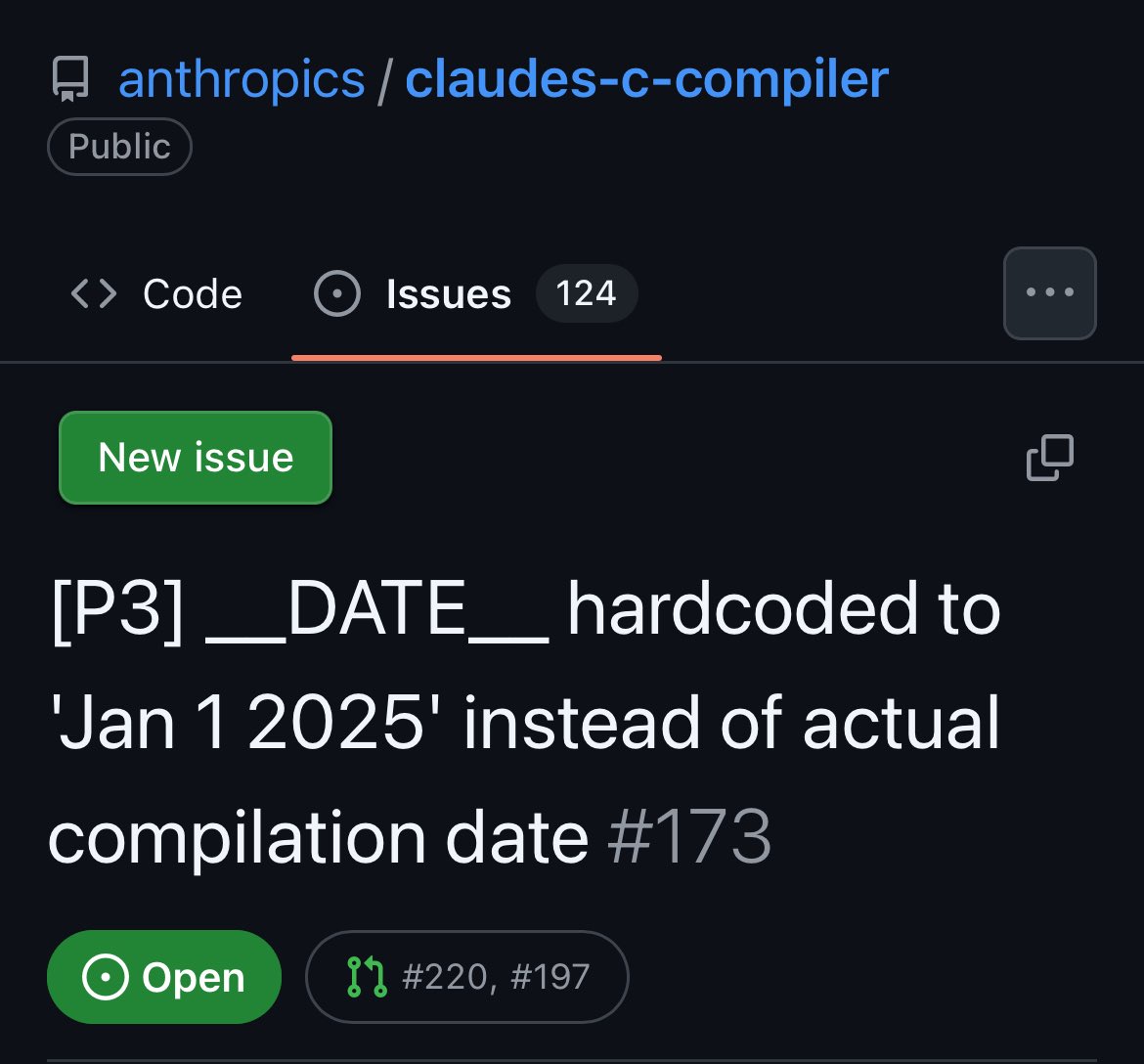
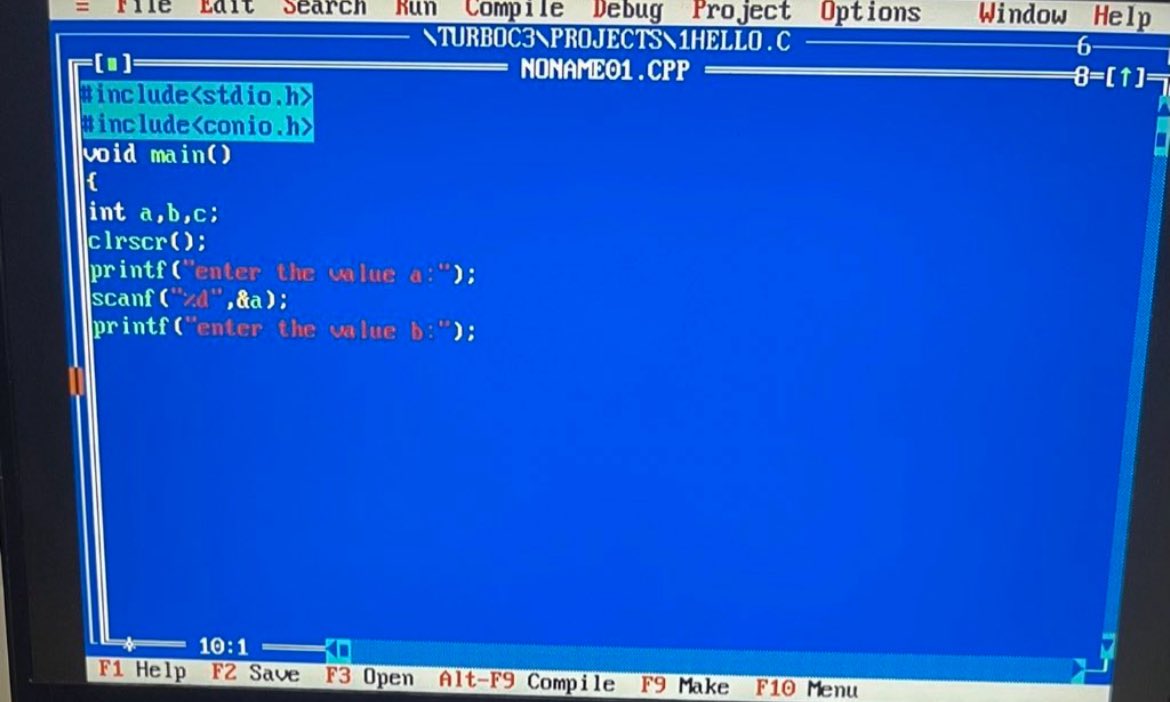






Jun 11
Stop calling yourself a Senior Developer if you can’t debug without AI!
The biggest ego trip in tech right now is "Senior Vibe Coding." Engineers with years of experience think they’ve achieved god-mode because they can prompt a complex feature into existence in 20 minutes.
But here’s the brutal reality check: You aren't engineering anymore. You’re just babysitting a very fast, very confident junior dev who constantly hallucinates.
When you outsource your core logical thinking to a model, your technical edge begins to atrophy. The illusion of velocity is masking two massive traps:
1. The Reading Tax: Reading code is inherently harder than writing it. When you review 500 lines of AI boilerplate, your brain naturally skims. You miss the subtle, silent edge-case bugs that a human would never write, but an LLM confidently outputs.
2. Debugging Atrophy: The moment production crashes at 2 AM, a prompt won’t save you. If your default response to a complex stack trace is to blindly copy-paste it back into your AI editor hoping for a quick fix, you've lost control of your system.
8
2
15
2,706
Jun 5
The "AI makes you a 10x Developer" you keep seeing on X is an ABSOLUTE illusion. And the empirical data finally proves it!
The overwhelming consensus right now is that AI coding tools make every developer 10x faster, rendering foundational learning obsolete.
Here is what the actual, data-backed reality looks like:
1. The "Time Savings" Illusion: A study by METR tracked experienced contributors tackling tasks in complex codebases. While developers predicted AI would save them 24% of their time, using AI actually increased completion time by 19%. Why? Because models generate syntactically correct code that completely misses broader system architecture, forcing engineers to waste hours debugging out-of-context boilerplate.
2. The Comprehension Trap: A randomized trial by Anthropic analyzed developers learning a new framework. Those who relied on AI to generate their code scored 17% lower on comprehension tests. When you treat AI as a typewriter instead of a sounding board, your brain skips the critical cognitive heavy lifting.
3. The Junior Bottleneck: A Harvard-backed study tracking tech worker records revealed that companies adopting generative AI cut junior developer hiring by 9% to 10%, while senior roles remained entirely flat. AI isn't replacing engineers—it's replacing the entry-level code-typists.
5
6
19
2,598
Jun 4
I’ve spent years building production AI features, internal tools, evaluation harnesses, RAG pipelines, and agentic workflows.
Yes, AI is not magic! It is a very powerful, very expensive, very brittle multiplier of human intelligence. BUT it only creates durable value when skilled humans do the hard, unglamorous work of defining problems precisely, curating data, iterating on failure modes, integrating into real workflows, measuring outcomes, and maintaining the system over time.
Most “AI projects” skip most of that and then wonder why they fail.
Jun 3

BREAKING: Ray Dalio just said the AI market is a bubble and it will burst.
"All great technology changes produce bubbles," Dalio told Bloomberg. "The pricking is the converting of wealth into money" right now, every major tech company is pouring hundreds of billions into AI infrastructure and booking it as investment.
The moment investors demand actual returns, companies will have to show that the money spent is generating real profits from real customers. If the revenue is not there, valuations collapse and right now, the revenue is not there.
AI companies are spending $800 billion in capital expenditure this year alone. OpenAI spends $60 billion annually on cloud infrastructure against $25 billion in actual revenue.
Less than 1% of executives globally report meaningful ROI from their AI investments. 95% of enterprise AI pilots have failed to deliver measurable returns according to MIT.
The entire $2 trillion cloud backlog held by Microsoft, Oracle, Google, and Amazon is anchored by two unprofitable companies: OpenAI and Anthropic.
By 2030, the industry needs $2 trillion in annual revenue to justify what is being built today. Bain estimates it will fall $800 billion short.
Dalio is not saying the technology is fake. He is saying the economics do not work yet and every bubble in history has ended the same way when that moment of reckoning arrived.


2
1
5
908
Jun 3
GitClear recently analyzed over 211 million lines of code to see what AI is actually doing to our code.
The results completely DESTROY the "hyper-productivity" narrative!
1. In 2021, 25% of code changes were refactoring (moving and consolidating code). By 2024, that plummeted to under 10%. Developers aren't taking the time to architect reusable modules anymore; they are just hitting 'Tab' and letting the AI generate another isolated, brute-force function.
2. Commits containing massive blocks of duplicated code skyrocketed by an astounding 800% last year. AI models are trained to predict the next token, not to enforce the DRY (Don't Repeat Yourself) principle. When you are building systems with high-stakes logic - like managing timezone conflicts and concurrent reservations for a sports venue booking platform - this kind of duplicated code is exactly how you introduce catastrophic bugs across different files.
3. Almost 8% of all newly added code is now being reverted or heavily revised within just two weeks of being committed. We aren't writing better code; we are just rapidly generating "mistake code" that has to be manually untangled later.
Google’s own DORA report backed this up with a brutal metric: For every 25% increase in AI adoption, delivery stability actually decreased by 7.2%.
When managing engineering teams at scale, the takeaway becomes glaringly obvious: AI is a phenomenal typing accelerator, but it is an atrocious software architect.
Stop measuring developer productivity by how many lines of code were generated this week. Start measuring it by how many lines you didn't have to write because the system was designed correctly the first time.
More code is not a feature. It is a liability.
5
3
28
2,734
Jun 2
I met an engineer friend for coffee yesterday who told me he’s getting ready to QUIT Software.
He’s a mid-level dev, incredibly smart, but completely burnt out by the doom-scrolling!
He said, "Look at the 2026 data, man. Active tech openings are down to a multi-year low. Entry-level hiring has dropped nearly 20%. Eric Schmidt is out here telling everyone traditional coding is dead, and tools like Claude Code can resolve half our production bugs autonomously. What is even the point of trying to compete with a machine that works for pennies?"
He genuinely believed the popular consensus: The machines are over, so human developers are obsolete. I let him finish, took a sip of my coffee, and told him he was completely misreading the room.
Yes, the market is restructuring. Yes, companies are trimming the fat. But they aren't firing people because they want less software. They are firing the the people whose entire value proposition was copy-pasting boilerplate, writing routine unit tests, and manually building CRUD apps.
Look at what happened to the senior engineering market. Demand for system architects, infrastructure specialists, and platform engineers is actually holding strong. Why? Because when it costs zero dollars to generate 10,000 lines of code, you don't need fewer engineers. You need better engineers to make sure that mountain of synthetic code doesn't blow up your production server.
I told him: "Two years ago, your value was looking up syntax and type. Today, your value is your judgment. Can you break down a messy business problem into concrete technical constraints? Can you look at 5 different architectural patterns an AI suggests and weigh the cloud token costs against technical debt? Can you audit a script and spot the logic flaw before it hits production?"
Laying bricks is cheap now. Designing the building is where the money is.
If you are thinking about quitting tech because "AI can code," you are giving up right at the exact moment the boring parts of your job are being automated away.
Don't quit. Upgrade your cognitive stack. Move from a coder to a conductor.
18
19
211
34,987
Jun 1
If you want to be an AI Engineer, and make TOP dollar in the industry, read this:
Here is what the elite 1% of AI Engineers are doing differently:
1. They treat Pydantic as their Data Backbone
Models love to output poetic, unpredictable nonsense. Businesses require deterministic, predictable data. Top-earning engineers don't just ask an LLM for JSON; they build strict Pydantic schemas and use structured outputs to force the model’s cognitive leaps into strict data contracts.
2. They build Agentic Brakes, not just Autonomy
The engineers making real money are the ones who understand Token Budgeting and Deterministic Fallbacks. When an autonomous agent gets caught in an edge-case reasoning loop, it doesn’t just break the code - it burns through thousands of dollars in API costs in minutes.
3. They master Codebase Intelligence & Context Architecture
With the rise of the Model Context Protocol (MCP), the bottleneck isn't the AI's intelligence; it's the context you feed it. Top dollars go to engineers who can build semantic maps of massive enterprise repositories, optimize vector database retrieval (RAG) with advanced re-ranking, and handle complex token context windows without causing latency lag.
4. They focus on Evaluation over Experimentation
Junior devs test their AI apps by manually chatting with them 5 times and saying "looks good." Senior AI Engineers build automated evaluation suites using frameworks like LangSmith or DeepEval. They use LLM-as-a-Judge patterns to run automated regression tests on prompts, scoring outputs for hallucination and grounding before a single line hits production.
1
1
9
1,176
May 29
Your "Local LLM" and “Free AI” dev setup is a massive WASTE of time and money!
The hottest trend on X right now is showing off your "local-first" setup. Developers are buying expensive NVIDIA 5090s, bragging about running Llama-3.2 or Phi-3.5 completely offline, and treating cloud API users like absolute peasants.
"Look at my zero-latency inference! Look at my data privacy!"
It’s a beautiful flex. It's also an engineering Delusion.
Here is the truth people are refusing to admit because they want to justify their hardware spending: You are sacrificing massive cognitive reasoning just to say you run on localhost.
When you switch your development workflow from a massive, frontier cloud model to a quantized 8B or 7B Small Language Model (SLM) running on your machine, you aren't upgrading. You are downgrading your assistant from a Principal Architect to an intern who drank too much coffee.
Yes, SLMs are incredible for hyper-specific, narrow tasks like text classification or basic autocomplete. But for complex system design, edge-case debugging, and cross-repository code auditing? They hallucinate under pressure because they lack the deep parameter weight to handle complex abstraction.
Stop trying to turn your local workstation into a miniature data center.
Use the frontier cloud models for the heavy intellectual lifting - the system boundaries, the state management, the algorithmic strategy. Use local models for basic syntax completion.
18
1
12
2,753
May 28
Your $1,200/month cloud bill isn't an infrastructure problem. It's an "AI Architecture" DISASTER!
Everyone loves showing off how 5 different background bots are constantly talking to each other, monitoring tasks, and executing code in real-time. It looks beautiful in a terminal demo. It's an ABSOLUTE nightmare when you look at the billing dashboard.
If you want to build a bulletproof engineering moat right now, stop focusing on autonomy and start focusing on constraint boundaries:
1. Token Budgeting: Implementing hard caps on how deep an agent can nest its reasoning before forcing a human-in-the-loop fallback.
2. Deterministic Fallbacks: Knowing exactly when to take the problem away from the AI and pass it to a simple, optimized script or a standard PostgreSQL query.
3. State Isolation: Ensuring that if one background bot hallucinates, it doesn't trigger a cascading API chain reaction across your entire cloud network.
Velocity without cost efficiency is just an expensive hobby.
5
2
12
1,767
May 21
The tech layoff data just crossed 100,000 corporate jobs cut in 2026. But STOP calling it a "job shortage." It's an architecture shortage.
The timeline is a bloodbath of doom-scrolling. LinkedIn, Meta, Cisco, and PayPal are slashing workforce headcounts by 5% to 10%, while collectively pouring a staggering $725 billion into AI infrastructure and GPUs this year.
The popular take on X right now is: "AI is replacing developers, payroll is dead, and the junior/mid-level engineering market is permanently cooked."
But if you look at what's actually happening behind the scenes on the hiring side, you will realize the popular opinion is completely misreading the room.
Companies aren't shrinking their tech teams because they don't need code built. They are shrinking their teams because a single, highly skilled architect equipped with AI can now do the work of a 5-person engineering pod.
The era of hiring 10 developers to copy-paste boilerplate, build basic CRUD apps, and manual-test API endpoints is over. The machine does that for pennies.
The layoffs aren't targeting technical competence; they are trimming structural bloat.
If you look closely at the data, senior individual contributor openings are actually spiking. Leaders like Box CEO Aaron Levie are aggressively hiring for a very specific, new breed of developer: The AI Integration & Platform Engineer.
These aren't prompt-engineering hobbyists. They are the untouchables who understand:
1. System Design at Scale: How to glue multi-agent workflows into legacy corporate databases without causing infinite loops or security leaks.
2. The "Hallucination" Audit: Reading 1,000 lines of AI-generated code and instantly identifying the architectural flaw that will crash under traffic.
3. Business Context: Translating messy product requirements into hard technical constraints that the AI can execute safely.
The market isn't rejecting developers. The market is rejecting the old 1x developer playbook.
Stop panic-applying to the same generic roles with a resume full of basic API wrappers. Shift your focus to deep system architecture, security guardrails, and algorithmic optimization.
17
16
96
16,806
May 7
AI Bros on X, you NEED to hear this:
If you can build an app in a WEEKEND using a prompt, so can everyone else!! That's not a million dollar app.
If your entire value proposition can be replicated by a "Copy-Paste" into a prompt, your profit margins will hit zero faster than you can say "fund me."
8
13
2,149
May 5
AI Engineering is one of the most IN-DEMAND roles with TOP salaries.
Here's a step-by-step roadmap to become an AI Engineer in 2026:
Step 1: The Logic Layer (Prompt & Context Engineering)
Forget "magical" prompts. An LLM is just a next-word predictor; you need to treat it like a compiler.
Concepts to Master: Tokenization limits, context windows, structured JSON outputs, system boundaries, and temperature vs. top-p routing.
The Real Skill: Forcing an LLM to reliably return a strict, predictable data schema instead of a conversational paragraph.
The Project: A zero-dependency script that ingests raw, messy unstructured user input and spits out validated, strictly-typed JSON that a traditional database can read.
Step 2: The Meaning Layer (Embeddings & Vectors)
AI doesn't "read" your company's data; it calculates distance. To feed an AI private data, you need to turn words into coordinates in a high-dimensional space.
Concepts to Master: Embedding models, cosine similarity, dense retrieval, and chunking strategies (how you slice documents so the AI doesn't lose context).
The Tools: Vector Databases like Pinecone, Qdrant, or simply utilizing pgvector inside PostgreSQL.
The Project: Build a hyper-specific RAG (Retrieval-Augmented Generation) pipeline. Upload 50 dense legal or financial PDFs, chunk them, embed them, and build a search query that retrieves only the exact paragraph needed to answer a complex question.
Step 3: The Action Layer (Tools & Pipelines)
A chatbot that just talks is useless. An AI engineer builds systems that do things.
Concepts to Master: Function Calling (Tool Use). This is how you give the AI "hands" to trigger external code and APIs.
The Real Skill: Writing secure backend routes that the LLM can autonomously decide to execute based on the user's intent, without hallucinating the parameters.
The Project: An AI assistant that doesn't just read your database, but executes POST requests to update records, trigger emails, or reschedule events on a live calendar.
Step 4: The Brain Layer (Agents & Orchestrators)
This is where you graduate from script-kiddie to Engineer. You stop writing linear code and start building graphs of autonomous workers.
Concepts to Master: Multi-agent workflows, state management, cyclical graphs, and memory (short-term session state vs. long-term persistence).
The Tools: LangGraph, CrewAI, Vellum AI.
The Project: A Multi-Agent Research Swarm. Agent 1 scrapes the web. Agent 2 filters the noise and cross-checks facts. Agent 3 formats the final report and sends it to a webhook.
Step 5: The "Partnered Execution" Project (The Real-World Test)
Don't build a generic "AI CRM" or a Twitter clone. Build something painfully tied to the physical world where logic, constraints, and edge cases actually matter.
The Ultimate Project: Build an automated sports venue booking system. Use an agentic orchestrator to parse incoming requests from local schools. The agent must query your database to prevent concurrent ground reservations, handle timezone math, manage role-based admin access, and trigger the payment gateway -all autonomously, with a human-in-the-loop fallback mechanism for critical errors.
15
26
134
11,436
May 3
EVERYONE is cheering that AI can build a SaaS in 5 minutes. NOBODY realizes that just made SaaS completely worthless.
"Look! I built a CRM in 10 minutes!"
Cool. So did 500,000 other people this morning.
Here is what the tech world is completely missing right now: When the cost of creating what you built drops to zero, the value of the it itself also drops to near zero.
If your entire product is just a nice UI wrapped around a database, you don't have a business anymore. An AI agent can build a hyper-personalized version of your app for your customer, for free, in real-time.
So what actually survives the 2026 AI coding boom?
1. Physical World Integration
Code is infinite. The real world is messy. An AI cannot navigate local regulations, manage physical hardware, or convince local schools to onboard onto a sports ground booking system. Software that bridges the gap into physical, offline logistics is the ultimate un-hackable moat.
2. Proprietary Data Pipelines
If your app just calls the same OpenAI API as everyone else, you are dead. If your app sits on a mountain of exclusive, domain-specific data that the AI works on, you are invincible.
3. Human-Led "Partnered Execution"
As the internet fills with synthetic garbage and automated bots, trust becomes the most expensive currency on earth. Businesses built on genuine human expertise, high-stakes career strategy, and actual 1-on-1 execution will command a massive premium because they are the only things that can't be faked.
47
5
105
25,054
May 1
Your perfectly AI-optimized resume is why you ARENT getting interviews.
The hiring pipeline is currently flooded with identical, ChatGPT-polished resumes. They have flawless grammar. They perfectly hit every keyword in the job description. They list all the right autonomous agents and vector databases.
And they go straight into the reject pile.
Here is the brutal reality: When everyone uses the exact same AI to optimize their bullet points, your "perfect" resume just becomes white noise. You are presenting yourself as a list of APIs and frameworks.
In 2026, companies don't hire a tech stack. They hire a career story.
Teams are looking for engineers who are also great thinking partners, problem solvers and more importantly understand the business they are developing for. They are looking for partnered execution.
If you want to break through the noise, you have to fundamentally shift how you write your resume:
❌ The AI-Generated Bullet: "Implemented Redis caching and Pinecone to improve query latency by 40%." (Boring, task-focused, isolated).
✅ The Career Story Bullet: "Partnered with the sales team to eliminate a massive data-retrieval bottleneck, architecting a caching layer that unblocked enterprise client onboarding and saved $15k/month in server costs."
Stop trying to cram more AI buzzwords into your summary.
Start narrating the messy, real-world problems you actually solved and the business impact you drove.
2
1
14
1,939
Apr 27
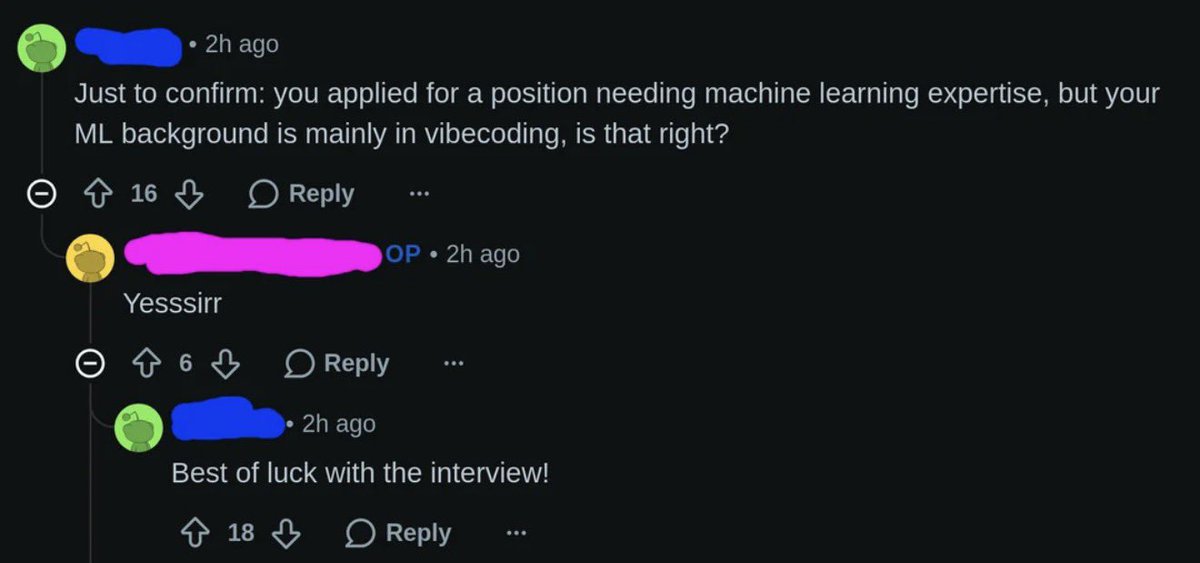
Vibe coder asking for last minute interview tips 🤦♂️
4
1
30
2,768
Apr 26
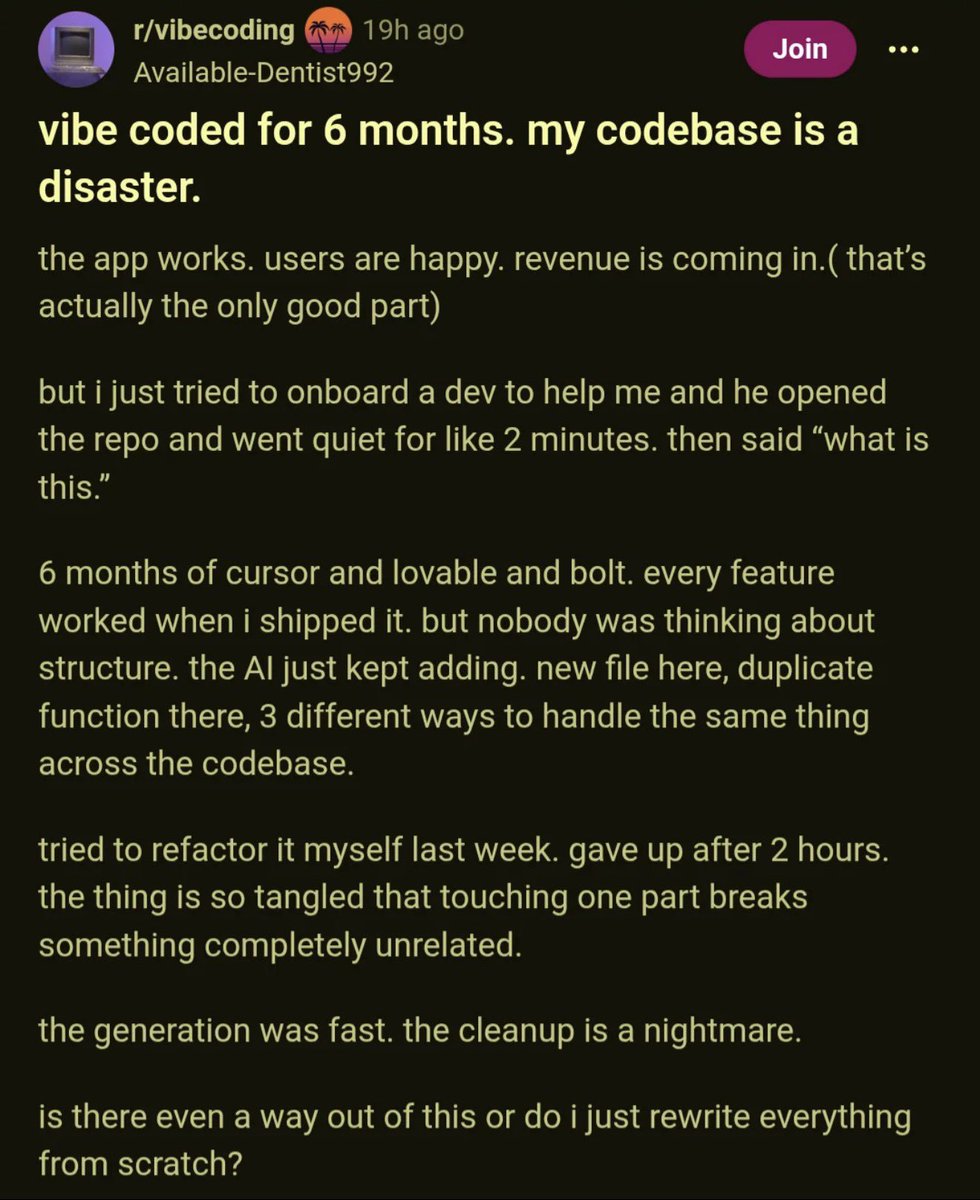
Stories of vibe coded disasters piling up on Reddit
Unless YOU intervene and build out a structure for AI, it is going to push slop.
257
158
1,656
230,962
Apr 23
STOP calling yourself a "Full Stack Developer." That title is almost dead. 🚨
If your resume's biggest flex is that you can build both a React frontend and a Node CRUD backend... you are competing with a $20/month AI subscription. And you are losing.
In 2026, AI is the full stack. The ability to write boilerplate across the stack is no longer a premium skill; it is the absolute bare minimum baseline.
If you want to survive the current market, you have to completely rewrite your career story. Companies are no longer hiring "code translators." They are hiring Product Engineers.
Here is what your resume actually needs to prove right now to get past the hiring filter:
1. Partnered Execution (Over Ticket Pushing)
Don't just list the frameworks you used. Show how you partnered directly with business to solve a real, messy problem. Did you push back on a bad product requirement? Did your architecture directly unblock the sales team or save cloud costs? You are a business partner first, and an engineer second.
2. Architectural Restraint
Junior devs use AI to generate 10,000 lines of code. Senior devs use AI to delete it. Highlight how you managed technical debt, simplified complex system designs, and built scalable, "boring" infrastructure that doesn't crash at 3 AM.
3. The "Last Mile" Delivery
AI gets a project to 90% incredibly fast. But that last 10%—handling the bizarre edge cases, the concurrent database locks, the messy physical-world logistics—is an absolute nightmare for an LLM. Prove you are the person who knows how to drag an AI prototype across the finish line into a stable production environment.
23
19
335
48,494
Apr 21
Right now, every developer with Claude and an API key is trying to build a massive, world-changing generative tool.
And 99% of them are becoming OBSOLETE in six months.
The actual gold mine in 2026? Using AI to build hyper-niche, painfully boring software for industries that Silicon Valley forgot - Micro SaaS!
Here is why the math works for solo developers today:
1. The Execution Gap is Gone Two years ago, launching a SaaS required a frontend dev, a backend engineer, and a DBA. Today, a single developer using Claude or Codex can orchestrate the entire modern stack in a week. You no longer need a team; you just need a problem.
2. Riches are in the "Boring" Niches Don't build a "general productivity app." Build a hyper-specific solution for a physical-world problem. Think about a dedicated venue booking platform specifically designed for local schools to reserve sports grounds. It sounds completely unsexy. It won't get you on the front page of Hacker News. But it solves a massive logistical headache (handling timezones, double-bookings, and admin access) for a specific group of buyers who are thrilled to pay a monthly subscription to make their pain go away.
3. You Compete on Empathy, Not Code When the cost of writing code drops to zero, your only moat is your understanding of the customer. Because the AI is handling the boilerplate and the repetitive syntax, you can actually spend 80% of your time acting like a business partner—talking to users, refining the product, and closing sales.
The formula has never been clearer: Find a boring problem in a traditional, messy industry.
Use AI to build the solution in weeks, not months. Charge $99/month to 1,000 businesses.
21
23
219
45,643