
Joined April 2023
- Tweets 1,565
- Following 310
- Followers 730
- Likes 476
635 Photos and videos









Pinned Tweet

11 Jan 2024
🎙 Untangling Web3
The podcast that simplifies tomorrow's technology, today.
Follow and subscribe to join our journey to untangle Web3.
1
7
32
6,684
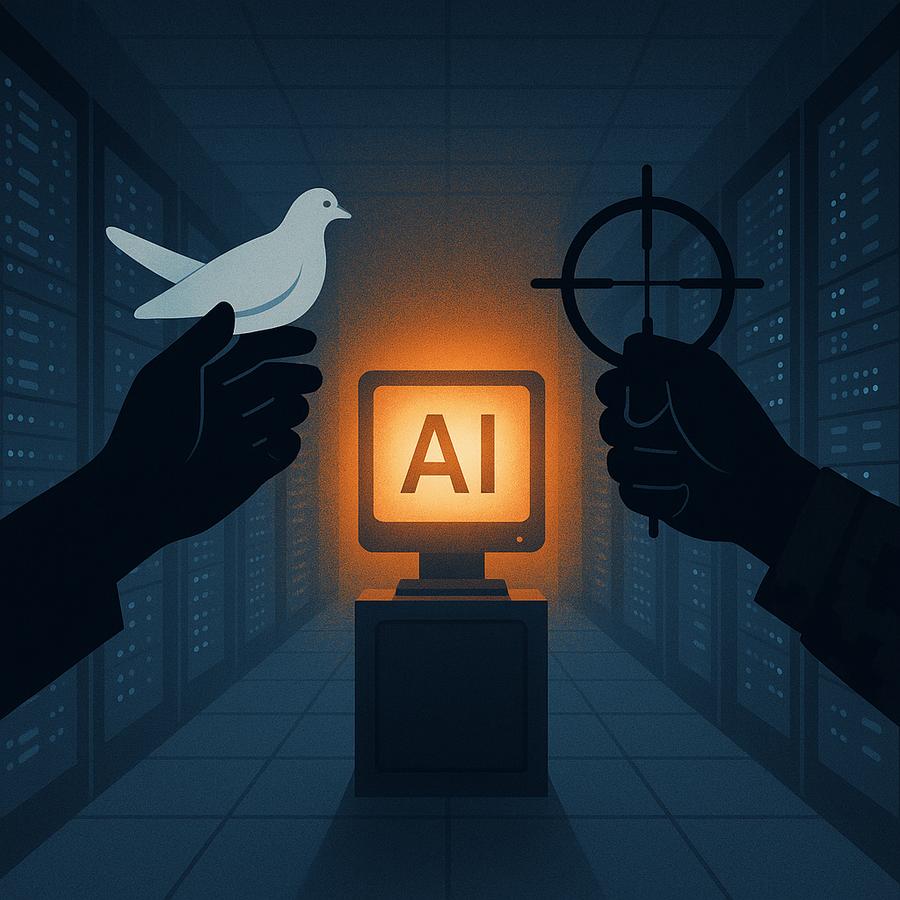
Anthropic built its entire brand on warning the world about dangerous AI.
The government just used those warnings to shut down its most powerful models.
"We disagree that a narrow potential jailbreak should be cause for recalling a model deployed to hundreds of millions of people." - Anthropic
3
32
OpenAI ignored the warnings. Anthropic documented them.
Right now, OpenAI's models are still running.
If being loudly responsible gets you shut down faster than being quietly reckless - what incentive does any lab have to be honest about risk?
12
More on this - Untangling Web3, tomorrow's tech today:
untanglingweb3.com
4
That quote is doing a lot of work.
For years, Anthropic positioned itself as the careful lab - the one taking risk seriously while others shipped fast.
Now it's defending a commercial product from regulators it helped educate.
10
Jun 12
Figuring out where AI or emerging tech actually fits in your business?
Untangling helps organisations turn emerging technology into something practical and commercially valuable.
We support teams with strategy, technical guidance, and rapid proof-of-value work across AI, blockchain, digital identity, IoT, and digital infrastructure.
Small team. Hands-on. Results-focused.
Need support? Get in touch:
theuntanglingweb3podcast@gmail.com
24
Jun 11
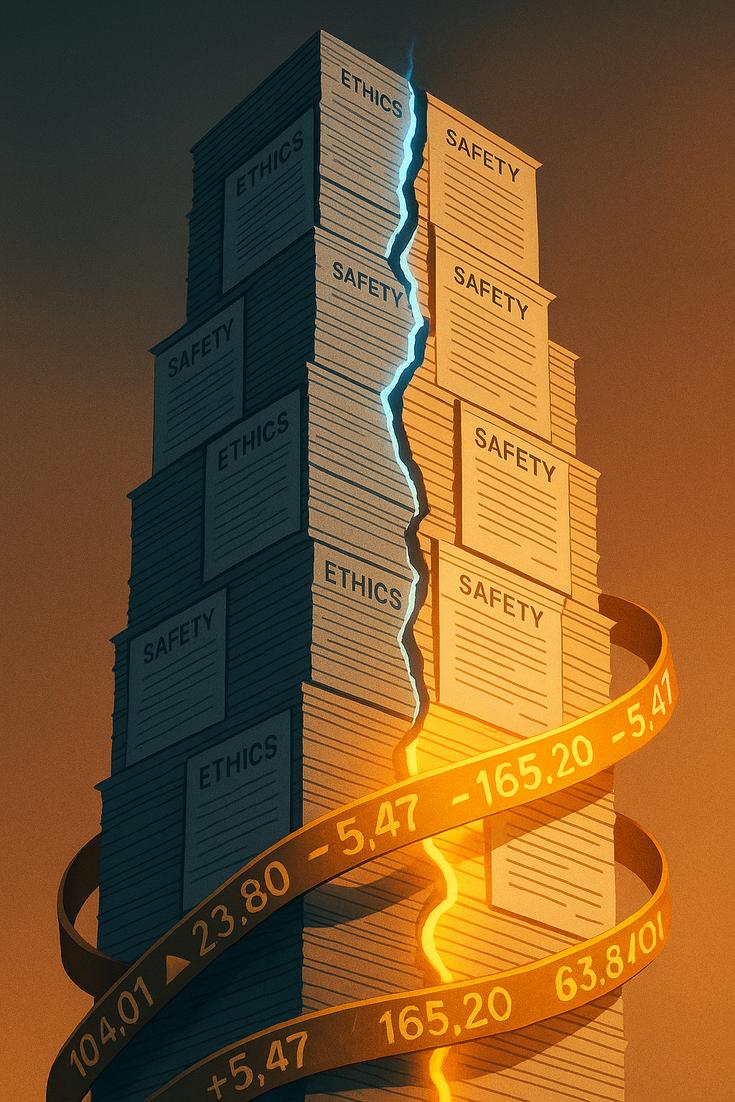
An xAI engineer raised safety concerns about Grok.
Days later - he was fired.
The lawsuit names both xAI and SpaceX. Two separate companies. One consequence for speaking up.
3
26
Jun 11
Grok is live. The IPO landed. The engineer is the only one still paying a price.
If that's how internal safety concerns get handled before a major milestone - what's the actual incentive to raise the next one?
4
Jun 11
The timing is the story.
The termination came days before SpaceX's IPO. Not after. Not weeks before. Days.
When billions are on the line, an internal safety flag stops looking like due diligence and starts looking like a liability.
11
Jun 11
Building infrastructure for the future means being everywhere. Early on, the team behind this tech recognized the need for multi-chain compatibility, not just for today, but for aggressive network expansion.
1
2
2
54
Jun 11
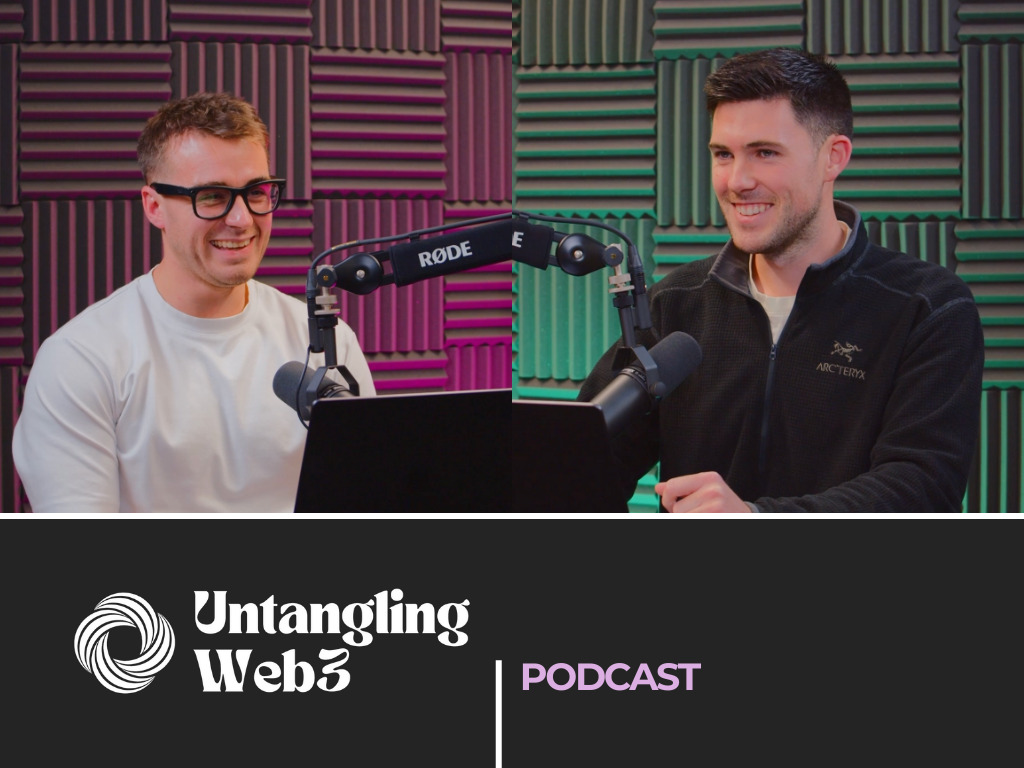
This week on Untangling Web3, we sit down with Andrej Benčić (@bendzi), CEO & Co-Founder of Tenderly (@TenderlyApp).
Check out the full episode with Andrej and Jack now, at:
youtu.be/pKsMxsyloFo?si=ut4c…
1
22
Untangling Web3 retweeted

Jun 9
Live now: @bendzi on the hybrid onchain institution and the next stage of onchain finance. 👇

🚨 New Episode: Hybrid Onchain Institutions with Andrej Benčić 🏦⚙️
🎧 Watch now: youtu.be/pKsMxsyloFo?si=ut4c…
Crypto's institutional moment has arrived.
BlackRock's Bitcoin ETF attracted tens of billions of dollars. Stablecoin supply has surged beyond $250B. Major banks, asset managers, market makers, and payment firms are all building onchain strategies.
But moving financial infrastructure onchain creates a new challenge:
How do institutions manage risk in systems where transactions are permanent, capital moves instantly, and mistakes are visible to everyone?
This week on Untangling Web3, we sit down with Andrej Benčić (@bendzi), CEO & Co-Founder of Tenderly (@TenderlyApp).
What started as a bootstrapped project from a team that won 12 blockchain hackathons has become critical infrastructure used by Uniswap, Aave, Chainlink, Safe, Wintermute, and many of the largest teams in crypto.
This conversation explores what happens when blockchain moves from experimentation to financial infrastructure.
3
9
427
🚨 New Episode: Hybrid Onchain Institutions with Andrej Benčić 🏦⚙️
🎧 Watch now: youtu.be/pKsMxsyloFo?si=ut4c…
Crypto's institutional moment has arrived.
BlackRock's Bitcoin ETF attracted tens of billions of dollars. Stablecoin supply has surged beyond $250B. Major banks, asset managers, market makers, and payment firms are all building onchain strategies.
But moving financial infrastructure onchain creates a new challenge:
How do institutions manage risk in systems where transactions are permanent, capital moves instantly, and mistakes are visible to everyone?
This week on Untangling Web3, we sit down with Andrej Benčić (@bendzi), CEO & Co-Founder of Tenderly (@TenderlyApp).
What started as a bootstrapped project from a team that won 12 blockchain hackathons has become critical infrastructure used by Uniswap, Aave, Chainlink, Safe, Wintermute, and many of the largest teams in crypto.
This conversation explores what happens when blockchain moves from experimentation to financial infrastructure.
1
3
6
889
🔎 Key insights from the episode:
1️⃣ Crypto needs a flight simulator
No airline would allow pilots to fly without simulation training. Yet billions of dollars have historically been deployed into production blockchain environments with limited testing. Tenderly allows teams to simulate transactions against live blockchain conditions before execution.
2️⃣ Smart contract risk is only part of the story
Institutions care about treasury operations, operational controls, compliance, scenario planning, monitoring, reporting, and incident response. The technology stack around the protocol is becoming just as important as the protocol itself.
3️⃣ Multi-chain has become a real operational challenge
Applications increasingly span L1s, L2s, rollups, bridges, and multiple liquidity venues. Managing, monitoring, and testing across these environments is far harder than most users realise.
1
46
One theme kept coming up throughout the conversation:
Institutions don't primarily buy innovation.
They buy predictability.
Crypto-native teams can often tolerate uncertainty and rapid iteration. Traditional financial institutions cannot.
The next phase of onchain finance may be defined less by new applications and more by the infrastructure underneath them:
• simulation
• monitoring
• observability
• risk management
• operational controls
The systems that rarely make headlines but become essential as capital scales.
🎙️ Watch the full episode: youtu.be/pKsMxsyloFo?si=ut4c…
💬 If institutions are moving onchain, should real-time simulation become a mandatory standard before capital is deployed?
@AlecJBurns @JackODavies_
1
53
Meta built WhatsApp. Spent billions on it.
The EU just told ChatGPT and Gemini they can use it for free - while regulators are still deciding if Meta did anything wrong.
3
33
The Digital Markets Act lets regulators act before an investigation closes.
So rivals get free access to 3 billion daily users now, today, before Meta has had a chance to defend itself.
That's not a fine. That's a forced subsidy.
19
If WhatsApp is now treated like public infrastructure, every other platform Meta, Google, and Apple use to push their own AI gets the same question asked of it next.
This ruling is small. The precedent it sets is not.
17
More on this - Untangling Web3, tomorrow's tech today:
untanglingweb3.com
8
South Korea's crypto market is booming, yet its citizens are forced to trade through USD stablecoins because there's no Korean Won stablecoin. This capital outflow is significant. Could a Won stablecoin change how global capital flows on the blockchain?
1
2
2
95