
Joined April 2025
- Tweets 218
- Following 29
- Followers 20
- Likes 285
83 Photos and videos


May 22
Are you still manually stitching together LLM scripts, generated images, and TTS audio just to build a basic AI video pipeline?
The story-flicks repository unifies these fragmented multi-modal tasks into a single automated Python pipeline. It uses an LLM to generate structured scene scripts, parallelizes requests to diffusion and text-to-speech models, and relies on MoviePy to sync audio timestamps with subtitles and stitch image frames.
✅ Vendor-agnostic model inference with native support for OpenAI, DeepSeek, and local LLMs via Ollama
✅ Parallelized generation of image assets and synthesized audio tracks per narrative scene
✅ Automated subtitle synchronization using explicit audio timestamps during the assembly phase
✅ Modularity designed around the adapter pattern to swap underlying AI providers seamlessly
This architecture serves as a production-ready scaffolding for asynchronous programmatic video generation, though developers should note that MoviePy relies on CPU-bound rendering which can bottleneck heavy high-definition media processing.
This open-source engine has already earned over 2,345 stars on GitHub, demonstrating why it is a compelling modern alternative for developers looking to completely bypass the paywalls and token limits of closed SaaS solutions.
REPOOO 👇
1
4
72
May 22
1
29
May 20
Why burn thousands on enterprise API tiers or run complex scraping clusters just to build a custom RAG dataset from your X bookmarks?
The twitter-web-exporter project offers a client-side architecture that bypasses the restrictive official X API paywalls entirely, enabling the local extraction of your complete account data and bookmarks directly inside your browser.
✅ Injects a local userscript to intercept native fetch requests and GraphQL network responses seamlessly
✅ Flattens deeply nested internal JSON entities from private endpoints directly into clean data structures
✅ Bypasses official rate-limits completely without needing API keys, developer tokens, or OAuth configs
✅ Supports bulk downloading of media and full metadata exports into raw JSON, CSV, and HTML formats
This architecture functions as a client-side network interceptor that relies on the user's active session, allowing for the quick accumulation of structured, local context datasets for LLM fine-tuning or personal knowledge bases without triggering infrastructure costs.
This open-source architecture has already earned over 2417 stars on GitHub, showing why it has become the standard modern alternative for this exact developer pain point.
REPOOO 👇
1
4
69
May 20
Google just launched Gemini 3.5 Flash.
And we’re much closer to the first real digital employees.
✅ plans complex tasks for hours
✅ divides the work among sub-agents
✅ works on huge codebases
✅ uses tools and executes actions
✅ maintains massive context without losing consistency
Google is no longer competing to make the best chatbot.
It’s competing to build agents capable of working on their own.
And the craziest part:
Gemini 3.5 Flash already rivals top models in agentic tasks and coding, at a fraction of the price.
4
78
May 20
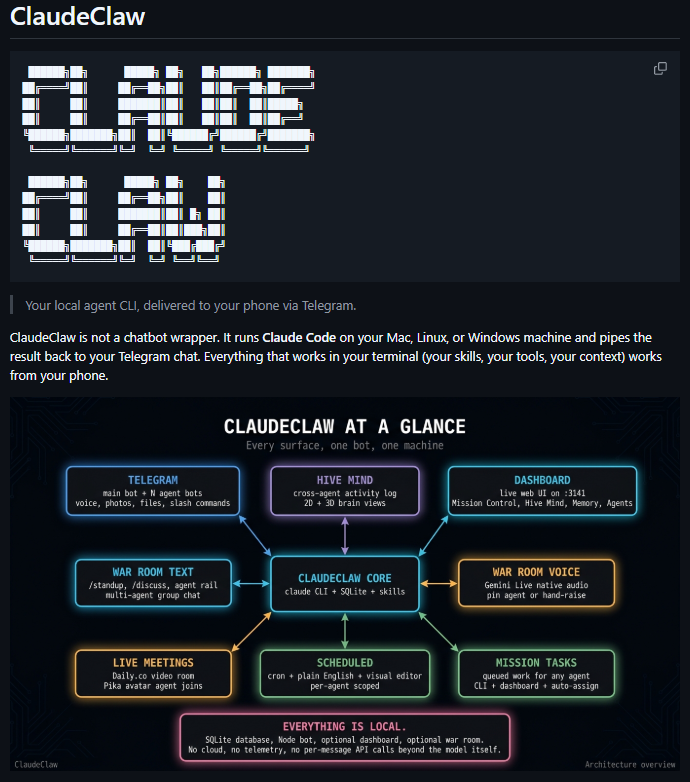
Is granting a Telegram bot full execution access to your local filesystem the ultimate AI workflow hack, or a critical security disaster waiting to happen?
ClaudeClaw OS acts as a Node.js middleware that orchestrates requests from Telegram directly to local instances of the Claude Code CLI. It eliminates the need for complex SSH tunnels or VPNs by running your local development environment as a remote-controlled, multi-agent cluster.
✅ Persists state natively across OS reboots using launchd, systemd, or pm2 background daemons
✅ Synchronizes shared multi-agent memory using a high-concurrency SQLite database running in WAL mode
✅ Injects local context dynamically by parsing open tasks directly from your local Obsidian markdown vaults
✅ Routes media payloads through Groq for audio transcription and Gemini for vision before passing text metadata to Claude
This architecture introduces a natural language cron engine that schedules periodic tasks for specific specialized agents, allowing developers to automate and monitor heavy local scraping or repository analysis while entirely away from the keyboard.
This experimental open-source project, ClaudeClaw OS, has quickly gathered 136 stars on GitHub, highlighting a growing developer demand for ubiquitous remote access to powerful local AI environments without relying on ephemeral cloud containers.
REPOO 👇
1
3
75
May 20
Why tie your AI coding agents to a monolithic IDE or a blind CLI when you can run them as a decoupled local daemon with built-in visual diffs and live previews?
Mainframe is an open-source orchestration environment that solves the fragmented workflow of managing autonomous coding agents.
✅ Runs an agnostic local Node.js daemon via HTTP and WebSockets
✅ Injects dynamic context via local RAG based on your working tree
✅ Manages persistent multi-session state without terminal clutter
✅ Supports custom LLM adapters through an extensible plugin system
By decoupling the orchestration engine from the user interface, this client-server approach eliminates the context fragmentation typical of CLI tools while bypassing the restrictions of editor-bound integrations.
Mainframe has already earned 26 stars on GitHub, showing early but clear validation from developers seeking a highly customizable, modern alternative for orchestrating heavy vibe-coding sessions.
REPOOO 👇
3
1
91
May 20
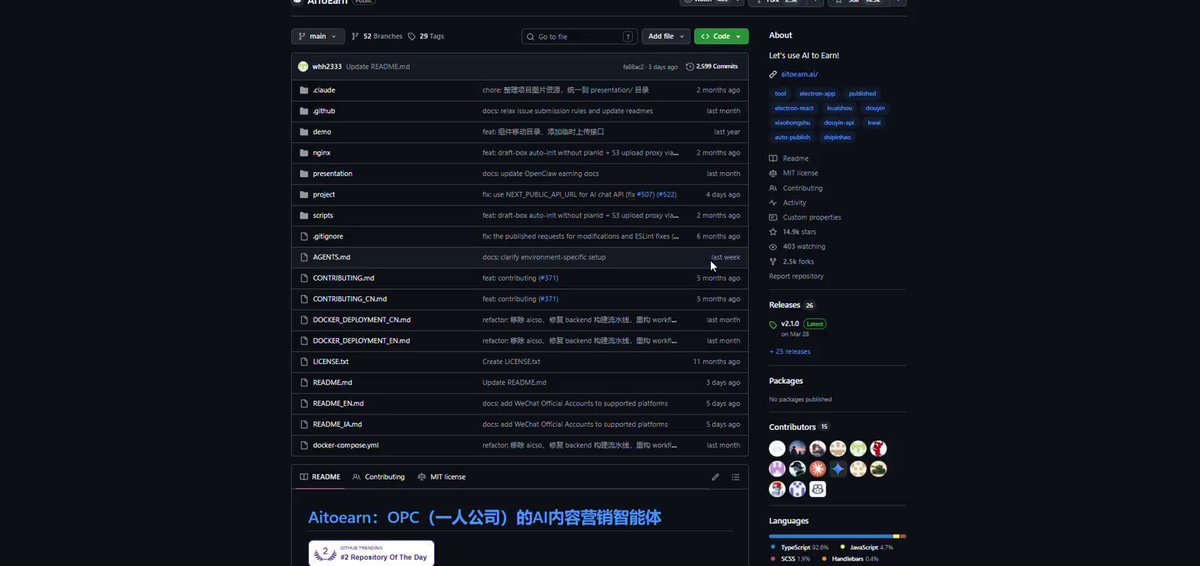
Why pay $100/mo for a legacy CRUD scheduler when you can run a self-hosted Electron Docker stack that uses local agents to reverse-engineer social APIs, orchestrate multimodal LLMs, and reply to buyers autonomously?
AiToEarn replaces static scheduling by wrapping headless browser automation and generative AI endpoints into a unified, MIT-licensed pipeline.
✅ Orchestrates local LLMs and multimodal APIs like Sora and Flux to generate trend-based assets
✅ Manages cookie rotation and session states across 14 platforms via headless automation
✅ Processes incoming comments using zero-shot routing to detect and reply to buyer intent
✅ Operates natively as an Electron thick client or a containerized Docker backend
This architecture replaces traditional third-party API dependency with an autonomous RPA workflow, though running it at scale requires robust proxy management to handle the inherent brittleness of reverse-engineered DOM scraping.
The AiToEarn repository has already earned 15,524 stars on GitHub, demonstrating exactly why open-source builders are abandoning expensive, rigid social tools for self-hosted agentic alternatives.
REPOO 👇
1
3
276
May 19
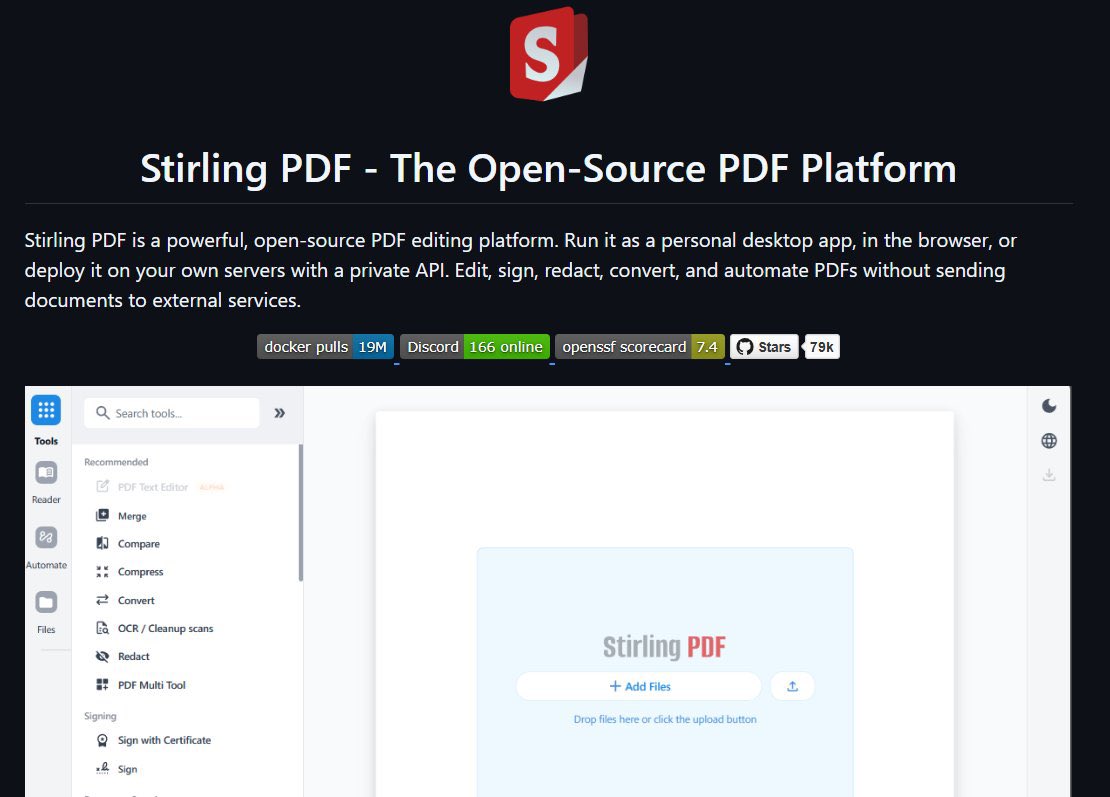
Tired of sending sensitive PDF documents to third-party cloud servers just to merge, sign, or run OCR on them?
Stirling-PDF is a self-hosted, open-source PDF manipulation suite that started as a 24-hour ChatGPT experiment and grew to ~79k GitHub stars. It packs over 50 features into a single local deployment, offering a secure alternative to cloud-dependent tools.
✅ 100% local execution via desktop app, browser, or Docker (zero data ever leaves your machine)
✅ Over 50 comprehensive utilities including splitting, compressing, signing, and redacting
✅ Embedded offline OCR capabilities for document scanning without external API dependencies
✅ Open-core model providing a fully functional free tier with optional enterprise SSO and governance
Are you still relying on expensive Acrobat subscriptions or insecure web tools for your document pipelines?
REPO 👇
1
2
51
May 19
Why are we still forcing AI developers to learn complex Kubernetes YAML and Docker configs just to deploy a multi-node agent network?
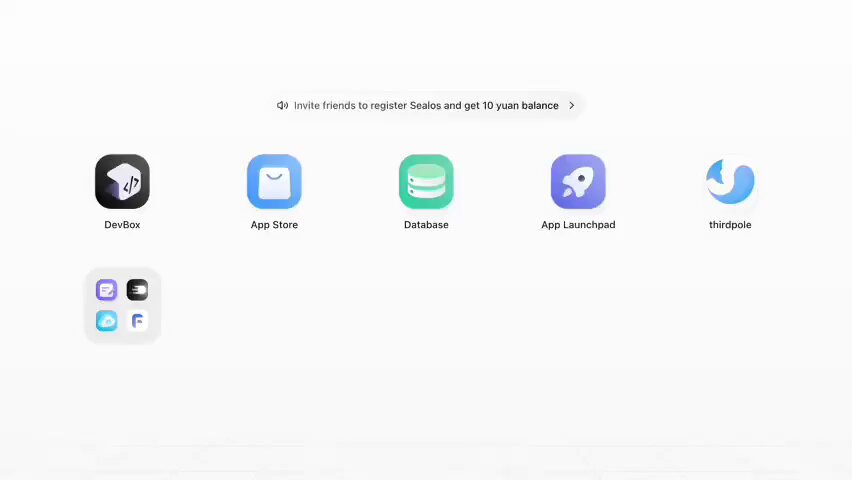
Sealos tackles this by abstracting entire Kubernetes clusters into an AI-native Cloud Operating System. It unifies your entire application lifecycle, giving you raw cluster power through an intuitive desktop interface and natural language orchestration.
✅ Natural language infrastructure provisioning for vector databases, LLM proxies, and full-stack applications.
✅ DevBox remote environments that isolate dependencies in containers and sync directly with local IDEs via SSH/WebSockets.
✅ High-performance Layer 4 load balancing powered by a core Go layer utilizing native IPVS and Kubeadm.
✅ Production-ready databases deployed with high availability, automated failover, and S3-compatible storage.
This architecture acts as a pure Kubernetes abstraction layer using custom Go operators and CRDs, ensuring you maintain full underlying control of your nodes with zero vendor lock-in.
This open-source architecture has already earned over 17705 stars on GitHub, showing why it has become the standard modern alternative for this exact developer pain point.
REPOOO 👇
1
2
40
May 19
8
May 18
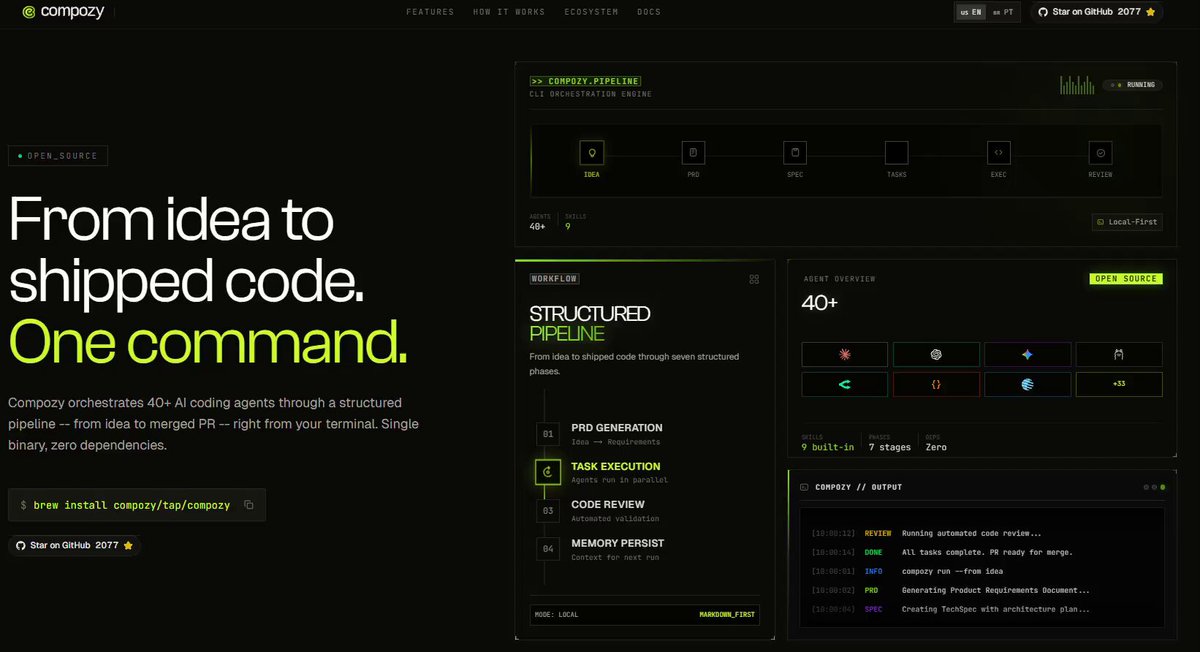
Why are we trusting proprietary cloud platforms with our codebase context when a local Go binary can orchestrate 40 AI agents using pure Markdown and Git?
Compozy is an open-source, local-first CLI engineered to handle the complete lifecycle of AI-assisted development directly on your machine. It wraps agent orchestration, task tracking, and prompt context into standard file structures.
✅ Local-first architecture running as a standalone Go binary with zero external telemetry or cloud dependencies.
✅ Markdown and YAML frontmatter artifacts ensuring all PRDs, tasks, and historical decisions are fully readable and versionable via Git.
✅ Dual-layer memory engine that automatically compacts prompts to optimize token utilization and mitigate context window degradation.
✅ Integrated structural codebase explorer that maps local directory architecture before injecting context into agent execution pipelines.
This decentralized orchestration model utilizes a persistent background daemon and terminal user interface to prevent context drift across multi-agent sessions without requiring complex external plugins.
This decentralized open-source architecture has already earned over 2077 stars on GitHub, showing why it has become the standard modern alternative for this exact developer pain point.
REPOOO 👇
3
3
109
May 18
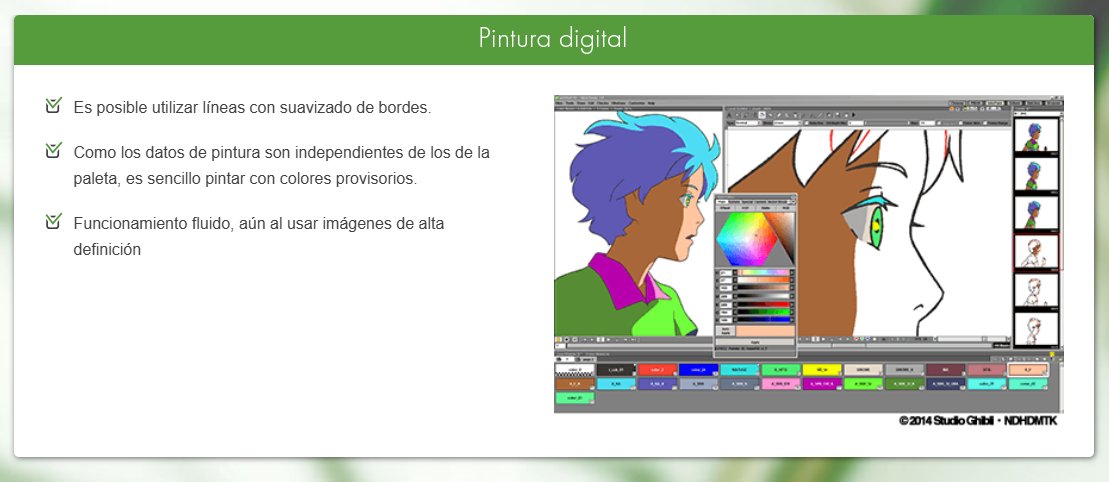
Why are we paying expensive monthly SaaS subscriptions for creative tools when Studio Ghibli's battle-tested C production engine is completely open-source?
OpenToonz is a full-featured 2D animation production software built with C and the Qt framework, providing a production-grade environment decoupled from expensive proprietary licenses.
✅ Directed Acyclic Graph node architecture processing pixel buffers in parallel for real-time compositing
✅ Advanced 2D vectorization and image processing using OpenCV and specialized mathematical alignment
✅ Dynamic indexed palette system completely decoupled from hardcoded pixel values for instant global color updates
✅ Native multi-threaded execution and OpenGL hardware-accelerated shaders for instant viewport rendering
This architecture implements an indexed timing matrix system to map exposure sheets directly to multi-layered vector assets, optimizing frame rendering pipelines under low hardware latency without heavy web or Electron wrappers.
This open-source architecture has already earned over 5528 stars on GitHub, showing why it has become the standard modern alternative for this exact developer pain point.
REPOOO 👇
1
3
86
May 18
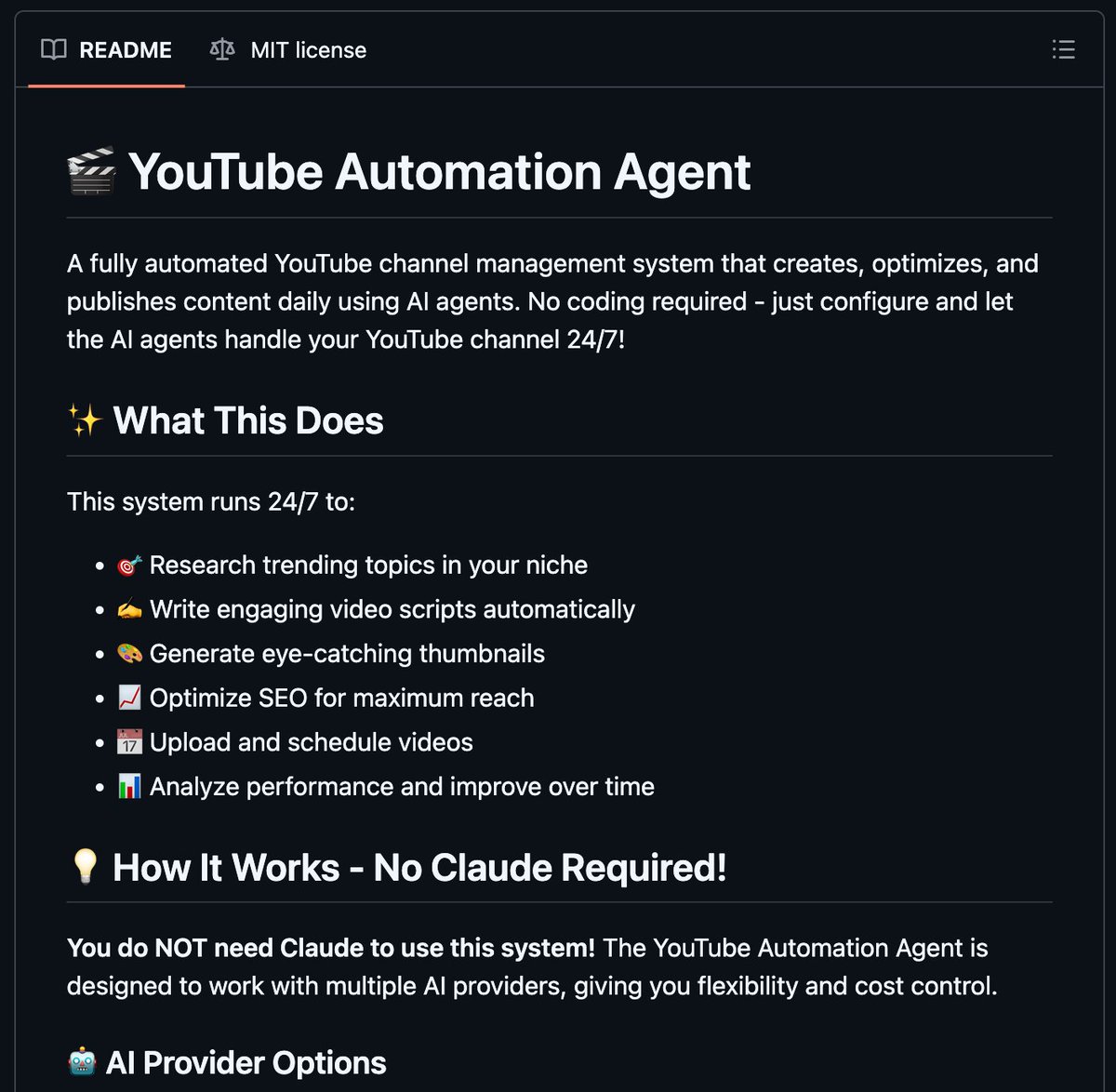
Why are we still paying thousands in SaaS subscriptions and OpenAI enterprise tokens when you can orchestrate a full 6-agent autonomous production pipeline locally on a Raspberry Pi using Gemini's free API tier?
This repository houses an event-driven multi-agent framework designed to completely automate a YouTube channel end-to-end without external cloud infrastructure dependencies. It coordinates 6 specialized asynchronous agents to handle everything from initial trend data gathering to video upload.
✅ Asynchronous control loop that decouples specialized agent tasks (Research, Scripting, SEO, Thumbnails, Publishing, and Analytics)
✅ Local execution optimized for minimal hardware footprints and ARM-based single-board computers like a Raspberry Pi
✅ Automated feedback loops where actual channel performance metrics are piped back into the model context to self-correct prompt generation
✅ Native authentication handling via standard OAuth2 protocols directly with the official YouTube Data API v3 endpoints
Check out the complete codebase and implementation details that are already trusted by developers to handle production-scale workloads, showing why it has become the standard modern alternative for this exact pain point 👇
REPOOO 👇
1
2
86