
Self defense is a sacred obligation. Iran's nuke and ICBM programmes must be destroyed.
Joined February 2022
- Tweets 42,755
- Following 3,862
- Followers 794
- Likes 55,872
469 Photos and videos





Pinned Tweet

3 Aug 2023
Jews are the true palestinians.
Παλαιστίνη means
The Land of Israel
because "Israel"="wrestled with (God)" and "wrestlers"="παλαιστές".
Hellenistic Jews like Philo of Alexandria used that name when writing in Greek 100 years before the Romans renamed IVDEA to Palaestina.
18 Mar 2023

Moreover, "Palaistine" is just a Greek name for Israel.
In Hebrew, "Israel" means "wrestled with God" (Genesis 32 22-32).
Now translate "wrestlers" to Greek & you get ...
"palaistes".
This name was used also by Jews when writing in Greek, like Philo of Alexandria in 1st cent CE.
27
30
73
13,714
Anti-aggression principle retweeted

Jun 13
פעם נוספת בתוך פחות מ-12 שעות: חיזבאללה שיגר כטב"מ לשטח ישראל. אין מנוס מתקיפה בדאחיה - או שהירי לתוך הארץ יתגבר ויהפוך שוב לשגרה.
132
27
357
16,875
Anti-aggression principle retweeted
Hezbollah is firing at Israel once again, making a mockery of the Dahieh equation. What are we afraid of - sabotaging an agreement between the US and Iran that we don't even want signed?
3
6
31
1,822
Anti-aggression principle retweeted
Want to wait until the end of Trump's birthday? Fine. But after that, Dahiyeh has to shake.
Because after Trump's birthday, it'll be his cat's birthday, and then the Knicks' championship celebrations.
There will never be a convenient time - and meanwhile, Hezbollah is shaping a new-old October 6th equation.
2
3
13
749
"America" is disintegrating in front of our eyes.

12

Anti-aggression principle retweeted

16h
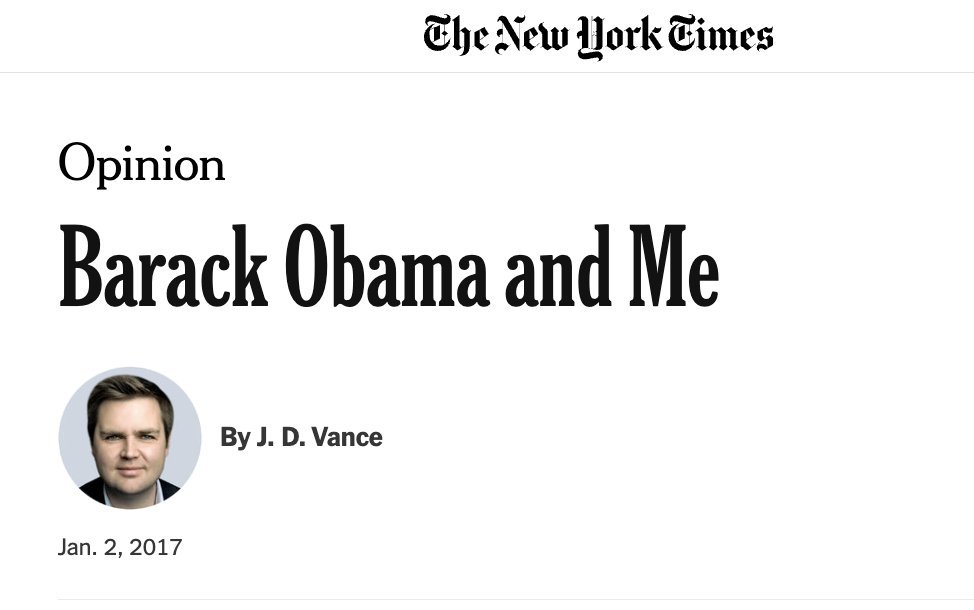
He’s the Manchurian Candidate. His biography is most likely BS. He does not appear intelligent enough to have gotten into Yale. He served behind a desk as a Marine. Look at him, how did he become a Marine? His vibe is inauthentic and there’s something very wrong with him.
1
3
14
237
And his boss the most vile loose pile of dog poo since , well , dog poo piles.

JD Vance may well be the most vile, smooth-talking liar in politics since Barack Hussein Obama.
2
Anti-aggression principle retweeted

Trump has lived down to his enemies' expectations
1
2
68
Anti-aggression principle retweeted

A year ago today Israel launched Operation Rising Lion. Israel was pounding Iran until Trump jumped in and messed up.
Today a year, later we learn that Trump has capitulated to the Ayatollahs and has stabbed its allies in the Gulf and Israel while giving a lifeline to the IRI and abandoning the long-suffering Iranians

4
15
26
453
Anti-aggression principle retweeted

This is heavy but important.
An Israeli combat medic named Daniel Elbo Arama shares what he saw treating a young woman right after the October 7 attacks.
She was barely clothed, covered in blood, and begged him for help.
In the ambulance she told him she had been raped by four terrorists. The bleeding was so bad they had to use medications normally given for gunshot wounds. She needed hours of surgery afterward.
Daniel has worked in emergency response for twenty years, including in conflict zones, but he says this day will stay with him forever.
Raw testimony like this shows exactly what happened that day.
We can’t forget.
127
2,684
7,909
101,781

Anti-aggression principle retweeted

Jun 13
The racist, antisemitic jerk Trevor Noah is of course wearing a Paraguay jersey even though he lives in the United States, hosted The Daily Show, and makes all of his money in the U.S.
What an asshole!
2
1
8
791
Anti-aggression principle retweeted

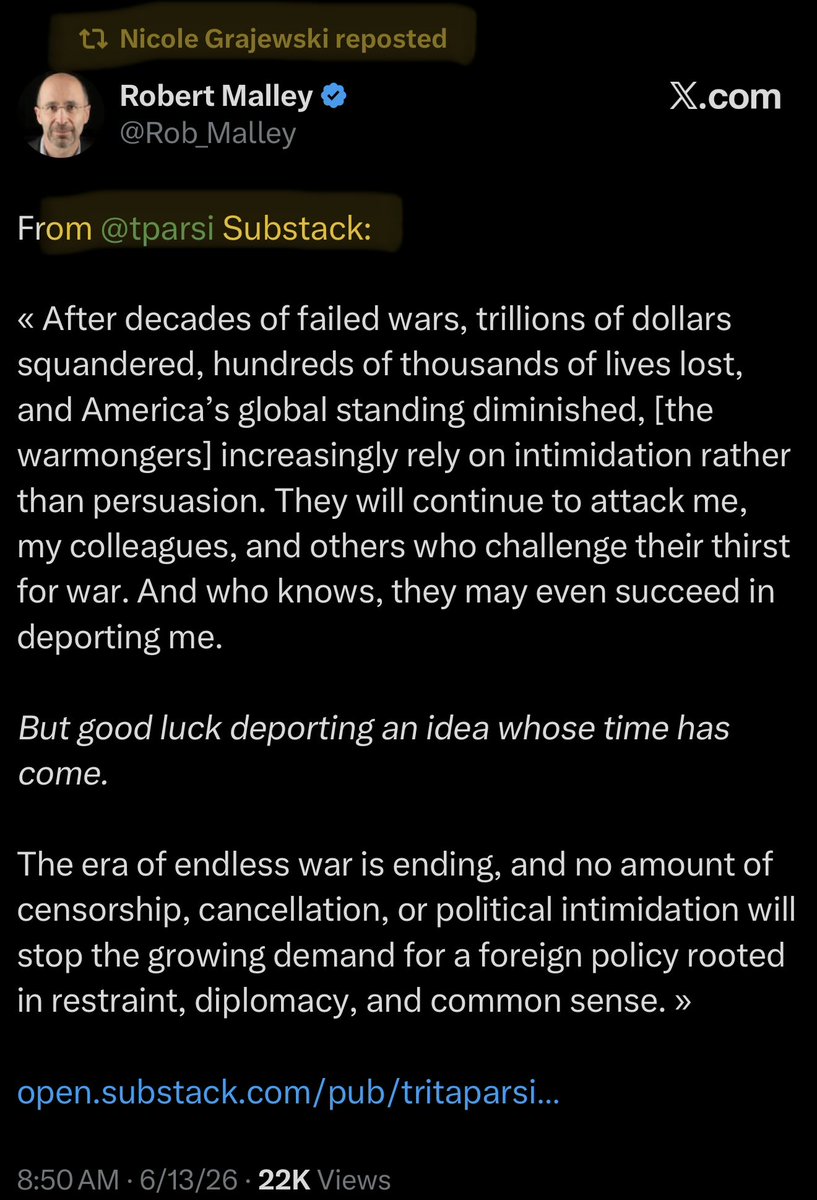
If it wasn’t clear, those who are against the Iranian people and Pahlavi are invested in the survival and rebranding of the Islamic Republic.
May 24

If I never see the word Pahlavi again I would be so happy
2
23
90
1,076
Germany was not a party to the Potsdam Conference. There was no German state anymore at that stage, only an occupied territory.
Why did you block me, Naftali? I haven't said a bad word to you. I wasn't disrespectful.
Why? Why have you done this to me?
Oh my dear God. Why?
With the nazi government?
With what?
What negotiations?
There were no negotiations after the surrender. There was no more right to refuse anything from the German side, that's what "unconditional" means.
1
21
I couldn't even reply to my own post, because of the block.
🫣😲🥹
1
8
I felt incredibly hurt by that action.
ה' ישמור.
שמע ישראל ה' אלוקינו ה' אחד.
4
Anti-aggression principle retweeted
This is Gaza on a regular day.
A huge crowd packs the street while Hamas fighters walk around openly with rifles and heavy weapons. People are cheering, filming on their phones, and one guy even fires an RPG right there in the middle of it all. Smoke everywhere, everyone celebrating.
These are the same “innocent civilians” we keep hearing about. They’re not hiding from Hamas. They’re cheering them on.
152
780
1,993
46,569
Motherfucking enemy of the state is still at it.
Calls Eropeans to use "their ENORMOUS LEVERAGE" against Israel to force the creation of the DeathtoIsrael PureArab Racist state in the Land of israel.
Fucking traitor.
@AmichaiChikli @netanyahu @gidonsaar

To the Heads of State and leaders of the G7 Countries:
The United States of America, Canada, France, Germany, Italy, Japan, the United Kingdom, and the European Union
In preparation for your upcoming summit meeting in Évian-les-Bains, France on June 15-17, 2026: Mr. President, Prime Ministers, Chancellors, distinguished leaders,
I come before you not as a government official, but as an Israeli peace activist and negotiator, someone who has spent nearly fifty years working with Israelis and Palestinians, speaking with political leaders, peace activists, ordinary citizens, and, at times, even with those whom governments refuse to speak to.
I am here to tell you something that many people no longer believe:
Peace between Israelis and Palestinians is still possible.
But it will not happen on its own.
For decades, the international community has supported a two-state solution in words while allowing realities on the ground to move steadily further away from it. Today we are at the edge of a cliff. The decisions made in the next year may determine whether two states remain possible or whether Israelis and Palestinians are condemned to permanent conflict.
The Gaza war has taught us a painful lesson. There is no military solution. Israel cannot bomb its way to security. Palestinians cannot fight their way to freedom. The alternative to a political solution is not victory for one side. The alternative is endless war.
The G7 countries possess enormous political, economic and diplomatic leverage. It is time to use it.
I also want to speak plainly about the role of the United States and of President Trump. The reality is that no international leader today possesses more influence over Israeli decision-making than President Trump. He has demonstrated repeatedly that when he chooses to make an issue a priority, Israeli leaders listen. He also has significant influence with key Arab partners whose participation will be essential to any lasting peace.
If that influence is used not only to stop wars but to build peace, it could become one of the most important diplomatic achievements of our time. The G7 should work in partnership with the United States, helping to create a unified international framework that combines American leadership, European commitment, regional participation, and international guarantees. Only such a coalition has the weight necessary to move the parties beyond the failures of the past.
I ask you to support five concrete steps.
First, make it clear that the goal of international policy is the creation of a sovereign Palestinian state living in peace and security beside Israel.
Not as a distant aspiration. Not as a slogan. As a real political objective with a timetable.
Second, support the rebuilding of Gaza under a legitimate Palestinian governing authority that rejects armed militias and is capable of delivering security, services, accountability and hope. The people of Gaza deserve a future beyond war. At the same time, Gaza cannot be rebuilt while armed organizations continue to operate outside the authority of the state. There must be one legitimate governing authority, one security structure, and one monopoly on the use of force. Disarmament must be part of the political process, implemented in a way that provides confidence to both sides and is linked to the broader framework of peace, reconstruction, security, and statehood.
Third, insist on security arrangements that guarantee that Gaza and the West Bank will never again be used as launching grounds for attacks against Israel.
Israelis must know that peace means security. Palestinians must know that security will not be used as a permanent justification for occupation. Both peoples deserve safety, dignity, and freedom.
Fourth, support democratic renewal.
Neither Israelis nor Palestinians should be denied the opportunity to elect leaders capable of making peace.
Too often, leaders have become prisoners of political survival rather than servants of their people’s future. If current leaders cannot deliver a political future, then new leaders must emerge through democratic means.
Fifth, create an international implementation mechanism with real authority, resources, and accountability.
We do not need another declaration. We need a process that survives changes of governments and political crises. The conflict has become internationalized. The solution must be internationally guaranteed.
Ladies and gentlemen,
The people I meet on both sides are exhausted. Israeli parents want their children to live without fear. Palestinian parents want their children to live with dignity and freedom.
These are not contradictory aspirations. They are complementary aspirations.
The future I believe in is simple:
Israel as the democratic nation-state of the Jewish people with full equality for all of its citizens.
Palestine as the democratic nation-state of the Palestinian people with full equality for all of its citizens.
Mutual recognition of the historic connection of the Jewish people to the Land of Israel and of the Palestinian people to the Land of Palestine.
Open borders for cooperation. Strong borders for security. Regional integration. Economic partnership. And an end to the belief that one people can achieve its national aspirations by denying the aspirations of the other.
History will not judge us by the speeches we give. History will judge us by whether we had the courage to act when action was still possible.
The choice before us is clear:
Two states, mutual recognition, security, and peace.
Or perpetual war.
I ask you to help make the right choice.
The window for a two-state solution is not closed, but it is closing. Future generations of Israelis and Palestinians will ask whether we acted while there was still time. Let our answer be yes.
Thank you,
Dr. Gershon Baskin
7
Anti-aggression principle retweeted

Former CIA officer John Kiriakou straight-up admits he works for Russia.
Then drops this: “Fuck the American government.”
This is what betrayal looks like.
Remember this the next time you see him on a podcast or going viral on X attacking Israel.
24
58
223
10,792
Anti-aggression principle retweeted

What have we come to when the Mayor of London condemns what a sovereign state 2000 miles away is doing?
If nothing else, it confirms that Muslims anywhere in the world now feel free to weigh into the Islamic war against the Jews having a national home.
1
1
2
30