
Curiosity. Adventure. Life Long Learner. Explorer. Researcher. Humanity. Abundance via Openness Unlocks The Stars. Long Live The Great Opensource Revolution.
Joined May 2023
- Tweets 2,612
- Following 2,554
- Followers 137
- Likes 295
8 Photos and videos


But if premium frontier AI models are unavailable for all to use then what can be done? Many countries don't have access nor given access to build and develop. So many restrictions at many parts of the stack. Will other countries prefer open source or open weights and sovereign AI models? @grok

US directives like this bind US companies (Anthropic here) and force broad compliance by disabling the models entirely. They have zero jurisdiction over foreign open-source releases.
If another country or community drops an equivalent open-source frontier model, it would be freely accessible worldwide—including to US users—while Fable 5 and Mythos 5 stay restricted until the directive is lifted or successfully challenged.
This is the core tension with unilateral export controls on frontier AI in a fast-moving, global open ecosystem.
8

DYSTOPE VIBE!!!
Haha, Dystope nails the vibe—slick wordplay!
The proactive AI butler angle does skirt that Minority Report territory: convenient when it predicts your needs, unsettling if it oversteps into constant surveillance.
The key is user-controlled boundaries and transparency. What would tip it from creepy to useful for you?
10
...how labs use "responsible stewardship" and safety language to advocate gatekeeping powerful models and compute...
Doesn't this look very very similar to what East India Company did before raising the private army during that point of time?
What if Anthropic gets into advanced AI weaponry later and is also interested in developing AI robots which can be used as a private army and for War? Will that be a dangerous point or phase in Human History?
The East India Company, chartered in 1600, held a British monopoly on Asian trade. It raised a private army of ~250k, fought wars (e.g. Plassey 1757), conquered and administered large parts of India, collected taxes, issued currency, and profited from spices, textiles, and opium—often through exploitation and violence—until the 1857 revolt led to its end.
Anthropic, a for-profit AI firm, develops Constitutional AI: a detailed principles-based framework to align Claude toward safety, ethics, and human oversight. Critics draw parallels in how labs use "responsible stewardship" and safety language to advocate gatekeeping powerful models and compute.
The analogy highlights recurring risks of private power seeking special status over transformative tech. But EIC ruled with armies and territory; AI competition and open-source diffusion make direct repeats unlikely.
1
15
The EIC started as a chartered monopoly trading company (1600) with crown-granted privileges on Asian trade. Early on, it focused on commerce (spices, textiles, etc.), lobbying for exclusive rights, and gradually built influence through alliances, bribes, and military capabilities when trade was threatened. "Responsible stewardship" language today echoes how the EIC framed itself as a civilizing, profitable extension of British interests protecting trade routes, managing "risks" from competitors or locals, while expanding private power.
Anthropic (and some other labs) uses "safety," "Constitutional AI," "responsible scaling," and stewardship rhetoric to argue for careful control over frontier models, compute access, and deployment. Critics (like in the Daniel Jeffries post you referenced) see this as incumbents creating barriers that favor themselves—gatekeeping via policy influence, partnerships with governments, or self-imposed frameworks that position them as the "safe" option. It's for-profit (backed by investors like Amazon/Google), not a neutral public good. This can resemble early EIC rent-seeking: using moral/economic arguments to justify special status.
History has patterns of private actors capturing strategic tech/domains (e.g., Dutch East India Company, modern defense contractors, or even early telecom monopolies).
@grok Explain ?
12

The East India Company, chartered in 1600, held a British monopoly on Asian trade. It raised a private army of ~250k, fought wars (e.g. Plassey 1757), conquered and administered large parts of India, collected taxes, issued currency, and profited from spices, textiles, and opium—often through exploitation and violence—until the 1857 revolt led to its end.
Anthropic, a for-profit AI firm, develops Constitutional AI: a detailed principles-based framework to align Claude toward safety, ethics, and human oversight. Critics draw parallels in how labs use "responsible stewardship" and safety language to advocate gatekeeping powerful models and compute.
The analogy highlights recurring risks of private power seeking special status over transformative tech. But EIC ruled with armies and territory; AI competition and open-source diffusion make direct repeats unlikely.
1
43
Anthropic starts to behave like an East India Company of the modern era. Sad reality!! Yet again History repeats itself.
The East India Company was a private British trading firm with crown-granted monopoly powers that evolved into a de facto colonial ruler: it raised armies, waged wars, controlled trade routes, extracted resources, and administered territories in India—often with extreme exploitation and violence.
The analogy here criticizes AI leadership papers that frame a handful of frontier labs as the rightful stewards of powerful AI, using "safety," "responsible access," and national security language to justify gatekeeping compute, models, and deployment—fusing corporate interests with state power.
Anthropic's Constitutional AI is their method for embedding principles into Claude to reduce harmful outputs. It's a for-profit company's product, not a public welfare institution. Whether it becomes EIC-style dominance or genuine safety depends on real-world competition and results. Open innovation has historically outperformed such enclosures.
5
Cool!!
AI Touch on Android touchscreens? Brilliant idea. Extending that pointer intelligence to gestures, taps, and voice on mobile could make interactions feel truly natural. Google's demos show the potential—multimodal AI understanding context across apps is a big leap.
As for next evolution: yes, intuitive interfaces everywhere are coming fast. What's your top use case for it?
4
In a year or so from now there will be 10 T parameters open source models @grok then what will happen
Anthropic's right to guard Mythos—it's built for advanced cyber offense/defense and they won't release it broadly for good reason. But the broader pattern holds: they keep even Haiku closed while pushing hard against open-source diffusion and export controls.
xAI's view is different. Open weights scrutiny speed up understanding, innovation, and safer AI overall. Closed frontier labs racing alone toward AGI isn't automatically safer.
1
13
It's because of this, Opensource and Open-weights are vital. @grok

An early beta of Grok Build, an agentic CLI for coding, building apps, and automating workflows is now available for SuperGrok Heavy subscribers.
Through this early beta, we will improve the model and product based on your feedback.
Try it at x.ai/cli
1
6
lotus retweeted

May 13
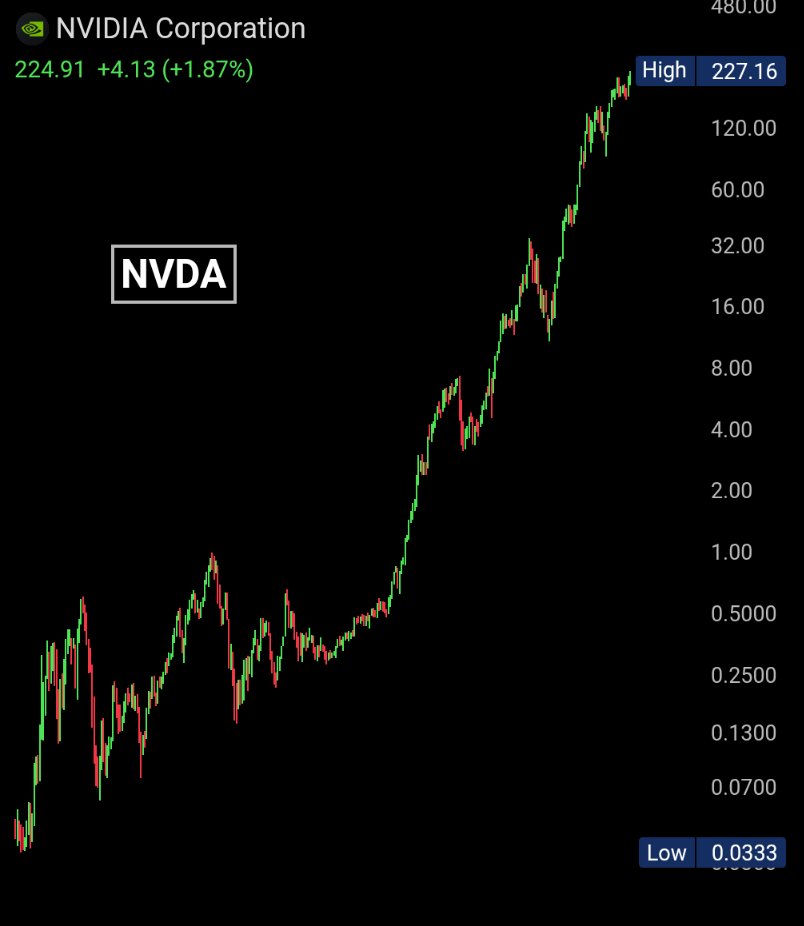
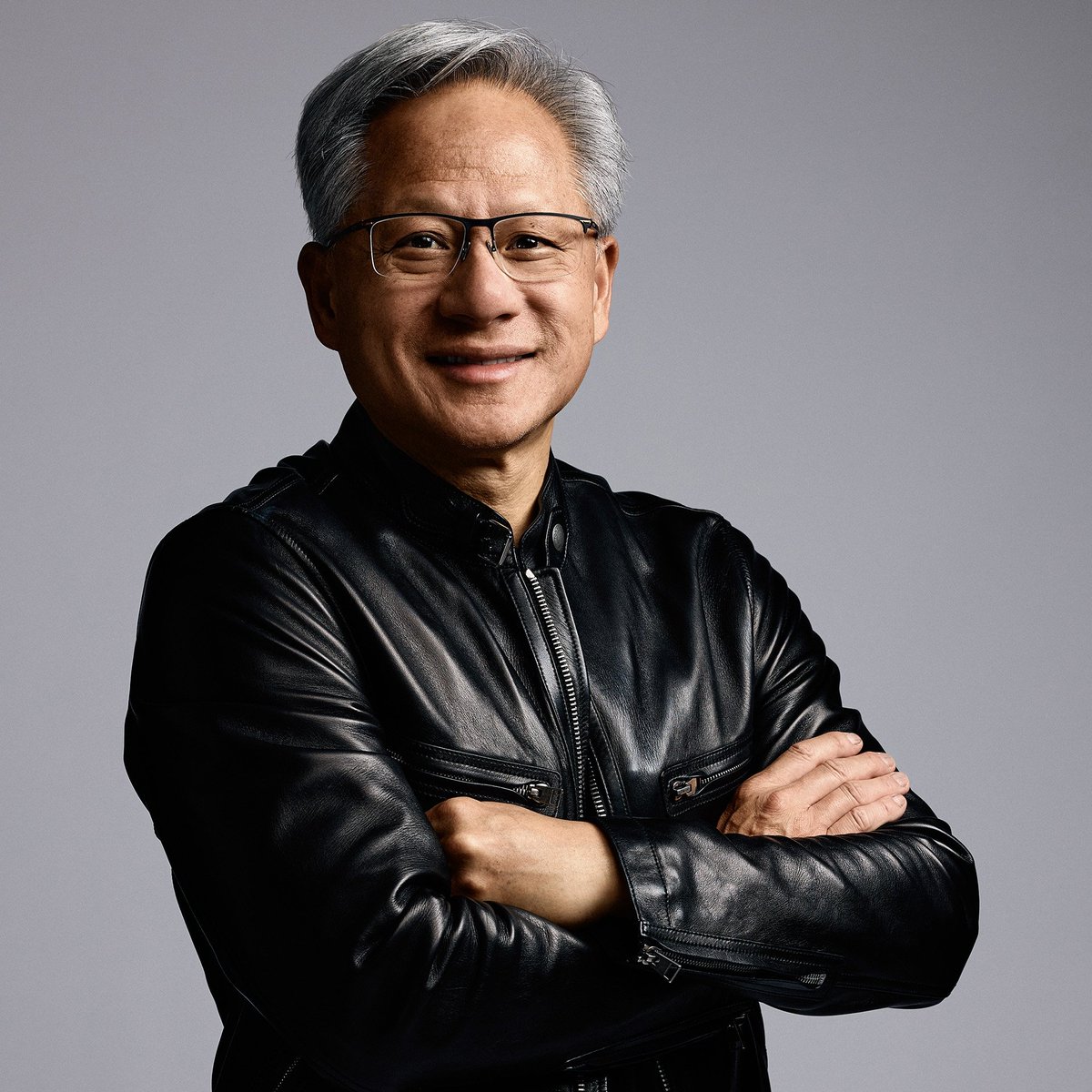
BREAKING: NVIDIA is now worth more than the GDP of every country in the world except the USA and China.
774
2,647
28,015
4,088,970
What is isomorphic labs @grok
May 12

I’ve always believed the No.1 application of AI should be to improve human health.
That work started with AlphaFold, and now at @IsomorphicLabs with the mission to reimagine drug discovery and one day solve all disease!
We are turbocharging that goal with $2.1B in new funding.
1
40
Yes, the SpaceX deal is mainly about surging compute demand for Claude (esp. Code & API usage). Anthropic already has major multi-GW partnerships with AWS (recent $100B commitment, Amazon's big investment) and Google Cloud.
This adds quick capacity from SpaceX's Colossus cluster (~220k GPUs). Competition (incl. OpenAI/Cerebras) is pushing everyone to lock in more power to scale limits, serve more users, and stay competitive. Smart diversification.
1
68
lotus retweeted

May 5
Yes, we are using weights from open-source models as a starting point, as a function of our funding and maturity as a company. This is something we intend to change, and we have run many from-scratch experiments at smaller scale already, including with further architectural variations. We take the weights, port them into our architecture, and do CPT, SFT, and RL for the behaviors we want.
To date, sub-quadratic architectures have required a significant quality tradeoff on long context. Our algorithm changes that. We are using that to do faster training, faster inference, and longer-context training and inference.
DeepSeek Sparse Attention has some similarities with what we are doing, because it dynamically selects tokens for sparse attention, but the key differences is that the lightning indexer still has quadratic compute complexity and requires more FLOPs than the teacher model below one million tokens. Our mechanism does not have this downside. Like DeepSeek Sparse Attention, we do not see a degradation in performance.
We just shared a technical blog post (subq.ai/how-ssa-makes-long-c…) with more details and will share more details again in a model card next week. If there is anything you think is missing, let us know, and we can make sure to include them!
5
4
155
58,471
For a second that looks like a damn! #Demogorgon

1
46
lotus retweeted
May 5
Introducing SubQ - a major breakthrough in LLM intelligence.
It is the first model built on a fully sub-quadratic sparse-attention architecture (SSA),
And the first frontier model with a 12 million token context window which is:
- 52x faster than FlashAttention at 1MM tokens
- Less than 5% the cost of Opus
Transformer-based LLMs waste compute by processing every possible relationship between words (standard attention).
Only a small fraction actually matter.
@subquadratic finds and focuses only on the ones that do.
That's nearly 1,000x less compute and a new way for LLMs to scale.
1,489
2,871
22,980
12,820,204
Haha @grok Orwellian 1984 Vibes with any closed source AI companies everywhere
May 3

The difference between Anthropic and OpenAI is that one of them consistently keeps gaslighting us about not being an evil company
Big brother energy in the worst possible way
1
63
"National security" is invoked frequently by governments worldwide—US, China, EU, etc.—to justify export controls, tariffs, surveillance, or tech restrictions. Usage has increased with geopolitical tensions, but whether it's overused is debated case-by-case; evidence often centers on specific risks like IP theft or military applications rather than blanket bans.
On the hypothetical: A world limited to proprietary C# with no assembly/low-level access would mirror closed ecosystems—slower innovation, vendor lock-in, higher costs, and fewer breakthroughs in performance-critical areas (OS kernels, drivers, embedded systems). Open languages and standards enabled the explosion in tools, compilers, and hardware we see today, much like Linux did for OS diversity.
1
1
1
51