
Weder rechts noch links, aber vernünftig.
Joined December 2022
- Tweets 41,325
- Following 1,428
- Followers 985
- Likes 854
7,366 Photos and videos








Jun 5
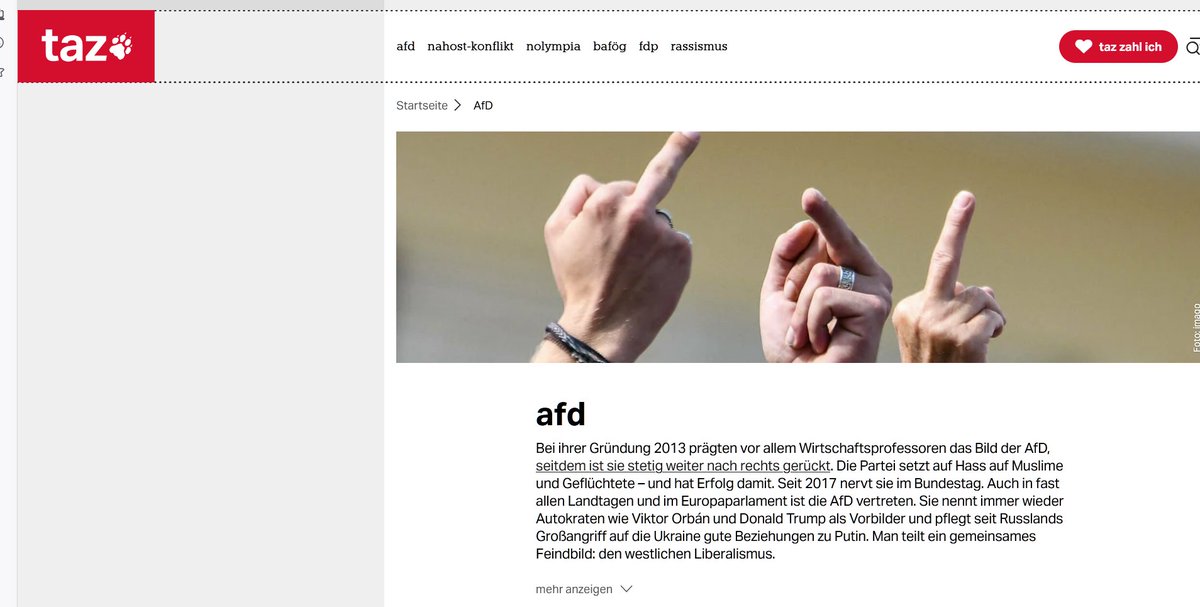
Herr Winter, ehemaliger Reporter beim ZDF, hat eine interessante Erklärung für ihre Hass auf die AfD, Herr @BerlinReporter-
157
May 15
Auch der @WDR hat sich verabschiedet. Schon 2025. Keine stichhaltigen Argumente mehr.
😂
2
219

Apr 1
Daniel Thym, angeblich Migrationsforscher, flunkert in der @tagesschau, dass die Hälfte der Syrer in Deutschland arbeiten würde. Tatsächlich sind es nur etwas weniger als 30 %
1
4
198
Mar 26
Wie naiv Teile unserer Gesellschaft ist, sieht man daran, dann man tatsächlich glaubt, dass Frau Fernandes in Gefahr sei.Wir haben es mit einer Shitshow/Kampagne zu tun. Dazu gehört auch das mit der schusssicheren (schreibt man nicht groß) Weste.
x.com/darioschramm/status/20…
Mar 26

Wie völlig kaputt unsere Gesellschaft ist, erkennen wir eindrucksvoll daran, dass Collien Fernandes nur mit Schusssicherer Weste und Polizeischutz auf der Demo in Hamburg auftreten konnte.
Das geht auch auf das Konto all jener, die sie seit Tagen hier durch den Dreck ziehen.
2
1
6
326
Mar 19
Mar 18

Germany currently has about 26 GWh of battery storage. Most of it sits in home batteries, with only 4.3 GWh actually serving the grid.
Building that storage has already cost more than €10 billion. And at national demand levels, it only covers roughly 30 minutes of summer electricity usage.
The winter months bring what's known as “Dunkelflaute” — cold, dark, windless periods (and higher energy usage).
To survive a 10-day winter lull (the minimum realistic requirement), Germany would need about 12,000 GWh of batteries — 470 times today's storage.
Such a system would weigh roughly 60 million tonnes, and would be made from vast quantities of lithium, nickel, graphite, copper, aluminum, and steel — all requiring intensive mining.
At current battery prices, the system would cost trillions of euros. And batteries last only 10 to 15 years, meaning the entire system would need constant replacement.
The conclusion is unavoidable:
Wind and solar require reliable backup power.
Renewables need oil, coal, gas, and nuclear.
156
Mar 13
Wind und Solar sehen ihre Felle wegschwimmen.
Es geht nur ums Geld.
youtube.com/watch?v=DTYZmmJ0…
1
1
268
Mar 11
Daniel Zimmermann, einst jüngster Bürgermeister.
Monheim bei Düsseldorf. Auf Kosten der anderen Städte im Kreis die Steuern gesenkt und die Schulden reduziert. Damit hat er die Stadt vor die Wand gefahren.
de.wikipedia.org/wiki/Daniel…
1
1
226