宏观经济,大宗商品,油管视频号搜王海滨的财经闲谈。
Joined April 2009
- Tweets 49,811
- Following 1,289
- Followers 242,377
- Likes 3,536
5,893 Photos and videos
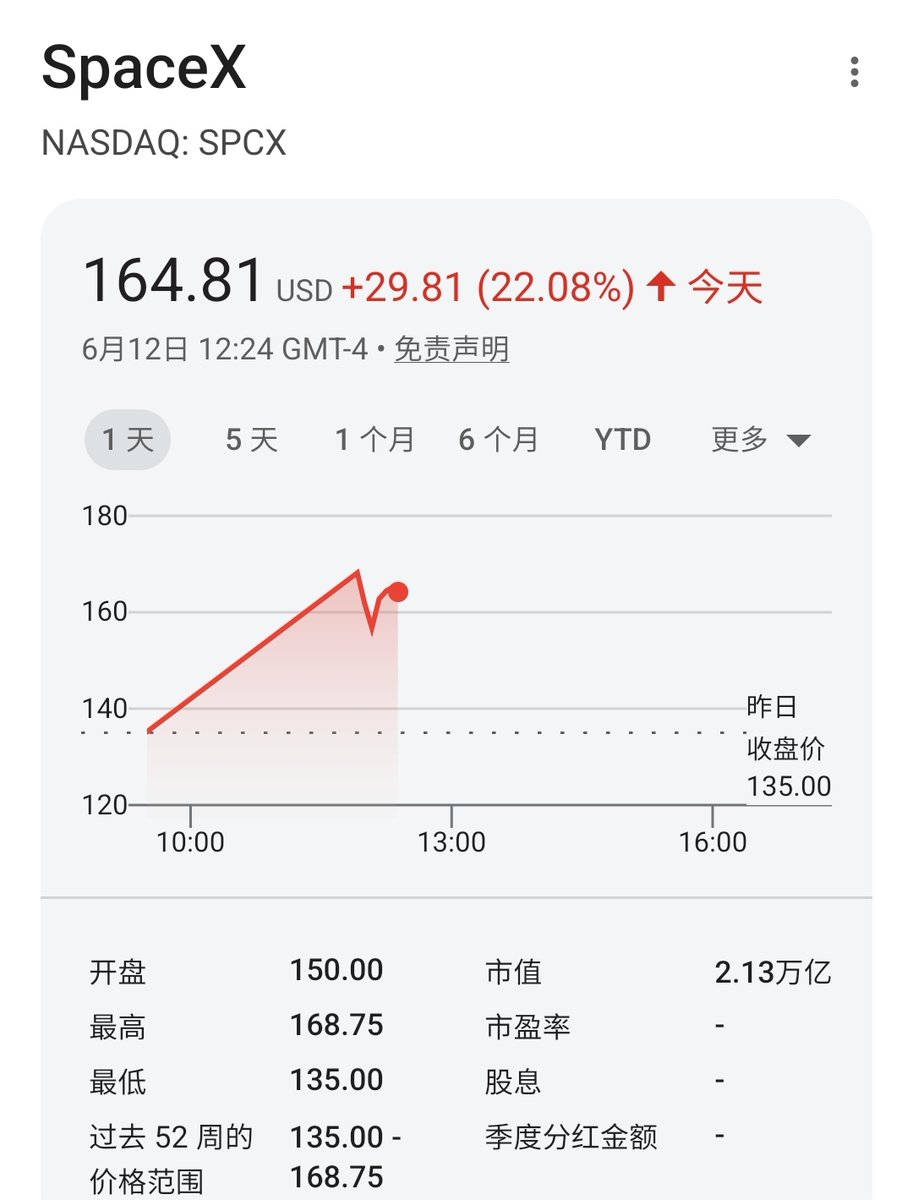

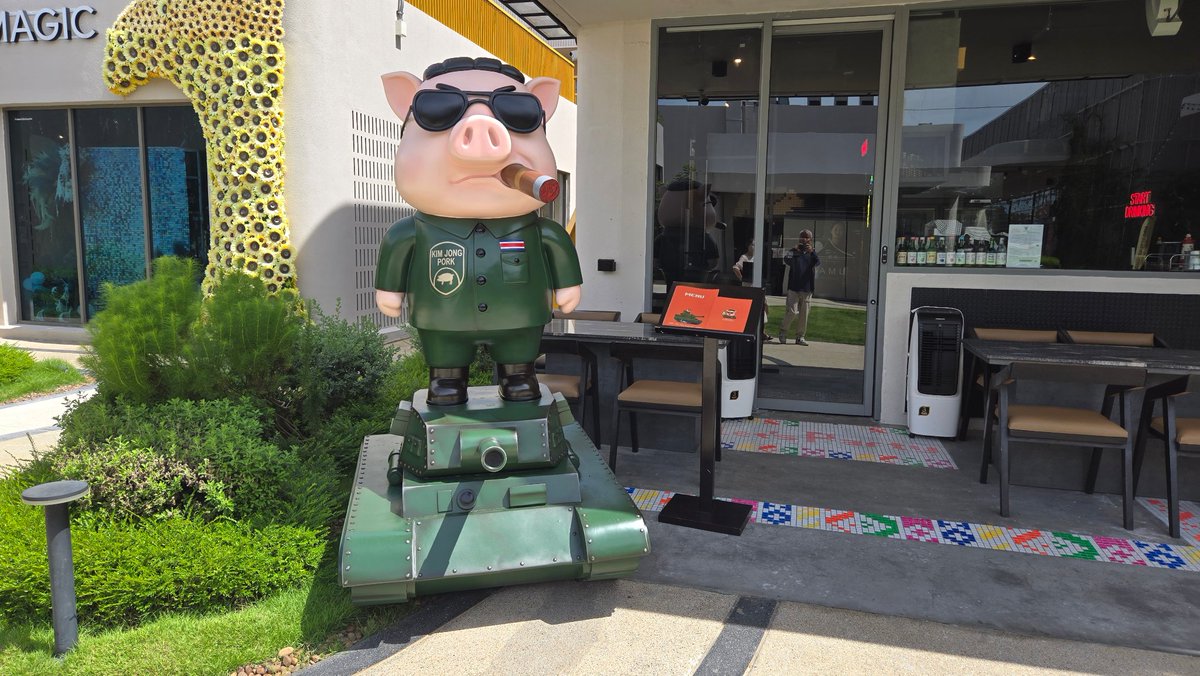

一个万亿美元富豪诞生的背景,AI淘汰了什么人。 youtu.be/jgMtjUk5S9g?si=Ws9a… 来自 @YouTube
6
3,439

多数人都不知道合艾。
合艾是泰国南部大市,医疗在曼谷外排名第一,生活费比普吉岛便宜。
其实我建议有些担心普吉岛费用贵的,可以考虑合艾。
Jun 12

单纯在合艾、普吉岛、华欣、帕塔雅北部、大城府这些地方养老,租住外国人社区和泰人社区的区别不多。
租金从公寓的300美元到豪华别墅的10000美元,都可以选择。
购买商业保险,每年支出1000美元。
食品方面,去泰人的菜场,并不会有什么不好。
而请佣人和司机,只要500美元起而已。
4
3
36
18,939

Jun 12
《中国宏观经济深度透视报告2026》已经上传。
Jun 10
原来x的订阅内容与youtube交易研习室的内容搬至此地costainca.substack.com/subsc…
2
8,232
Jun 12
Reddit 检测认为不符合其规则,删除
Jun 12
Ice and Fire Over 40 Years: The West’s Failure and China’s Success
This is not a long-term story.
It is only a stage.
The final outcome remains unknown.
I lived through 1989. That year, I appeared on the streets for a short while because I was facing the college entrance exam.One of my seniors was a student movement leader at a university in Beijing. His mother knelt before him and begged him to return to Shanghai. He came to visit our English teacher and was asked to sit at the back and wait until class ended.I curiously turned around to look at him. His face still bore the traces left by some kind of gas.Of course, this senior’s fate was uncertain. No one knows what happened to him afterward.
At that time, we admired people like him.
After graduation, I was assigned to a factory in Shanghai’s suburbs. I didn’t even know its name. My father used connections at his own work unit to transfer me to a steel plant, paying the school 5,000 yuan — equivalent to about 70 times the monthly salary at the time.
But I let my father down and went to work for a foreign-funded enterprise instead.I was steeped in Anglo-American corporate culture and held an unshakable faith in Western civilization.
By 1999, I had started my own business, firmly believing in freedom and democracy.
A few years later, after I went bankrupt, I became a renovation worker and contractor.
I was renovating a house for a Spaniard in Shanghai.
In truth, both the underworld and the authorities had inflicted deep wounds on me, so you can imagine how much I hated the CCP.
During one lunch, we had a restrained argument — after all, he was my client.
He did not share my worship of democracy. A middle-aged man who had done business in eight countries, traveling from Europe to North America and then to China, he told me: “Democracy is hugely destructive, and corruption is everywhere.”
I stood up and left.
Later, I wrote articles that gained enormous influence. Many pieces had over a million reads — keep in mind this was twenty years ago.
I published several books and wrote columns for financial magazines for years, which gave me the opportunity to enter the commodities sector as a spot-market analyst.
This job began to shatter my worldview.
The market is ruthless and respects only objectivity. Any bias driven by ideology leads to failure, losses, and even death.
In my more than ten years in the industry, several people jumped to their deaths, and countless others went to prison.
While learning and practicing, the market constantly corrected and blood-washed my positions.
During my years of bankruptcy, I did not attribute all my anger to the CCP. I was also angry at my own ignorance, so I taught myself economics to understand what had gone wrong with society.
My anger toward the mainstream led me to become a fervent believer in the Austrian School.When I applied my faith in market liberalism to actual trading, the market inevitably struck back.
The market does not believe in liberalism; it believes only in game theory and human behavioral economics.
I once met a behavioral economics professor from the University of Chicago. I showed his students some of my political economy articles (I had placed my laptop on the table).
His students were shocked that my writing on political economy was better than what their lecturers produced.
Later, the professor invited me to a small restaurant and said, “It is better to cut off one finger than to injure ten.”
I should focus on doing one thing well.
I wasn’t sure whether he meant I should stick to being a renovation worker or focus on academia. But from then on, I began reading works on behavioral economics.
While doing this work, the social sciences became a lifelong hobby.
I started traveling abroad at my own expense to observe social changes in various countries.
In 2011, Myanmar’s political reforms triggered my second wave of enthusiasm since 1989. I went to Myanmar to investigate, meeting local residents, European and American NGO staff, Burmese Chinese businessmen, and temple keepers in Chinatown. I traveled everywhere, collected materials, and studied its modern history.
At the same time, I went to Cambodia for comparison between the two countries’ political and economic reforms.
Ten years after its political reforms, Myanmar still did not have a decent power plant. There were over a hundred extreme environmental organizations.
Cambodia had over three thousand legal and illegal trade unions.
Industrialization in both countries had stalled.
Later, Cambodia turned to black industries, while Myanmar slid into military coup and war.
After studying Myanmar for two years, I gave up on it. In 2013, I went to the United States and stayed there for a long time, then to New Zealand for a while.
In America, I saw Navarro and Bannon’s theories move from the fringes to the mainstream. China had become the enemy. A poor middle-aged white woman and a homeless man helping with moving firmly told me: “Make America Great Again.”
I first heard this phrase not from Trump, but in 2013 in a house in the San Fernando Valley belonging to an anthropology professor.
It came from her tenant — that poor white woman.
I am a sensitive person, so I understood that China and the U.S. were heading toward confrontation and that America would inevitably contain China.
I went to New Zealand.In Christchurch, years after the earthquake, no reconstruction had taken place. Local friends shrugged and said: “It’s a democratic society, you know.”
Democracy brings low efficiency but also fairness, and ultimately achieves the desired results.
This was what liberals had always told me, and I once deeply believed it.
But after witnessing the destructive chaos in Myanmar and Cambodia, seeing some trivial matters in New Zealand, and observing problems in America, I began to study the modern economic histories of over a hundred countries across five continents.I discovered a deliberately ignored issue.
Europe’s successful industrialization came from mercantilist authoritarian monarchies.
Britain was a constitutional monarchy with checks and balances between king and aristocracy.
America’s four-hundred-year development was not only a slave republic but also a system where only some people had voting rights, with local autonomy, judicial independence, and long-term rule by legislators.Even the U.S. Constitution reflects precautions against democracy to prevent it from infringing on liberty.By 1900, America was already the world’s largest economy — before it had full democracy.
In modern political discourse, “democracy” belonged to the Soviet and Eastern European socialist camp, while “freedom” belonged to Anglo-American society.
In the 1970s, lying on a threshing floor in rural China, I heard shortwave radio from Taiwan. A soft-spoken Taiwanese girl said “the free world…”Distant memories flooded back.
The Free World.
Not the Democratic World.
That soft-spoken girl spoke during Chiang Ching-kuo’s rule, when Taiwan’s economy was taking off — under authoritarian rule.
So I looked at South Korea’s economic takeoff under Park Chung-hee’s authoritarian regime.
I looked at Japan’s economic takeoff under the Liberal Democratic Party’s one-party rule for forty years.
I looked at how Singapore became a developed country under Lee Kuan Yew’s enlightened dictatorship.
In the same postwar period, while developed countries enjoyed the fruits of advancement, the backward Third World countries in Asia, Africa, and Latin America — under Western democratic guidance and Soviet-style socialist democratic revolutionary exports — fell into ever greater chaos.The Philippines and Liberia, which fully copied the American constitutional system, remained mired in poverty, chaos, war, poverty, and chaos.India, the largest democracy in South Asia, stayed poor and backward.
Then China began reform and opening up. In 1989, there was a chance to transform into a democracy, like the Soviet Union’s dissolution.
I once imagined what China’s development would have been like had that happened — until I witnessed Myanmar’s political reforms after 2011.
I no longer believed in that dream.After comparing many countries, I came to understand that if the students had succeeded in 1989, China would have become like Myanmar or India in the previous fifty years, or like the Philippines — a society of continuous turmoil, consuming its limited wealth in political frenzy.
It would have had the chance to become an oligarchic society like Yeltsin’s Russia, with 90% of people falling into extreme poverty, retirees losing pensions, public healthcare and sanitation systems collapsing, and women flowing to Japan and Korea to engage in prostitution.
In fact, Deng Xiaoping was a great man. He ended that movement and, through his southern tour as political theater, blocked the extreme left and prompted Jiang Zemin to resume reforms.
Many years later, after reading other materials, I learned that Western Marxism had never died.
The Frankfurt School had long gone to North America.The collapse of the Soviet bloc was the collapse of economic communism.But ideological communism never disappeared. It deeply occupied the ideological spheres of the entire Western world and many democratic countries in the Third World, holding a dominant position.
For half a century, the “democracy” the West exported to the world was actually a post-Marxist form of communism.
When a country has not yet accumulated wealth, various NGOs appear under the guise of helping its citizens. They organize independent trade unions and environmental groups to obstruct and sabotage economic development, setting up barriers for capitalism so that factory owners cannot accumulate capital or even produce normally.Local elites soon realize it is easier to go along with this, incite populism, gain power, and extract profits from traditional businesses rather than pursue difficult development models that offend the West.Thus the country remains trapped in poverty, with no economic development, no fiscal surplus, dysfunctional public health and education, chaotic security, and wealth controlled by elites.
This model encountered strong resistance when exported to China.The CCP itself rose through this playbook.
In its early urban phase, it used unions and labor movements to disrupt production — and failed. It then turned to the countryside and adopted ancient Chinese dynastic ruling methods, extracting basic revenue from agriculture.
When Mao Zedong wrote about “democratism” on the front page of Xinhua, he aligned with American leftists.But in great-power geopolitical games, he was abandoned by the United States and had to embrace the Soviet Union.
Mao read ancient Chinese thread-bound books and drew governance wisdom and statecraft from dynastic history.Therefore, he established China’s central-local power-sharing system. After 1953, central and local finances were separated.This created a huge difference between China’s planned economy model and the Soviet one, greatly increasing the chances of success for Deng Xiaoping’s reforms.
After 1989, Western influence declined, and so did the influence of Western left-liberal factions. Pelosi had to return to America.The CCP deeply understood the destructive power of unions on production and knew that NGOs were ideological organizations, so it banned independent unions.This became an important foundation for the rise of China’s private economy.
Deng Xiaoping accepted Coase’s property rights theory and laid a clear (though imperfect) property rights system for China. Land remained collectively owned; citizens only had 40- to 70-year use rights.
After being poor for too long and enduring too much war and chaos — the Cultural Revolution was no less than a civil war — the Chinese people finally gained a period of peace. With established property rights and the opportunity to build their own businesses, private enterprises flourished.
Overseas Chinese capital and Japanese-Korean capital saw that China had removed the factors causing economic chaos — unions — and offered preferential tax policies for investment attraction along with massive infrastructure and public education investment. Capital poured in.Stable regime succession, continuity of long-term development policies, and the transition from development-oriented corruption (win-win) to predatory corruption were checked by the CCP’s tough anti-corruption system, which slowed the formation of predatory corruption.These were all reasons for China’s economic takeoff.
Meanwhile, the entire West was using the consciousness streams of marginal groups to attack mainstream populations — the Marxist tactic of equalizing wealth by using proletarian dictatorship to strike all capital.The West was busy with its cultural revolution and outsourced industrialization to China.
I once explained religion to viewers in a program:Monotheistic religions have their own God, justification by faith, and equality of all beings under God.Modern Western atheists believe everything outside humanity is more important than humanity — animals over humans, and pluralists believe minority groups are more important than mainstream groups.This is a form of control theory.
The West is busy on the ideological battlefield.China is busy on the economic battlefield.
If not for America’s high-tech sector, which is relatively untouched by ideological interference and still sustains American strength, it would have handed high-tech over to others.
This is the past.
The past only explains the past.
China is now learning from Europe and America. Although it achieved great success through primitive capitalism and state capitalism, its philosophical guidance remains Marxism.China’s model is “outer Marxism, inner Legalism” — the same concept as ancient China’s “outer Confucianism, inner Legalism.”Explained to Westerners: China’s governance wears the outer garment of Marxist thought but uses traditional Chinese Legalist governance models.This Legalism is not only about legal systems but includes the entire set of household registration and equalized people governance models.
Japan is actually a pseudo-democracy; its ruling model also derives from ancient China’s household registration system, combined with some Legalist and Wang Yangming influences.
The harm of “outer Confucianism, inner Legalism” lies in not abandoning Confucian philosophical guidance, making it difficult to realize citizens’ free will and transition capital from traditional to knowledge capital.
The fatal flaw of “outer Marxism, inner Legalism” is likewise not thoroughly abandoning Marxism. The dictatorship system will treat private business owners who created enormous value as auxiliary tools.In times of fiscal imbalance, private business owners will face catastrophe.China’s ruling class often destroys the very foundation of its own rise.
In ancient times, dynastic rulers destroyed free peasants, leading to large-scale land consolidation and tax burdens that crushed them.
In modern times, the ruling class will destroy small and medium private business owners, forming large platform oligarch economies and using taxes to crush them.
The world outside China is turning rightward after self-reflection.
After thirty-seven years of successful development, China is learning everything from the Western left: heavy taxes, social welfare, and invisible Brahmin control systems.
Looking back at 1989, I hope that one day our elites can say this:“We fought together for the progress of this country. We should have argued, fought, and struggled like family.
We must not use the army — the army is for external threats.
This is our nation’s shared regret and sorrow.”
4
6
10,374
Jun 12
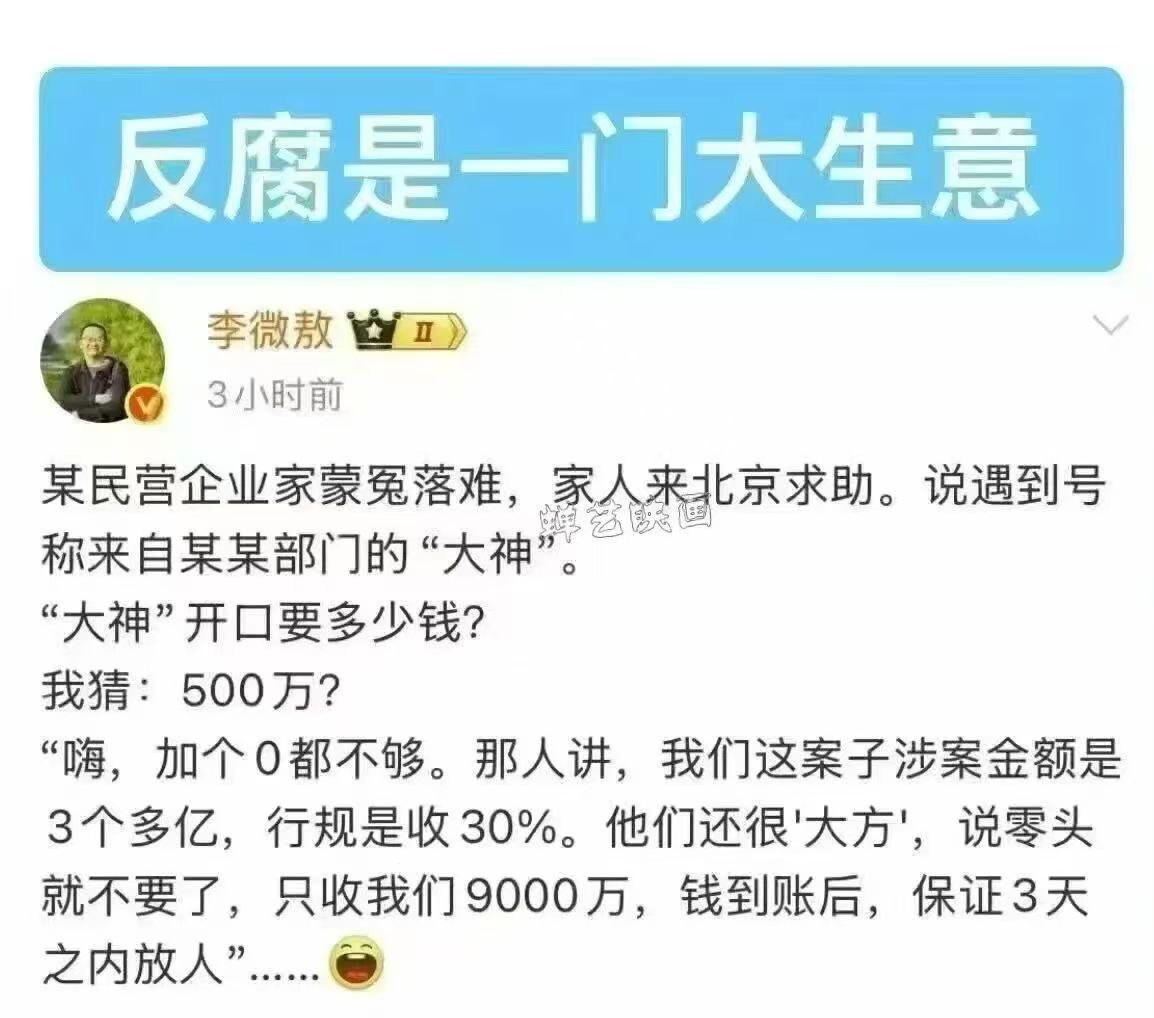
人一进衙门口,各种牛鬼蛇神就跑出来了。
我这样跟各位说吧,在习治下,官僚没有一个会冒险给你疏通的,除非你自己就是权贵,还有可交换的政治资源,且没有站错队伍。
此时你唯二的选择:
1,逃亡去一个无法引渡的国家。
2,尊重法律,找一个能打官司的专业律师,按部就班,一层层诉讼。
做完一切符合程序正义的努力,认命。

13
7
117
55,532
Jun 12
单纯在合艾、普吉岛、华欣、帕塔雅北部、大城府这些地方养老,租住外国人社区和泰人社区的区别不多。
租金从公寓的300美元到豪华别墅的10000美元,都可以选择。
购买商业保险,每年支出1000美元。
食品方面,去泰人的菜场,并不会有什么不好。
而请佣人和司机,只要500美元起而已。
Jun 11

看了Leo和Lili退休后去中国旅居,回来后对比中美生活感受的视频,我觉得很多美国华人对退休后去低物价国家养老有点太乐观了。
他们租的房子一个月5000人民币,听起来很便宜,但住下来发现能闻到邻居炒菜味,听得到楼上楼下小孩哭闹,家里一天不打扫就到处是灰。说到底,5000人民币租到的是当地普通人的居住水平,不是美国郊区独栋住宅的居住体验。
这些年我去越南和南美洲国家最大的感受就是:游客和当地人的消费标准根本不是一回事。当地人一个月几百美元能过日子,不代表你也愿意那样生活。很多美国退休人士到了国外,想住干净安静的社区,享受私立医疗服务,经常吃西餐喝咖啡,想家的时候随时买机票回美国。真要维持和美国差不多甚至更好的生活品质,往往得住酒店式公寓或高档社区,房租一个月两三千美元很正常。
另外,很多网上宣传东南亚养老天堂的内容,其实更适合退休收入不高,单身或离婚的美国退休男性。他们追求的是更低的人力成本和男女关系市场,所以他们去东南亚生活会更舒服。但对于有家庭,有配偶,习惯美国中产生活品质的退休夫妻来说,往往不是为了图便宜,而是要考虑居住品质,医疗条件,交通便利性以及旅行体验。
很多人算退休开销时只算当地物价,却忘了机票,旅游,外国人医疗保险这些大头。以我们家来说,在加州没有房贷房租,两娃上公立学校的情况下,现在每个月生活开销大约都要$10000美元。如果将来时不时去国外旅居一阵,就算不用养娃了,但是加州的房子回来要住还得养。加上旅居地每月$2000到$3000美元的房租,吃喝玩乐,机票,邮轮的费用。总开销估计会比在美国生活高。
所以我越来越觉得,退休后去别的国家旅居最大的收获不是省钱,而是时不时换个环境生活,体验不同的文化和风景。如果只是为了省钱,现实肯定没有很多YouTuber说得那么美好。youtu.be/oAQVK6pzQLo?is=RkhS…
6
13
36,138

中医确实是地球上唯一一个越老越值钱、越文盲越吃香的行业。走这条路准没错,
我爷爷种了一辈子地,80岁还是农民。81岁把白大褂一穿,胡子留长,往那一坐,就是老中医了。
虽然他一个字不认识。但用半天时间学会了“望闻问切” 。望就是瞅你一眼,闻就是闻闻你脚臭不臭,问就是”你哪不舒服啊”,切就是拉着你手腕摸三十秒。
然后跟你说:湿气太重。
把你从头到脚的器官提一遍。有100多种组合随便给你套一个。
你肝湿,你肺湿,你鸡巴湿,你脑子湿...
随手给你开 20 斤人中黄先吃半个月。要是没治好,说明你湿气太重了,该火化了。化成灰就彻底除湿了。
Jun 9

我发现一个超完美的职业规划,
程序员35岁被淘汰,花一年时间高考。
读五年医学院,40多岁拿证当老中医。
还有年龄优势,患者看外表就会很信任。
25
17
150
69,633