Historically educational posts covering all things war and more!
Joined June 2008
- Tweets 973
- Following 11
- Followers 166,694
- Likes 48
924 Photos and videos
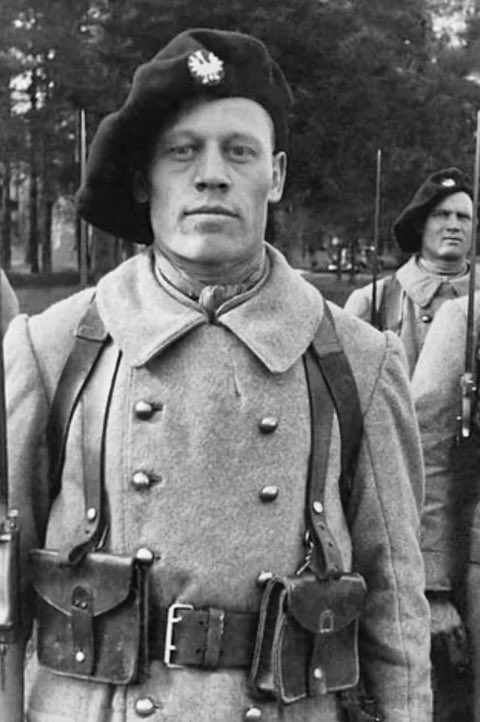

Members of the Polish Legion stationed in France as they prepared to fight against the German invasion in 1940.
During World War II, hundreds of thousands of Polish soldiers continued the fight in exile after Poland was invaded by both Nazi Germany and the Soviet Union in 1939. Escaping occupied territory, Polish military forces regrouped abroad and became collectively known as the Polish Armed Forces in the West.
Polish troops went on to serve in nearly every major theater of the war. Polish pilots played a vital role in the Battle of Britain, with the famous No. 303 Squadron becoming one of the RAF’s top-scoring fighter units. Polish soldiers also fought in North Africa, Italy, France, Belgium, the Netherlands, and even inside Germany itself.
One of Poland’s most celebrated achievements came during the Battle of Monte Cassino, where the Polish II Corps succeeded in capturing the heavily fortified monastery after several failed Allied attempts. Polish forces also played key roles during Operation Market Garden and helped liberate parts of Western Europe.
At sea, the Polish Navy fought alongside the Royal Navy, while Polish cryptologists achieved some of the earliest breakthroughs in deciphering the German Enigma code before the war had even begun.
Despite these major contributions to the Allied victory, Poland emerged from the war under Soviet influence rather than regaining full independence. As a result, many Polish veterans found themselves unable or unwilling to return to their homeland after the conflict ended.
3
2
28
3,501
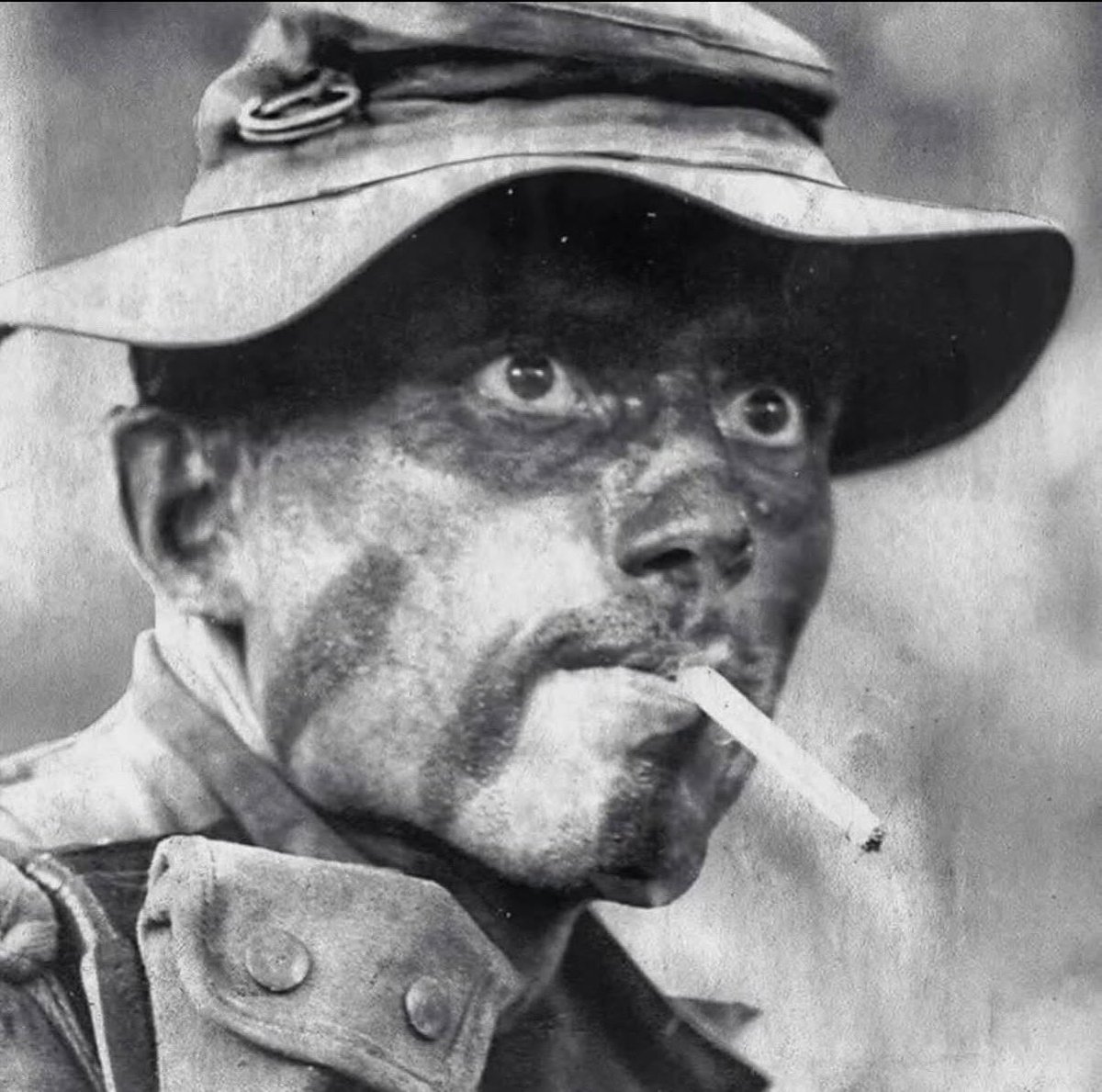
An unidentified Recon Marine, his face painted and bush hat decorated with grenade pins, pauses to rest after a patrol sweep near the U.S. Marine base at Khe Sanh. AP Wire photograph, 1968.
Taken during one of the most intense phases of the Vietnam War, this photograph shows a U.S. Marine reconnaissance trooper near Khe Sanh in 1968. His face paint, cigarette, and bush hat decorated with grenade pins have made the image one of the war’s most enduring visual records. Though his identity is unknown, his expression reflects a common reality among those who served: fatigue, constant alertness, and the pressure of operating in hostile terrain.
Khe Sanh, close to the Laos border, was the focus of a 77-day siege in early 1968. Throughout the battle, thousands of U.S. Marines and South Vietnamese forces held the combat base against sustained attacks from North Vietnamese troops. The engagement unfolded alongside the wider Tet Offensive and quickly became one of the most controversial battles of the war. U.S. commanders also feared it could turn into a modern-day Dien Bien Phu, echoing the decisive French defeat that had reshaped Indochina.
Reconnaissance Marines typically operated in small, isolated teams deep behind enemy lines. Their role involved gathering intelligence, tracking enemy movements, and coordinating artillery or air support. These missions were among the most hazardous of the conflict, with casualty rates often rivaling or exceeding those of regular infantry units.
During the siege itself, American air power delivered more than 100,000 tons of ordnance in support of the base. The surrounding region became one of the most heavily bombed areas in modern military history.
7
39
293
12,659
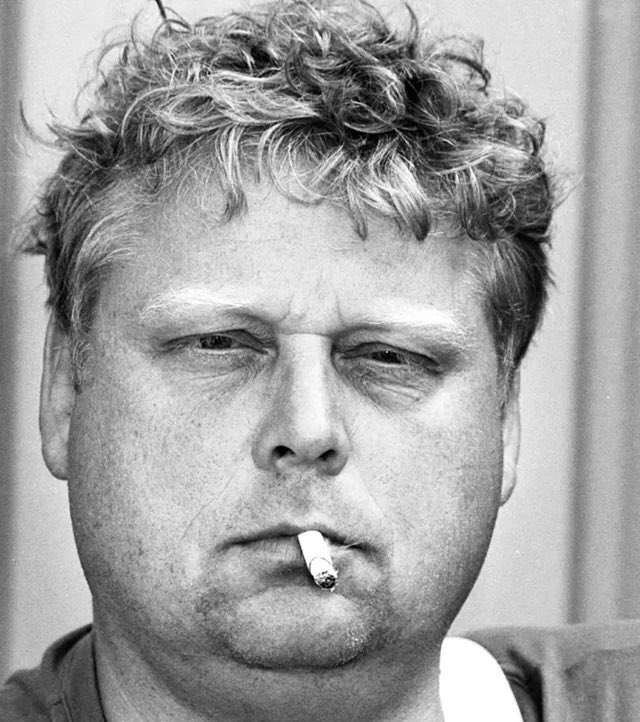
This photo of Theo van Gogh, taken in 2004, was captured the same year he was murdered. A great-grandson of Vincent van Gogh’s brother, Theo, he was killed on November 2, 2004, by a radical Islamist for his controversial film Submission, which criticized the treatment of women in Islam.
3
27
2,845
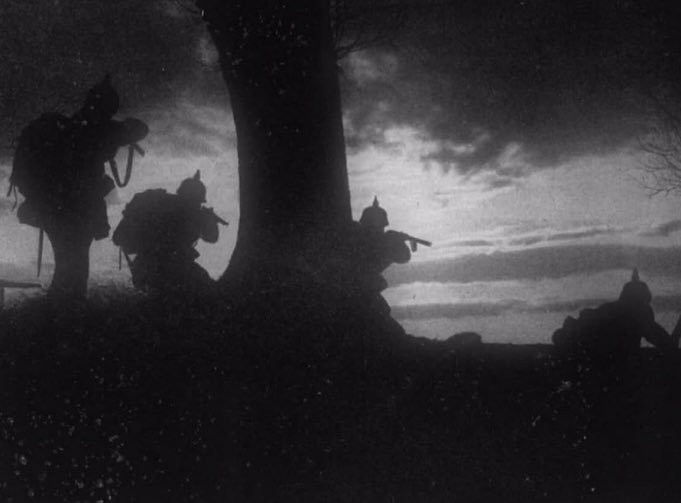
German infantry soldiers engaged in combat on the Eastern Front during World War I, 1915.
In 1915, German infantry on the Eastern Front took part in large-scale mobile campaigns that helped force a major Russian withdrawal. During the Gorlice–Tarnów Offensive, troops advanced quickly behind concentrated artillery bombardments that broke through Russian defenses. Operating across harsh terrain—from frozen winter ground to muddy spring fields—soldiers depended on discipline and coordination to sustain their advance.
At this point in the war, many infantrymen still wore the traditional leather Pickelhaube helmet as they carried out sweeping operations across vast stretches of territory. Their advances drove Russian forces back hundreds of kilometers, marking one of the most significant shifts on the Eastern Front during World War I.
1
6
50
3,865
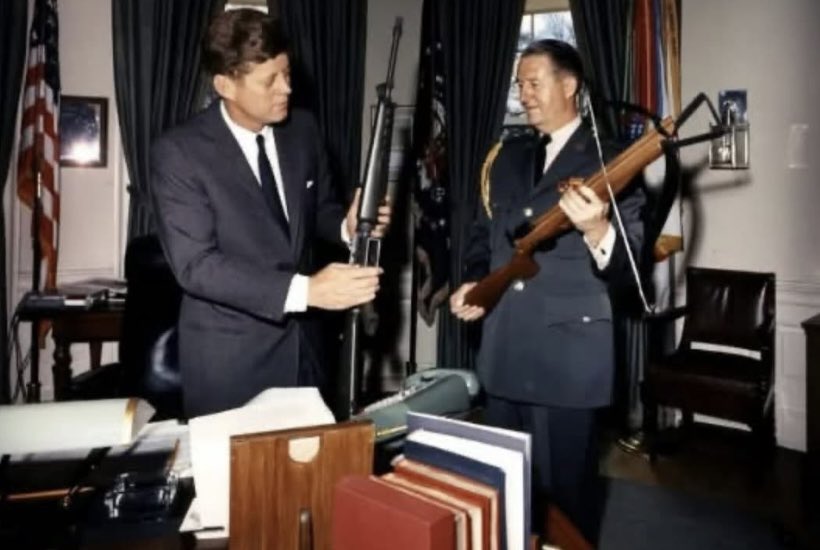
John F. Kennedy and Major General Chester “Ted” Clifton in the Oval Office in April 1963, reviewing an early Colt AR-15 alongside a CIA-developed crossbow.
At the height of the Cold War in April 1963, John F. Kennedy is shown examining an early Colt AR-15 in the Oval Office, a lightweight rifle that had only recently begun to draw attention within U.S. military circles. Based on the ArmaLite design of the late 1950s, it represented a major departure from the heavier battle rifles of earlier generations, and within a few years its lineage would evolve into the M16 widely used in the Vietnam War.
Standing alongside Kennedy is Major General Chester V. “Ted” Clifton, one of his closest military advisers and his liaison for coordinating defense matters directly with the White House. A veteran of both World War II and the Korean War, Clifton remained a steady presence during some of the most high-pressure moments of the Cold War, including the Cuban Missile Crisis.
The period was also marked by strong interest in unconventional warfare and covert technology, often associated with CIA and special operations development. During Kennedy’s presidency, U.S. intelligence and defense agencies expanded special forces capabilities, and Kennedy himself played a key role in strengthening the Green Berets, even approving their now-iconic green beret as the official symbol of Army Special Forces.
1
2
38
3,829
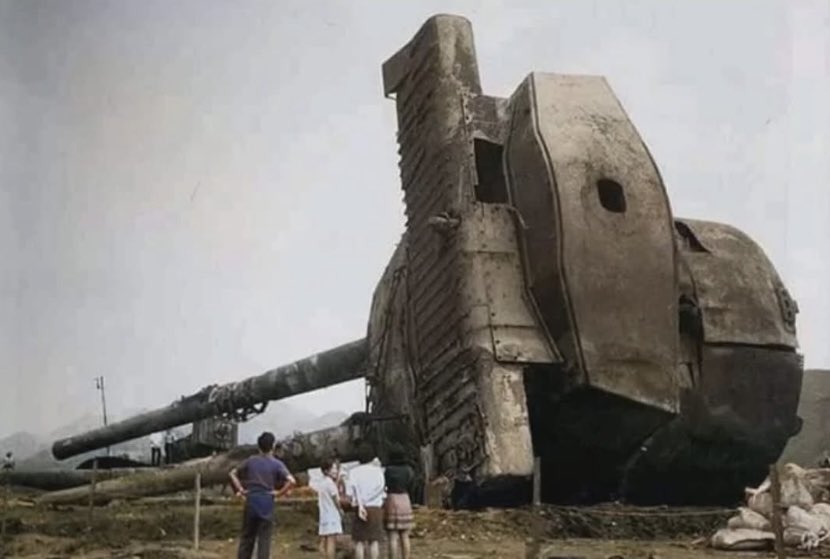
People examine the turret recovered from the wreck of the Japanese battleship Japanese battleship Mutsu in 1970.
Japanese battleship Mutsu was once among the most formidable warships afloat, symbolizing Japan’s naval power in the early 20th century. Commissioned in 1921, she was one of only two Nagato-class battleship ever constructed and was armed with eight 16-inch guns capable of launching shells weighing over a ton each.
During World War II, Mutsu served with the Imperial Japanese Navy’s main battle fleet, though fuel shortages and shifting strategy meant she spent much of the war anchored rather than in active combat. In June 1943, catastrophe struck while she was moored near Hiroshima, when a sudden explosion ignited one of her aft magazines and ripped the ship apart, killing over 1,100 crew members.
The sinking was initially concealed by the Japanese government to preserve wartime morale. Much of the wreck remained underwater for decades until salvage efforts in the late 1960s recovered major components, including the massive turret seen in later exhibitions. Visitors were often stunned by its scale—each gun barrel measured over 60 feet long and outweighed many modern armored vehicles.
Some recovered metal from Mutsu was later incorporated into memorials and museum displays across Japan, while other portions were reportedly melted down and repurposed for industrial use after the war.
5
77
737
43,929
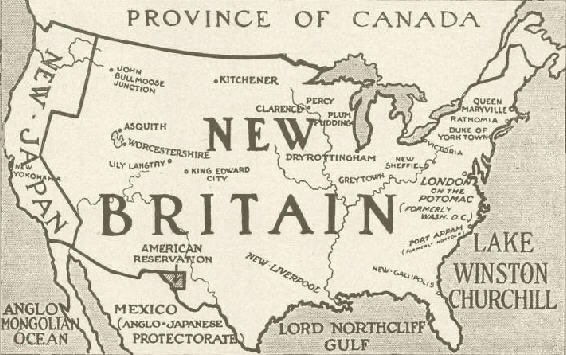
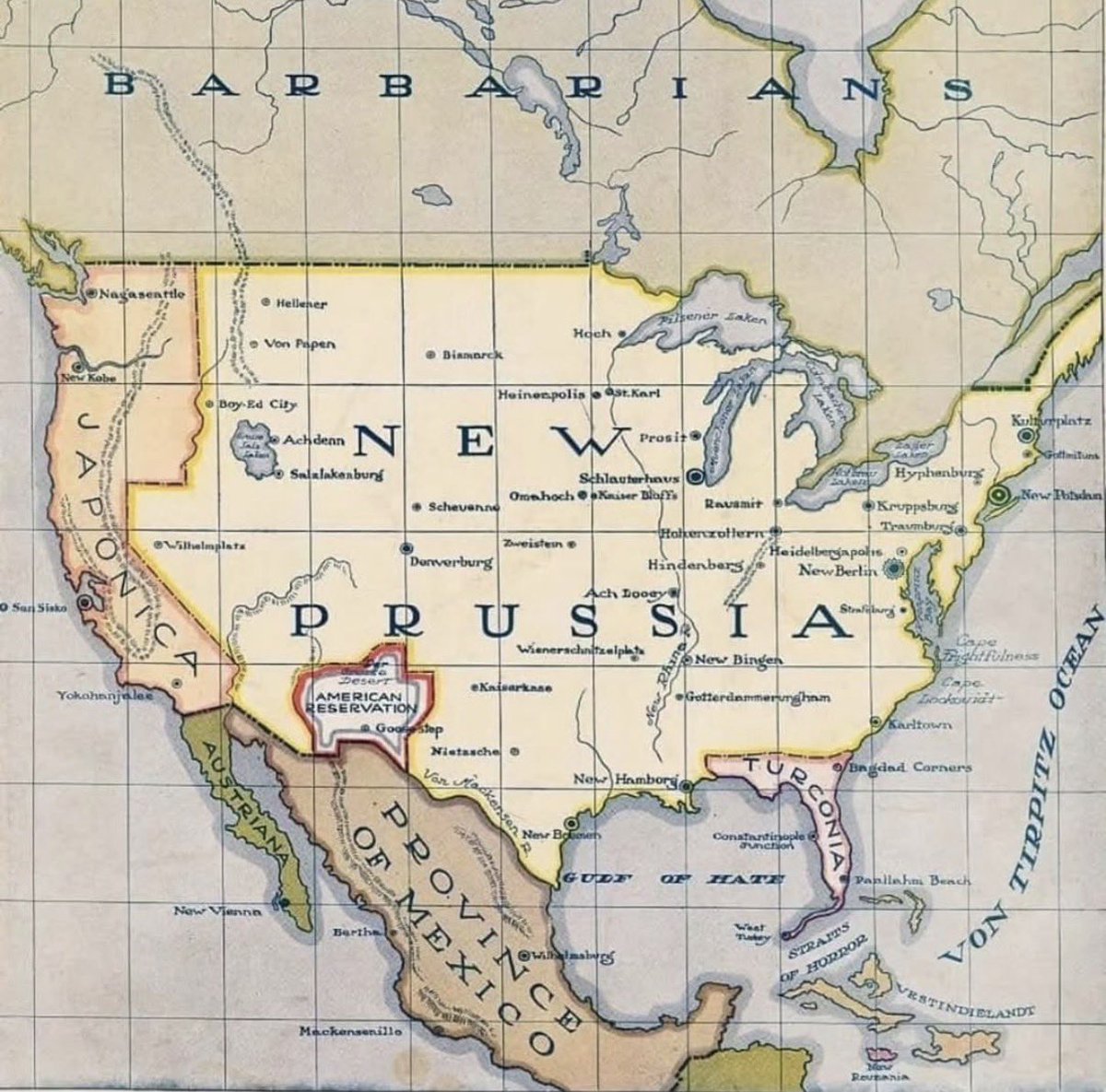
A 1916 propaganda map produced by the Allied powers during World War I, depicting a fictional future in which the United States is divided and controlled after a victory by the Central Powers.
During World War I, the Central Powers were led primarily by the German Empire and Austria-Hungary. Their military was often referred to as the “Prussian Army,” and German soldiers were commonly called “Prussians,” referencing the powerful Kingdom of Prussia. Before 1870, Germany was not a unified country but a collection of independent kingdoms and states. Under Wilhelm I and his chancellor Otto von Bismarck, Prussia led the movement that unified the German states into a single empire.
The map includes several strange and humorous details. The Great Lakes are renamed after German beers, while American cities receive German-inspired names, such as Boston becoming “Kulturplatz” and Austin being renamed “Nietzsche.” Near the “Province of Mexico,” the map even shows an “American Reservation” with a capital called “Goose-Step.” One amusing detail is that Bismarck, North Dakota, is left completely unchanged.
Perhaps the most puzzling feature of the map is that California and the Pacific Northwest are labeled “Japonica.” This is unusual because Japan was actually allied with Britain, France, Russia, and Italy during the war, rather than with the Central Powers.
4
4
55
6,138
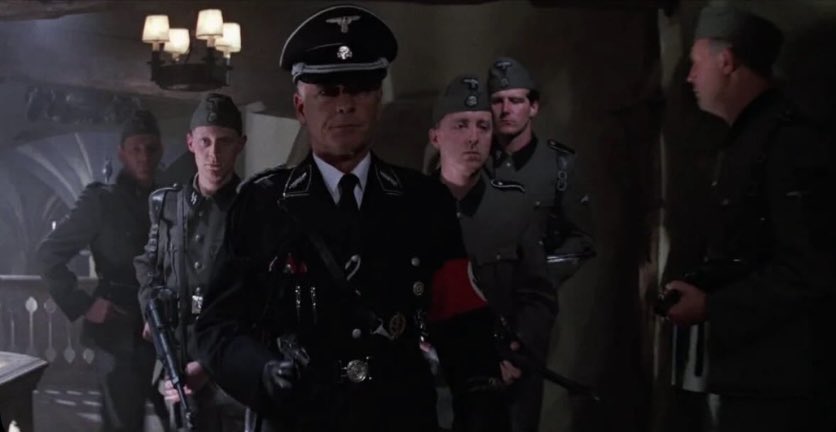
In Indiana Jones and the Last Crusade (1989), the Nazi uniforms seen on screen were not replica costumes but authentic World War II-era military outfits. Co-costume designer Joanna Johnston reportedly discovered the original uniforms in Eastern Europe and incorporated them into the film’s production.
8
63
746
42,714