
WebFX is your digital marketing growth partner in the AI era, ready to level up your business with cutting-edge strategies.
Joined April 2008
- Tweets 10,669
- Following 1,123
- Followers 5,353
- Likes 2,846
1,501 Photos and videos











Your brand's trust signals — third-party reviews, in-depth case studies, industry certifications, author bios — are even more valuable to your marketing than you may think.
They go further than helping your audience decide who to contact or buy from. Search engines and AI look for those same things when deciding how to respond to user inputs.
Trust signals have always influenced whether a prospect stays on your site or bounces. They are the details that tell a buyer your business is legitimate and experienced. They don't always make it onto the SEO checklist, though.
AI search has made the push for credibility even harder to ignore. The same signals that build credibility with people now factor into whether AI platforms cite your business when someone asks a relevant question.
A perfectly structured page with strong technical SEO but no visible trust signals gives AI tools, search engines, and buyers very little reason to choose you over a competitor.
A lot of the conversation around search and AI optimization focuses on content structure, schema markup, and keywords. Those things matter, but they're only part of the whole picture.
Watch the video for our take on authenticity in this new era of SEO, and then head to the blog for eight more ways to adapt your SEO strategy to the current landscape.
buff.ly/wHskZzR
2
47
Any agency can say they do GEO. Proving it is another thing entirely.
Get our full GEO outsourcing guide on our website!
buff.ly/xKt2igK
2
40
Google recently announced Universal Cart, an AI-powered shopping cart that lets users save, compare, and move toward checkout across Search, Gemini, YouTube, and Gmail without ever visiting your website.
That last part ("without ever visiting your website") is the one worth paying attention to.
Zero-click commerce isn't a future scenario anymore. It's where Google is actively heading.
Universal Cart can track price drops, notify shoppers when items are back in stock, connect to Google Wallet, and more — all before a buyer clicks through to your product page.
Learn more on our website!
buff.ly/HwJ2ucX
3
1
56
Google's Preferred Sources feature is one of the quieter updates to come out of search lately, but it has a real connection to click-through rates inside AI Overviews. Jess explains more in this video. 🎥
How do you encourage your audience to choose your brand as a Preferred Source? Start by creating a link they can use.
The link to the Preferred Sources page is actually pretty easy to set up. As an example, here's what it would look like if we created a link for you to add us as one of your preferred sources. 😉
google.com/preferences/sourc…
If you want your audience to add your website, just replace our domain with your own at the end of the URL, and share it in your marketing — on your website, on social media, etc. It's that simple!
Google even provides button assets you can drop onto your site.
The businesses that will benefit from this are the ones already publishing consistently and earning enough trust that their audience wants to opt in. There's no shortcut there.
If you're already doing the work, this is a quick way to make it count inside AI search features.
p.s. Don't forget to add WebFX as a Preferred Source! See above for the link!
9
116
Your rankings are up. Your traffic is down.
That's not a bug — nearly 60% of Google searches now end without a click, and AI Mode produces zero clicks 93% of the time.
2026 search market share, explained: buff.ly/ygBzaTY
1
1
82
The most expensive sentence in business right now?
"My customers aren't using AI."
We've heard variations of this phrase over the last few decades.
In the early days of search, we heard, "My customers aren't using Google."
As smartphones were starting to take off, it was, "People don't visit my website from their phones."
But now, Google dominates the search landscape, mobile-friendly websites are essential, and AI serves as an important touchpoint in many customer journeys.
Even if your customers aren't seeking out AI chatbots, they're likely interacting with the AI tools built into the platforms they know and love.
AI Overviews in Google's search engine are a great example of this. They show up in more than a quarter of all searches. That's an estimated 4.1 billion AI Overviews each day.
The businesses that ignored search in 2005 and mobile in 2012 spent years playing catch-up.
The window on AI is still open, though not indefinitely.
2
59
Google Analytics now has a dedicated AI Assistant channel for traffic from ChatGPT, Gemini, and Claude.
No custom setup required — it just appears in your acquisition reports.
The real question is what to do with the data once it's there. We built an AI Traffic Quality Ladder to help with that.
More details on our blog!
buff.ly/Q2R2nkZ
2
2
1
87
How do you get better results from your AI inputs? Ask what the LLM needs to get the job done.
Here's what Sam D., one of our team's AI aficionados, has to say.
"Sometimes [AI] might need a specific website, or if you're debugging some code problems, it could be a specific error message. Getting that information into the AI that you might not have given it in the first place can help it debug that issue further and go down a better path, which helps you solve your problems faster."
8
1
1
81
Marketing has always had a lot of acronyms. SEO, PPC, ROI, ROAS, CRM…it can be a lot. And now, with AI thrown into the mix, we’re getting even more acronyms, with one of the most prominent ones being GEO (which stands for generative engine optimization).
“Wait, GEO?” you might be asking. “So, it’s just SEO with a different first letter?” Well, no. GEO is definitely related to SEO, and you need both to have a successful visibility strategy, but they’re not the same thing.
To put it simply, SEO focuses on optimizing your content for traditional search rankings, while GEO focuses on optimizing for AI-generated responses. So, the intent is the same — increasing online visibility in search — but the channels are different, which means the methods generally are, too.
As you likely know, common tactics for improving SEO include:
🔎 Targeting long-tail keywords
🔎 Earning third-party backlinks
🔎 Improving speed
🔎 Optimizing for mobile
GEO, on the other hand, uses techniques such as:
🤖 Providing direct answers to prompts
🤖 Integrating hard data and examples
🤖 Creating dedicated FAQ sections
🤖 Building out brand and entity signals
So, SEO and GEO are often considered separate strategies. BUT that’s not to say they’re entirely disconnected.
Actually, one study showed that more than half of AI Overview citations come from pages that also rank in traditional search results. That means optimizing for SEO also helps you optimize for GEO. Meanwhile, GEO-specific tactics serve as an important new layer in your strategy that helps accelerate visibility in AI features and tools.
At the end of the day, by far the best plan is to prioritize both SEO and GEO in your marketing strategy, optimizing for search visibility across the board.
Learn more on our website! buff.ly/PJa9xWa
4
60
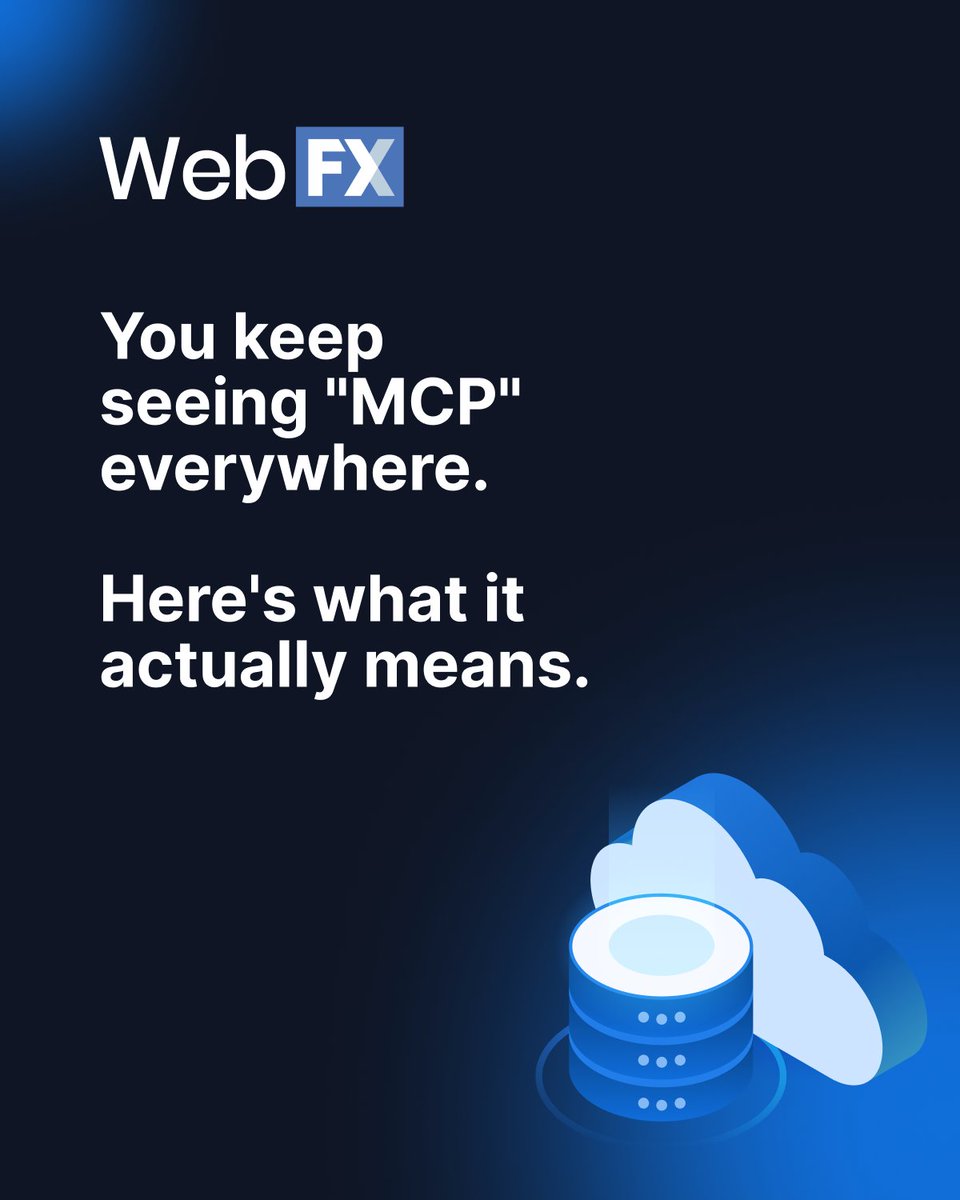
MCP.
If you've seen this acronym floating around your feed lately and thought "I should probably know what that is," you're not alone.
Let's break it down.
✨ MCP stands for Model Context Protocol. It's an open standard created by Anthropic (the company behind Claude) that gives your AI tools a common language to speak with the rest of your tech stack.
Here's the problem it solves.
Right now, many AI tools operate in a silo. Your AI assistant can chat with you out of the box, but it can't pull a report from your CRM, check your ad performance, or look at your analytics unless someone builds a custom connection for each one. And every new tool means another custom integration.
That's complex. 😵
MCP simplifies that by creating one standard way for AI tools to connect to your company's tech stack. Instead of building a unique integration for every combination of AI tool and data source, you have one connection that works across the board.
Think of it like hiring a translator who speaks every language in the room. Instead of needing a separate translator for every conversation, one person handles it all. That's basically what MCP does for AI.
So what does this look like in practice?
Say you're a marketer (which you probably are if you're reading this post 😉).
With MCP, your AI assistant could pull your latest campaign data from Google Ads, cross-reference it with lead data in a CRM, and draft a performance summary, all without you toggling between five different tabs.
MCP adoption has been fast, too. OpenAI, Google, and Microsoft have all gotten behind MCP, and major CRM players like Salesforce and Nutshell are building with it.
📣 The big question: Why should you care right now?
Because the companies that (safely and securely) connect their AI tools to their actual business data are going to move a lot faster than the ones still copy-pasting between platforms.
You don't need to become an MCP expert overnight. But understanding what it is and where it's headed puts you ahead.
ALT You keep seeing "MCP" everywhere. Here's what it actually means.
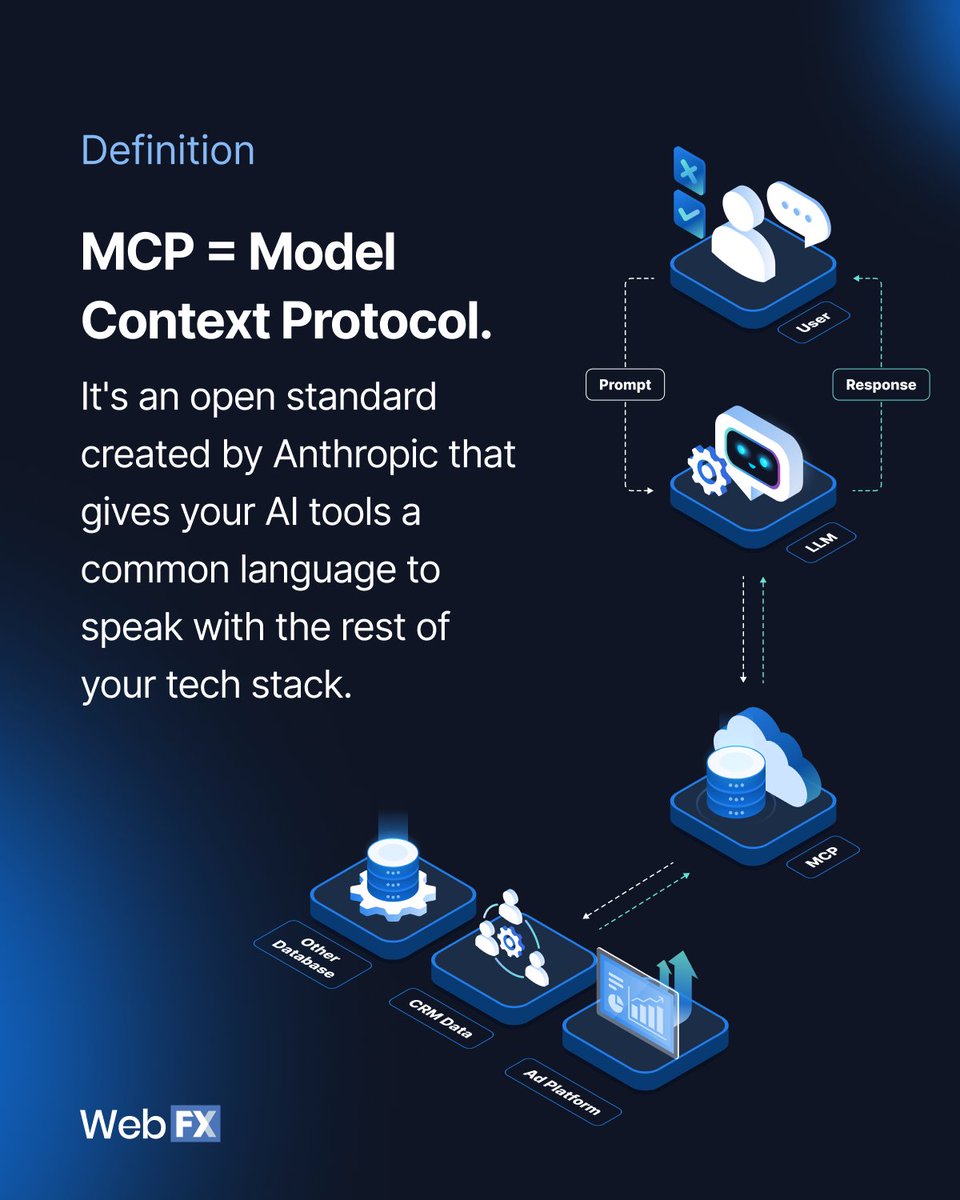
ALT MCP = Model Context Protocol. It's an open standard created by Anthropic that gives your AI tools a common language to speak with the rest of your tech stack.
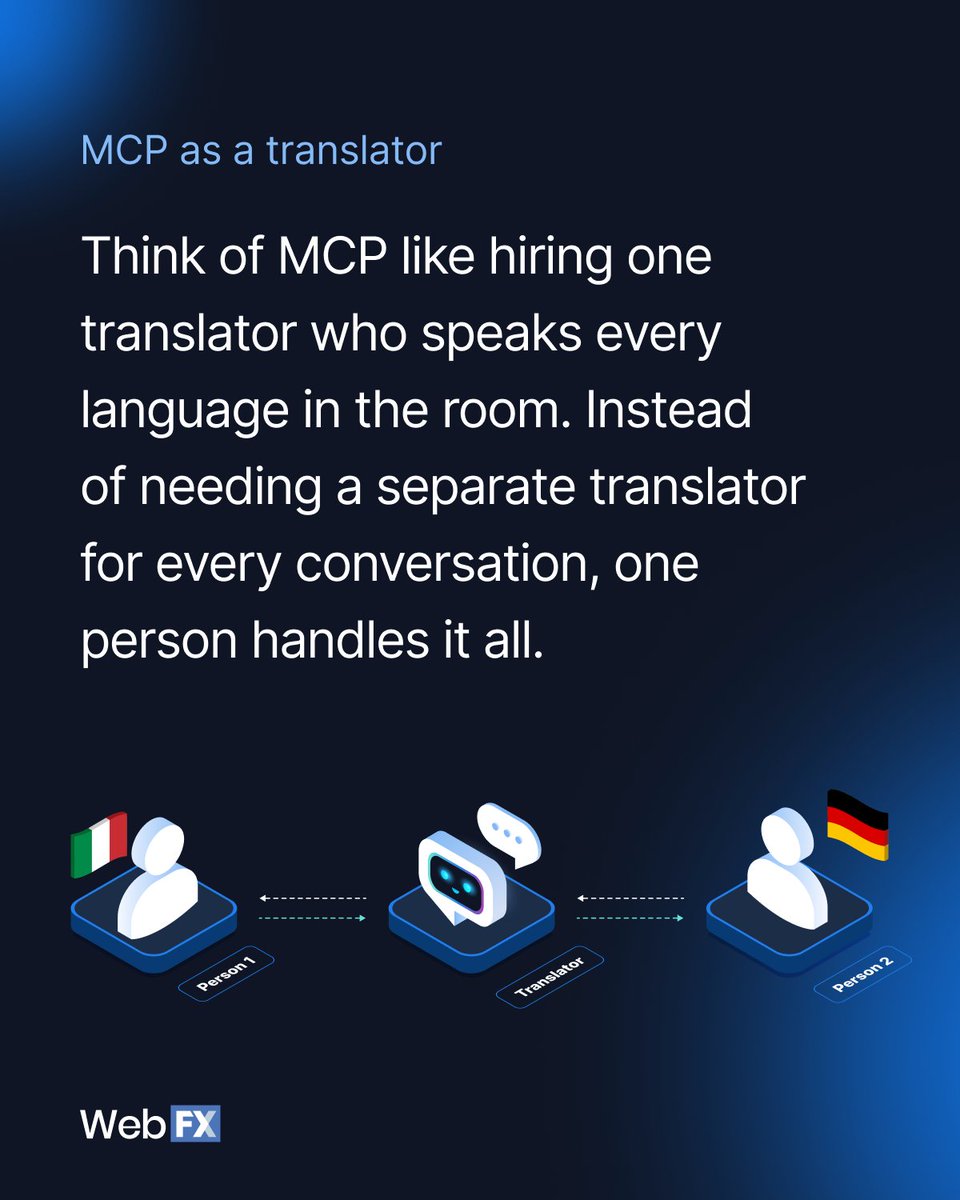
ALT Think of MCP like hiring one translator who speaks every language in the room. Instead of needing a separate translator for every conversation, one person handles it all.
ALT MCPs are becoming the standard. You don't need to become an MCP expert overnight. But understanding what it is and where it's headed gives you a head start.
5
108
The wait is over — ChatGPT has officially launched its self-serve ad portal, meaning businesses can now have ads appear in front of the leading AI tool's audience.
ChatGPT Ads Manager is currently available to U.S.-based businesses, as well as OpenAI partners. Ads will appear in front of Free and Go tier users in the U.S., Canada, Australia, and New Zealand.
If your company wants to start advertising with ChatGPT, you'll have to go through the sign-up process, which includes a verification of your business.
The verification process may take time, especially with current demand levels. But once you're in, you can start creating campaigns.
Get all of the details on this new launch and more on our website!
buff.ly/T7n1v7G
1
83
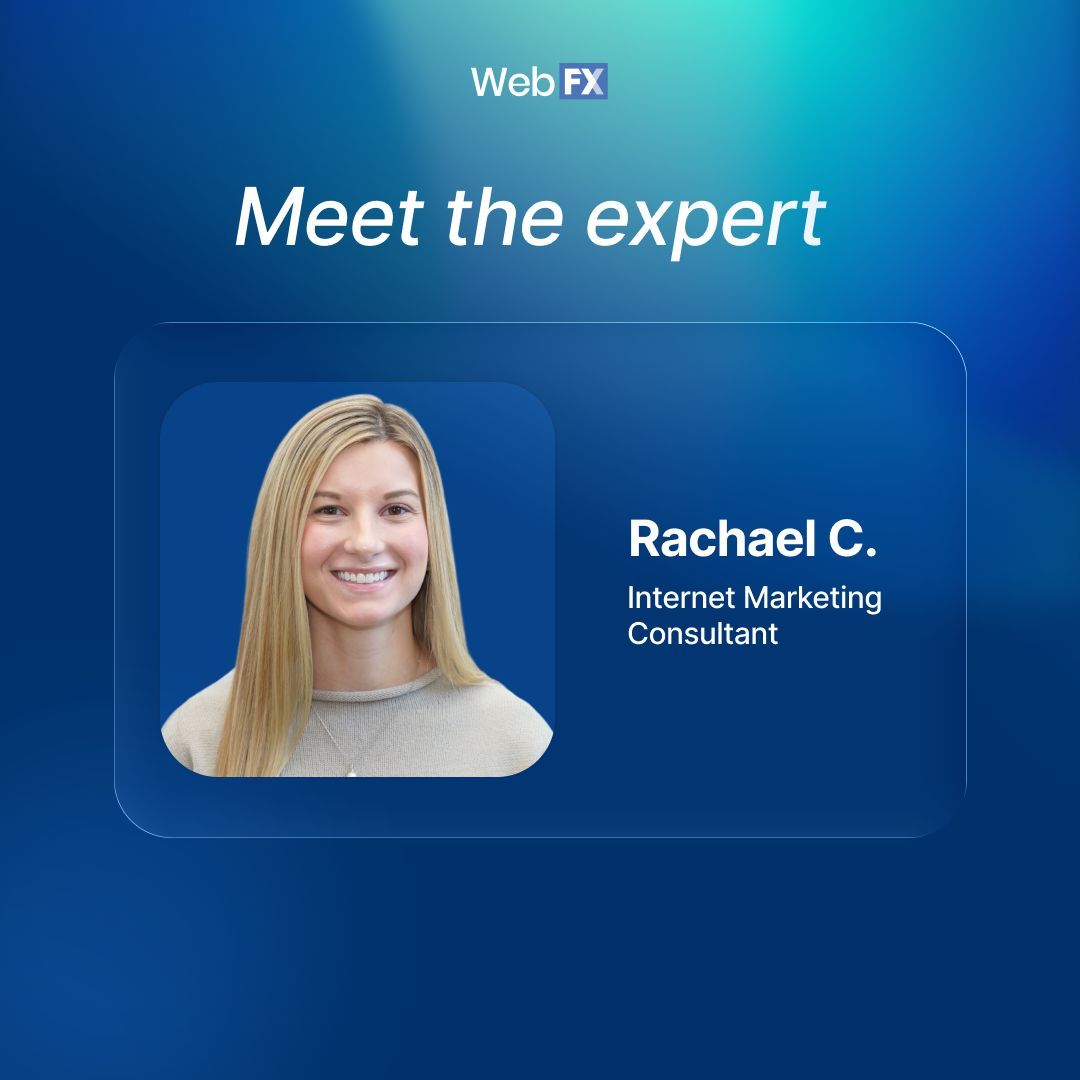
Meet Rachael — Susquehanna University grad, communication all-star, and expert digital marketer.
In her role, Rachael serves as the main point of contact for her clients and their digital marketing strategies, ensuring that they see growth from their WebFX partnership.
Whether managing SEO, AI SEO, or PPC campaigns, she loves diving into all things marketing.
What does Rachael love most about her role?
🗣️ "The opportunity to work with and create meaningful business impact for clients in diverse industries located across the country."
Get to know more about Rachael right here. 👇

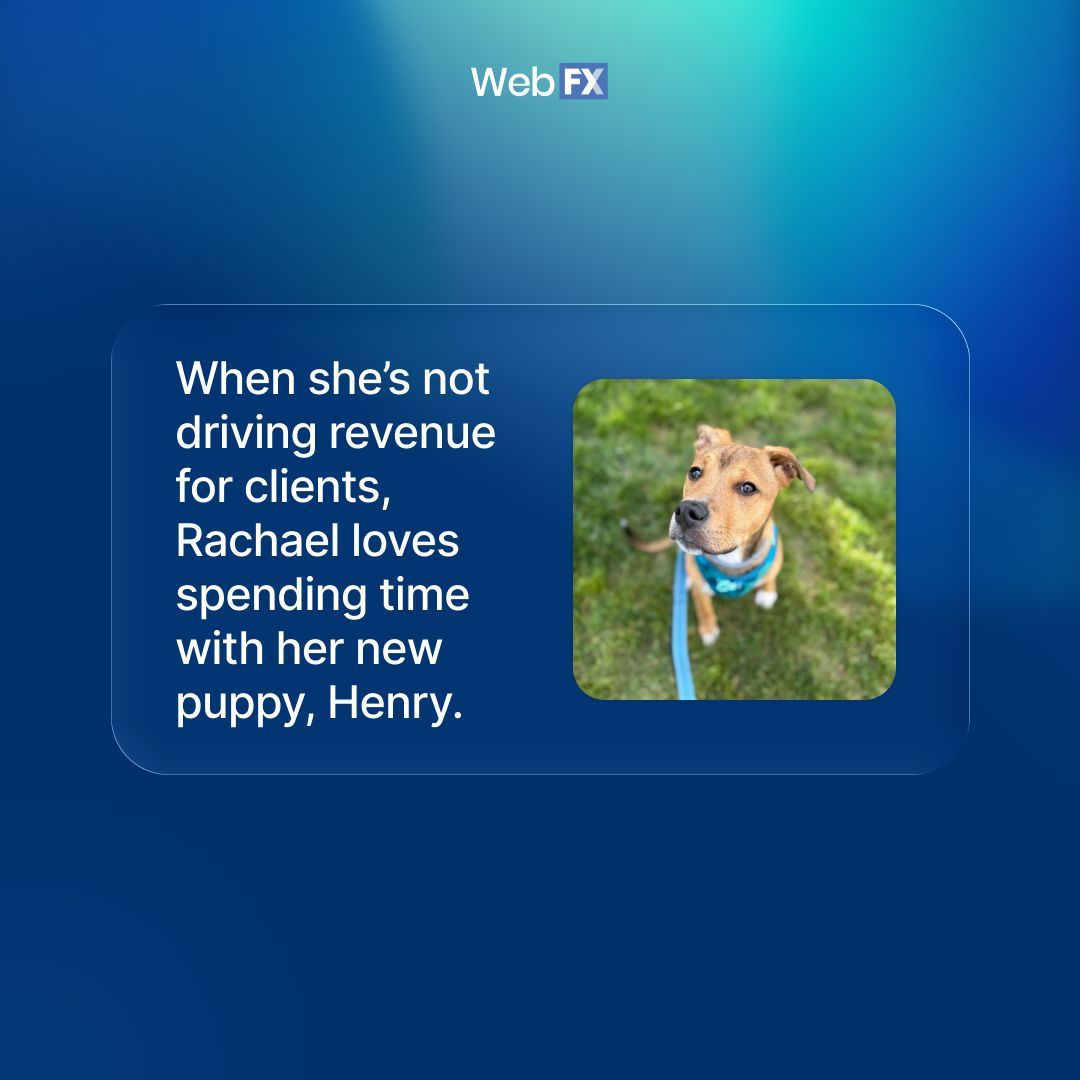
2
814
What if the reason your brand isn't showing up in AI-generated answers has nothing to do with your content quality, and everything to do with how it's structured behind the scenes?
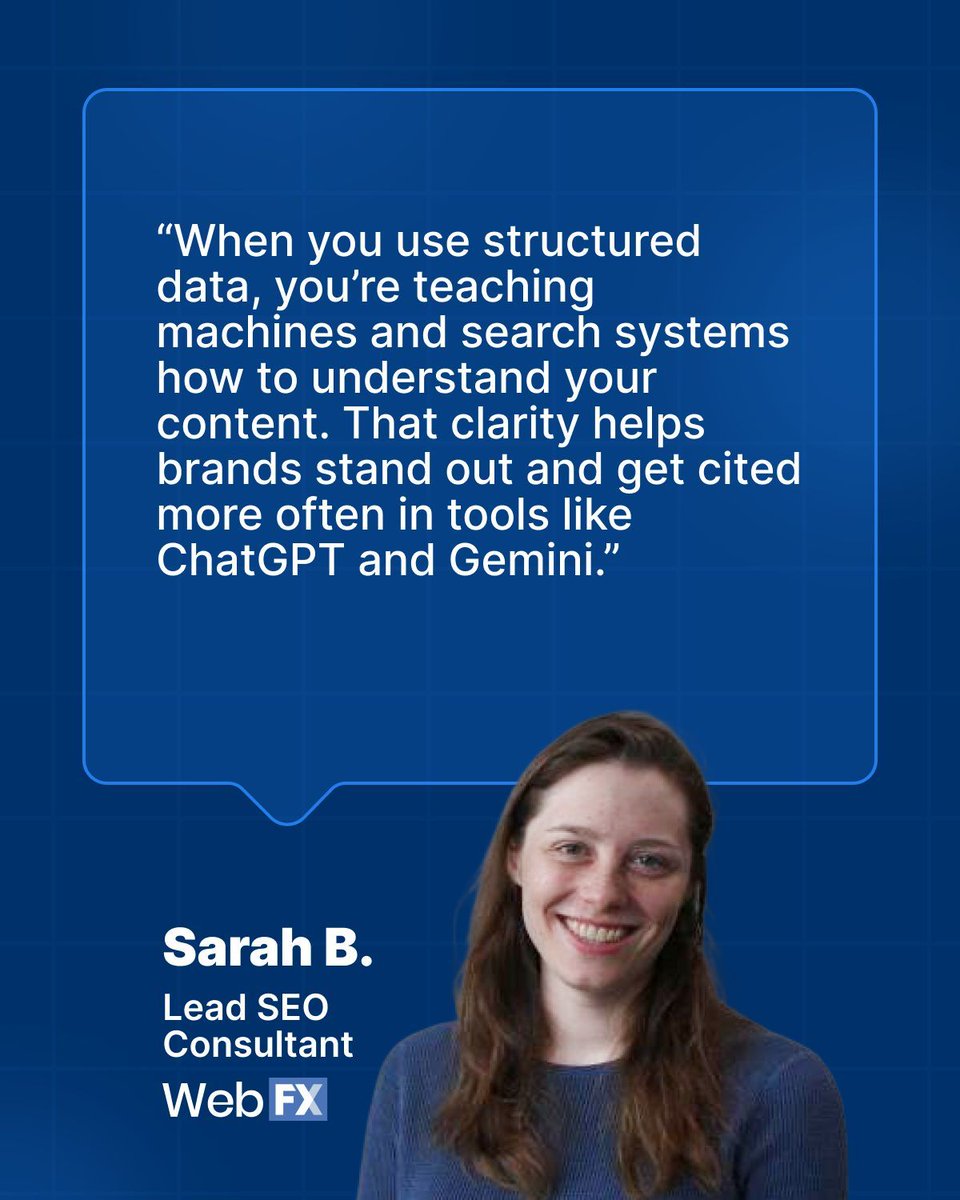
AI models need to interpret your content before they can cite it. That's where structured data comes in. Schema markup helps AI systems understand what your content is about and who's behind it, putting it in a format machines can actually work with.
When that's done well, your brand doesn't just show up in a list of results. It becomes part of the answer. That means more visibility, more trust, and more qualified traffic from AI-powered search.
There are several schema types that can improve your AI visibility. Article and BlogPosting help establish authorship credibility. FAQ and HowTo surface step-by-step answers. Product and Review show up in shopping queries. Organization strengthens brand accuracy. And Person helps AI cite your experts.
The key is making sure your schema is accurate, consistent, and matched to the intent of each page. Structured data is only going to become more important as AI continues to power discovery, and the brands that treat it as a visibility strategy now will have the edge.
buff.ly/3D6KXaZ
50
AI doesn't read your website the way a person does. To AI, every word, every page, and every mention of your brand across the web is a datapoint it processes mathematically.
Why that matters: AI is increasingly deciding which brands get surfaced in search. It draws on the full picture it's built of you across every source it can find.
If that picture is clear, you get recommended. If not, you get overlooked.
More on how to optimize your brand for AI on our blog.
buff.ly/Bu4u3FK
51
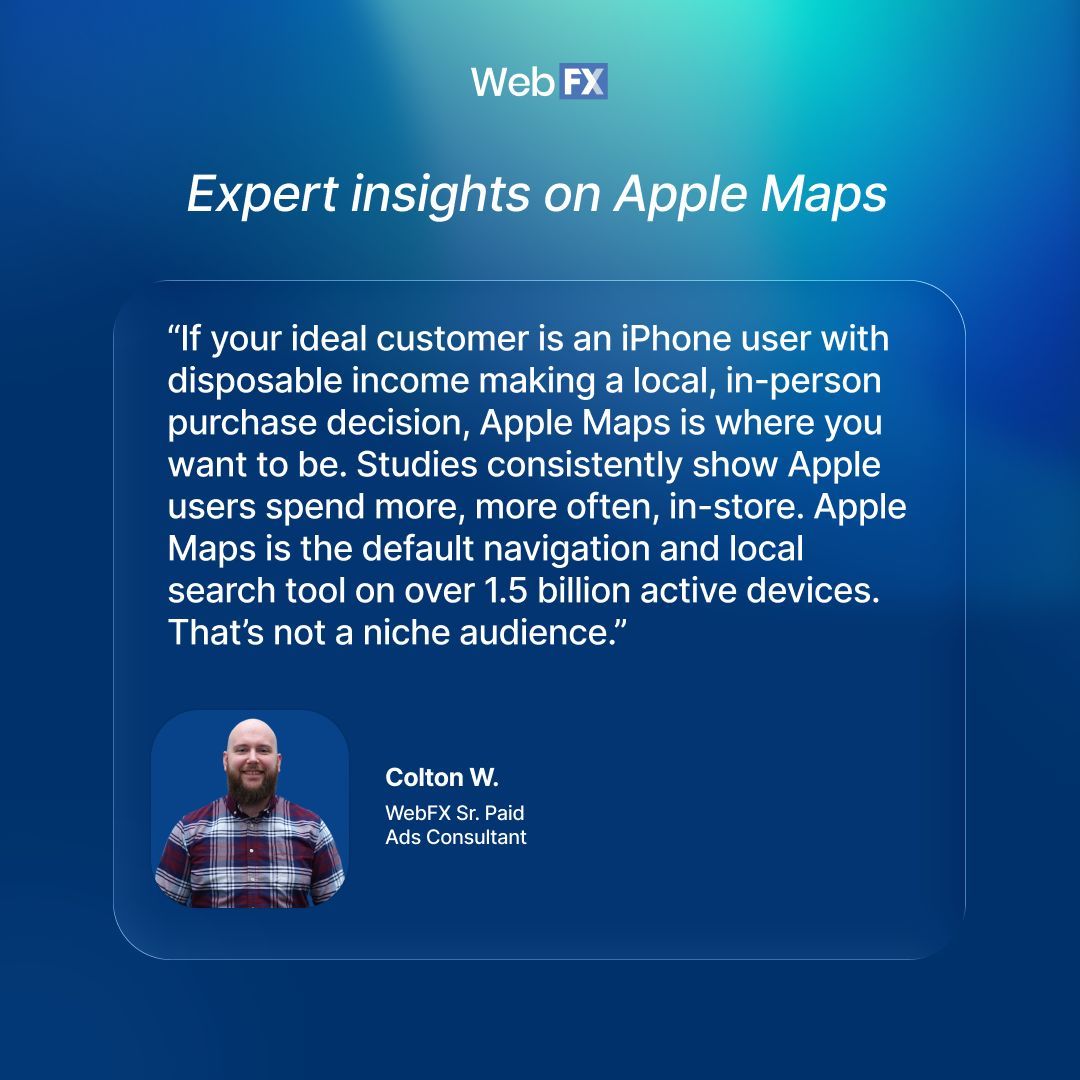
Apple Maps may look a bit different starting this summer. 🍎
Apple is planning to introduce sponsored placements within Apple Maps, starting in the U.S. and Canada. Businesses will be able to show up as promoted results when people search for things like home services, hotels, auto repair, or healthcare providers inside the app.
Ads will likely appear in two places: in the search results and within a "Suggested Places" feature that recommends businesses based on what's trending nearby and a user's recent searches.
So, what should your business do right now?
The biggest step you can take before Maps ads are live is to make sure your company information is complete up to date. Apple Business, a new all-in-one management platform, can help you keep track of your company details and ensure that the people who reach you are getting the right information.
Claim your locations, update your hours and categories, upload photos, and make sure your listing is accurate.
Apple uses this information to power how your business appears across Maps, Siri, and other Apple services.
Beyond that, it's a good time to audit local SEO fundamentals like NAP consistency, local citations, reviews, and location schema.
We broke down everything we know so far on our website. buff.ly/Uj8Fxs9
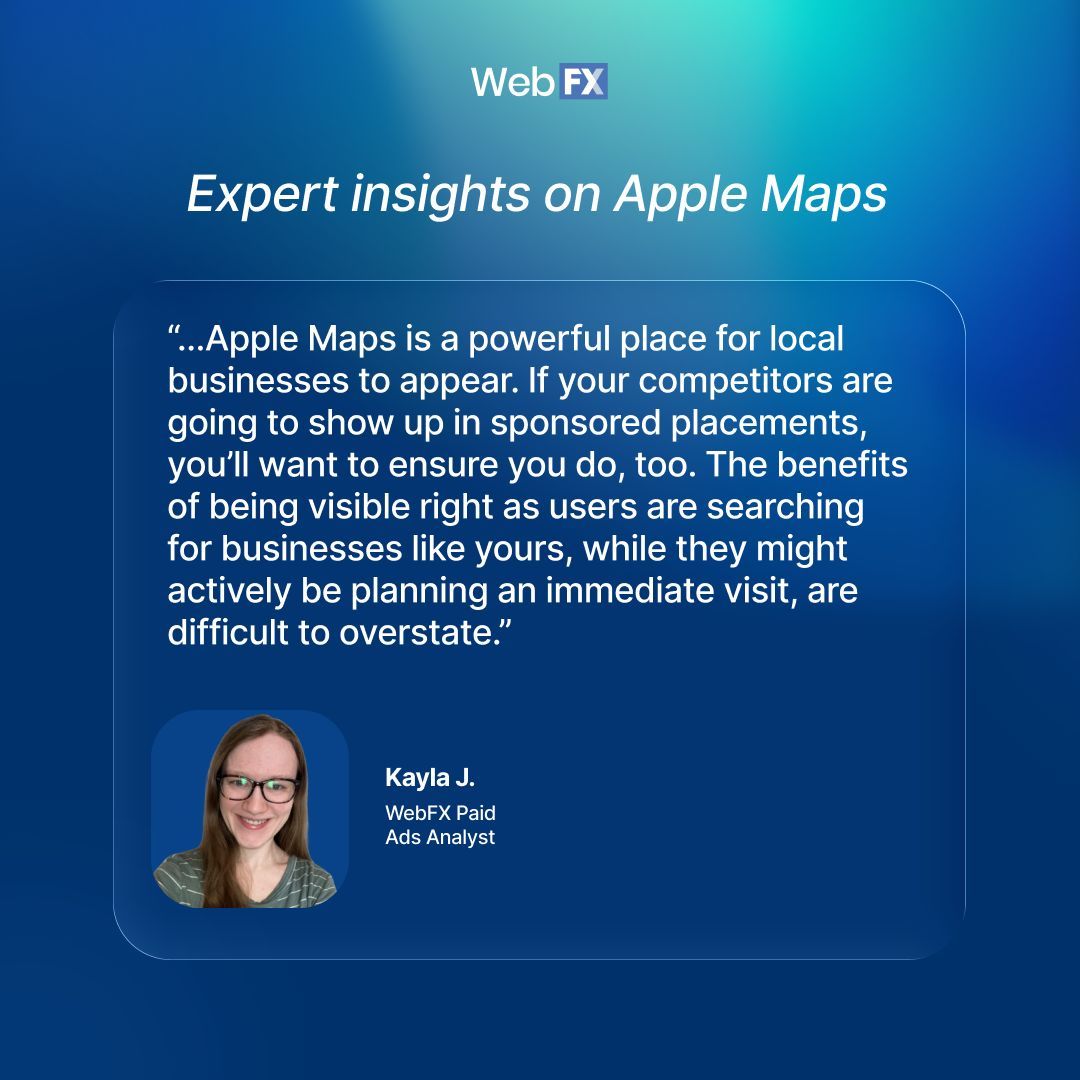
1
1
95
"Which of these channels is actually making us money?"
If your team is drowning in data but still can't confidently answer that question, marketing mix modeling (MMM) might be the missing piece.
MMM gives you the big-picture view of your marketing performance, using historical data to understand how every channel — plus external factors like seasonality — works together to impact your bottom line over time.
Learn more about MMM on our blog! buff.ly/5lvu0FQ
1
48
Revenue is the north star for our clients' strategies. Whether we're crafting a GEO plan, managing social media ads, or updating your local presence, we put your revenue growth at the heart of what we do.
Want to learn more about how our team can positively impact your bottom line? Get in touch with us!
buff.ly/tRpK50Z
1
1
82
Hey you.
Yeah, you.
Would you like to level up your digital marketing knowledge?
We know of a ✨ really cool ✨ newsletter that's powered by a team of digital marketing pros.
Subscribe to Revenue Weekly for digital marketing expertise delivered right to your inbox.
buff.ly/pYf1SUg
Pass it on!
3
49