Top 99% trader on @polymarket // verified on @zscdao
Joined May 2021
- Tweets 15,225
- Following 2,867
- Followers 29,979
- Likes 44,292
644 Photos and videos











Polymarket Faces Korean Compliance Crossroads
A quick take based on recent coverage of Polymarket's regulatory situation in Korea. ( @bloomingbit_io )
🔗 en.bloomingbit.io/feed/news/…
The Korea Communications Standards Commission (KCSC) has launched a formal review of Polymarket to determine whether it violates domestic gambling laws.
Polymarket is currently accessible in Korea without restrictions and offers Korean-language services. The key issue is the "ARUSFTI": overseas virtual asset service providers offering Korean-language services and targeting Korean users must register with the Financial Intelligence Unit (FIU).
Polymarket already meets these conditions.
The 2021 Binance case is a useful precedent. Rather than comply with FIU registration requirements, Binance quietly dropped its Korean-language service and blocked KRW deposits - effectively exiting the market.
Polymarket now faces the same choice: comply and stay, or quietly withdraw. Both its decision and the Korean government's response will be worth watching.
cc @Polymarket @PolymarketTrade @zscdao
1
1
4
288
willy Lee retweeted

Mar 12
Excited to announce our partnership with @PalantirTech and TWG AI to build the next generation sports integrity platform.
Some color on why this is significant:
Today, in the state-by-state regulatory framework, leagues have limited visibility into what's happening in their markets, fragmented tooling, and have to choreograph their compliance desires across dozens of state regulators with no unified standard. Additionally, the technology being used is rudimentary compared to what's actually possible.
The shift to a federal regulatory framework is the chance to innovate around the entrenched, fragmented, and antiquated infrastructure and build this the way it should have been built.
Palantir's anomaly detection and data integration is second to none. TWG AI brings deep financial infrastructure and sports expertise, and is owned by TWG, which has ownership stakes in the Lakers, Dodgers, Chelsea, and more. These are the right partners to build something that actually holds up and gets adoption - utilizing our collective domain expertise to build a solution specifically suited for the risk profile of sports markets.
If we do this right, our hope is its use will extend beyond sports prediction markets and be valuable to all stakeholders in the sports ecosystem.
For the love of the game.

245
165
1,775
257,873

I’m really happy to see the investment news for @fireplacegg — especially as a beta tester who received user number #002.
As demand for information from prediction markets continues to grow, there will be an increasing need for high-quality terminals.
News of strong builders securing investment helps create long-term sustainability.
Rooting for you guys 👍
My Posting: x.com/willyLee/status/199228…
Feb 18

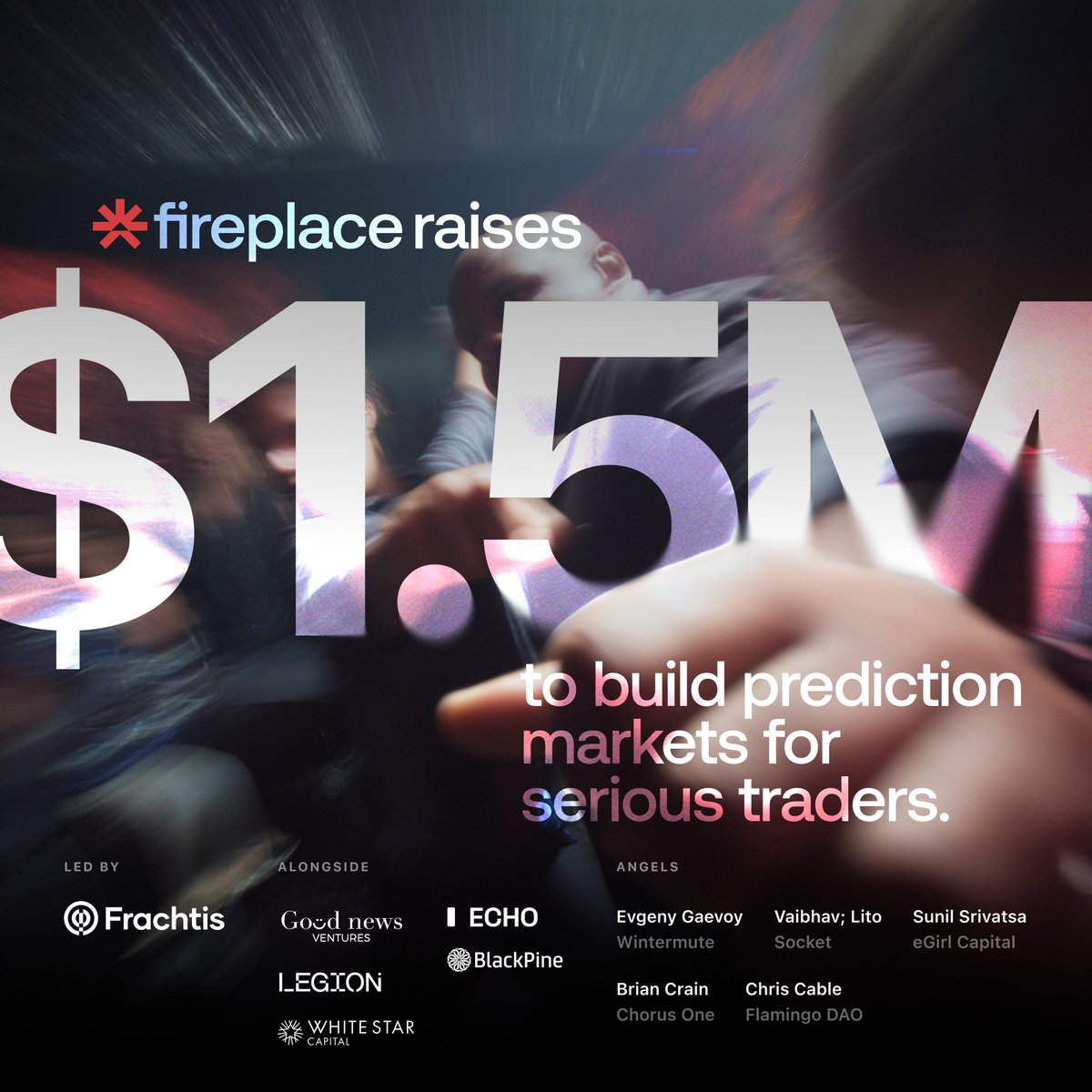
Fireplace is happy to announce that we've raised $1.5M to build the smartest trading terminal for prediction markets. 🧵
1
12
486
willy Lee retweeted

Feb 17
I have some big news to announce…
654
415
2,555
3,849,702
Banger 😂😂😂

1
4
351
"Some of you may remember the DAO, but if not, I recommend this Wired article on the story. Some of those experiments were revisited many years later and ultimately found PMF, like prediction markets."
> Prediction markets were once dismissed as early crypto experiments, but they may ultimately evolve into real-time macro information infrastructure — pricing probability faster than traditional institutions can.
cc @Polymarket @PolymarketTrade
Feb 13

(New Essay) The Machinery of Modern Finance
On why I think the next ten years of financial innovation will surpass the prior fifty.
Give it a read.
brandonkumar.substack.com/p/…

8
397
I tend to think markets form in stages:
> First capital concentrates.
> Then people gather around that capital.
> Then rules emerge to coordinate those people.
> And only after that does culture solidify.
In that sense, what some call “dopamine markets” may simply be markets that are still in their earliest phase.
1. Before we get sophisticated hedging instruments or institutional-grade products, we need participation.
2. Before participation stabilizes, we need liquidity.
3. And before liquidity exists, we need a reason for capital to show up in the first place.
Expecting refinement before formation is backwards.
Speculative energy is often the ignition layer — not the final form. Structure, regulation, and eventually culture tend to follow scale. Markets don’t begin as institutions. They begin as experiments that attract attention — and attention attracts capital.
Over time, what starts as volatility can mature into infrastructure. That’s not moral failure.
That’s how economic ecosystems evolve.
cc @VitalikButerin @Polymarket @Kalshi
Feb 15

It’s easy to criticize “dopamine markets” when you’re sitting on a multi-billion dollar foundation that only has value due to retail speculation.
Platforms like @Polymarket and @Kalshi don’t have the luxury of selling $ETH to fund ideological experiments — they have to build products people actually want.
Speculation bootstraps liquidity. Liquidity enables hedging. You don’t get serious financial infrastructure without first attracting volume.
Capitalism isn’t “corposlop.” It’s market discovery. This is what the average better wants.
Let markets evolve organically. The “useful” stuff like insurance baskets and institutional hedging products will come in with time.
Capitalism innovates faster than socialism in the end 🤝
1
7
361
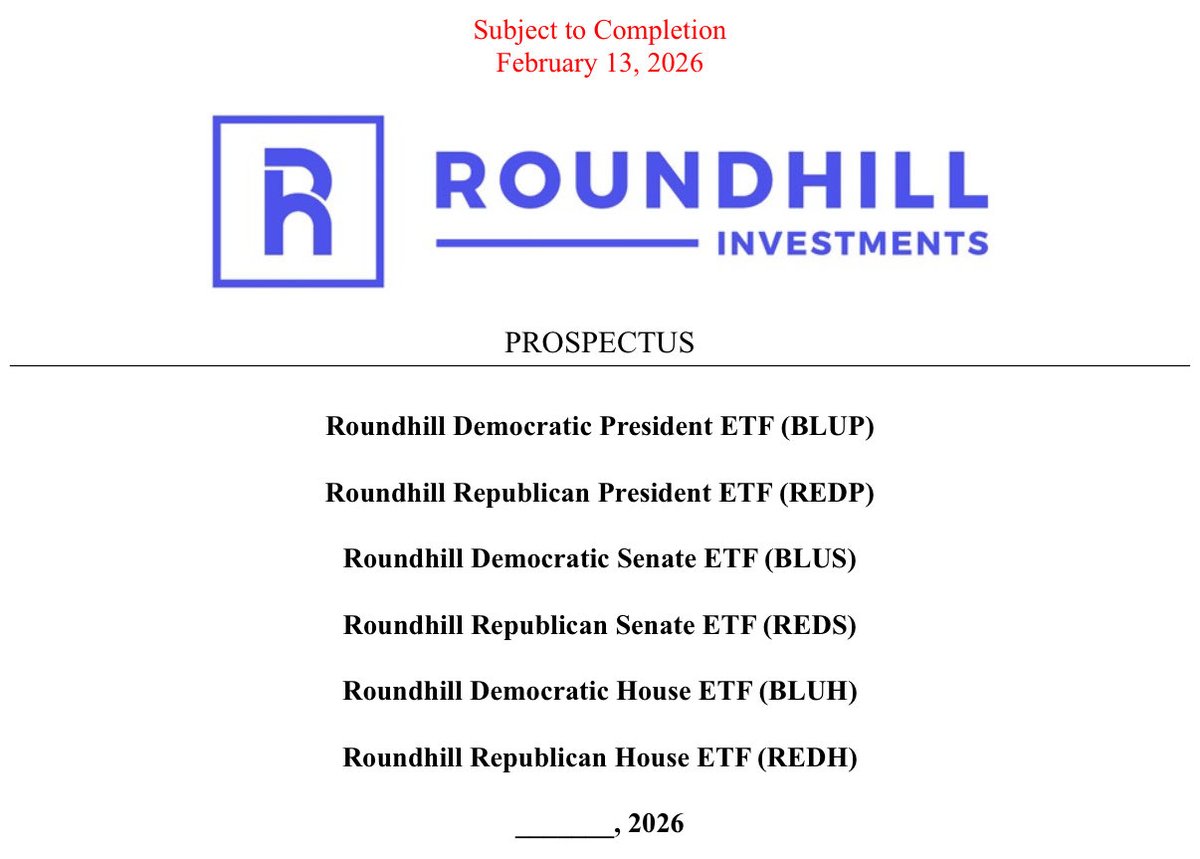
Polymarket ETFs are coming to us.
What can we expect from this?
@Polymarket @PolymarketTrade
Feb 13

Roundhill just filed for a bunch of ETFs that track prediction markets for political elections. Using event contracts. Potentially groundbreaking. If this goes through wow opens up huge door to all kinds of stuff. Ht @Todd_Sohn
1
3
376
Prediction markets are increasingly being viewed as a hedging tool, and this piece seems to offer a thoughtful direction on what that “hedging” could actually mean.
Rather than treating them as simple betting venues, it frames prediction markets as a risk-management instrument — keeping growth assets like equities or ETH for capital appreciation, while securing stability not by holding cash but through prediction-market positions that reflect inflation and one’s own consumption patterns.
I also found it particularly interesting that those positions themselves could be denominated in yield-bearing or appreciating assets rather than idle cash.
Feb 14

Recently I have been starting to worry about the state of prediction markets, in their current form. They have achieved a certain level of success: market volume is high enough to make meaningful bets and have a full-time job as a trader, and they often prove useful as a supplement to other forms of news media. But also, they seem to be over-converging to an unhealthy product market fit: embracing short-term cryptocurrency price bets, sports betting, and other similar things that have dopamine value but not any kind of long-term fulfillment or societal information value. My guess is that teams feel motivated to capitulate to these things because they bring in large revenue during a bear market where people are desperate - an understandable motive, but one that leads to corposlop.
I have been thinking about how we can help get prediction markets out of this rut. My current view is that we should try harder to push them into a totally different use case: hedging, in a very generalized sense (TLDR: we're gonna replace fiat currency)
Prediction markets have two types of actors: (i) "smart traders" who provide information to the market, and earn money, and necessarily (ii) some kind of actor who loses money.
But who would be willing to lose money and keep coming back? There are basically three answers to this question:
1. "Naive traders": people with dumb opinions who bet on totally wrong things
2. "Info buyers": people who set up money-losing automated market makers, to motivate people to trade on markets to help the info buyer learn information they do not know.
3. "Hedgers": people who are -EV in a linear sense, but who use the market as insurance, reducing their risk.
(1) is where we are today. IMO there is nothing fundamentally morally wrong with taking money from people with dumb opinions. But there still is something fundamentally "cursed" about relying on this too much. It gives the platform the incentive to seek out traders with dumb opinions, and create a public brand and community that encourages dumb opinions to get more people to come in. This is the slide to corposlop.
(2) has always been the idealistic hope of people like Robin Hanson. However, info buying has a public goods problem: you pay for the info, but everyone in the world gets it, including those who don't pay. There are limited cases where it makes sense for one org to pay (esp. decision markets), but even there, it seems likely that the market volumes achieved with that strategy will not be too high.
This gets us to (3). Suppose that you have shares in a biotech company. It's public knowledge that the Purple Party is better for biotech than the Yellow Party. So if you buy a prediction market share betting that the Yellow Party will win the next election, on average, you are reducing your risk.
Mathematical example: suppose that if Purple wins, the share price will be a dice roll between [80...120], and if Yellow wins, it's between [60...100]. If you make a size $10 bet that Yellow will win, your earnings become equivalent to a dice roll between [70...110] in both cases. Taking a logarithmic model of utility, this risk reduction is worth $0.58.
Now, let's get to a more fascinating example. What do people who want stablecoins ultimately want? They want price stability. They have some future expenses in mind, and they want a guarantee that will be able to pay those expenses. But if crypto grows on top of USD-backed stablecoins, crypto is ultimately not truly decentralized. Furthermore, different people have different types of expenses. There has been lots of thinking about making an "ideal stablecoin" that is based on some decentralized global price index, but what if the real solution is to go a step further, and get rid of the concept of currency altogether?
Here's the idea. You have price indices on all major categories of goods and services that people buy (treating physical goods/services in different regions as different categories), and prediction markets on each category. Each user (individual or business) has a local LLM that understands that user's expenses, and offers the user a personalized basket of prediction market shares, representing "N days of that user's expected future expenses".
Now, we do not need fiat currency at all! People can hold stocks, ETH, or whatever else to grow wealth, and personalized prediction market shares when they want stability.
Both of these examples require prediction markets denominated in an asset people want to hold, whether interest-bearing fiat, wrapped stocks, or ETH. Non-interest-bearing fiat has too-high opportunity cost, that overwhelms the hedging value. But if we can make it work, it's much more sustainable than the status quo, because both sides of the equation are likely to be long-term happy with the product that they are buying, and very large volumes of sophisticated capital will be willing to participate.
Build the next generation of finance, not corposlop.
5
6
595
willy Lee retweeted

Feb 12
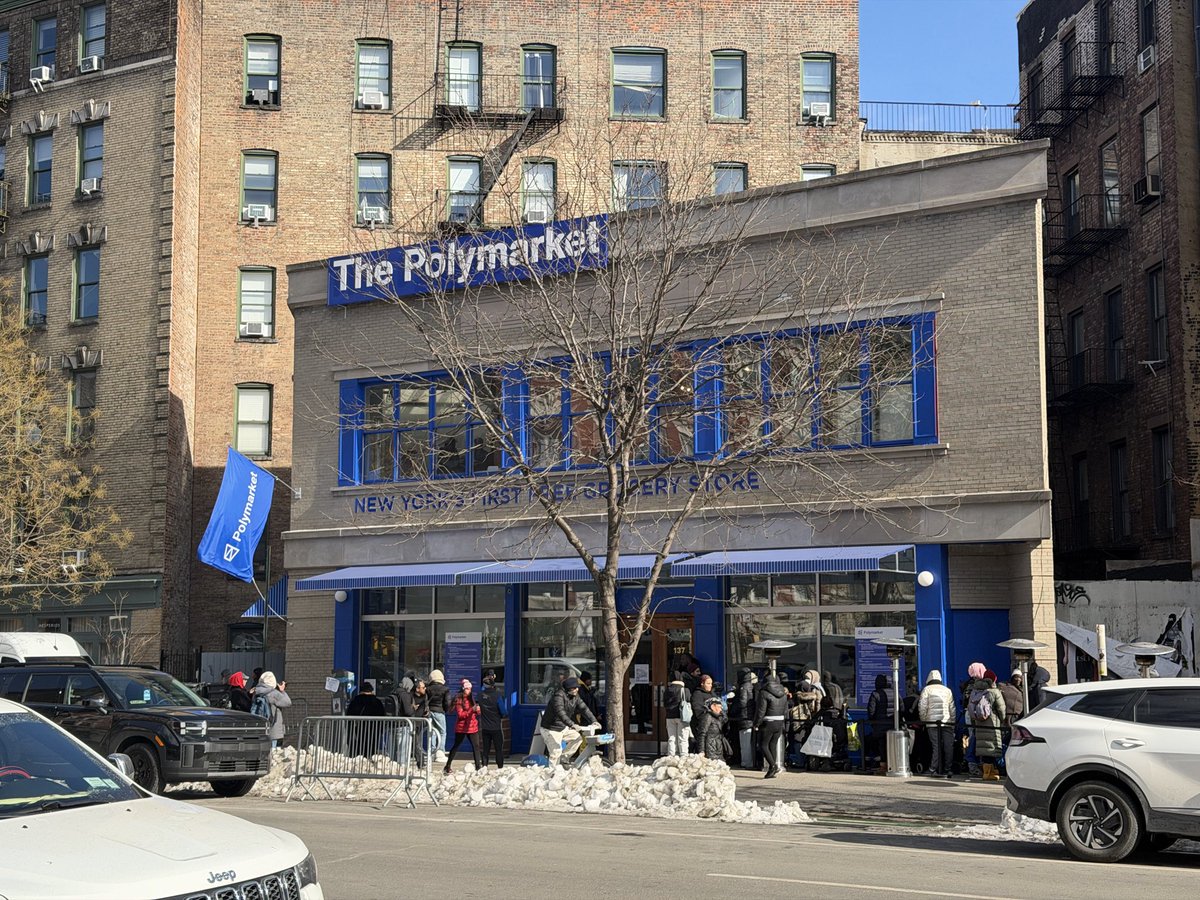
New York City’s first free grocery store, The Polymarket, is officially open.


1,875
1,709
18,232
5,203,839
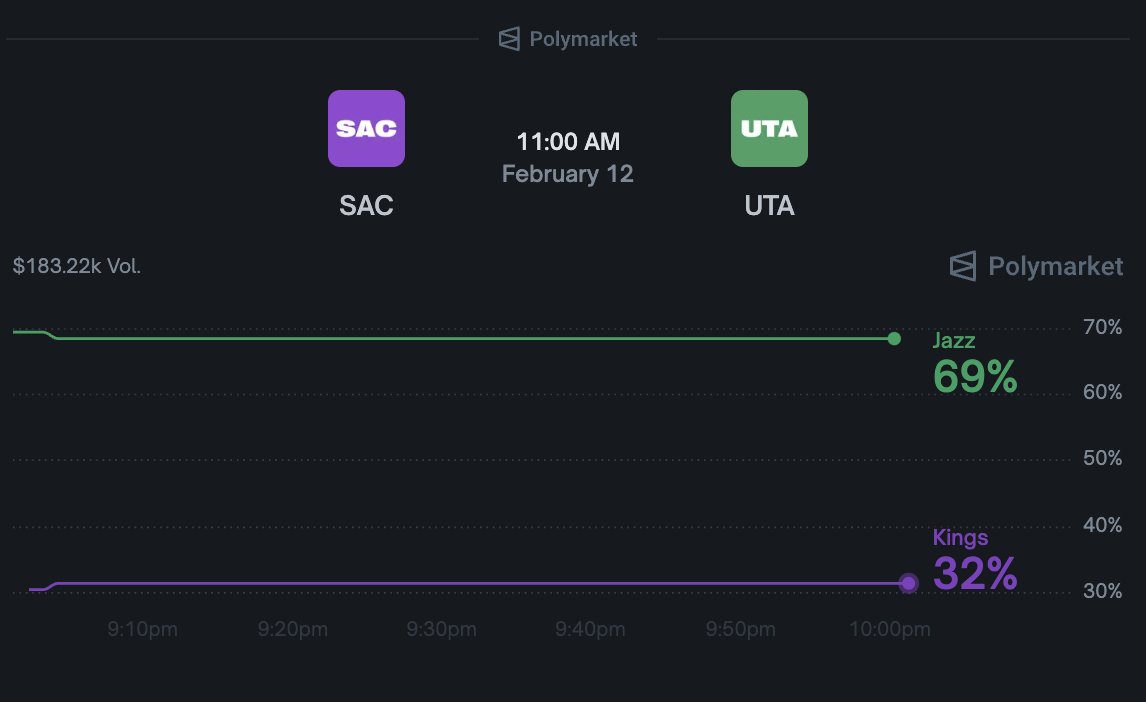
I thought the Super Bowl was already over lol, it’s actually in 13 hours.
See you soon.
@PolymarketSport
3
14
413
Prediction Markets Are Becoming Exchanges
I’ve long believed that prediction markets will eventually become exchanges. Not betting apps, but markets where probability and information are priced and traded.
The Polymarket × Jump partnership looks like a clear signal of that transition.
It’s a scene we’ve seen before. Early CEXs followed the same path.
> Order books were thin,
> spreads were wide,
> and prices reacted more to emotion and timing than to information.
> Charts existed, but they weren’t places where capital could stay.
The real change began when professional market makers like Jump and Wintermute entered.
Two-sided liquidity became persistent, price distortions self-corrected, and CEXs evolved from token shops into financial exchanges.
Polymarket–Jump feels similar.
It signals a move away from event-only, fragile liquidity
toward an always-on, tradable market.
This isn’t just about more liquidity. Prices start reacting to information, not vibes. Small orders stop moving the market. And position management becomes possible.
cc @Polymarket @PolymarketTrade

4
22
1,182
willy Lee retweeted

Feb 5
Strong Disagree.
Feb 5

I believe Prediction Markets are violating the law. In 40 states we have regulated betting that can’t market to teenagers, pays state taxes, protects game integrity & reports suspicious activity to law enforcement. Prediction markets do none of that at all ms.now/morning-joe/watch/chr…
114
90
646
243,459
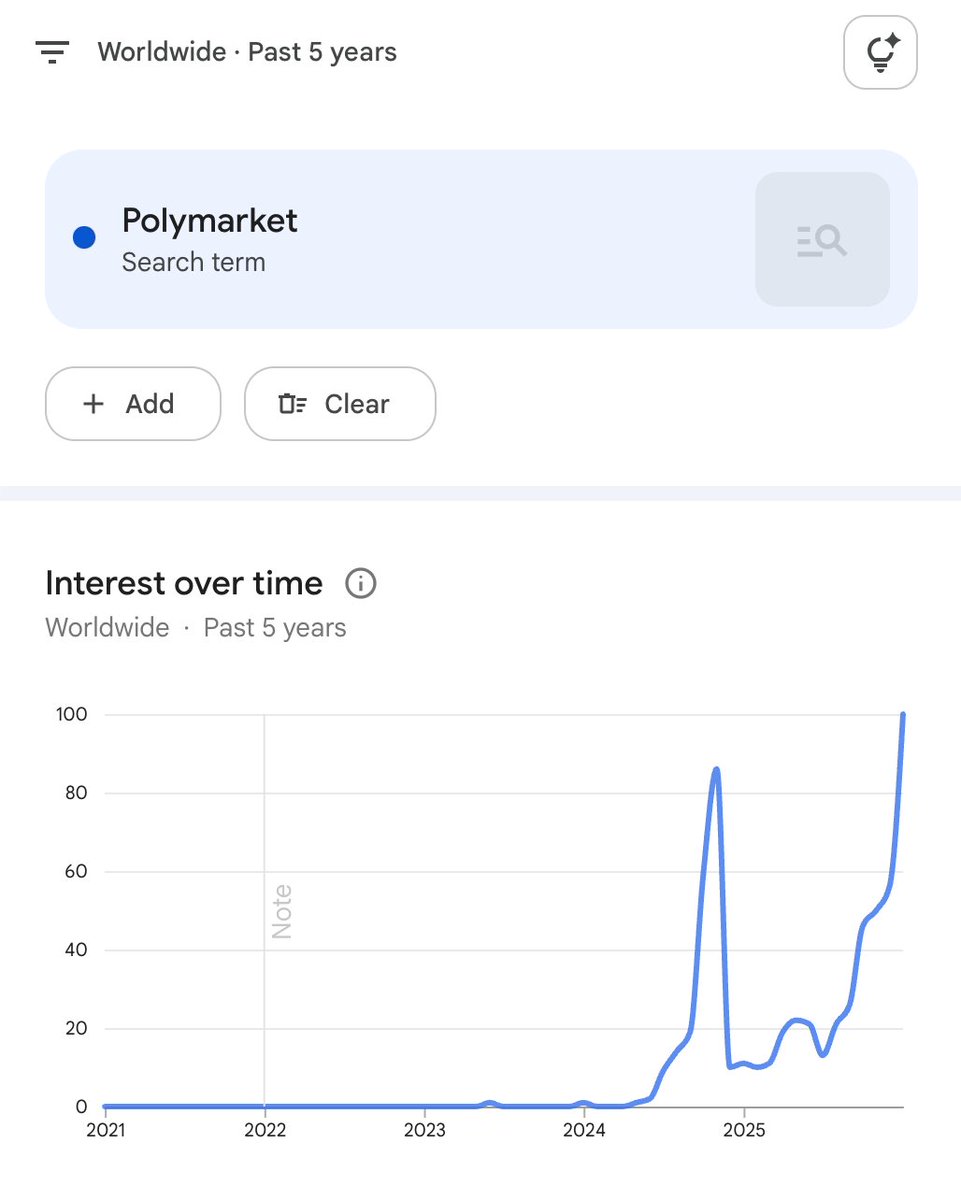
Yes, that’s right. Polymarket ended after the U.S. election.
Polymarket:

1
21
2,247
Do you still think @Polymarket is just a simple betting market?
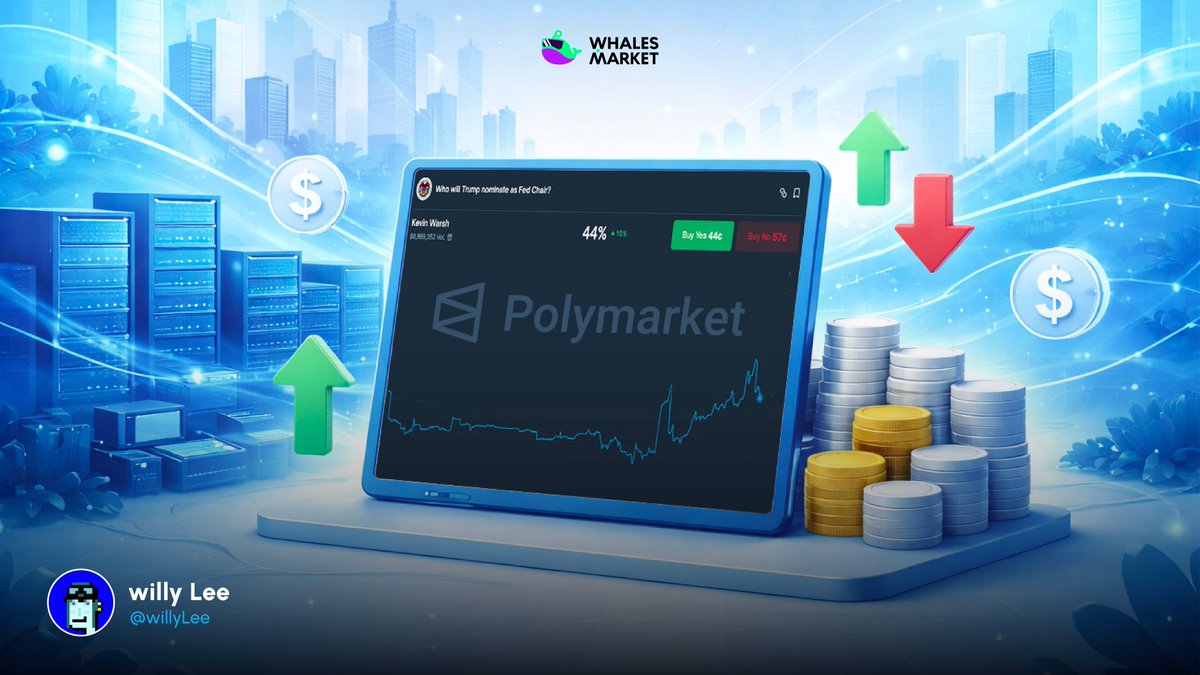
Today, @whalespredict published a blog post based on a piece I wrote about two months ago, with some light edits.
In the post, I share my view of Polymarket as more than a prediction market — an infrastructure, and potentially a path toward becoming an exchange.
Hope it helps you see and enjoy Polymarket from a broader perspective.
cc @PolymarketTrade
Jan 26

🐳 Behind every Prediction Market trade is a complex system most people overlook.
When results drop:
• Who verifies the outcome?
• Who ensures losers pay winners?
• Who manages risk if one side can't settle?
This is where Financial Infrastructure kicks in:
➥ Clearing: Verifying and matching trades between parties
➥ Settlement: Final asset transfer after results
➥ Risk Management: Handling counterparty risk
These are the invisible "circulatory systems". Without them, markets collapse. But who's building this infrastructure for on-chain prediction markets?
@willyLee dropped a solid piece answering exactly this. It reframes how we should look at @Polymarket. Not as a prediction product, but as a financial layer being quietly built underneath.
Key insights here 👇
whales.market/blog/the-finan…
2
18
767